
Before the neon gateways of motels and auto courts, before the resorts, Phoenix welcomed visitors at a handful of elegant hotels. They succeeded the one-, two- and three-story hostelries mostly built in the late 19th and early 20th centuries, which gradually became single-room occupancy properties catering to those with few means.
All were located downtown, easily walkable for shopping, entertainment, and restaurants. They were convenient to travelers arriving by train at the Southern Pacific and Santa Fe depots, and after 1923 at Union Station. Once the town was easily accessible by rail, it attracted everyone from "health seekers" to Hollywood movie stars.
Let's take a tour. Click on the photo for a larger image. These images come from the McCulloch Bros. Collection/ASU Archives and the Brad Hall collection.
The Adams:
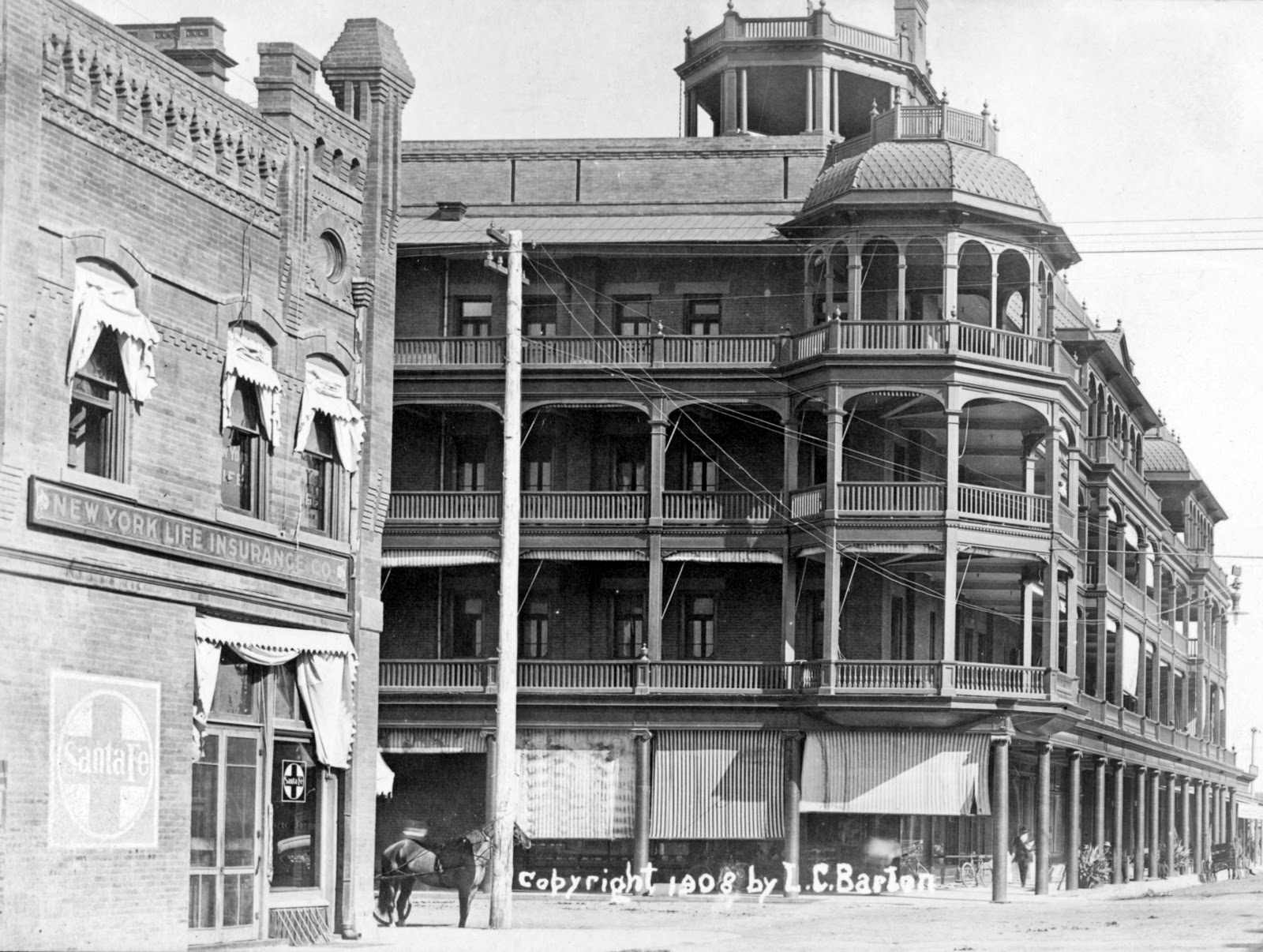
The Hotel Adams, at Center (Central) and Adams Street, was completed in 1896, the largest and grandest hotel in the territory. Phoenix's population was only 5,000. Owner John Adams came from Chicago and twice served as Phoenix's mayor.
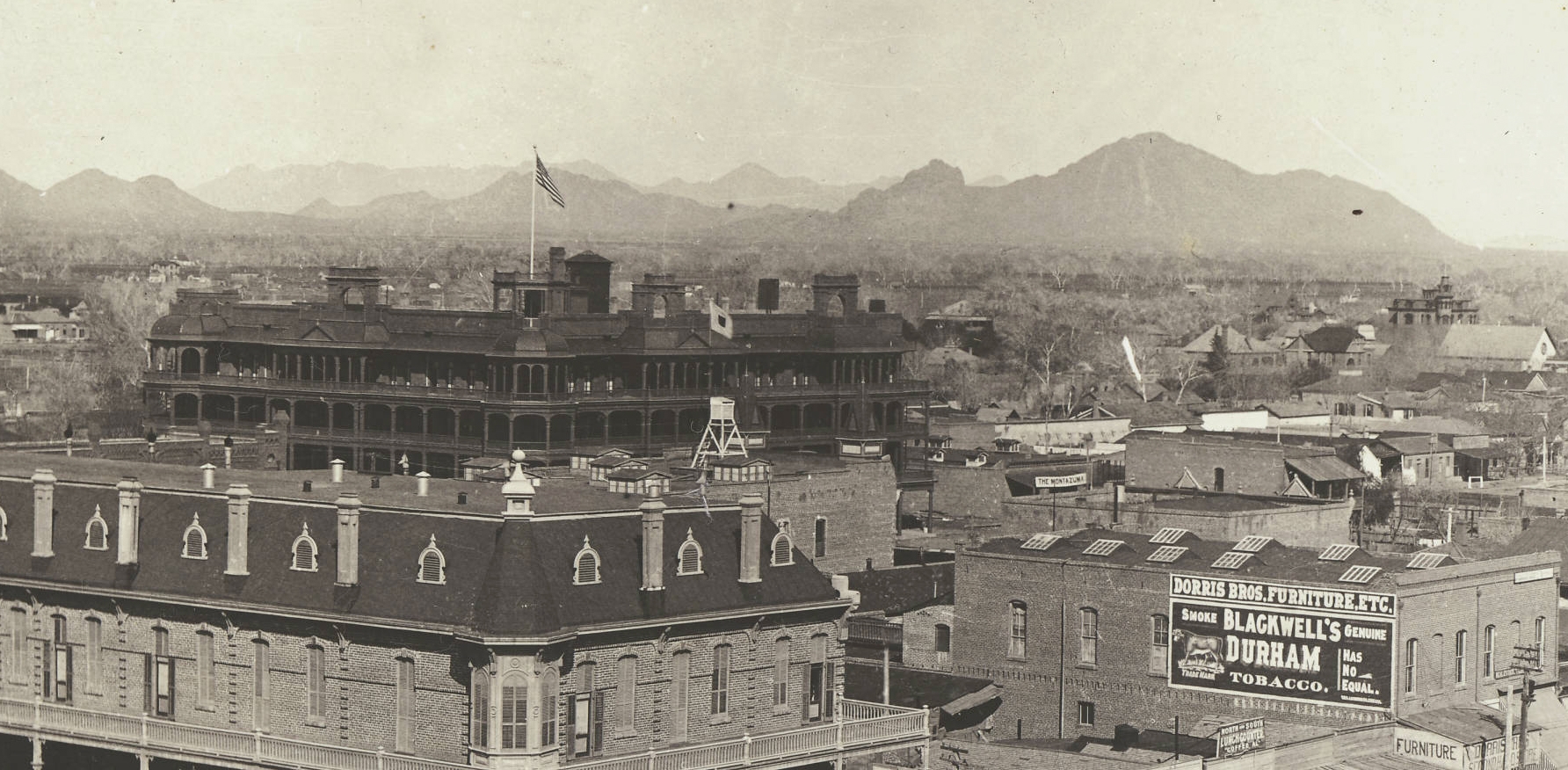
In 1899, looking over the Monihon Building (which features in my mystery City of Dark Corners), the Adams is the most impressive building in town.
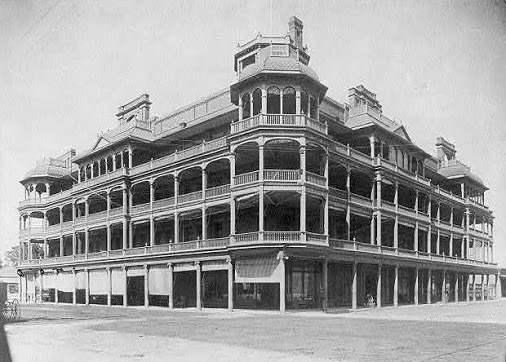
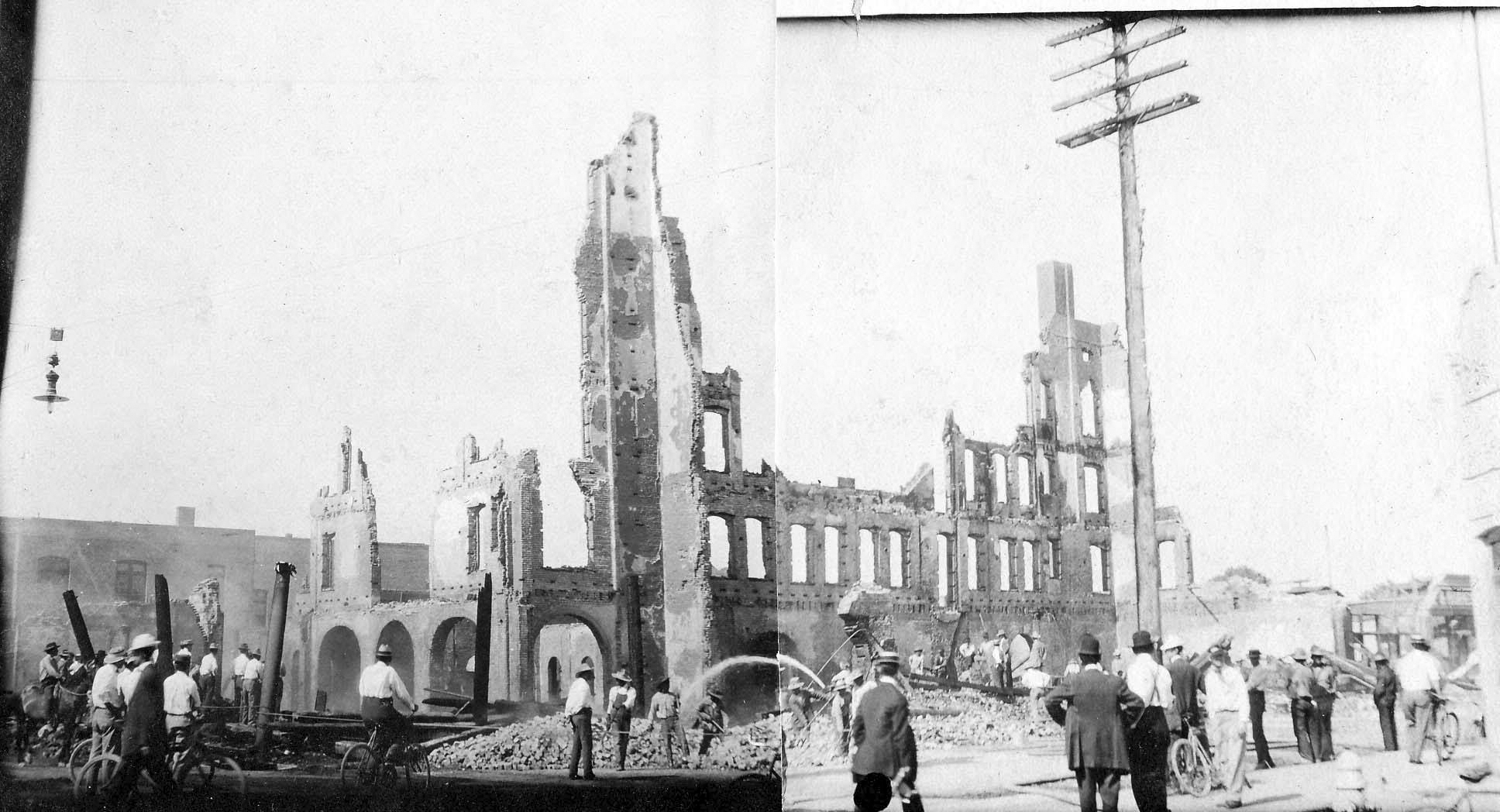
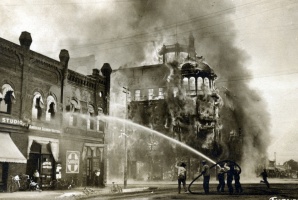 Here's a glamour shot of the hotel soon after its completion. Without air conditioning, its awnings, balconies, and sleeping porches helped keep guests cool in the summer. Unfortunately, the original mostly wooden building was completely destroyed by a fire in 1910. The blaze was so intense that it was fortunate — and thanks to the efforts of the young Phoenix Fire Department, that it didn't spread through downtown, becoming a Great Phoenix Fire.
After the blaze was extinguished, only rubble remained. Adams immediately began rebuilding.
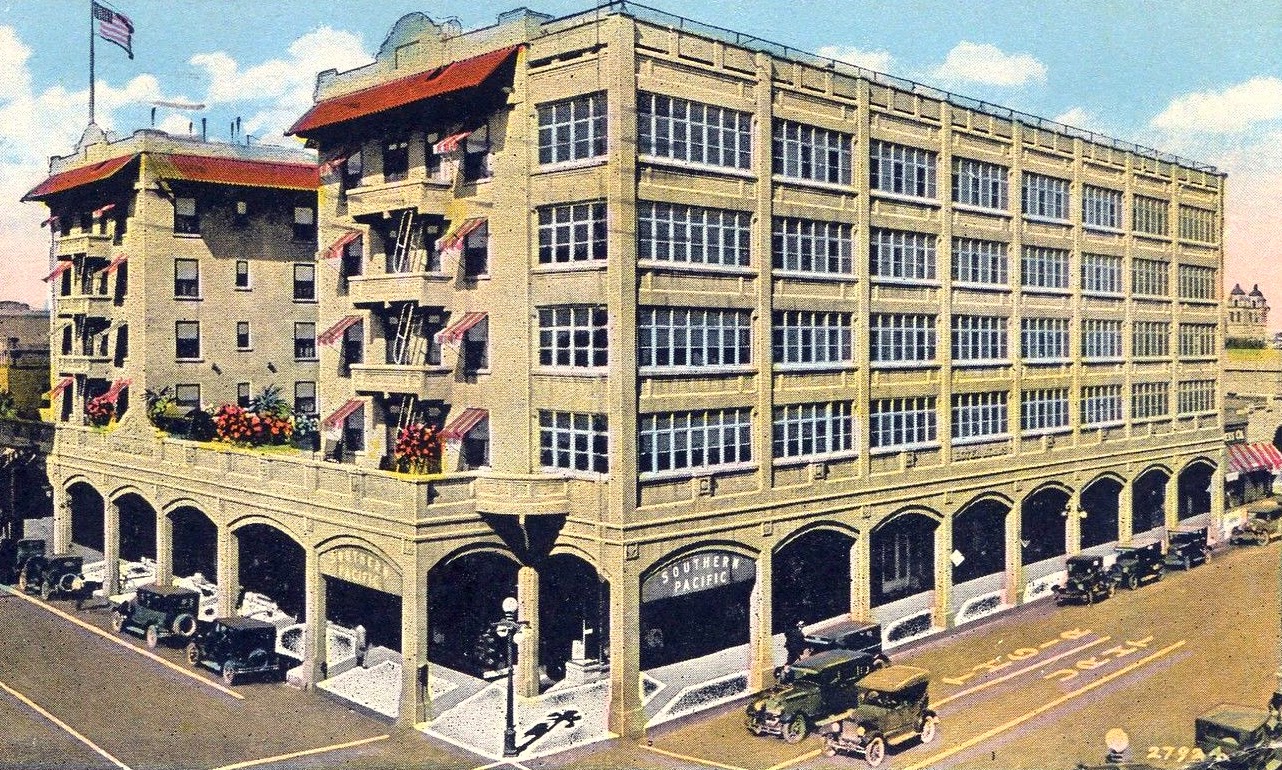
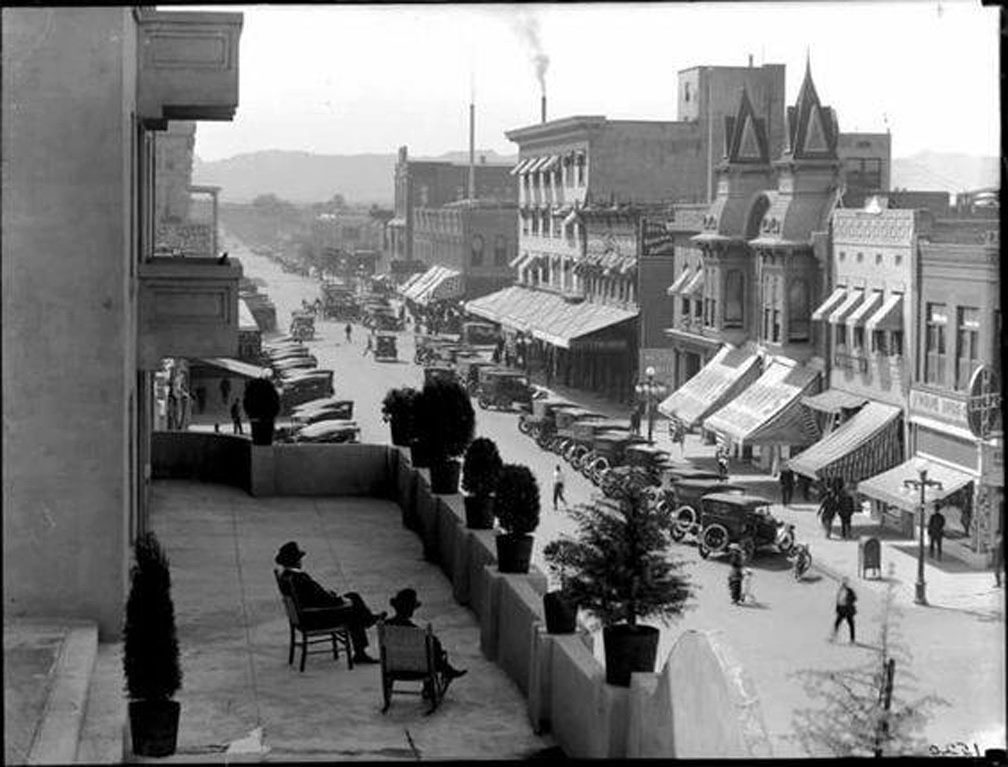
It was replaced by a five-story masonry building — "absolutely fireproof" — that was not only the city's premier hotel, but the coffee shop and bar would be the unofficial meeting places of the state Legislature for decades to come. Note the railroad ticket office. Below is a view from the balcony looking south, circa 1920. Awnings helped keep the sidewalks cool.
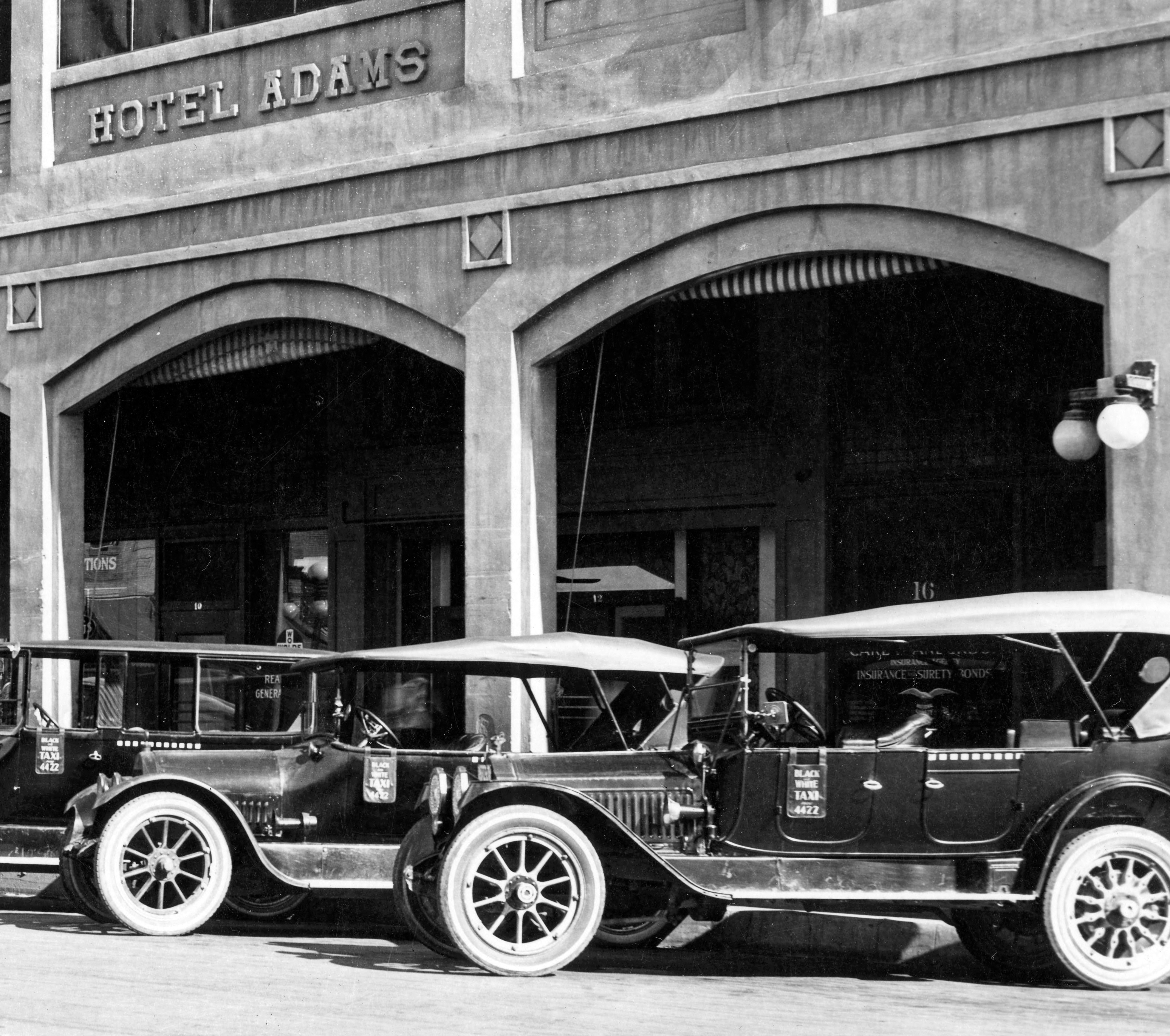
Above are taxis in the 1920s. Below is the Adams' grand lobby:
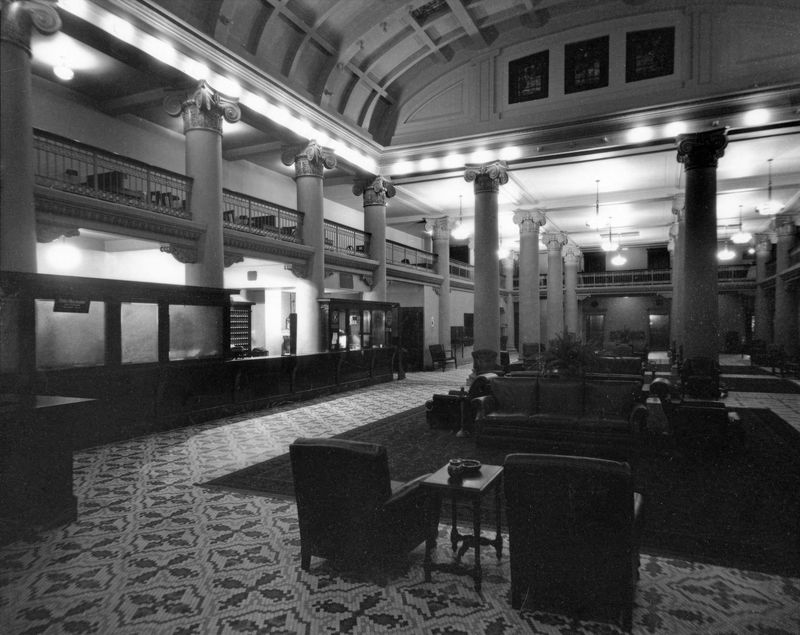
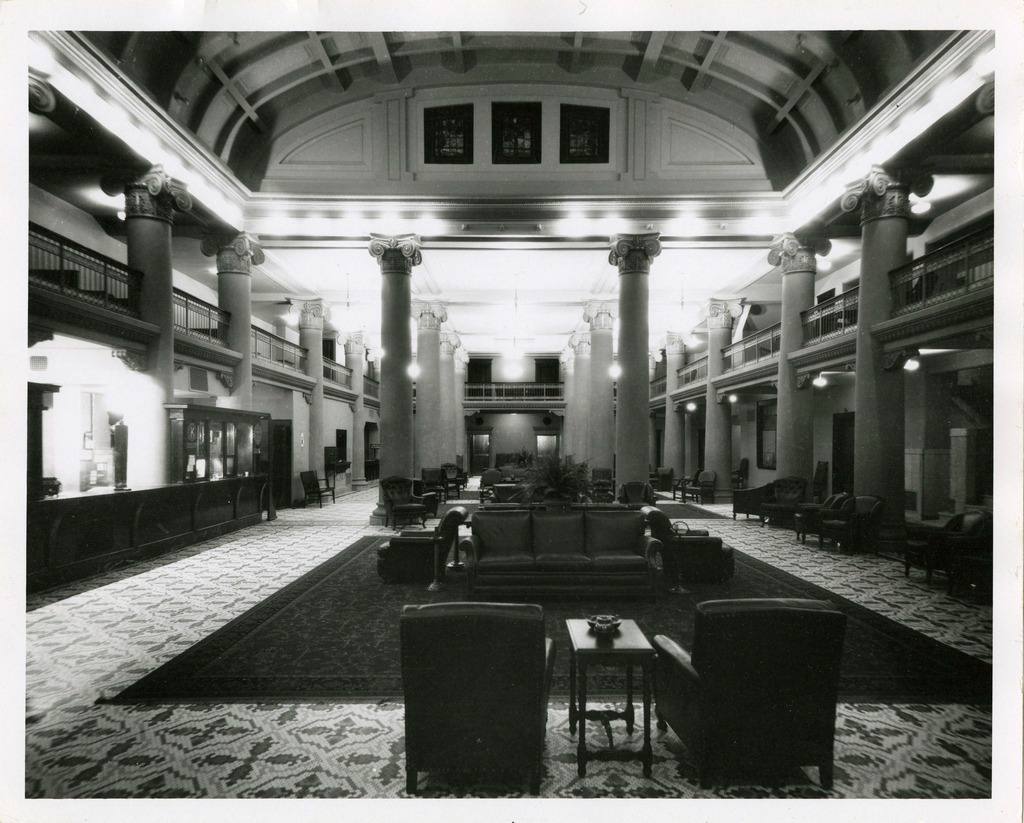 (McColloch Brothers collection/ASU Archives)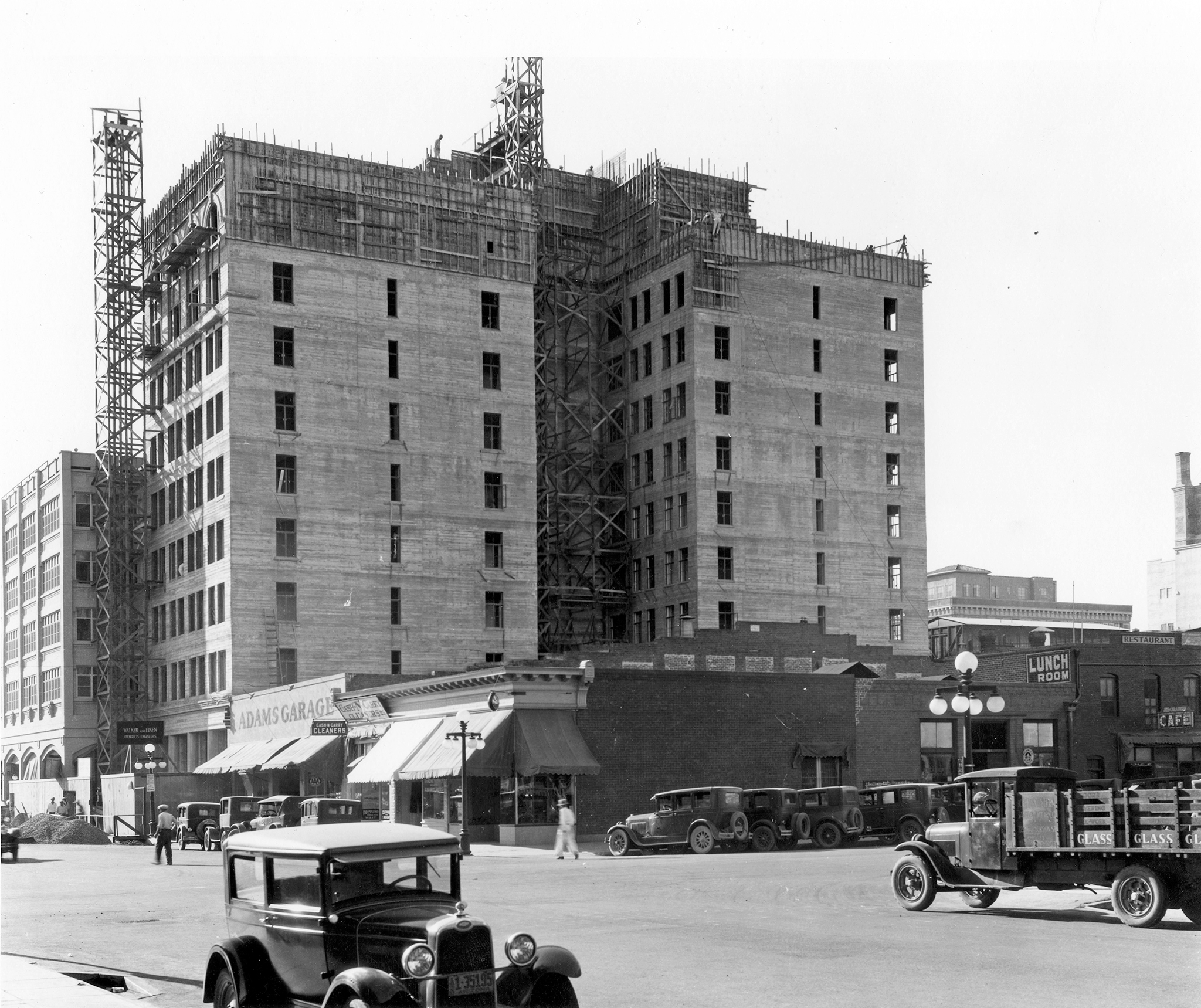
Facing new competition, the Adams added a tower on its east side in 1928. It also added a swimming pool. Capped with a neon sign, the hotel would be an iconic landmark for decades.
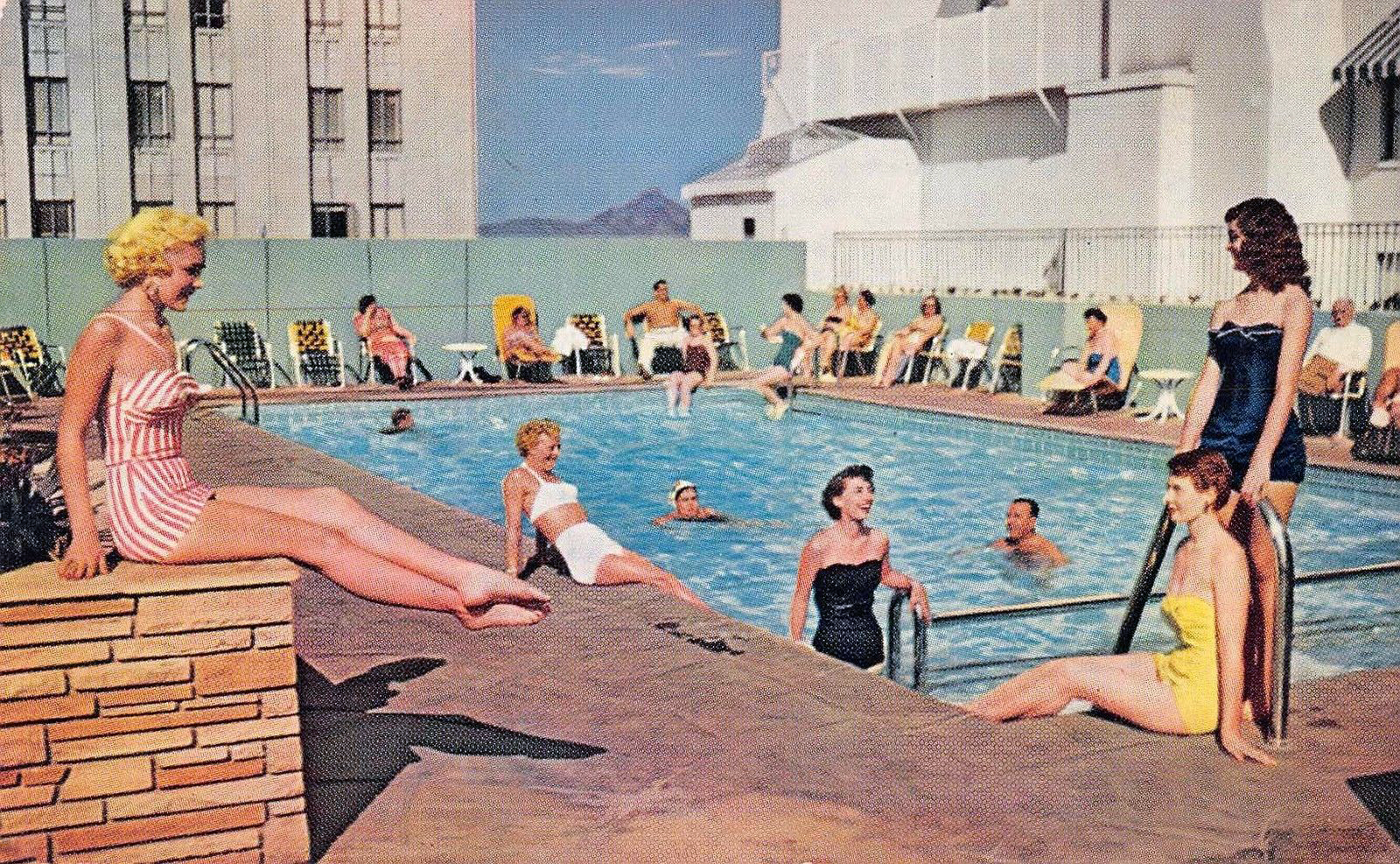
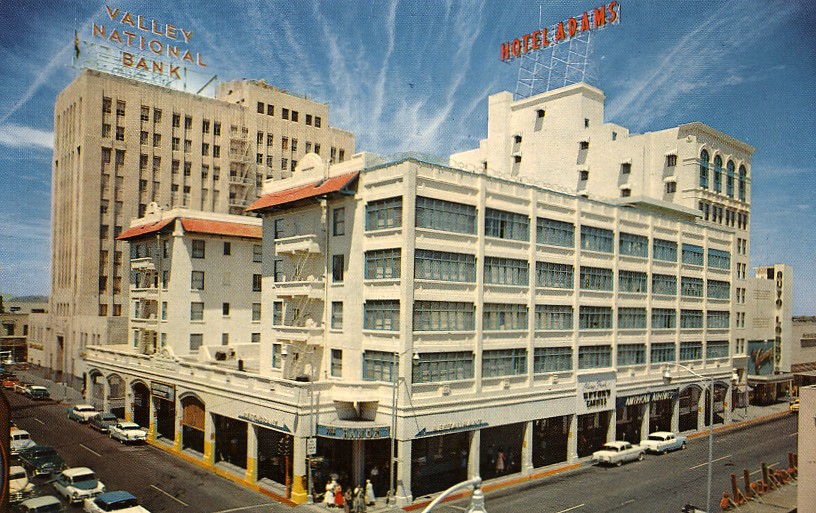
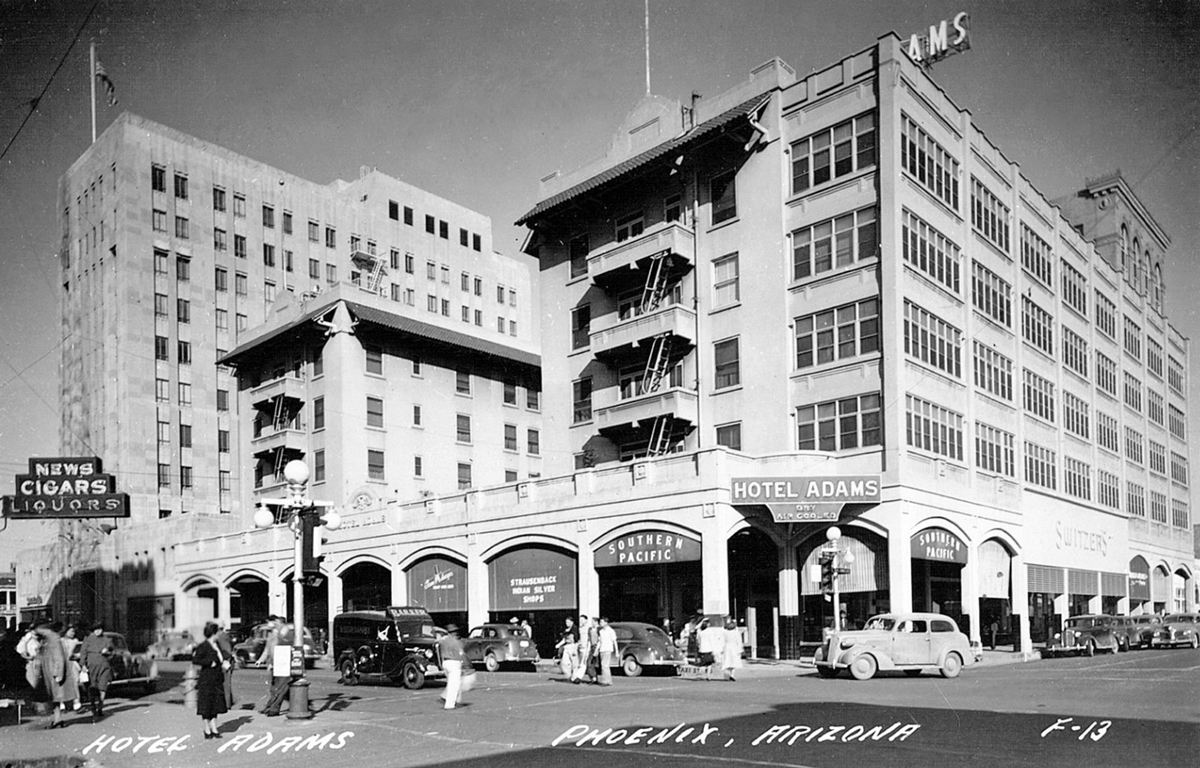
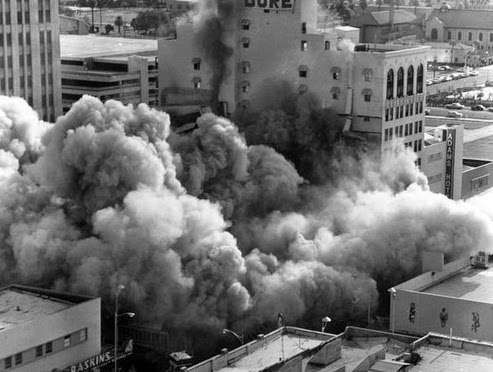
If only we could have kept and restored it. Unfortunately, the Adams was demolished in 1973 and replaced with the modernist "cheese grater" hulk that still stands today under the Renaissance nameplate (pro tip: Rename it the Hotel Adams).
The Luhrs:
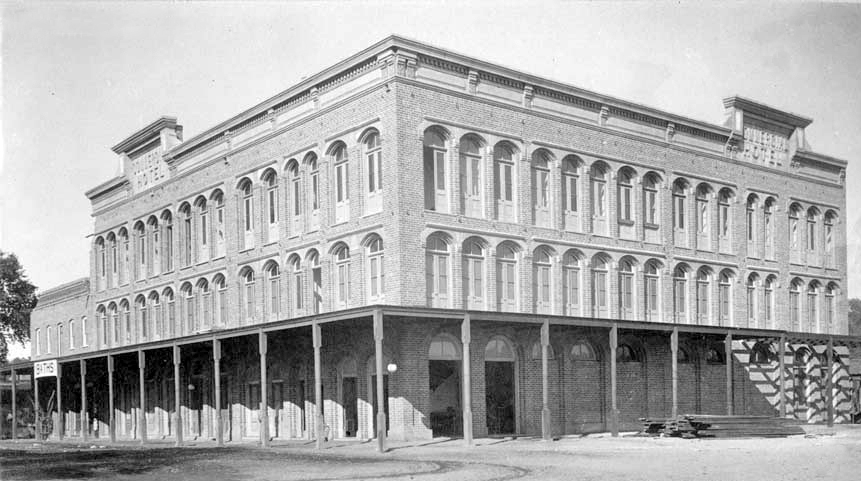
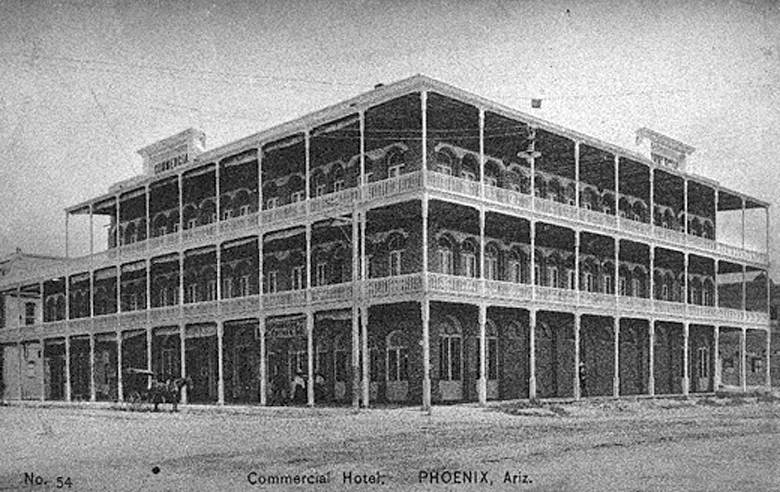
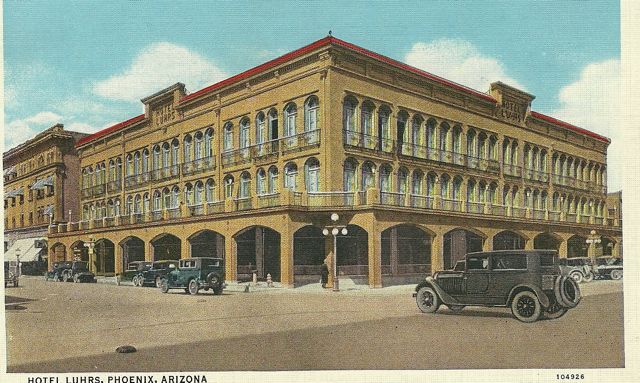
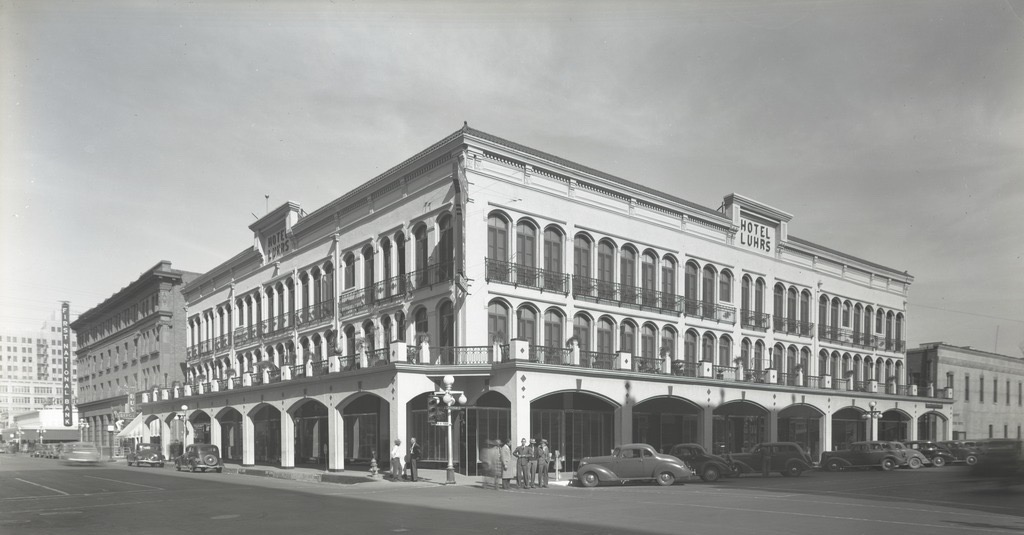
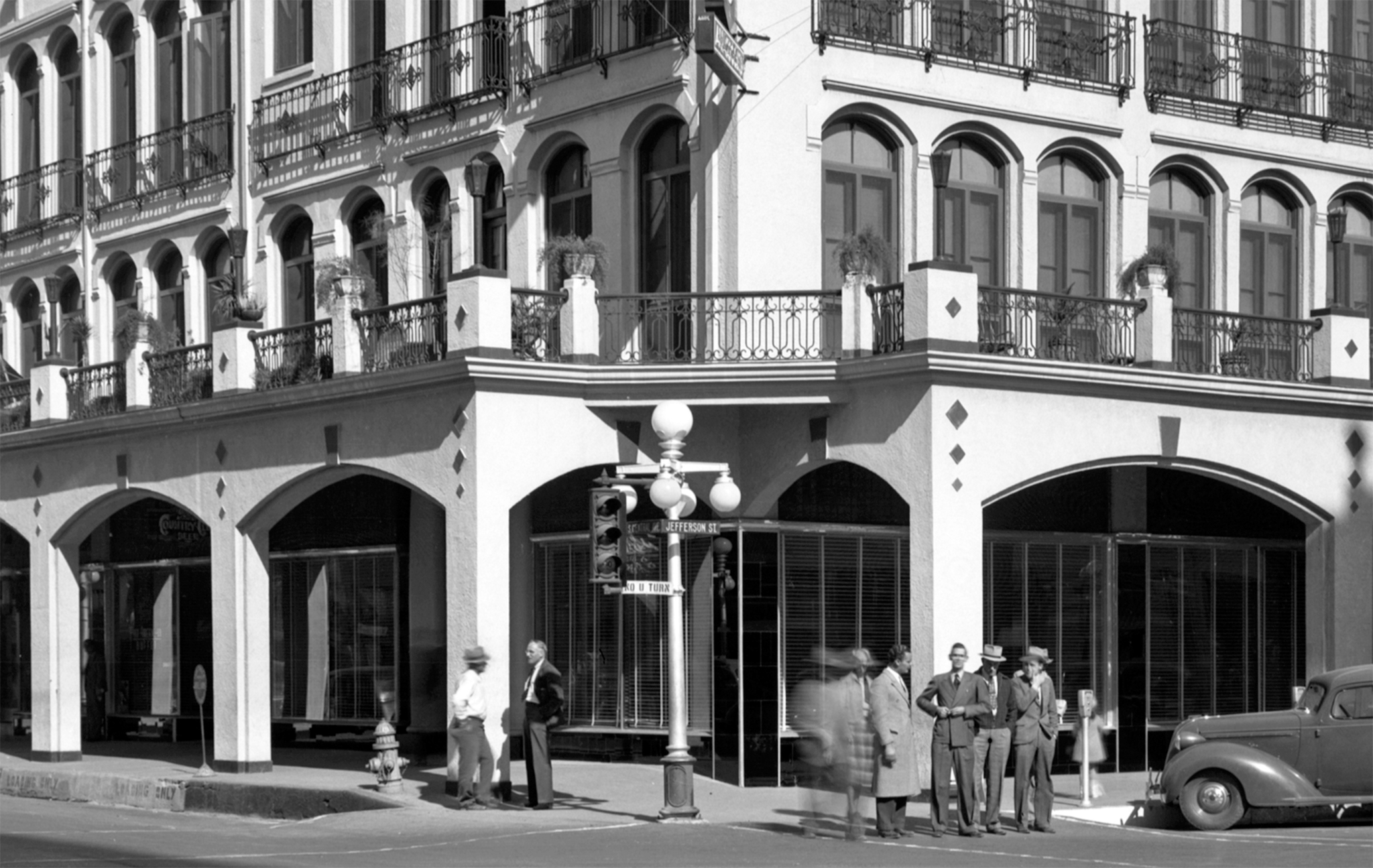
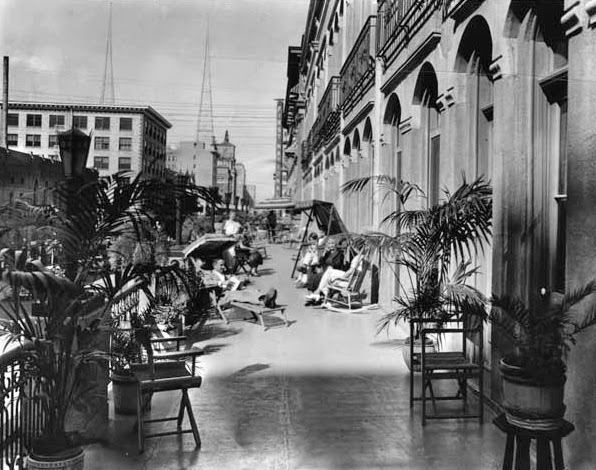
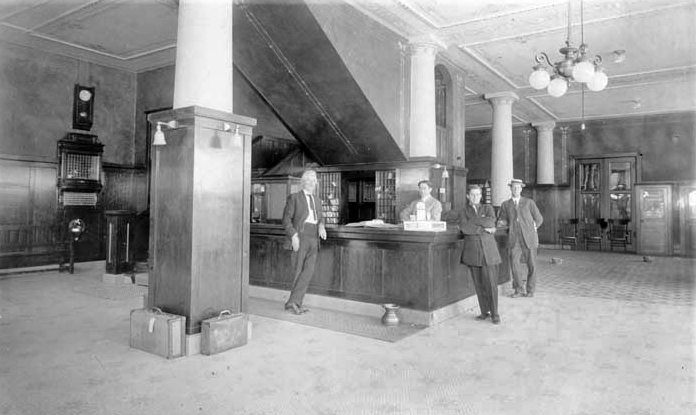
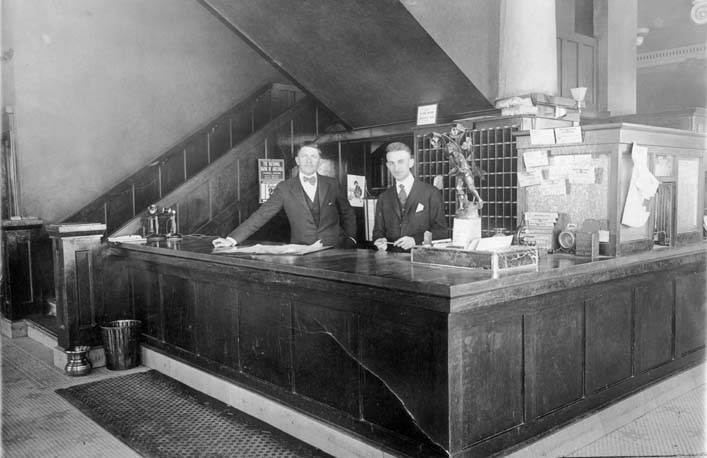
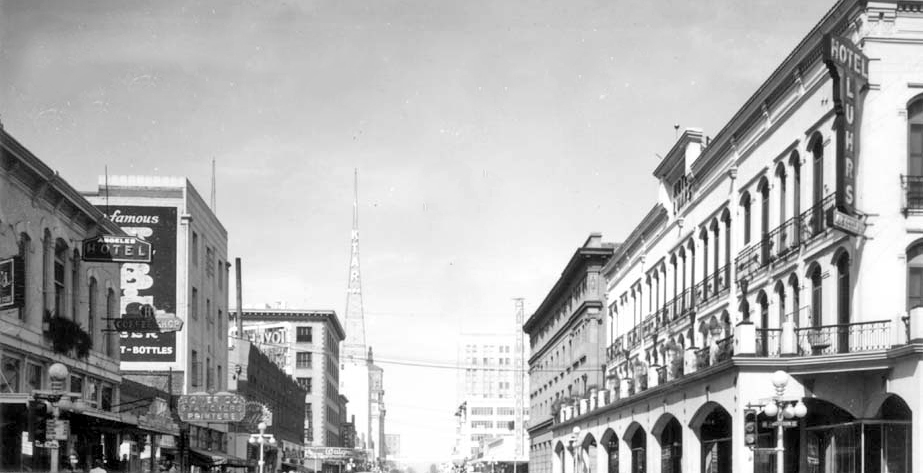
Before the Luhrs Building or Tower, Prussian emigre George Luhrs bought the Commercial Hotel on the northeast corner of Central and Jefferson. He rebuilt and expanded the establishment (which dated from the late 1880s) into the elegant Luhrs Hotel. The building looked nearly as good in the 1970s, when it was demolished.
The Hotel Jefferson:
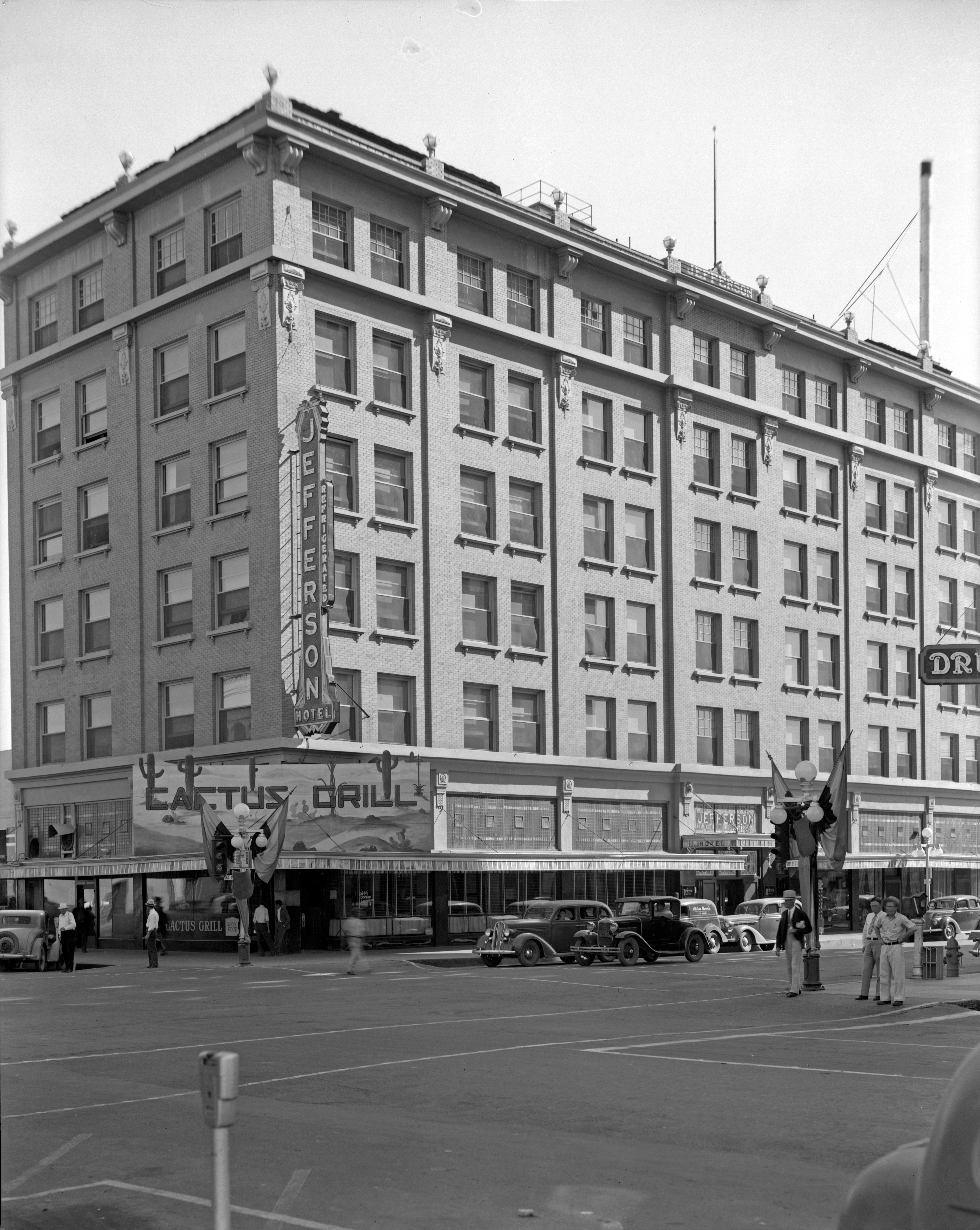
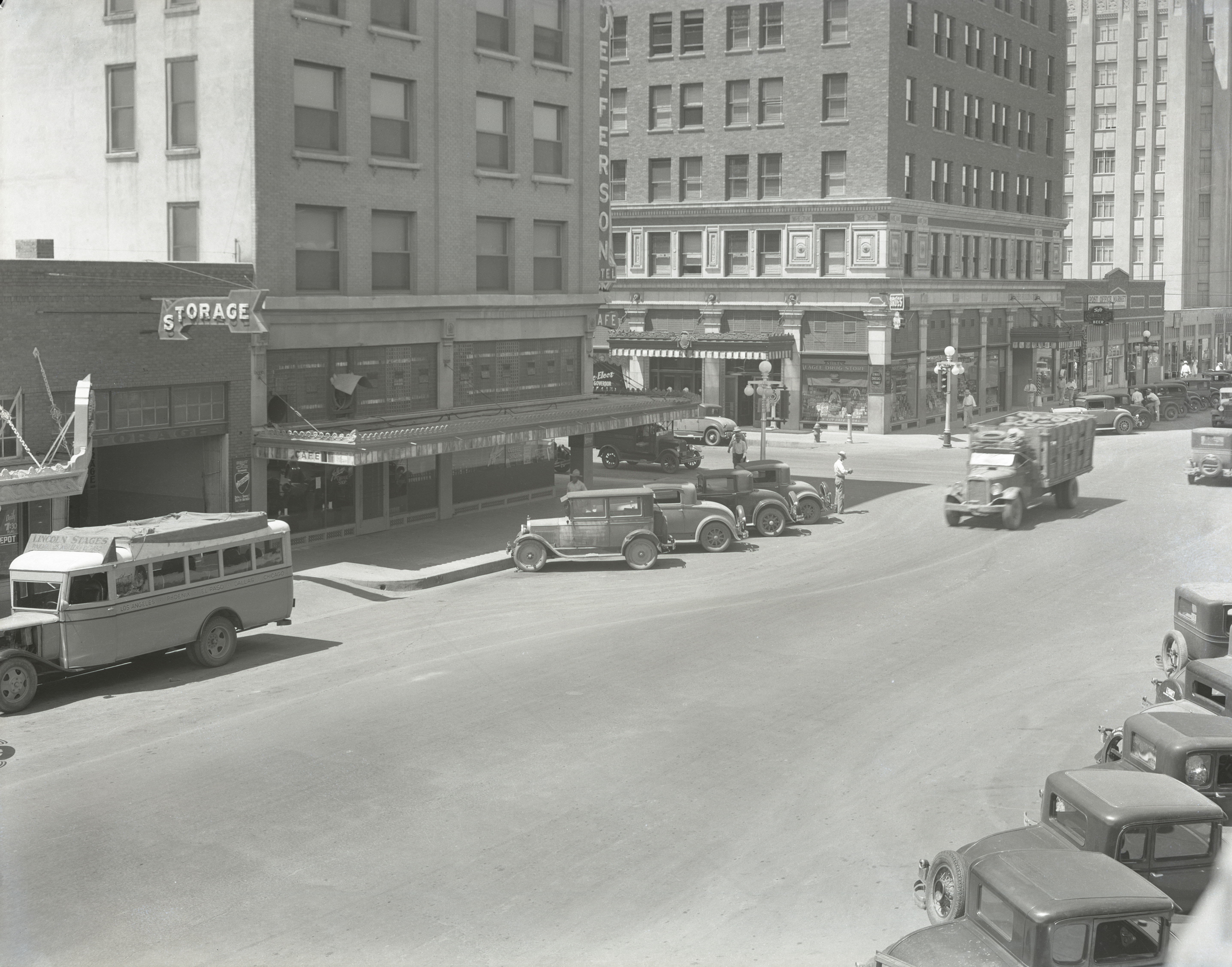
Built in 1915, the Jefferson stands on the southeast corner of Jefferson and Central, just south of the Luhrs. At the time it was the tallest building in the city. This photo is from 1937 and features a neon sign. It had a cameo in Alfred Hitchcock's 1960 movie Psycho where Janet Leigh's character has a tryst. The Jefferson avoided the wrecking ball, becoming city offices and today remade into condos.
The San Carlos:
The Roaring Twenties brought more visitors, including Hollywood's elite. Phoenix, which would grow 65 percent in the decade to reach a population of more than 48,000 by 1930, badly needed new hotels. Dwight Heard bankrolled Charles Harris' plans for a major hostelry on the northwest corner of Monroe and Central, where the old Central School once stood. Los Angeles architect G. Witecross Ritchie created an Italianate masterpiece:
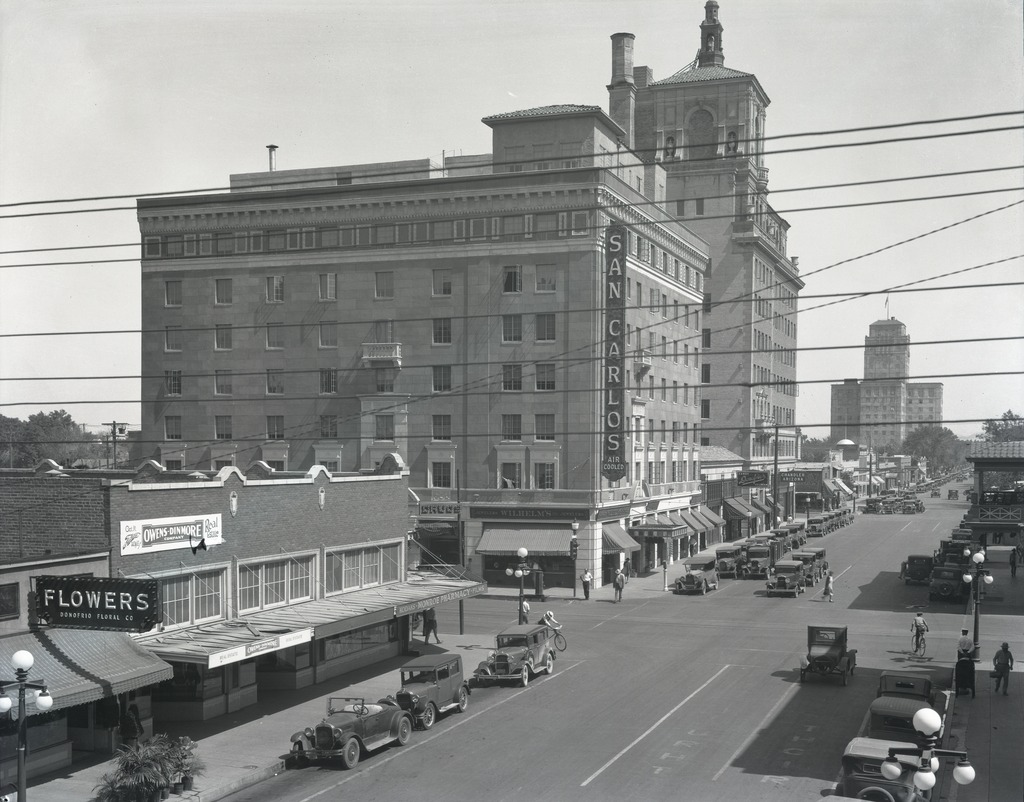
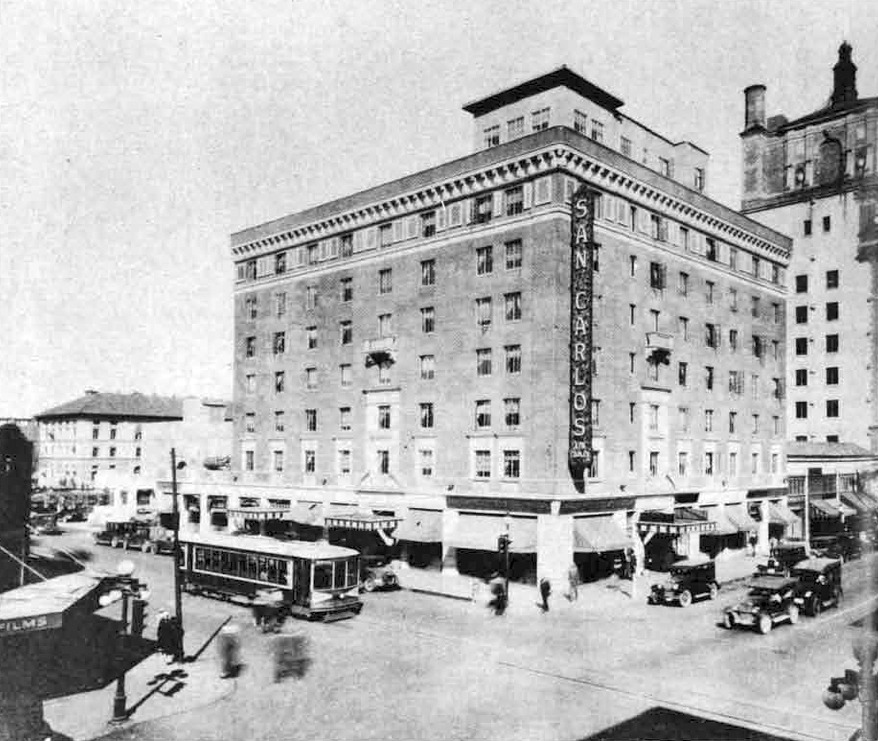
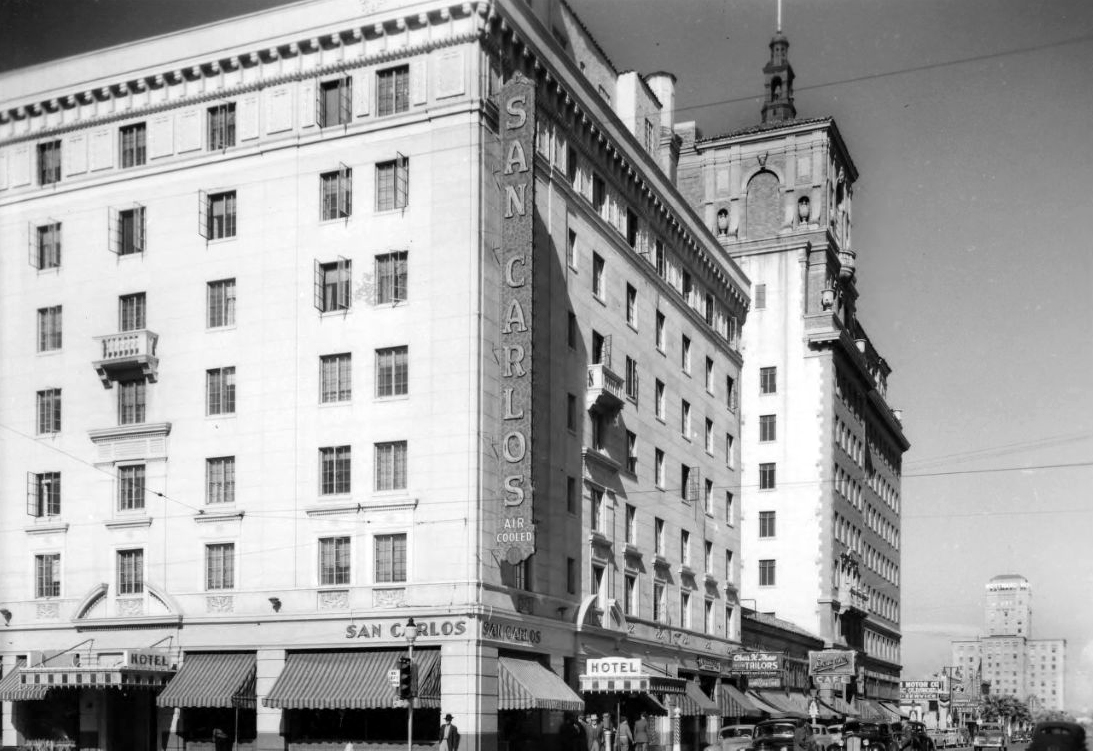
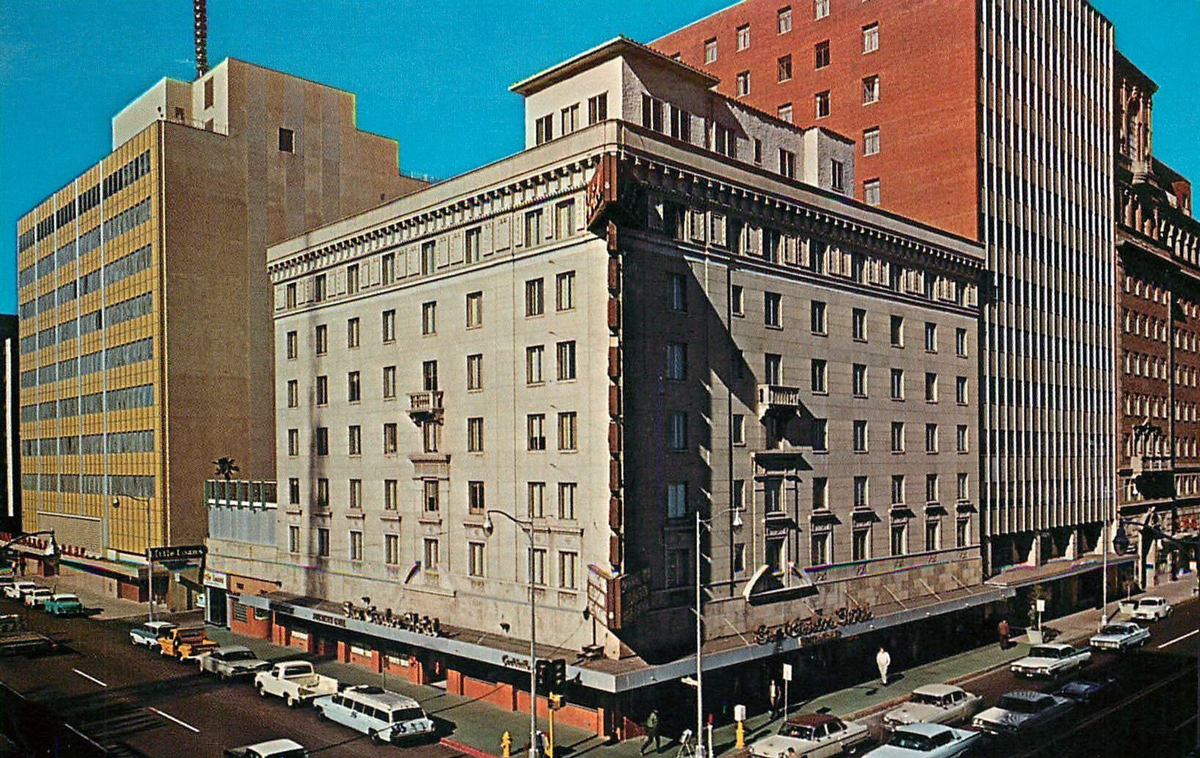
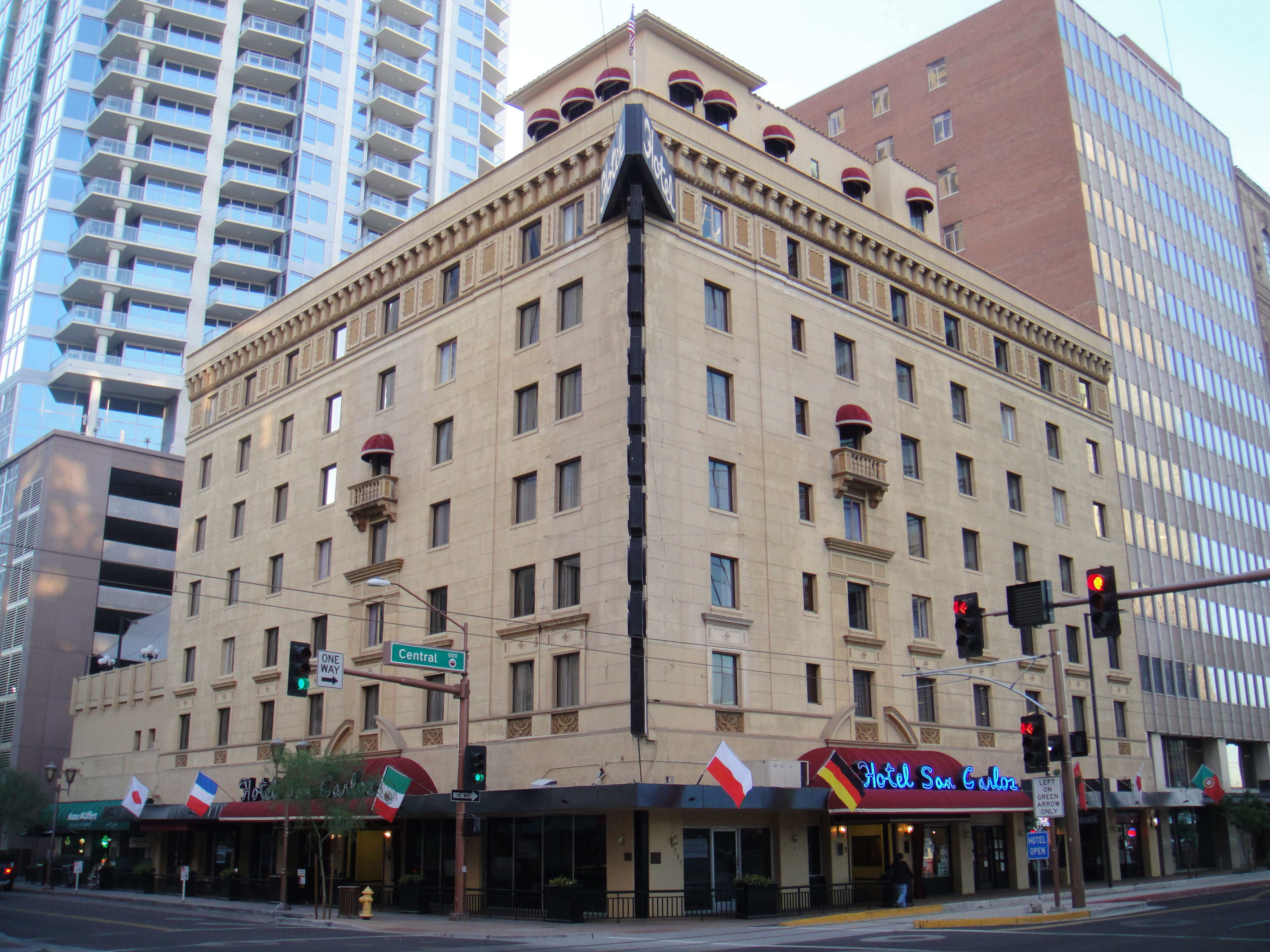
Opening in 1928, the luxurious San Carlos was the city's first hotel with air conditioning. It was an immediate hit. Stars who stayed there included Mae West, Carole Lombard and Clark Gable, Spencer Tracy, Cary Grant, Humphrey Bogart, and Marilyn Monroe. The Hotel San Carlos remains open today after a multi-million-dollar renovation by the Melikian family. It retains its historic charm — and has a star walk. (I've never encountered the ghost). It is also the only remaining great hotel of the young city that is still in its original use.
The Westward Ho:
The San Carlos' fiercest competitor also opened in 1928, G.W. Johnson's Spanish revival Hotel Westward Ho. Originally planned as the Roosevelt Hotel, the Ho stood at 16 stories and was later topped with a radio tower. For three decades, it was the tallest building in Phoenix.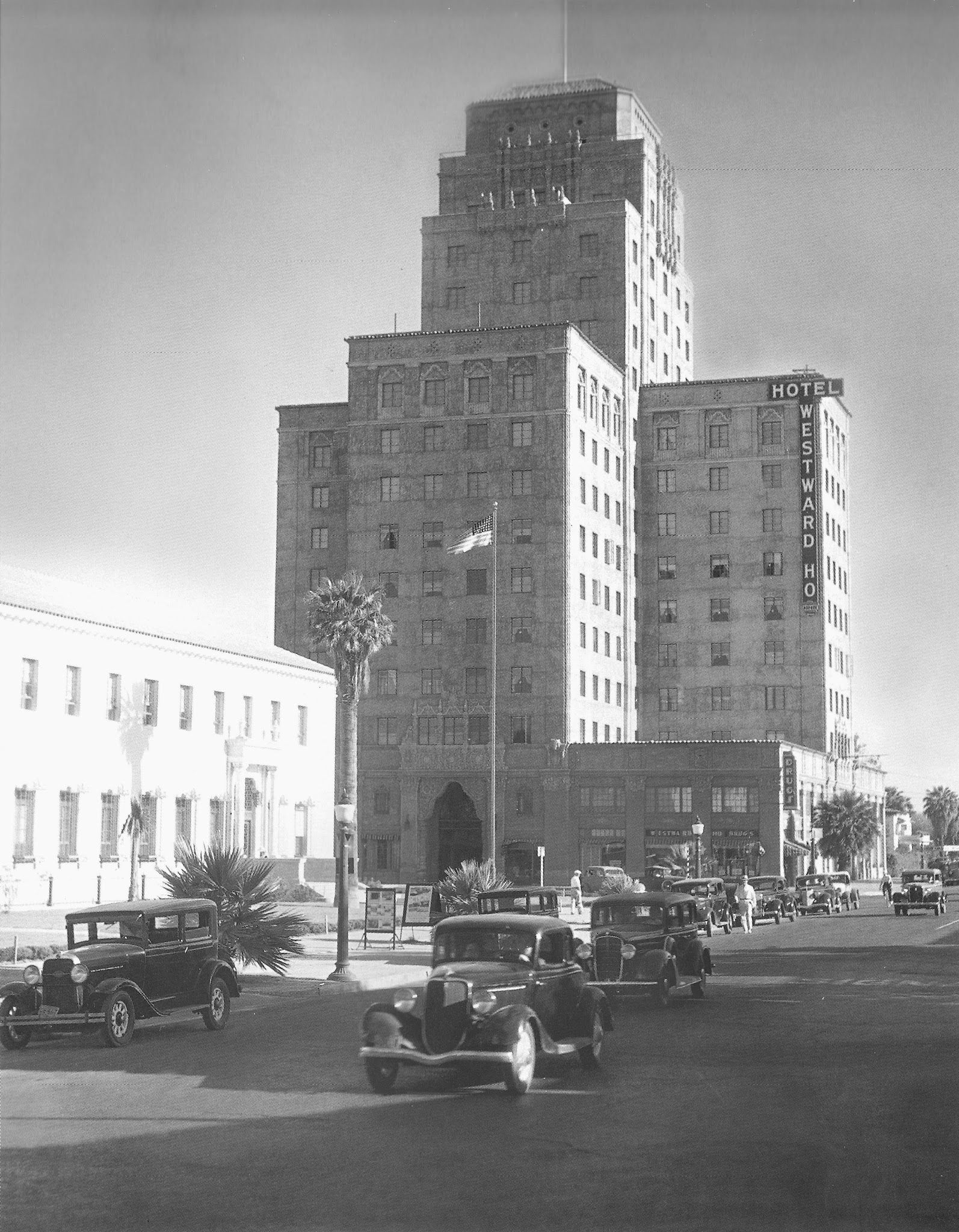
Through the 1960s, the Westward Ho not only hosted celebrities and political VIPs (including presidents Kennedy and Johnson) but was where many of the city's social events happened. Gradually, the hotel was expanded with a motor hotel, courtyard pool, and shops to the north.
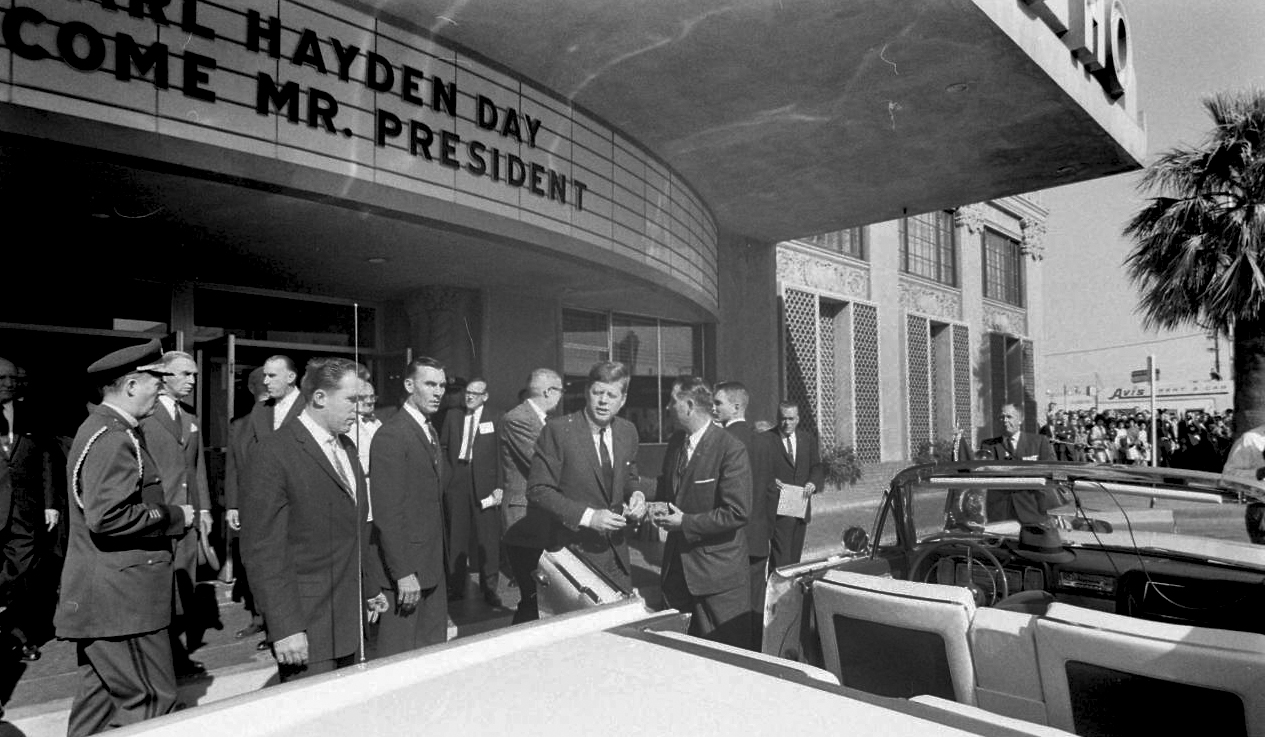
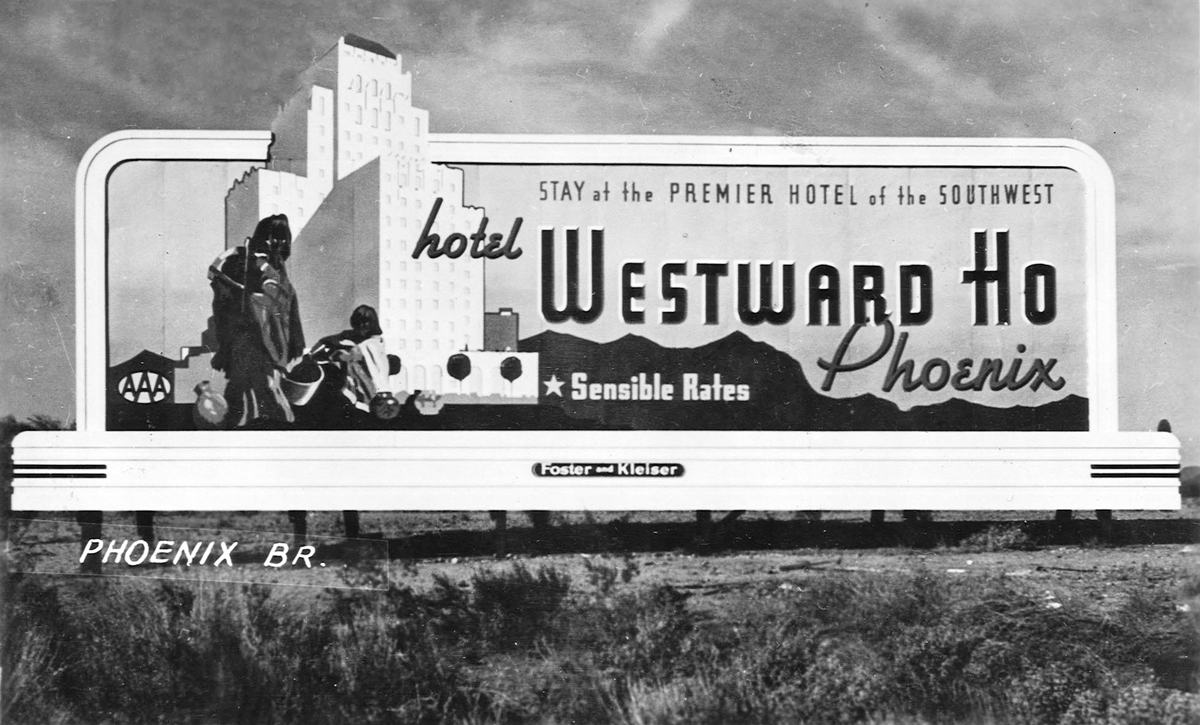
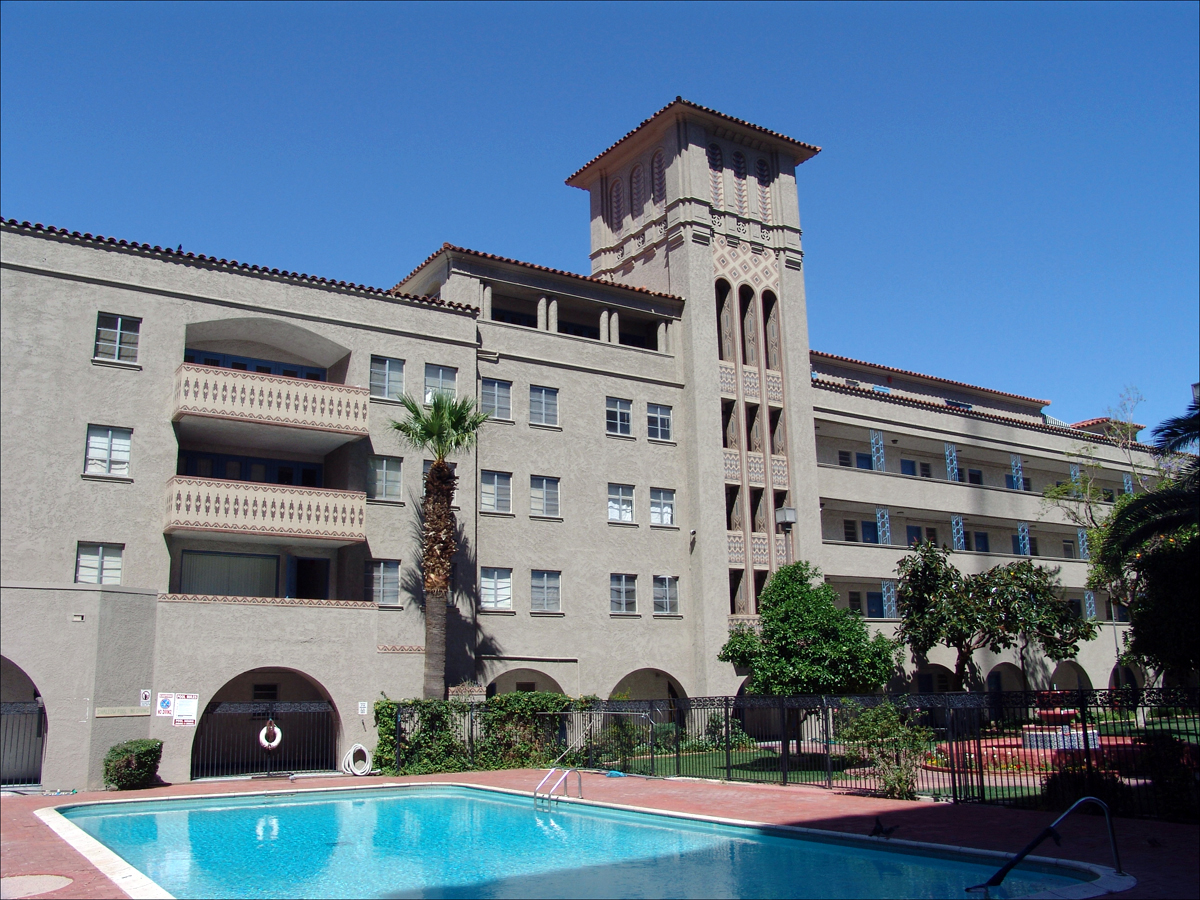
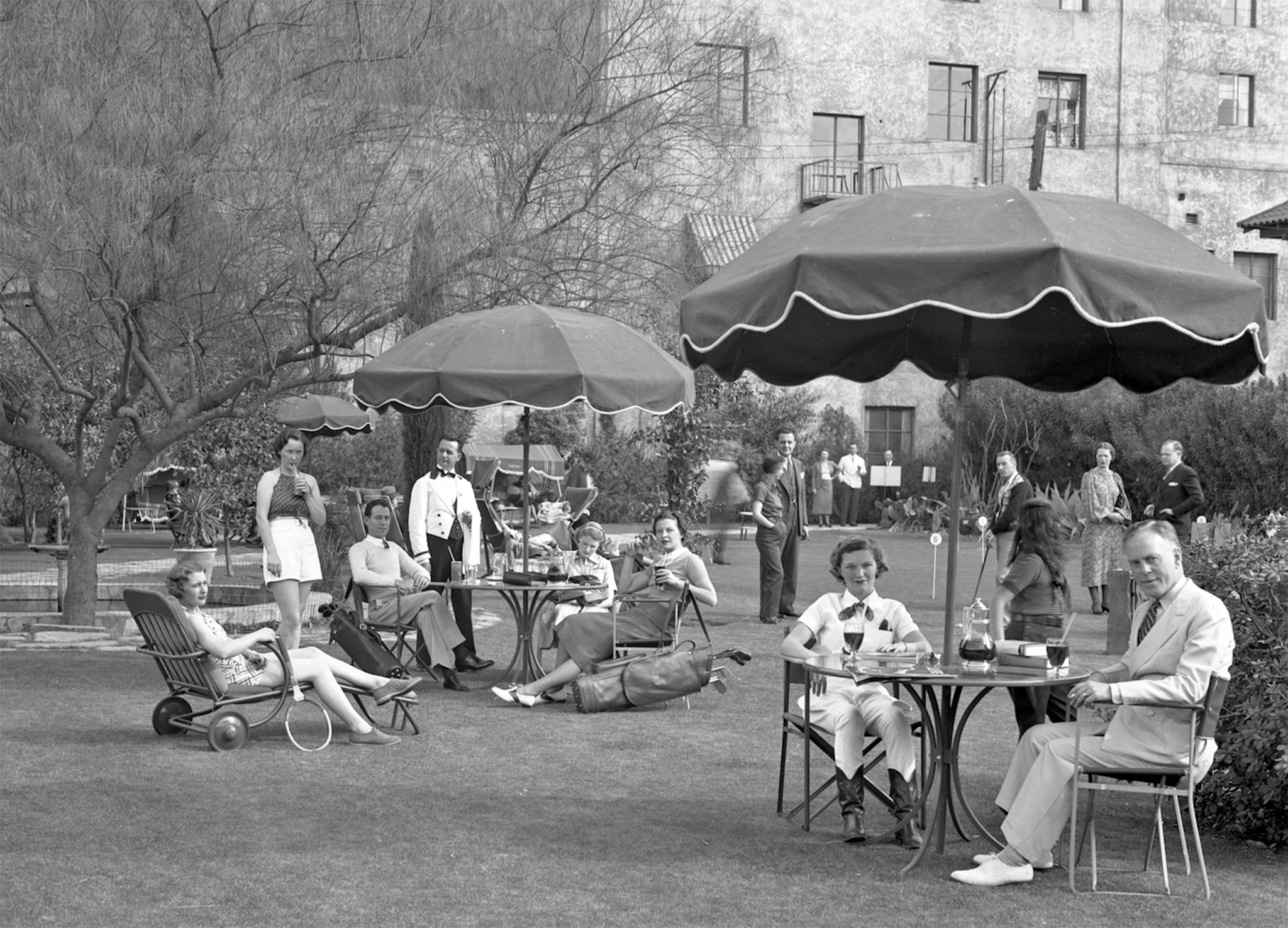
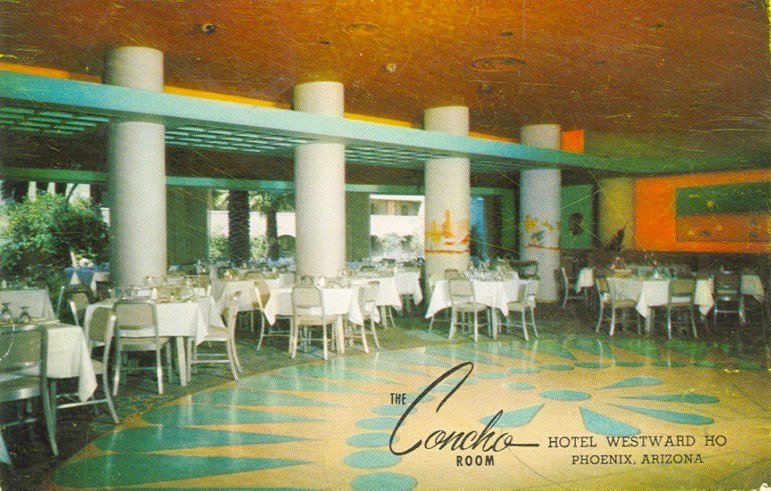
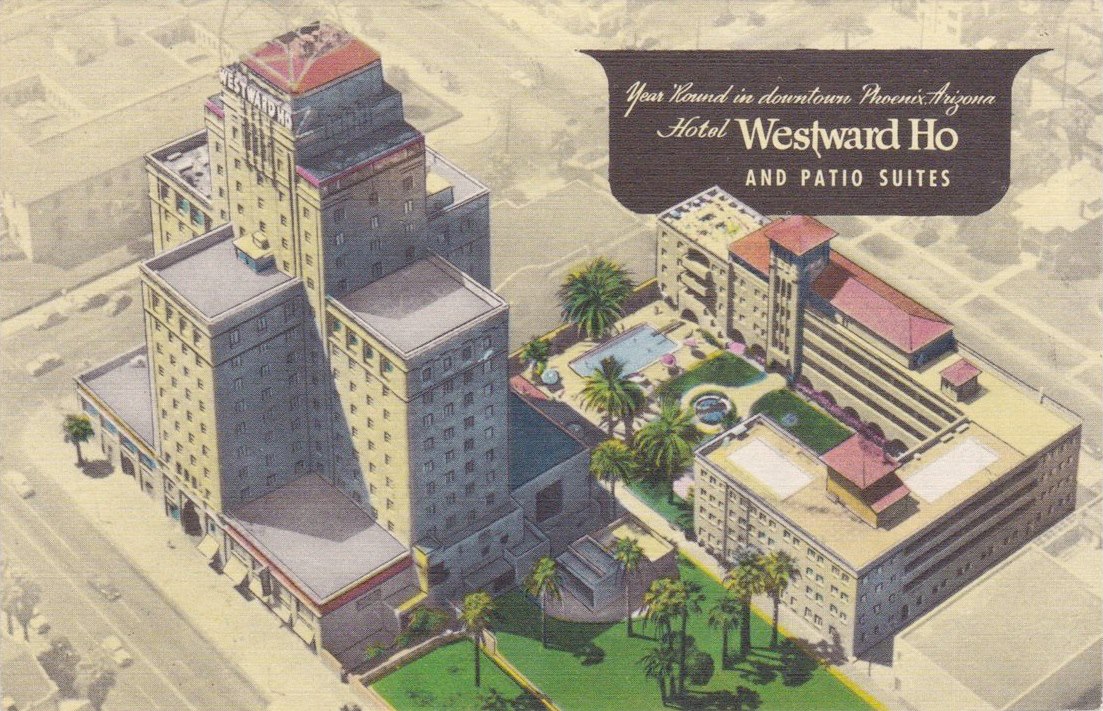
The Westward Ho fell on hard times in the 1970s and was eventually turned into subsidized housing. Its loss as a premier hotel is one of Phoenix's great squandered opportunities.
Honorable mentions:
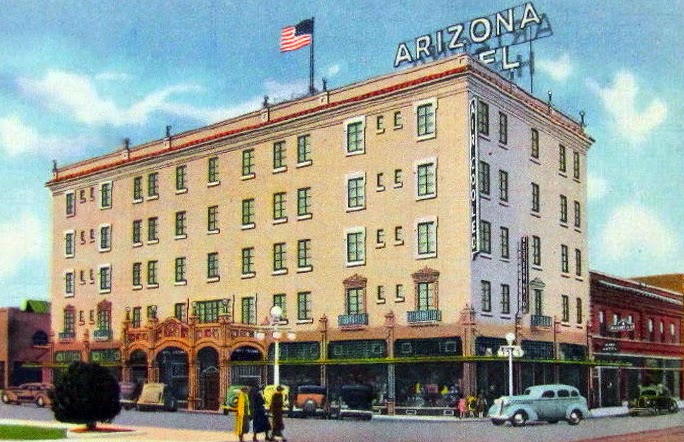
The Arizona Hotel at the southwest corner of Washington Street and Third Avenue. It was gone by the 1960s:
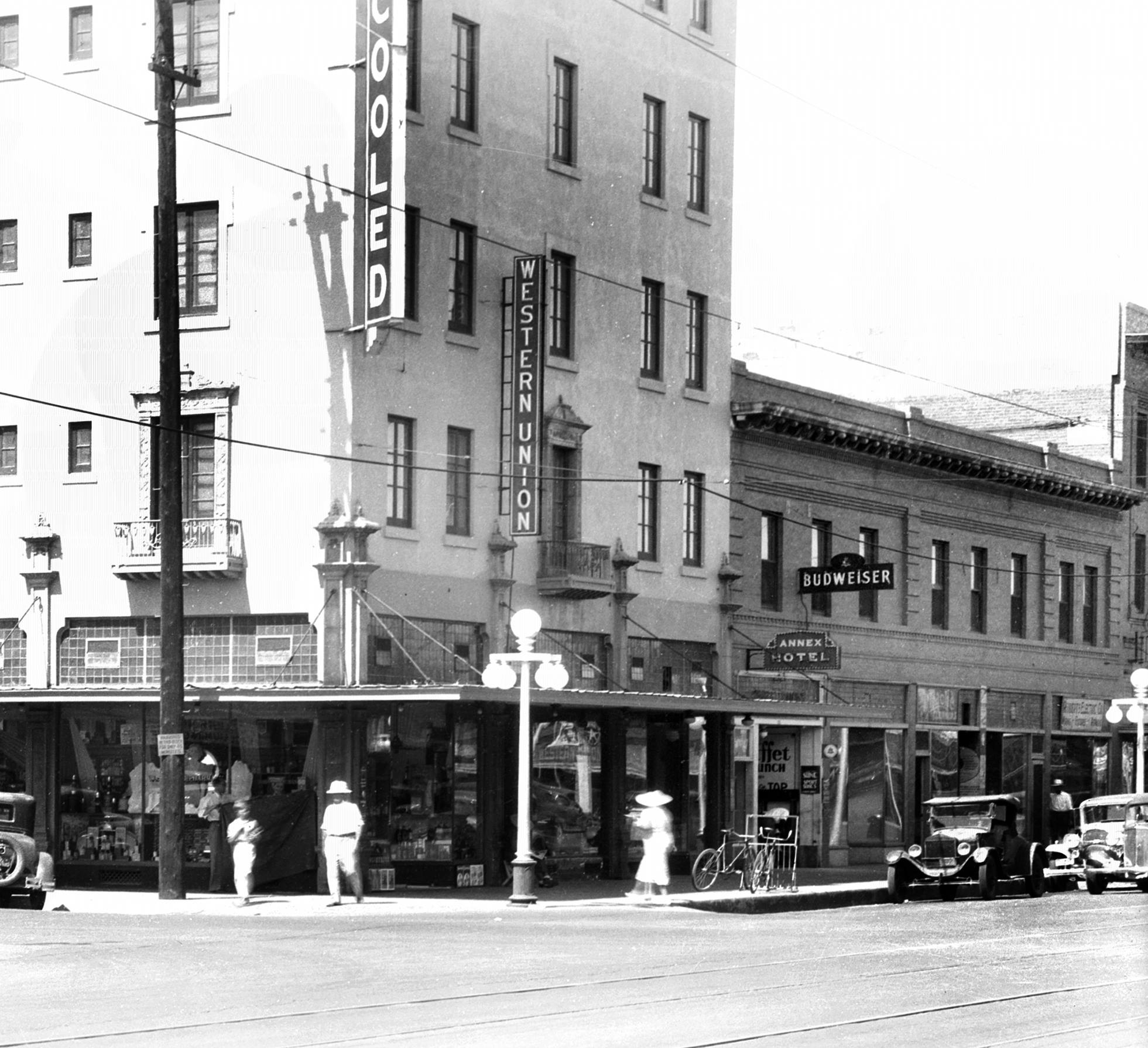
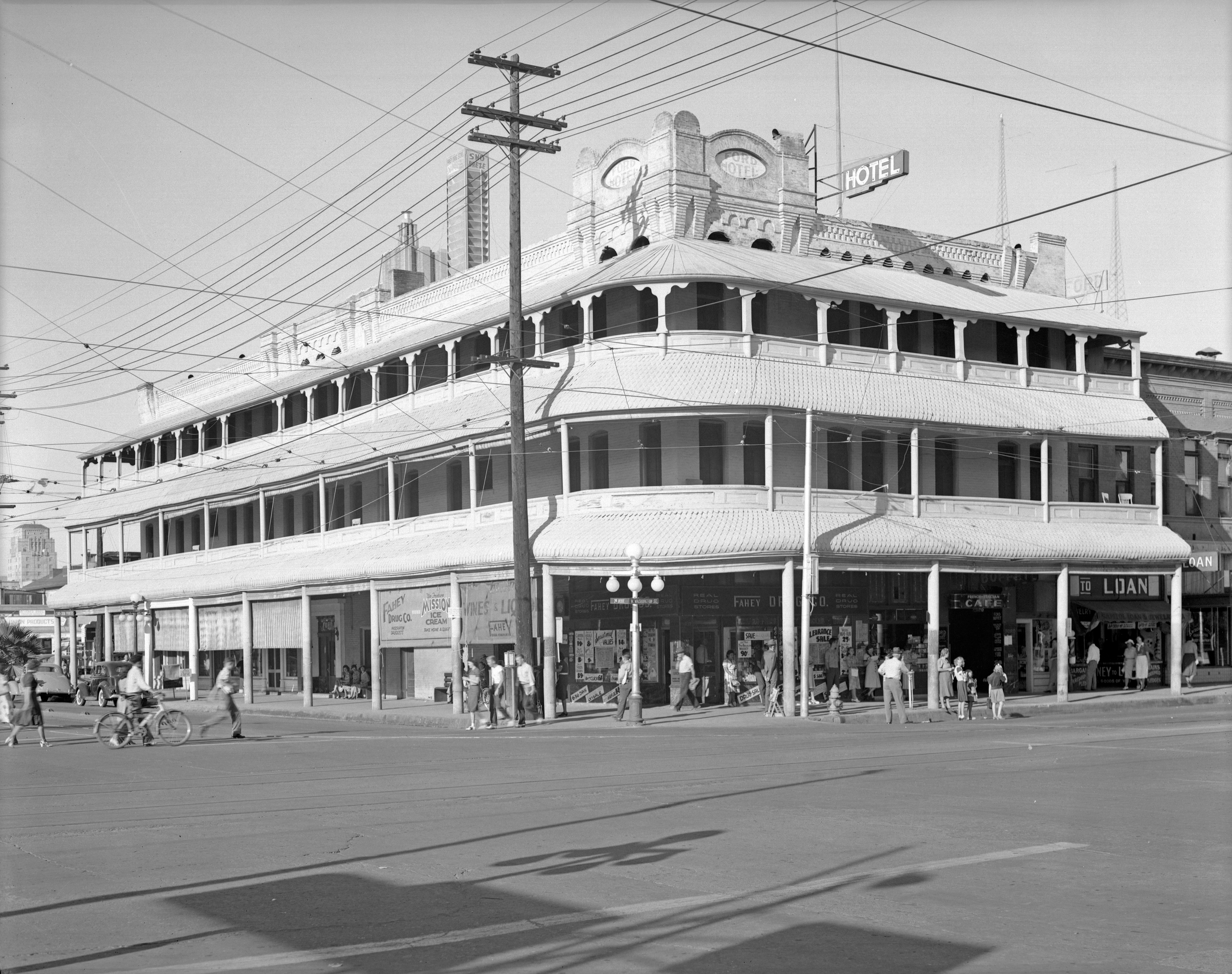
The 1896 Ford Hotel, designed by Phoenix architect William Norton, on the northeast corner of Washington and Second Avenue. It was torn down in 1969. When it was new, the Ford advertised Phoenix as having "the finest climate in the world" and promised "everything new and modern" and "hot and cold baths free." Below, the building in the 1930s (McCulloch Bros. Collection/ASU Archives).
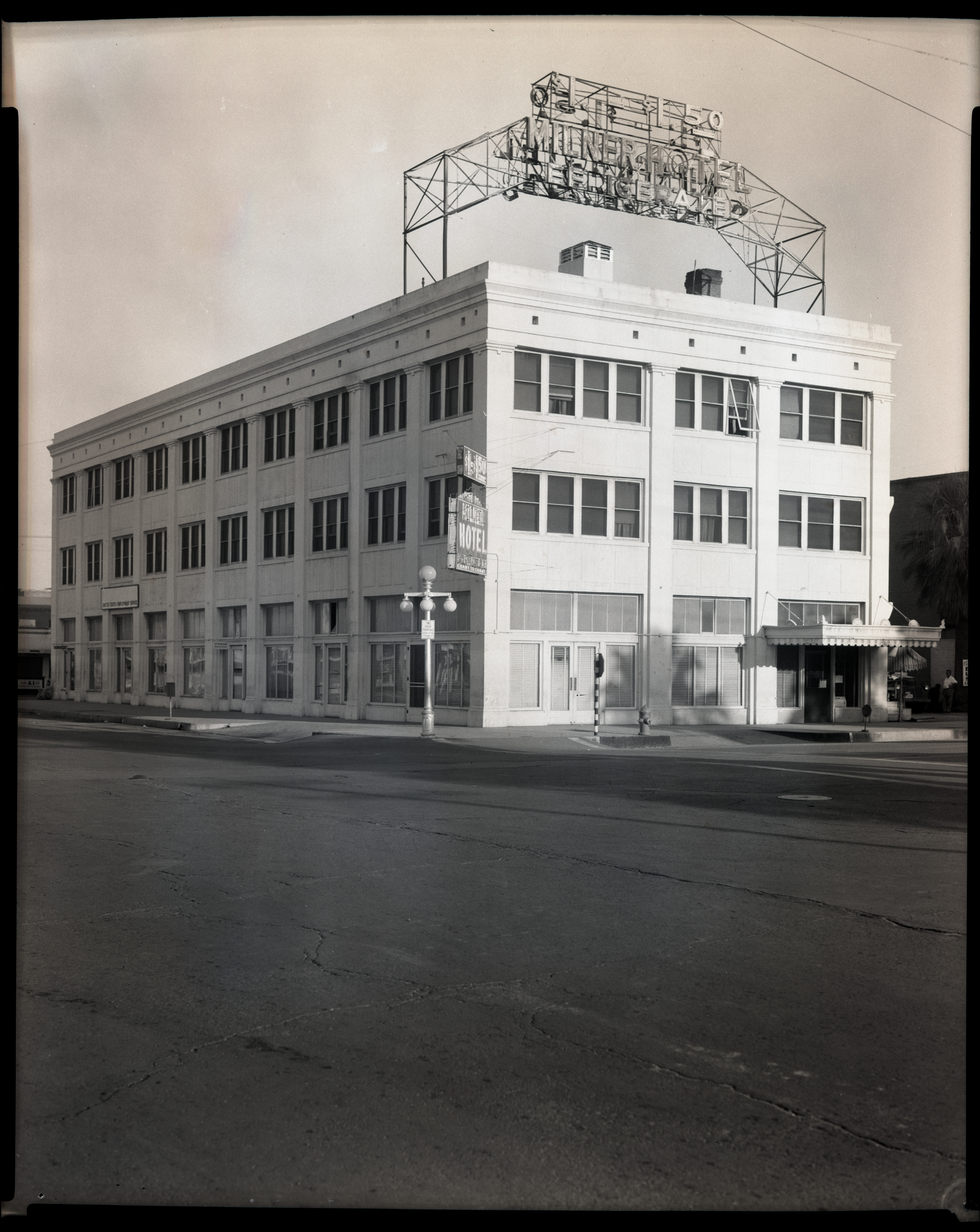
The Milner Hotel, located at 28 S. Second Avenue, seen in 1945 with a neon sign on the roof.
————
My book, A Brief History of Phoenix, is available to buy or order at your local independent bookstore, or from Amazon.
Read more Phoenix history in Rogue's Phoenix 101 archive.
Thank you for this wonderful piece on hotel history and architecture. Americans are slow learners on the need for historic preservation. But bright spots exist. The National Trust for Historic Preservation publishes the Historic Hotels of America guide. Many of the great, old and ambient hotels have been saved, and more restorations are added to the guide every year. My idea of a dream retirement would be to check out every one.
On Dec 12, 1964 a group of us students at ASU held a Christmas party at the Adams. At midnight, Dec 13, 1964, I turned 21 years old and walked into the bar and ordered my first “legal” alcoholic drink, as an adult.
In 1972 I participated in a pipe smoking contest held at the Adams and sponsored by the Phoenix Pipe Shop. I won the contest! and collected a $500 savings bond.
1973 I attended a Christmas party at the top of the Westward Ho, sponsored by radio station KXIV. I was advertising on Herb Johnson’s jazz show at the time.
When downtown Phoenix embalmed itself with inert government buildings and parking garages, it did so on the graves of buildings that supported and embellished human community. It’s why architecture obeyed rules like the golden ratio. It’s also why the buildings were not just objects but the living tissue of an organic life form. Downtown Phoenix was livelier in 1880 than it is in 2016 because we hadn’t set the price of personal mobility higher than community itself. It helped that the automobile hadn’t yet been invented, of course.
You can have a city or you can have car storage. It’s really difficult to have both. Even downtown Portland is seriously damaged this way – parking garages locked in mortal combat with great fabric buildings. And the toll on historic gems continues. There’s a Richardsonian edifice slated for destruction so another sterile hotel/office building combo can take its place, rendering one more square block alien to most organic urbanism. Even in Hipster, USA money swamps the conversation.
With as many empty lots in Phoenix,surely we could have saved the old historic buildings and still built whatever we thought was necessary.
I would note the tug is really between the value of an old, obsolete building that will require a lot of money, or a new building that will require a lot of money- then the question becomes what will the lender spring for- and that answer is almost always new. New has easy metrics, along with easy comps.
I say this as a member of a family that has owned and operated two motels that were restored on Route 66, and numerous historic houses that we owned and worked on.
Money, that evil item is often why historic properties are treated like slums in waiting, because that is what happens when the business that sustained them goes elsewhere- those grand hotels were utterly doomed when the freeways allowed movement past downtown by travelers, and the airport replaced the trains.
Gotta have the business- and if the only business is flop houses for worn out small room hotels, then flops are it. My neighboring motel properties routinely rented rooms as cheap as $20 a night right up to early 2000s, until they were remodeled by owners who got past the slumlord mentality. But it took a lot of money invested, and it took a lot of upgrading of the facilities.
So, in short, the trade makes the destiny of the commercial area- see Michael Pollack’s ability to rescue really skeevy strip malls and at least allow them to still operate at a minimum level of decency, while still making money.
Chris in denver: Hugh Laurie computer hacking.
https://en.wikipedia.org/wiki/Traitor%27s_Gate_(Spooks)
Chris I first skipped off into anther world on your question. I think above is the answer.
Concern Troll: Multi story hotels. you know what they say about letting your first born sons sleep on the roof. Better a one story motel on Route 66.
also
One of the Phoenix structures got sued by a bunch of attorneys for Asbestos exposure.
I hate to be the voice of dissent, but wouldn’t some of the older buildings downtown still be standing if downtown wasn’t abandoned by residents and visitors in the 1950s – 1970s for the “latest and greatest” being constructed on the then fringes of metro Phoenix? I see constant finger pointing at developers and politicians for the destruction of the “old” city. However, from reading numerous pieces on the decline of downtown, it seems that the developers and politicians just reacted to desires of residents and visitors to continue low density living marching out in all directions from downtown.
It makes no financial sense to keep older buildings standing when people have decided that these older buildings are worthless. The Fox Theater faced years of declining revenue before they wrecking ball was taken to it. As a relatively new Phoenix resident, I have to wonder why there was such little civic pride among the people who lived here at the time that they would allow downtown to get to such a bad state only to whine and moan decades later about what was “lost.” Luckily downtown seems to have a resurgence of energy, mainly due to people who have moved here in the past couple of decades who have injected new life into downtown and see value in what’s left and what is being constructed. Meanwhile I have coworkers who are natives of Phoenix who live in ten year old tract homes in Surprise and “east” Mesa who will openly admit to not having gone downtown in the past twenty years.
My Grandfather, James Walter Ellingson, worked at the Adams Hotel as a bellhop when it first opened. He came to Phoenix as a baby in the 1880s. His next job was as bagage master and Western Union delivery boy there in Phoenix.
You;re right about the flight to the suburbs….. I grew up in Scottsdale, (SHS ’59). But I remember those grand old hotels…..
Another great one, Jon!