
Even into the 1960s, the towns of the Salt River Valley were distinctive and separated from each other as well as from Phoenix. Let's take a photo tour (click for a larger image):
Glendale:
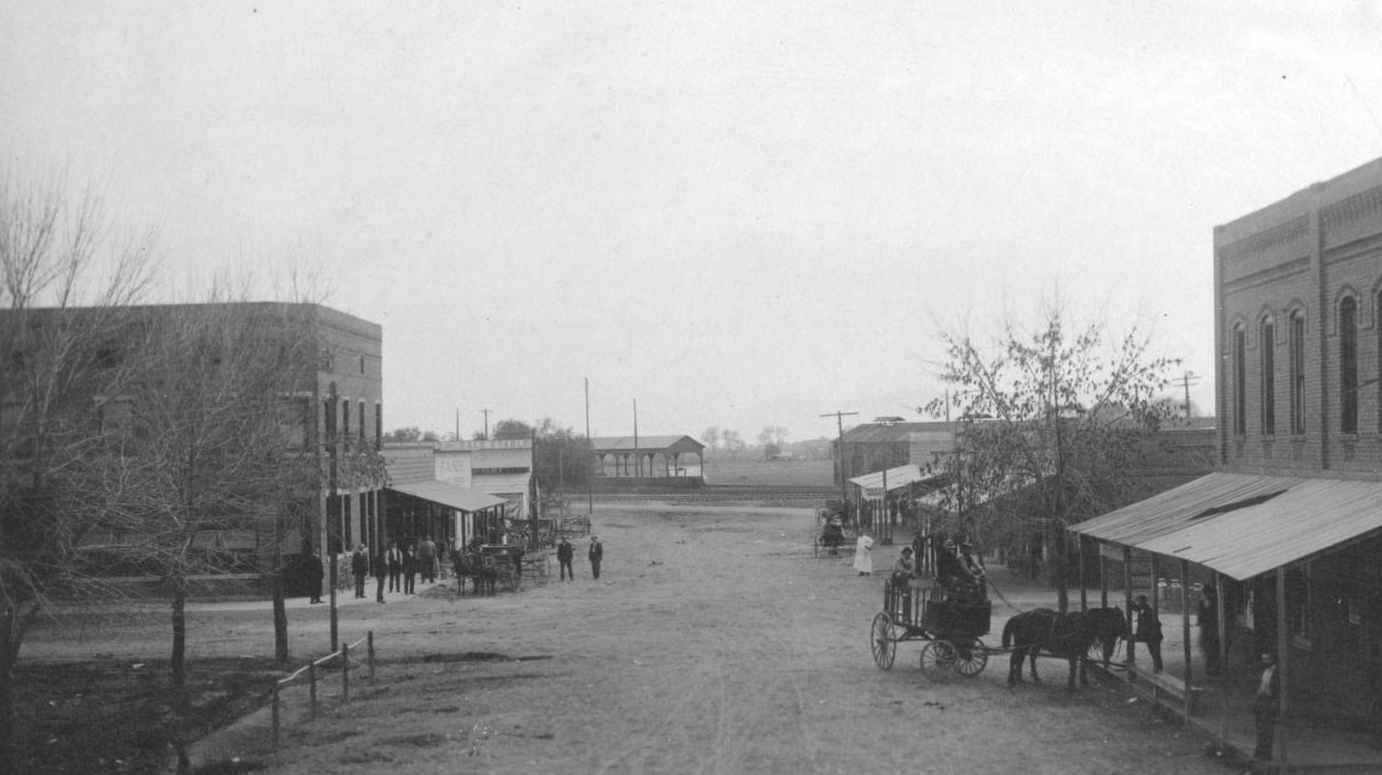
The Gillette Building at 58th Drive and First Avenue looking toward the Santa Fe Railway tracks and Grand Avenue in 1910 (McCulloch Bros. Collection/ASU Archives).
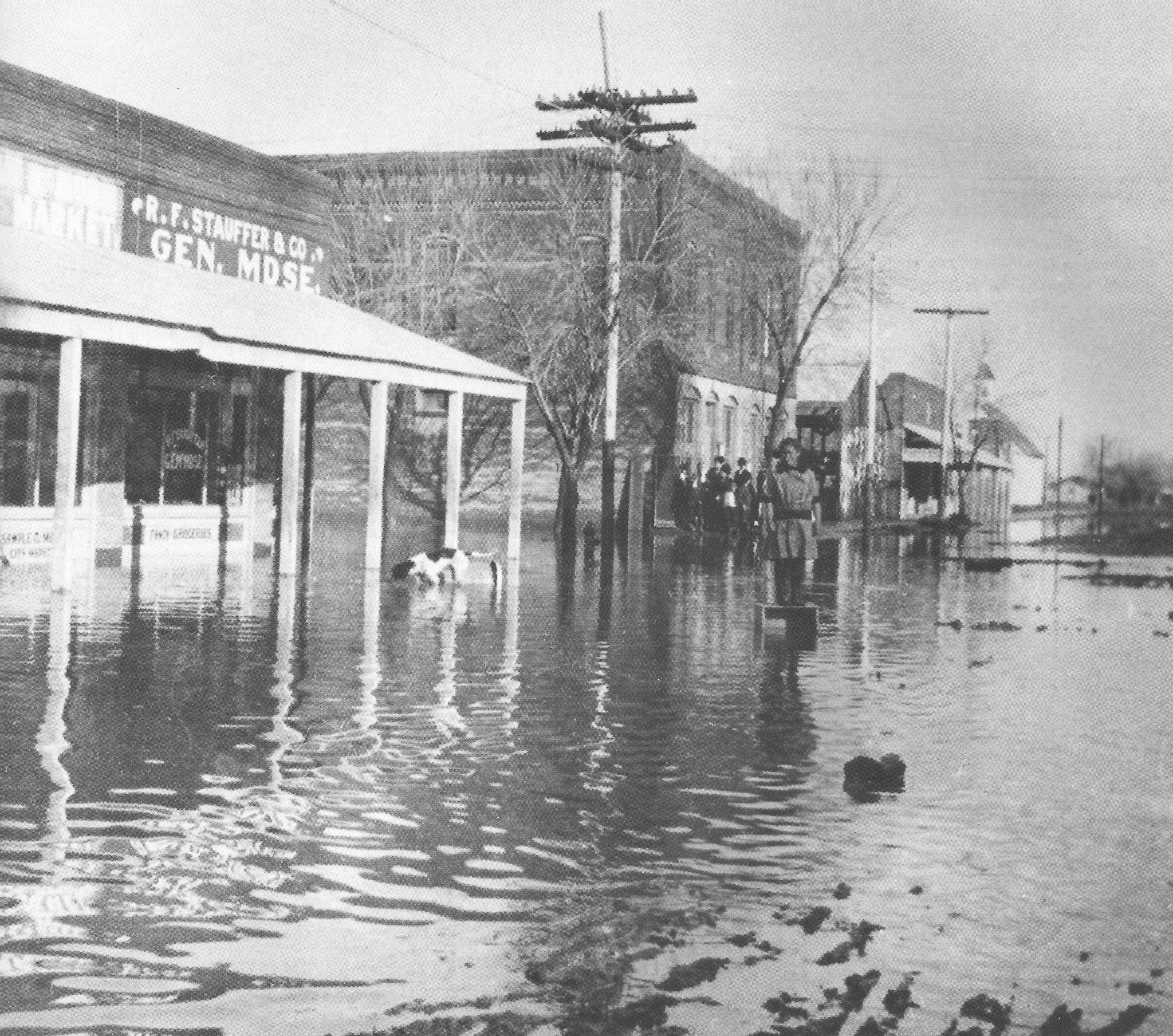
Glendale flooded in 1915 (McCulloch Bros. Collection/ASU Archives).
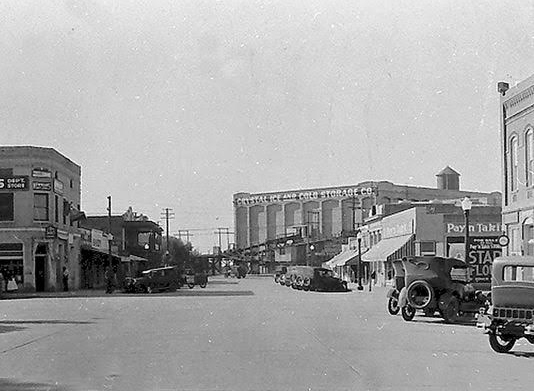
The same location in the 1920s (McCulloch Bros. Collection/ASU Archives).
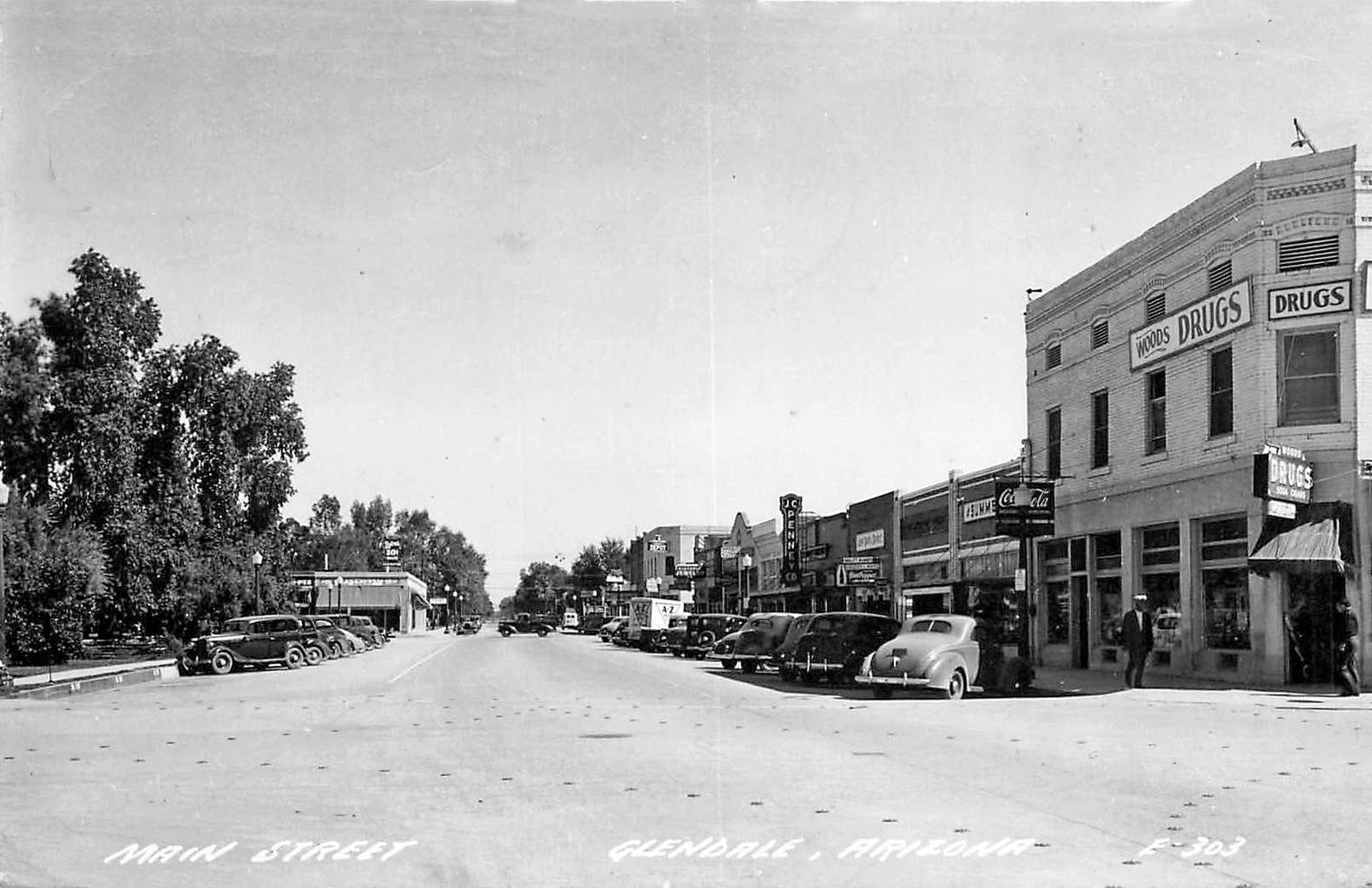
Main Street seen in the 1930s when the town's population was about 3,700 (McCulloch Bros. Collection/ASU Archives).
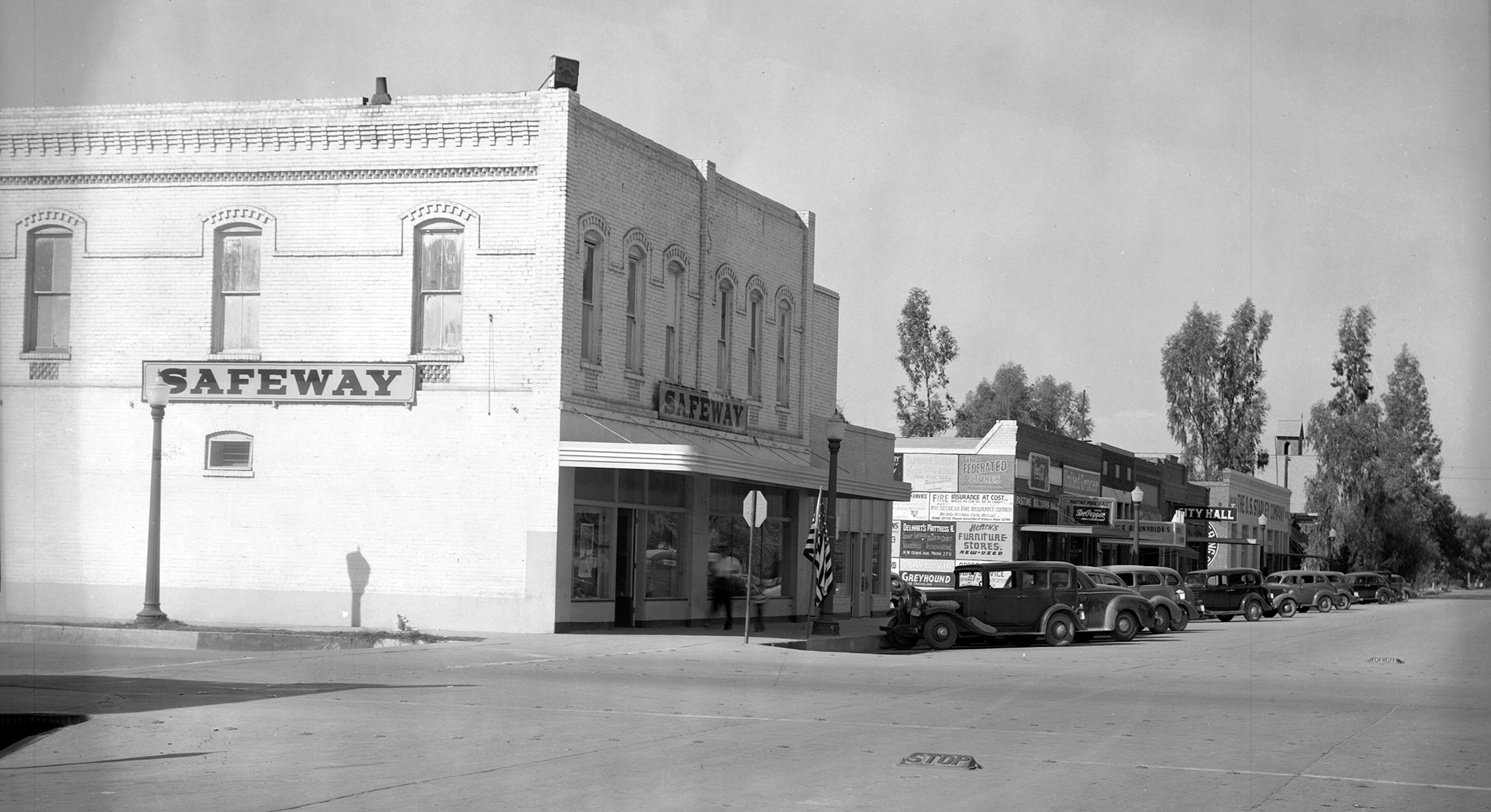
Looking north on 58th Drive, including Safeway, the Plaza Theater, and city hall in 1942 (McCulloch Bros. Collection/ASU Archives).
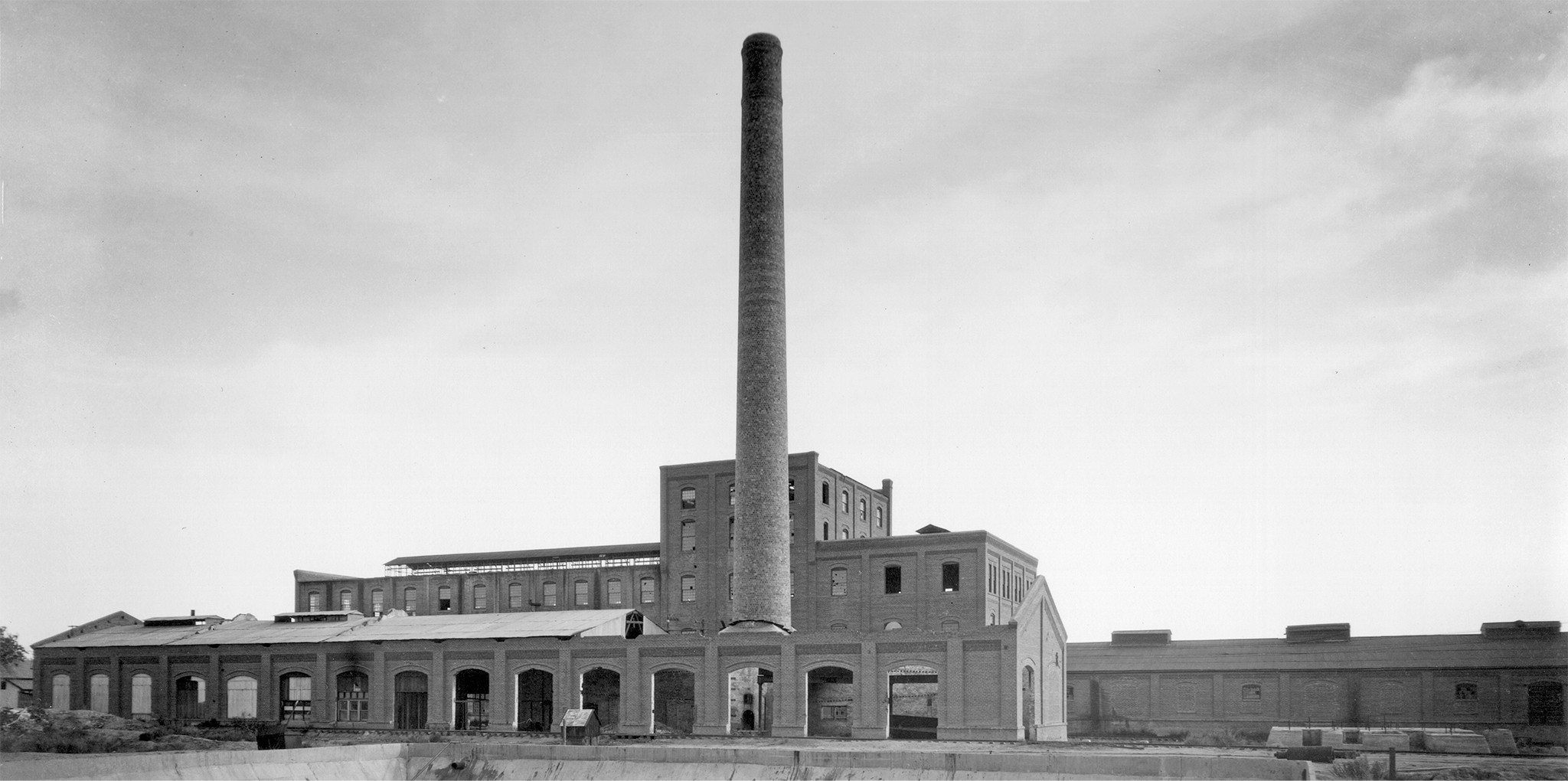
The sugar beet factory circa 1940 (McCulloch Bros. Collection/ASU Archives).
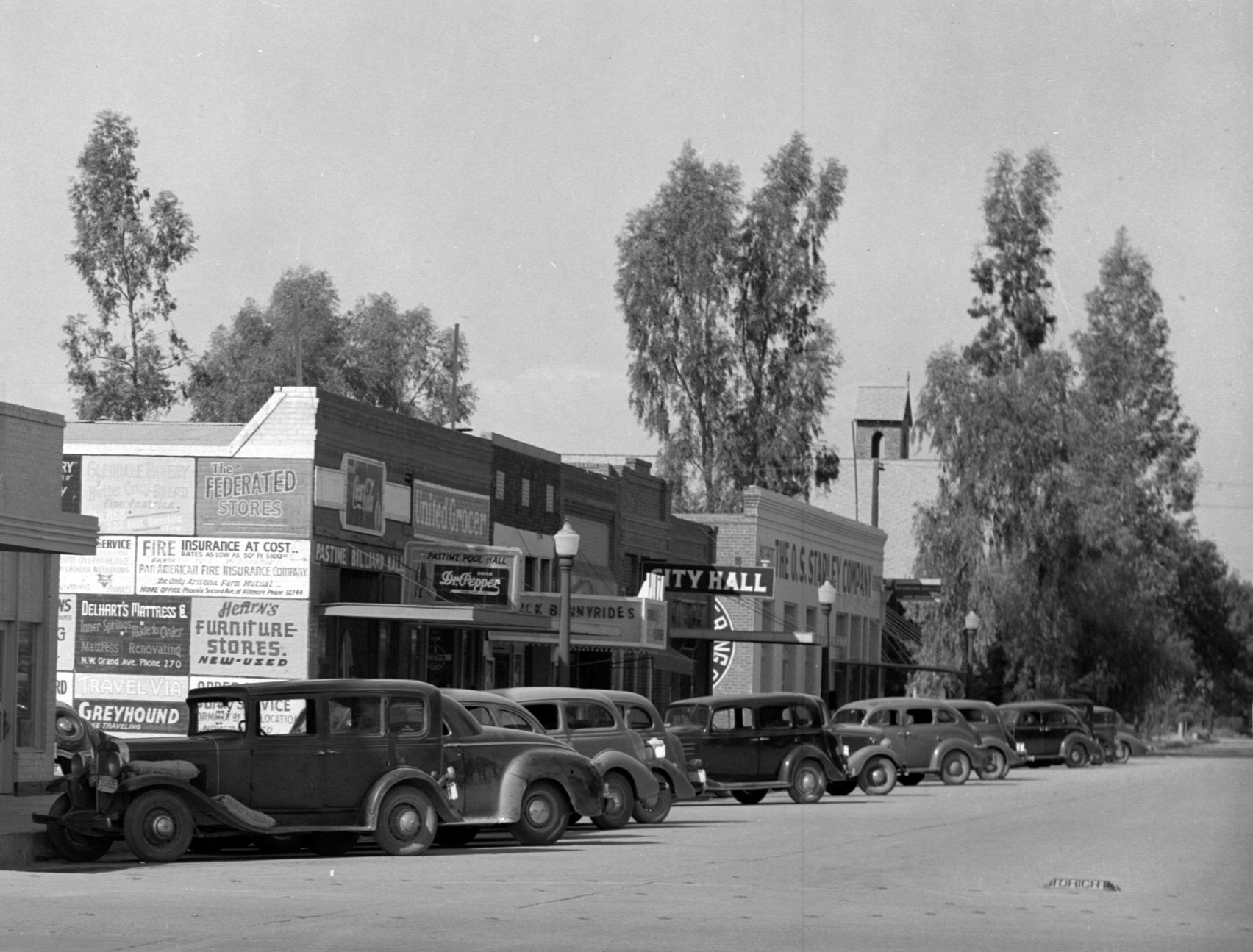
First Avenue (58th Drive) looking north (McCulloch Bros. Collection/ASU Archives).
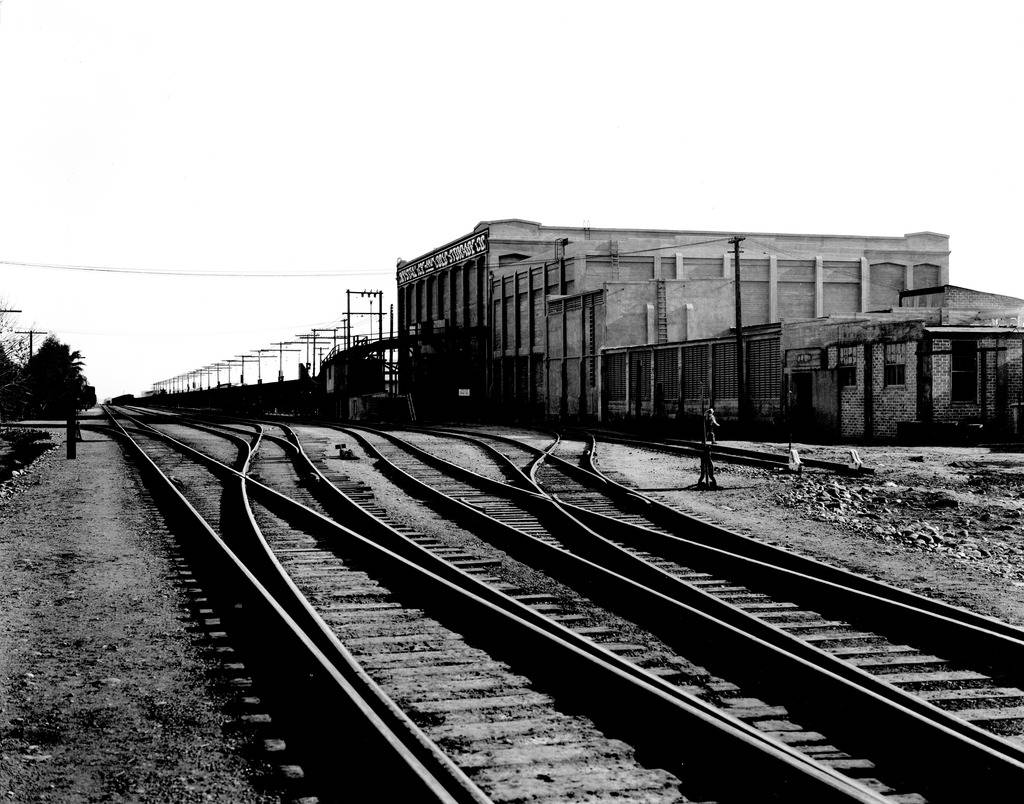
The Crystal Ice main building and icing platform where workers slid ice into refrigerated boxcars. It was located on the Santa Fe Railway on the west side of Grand Avenue (McCulloch Bros. Collection/ASU Archives).
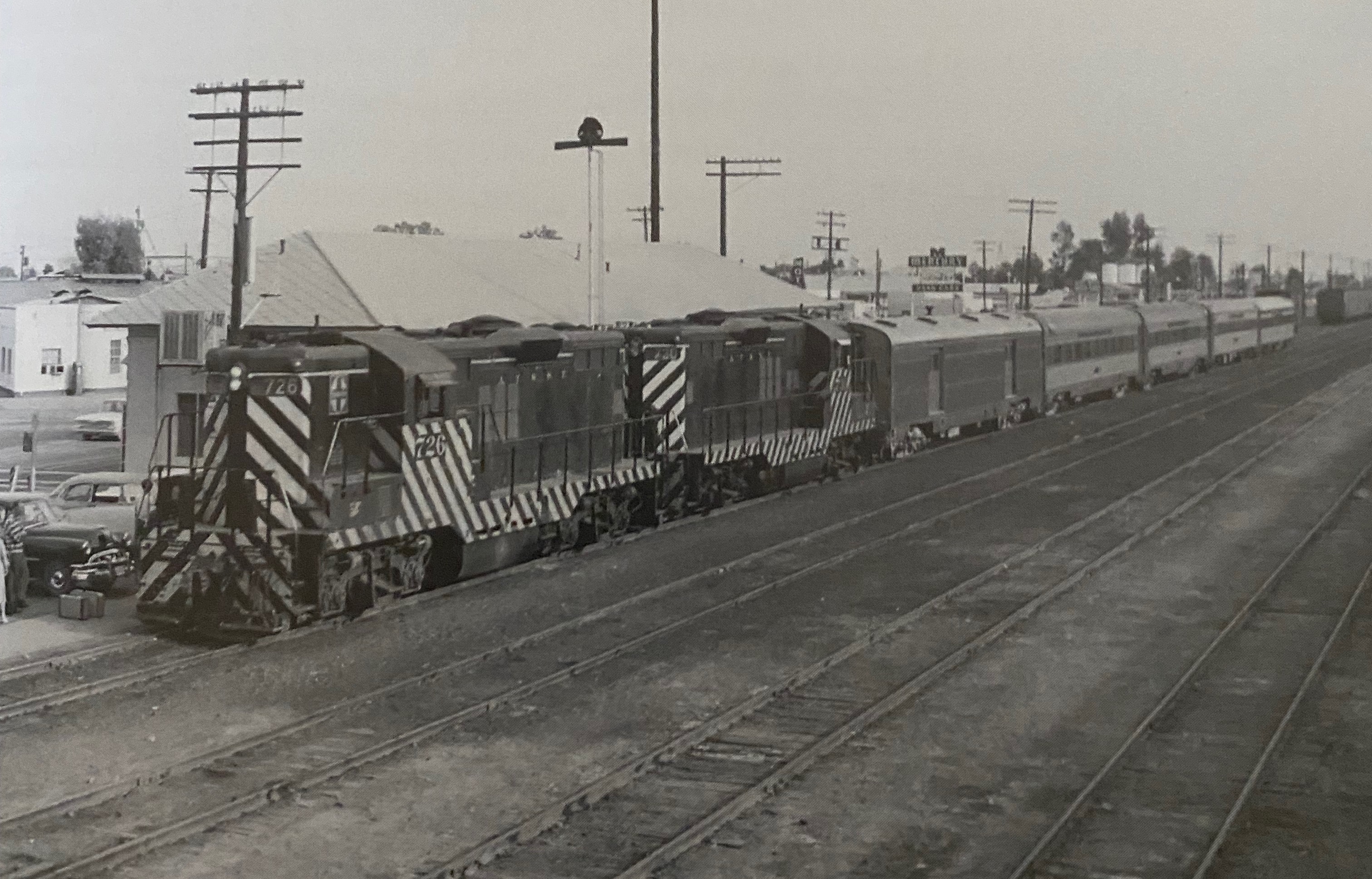
Santa Fe train No. 49 stops at the old Glendale passenger depot in 1960 on its way to Williams Junction. It's probably winter, when the train carried a diner and Pullman (Bob Knoll photograph).
Tempe:
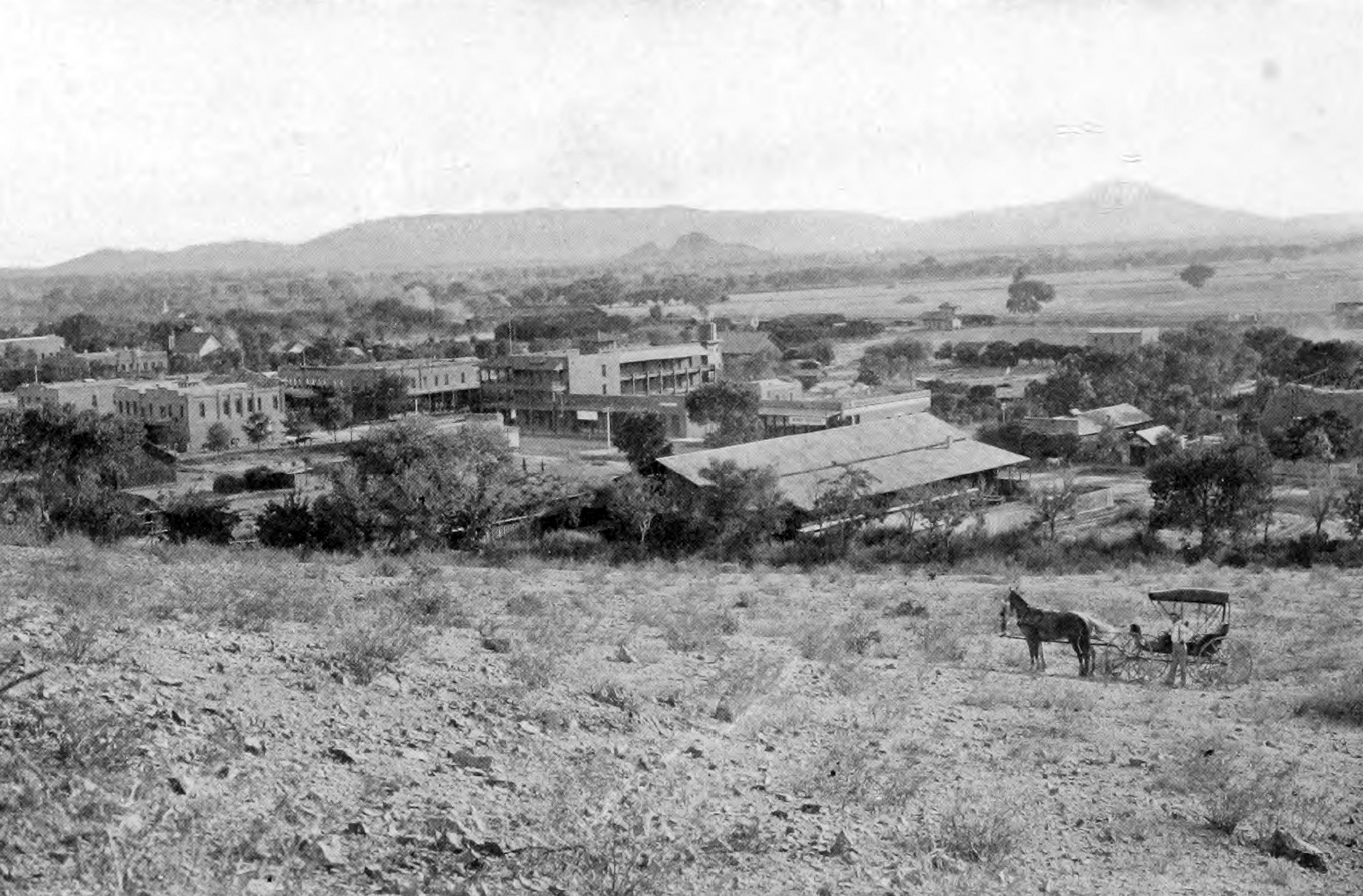
Tempe in 1901, seen from the butte (Photographer unknown).
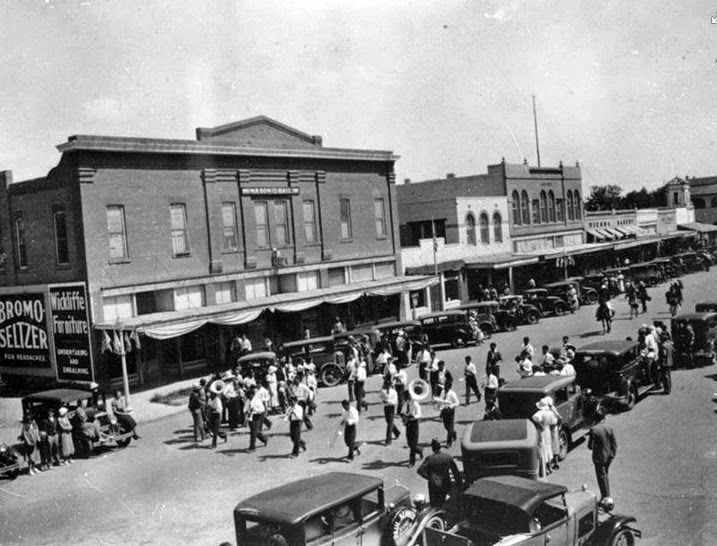
Mill Avenue looking at the Andre Building in the 1920s (Tempe History Museum).
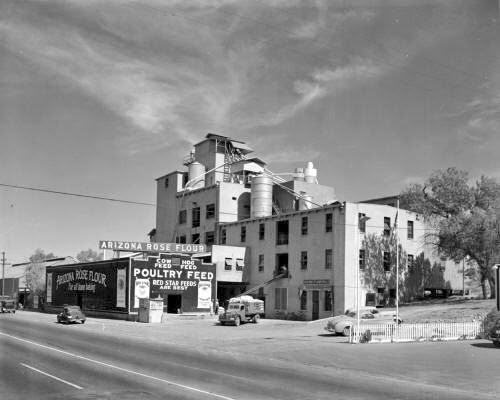
The Hayden Flour Mill circa 1935 (Photographer unknown).
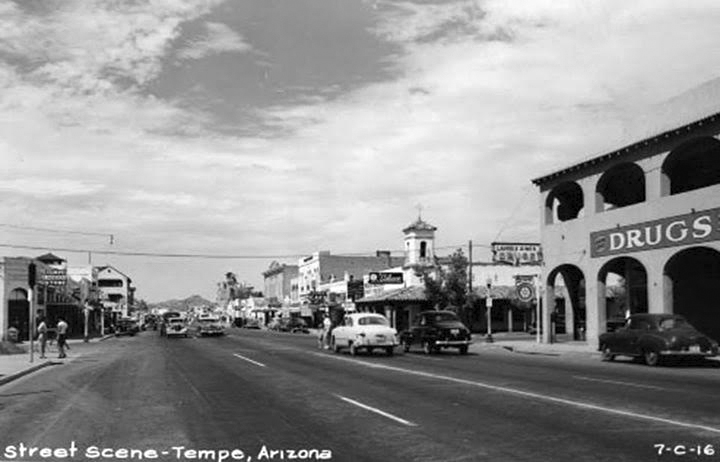
Mill Avenue in the 1940s (Photographer unknown).
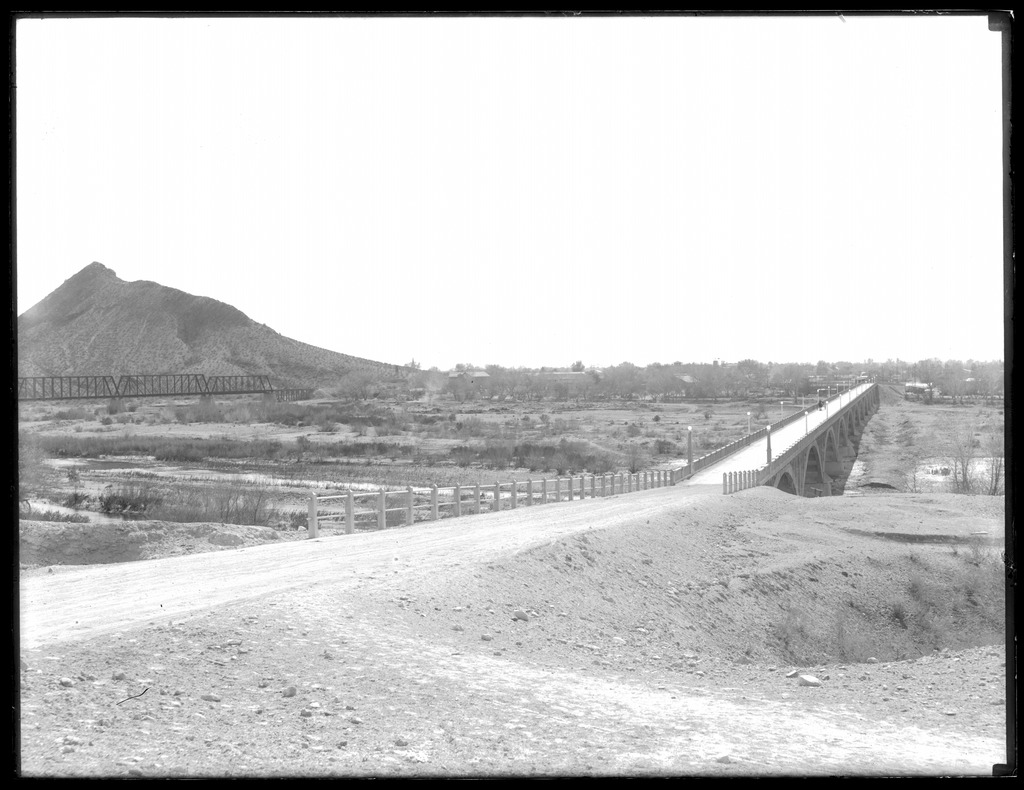
The Ash Avenue Bridge and, left, the Southern Pacific Railroad bridge over the Salt River (McCulloch Bros. Collection/ASU Archives).
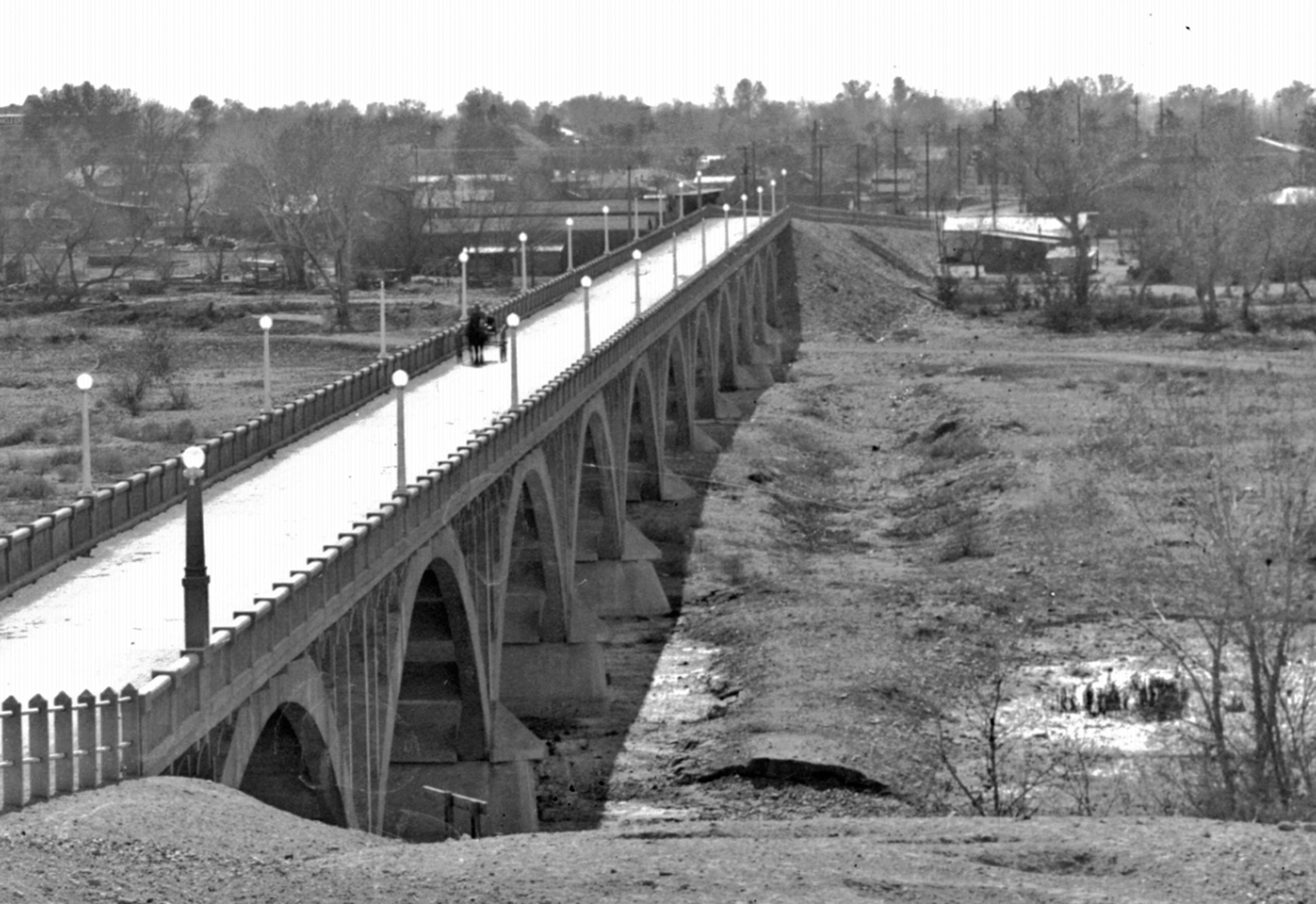
A horse and buggy cross the Ash Avenue Bridge in 1913. After the SP Railroad bridge in Tempe and Center Street Bridge in Phoenix, this was the third bridge across the Salt River (Tempe History Museum).
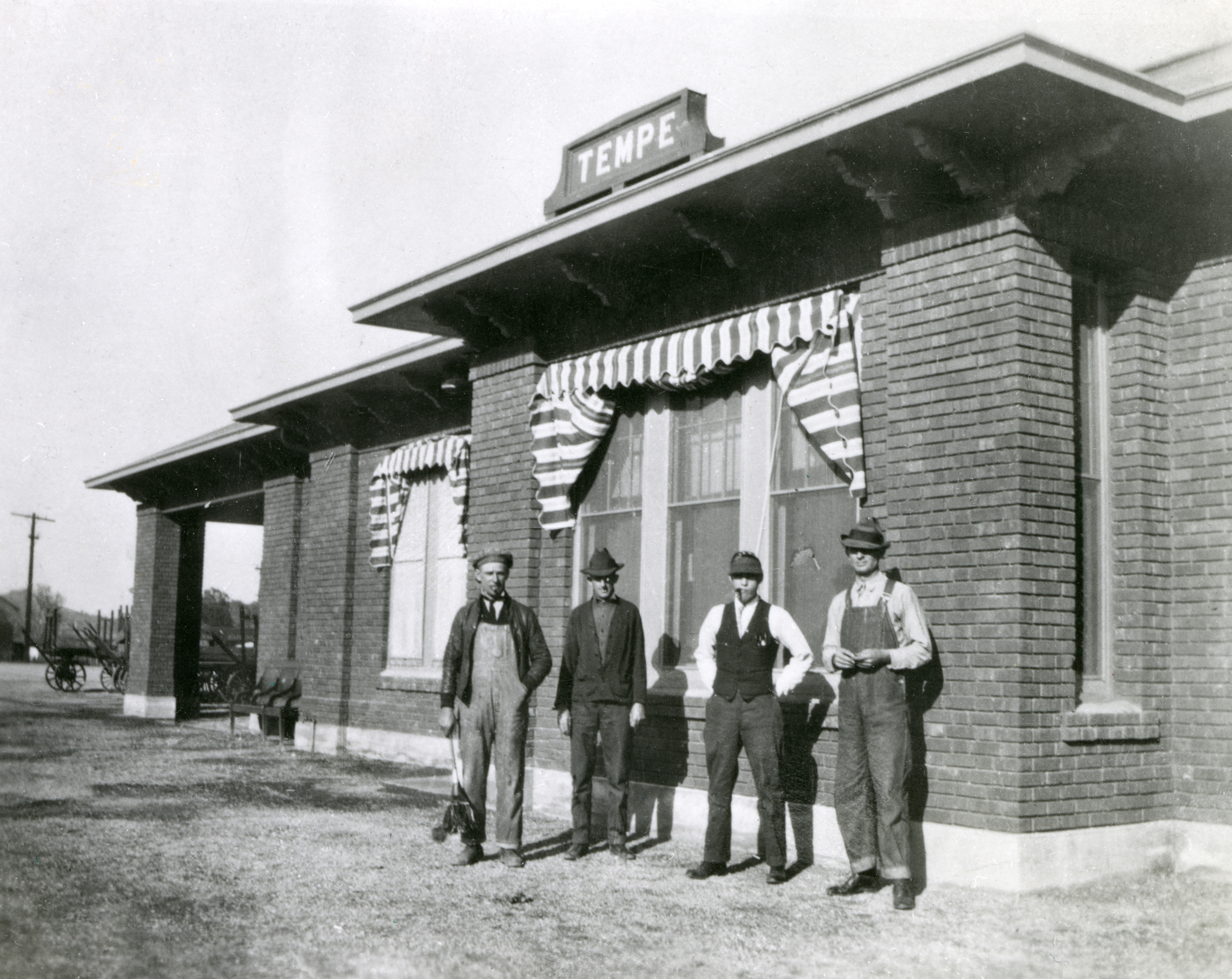
Tempe Southern Pacific Depot (Tempe History Museum).
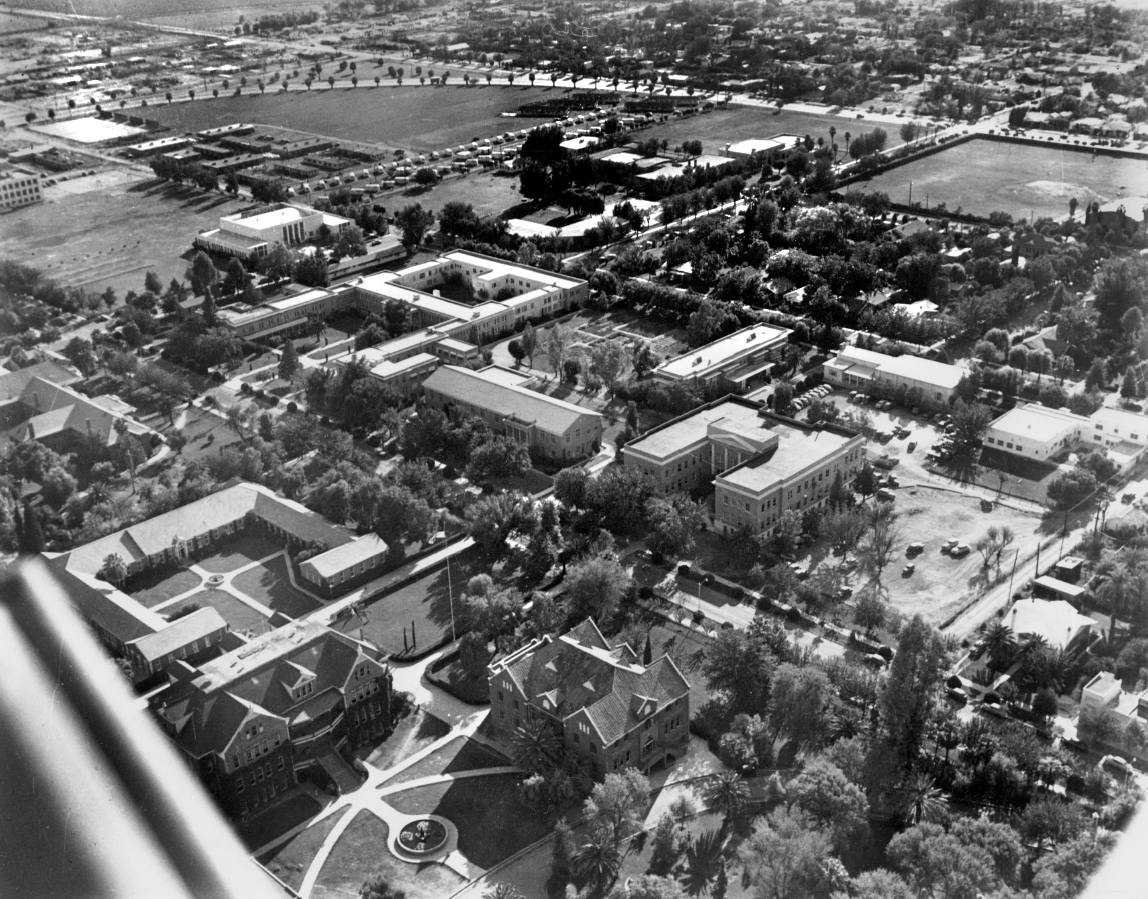
Arizona State College overhead in 1950.
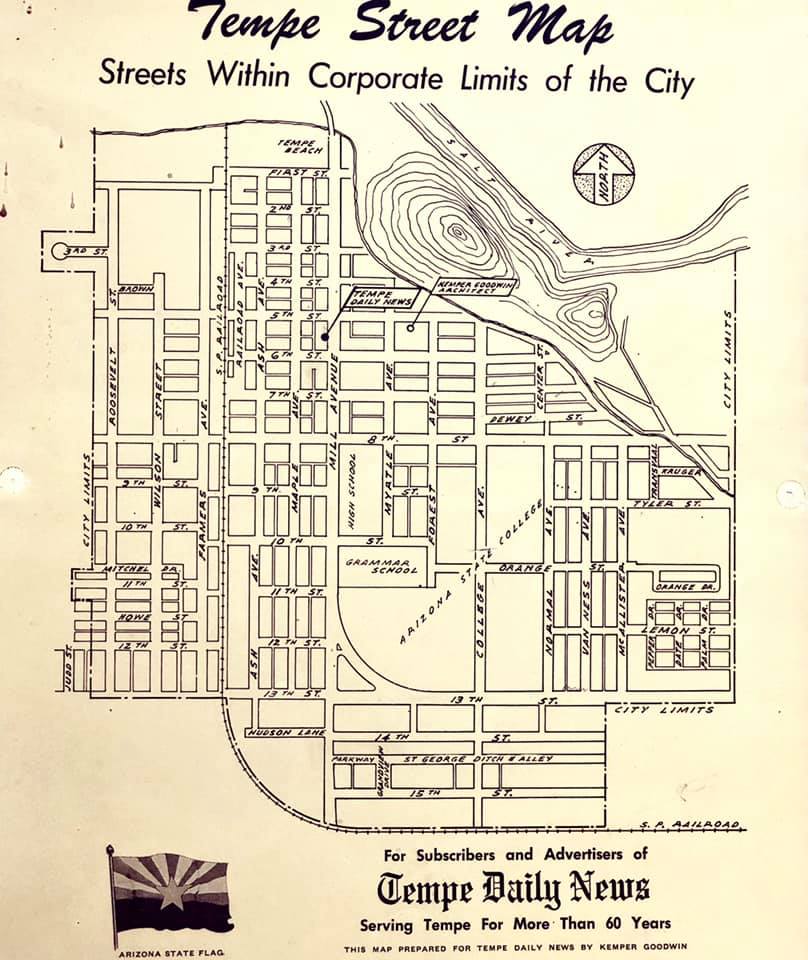
A Tempe map in 1950: A small, compact college town (Tempe History Museum).
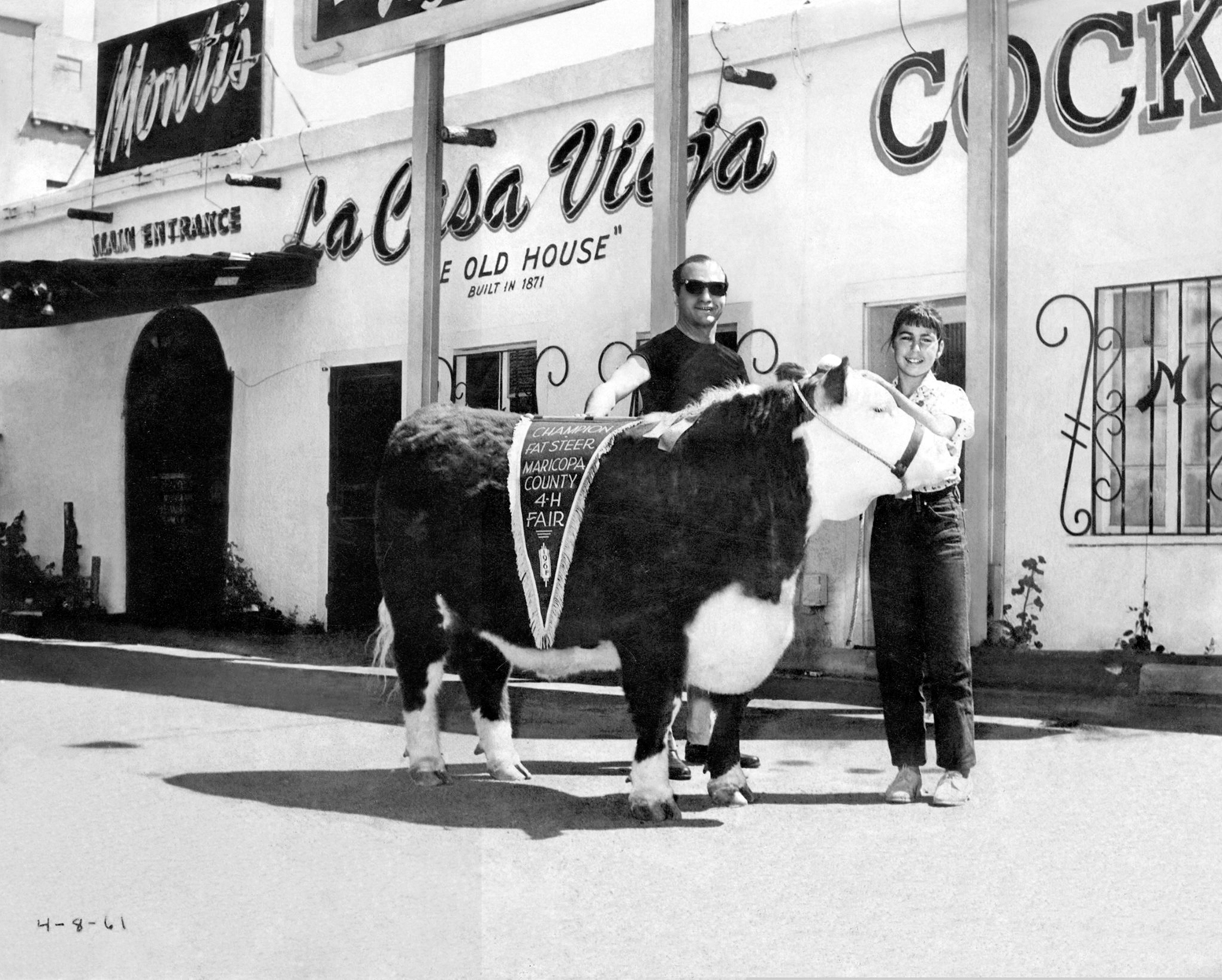
Leonard Monti at Monti's La Casa Vieja in 1961 (Brad Hall collection, photographer unknown).
Mesa:
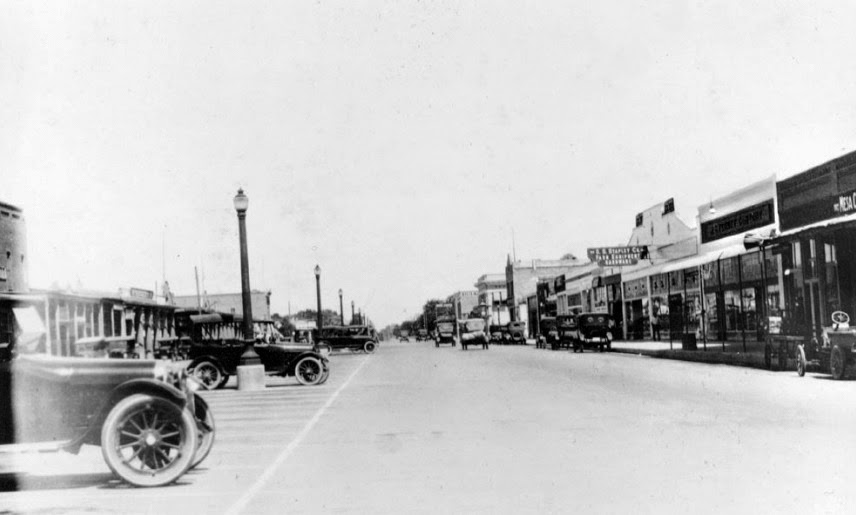
Main Street and MacDonald in the 1920s (McCulloch Bros. Collection/ASU Archives).
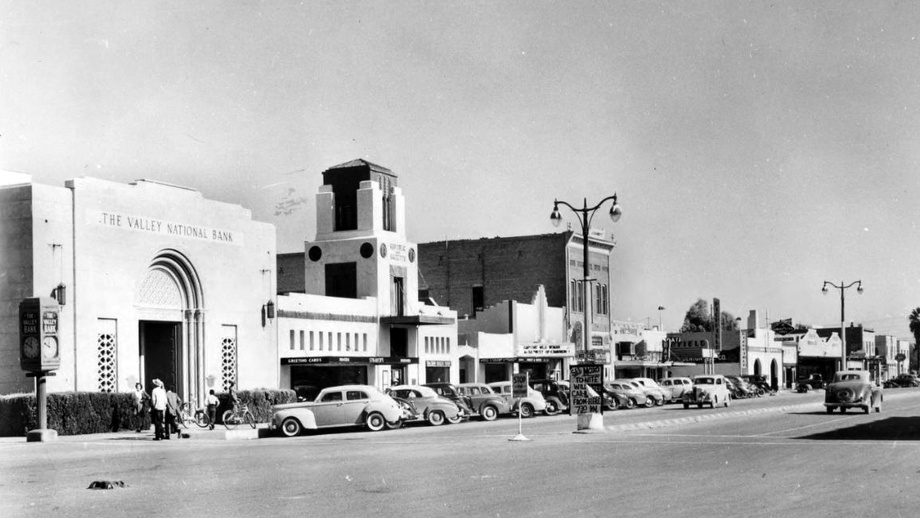
Around the same location in the 1940s (McCulloch Bros. Collection/ASU Archives).
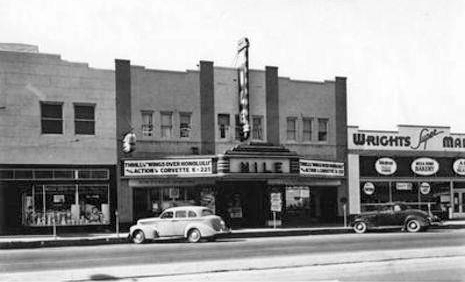
The Nile Theater on Main Street in the 1940s (McCulloch Bros. Collection/ASU Archives).
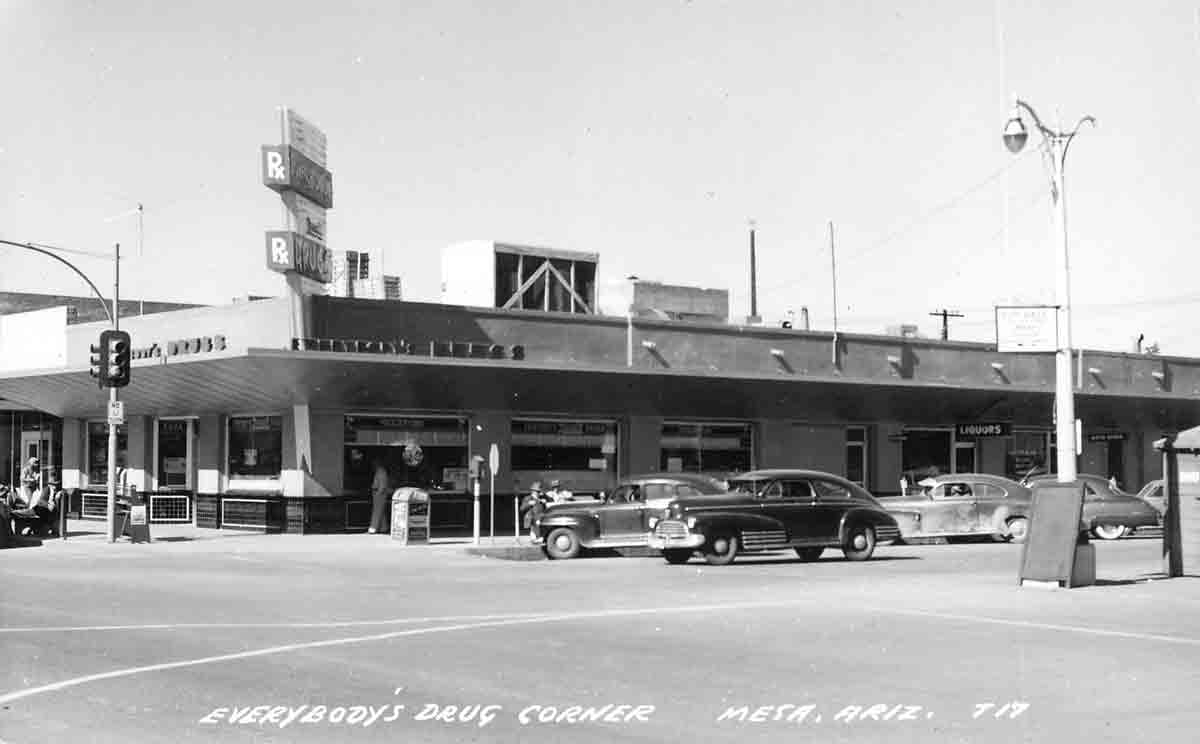
Everybody’s Drugs on Main Street (Brad Hall collection, photographer unknown).
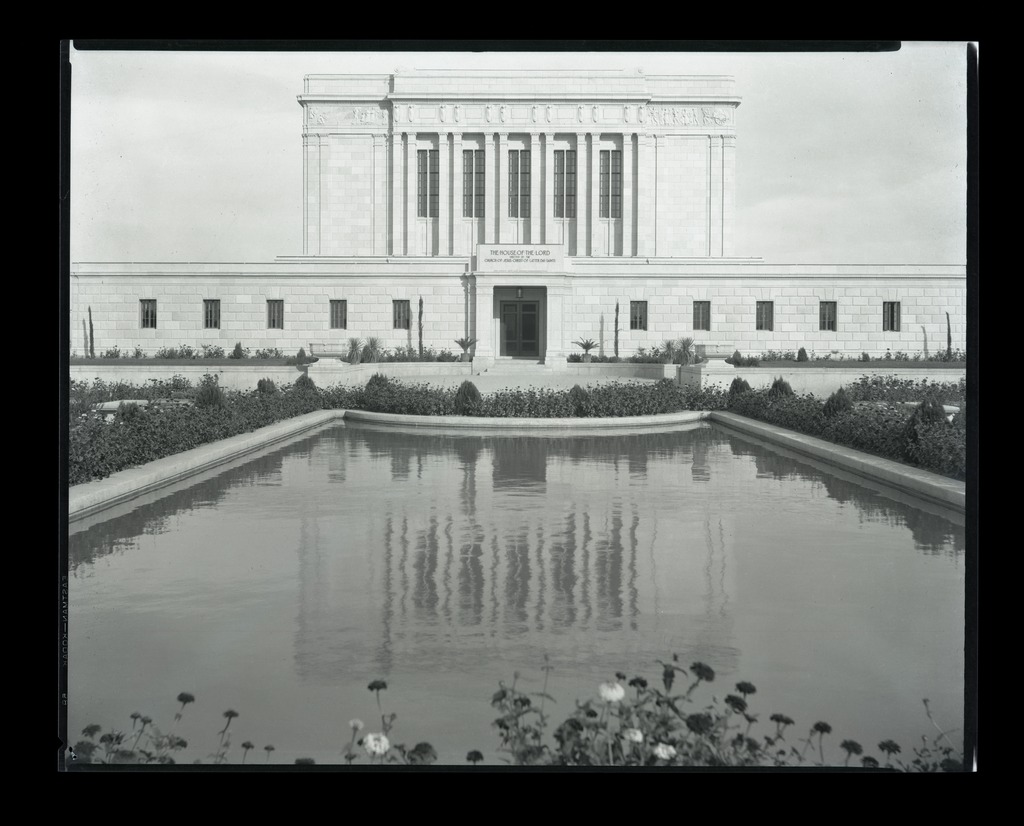
The Arizona Temple of the Church of Jesus Christ of Latter-day Saints in 1940 (McCulloch Bros. Collection/ASU Archives).
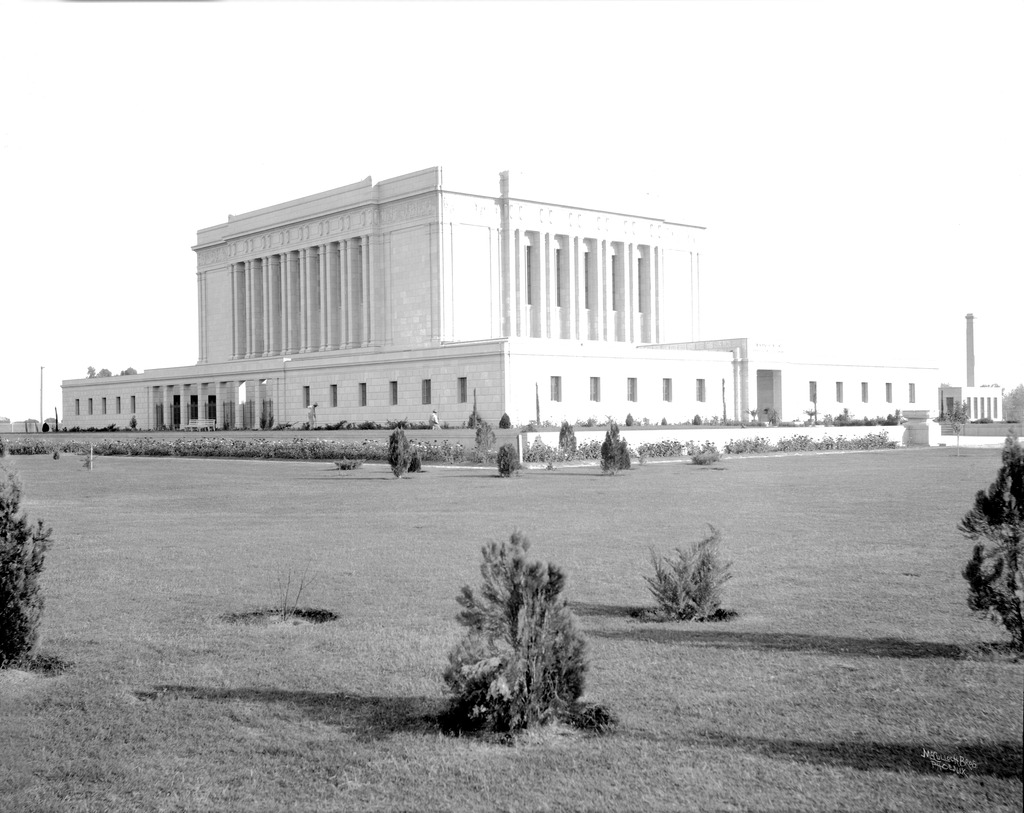
Another angle of the Temple (McCulloch Bros. Collection/ASU Archives).
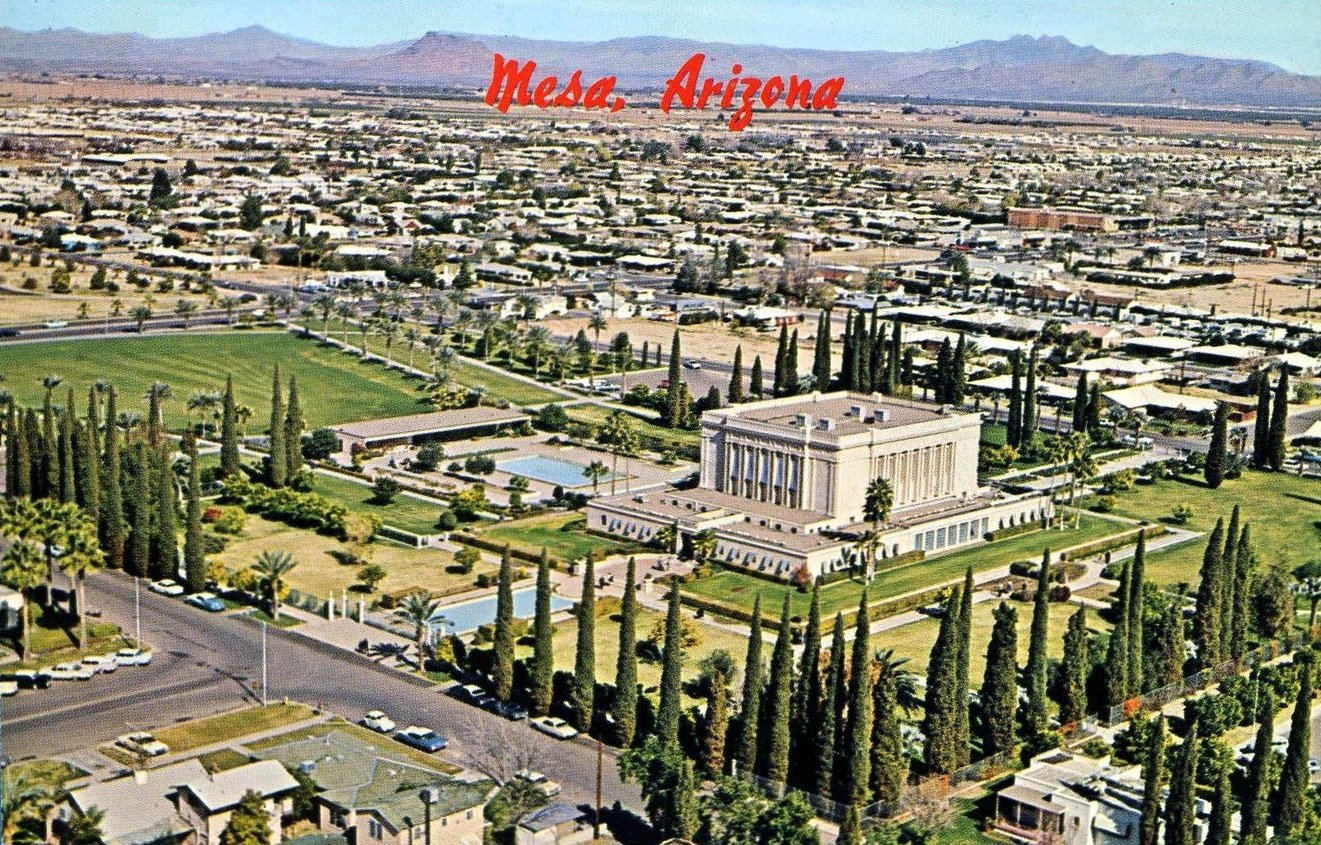
The Arizona Temple in the 1950s, from a postcard (Brad Hall collection).
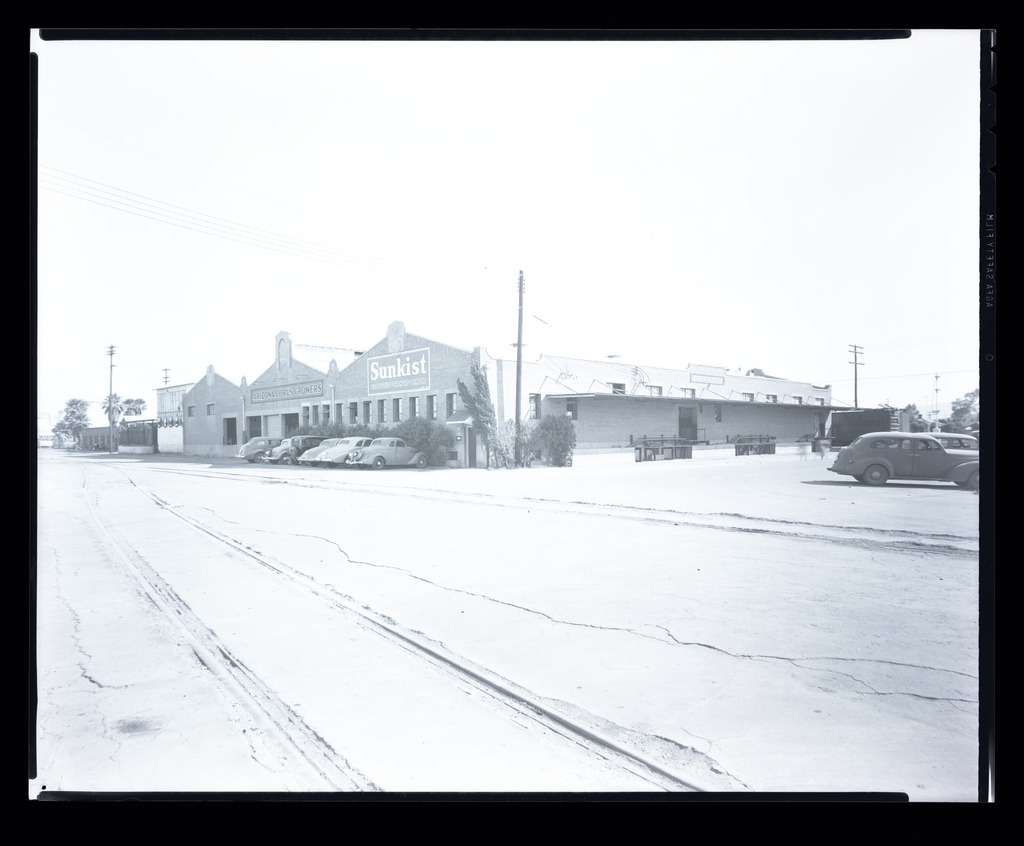
The Sunkist citrus packing plant in Mesa, 1940 (McCulloch Bros. Collection/ASU Archives).
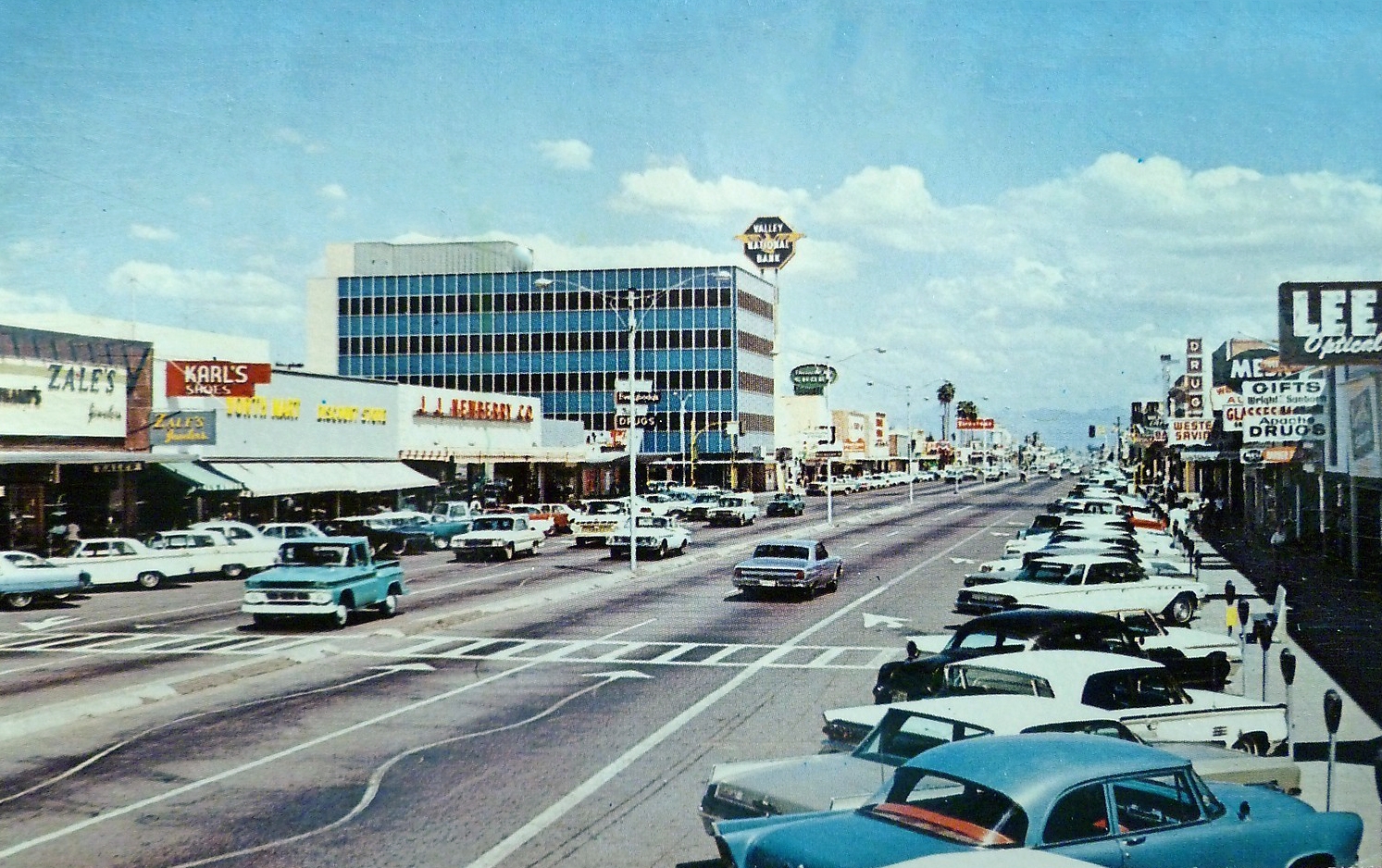
Downtown Mesa, thriving before the Superstition Freeway and malls, in 1960 (Brad Hall collection, photographer unknown).
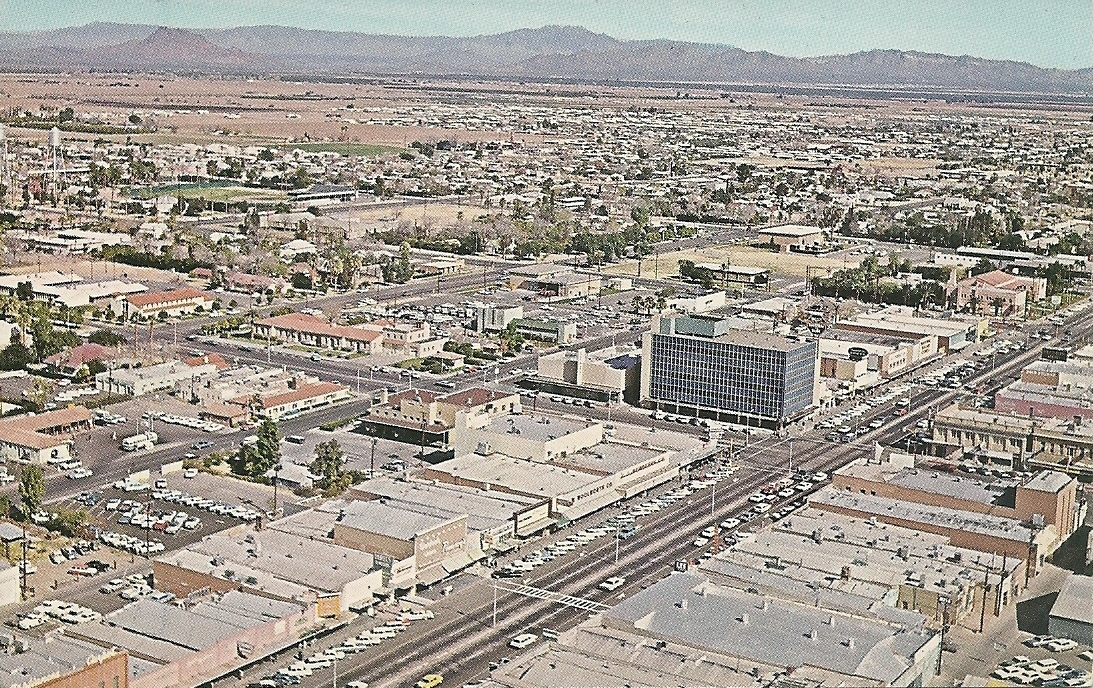
An overhead of Main Street and Mesa was still compact with citrus groves to the east. In 1960, the population was 33,772 (photographer unknown).
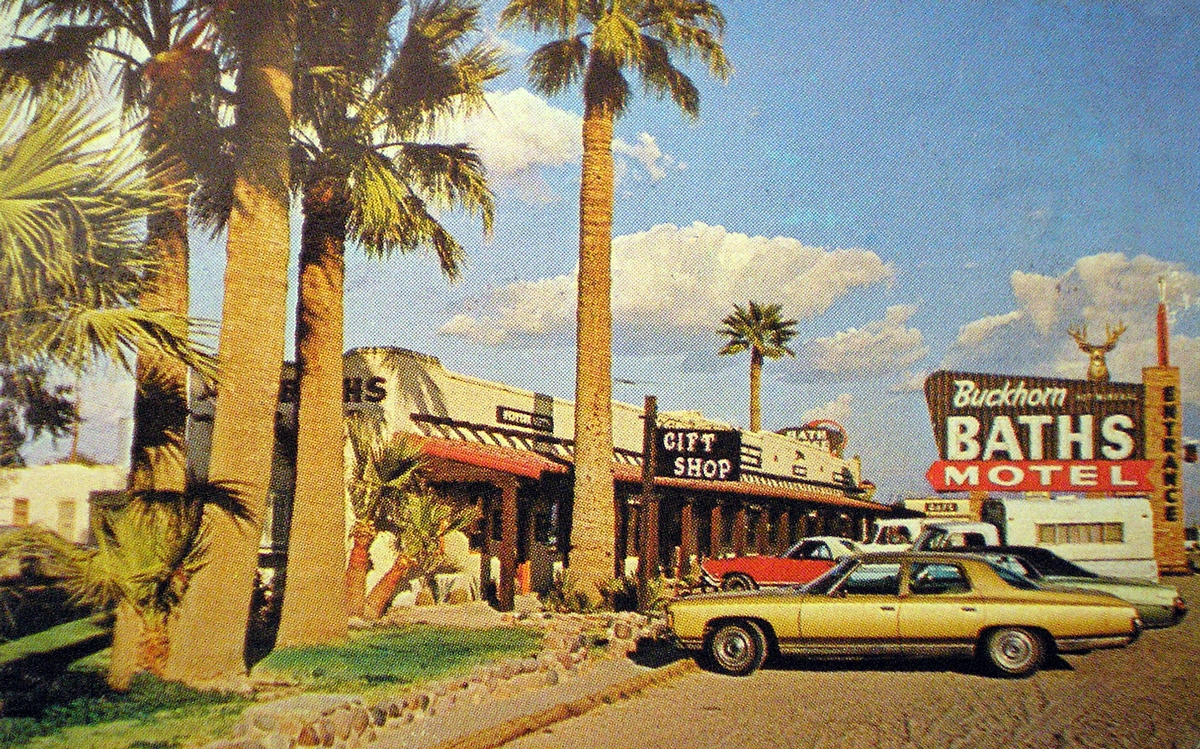
Mesa's famous Buckhorn Baths on east Main Street in the 1960s. Beginning in 1936 as a gas station and store, Ted and Alice Sliger developed the property into a resort which opened in 1939. It continued to operate until 1999 (Brad Hall collection, photographer unknown).
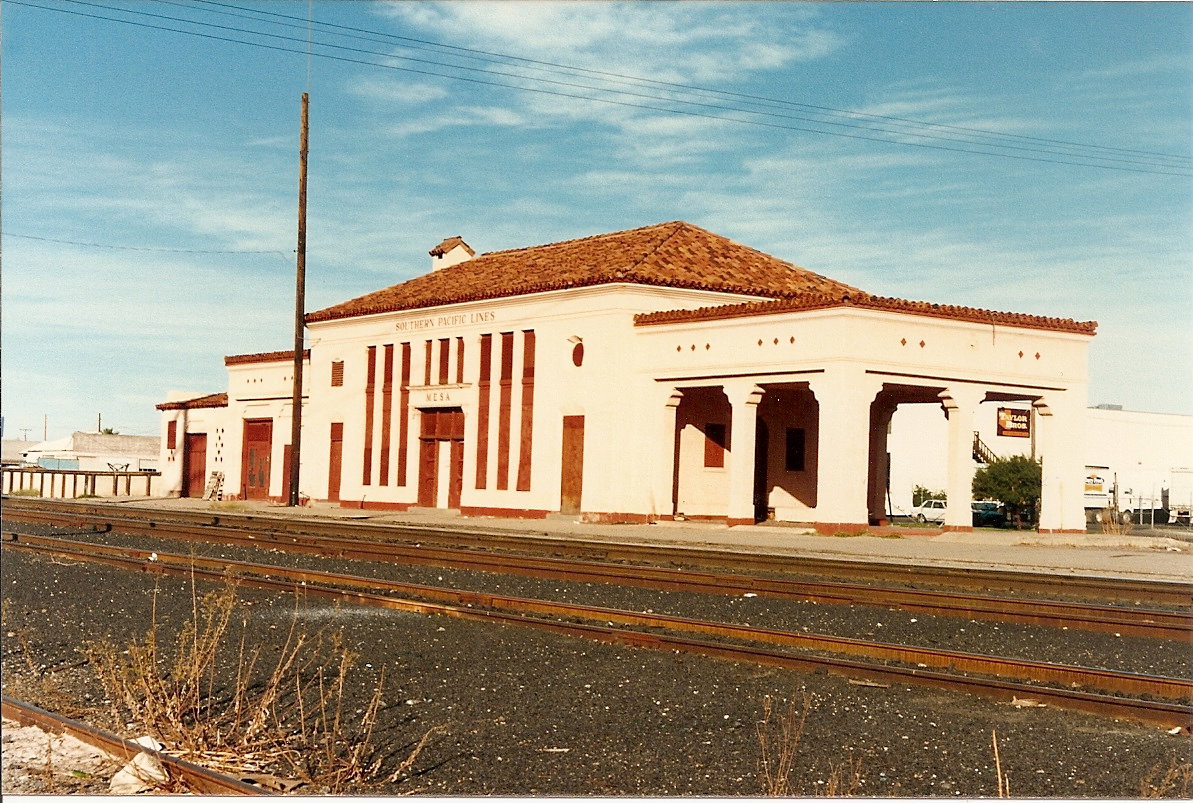
The handsome Mesa Southern Pacific depot (Joe Schallan photograph).
Gilbert:
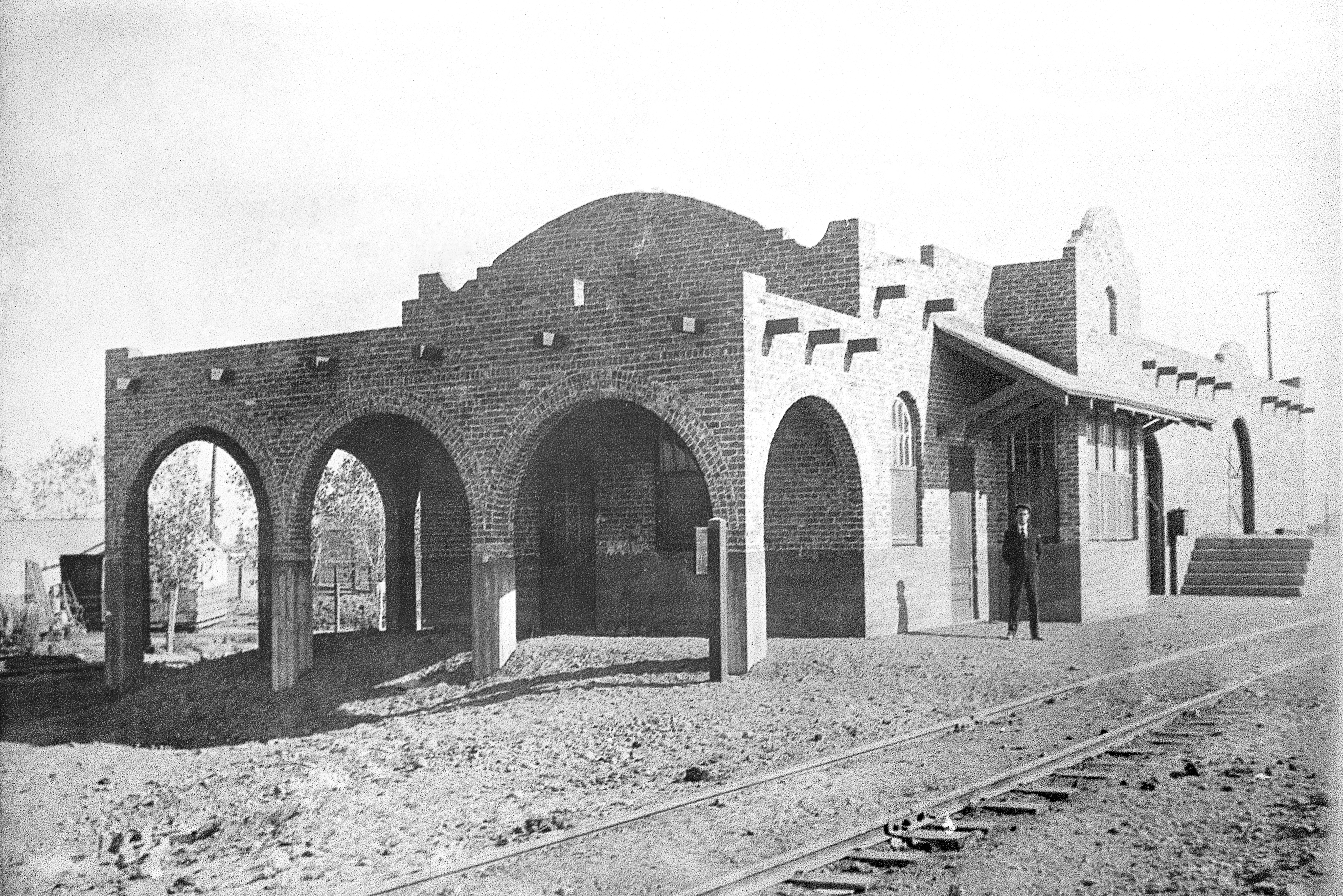
The Gilbert SP depot, completed in 1905. By 1920, the population was 865 (photographer unknown).
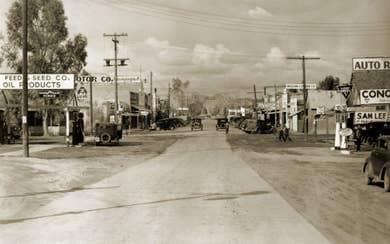
Gilbert Road. The town owes its name to William "Bobby" Gilbert (Gilbert Historical Museum).
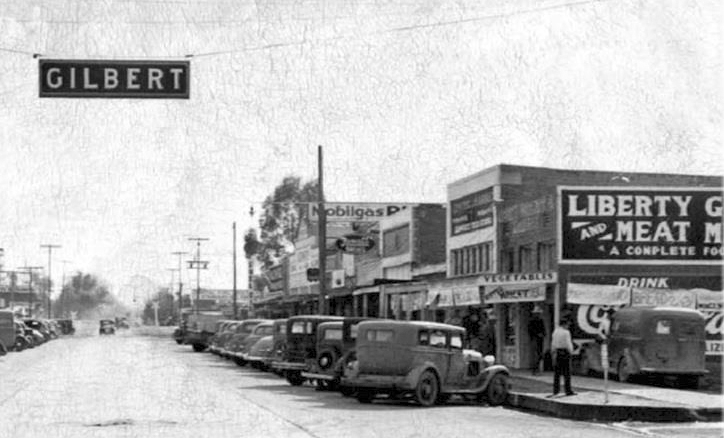
The town in the 1930s (photographer unknown).
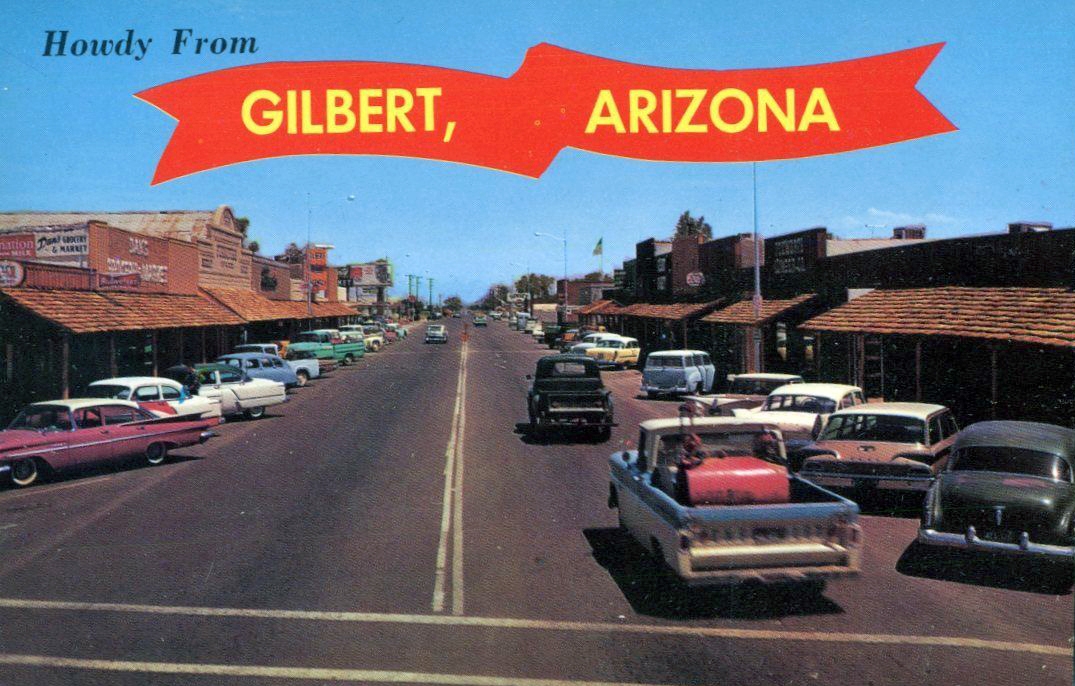
A postcard from the 1960s. The population was 1,833.
Scottsdale:
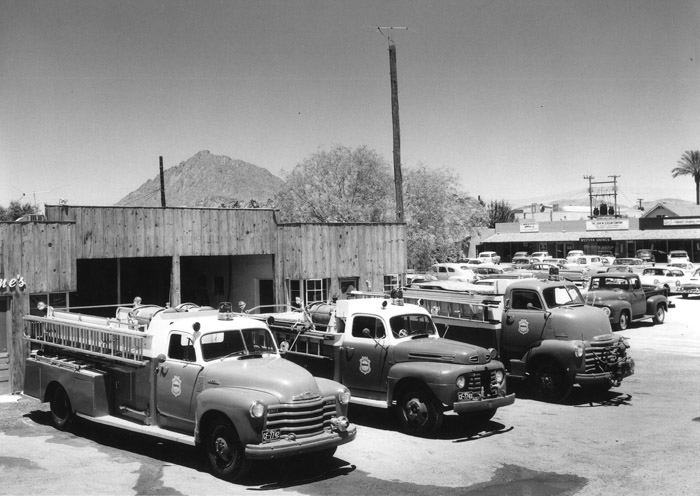
The main station for the Rural Fire Department in the 1950s (photographer unknown).
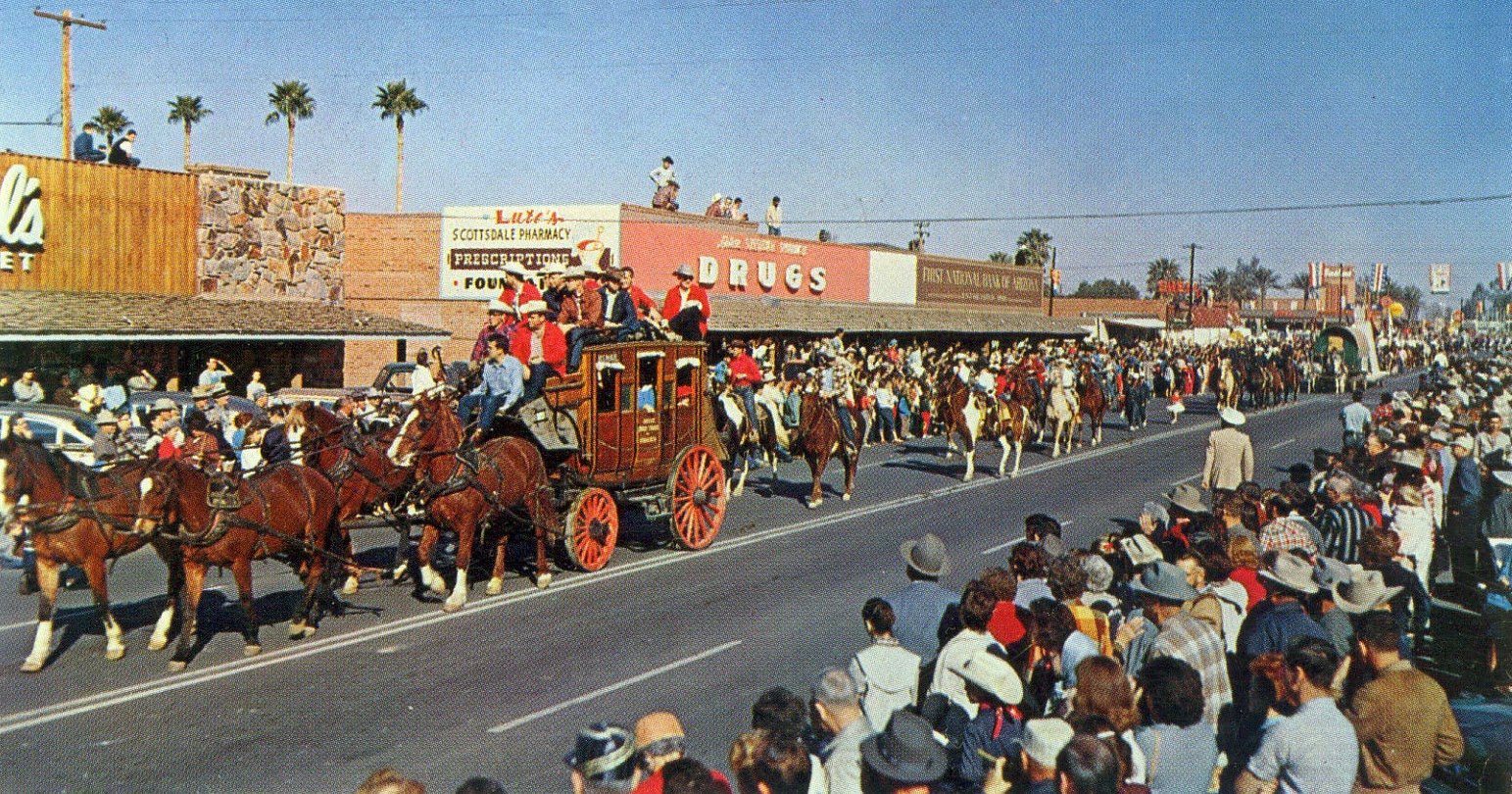
The Parada del Sol parade in the 1950s. Lute's Drugs is prominent among the storefronts (photographer unknown).
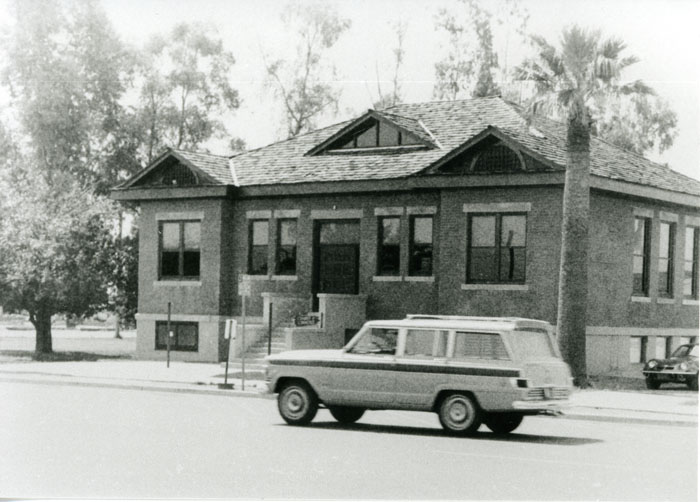
The "Little Red Schoolhouse," which later became police headquarters and then part of the Scottsdale civic mall housing the Scottsdale Historical Society. The school was a brainchild of Chaplain Winfield Scott. Another was citrus groves in the Salt River Valley (photographer unknown).
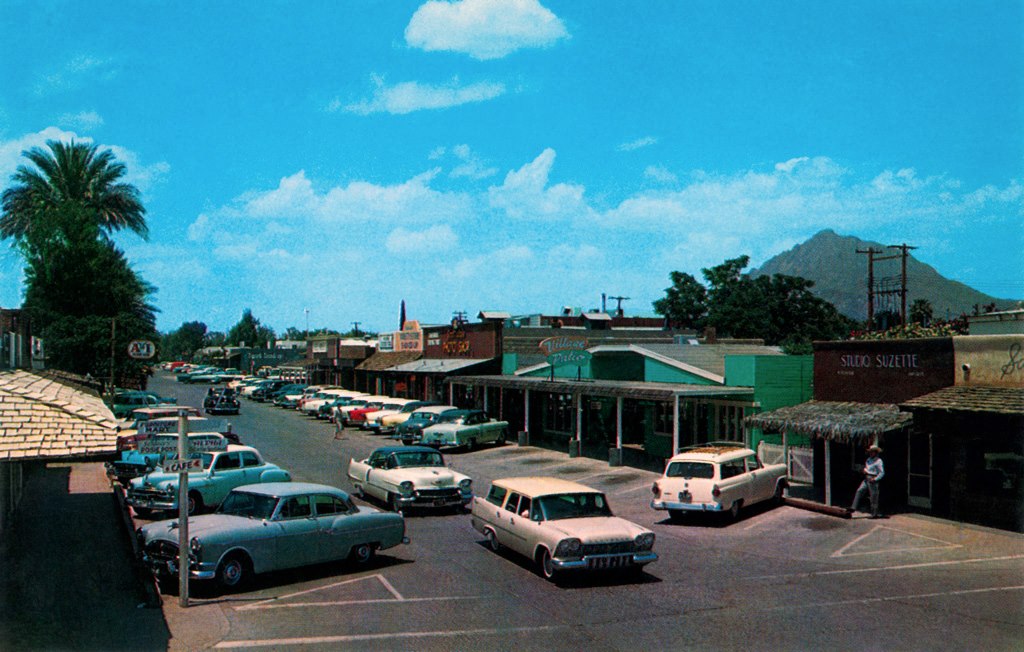
Main Street and Brown in 1960. Scottsdale's population was a little more than 10,000 (photographer unknown).
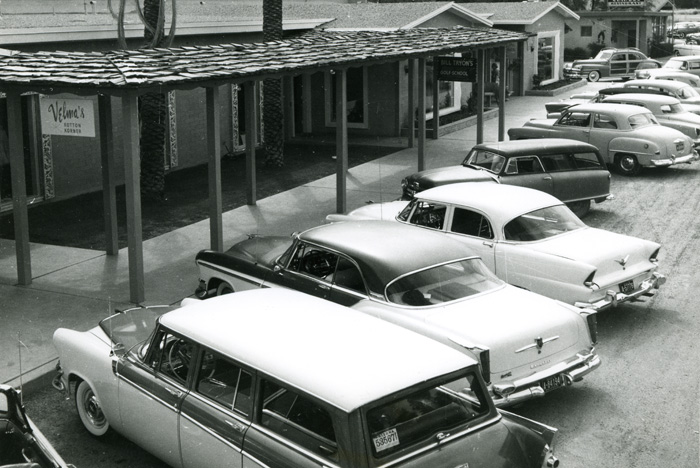
Cars are crowded on Fifth Avenue (photographer unknown).
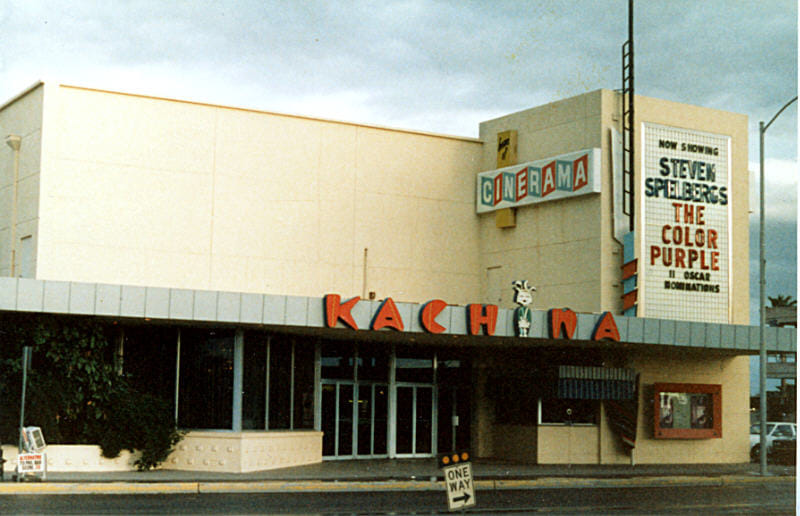
The Kachina Theater at Fifth Avenue and Scottsdale Road. It opened in 1960 and was demolished in 1989 (photographer unknown).
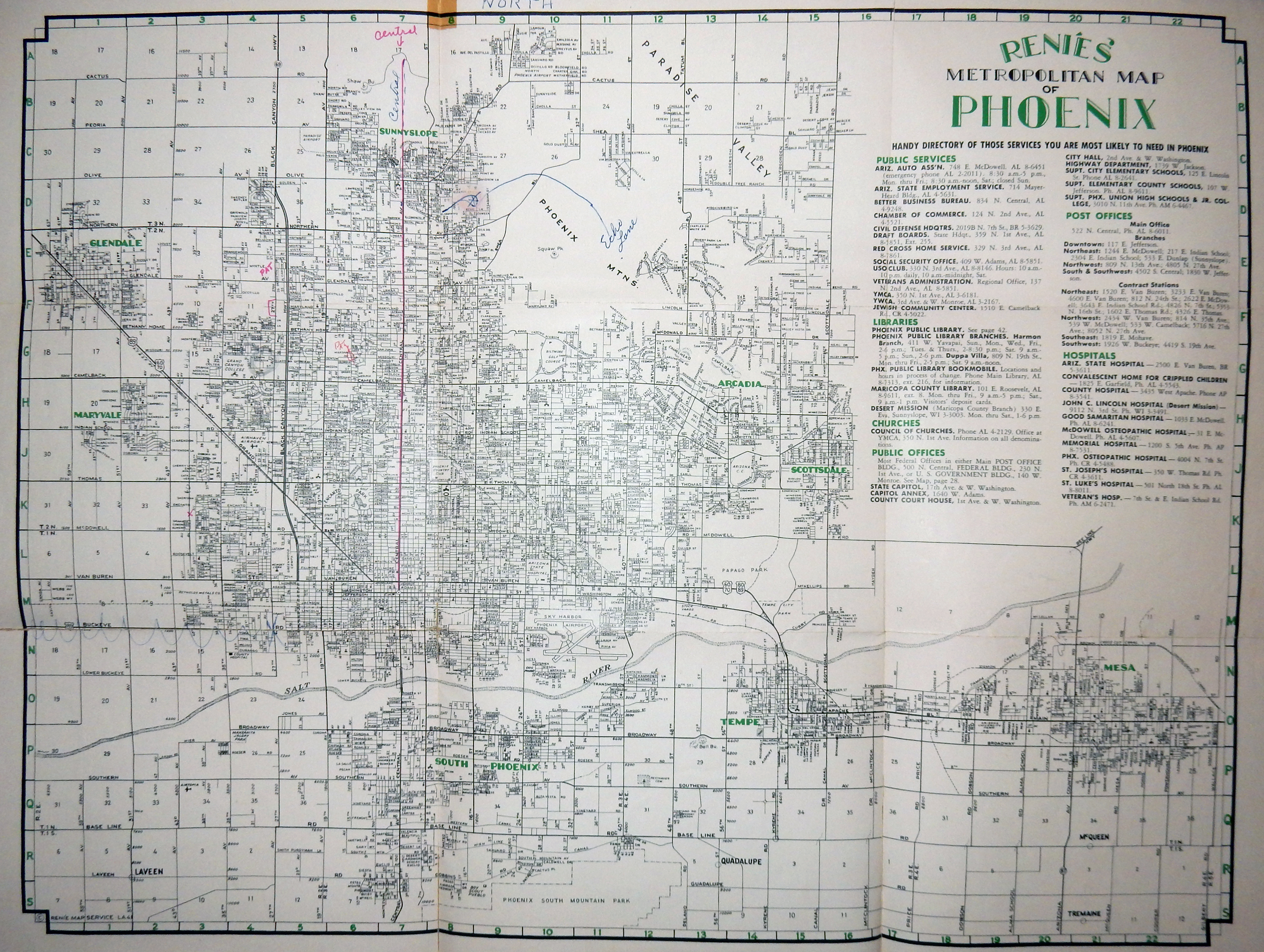
Below is a map from the late 1950s. Click for a larger view. It shows how the Valley towns were still separated:
Related: More Valley towns
———————————————————————————
My book, A Brief History of Phoenix, is available to buy or order at your local independent bookstore, or from Amazon.
Read more Phoenix history in Rogue's Phoenix 101 archive.
Great photos! I’ve had good times in all these historic downtowns, except for Gilbert (I’ve only driven through it).
Dropping Grand Avenue below grade through downtown Glendale was a great decision! Glendale’s downtown and the neighboring Catlin Court Historic District are doing a good job of nurturing their shade trees, too.
Here’s a shot of the Mesa Southern Pacific depot I took in December 1973:
https://www.flickr.com/photos/thelostdutchman/50662832712/
You’ll find more Mesa depot photos on this post:
https://roguecolumnist.com/2020/08/railroads-to-phoenix/
Great Photos.
In this group my favorite is Ash Bridge.
Back when there were villages on the Salt in the Great Sonoran Desert. Along with Phoenix and Tempe is the little known area of Lehi.
My lady friend is a native Arizonan and we are in our 80″s. Consequently a number of photos Jon posts are known to us.
I lived and worked the fields and went to Glendale High School in the early 50’s.
My lady friend grew up at 13th Street and Vanburen in a “Spaniard” neighborhood. Her grandparents ,both sides came from Spain and settled in the mining towns of Bisbee, Globe. Jerome. Miami and eventually in Phoenix around 1900.
I enjoy the photo history and try not to imagine what it would look like without humans. The Sixth Extinction is headed at us, Full Speed!
A treasure of memories for me. Loved to see that Phoenix Jaycee stagecoach in the Parada del Sol procession!