American Eden

American Eden

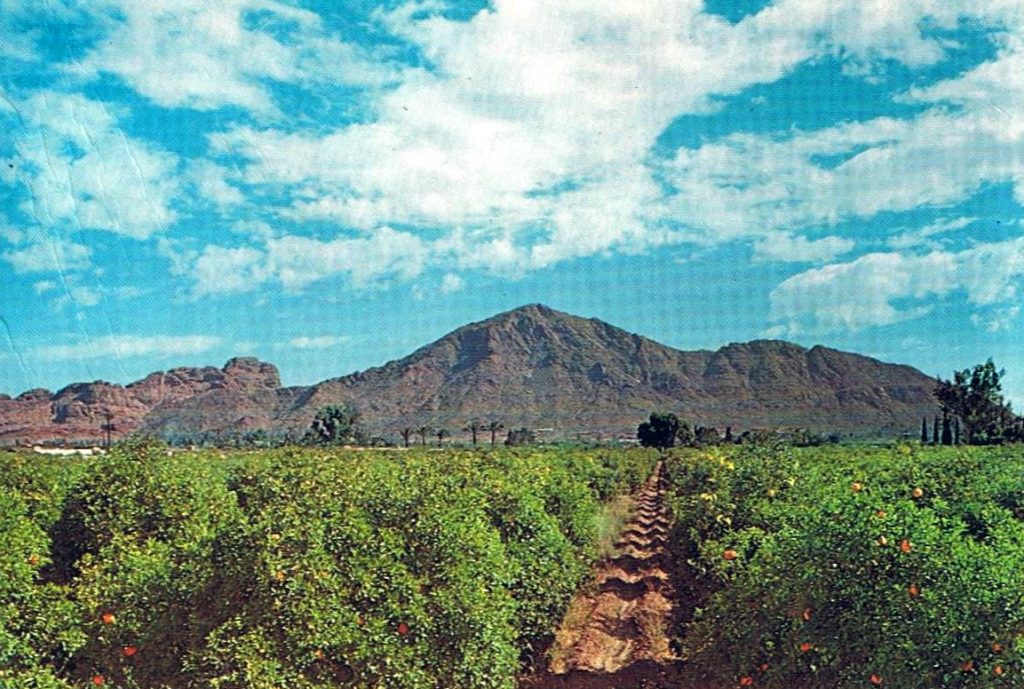
Camelback_Mountain_orange_groves_1950s(1)

Agriculture is the oldest organized human activity in the Salt River Valley. This is why Phoenix was never a Wild West town like Tombstone or even Prescott. It was never a copper square.

For hundreds of years this sustained the Hohokam, who created the most advanced irrigation civilization in the New World. They built hundreds, perhaps thousands, of miles of canals to bring water from the Salt River to their fields. After the Hohokam left in circumstances that are still debated, the valley lay empty for 400 years. Waiting.

Jack Swilling may get too much credit among the founders of Phoenix. But one thing that's certain is this soldier of fortune immediately grasped the valley's agricultural potential when he arrived after the Civil War to help John Y.T. Smith farm hay for the Army at Fort McDowell.

He saw the Hohokam canals, the seemingly flat ground and rich earth, and knew it was farming country. In some cases, old Hohokam canals were simply cleaned out by the Swilling Irrigating Canal Co. His passion in selling what "Lord" Duppa would aptly name Phoenix attracted men from Wickenburg and Prescott. Swilling's Ditch was built in 1868 from today's 40th Street and ran west beside Van Buren Street.

No other place in the West between the 100th meridian and California and the Pacific Northwest was so hospitable to farming. Three rivers met here and the soil was alluvial and priceless. Unlike the future Dustbowl, with its shallow topsoil and dependency on fickle rainfall, the Salt River Valley alone had almost all the makings of a major agricultural empire.

By 1870, 200 Anglo settlers had arrived and laid out the townsite, land was platted from the Gila and Salt River Baseline and Meridian, and more ditches were dug. Wheat and grains were the early crops. Former Union officer William John Murphy led building of the 41-mile Arizona Canal between 1883 and 1885. In the late part of that decade, the Rev. Winfield Scott, an Army chaplain, acquired 640 acres. With his brother George, he planted the first citrus trees, along with growing dates and figs and other tree crops.

Yes, tony Scottsdale is named after this chaplain-farmer. (So is Winfield, Kan.). But other farm villages preceded it: Mesa (1878), Tempe (1879), Glendale (1887) and Peoria (1897).

Note to readers

I always feel as if I let you down when I don't post two columns a week. But the reality is that my day job intrudes. Thursday is the deadline…
The woman and the moment

The woman and the moment

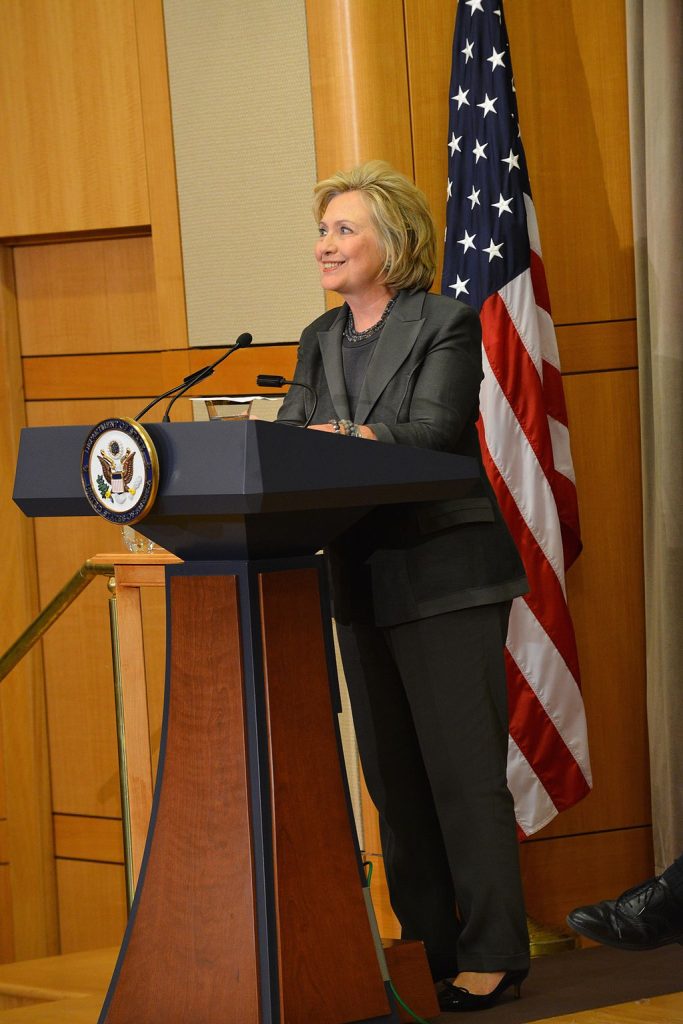
Former_Secretary_of_State_Clinton_Delivers_Remarks_at_Groundbreaking_Ceremony_of_the_U.S._Diplomacy_Center_(14943786999)This marks the third presidential election since Rogue Columnist launched. And even though it is some 18 months before voters go to the polls, I'm already exhausted. I'm already missing the "front-porch campaigns" of the 19th century, when it was considered unseemly to appear to covet the highest office in the land.

The Republicans offer up the usual clown college, with even less experience. No new ideas. Just new countries to attack. Gone are the days when the GOP was a mass party and great debates between the likes of Barry Goldwater and Nelson Rockefeller presented genuine choices. And yet the Republicans are highly successful in extending the governance of the New Confederacy.

That ever-more besieged and pushed-into- coastal-enclaves tribe of liberals would like to see Elizabeth Warren run for the Democratic nomination. I have the highest regard for Warren and Sen. Bernie Sanders. They would also carry perhaps one state in the Electoral College.

That leaves the Democrats with Hillary Clinton. She faces serious obstacles. Some are of her own making. She's not a natural campaigner, lacks telegenic charisma (not as bad as Bruce Babbitt who was wonderful in small groups), and is attached to a real potential scandal (The Clinton Foundation, not Benghazi).

The corporate media can't report on issues. That leaves personalities, and Hillary is their catnip. But not like Reagan. For the worst kind of coverage. Recall that the pre-Murdoch Wall Street Journal virtually accused her of killing aide Vince Foster. Worse, the historic vitriol directed by the vast rightwing infrastructure and average working-class whites against President Obama will turn against Hillary with the ease of the old Soviet party line.

Reform and extremism

Reform and extremism

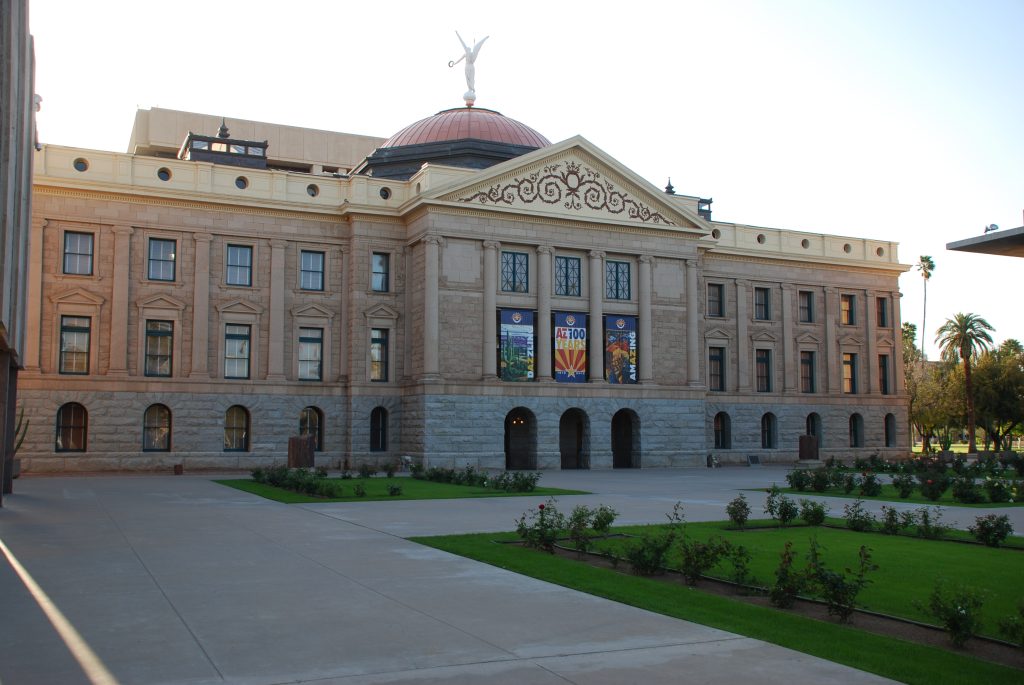
Arizona_State_Capitol_DSC_2701_ad
One of the curiosities of Arizona politics is how widely supported efforts to make government cleaner — the approval of term limits in 1992 and so-called clean elections public financing of candidates in 1998 — coincided with the rise and now dominance of the extreme right.

Term limits were a fad in the early 1990s, ostensibly meant to eliminate a permanent political class. Although never implemented on a national level, they gained traction in many state and local government. "Clean elections" was intended to take big money out of politics, especially in the aftermath of the bribe-ridden AzScam scandal.

Under the new rules, a Burton Barr, who ruled the Legislature as House majority leader from 1966 to 1986 would have been impossible. Barr's time, working with such Democratic leaders as Alfredo Gutierrez and Art Hamilton, also was the high-water mark of legislative achievement for Arizona.

Had term limits been enacted nationally, we never would have had a Carl Hayden, who served in the Senate for 42 years, or a John J. Rhodes, who served in the House for 30 years. And thus, no Central Arizona Project, which demanded such longevity from lawmakers from what was then a small and politically weak state challenging mighty California.

Raul Castro, an appreciation

Raul Castro, an appreciation

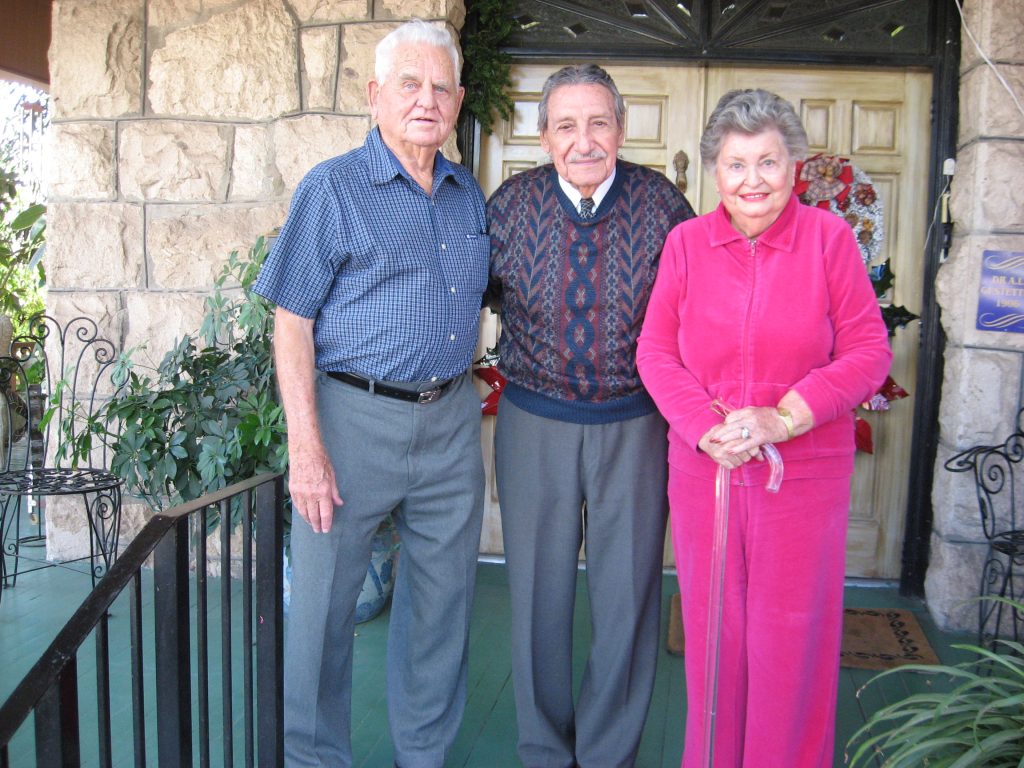
Raul_Castro_2008Raul Castro, center, along with his wife Pat and longtime law partner and friend Henry Zipf at the Castros' home in Nogales, Ariz., circa 2008.


By Jack August Jr.
, Guest Rogue

In 2007, then-91 year-old Raul Castro addressed a packed auditorium at the Arizona Historical Foundation’s annual Goldwater Lecture Series at Arizona State University.  At the time, I served as Executive Director of the foundation, which, among other things, maintained the personal and political papers of Sen. Barry Goldwater. 

Two hundred mostly conservative and arguably skeptical supporters of the legendary Arizona senator were curious to see what the former Democratic governor, judge, and ambassador had to say.  

After introducing him, I sat down and watched Castro stride to the podium; he had no notes. He launched into a one-hour presentation that seemed like ten minutes, telling his life story, touching upon the role that education played in his life, his years as a “hobo” riding the rails, his undefeated professional boxing career, and his countless experiences of prejudice and adversity. 

But the overarching theme in his talk was the promise that America held for all its citizens. When he finished the audience exploded in applause and stood on their feet clapping for several minutes. It was a stunning performance.

The distinguished professional career of Castro, who died last week, stood in stark contrast to the adversity inherent in his humble beginnings, which only hardened his resolve and strengthened his determination.

The callow field

The callow field

The problem with wealthy Republican John Sydney McCain III running for a sixth term has nothing to do with his age. Far from it. In the past, age was prized for its experience and wisdom. Sen. Carl Hayden won funding for the Central Arizona Project when he was 91.

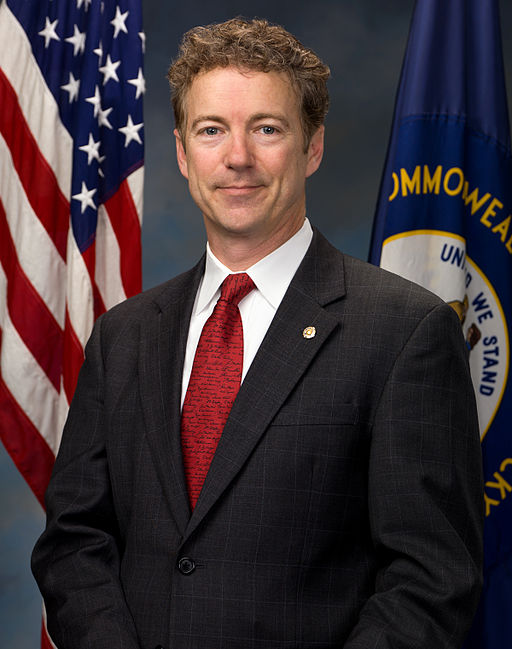
Rand_Paul,_official_portrait,_112th_Congress_alternateThe shame is two-fold. Unlike Hayden and almost all of the congressional delegation during the 20th century, McCain has done nothing to help Arizona, a state deeply dependent on the federal government. Second, all of McCain's seasoning has been squandered on flip-flopping, opportunism, and working the Sunday news shows. What a waste.

The man he lost the presidency to in 2008 was another senator, freshman Barack Obama. I have a prediction: When Obama is out of office, he will be missed by most, not least for being No Drama Obama. But that is a column for another day, another year.

His unfortunate precedent was to make it appear legitimate for a freshman senator to run for the presidency (with an assist from McCain, who chose the half-term governor of Alaska as his running mate). Few people have Obama's intellect, maturity, and integrity — least of all (not so wealthy) Republicans Rafael Edward "Ted" Cruz and Randal Howard "Rand" Paul, but they are running for the most powerful office in the world. (So, too, is Marco Rubio, another- first-term senator, who announced after this column originally posted).

For whom the bell tolls

For whom the bell tolls

Drought_(March_2014)_04
California, facing its worst drought in modern times, gets all the press. Arizona, confronting many of the same issues, albeit less severely so far, flies under the radar.

I'm told that the latest meme of is Phoenix 3.0 — 1.0 being an agricultural economy, 2.0 being development and 3.0, now, is moving into the broad, sunlit uplands of a technology economy.

This is only boosterwash. Data centers and profaning the desert with solar "farms" is far from being at the headwaters of the tech economy. Where the innovation happens on a global scale. Where the world talent congregates for high-paid jobs. This is almost exclusively happening in blue states, in a few "technopolises" such as Silicon Valley, San Francisco, Seattle, San Diego, Boston and New York.

The headwaters of advanced industries don't go to states defined by their extreme politics, underfunded education, and cuts to universities.

The reality is that Arizona is desperately trying to restart the growth engine for one, two, maybe three more runs — with championship golf — before the edifice finally collapses. By then, the architects of the short hustle will be living off their profits somewhere else.

Bringing forth fruit

Bringing forth fruit

Rainbow 4
I first met Kit Danley in 2001 when she asked me to visit Neighborhood Ministries at its new home, hard against the railroad yards on Fillmore Street west of 19th Avenue.

It was a place that held fond memories for me. As a child, I had spent many hours train watching at the nearby Mobest Yard of the Santa Fe Railway. In those days, Fillmore ran through to 19th Avenue, and this end of the yard featured a cleaning facility for passenger cars (when Phoenix had passenger trains) and the locomotive turntable. South was the busy and (to my young eyes) imposing Valley Feed and Seed, where railcars were switched against the warehouse for loading and unloading.

Valley Feed and Seed looked very different in 2001: abandoned, decomposing, the grounds full of debris, silos that once provided seeds for this great agricultural valley now empty, eight acres of sadness. It was a graveyard that extended to Van Buren Street. Fillmore had been closed to a cul-de-sac when the yard was moved south (to lessen the train delays on McDowell). The surrounding area was known for crime now, not commerce.

But this was the site that Neighborhood Ministries had purchased in 1998 for an ambitious campus that would increase its outreach to the poor. By the time of my first visit, the organization had raised $2.2 million to begin renovations.

Kit_DanleyI liked Danley immediately. She was a near-native, went to Scottsdale High (I went to Coronado), and had chosen to make a stand in the wounded heart of Phoenix, founding Neighborhood Ministries in 1982. She was the polar opposite of the city of the short hustle, the state where hate was peddled for political profit.

And she would be frustrated that I appear to be making this column about her (it's not; read on). Like her spiritual forebear in Phoenix, Father Emmett McLoughlin, she felt called by Christ to minister here to the least and the lost, to the stranger and the wanderer, and find Christ in them.

Still Nixon to kick around

Still Nixon to kick around

Richard_Nixon_HS_YearbookI was listening to a Fresh Air podcast the other day when the guest said that President Richard Nixon, elected as a conservative Republican, declared a federal "war on cancer" in 1971 with seed money of $100 million for research ($580 million in today's dollars). It started the trajectory that now has cancer-research funding at $4.8 billion.

That snippet reminded me that Nixon also created the Environmental Protection Agency and enthusiastically signed the Clear Air Act. He supported the Clean Water Act but vetoed the version Congress sent him based on cost (the veto was overridden). The similarly groundbreaking Marine Mammal Protection Act — also supported by Nixon and it became law in 1972.

These things happened not because Nixon was the prisoner of a Democratic majority in Congress — the Democrats were often divided and in those days Republicans had liberals, centrists and conservatives — but because he believed in them or thought they made good politics. He also largely funded LBJ's Great Society, albeit some cloaked in the rhetoric of his "New Federalism."

Nixon was no tax cutter. Instead, he instituted revenue sharing with states and cities, putting federal funds behind his conservative principle that they could use the money more efficiently. He proposed a federal health-care program that foreshadowed in many ways Obamacare, as well as a form of guaranteed income for all. Amtrak saved passenger trains, albeit imperfectly, on Nixon's watch.

For decades, Richard Nixon has been the devil to the left. But the left isn't politically relevant anymore (Jerry Ford Republicanism is what passes for "the left" in today's broken political spectrum). What's more consequential is that Nixon is now the devil to the right, which is more powerful than ever. So in the public square today, we are relitigating not Watergate but the domestic achievements of Tricky Dick.

Growthgasm! (No faking)

According to today's news from the Census Bureau, metro Phoenix added 84,980 people from July 2013 to July 2014. This makes Phoenix No. 6 among the 10th largest metro gainers numerically. Maricopa County ranked second among counties nationally with a gain of 74,000.

Neither metropolitan area nor county clocked in leading percentage growth, which can be misleading anyway (No. 1 was fracking capitals in North Dakota). Although it is worth noting that they did at times during the 1990s and early 2000s.

So what are we to make of this besides in-migration is finally starting to accelerate after a sharp drop during the Late Unpleasantness? Sun Belt regions generally led in population growth, so Phoenix fits within this trend as the economy gains strength under our Socialist Kenyan Dictator (Did I mention that he's black?).

Here are a few thoughts:

Evil Frank Underwood

Evil Frank Underwood

House_of_Cards_title_card.jpgFor at least the first two seasons, Netflix's House of Cards had plenty going for it: Kevin Spacey as conniving congressman Francis Underwood, Robin Wright as his equally devious wife, Claire, murder, suspense, and the breathtaking beauty of the nation's capital.

It was never troubled by reality. Underwood, a Democrat, represents the South Carolina district around Gaffney — white Southern Democrats are virtually extinct. He's Whip, but the real power in the House behind the nearly comatose Speaker and Majority Leader — no Whip would have that influence. A real hoot for Zonies was the character of Hector Mendoza, the Senate Republican leader and senator from Arizona — yeah, sure.

But this season, as Underwood has become president and the writing focuses to a dangerously tedious degree on policy, House of Cards has become something else. Now I am prepared to say, yes, Frank Underwood is evil.

Foreigner

The biggest kick in the head on this trip back home came when I drove past Kenilworth School, where I went from first through eighth grade. Other alumni include Senators Barry Goldwater and Paul Fannin.

When I was there in the 1960s, the stately building was surrounded by grass and trees (watered by flood irrigation), including the mature palms that lined Third Avenue. Teachers could park on the streets, although a number of them walked because they lived nearby. The houses were all landscaped with lawns, trees, flowers, and hedges. In addition to making the neighborhood attractive and walkable, this helped cool it. We went back to school without air conditioning in September.

Kenilworth avoided aggressive attempts to demolish it when the unnecessary Papago Freeway inner loop was rammed through the neighborhood in the 1980s. It also survived the curving of Third Avenue, which destroyed the grid designed to give the neighborhood a pleasing aspect. And the mammoth widening of Seventh Avenue to feed the freeway.

Now a bunch of rocks have been thrown down in front of the school. A driveway and even larger parking lot have been added where the grassy playground once stood. Where we would lie on the cool ground, watch jet contrails, and dream the dreams of youth. The dissonance is painful. The classical revival building set amid all this ugliness is similar to a diamond lying in a pile of manure.

The trouble is that I am one of the few people who would even notice. Like Carson McCullers, "I must go home periodically to renew my sense of horror." But I am increasingly a foreigner here.

Getting by in Phoenix

In the summer of 1976, the owner of Phoenix Ambulance became convinced that I was the leader of a secret, impending unionization drive among the EMTs (I wasn't, but good idea). By August, he had forced me out and made sure I couldn't get a job at another ambulance firm.

He also fought me over unemployment benefits. For a month, until a hearing amazingly went my way, I was worse than broke. I began applying for food stamps but the process was so demeaning that I stopped. Things got so bad that I had to get food from St. Vincent de Paul.

I applied for 50 jobs — nothing. I was 19 years old, very highly trained in one field and had been well paid for my age. Nobody was going to hire me at Jack in the Box at minimum wage. The local economy was still slow; the 1974-75 recession had arrived late. The classified advertisements were an exercise in futility (although I did apply to be a projectionist at an adult theater — I often think of my X-rated career that might have been).

Eventually, I found work at another ambulance company, finished college, left Phoenix, had other career callings (and came back home and was kicked out). Ever since I have given money to St. Vincent de Paul (and St. Mary's Food Bank). The point is that I know how hard things can be in Phoenix.

It is true for many more people today.

Playing chicken Kiev

Playing chicken Kiev

2014-05-09._День_Победы_в_Донецке_248

Insurgents, including perhaps Russian soldiers, in Donetsk, in contested eastern Ukraine.

Congressional Republicans, some Democrats, and the military-industrial complex want us to go deep in the conflict between Ukraine and Russia. Arm Ukraine. Send troops to nearby NATO countries. Even puts boots on the ground in Ukraine itself.

Or go deeper. Some believe Washington and the CIA played a significant role in destabilizing and ultimately ousting the elected president of Ukraine, Viktor Yanukovych. But this overlooks Yanukovych's blunders and mishandling of both foreign relations and brutality against demonstrators. If he was corrupt, welcome to Ukraine.

Contrary to the dSi narrative, Russia actually does have vital national interests at stake. Ukraine was for centuries a province of the Russian empire and then a "republic" in the USSR. Even when things were cozy between Washington and Moscow in the 1990s, Russian President Boris Yeltsin declared Ukraine part of his country's "near abroad."

The United States has no — no — vital national interests in Ukraine.

Driving Phoenix history

Driving Phoenix history

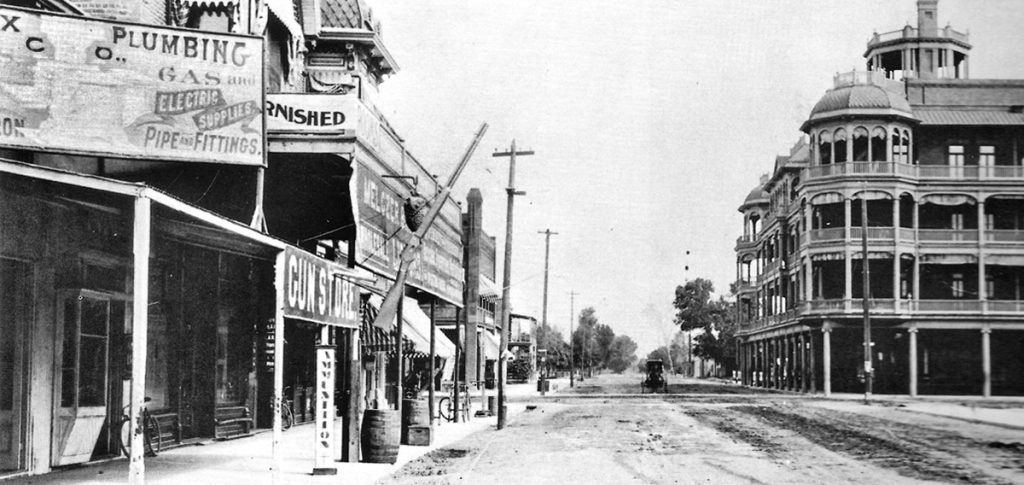
CentralAdams1909Central Avenue and Adams Street in 1909. The original Hotel Adams, later lost to fire, is to the right. Before it was Central, the main drag of Phoenix was Center Street.

Even with light rail (WBIYB), most Phoenicians spend vast amounts of time in their cars. But you can't avoid history, if you're paying attention.

Most people know the east-west grid of the original city has streets named after presidents, from Grant to the south to Roosevelt at the north (named after Theodore). The least deserving president is James Buchanan but there he is, right by the railroad tracks.

With so many streets in 1,500-square-miles of urban space, there's also plenty of asphalt to give faux Spanish names, or the names of developer's wives and daughters (Cheryl, Susan, Linda, Pamela, Sharon, Cindy, etc.). But the next time you're racing along in your SUV, consider:

McDowell Road, which was the wagon road to Fort McDowell, the supplying of hay to the cavalry being one of early Phoenix's raisons d'etre. Irwin McDowell was in command of union forced defeated at First Bull Run in the Civil War.

Thomas Road was named after William Thomas, a rancher and Maricopa County recorder at the turn of the 20th century.

Earll Drive takes its name from E.A. Earll, who platted the Earll Place homes. The origin of nearby Cheery Lynn is unknown (at least to me).

Osborn Road does not honor the state's seventh governor, Sidney Preston Osborn, who served from 1941 to 1948. Instead, it was named after homesteader John Preston Osborn, Sidney Osborn's grandfather.