What killed liberalism
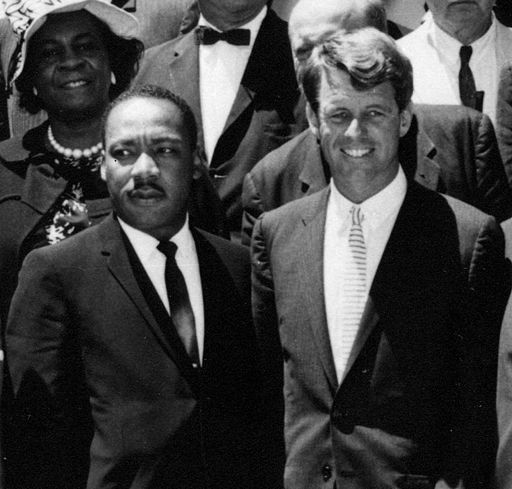
The Rev. Dr. Martin Luther King Jr. and Sen. Robert Kennedy, circa 1967.
Writing earlier this week on the 50th anniversary of the assassination of John F. Kennedy, I stated, "The Vietnam War killed liberalism. Bobby (Kennedy) might have avoided that fate."
The comments on the column are superb, so go back and read them if you can. But Emil rightly called me out for such doing an intellectual Jackson Pollock with such a broad brush.
So let me clarify.
Today, most Americans don't even know what "liberalism" means in this context. For examples, right-wingers are all for "neo-liberalism" in the economy, but rush to the barricades at the whiff of liberalism in politics. Liberals themselves have moved to the century-old term "progressive."
JFK identified my liberalism well:
What do our opponents mean when they apply to us the label "Liberal?" If by "Liberal" they mean, as they want people to believe, someone who is soft in his policies abroad, who is against local government, and who is unconcerned with the taxpayer's dollar, then the record of this party and its members demonstrate that we are not that kind of "Liberal."
But if by a "Liberal" they mean someone who looks ahead and not behind, someone who welcomes new ideas without rigid reactions, someone who cares about the welfare of the people — their health, their housing, their schools, their jobs, their civil rights, and their civil liberties — someone who believes we can break through the stalemate and suspicions that grip us in our policies abroad, if that is what they mean by a "Liberal," then I'm proud to say I'm a "Liberal."
JFK
I am young to have a Jack Kennedy memory, but I do. It was November 1961, and the new president came to Phoenix to celebrate Carl Hayden Day at a VIP event at the Westward Ho Hotel.
This was when downtown Phoenix was the center of commerce and power in the Southwest and the Westward Ho was a swanky hotel. When Carl Hayden, as president pro tem of the U.S. Senate, was third in the line of presidential succession.
Hayden looked old. He had been in Congress since statehood and was the single most important figure in the legislative fight for the Central Arizona Project. But, according to his biographer Jack August Jr., Hayden was as formidable as ever. The joke that Ol' Carl was embalmed and aide Roy Elson raised his hand on votes was just a joke.
Back to JFK. I was in my mother's office on the sixth floor of the Greater Arizona Savings Building (nee Heard Building), where the Arizona Interstate Stream Commission was headquartered. I joined the lawyers and engineers at the window to watch the presidential motorcade come up Central.
Election postmortem
The mainsteam media looked at Tuesday's results and see big trouble for Democrats.
In Virginia, Clintonista and former Democratic National Committee Chairman Terry McAuliffe outspent his opponent, state Attorney General Ken Cuccinelli, by three-to-two and only won by 2.5 percentage points. In New Jersey, Republican Gov. Chris Christie won a commanding victory in a blue state.
In this narrative, the president looms large. Obamacare suffered a troubled rollout. His approval rating has hit a new low. Unstated: He's black.
Progressives shouldn't whistle past the graveyard, but I'm not sure how much this is true.
For example, Virginia held the capital of the old Confederacy and is not a swing state anyone should count on. Some experts like to see the Old Dominion and North Carolina as at least potentially purple states. I'm not so sure.
Early Obamacare soundings
I'm hesitant to draw many broad conclusions about the Affordable Coverage Act based on early glitches to the federal Web site. Much of the journalism has been shoddy, lazy or driven by politics.
Readers of this blog know I had my doubts. If universal coverage was not politically possible — not even a public option — then was it worth it for President Obama to stake his presidency on this.
This: A conservative, "market-based" plan that originated in the Heritage Foundation when it had more integrity and implemented at the state level by the GOP's most recent presidential nominee. This: A massive giveaway to the private insurance industry.
But it's done and I want it to succeed as far as is possible with the many compromises that were necessary to achieve a portion of what is considered a basic human right in other advanced countries.
At this point, here is what I know:
Secession with benefits

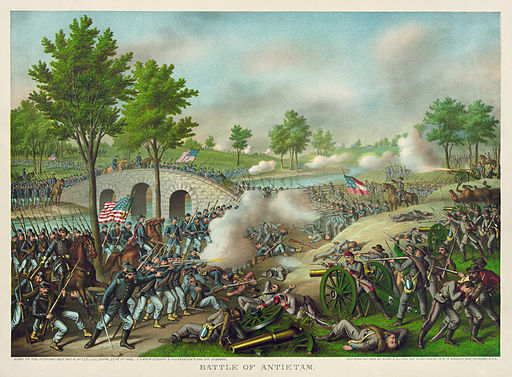
The Battle of Antietam, 1862, where my great- great-uncle, fighting in the Confederate division from Texas under Gen. John Bell Hood, was fatally wounded.
What "Soleri" called the Cold Civil War is underway. The game of shutdown/default chicken, with grave consequences for America's economy and standing in the world, is only the latest manifestation. Although the worst was avoided, it is only a temporary truce. Republican House members representing about 18 percent of the population, were able to hold 100 percent of the nation hostage.
There is talk in places such as Texas of secession, and in Arizona and other states of nullification, choosing which federal laws to follow, hearkening back to the crises the preceded the Civil War. But these and the fetish about the debt and deficit, as well as the size of government, are carried out with high hypocrisy.
The reality is that almost all states of the New Confederacy — the old South, plus parts of the Great Plains and intermountain West — are net takers. In other words, they receive more federal money than they pay in taxes. For example, Arizona, whose entire Republican delegation voted against the compromise to reopen the federal government, received $1.60 for every dollar paid. In South Carolina, the cradle of secession, the ratio is $2.13 to $1.
What this is
In the 14th day of the federal shutdown and the media, traditional and new, with honorable exceptions, have done a terrible job of explaining things to the American people. It's a football game: The Republicans have fumbled and the Democrats would retake the House. Wait, the Republicans just did a quarterback sneak and are back on top…
False equivalency abounds: "Both side are to blame." Or it is the soccer mom explanation: They need to grow up and play well together.
It is none of these things.
We are in the midst of a constitutional crisis, the worst since the eve of the Civil War.
Scandal for schools
Last week, two items came my way. I learned that Andre Goodfriend, my buddy from grade-school days, has become the United States chargé d'affaires, or deputy chief of mission, at our embassy in Budapest, Hungary. Meanwhile, it was reported that enrollment in the Phoenix Union High School District reached a 36-year high.
The district is 80 percent Hispanic and only 5 percent Anglo. As recently as 1990, the demographics were 41 percent Anglo and 40 percent Hispanic. Some 81 percent of students qualify for free or reduced-price lunches — and based on my research, this is often the only meal some of them receive in a day.
What these tidings have in common is the scandalous trajectory of failure in our public education system.
This is a huge topic, and I recommend Diane Ravitch's Rein of Error and The Death and Life of the Great American School System for anyone seeking some of the best examinations of the topic by one of our great scholar-advocates. My aims are more modest.
Exceptionalism
Patriotism is the last refuge of a scoundrel — Samuel Johnson, 1775
Poor Nikita Khrushchev, banging his shoe at the UN, threatening to "bury" us — America just got stronger. Ike's Secret Service wouldn't even let the Soviet leader visit Disneyland on his trip here. Instead, he should have hired a public relations outfit to place an engagingly written op-ed in the New York Times. When the new czar, Vladimir Putin, pulled this off last week, American pols and opinion leaders went crazy. The detonation didn't come from Putin appearing statesmanlike (even when off-base), but when he challenged President Obama's assertion about American exceptionalism. "It is extremely dangerous to encourage people to see themselves as exceptional, whatever the motivation."
Peggy Noonan was nearly hysterical. "Putin is telling the world he knows how to correct America, tell it off, criticize it for its conceit," she blogged, and of course had to blame President Obama: The Russian president is "attempting to show the world he’s its reliable voice, its real leader, not those other guys. Would he have done this in the past? No. A truly historic level of foreign policy incompetence on the part of
the White House got us to this point." The right-wing talking-points email must have gone out because Charles Krauthammer made much the same argument, adding: "I mean, the chutzpah of writing that, by a KGB thug…" Wealthy Republican Sen. John Sidney McCain III, R-Fox News, vowed to give Putin some of his own back by writing an op-ed in Pravda.
Even the Washington Post's Dana Milbank felt compelled to explain to the Russian president the gravity of his transgression:
Americans aren’t better than others, but our American experience is
unique — exceptional — and it has created the world’s most powerful
economy and military, which, more often than not, has been used for good
in the world. When you question American exceptionalism, you will find
little support from any of us, liberals or conservatives, Democrats or
Republicans, doves or hawks.
The permanent crisis
Five years ago this week, the giant investment bank Lehman Brothers collapsed. This set in train the worst economic crisis since the Great Depression. The world barely avoided a second depression. Now, the United States is technically in a recovery. It doesn't feel that way to most people. Unemployment, at 7.3 percent, is at a level that would have been considered a crisis in the post-World War II era. Now it's the new normal. The one-tenth of a percentage point drop in August came for the wrong reason, 312,000 people dropping out of the labor force — and these are not mostly baby boomers headed for secure retirement. Most of the jobs being created are in low-wage industries and many are part-time. Even if we continued to see 169,000 jobs per month added — unlikely — it would take until mid-2023 before we regained the employment level of 2008. A recession comes along about every seven years, so even that horrid timeline is unrealistic.
Something has gone drastically wrong in America. We no longer have a manned space flight program, even as China prepares a moonshot. We're not reaching for the stars, literally or metaphorically. The sequester ensures research funding is being slashed. The Large Hadron Collider, the greatest triumph of modern physics, is in Europe, not America. A "Manhattan Project" for renewable energy? Building high-speed rail and other advanced job-creating, productivity enhancing projects? Such all-American efforts are beyond today's America. Our infrastructure is in deadly bad shape. But we're incapable of doing more than patching a road-heavy transportation system — and we have too many roads already — geared to a much less populous nation with 1960s gasoline prices. A real college education is now the province of the well-off. So are good jobs. The ladders up that were so abundant here are mostly gone. No wonder about one third of the people stuck in minimum-wage jobs are age 40 or above. Adjusted for inflation, 40 percent of American workers earn less than the minimum wage in 1968. The shift of national income from labor to capital is startling, with the result being historic and rising inequality.
This state of the nation is inextricably tied to the situation in Washington, D.C. It is typically described as "gridlock" and the media are at pains to find the "extremes" of both parties holding up intelligent responses to our cascading troubles. This is not true.
The immigration con

A smuggler's Jeep found stuck on the border fence near Yuma in 2012.
As I write, here are some of the latest headlines: "Looming Budget Fight Could Doom Immigration Reform"; "Cecilia Munoz: Quarterback of Obama's Immigration Reform Efforts," and "Immigration Reform Supporters Ask for Help From Businesses."
Does any serious person believe there was ever a chance for "sweeping immigration reform," as it was called with a repetition of a bubblegum rock station playlist? I know, I know: This was how the GOP would save itself from extinction as demographic trends appear to shift against old, bitter, suburban and rural white people. Thus, at least in the minds of the oblivious D.C. pundits depicted with such savage accuracy in the new book This Town, wealthy Republican Sen. John Sidney McCain III would reclaim his mantle as a statesman, a maverick, and herd his party to a deal with President Obama.
But this failed the smell test from the start. Even McCain, who at certain points in his career had favored immigration reform (when he didn't and vice versa), kept prattling on about "a secure border" being the foundational element of any deal. After an amendment to the so-called Gang of Eight's immigration bill in the Senate, McCain said, "We'll be the most militarized border since the fall of the Berlin Wall." It says something about today's pretzel of a Republican Party that the once despised symbol of oppression ("Mister Gorbachev, tear down this wall!") is now offered as reassurance against an invasion of Brown People. And all that to get a deal that would somehow raise Republican favorables among voting Brown People. Next step: President Rubio!
Detroit and us

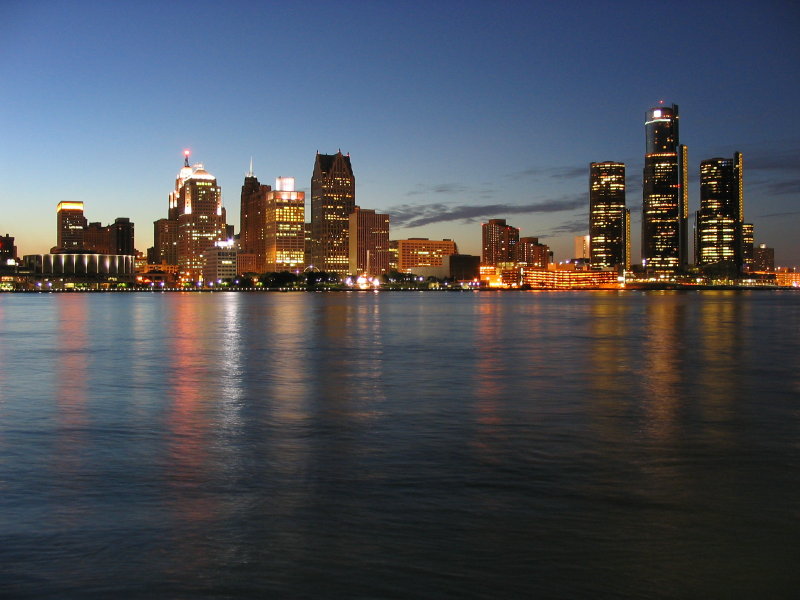
Detroit's skyline seen from Windsor, Ontario
[NOTE TO READERS: We will resume the Friday Saloon next week; in the meantime, feel free to hijack this thread if you wish.]
When some of you asked me to write on Detroit, I wasn't sure I could add much to the many stories and columns that have been produced after the city filed for bankruptcy. But many were the proverbial blind men trying to describe an elephant. Something big has happened, but what? How did things get so bad? And is this a foreshadowing of calamities to come? As one reader put it, "The Detroit default woke me up to the impending train wrecks we're facing elsewhere. What happened? Another oversight calamity?"
Back to the elephant, as in, the elephant in the room. No discussion of Detroit can avoid race and the city's toxic racial history. At a little more than 700,000 population, Detroit is the only major city in the nation with a staggering concentration of African-American poverty. It is 83 percent black compared with 14 percent for Michigan. The poverty rate of more than 36 percent is twice the state level. Median household income is 57 percent of the state average. There is no other American city so populous facing such an imbalance.
The bedroom and the commons
We're often having the wrong argument in this cold civil war. The most recent example was the farm bill that came out of the Republican-controlled House of Representatives. For the first time in decades, it stripped away food stamps from the legislation. The rationale was to cut federal spending. And yet the bill ended up giving away even more taxpayer dollars to already highly profitable big agribusiness than was proposed by the Senate or the White House. A useful lens for understanding the battles in America might focus on two areas: The bedroom and the commons.
Republicans are obsessed with legislating what happens in the bedroom. Along with their conservative Democrat fellow travelers, they gave us the Defense of Marriage Act and later rode fear of "the gay" to triumph in 2004. Even though the Supreme Court recently struck down DOMA and more Americans are embracing same-sex unions, Republicans keep trying to introduce or defend so-called anti-sodomy laws. One is Virginia's Ken Cuccinelli, who wants to be governor.
The conservative movement is now moving aggressively against abortion in state legislatures, most prominently in Texas and North Carolina. And they are succeeding. No gentle outreach for bipartisanship here: These Republican-controlled statehouses are ramming through draconian legislation, the opposition be damned. In Ohio, Gov. John Kasich signed abortion restrictions, placed in a budget bill, surrounded by only men. Kasich is more popular than ever in a state that was once vigorously competitive and he is heavily favored to win re-election.
The lives of others
[UPDATED] Rogue's Front Page Editor and Director of Competitive Intelligence has filled my in-box with some of the best stories about the extent of our national security state. We learn about the private companies that profit from analyzing your personal data. Our outsourced spy force is enormous. Not only that, but the National Security Agency, building a huge secret data farm in Utah, is recruiting a new generation of Stasi geeks. The administration's constitutional amnesia. How members of Congress are not outraged about the invasion of your privacy, but instead are turning on leaker Edward Snowden. How what was intended as a "transformational presidency" has turned into a soiled presidency instead: George W. Obama. Pro Publica offers the five things we still don't know about NSA snooping. One of the most on-point comments came from Tom Ricks, the former military correspondent for the Washington Post:
As for the assurances of intelligence officials that we
should not worry because they will be careful: I don't buy them. The
intelligence community has not come clean about the torture of captives, so why
should it have credibility on this? At any rate, the health of our Bill of
Rights should not be dependent upon the constitutional interpretations and
tender mercies of secret policemen and their staff lawyers.
And yet, I have heard people say variations of words spoken in 1930s Germany and the Soviet Union: "I don't mind this if it keeps us safer. I haven't done anything wrong, so I don't have anything to fear." According to a poll from the highly respected Pew Research Center, 56 percent of those surveyed say the government spying is acceptable. So-called conservatives unfurl their protest banners over slight attempts to limit assault weapons or raise adequate revenue for the commons. Most are silent in this very real reach into tyranny. Liberals are so marginalized as to be out of the public square, not least with President Obama.
Barry Goldwater
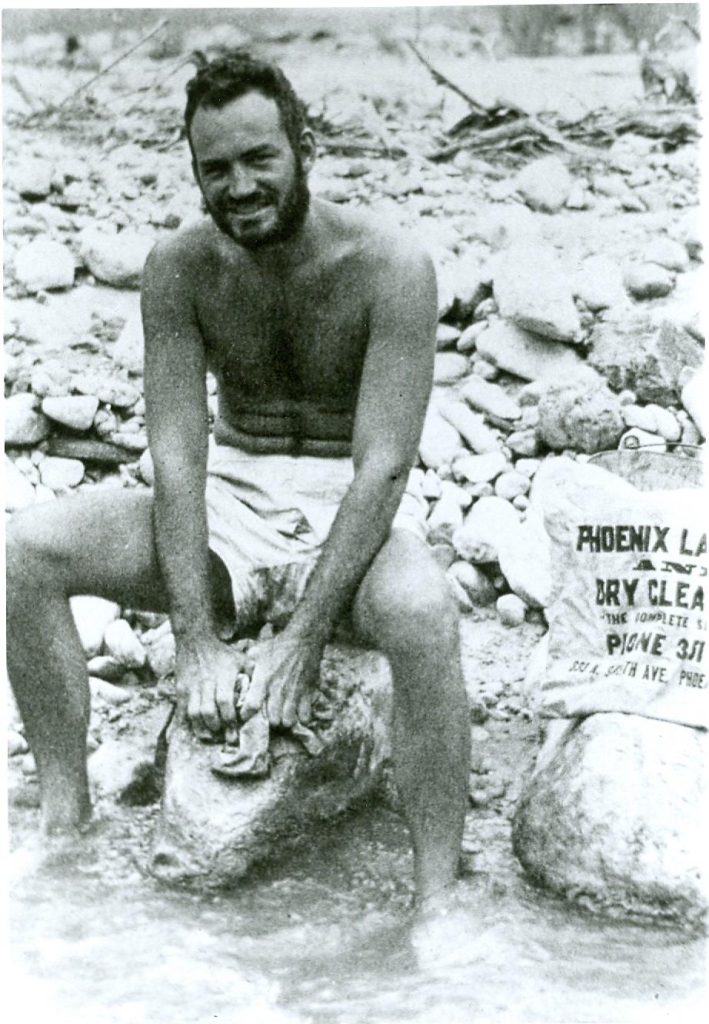
Barry Goldwater in 1941.
Phoenix would benefit from some heroic statues to enrich the downtown streetscape. It's not as if we're lacking in heroes and audacious history. Instead, we get a bronze of Barry Goldwater in Paradise Valley, unreachable by pedestrians but with an adjacent parking lot. Then there's terminal four at Sky Harbor named after Goldwater. And a street in Scottsdale. A newcomer might think the only history worth remembering, if badly painted, concerns the long-serving senator and 1964 presidential candidate.
Readers of this blog know better. But understanding Goldwater's place in Arizona is a daunting challenge. The magisterial biography remains to be written. And for most of his public career, Goldwater was a national figure. We must also contend with a good deal of nostalgia and hagiography concerning the hero. An example of the latter was a recent article in National Review about how Barry was a leader in Phoenix's school desegregation before the Brown decision. The former goes something like this: Barry was no Kook, he fought the religious right and one shouldn't conflate today's conservatism with that of Goldwater. Even I have been guilty. But the reality is more complex and interesting.