In the doldrums

Back in the 2000s, Phoenix was always at or near the top of the Milken Institute's list of best-performing cities. The local-yokel boosters made much of this. In reality, the metric was based on job growth and Phoenix looked pretty good, powered by the housing boom.

What a difference does the housing crash, Great Recession, and better measurements make. A few years ago, Milken retooled its survey. Now Milken uses a wide variety of yardsticks to present a more accurate and comprehensive look at how metropolitan areas are doing. In the new 2016 Best Performing Cities, metro Phoenix comes in at 46th.

Going deeper, Phoenix's five-year job growth ranked 40th; five-year wage and salary growth 63rd; short-term growth 76th; five-year high-tech GDP growth 56th (one-year was 110th); high-tech location quotient 56th, and the number of highly concentrated tech industries 63rd. It's not a pretty picture, especially when we're talking about the sixth-largest city and 13th most populous metropolitan area

At the top were Silicon Valley, Provo-Orem, Utah, Austin, San Francisco and Dallas. Among other Western peers was Seattle No. 10, Denver No. 13, and Portland No. 14. Blue "socialist" California won six of the top 25 spots among major metros. By comparison, Tucson was No. 155. Among small metros, Prescott was No. 33, Flagstaff 81, and Yuma 146. Bend, Ore., led the small metros.

Phoenix’s Roaring Twenties

Phoenix’s Roaring Twenties

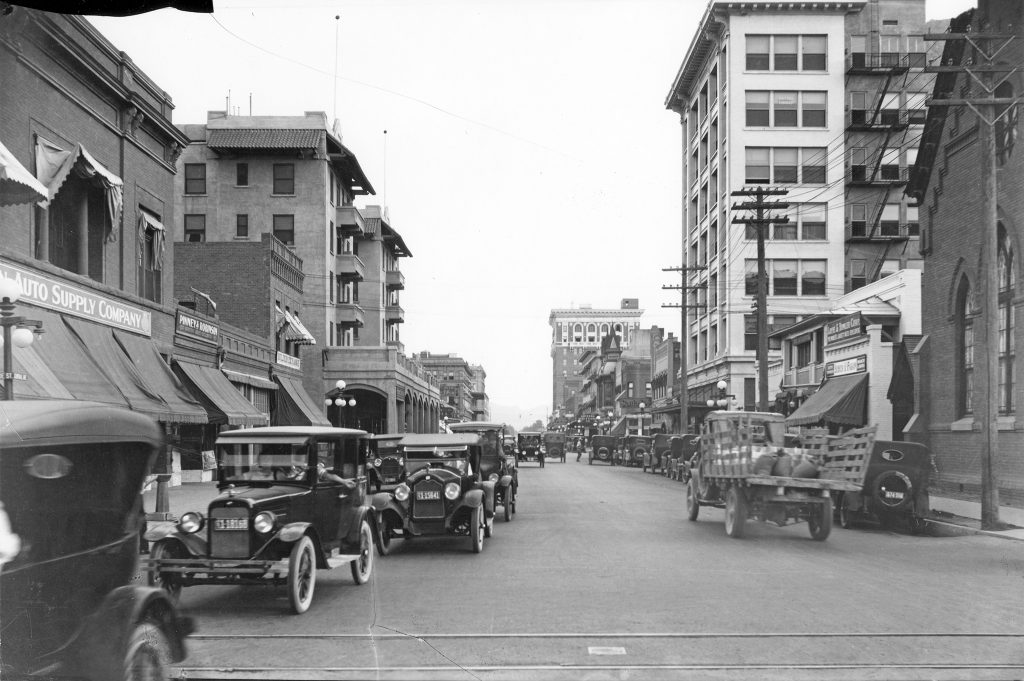
Central_Ave_looking_south_from_Monroe_1920s

If this photo shows a busy little city from the Roaring Twenties, that's exactly what you found in Phoenix during this transformative decade. Town to city, horses to cars, less Wild West and more sophistication — Phoenix had been moving this way for years. But in the 1920s, they became solidly entrenched — even Town Ditch was covered. The first "skyscraper," the seven-story Heard Building, right, opened in 1920. By the end of the decade, it had several taller and more impressive siblings that remain some of the city's most treasured and beautiful buildings. Central Methodist Church (ME South) on the near right would move to a handsome new structure at Central and Pierce.

The nation entered the decade with Woodrow Wilson as president. But he was incapacitated by a stroke and his wife, Edith, was protecting him from most visitors and essentially carrying out most of his executive duties. America was disillusioned by the outcome of the Great War, the Palmer Raids and the "Red Scare," what was seen as Wilson's overreaching, and two decades of the Progressive Era. Voters (including women, for the first time) eagerly embraced Ohio's Warren G. Harding as the next president. He promised a "return to normalcy," forever wrecking the correct word "normality." Harding freed the Socialist Eugene Debs, who Wilson had imprisoned for opposing American involvement in the war.

The Great War had brought changes to the Salt River Valley, especially with the booming demand for cotton. By 1920, it had turned into a bust and Phoenix was suffering through the national recession. Things would soon turn around as the economy expanded and America embarked on, as F. Scott Fitzgerald put it, "the greatest, gaudiest spree in history." It was the Jazz Age, with the experiment of Prohibition sidestepped with speakeasies. Prohibition was hardly observed at all in the non-Mormon towns of the West. In Phoenix, bars, borthels, and gambling dens operated in the open, sometimes making payoffs to the city. This wide-open environment soon attracted the Mafia, including Al Capone.

The Phoenix of the 1920s was expanding out of the half-mile footprint of the original township. In the previous decade, the city had surpassed Tucson to become the most populous place in Arizona. With more than 29,000 people in 1920, Phoenix would grow nearly 66 percent over the next 10 years. Residential neighborhoods expanded a half mile north of McDowell, west of the Santa Fe tracks at 19th Avenue, and east as far as 16th Street. These were gradually incorporated into the city limits, which expanded from five square miles in 1920 to 6.5 square miles a decade later.

The mansions of "Millionaire's Row" still graced Monroe Street, but the central business district was moving north. Elegant bungalows lined the streets north of Van Buren into the fancy new Kenilworth District north of Roosevelt Street and eventually the Period Revival neighborhoods just beyond McDowell, including Palmcroft. Many of these were reachable by the streetcars.

Now we’re talking treason

"We laugh at honor and are shocked to find traitors in our midst." — C.S. Lewis

I'm old enough to remember Republicans continually warning that Democrats would surrender our country to the Russians.

It's funny how things turn out.

The news broke late Friday, a Washington Post story headlined, "Secret CIA assessment says Russia was trying to help Trump win the White House." It said in part:

The CIA has concluded in a secret assessment that Russia intervened in the 2016 election to help Donald Trump win the presidency, rather than just to undermine confidence in the U.S. electoral system, according to officials briefed on the matter.

Intelligence agencies have identified individuals with connections to the Russian government who provided WikiLeaks with thousands of hacked emails from the Democratic National Committee and others, including Hillary Clinton’s campaign chairman, according to U.S. officials. Those officials described the individuals as actors known to the intelligence community and part of a wider Russian operation to boost Trump and hurt Clinton’s chances.

“It is the assessment of the intelligence community that Russia’s goal here was to favor one candidate over the other, to help Trump get elected,” said a senior U.S. official briefed on an intelligence presentation made to U.S. senators. “That’s the consensus view.”

As I have long contended: crisis reveals character. As in when Phoenix Bishop Thomas O'Brien hit a 43-year-old man with his Buick. Had O'Brien stopped and rendered first aid, called 911, administered last rites, he would have been a hero. Instead, he fled and the next morning called his secretary to arrange for his windshield to be replaced. But another driver got his license tag after the hit-and-run. He became the first Roman Catholic bishop to be convicted of a felony.

Faced with the Washington Post story, President-elect Trump had the opportunity to immediately call for an independent investigation into the Russian penetration of the American election. Instead, he berated the agency and defended Russia. He prepared to name Vladimir Putin's close confident and Exxon CEO Rex Tillerson as Secretary of State. Crisis reveals.

Trump and Arizona

Ah, I remember those palmy days when Hillary was going to win Arizona, when Donald Trump's vicious attacks on Mexicans would awaken the sleeping giant of the Hispanic vote. I was skeptical and shamed for that thoughtcrime on Facebook (from which I am taking a holiday).

Reality shows that Trump won 49.5 percent of the vote in Arizona vs. 45.4 percent for Clinton. She won only four counties (Apache, Coconino, Pima, and Santa Cruz). Significantly, Trump carried Maricopa County, the state's most populous and, after its fashion, urbanized. Trump won nearly 6 percent fewer votes here compared with Mitt Romney in 2012, but metro Phoenix was one of very few major metropolitan areas that went plurality red. Most went resoundingly majority blue. The New Confederacy is solidly anchored in Arizona.

Now it's time to pay the piper. Will America merely come to be more like Arizona over the next four, eight, or unlimited number of years? No the consequences will be more serious and disastrous than most can imagine, certainly not those living in Brightsideistan. So, some early looks at Arizona vulnerabilities:

The Affordable Care Act. Trump and, especially, the Republican Congress have vowed to repeal Obamacare without an immediate replacement. Arizona was one of the few red states to take part. As a result, nearly 180,000 Arizonans were covered by the ACA in 2016. If repeal happens, they will have no health insurance.

• Universities. If Trump carries out his consistent campaign promises to severely curtail immigration and slap big tariffs on Chinese goods, the results could be catastrophic for Arizona universities. Thousands of foreign students could stop coming here, with the loss of tens of millions of dollars in tuition. In addition, austerity from the GOP Congress has been hurting research funding for universities. Only President Obama has kept university R&D money coming. With Republicans completely in control, universities — already starved of state funding — could see a huge loss of money from Washington.

‘The white working class’

‘The white working class’

CyXTc61UUAAGbmJ
After the stunning defeat of Hillary Clinton, progressive mandarins are calling for a complete rebuilding of the Democratic Party. Here, for example, is Robert Reich's eight-step program. Unlike the Republicans after defeat, who double down on their ideological convictions and nihilistic congressional maneuvers, it may well happen. And it may be for the good. I don't know.

One thing I doubt is that the Democrats can win back the vaunted white working class. Ohio Rep. Tim Ryan, who is challenging Nancy Pelosi for House Minority Leader, said, “We need to speak to their economic interests, that we get it, that we understand, that we talk about those things and we try to fight hard for those things.”

Well, how? President Obama saved General Motors, including the Lordstown, Ohio, assembly. Yet that county supported Trump over Clinton by six points. Obamacare provided more health insurance for whites than for blacks and Hispanics combined. Yet exit polls show whites voted 58 percent for Trump vs. 37 percent for Clinton, who had detailed policy proposals to help working Americans. As you can see from the map above, the Rust Belt states that went for Trump have plenty of counties that were doing well. The same thing with the hard-red South. (Although, as I wrote in the Seattle Times, blue states are the economic superstars for reasons that most red states shun).

Perspective is important. Hillary Clinton has won a larger majority of the popular vote than any candidate in modern history who did not also win the Electoral College. We vote by states, but even here it was a near-run thing. Trump won Michigan's 16 electoral votes by two-tenths of a percentage point (how'd that protest vote work out for you?). In the end, she couldn't get the low-single-digit additional points in key states that Obama had previously won.

Air conditioning and Phoenix

Air conditioning and Phoenix

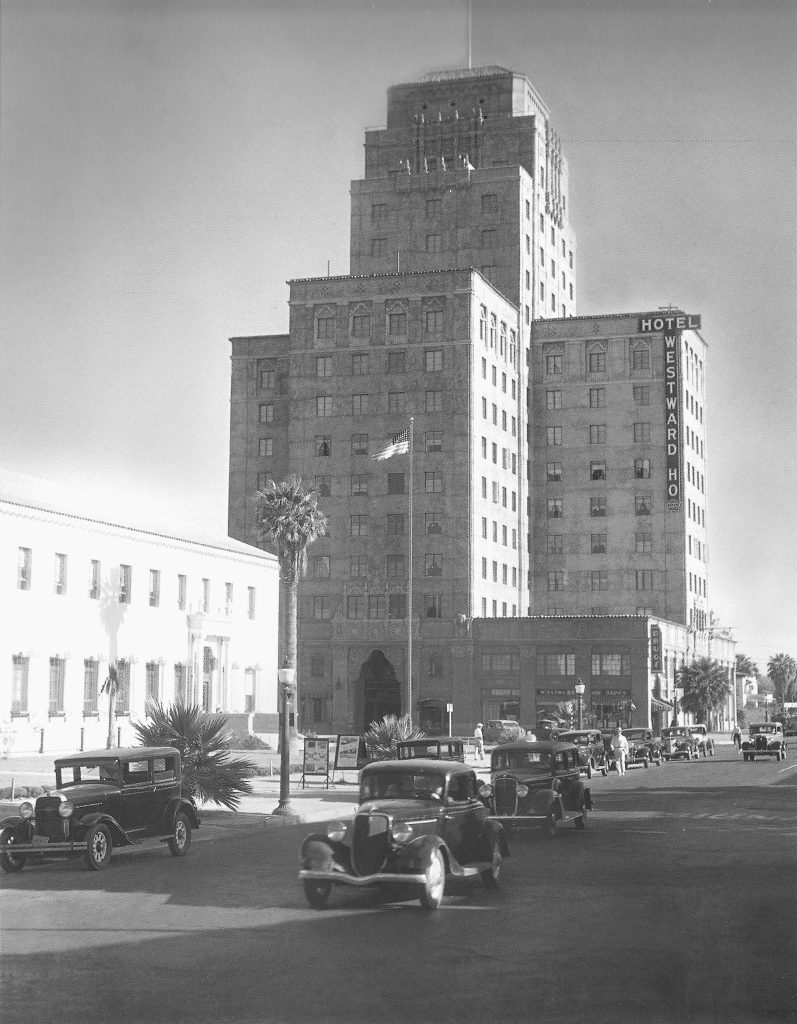
Westward_Ho_Hotel_Post_Office_Central_Fillmore_1937The first air-conditioned building in Phoenix was the Hotel Westward Ho, in 1929.

The common narrative is that Phoenix's spectacular growth was made possible by air conditioning. But that's only partly true.

Some of the hottest places in America held big cities in 1930, when air-conditioning units were large and expensive, confined to the largest buildings with money to spend. Among them were New Orleans (458,762), Dallas (269,475) Houston (292,352), and Atlanta (270,366). These cities suffered not only very hot, but also humid, summers. Phoenix, by contrast, had a population of only a little more than 48,000 that year. Even El Paso, the city that Phoenix leaders aspired to surpass as the business capital of the Southwest, held 102,421 people.

Before the beginning of the great post-war migration to the yet-to-be-named Sunbelt, the Intermountain West was lightly populated and a magical place unknown to most Americans outside of movies. The entire state of Arizona had a population of fewer than 436,000. The Intermountain West population was about 3.7 million out of a total U.S. population of 123 million. In other words, those seven states had fewer people than today's metropolitan Phoenix.

The great impediment to Phoenix's growth was not as much heat — note the cities above — as isolation. Cut off from the east and north by nearly impenetrable mountains, and from the west by forbidding desert, Phoenix was far from natural routes of commerce or travel. This began to change as branch lines of the Santa Fe and Southern Pacific railroads reached the emerging agricultural empire of the Salt River Valley in the late 19th century (the railroads' main lines had been built through northern and southern Arizona). This changed dramatically with the completion of SP northern main line through the city in 1926. Along with new highways, this forever broke through Phoenix's seclusion.

Live through this

If you want to argue about who or what is to blame for this catastrophe, I direct you to The Best of the Front Page, where the articles are as definitive as we can be at this point. I suspect mauch, much more will emerge in the coming months and years about Russian intelligence, Wikileaks, media malpractice, and the shenanigans of the FBI.

To the white working class voters in Pennsylvania, Ohio, Wisconsin, and Michigan who went for Trump: Fuck you. I refrain from profanity on this site, which has been overused to the point of being trivial, but how else to put it? Your situation is going to be so much worse as a result of what you did. I just wish you weren't taking the rest of us — those who made the majority of the popular vote that went to Hillary Clinton — and the planet down, too. My hope in this election was to avoid national suicide, not make any grand progressive gains which are impossible in this Cold Civil War. Even that modest aim proved impossible. I didn't sign up for this murder-suicide, but here I am.

If I were 30 and in better condition, I'd move to Scandinavia in a heartbeat. If I had been more careful in picking my parents, I'd drop out, go off the grid, keep subscribing to newspapers but not read them, read the great books and history, listen to classical music, opera, and jazz, be thankful for every day. I'd go back to school, learn a foreign language, become an amateur botanist, build a model railroad, re-read everything Shakespeare wrote, vote for what it's worth. I'd write my memoir, even if nobody would publish it.

Unfortunately, I have to work as long as I can, and do so in a calling that requires me to deeply immersed in the news. First as tragedy and then as farce? No, Karl. We're going to get both at the same time, good and hard.

Night falls on the republic

President-elect Trump. Roll that around in your mouth for awhile, see how it tastes.

This is what we get after the most portentous election in American history. The office of what was once quaintly called chief magistrate will be occupied by a temperamental narcissist hustler with no knowledge of statecraft, history, the world, or the Constitution. The republic is over, baby. You just need to decide how you'll live with it.

The pundits and pollsters were surprised. I was not.

For months, I've had a nagging worry. The cultural left grabbed the public square. Gay marriage, now accepted by most Americans, was not enough. We had Black Lives Matter shouting down opposing views and even taking the microphone from Bernie Sanders, whether a police shooting was uncalled for or righteous. The LGBTQI activists pushed into mainstream media to the point of a New York Times story on gender identity change in the first grade. The left weaponized language, such as "white privilege." As if all white people are the same and similarly "privileged." It celebrated the coming minority status of white people, demonized "white American history" through the lens of presentism as a cavalcade of nothing but genocide and oppression. Wrong-thinking academicians were badgered into silence or out of a job. The thought police aggressively patrolled social media.

And through all this, I thought: an increasingly angry number of whites were keeping eerily silent. Until they didn't on election day.

Yes, "fear of losing white privilege," "white nationalism," and no small amount of Obama Derangement Syndrome led to Trump's victory. It wasn't about the economy. But overreaching by the left was perhaps most consequential. And that kills the idea that Bernie Sanders would have been the better candidate. First, he would have been savaged by the right as SOCIALIST! (He was their preferred opponent). But like Hillary Clinton, he would have necessarily been the tribune of a changing country where the opponents of that change get a vote, too.

A version of the Bradley effect was surely at work here, too, where white likely voters told pollsters they were voting for Hillary — but when it came time to vote, the marked Trump. I warned about that, too. At the same time, years of Republican vote suppression efforts came together in this election, with results that were no doubt substantial and perhaps even decisive. As to this latter, most of the media will be so busy "normalizing" Trump that it will go unexamined.

A dozen historic elections

A dozen historic elections

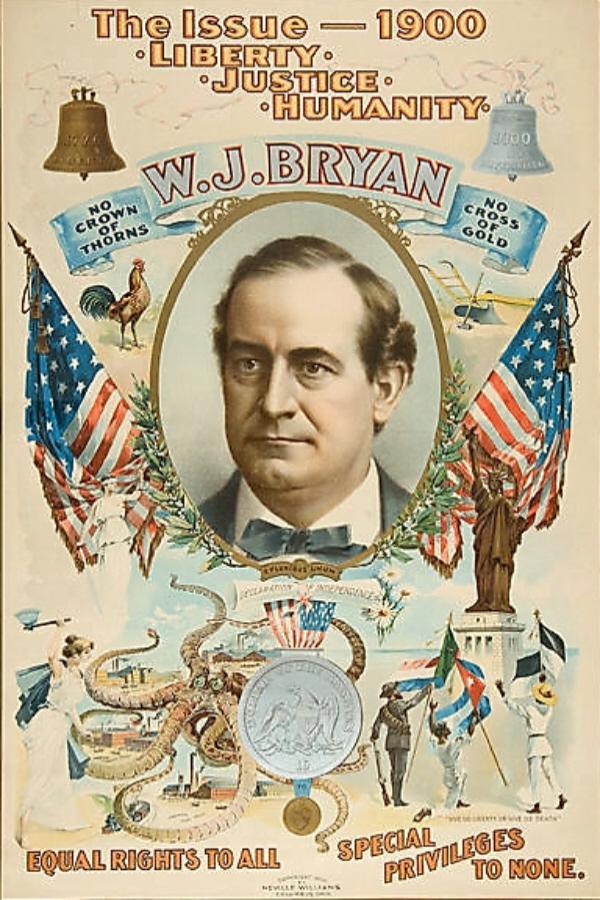
Bryan_in_1900
With Donald Trump, the most extreme and unqualified candidate of a major party, in striking distance of winning the presidency, we stand on the edge of the abyss. This election shouldn't be this close. You can use the comments section as an open thread as the next few days unspool. For my contribution, here are a dozen of the most consequential elections, nationally and in Arizona. At the least, they show that elections do indeed matter.

1828: John Quincy Adams vs. Andrew Jackson. Adams, the sitting Whig president, was defeated by war hero Jackson. The Whigs stood for the "American System" of internal improvements (infrastructure), a national bank and limiting the spread of slavery. Jackson was just the opposite. Jackson's victory led to the breaking of solemn treaties with the Five Civilized Tribes and their brutal relocation west (denounced by Adams) to open land for slaveholders, among many other ills.

1844: James K. Polk vs. Henry Clay. The defeat of "Harry of the West" not only doomed the American System but eliminated the last chance that the Civil War might have been postponed or avoided. One reason was the familiar partisan circular firing squad. Clay lost votes in New York and Pennsylvania to the abolitionist Liberty Party. It was the death of the Whigs.

With Polk, the nation again had a Southerner determined to extend slavery, including by prosecuting the highly unpopular Mexican War. At one point, Polk considered demanding all the territory to Tampico, but didn't want so many Mexicans brought into the union (they automatically became U.S. citizens with the Treaty of Guadalupe Hidalgo, which ended the war). On the other hand, in settling the Oregon Country dispute with Great Britain, he would have settled for the Columbia River as the northern border (in other words, Seattle would be in British Columbia). With Polk, the Civil War became inevitable.

‘I can’t wait for this to end’

I've heard this expression from so many people over the past two weeks, including some who are politically savvy. What world are you living in?

If Hillary Clinton wins the presidency, it's not going to end. Donald Trump might refuse to accept the results of the election. Although this might lack any foundation in law — unless the Republican Party had ground to challenge specific state results — it would embolden his hardcore, alt-right supporters. To do…well, they have the guns, don't they?

If she wins but Democrats fail to gain a majority in the Senate, it's not going to end. Republicans have stated explicitly that they will refuse to approve any Supreme Court nominee she puts before the upper house. President Obama's highly qualified, centrist-to-a-fault nominee Merrick Garland has not even been granted a hearing before the Senate.

This is only the beginning. The scorched-earth nihilism shown by a disciplined Republican Congress will only intensify if the party loses the White House yet again. Clinton's cabinet and agency nominees could conceivable be blocked for the next four years. The GOP will stop at nothing, because its members believe only they have the right to rule. This was the party willing to default on U.S. debt and bring on world depression to stick it to That (Black) Man in the White House. Its austerity has prolonged the suffering of millions.

In the elevator, a veteran politician said that Hillary had the ability to get things done LBJ-style. With all due respect, LBJ had solid Democratic majorities in Congress, a mass Republican party with plenty of liberals and centrists, the American liberal consensus still intact, and the nation's sympathy for the martyred John F. Kennedy. None of those things appertain today.

Brewer tells the truth

Brewer tells the truth

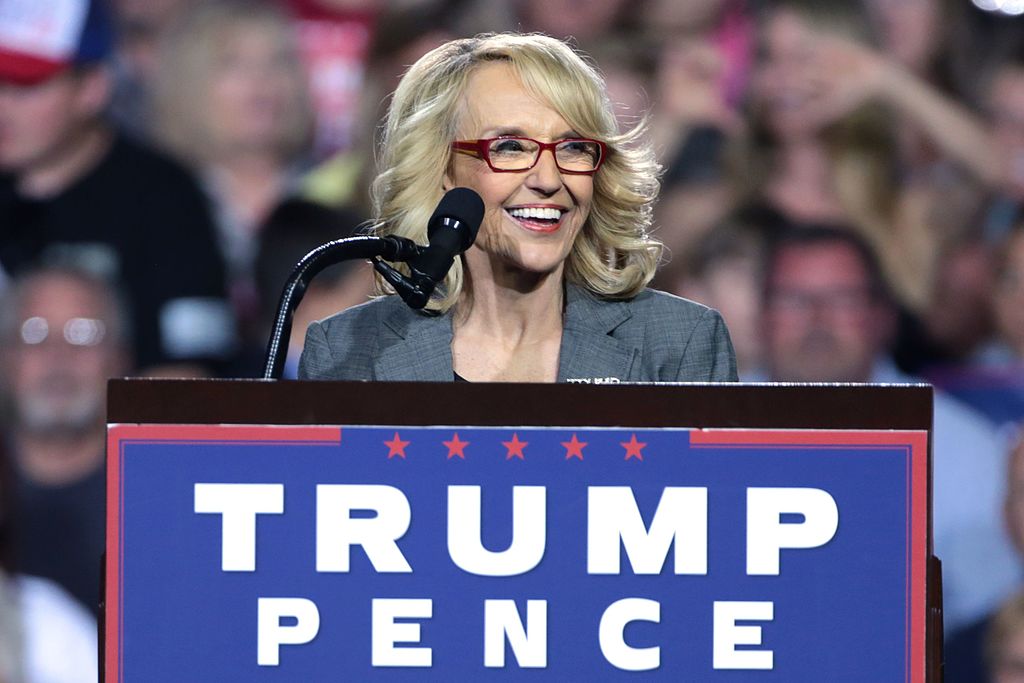
Jan_Brewer_(29827585030)
The national progressive echo chamber had quite a fit last week when former Gov. Jan Brewer brushed off the suggestion that Hispanics would cause Hillary Clinton to win Arizona. "Nah," she told the Boston Globe, "They don't get out and vote. They don't vote." The thought police pounced, condemnations flooded Facebook, and a Twitter lynch mob gathered at such a racist statement.

But she told the truth. Rare for her, perhaps unprecedented, but accurate for once.

Hispanics made up 30 percent of the population of Maricopa County in 2014, compared with only 16 percent in 1990. Yet in that critical election, their voter participation rate was in the single digits. And it can't be explained away by saying that low-income people vote less. The low-income Anglos vote religiously and conservatively.

Brewer, an accidental governor when St. Janet read the future and decamped for D.C. and then California, did much to help ensure this. As Secretary of State, charged with overseeing elections, she was also chair of the state Bush re-election committee in 2004. I'm sure polling locations were abundant and well handled in majority Latino precincts. Then, running on her own, she defeated the eminently better-qualified Terry Goddard on the strength of her backing the anti-immigrant SB 1070.

As I have written before, SB 1070 had little to do with illegal immigration and everything to do with ginning up the old Midwestern-immigrant Anglo GOP base and intimidating Mexican-American citizens. And one of the dirty secrets was that not a few older Mexican-Americans, who had seen their neighborhoods, schools, and culture most destabilized by the wave of illegals in the 2000s, quietly supported the bill, too.

But the problem of low Hispanic turnout predates the embarrassing, finger-in-the-face-of-the-president Jan Brewer, a woman who would drive down the class level of the trashiest trailer park.

A looming constitutional crisis

A looming constitutional crisis

McCain
In an interview today with a Philadelphia radio station, wealthy Republican Sen. John Sidney McCain III said, "I promise you that we will be united against any Supreme Court nominee that Hillary Clinton, if she were president, would put up. I promise you. This is where we need the majority."

Any nominee.

Later, according to Talking Points Memo, McCain's office appeared to back slightly away from the statement, saying, "Sen. McCain believes you can only judge people by their record and Hillary Clinton has a clear record of supporting liberal judicial nominees. That being said, Sen. McCain will, of course, thoroughly examine the record of any Supreme Court nominee put before the Senate and vote for or against that individual based on their qualifications as he has done throughout his career."

Trust the original blurt as the truth. Trust it, too, because of the unprecedented refusal of the Republican-controlled Senate to even give a hearing to President Obama's nominee, the distinguished federal Judge Merrick Garland, as moderate as they get and recipient of the highest rating from the American Bar Association. It's 215 days and counting  

Before we examine the implications of McCain's statement and the behavior of the Republican Senate, it's worth reminding Arizonans exactly who John McCain is.

Now the action is downticket

Now the action is downticket

United_States_second_presidential_debate,_2016
A confession: Almost all my close friends as an adult have been women. I haven't spent much time in locker rooms, much less engaged in "locker-room talk," as the Republican presidential nominee excused his language about grabbing pussies. On the ambulance, contrary to the dialogue on the television series Emergency, we talked about only two things: calls and sex. This was even true of the female paramedics. Get two guys as partners and the talk could turn quite bawdy in assessing our lusts-of-the-moment. But it was never what Trump was saying, which was about sexual assault. It gives a sinister meaning to "binders full of women."

Anyone with a passing knowledge of Donald Trump knows he's a pig. If it takes the now infamous tape to bring him down, so be it. So many other statements, actions, and positions should have already done this, including his pledge to imprison his opponent if elected. Like so much else, it is unprecedented in American presidential politics. We're way beyond the need for a Godwin's Law warning when discussing Trump — he is on a Hitlerian path.

It's important to understand that little of the recent Republican abandonment of Trump is based on principle. Wealthy Republican John Sidney McCain III was apparently fine with draft-dodger Trump calling him a coward for being imprisoned and tortured by the North Vietnamese. With the primary behind him and Hillary Clinton potentially winning Arizona, suddenly it's OK for McCain to denounce him. And so it goes. They are acting strategically, to prevent losing control of the Senate or even the House.

Another critical fact is that Trump now embodies the GOP after decades of drift into extremism, slaughter of RINOs, and flight from reality ("We create our own reality."). With or without Trump, the party denies mainstream science on climate change, wants to privatize or give to the states our public lands, privatize Social Security and destroy the social safety net, pursue ruinous austerity, appoint activist judges and Supreme Court justices, suppress voting rights, carry on a war against cities, deny women reproductive choice, cut taxes on the richest, "starve the beast" to show "gub'ment is the problem," turn us into a fascist theocracy. Behold the Party of Lincoln. The basic policies would have been the same under nominees Rubio, Kasich, Cruz, Fiorina, Carson, Bush, Jindal, Graham, Perry, Walker, or the strangely still respected Paul Ryan. Remember this. Burn it in your brain.

The park Phoenix almost lost

The park Phoenix almost lost

Rock_Formation_in_Desert_Papago_Park_1917
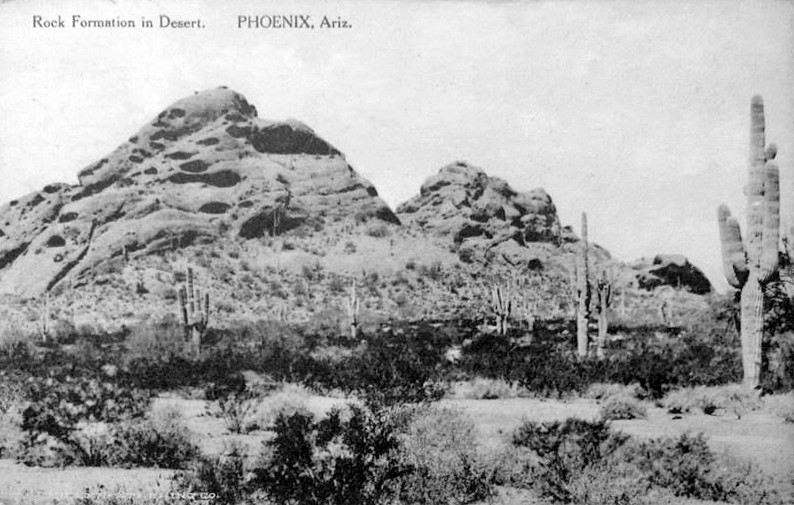
Today's Papago Park is full of delights and history, from the Desert Botanical Garden to the Phoenix Zoo, Hole-in-the-Rock, hiking, baseball, and Hunt's Tomb. As the official website says, "Its massive, otherworldly sandstone buttes set Papago Park apart, even in a city and state filled with world-class natural attractions."

But Papago Park almost didn't happen.

For those of you who don't venture south of Bell, north of "south Chandler," or are out-of-town readers, I'm writing about land that sits in east Phoenix and north Tempe. Technically, the boundaries run from McDowell on the north to Tempe Town Lake on the south, and 52nd Street and the Crosscut Canal/College Avenue to the west and east respectively. The park could have been much larger.

These magical uplands were five-and-a-half miles from the original Phoenix townsite when they were included in the reservation for the Pima and Maricopa tribes by President Rutherford B. Hayes. This was 1879, when the biggest concerns of the hardscrabble settlements of Phoenix and Tempe were reclaiming the Hohokam canals for agriculture. The National Park Service claims the Hohokam used Hole-in-the-Rock to mark the solstice. Early American settlers also appreciated the beauty of the ancient rock formations, including Carl Hayden (born in 1877) growing up across the river in Tempe.

Later in the 19th century, the reservation was contracted to the present-day borders of the Salt River Pima-Maricopa Indian Community. Some desultory mining activity took place around the buttes and they became more popular as exotic destinations for visitors. In 1914, a grown up Hayden, the new state's only representative in the U.S. House lobbied his friend, President Woodrow Wilson, to make the area a National Park. Wilson declined, but using the presidential powers of the Antiquities Act, declared it the Papago Saguaro National Monument. At the time, it stretched from the Salt River to Thomas Road.

Fate of the nation

I am writing this before the first presidential debate. I don't plan to watch. Too much brain damage. Nothing that would be said could change my vote for Hillary Clinton. The alternative is national suicide.

So far, the election is playing out pretty much as I suspected. Republicans, even the #NeverTrump crowd such as Sen. Ted Cruz, will dutifully line up and vote for Trump. If the GOP candidate were Dwight Eisenhower, Gerald Ford, or George H.W. Bush, I would give him a hearing. But one of our two great mass political parties has gone insane. Donald Trump is not an anomaly. He is the natural outcome of the paranoid style in American politics that long ago took over the Republicans. Ronald Reagan and Barry Goldwater could not win a GOP school-board primary today.

It doesn't matter that Trump is a serial liar, totally unqualified for national office, temperamentally unfit on a frightening level, the most dangerous candidate ever put forward by a major party. They will vote for him.

I don't want to hear about how things would have been different with Bernie. Had he won the nomination and been subjected to months of SOCIALIST!, he would be losing badly in the polls already. To me, your protest votes for Jill Stein or Gary Johnson are just short of treason. And if Trump wins, which he may well do, Mencken's quote that "democracy is the theory that the common people know what they want, and deserve to get it good and hard" will offer no comfort.