Days of rage

Days of rage

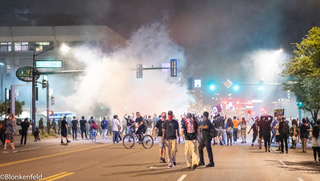
Jon Talton_Charles Blonkenfeld photo

Former Arizona Attorney General Grant Woods got it right when he tweeted, "We need to support and defend every protester. And we need to arrest and prosecute every single person who loots or damages private property. We can do both. We have to do both."

My two cents, after watching both peaceful protests and then the worst rioting and looting in modern Seattle history (yes, worse than the 1999 WTO): The events of the past several days are a combination of outrage over the murder of George Floyd by a Minneapolis police officer, criminals who took advantage of the situation, Trump, and cabin fever from weeks of Covid-19 lockdown.

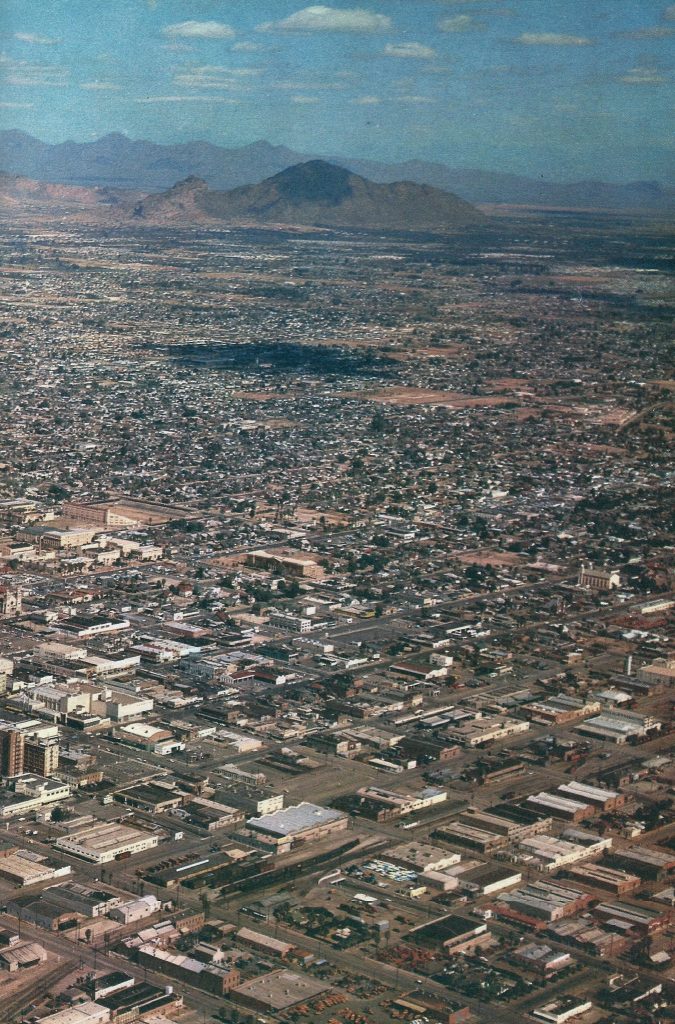
As for Phoenix, it has a downtown again. I remember when pitiful protests against George W. Bush were held on the sidewalk at 24th Street and Camelback. Now, downtown has come back sufficiently to be a dense core and offer public spaces (and police headquarters, above) to see protests and damage similar to real cities. The rocks regrettably come with the farm.

I can't think of any analogy in the city's history. When Martin Luther King Jr. was assassinated in 1968, a disturbance around Eastlake Park was quickly put down and Mayor Milt Graham and black ministers held a community meeting to encourage calm. Now Gov. Doug Ducey has imposed a statewide curfew without consulting the mayors of Phoenix or Tucson.

What happens now

What happens now

1024px-1918_at_Spanish_Flu_Ward_Walter_Reed_(cropped)
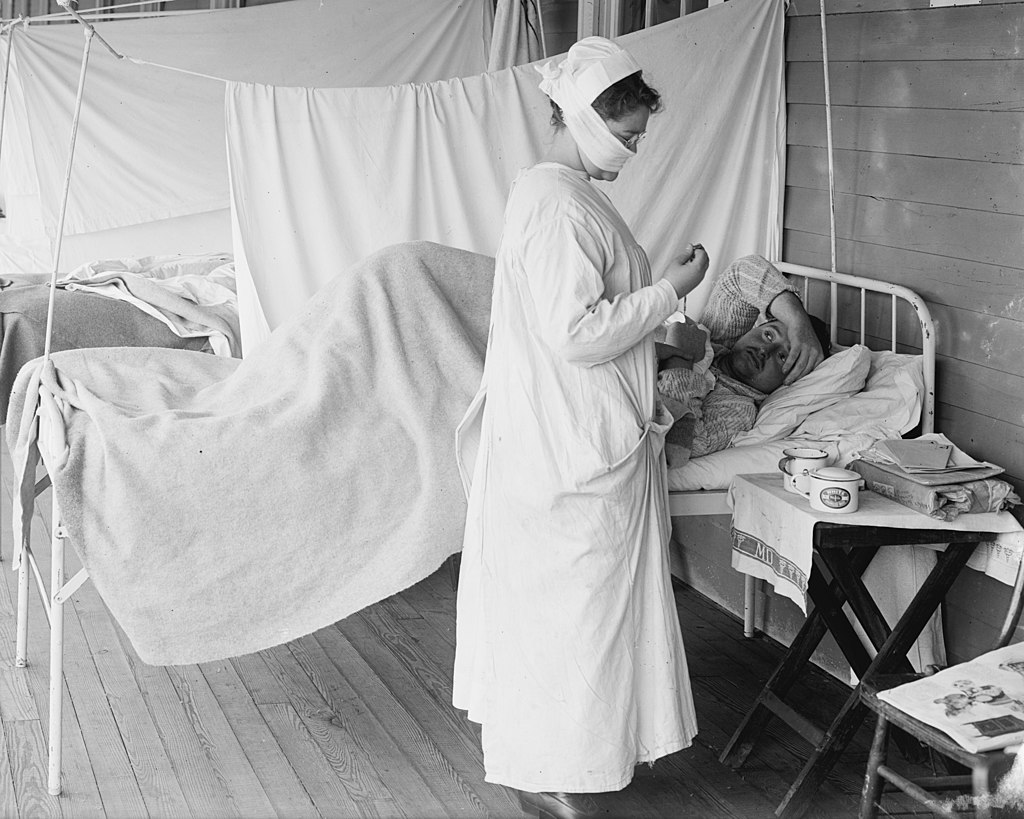
The 1918-1920 "Spanish" influenza pandemic appeared on the front page of the Arizona Republican on Oct. 5th, 1918. The all-caps headline: INFLUENZA RUNS ITS MAD COURSE THROUGH NATION." By Nov. 18th, the newspaper promised a full local report: 64 cases the previous evening in the Emergency hospital and 74 at St. Joseph's (city population about 28,000). The subhead of the story said, "Steady Progress Made to Halt Spread."

The "Spanish" flu, which likely began at an Army post in Kansas, was the deadliest pandemic since the Black Death in the 14th century. It killed at least 50 million worldwide and 675,000 in the United States. World population was 1.8 billion (vs. 7.7 billion now). That of the United States was about 100 million (vs. 330 million now). The pandemic was spread by the world war and unusual in fatally striking young people. This was before antibiotics, ventilators, or other miracles to come.

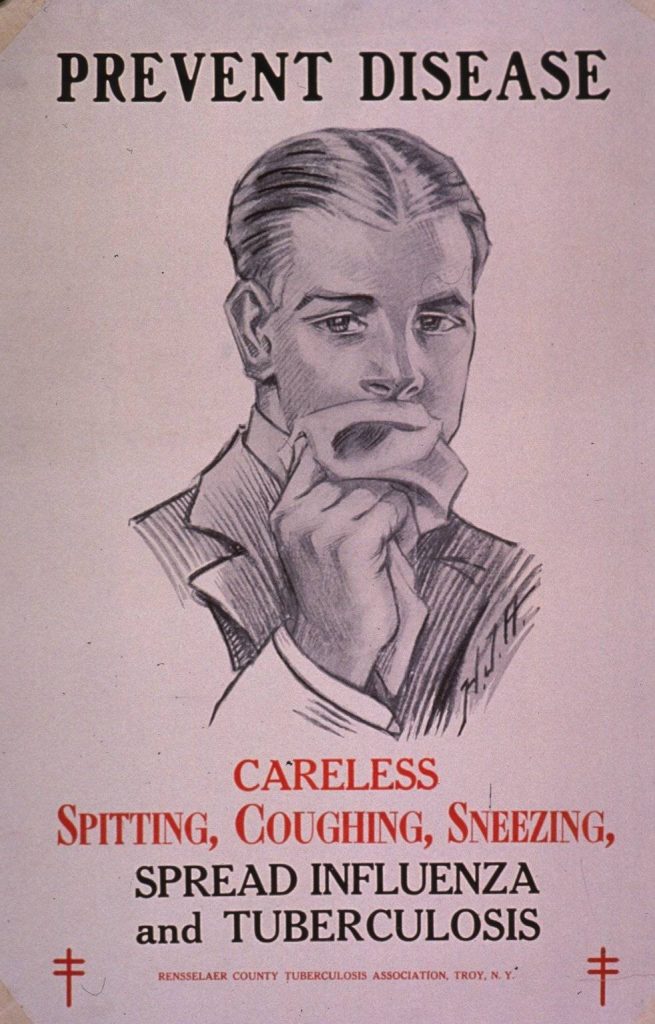
Phoenix shut down for six weeks until cases went down in December 1918. Masks, successful in many cities, were "not given a fair chance" here because of Phoenicians' "tendency to revolt." Yet four waves total hit and an estimated 2,750 out of the state's 334,000 people died. Phoenix was too small then to be included in a fascinating University of Michigan study on how the 50 largest cities responded. These measures included shut-downs, lowering crowding, wearing masks, and strict rules against spitting on the sidewalk.

After it burned itself out, as all pandemics do, life went on. Cities didn't die — indeed, America became much more urbanized. Neither did transit or passenger trains or sit-down restaurants or retail shops. Interestingly, for all the recollections from my grandmother — who was 29 in 1918 — she never mentioned the influenza pandemic.

While I was away…

While I was away…

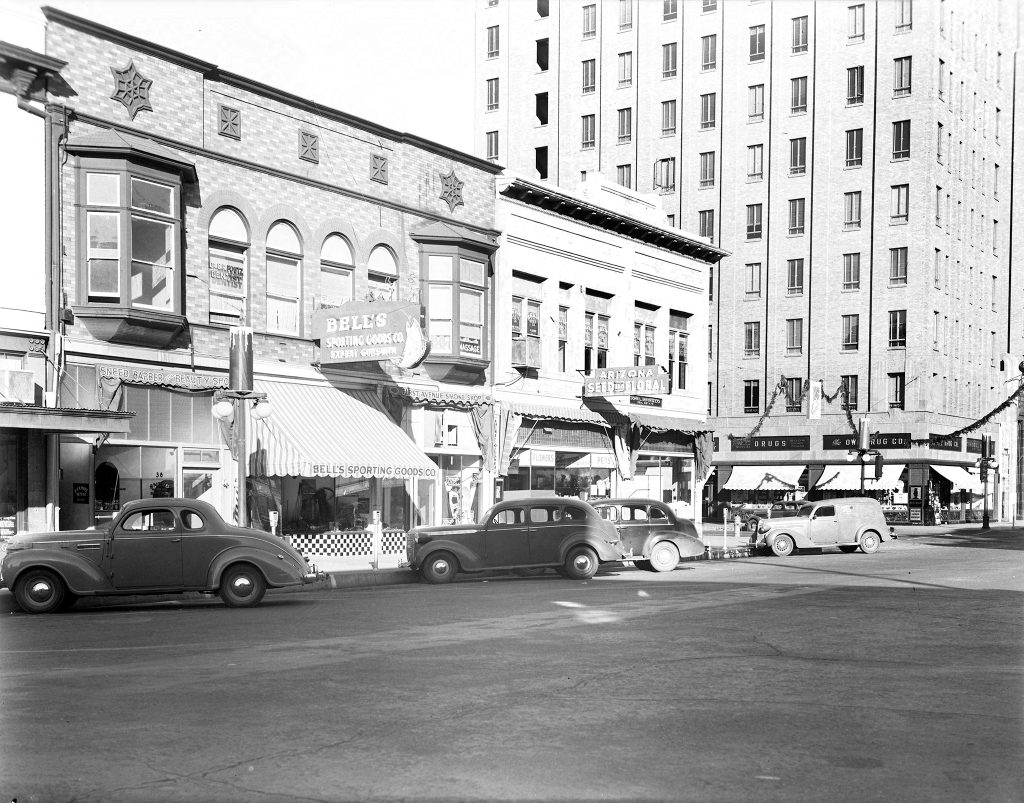
MonihonBldg_1AvWash1930s
I turned in the manuscript for my new mystery, Sunset Limited, about a private eye in 1930s Phoenix. For a variety of reasons, it was the hardest book I ever wrote. The Poisoned Pen Press, now owned by another firm, Sourcebooks, and this book's publication date is next year.

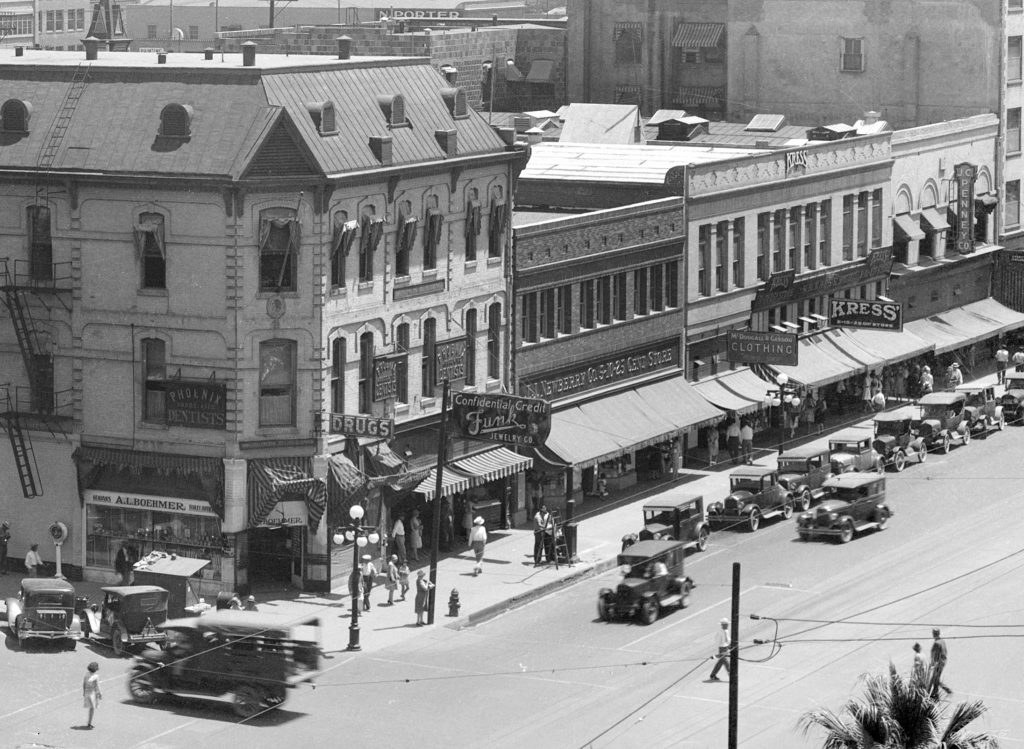
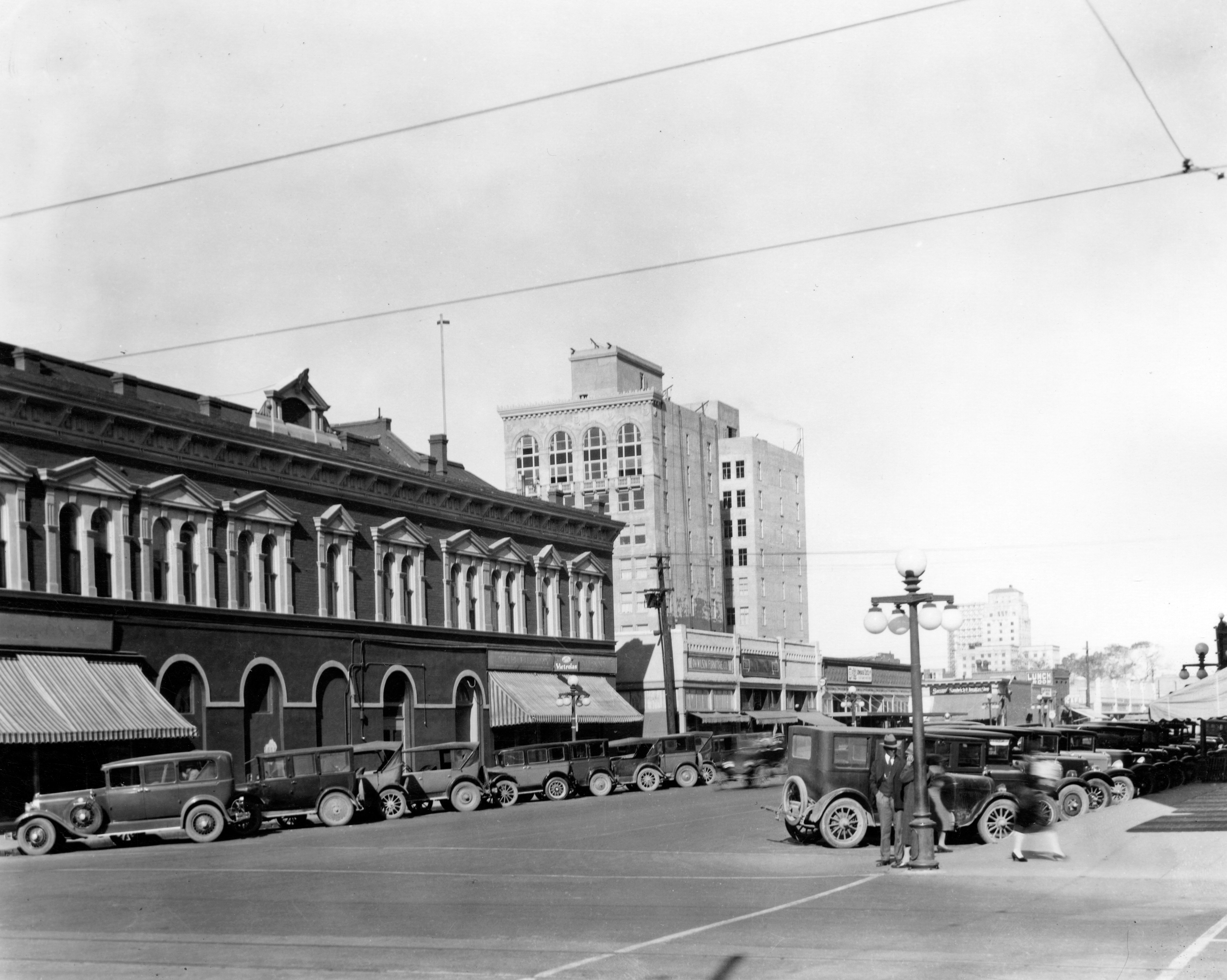
Inhabiting Phoenix during the year 1933 was a fascinating experience and welcome escape from today, Great Depression notwithstanding. Above is the Monihon Building, at First Avenue and Washington, where my shamus has his office.

• Perhaps the most astonishing thing I learned while I was away from this column came from a seemingly routine story sent along by Rogue's volunteer Phoenix/Arizona researcher Michael Sampson. Headlined "EPCOR cites increase in sewage issues," it's ostensibly about flushable wipes in a sewer system. But as with much Arizona news, reading between the lines is where it gets interesting.

The story states, "EPCOR, which provides water, wastewater and natural gas service to around 665,000 people across 44 communities and 15 counties in Arizona, New Mexico and Texas…"

Wait. What?

20/20 hindsight

20/20 hindsight

Phoenix night skyline
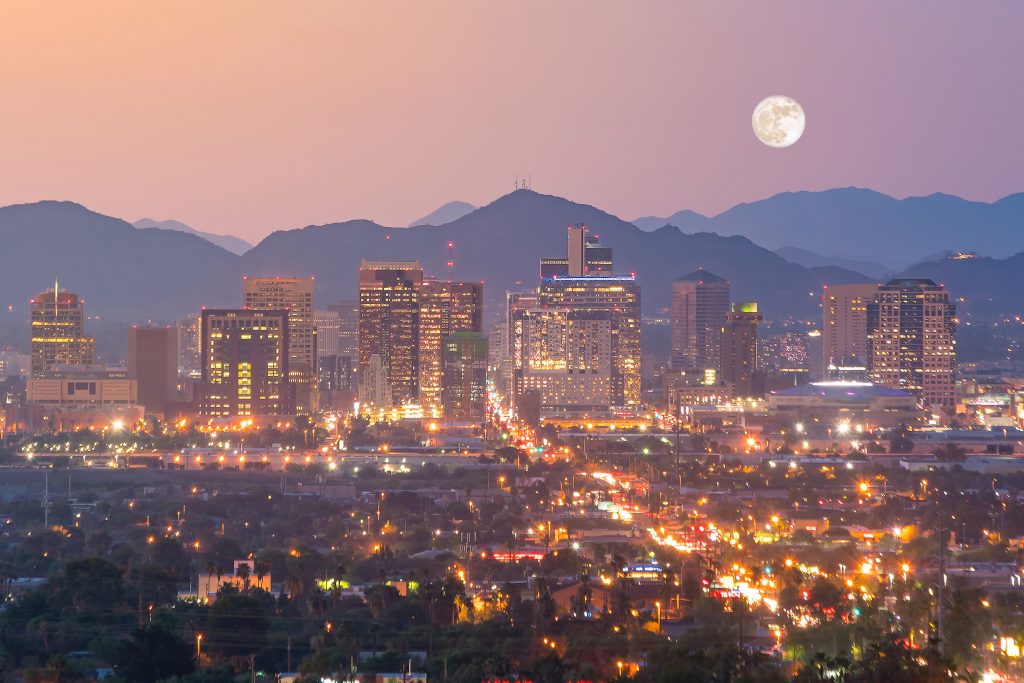
A score of things that made today's Phoenix:

1. ASU: In 1920, Tempe Normal School was awarding teaching certificates and providing high-school courses. From there it became Tempe State Teachers College (1925), Arizona State Teachers College (1929), Arizona State College (1945), and finally a university (1958). Today, under the dynamic leadership of Michael Crow, ASU is one of the largest universities in the United States. Among its five campuses/centers is the transformative downtown Phoenix location. The downside: Phoenix is by far the largest metropolitan areas in America with only one real, full-sized university.

2. Agriculture: A century ago, Phoenix was the center of a major agricultural empire thanks to its location in one of the planet's great alluvial river valleys. Anything would grow — just add water, which was abundant thanks to Theodore Roosevelt Dam and its successors. It's almost all gone. At one time, we could feed ourselves and exported produce and beef to the nation. Now Phoenix is almost entirely reliant on the 10,000-mile supply chain. A more foresighted place would have established agricultural trusts to preserve the citrus groves and Japanese flower gardens.

3. Air conditioning: Refrigerated air showed up in movie theaters and new hotels a century ago. Swamp coolers and central air units made Phoenix bearable for more people year-round (no more sleeping porches and wrapping oneself in wet sheets in summer). For awhile after World War II, Phoenix was also a center of air-conditioning manufacturing.

Plague

Plague

1918_Influenza_Poster
I'm not sure what I can add to the stories we've had on the Front Page. But I'll tell you what I know.

Writing from Seattle, I'm in one of the hotspots of coronavirus in the United States. As of today, 420 people are infected in King County, with 47 deaths. More will surely follow, but that's not the whole story. No infections or deaths have come from downtown or Belltown, where I live. The epicenter is an assisted-living center in tony Kirkland on the snooty Eastside across Lake Washington. So people should be cautious about making assumptions.

Gov. Jay Inslee has banned gatherings of more than 50 people and ordered all restaurants and bars shut down. More than 253,500 Washingtonians work in food service and drinking establishments. This "one-note-on-climate-change" presidential candidate who dropped out early has shown far more leadership on the pandemic than the current occupant of the White House.

Even so, we lack so much knowledge about the situation, especially because of the lack of test kits. South Korea has fast, free drive-through testing. The United States, "Great Again," feels like the Third World. We can't tell what is prudent and what is wild overreaction, what is irrational panic. Of course, many Republicans, even friends of mine, deny coronavirus is a problem at all. It's all a conspiracy to take down Dear Leader. Never mind lockdowns in Italy, Spain, and France. Never mind the British study that predicted 2.2 million deaths in the United States without vigorous action.

Remember, 80,000 voters in three Midwestern states gave an Electoral College victory to the most unqualified and dangerous man in American history. For three years, we were mostly lucky (not Puerto Rico in Hurricane Maria) with no immediate crisis demanding presidential leadership. Now our luck has run out.

Someone tweeted: "I think it's okay to be a little resentful at Trump voters for ultimately murdering us."

The field II

The field II

IMG_5988

Carl Muecke illustration

Much has changed since late September, when 19 Democrats were running for president. Now, it's a Biden-Sanders contest. Despite the narrative that the former vice president was a dead candidate walking, he scored a massive win on Super Tuesday. This is a reminder that Twitter world is not the real world. Much can still change: Thirty-eight primaries remain and 62% of pledged delegates are still unwon.

Still, based on today's state of play and barring a massive setback for the frontrunner, Joe Biden will be the nominee.

Some friends of the blog asked me to assess the situation. I have a hard time topping Andrew Sullivan's essay, which was on Rogue's Front Page over the weekend. Among his many insights:

This was not the GOP in 2016 — unable to winnow the field and coalesce behind a single opponent to Trump, and then staggering backward into submission. This is the Democrats in 2020, finally a party capable of operating with some institutional authority. Here’s a headline you don’t often see: “Democrats Not in Disarray!”

So I'll try to bat cleanup and go in a few other directions.

Jack Welch, an assessment

Jack Welch, an assessment

Jack_Welch_-_Caricature_(8264059707)
The evil that men do lives after them; The good is oft interred with their bones… — Shakespeare
 
The era of Jack Welch, who died Sunday at age 84, roughly coincided with my career as a business journalist. But I only met him once, at a cocktail party in Charlotte. What most struck me was how short he was. I'm six-two; he was officially five-seven. That's neither here nor there (or maybe it really matters). But that's my only personal memory. We made small talk for maybe five minutes.  I also recall being asked to do a Page One story on Welch for the Arizona Republic, when it seemed his General Electric was about to acquire Honeywell. I learned how many business professors were funded by GE and hence untrustworthy, perpetuating the Welch mythology.

This is on display in his obituaries, the New York Times emphasizing that he "led General Electric through two decades of extraordinary corporate prosperity and became the most influential business manager of his generation." And "Mr. Welch’s stardom extended beyond the business world. In a 2000 auction for the rights to his (ghost-written) autobiography, Time Warner’s book unit won with a bid of $7.1 million, a record at the time." Fortune magazine named him "Manager of the Century," overlooking the likes of the legendary Alfred Sloan of General Motors.

Here, though, I must depart from de mortuis nihil nisi bonum (Of the dead, say nothing but good) taught me by my flamboyant Latin teacher at Coronado High School, Leo O'Flaherty (Magister O'). For John Francis Welch Jr. was the most destructive and toxic corporate leader of the century, probably in the history of American business. He's a big reason why we find ourselves in this era of inequality, the ashes of much of the middle class, and resultant political instability.

More Phoenix in the 1920s

More Phoenix in the 1920s

Here are photographs of Phoenix from 100 years ago — I wrote about the decade in this column. Click on the image for a larger view. Enjoy!

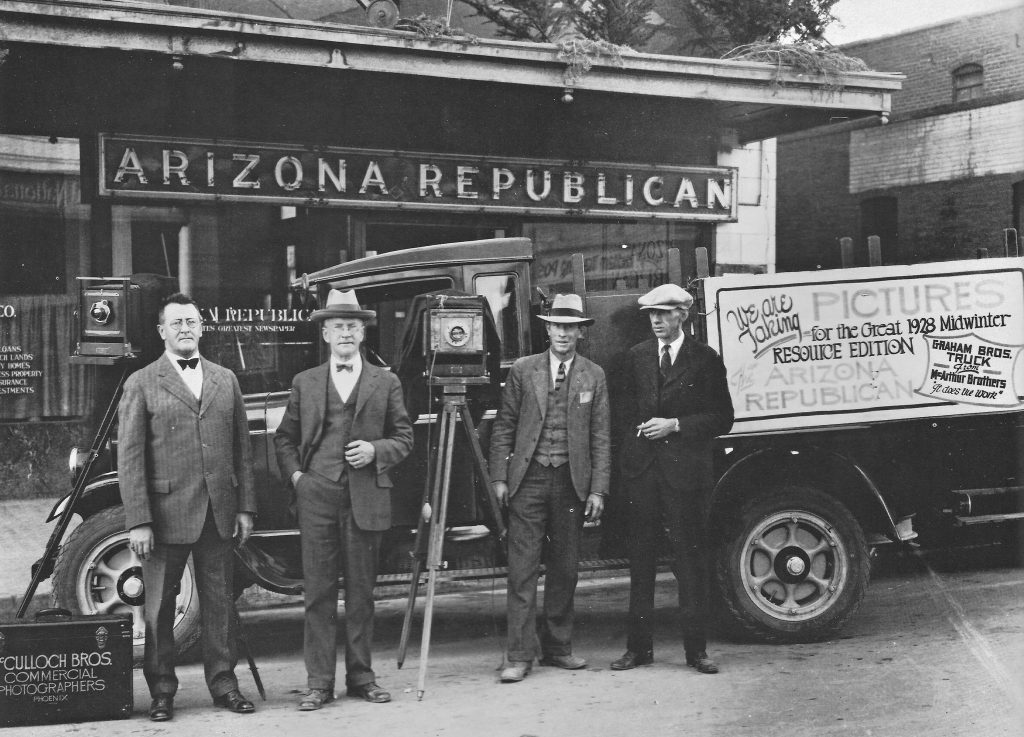
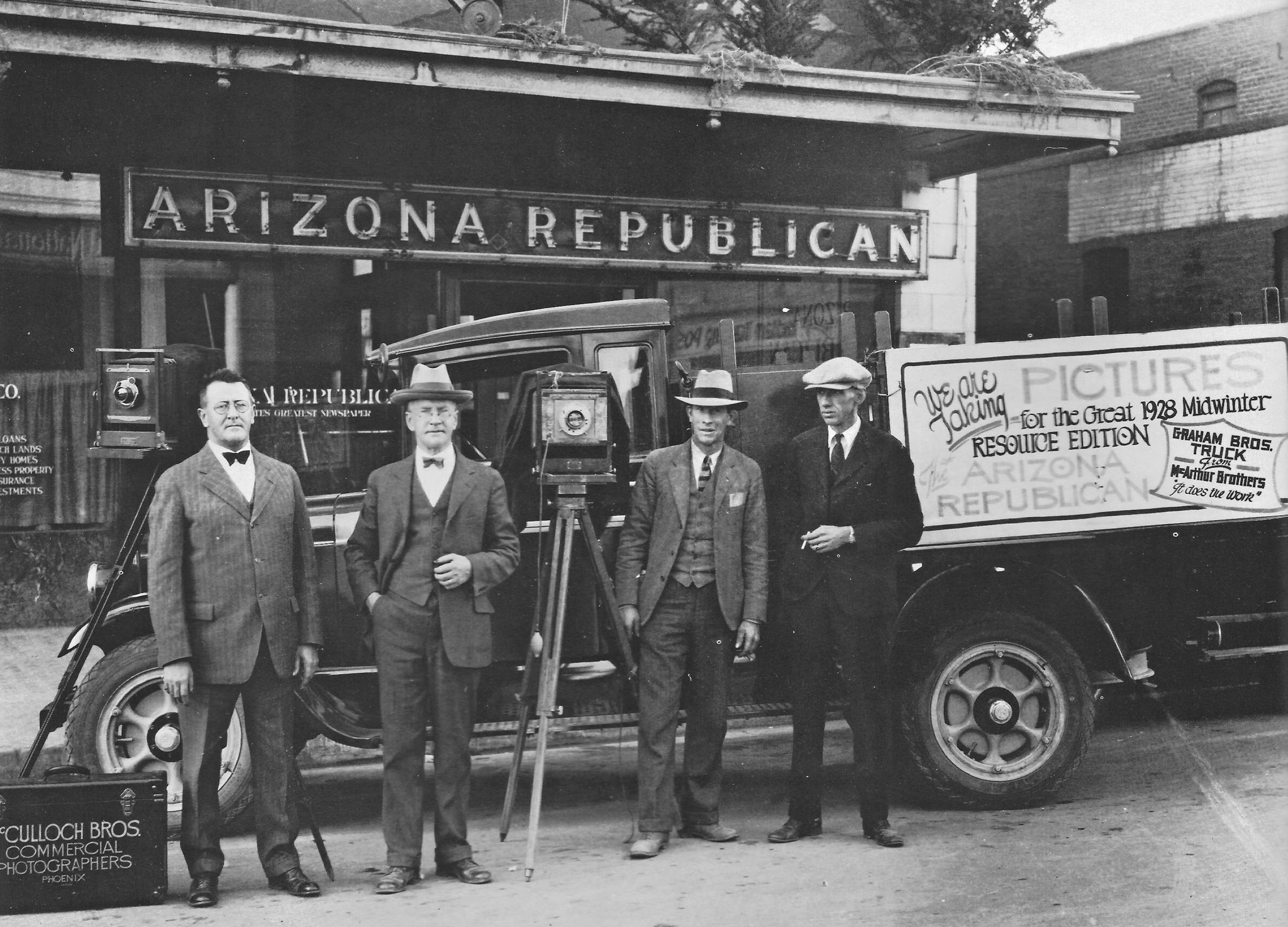
McCulloch_Brothers_Commercial_Photographers_1928The McCulloch Brothers Commercial Photographers posing in 1928 outside the Arizona Republican offices. ASU preserves the McCulloch archive as an essential resource for images from 1884 to 1947.

Phoenix map 1920s

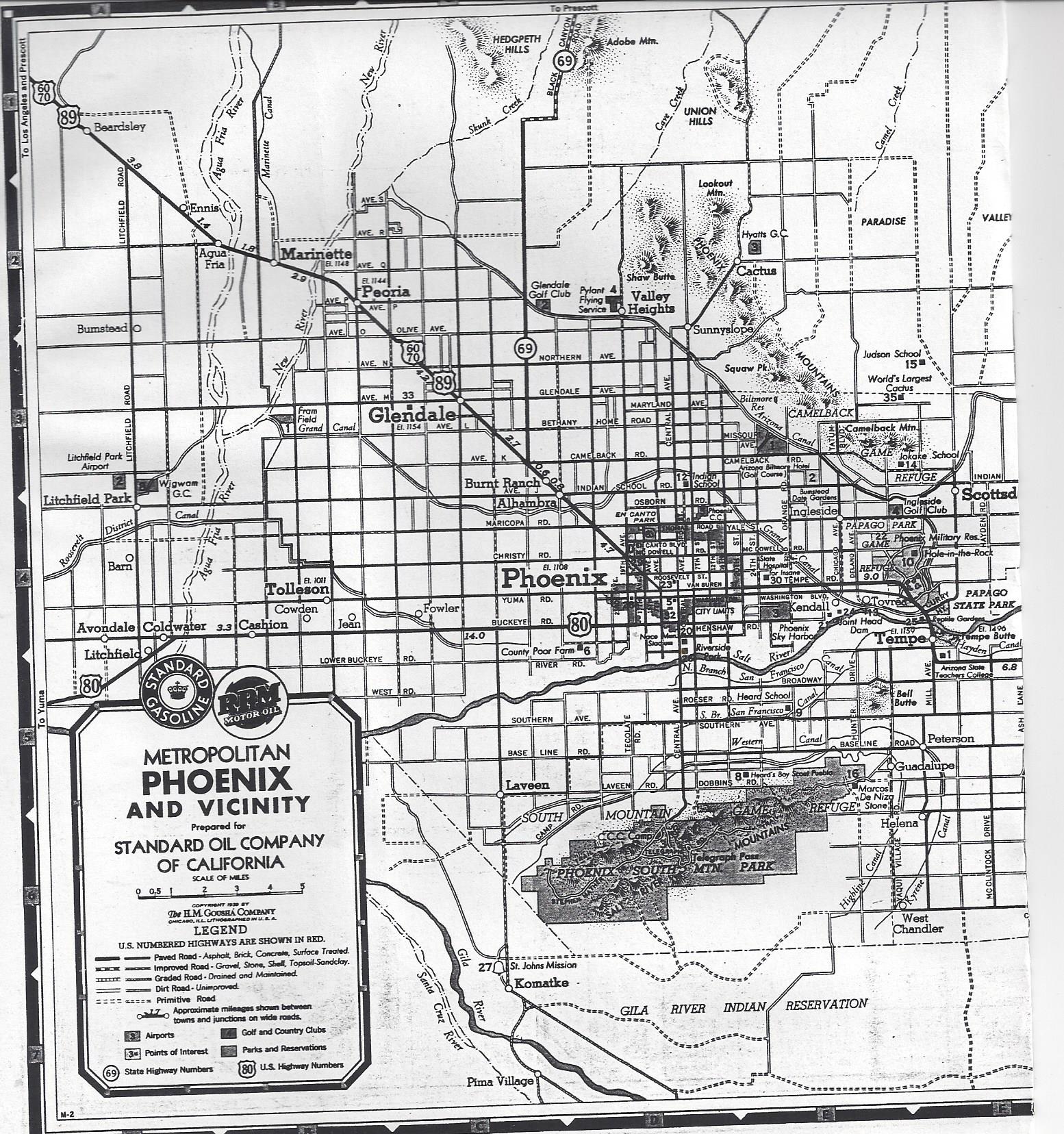
A Standard Oil roadmap of Phoenix and vicinity, circa 1925.

3rd_Ave_Monroe_looking_southwest_Kelly_Printing_1928(1)

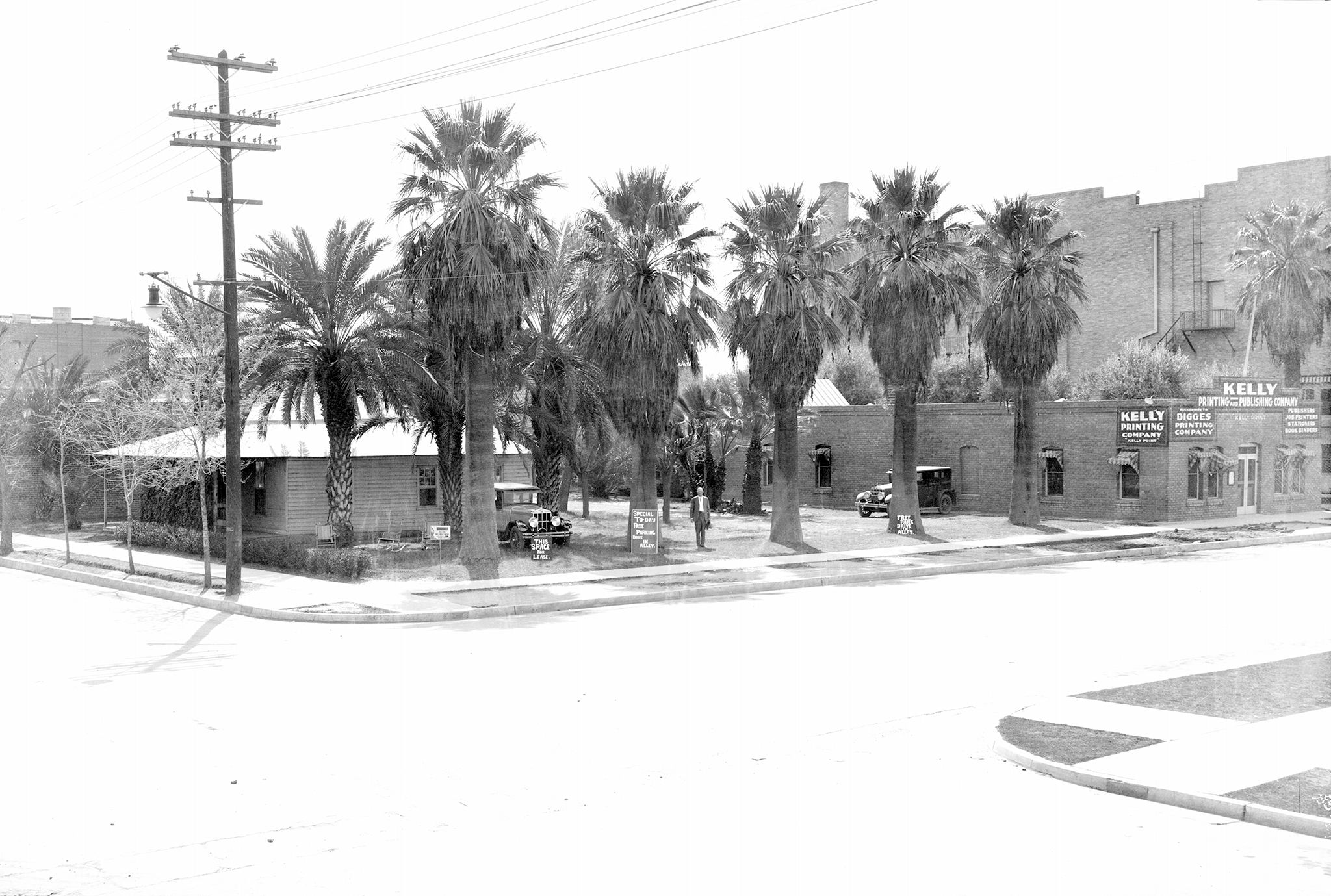
Kelly Printing at Third Avenue and Monroe Street, 1928. 

1st_Street_Washington_looking_north_Anderson_building_1928First Street and Washington looking north with the Anderson Building on the left in 1928.

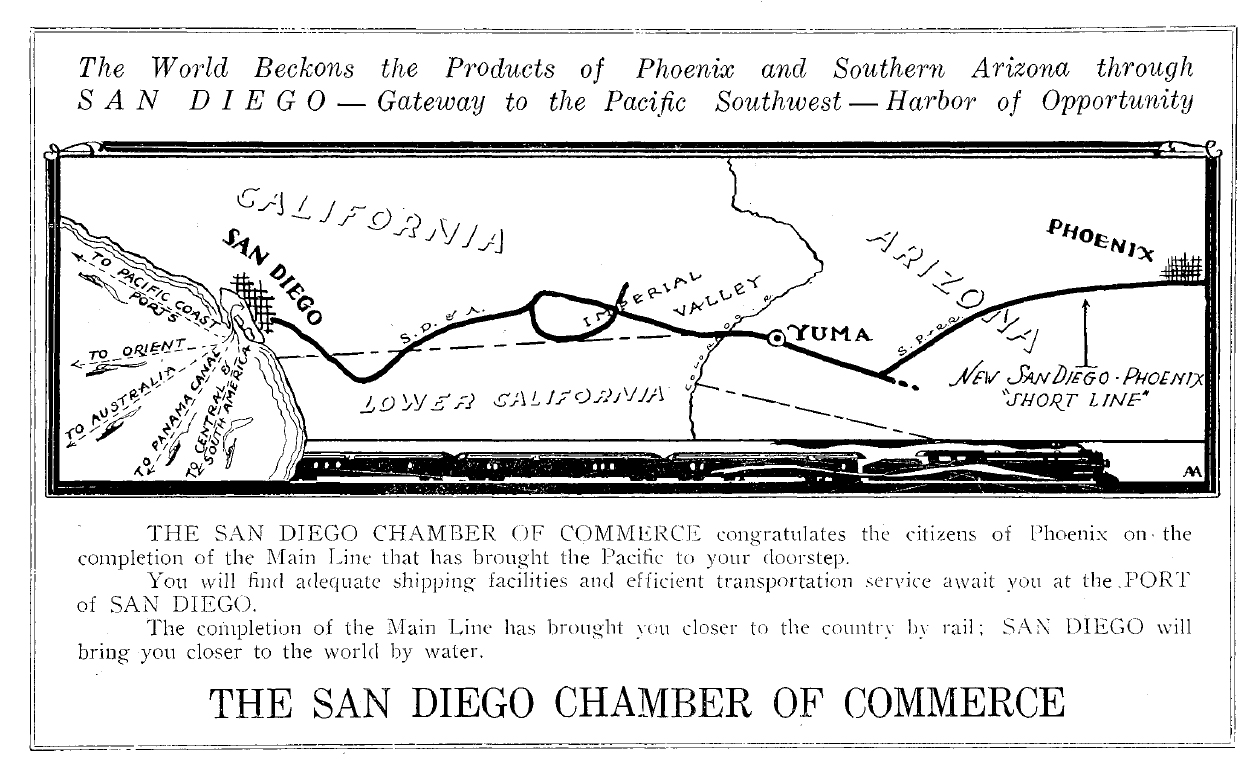
Ad_Main_Line_San_Diego_1926In 1926, Phoenix gained the northern main line of the Southern Pacific Railroad and most of its passenger trains at new Phoenix Union Station. This San Diego Chamber ad promotes a direct route between the two cities on the SP's challenging Carrizo Gorge route. That segment was originally begun by sugar magnate John Spreckels.

Arizona ends and odds

Arizona ends and odds

Grand_Canal_looking_towards_Brophy_School_1937
The Arizona Republic continues to tiptoe around the water issue. Most recent is a story about the uneven water availability for cities in metropolitan Phoenix. A day before, the paper ran a piece headlined "Buckeye is the nation's fastest growing city. But it doesn't have the water to keep it up."

Where to begin? First, Buckeye is not a city except on legalistic paper. It is a far-flung collection of real-estate ventures ("master-planned communities") connected by wide highways. Buckeye has an astounding 393 square miles of area for 74,000 people. As James Howard Kunstler puts it, "the matrix of single-family home subdivisions, arterial highways and freeways, chain stores, junk food dispensaries, and the ubiquitous wilderness of free parking — the last of these implying just one insidious side-effect of this template for living: mandatory motoring."

By contrast, the city of Phoenix consists of 519 square miles and 1.7 million people — that's a city. Buckeye, once tiny stop on the Southern Pacific Railroad was never meant to be a "city."

But the big enchilada is that Arizona doesn't have the water to continue unlimited sprawl. Who will tell the people? Who will stop the Real-Estate Industrial Complex?

• Phoenix opened the "Grand Canalscape" trail along 12 miles of the Grand Canal from Interstate 17 to Tempe. Mayor Kate Gallego said, “People are surprised when I tell them that Phoenix has more canal miles than Venice or Amsterdam. Today we are integrating the canals into our communities to improve neighborhood access, add new public art spaces and contribute to a healthier Phoenix by introducing them as a recreational amenity."

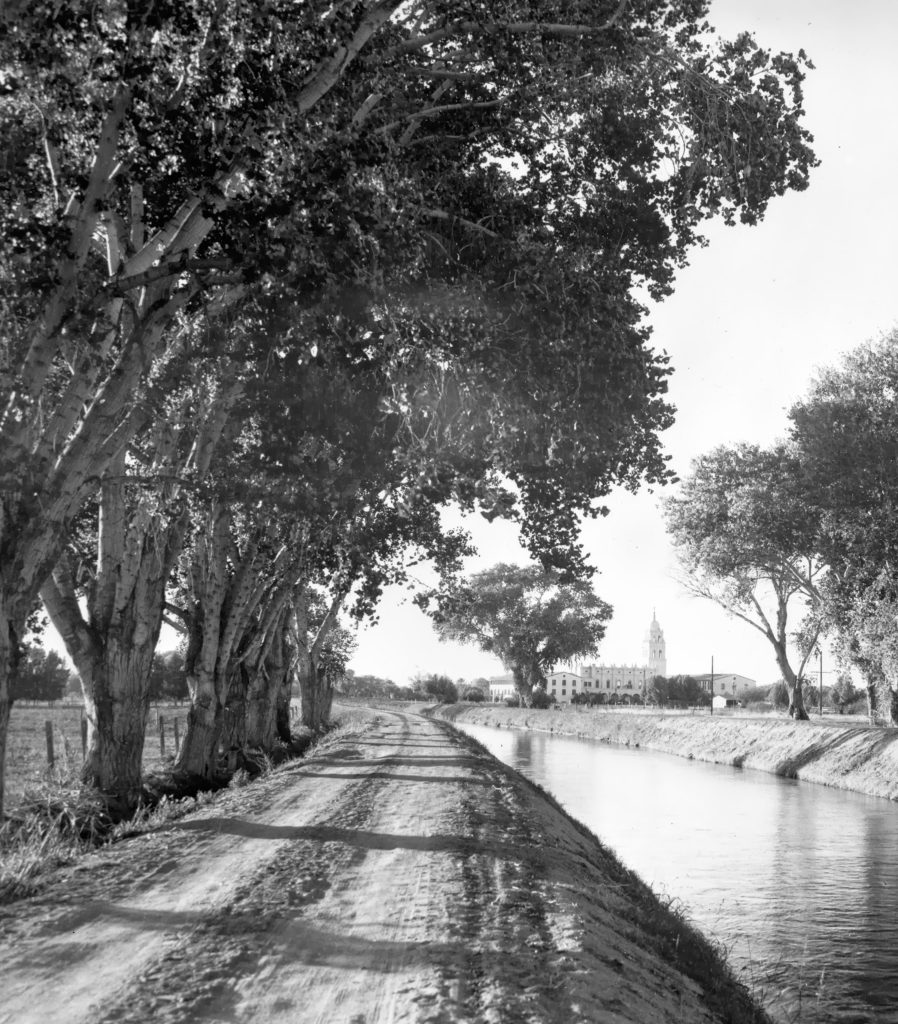
The Grand Canal, one of the original legacies of the Hohokam, once looked like the photo above. The new "safe, convenient route for bicyclists and pedestrians" is a sun-blasted emptiness. Phoenicians don't even know what they lost. Aside from road-widening, the ministrations of the Salt River Project is the biggest killer of Phoenix's once-abundant canopy of shade trees. And more sprawl is not worth the destruction of even one of those trees, much less tens of thousands. In the meantime, enjoy your skin cancer and heat exhaustion. It's heartbreaking to imagine a shaded canal, even in stretches. But, no.

The road ahead

The road ahead

Road_ahead
Oh, the temptation to put up another photo gallery of old Phoenix and let the traffic soar. But duty obliges me to put my shoulder to the task of commenting on our moment.

Forget a Democratic frontrunner. It's too early. I also know that some of you fervently want Bernie Sanders to win the nomination. Were the stakes for the republic and the planet not so enormous, I'd like to see it. When he got creamed, you would still believe — "He is the one!" — and make bitter excuses. But at least the zombie lies about how he wuz robbed in 2016 and would have triumphed if not for the eeevil DNC could finally expire.

America is not Seattle. Sanders can't win a general election. The angry shtick he honed on the Thom Hartmann radio program won't win a single swing-state vote that Hillary Clinton didn't carry and will alienate many that she did. He's not even a member of the Democratic Party and elides over the need for commanding Democratic majorities in the House and Senate to enact his sweeping agenda.

I generally agree with Sanders on many points. But he's not capable of winning. The American electorate is not me.

HRC lost the Electoral College in 2016 because of fewer than 80,000 votes in three Midwestern states. She won the popular vote by 3 million. And all this was in spite of Kremlin meddling, journalistic malpractice, vote suppression, Jill Stein, the Susan Sarandon cohort, and tepid support toward the end of the contest by Sanders. So few votes sealed our fate.

More Phoenix in the ’50s & ’60s

More Phoenix in the ’50s & ’60s

Last week's gallery of the 1940s was so wildly popular, let's continue on a theme. For readers, I produced columns on Phoenix in the 1950s and the 1960s. I invite you to read them, for they provide important context and history of the photos that follow (images that didn't make the original decade columns). Thanks to Brad Hall for most of these.

Enjoy! (Click on image to see a larger version):

Phoenix_1956Overhead and in color, Phoenix in 1956. In the lower part of the photo are the Southern Pacific tracks and the Warehouse District. In the middle-left is Phoenix Union High School, including Montgomery Stadium. Camelback is bare of any houses, a situation that won't last long.

Third Street & Roosevelt 1953Roosevelt Row was decades in the future when Birch's Drugs was snapped in 1953. It was part of a larger commercial strip along east Roosevelt and easily walkable from the Evans-Churchill and Garfield neighborhoods.

Tenth Street and McDowellAnother walkable spot. Tenth Street and McDowell, part of the "Miracle Mile" commercial district in the 1950s.

Indian School and Central 1957;jpg
The northwest corner of Indian School and Central shows A.J. Bayless, Bekins moving and storage, and Carnation Dairy's restaurant, soda fountain, and main processing plant. It's 1957.

More Phoenix in the 1940s

More Phoenix in the 1940s

Earlier columns delved into our fair city in this decade and its role in World War II. Here are more images from the decade. Most are thanks to the McCulloch Bros. Collection at the ASU Archives or Brad Hall's archive (click for a larger view):

1st_Ave_looking_northwest_towards_Adams_Title_and_Trust_1940sFirst Avenue looking northwest toward the Title and Trust Building (now the Orpheum Lofts).

1st_Ave_Monroe_looking_west_Sun_Drug_1st_Methodist_Church_1947First Avenue and Monroe in 1947.

3 - Saratoga Cafe insideInside the famous Saratoga Cafe at Central and Washington.

Saratoga Cafe 1940s

Affordable housing

Affordable housing

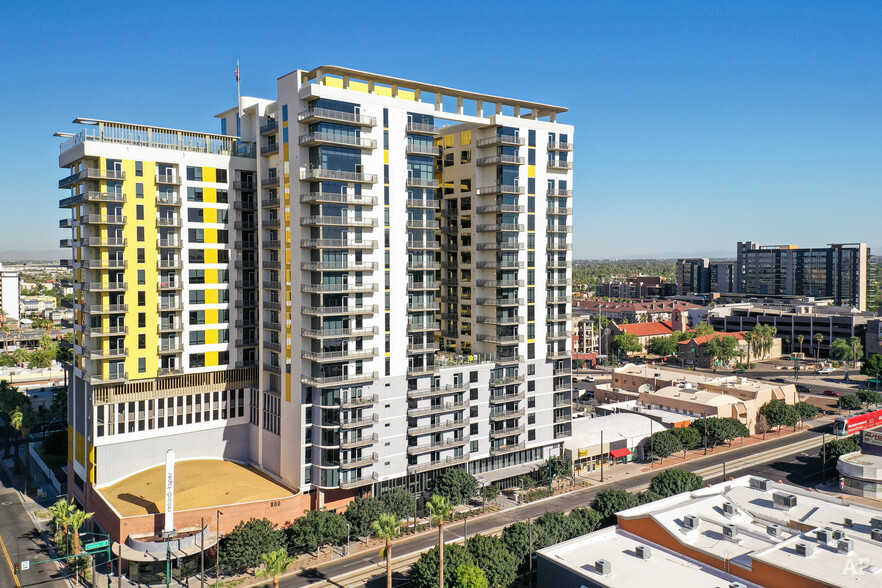
The Stewart
This is one of those weaponized words whose meaning is made murky by activists. It often means low-income housing. It doesn't mean I am entitled to afford a place on Sunset Cliffs in San Diego making low pay in "sunshine dollars." This is complicated issue.

So first, some definitions. According to the federal Department of Housing and Urban Development (HUD), "Families who pay more than 30 percent of their income for housing are considered cost burdened and may have difficulty affording necessities such as food, clothing, transportation and medical care. An estimated 12 million renter and homeowner households now pay more than 50 percent of their annual incomes for housing. A family with one full-time worker earning the minimum wage cannot afford the local fair-market rent for a two-bedroom apartment anywhere in the United States."

A more comprehensive view comes from the Center for Neighborhood Technology's H+T Index, which captures housing plus transportation affordability. Metro Phoenix's H+T costs average 49%, vs. a 68% national average and 46% in pricey Seattle and 55% in San Diego. The research center states, "The traditional measure of affordability recommends that housing cost no more than 30% of household income…However, that benchmark fails to take into account transportation costs, which are typically a household’s second-largest expenditure. When transportation costs are factored into the equation, the number of affordable neighborhoods drops to 26% (nationally).

The National Low Income Housing Coalition's annual Out of Reach report drills deeper. For example, to afford central Phoenix's 85003 ZIP Code requires an average hourly wage of $20.38 for a two-bedroom apartment. Maryvale takes $17.69 an hour (working full time). The once middle-class south Scottsdale's 85257 takes $23.08.

Now we're getting close to the problem in metro Phoenix.

Tico days

Tico days

Articulating bus 1970s
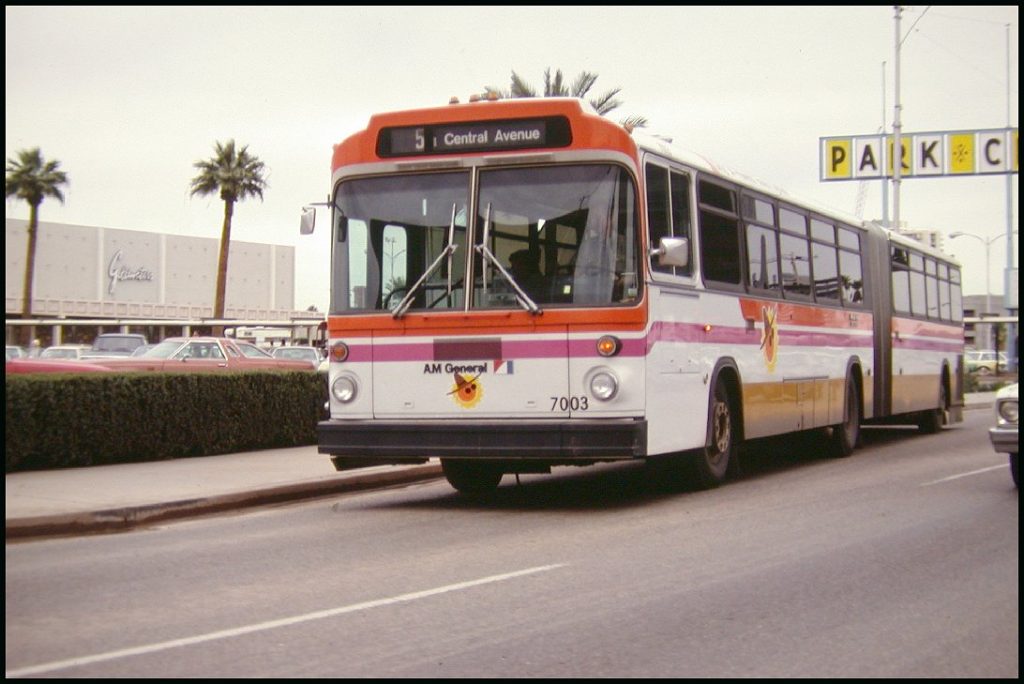
When I was a little boy, I rode the bus with my grandmother. We would board around Central Avenue and Cypress Street, riding downtown to shop. Such excursions were rare, to be sure. This daughter of the frontier loved to drive as much as she adored sliced bread, paper towels, and her "stories" (soap operas) on television.

In those days, the 1960s, buses were operated by a private company as Valley Transit. The city's surprisingly extensive streetcar system was a fading memory — cutbacks began in the Depression and the last dagger was a fire at the car barn in 1947. The replacement bus system was inadequate from the start.

In 1971, the city regained control of the system. Private ownership hadn't worked. Three years later, the Tico logo appeared on festively repainted Phoenix Transit buses. The mascot showed a sunny dot wearing a smile, sunglasses, and sombrero. It remained on Phoenix buses until the late 1980s.