Camelback through the years

Camelback through the years

Camelback_Mountain_1956
No physical landmark says "Phoenix" more than Camelback Mountain. It's also a geological oddity. The camel's hump was formed in the Precambrian era, from 2 billion years ago (in Arizona) to 600 million years ago. But the camel's head came from the Tertiary period, as recently as 66 million old — it was created around the time as the Papago Buttes.

As Halka Chronic writes in Roadside Geology of Arizona, "The whole sequence of Paleozoic and Mesozoic rocks that should come between the Tertiary head and the Precambrian hump is missing!" It's also the only faulted mountain in the Salt River Valley, the hump caused by the earth being lifted upward rather than volcanic activity.

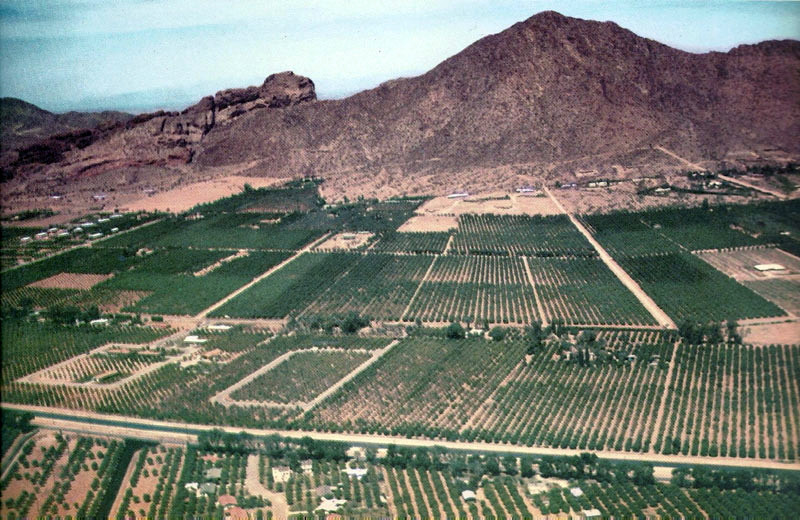
President Rutherford B. Hayes included Camelback in the Pima and Maricopa Indian reservation, a move reversed by the Territorial Legislature six months later. The 1956 photo above shows the mountain was still pristine, the same iconic image seen by the Hohokam, to whom it was sacred, and the first pioneers. But preservation was tardy and by this time private interests owned the entire mountain.

By the early 1960s, houses were marching up the side, with plans to go all the way to a resort on the top. I write about the ultimately successful effort to save the mountains elsewhere. It is true that Barry Goldwater took on the cause of Camelback after his unsuccessful 1964 presidential bid. We schoolchildren collected coins for the effort. But it ultimately took federal money, thanks to Interior Secretary Stewart Udall, to save the upper reaches of Camelback.

Phoenix extended Arcadia Drive north of the mountain's namesake avenue to serve the luxury homes clinging to the side. Who doesn't remember their first kiss from Valle Vista Road with the city lights reaching to the horizon. Unfortunately, recent years have also seen enormous numbers of hikers, especially tenderfoots attempting the ascent of this wilderness in the hottest weather. Their rescues put first-responders at risk and cost city money.

Let's take a visual tour of this magical mountain through the years (Click on a photo for a larger image).:

Snakebit

Snakebit

1024px-Chase_Field_-_2013-05-24_-_Section_118
I've spent a good part of my career advocating public funding for stadiums as a necessary evil to protect important civic assets. For example, I supported new stadiums for the legendary Reds and the perpetually disappointing Bengals ("Bungles”) when I was in Cincinnati. These new venues kept pro teams that would have otherwise decamped for larger markets.

I did it again most recently with the Phoenix Suns arena, arguing in November that allowing the NBA team to leave downtown would be a terrible blow to the central city:

Kate Gallego, facing Daniel Valenzuela in a March mayoral runoff, said, “it is not in Phoenix’s best interest to invest in an arena.” Arizona Republic columnist Laurie Roberts wrote, "taxpayers are about to get hosed if this deal goes through."

Here's the real deal: If Phoenix doesn't invest in the arena, Sarver — who has none of Jerry Colangelo's civic spirit — will move the team to the Rez, renaming it the Arizona Suns, no doubt, or even to Seattle, which is hungry to replace its lost Supersonics. The damage to downtown and light-rail (WBIYB) would be catastrophic. Talk about hosed.

Now come the Diamondbacks, demanding further pro-team welfare. The team can leave Chase Field as early as 2022 and has been sending ominous threats: Exploring use of the Cardinals stadium in Glendale for while, flirting with the Las Vegas area, fielding feelers from other cities. The most comfort officials would give is that the D-backs "are highly likely to remain in Arizona."

And I'm starting to think: Git. Let. Them. Leave.

The plot against light rail

The plot against light rail

LRT downtownThis is the reality of Phoenix's light-rail system: nearly 16 million passengers carried in the most recent fiscal year; expansion of the original 20-mile starter line to 26 miles; an essential link between ASU's Tempe and downtown campuses; 30 percent of riders use the train for work; large numbers use it to reach sporting events; $11 billion in private and public investment has occurred along the line since 2008.

Light rail has also proved essential in giving Phoenix, Tempe, and Mesa a fighting chance in an era where talented young people and high-quality companies want to be in city cores served by rail transit.

None — not one — of the hysterical predictions of opponents to light rail came true.

No wonder that voters backed light rail in three elections, in 2000, 2004, and 2015. We built it.

But destructive forces never sleep, never stop. Backed by dark money — including the Koch brothers and their nationwide war on transit — here comes Proposition 105 in the Aug. 27th special election. As is often the case, it's presented as an affirmative to deliberately confuse voters. "Vote yes!" hoping some will think they are supporting rail transit by marking that line. Signs say, "Yes on 105. Fix our roads" — but this has nothing to do with fixing roads; that's a different budget and roads are being fixed.

Don't fall for it. Vote no on Prop. 105 and its devilish companion, Prop. 106.

End times

End times

2019ok
Yes, I'll be writing about the needless election to save light rail.

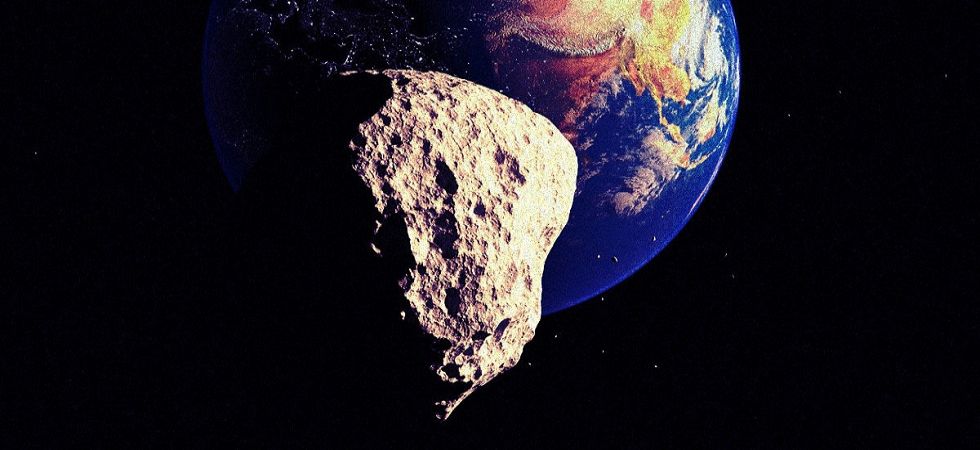
But I was struck, forgive the pun, by last week's news that a "city killer" asteroid had passed our planet, coming so close it was only one-fifth of the distance between the Earth and the moon. The rock wasn’t one that scientists had been tracking, and it had seemingly appeared from “out of nowhere,” Michael Brown, a Melbourne-based observational astronomer, told The Washington Post.

I was strangely unsurprised. My black-dog mood since 2016, when Hillary Clinton won the popular vote by 3 million votes but our fate was sealed thanks to 78,000 votes in three Midwestern states, in a deeply tainted, nay, stolen, election, has yet to abate. One of the most qualified people ever to seek the presidency lost to an astonishingly unqualified quisling for a foreign prince, a mob boss, a man now normalized by the media and heading for reelection.

Since then, everything has been falling apart. And all this time, I have thought: If we were surprised by a deadly visitor from the cosmos…yes, of course. The haunting 2011 film Melancholia, starring Kirsten Dunst, come true. Life, or its end, foreshadowed by art. Bad things coming our way.

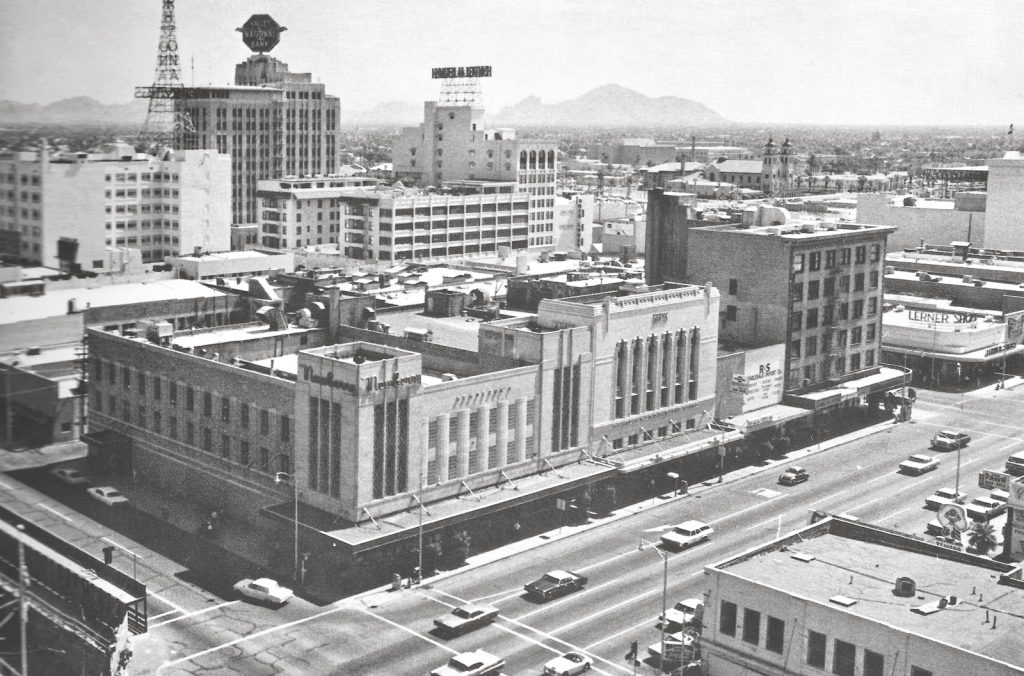
Phoenix, 1969

Phoenix, 1969

Downtown1969
I watched the Apollo 11 landing and moon walks in Phoenix with my grandmother. She was born on the frontier with horses and buggies, was alive when the Wright brothers first flew, when Lindbergh crossed the Atlantic…and now this. The entire trajectory of her life had been one of American progress (sliced bread! air conditioning! paper towels!). Mine was different.

Fifty years ago, Phoenix was on the cusp of nearly 582,000 people and Maricopa County of 971,000, increases over the decade of 32 percent and 46 percent respectively. The aggressive annexation that took the city from its compact 17 square miles in 1950 to 188 square miles a decade later continued. By 1970, Phoenix would spread over 248 square miles, all the way to the two lanes of Bell Road.

Charter government was still firmly in control of City Hall with little foreshadowing that its era was coming to an end. Milt Graham was still mayor. Young and popular, Graham had helped seed Charter's demise by running for a third two-year term, breaking the promise that the Charter Government Committee put up civic stewards, not career politicians, and mayors only served two terms. Importantly for the city's future, Graham was vehemently anti-transit.

Phoenix at statehood

Phoenix at statehood

Washington_1st_St_looking_northeast_from_Jefferson_Hotel_Salim_Ackel_1915
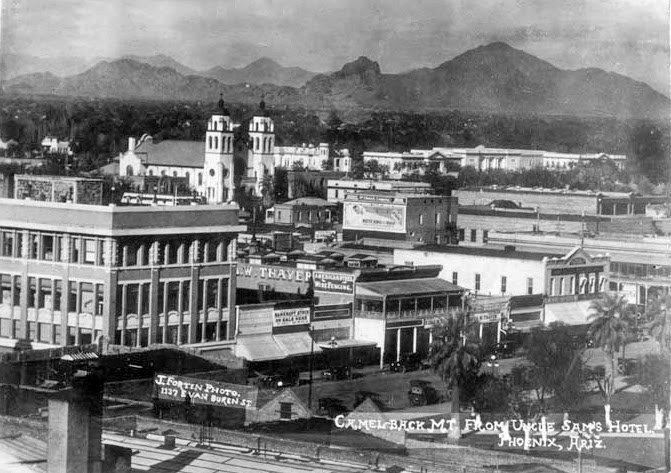
On Feb. 14th, 1912, Phoenix became the capital of the 48th state — Arizona would remain the "Baby State" until 1959, when Alaska and Hawaii were admitted to the union. With 11,314 people in the 1910 Census, it was still less populous than Tucson but would soon surpass the Old Pueblo, with growth of nearly 166 percent in this decade.

The new state capital was still fairly isolated. A transcontinental railroad main line wouldn't arrive until 1926. Still, in 1887 a branch from Maricopa had been completed by a subsidiary of the Southern Pacific, although it was plagued by flood wash-outs. The Santa Fe's Peavine branch had arrived from the ATSF main line at Williams via Prescott in 1895. A streetcar network was growing, too.

Phoenix was far from the powerhouse it would become. Arizona's economy was primarily driven by mining, so towns such as Bisbee and Jerome generated spectacular wealth with their copper mines. The same was true of the mining district around Globe. Railroads were also major players. All were controlled by out-of-state interests, a major reason the Progressive-era state constitution established a Corporation Commission to regulate at least rail lines (and later utilities).

Economy update

Economy update

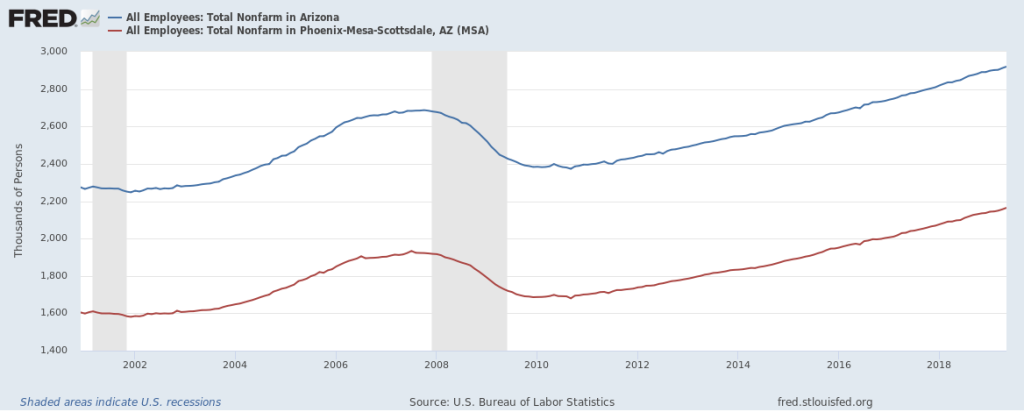
The expansion is now the longest in American history. According to the Arizona Commerce Authority, metro Phoenix posted the largest job gain from May 2018 to May 2019, at 3.2 percent. Let's take a closer look:

Arizona and metro Phoenix reached a historic high in seasonally adjusted civilian jobs as of May (click on the charts to enlarge):

AZjobs

Median household income adjusted for inflation also showed gains:

MHI

So far, not so bad…

Hot enough

Hot enough

Tumblr_mabisuDNgr1r9o57uo1_1280
It's not true that Phoenix has no seasons. Not even the joke that they are "hot, hotter, hottest, and hell." They just change with a sublime nuance. Or this was once the case. Leaving the delightful 70s in Seattle, I am here for 110, headed to 111. This is five to six degrees hotter for this time of year than normal. Summer temperatures have risen about 10 degrees in my lifetime, especially the overnight lows. And summer is lasting longer.

This is mostly the result of "local warming," where the farms, groves, and desert have been replaced by sprawl and gravel, along with the destruction of thousands of shade trees and the grass and landscaping that made the city more beautiful and livable. I suspect that few people know this or even notice it. For one thing, Phoenix suffers from a high rate of population churn. And many of today's residents are here for the heat, "the hotter the better." Advanced automobile air conditioning and air-conditioned houses cloak the danger of this human-made environment. So when all the asphalt, concrete, and fruit of the Arizona Rock Products Association release the accumulated heat after sunset, so what?

Consequences abound. Several large wildfires have raged. I also notice on the Phoenix Fire Department regional dispatch site a significant uptick in brush fires, requiring significant commitment of apparatus to knock down. One reason is the expanding exurban development into the desert. Fools go hiking and mountain climbing in this weather. That was once rare. Summer was the time to spend inside, especially during the day (when the nights cooled down). When I was a paramedic in the 1970s, a summer mountain rescue was extremely rare. No more. Now, multiple rescues happen every day, putting first responders at risk and the "victims" often near death.

Growth and its discontents

Growth and its discontents

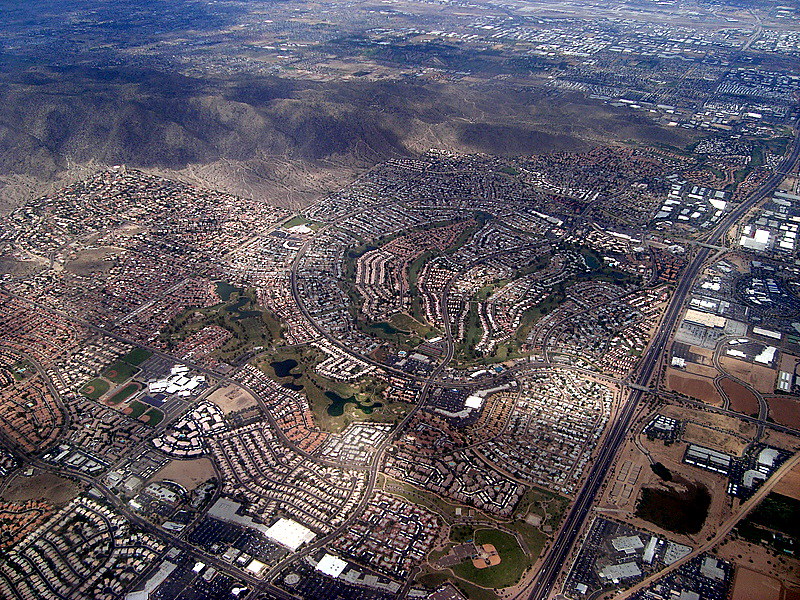
South Mountain sprawl
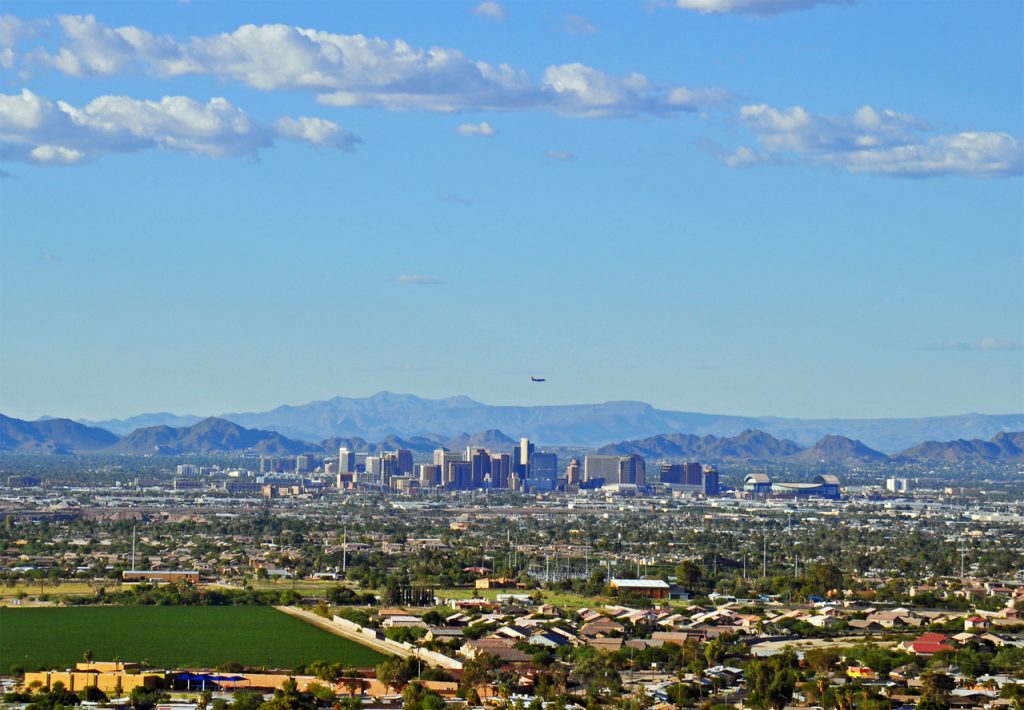
The Census reported earlier this spring that Phoenix was the fastest-growing city in the country. During the Great Recession, I wrote in jest the prayer of the Arizona developer: "Please God, give me one more boom, with championship golf." And the prayer has been answered, or so it seems on the surface.

The city added 25,288 new residents between 2017-2018. But even adding in fast-growing suburbs such as Buckeye and the "town" of Gilbert, the metropolitan area is far below the 100,000-plus it was growing in the 1990s and early 2000s. A glowing Forbes article talked of "a business-friendly environment, plentiful job opportunities and affordable cost of living." But the reality is closer to the one elucidated by commenter Concern Troll: Most of the population increase in Phoenix can be attributed to retirees and the low-wage service jobs that cater to them.

Permits for new housing units in metro Phoenix haven't recovered to their pre-crash levels; they're about where they stood in the early 1990s. Construction employment is only where it stood at the turn of the century, far below the mid-2000s. If the local-yokel boosters — "things must be good because people keep moving here" — are having a growthgasm, they're faking it.

Big preservation alert

Big preservation alert

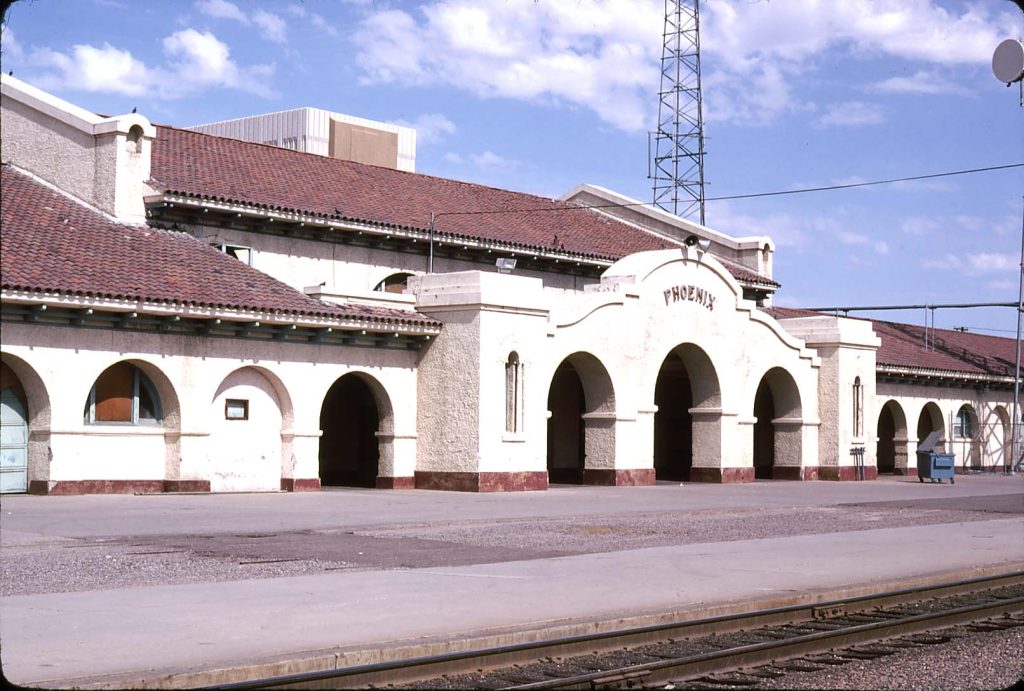
Union Sta arches
The most precious treasure of old downtown Phoenix is in flux. This could provide the city a long-overdue opportunity. Or it could go sideways in a hurry. I'm writing, of course, about Union Station.

According to CBRE, the big real-estate services firm "has been retained as exclusive representative to offer qualified investors the opportunity to purchase fee interest in the iconic…Union Station site in downtown Phoenix at 401 W. Harrison Street." It goes on, "Depending on the vision of a new owner, the Property may be eligible for a myriad of monetary and tax advantaged programs…"

Sprint, which has used the station to house switching equipment since the late 1980s, intends to move out before the end of next year. The Union Pacific Railroad's ground lease ends in March 2023, a century after the building was completed. Now what?

One of the most popular columns on this site is my history of Union Station (with photos) — you can read it here. The Spanish revival building brought together the Southern Pacific and Santa Fe railroads in one full-service station. Three years after its completion, the SP finished its northern main line and routed most of its passenger trains through Phoenix. The city was served by multiple intercity trains a day through the 1960s.

The last Amtrak train called here in 1996. The state refused to partner with the SP (merged with Union Pacific the same year) to maintain the west line between Phoenix and Wellton to passenger-train standards. Phoenix became the largest American city by far with no intercity rail service. Sprint — which was started by the SP — using the depot for switching equipment helped protect and save it. Being on the National Register of Historic Places wouldn't have stopped Joe Arpaio's jail-building mania and other losses in the Warehouse District. Mesa lost its lovely SP depot to arson…no one cared.

Who will care now?

The impeachment argument

The Constitution provides a remedy for a law-breaking president. He can be impeached by the House and convicted and removed from office by the Senate. Therein lies the problem in the case of Individual 1.

Even if the House impeached Donald Trump — no sure thing — the Senate would quickly toss the indictment into the circular file. Majority Leader Mitch McConnell might never even bring it to a vote. The Senate, with six-year terms and originally not even elected by the people, was intended to be a check on the popular and passing passions expressed by the House. But it has become something more in recent years.

The Senate is now a Republican firewall against any Democratic initiative or electoral gains. With solid control ensured by small primarily red states — Wyoming, with 578,000 people (about the size of Tucson), has the same number of U.S. Senators as California, with a population of 39.6 million. But it also prevents urgent action, whether to address the existential challenge of climate change or the mortal threat to the republic embodied in Trump.

Given this reality, is Speaker Nancy Pelosi correct in saying impeachment is "not worth it"?

The Post Office

The Post Office

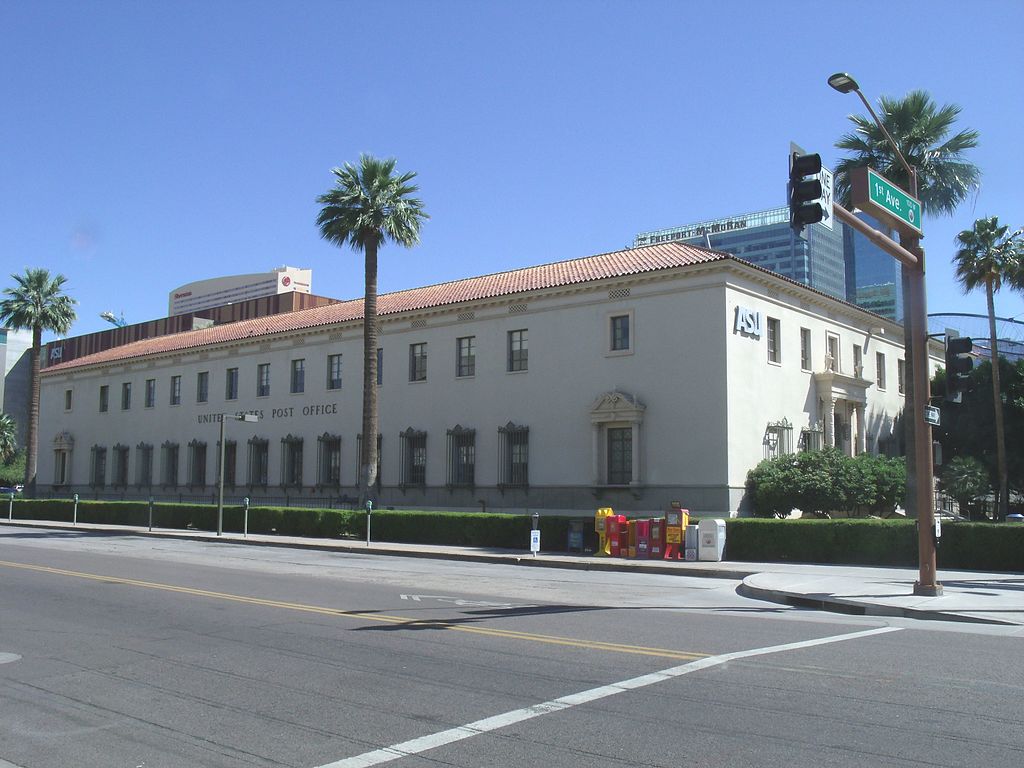
Phoenix-US_Post_Office-1932-1
A conversation on one of the Phoenix history pages of Facebook got me thinking about the thousands of cuts that bled downtown nearly to death. It was about the old Main Post Office at Central and Fillmore, now mostly used by ASU but contained some incomplete or wrong information. Still, a useful jumping off point.

Back in 2013, I wrote a three-part series entitled "What Killed Downtown" (see here, here, and here). It's still the gold standard on the subject. But the tale of the Post Office illuminates it in microcosm.

This lovely Spanish-revival building was completed in 1936, designed by Lescher & Mahoney, the architects responsible for many of Phoenix's finest buildings. Among them are the Orpheum Theater, Brophy College Chapel, El Zariba Shrine Auditorium (former home to the Arizona Mining and Mineral Museum), Phoenix Title and Trust Building (today's Orpheum Lofts), Hanny's, and the Palms Theater.

It was planned in the 1920s to replace the Post Office segment of the old Federal Building in the government block at Van Buren and First Avenue. With Sen. Carl Hayden's backing, it was originally intended to be six stories tall and closer to the central business district. But because of expensive land, the site was move north across from the new Westward Ho and the height was lowered. Building it was among the myriad federal projects that lifted Phoenix out of the Great Depression.

Best ex-President

Best ex-President

640px-Rosalynn_Carter _Jimmy_Carter_and_Admiral_Hyman_Rickover_aboard_the_submarine_USS_Los_Angeles._-_NARA_-_174924
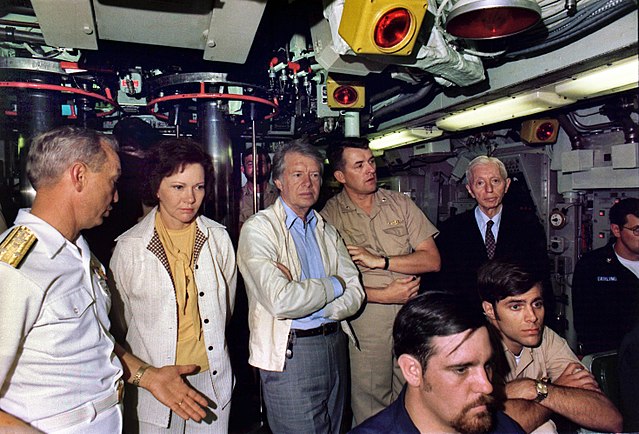
President Carter (center) aboard the USS Los Angeles in 1977, first in its class of highly-advanced nuclear fast-attack submarines. At right is Carter's mentor, Admiral Hyman Rickover, "Father of the Nuclear Navy."

The idea of the treasonous criminal Donald Trump presiding over the funeral of Jimmy Carter is almost too much to bear. At age 94, it's a depressing possibility.

I confess to disliking Carter's presidency. But the man had real accomplishments. A Naval Academy graduate, he is the only president to have qualified in submarines. That means much more than serving in a boat — to "qualify" means an officer or enlisted person must have mastered every task aboard the sub. It's a big deal. Carter intended to make the Navy a career until the death of his father brought him back to Georgia.

With the passing of George H.W. Bush, Carter is the only living president to be a real military veteran.

Along with John Quincy Adams, Carter is the most successful and inspirational former president, from his work with Habitat for Humanity to overseeing elections around the world and carrying out numerous humanitarian and diplomatic missions. He never sought to monetize — and degrade — his office in the way most of his successors have done.

The oasis, in photos

The oasis, in photos

40&Baseline_1970s jpg
My mother told me I was "a city kid" and a "desert rat." She was right about the first, but not the second. I was a child of the oasis, growing up in what are now the historic districts north of downtown and in the old city.

It's almost all gone now. Every time I'm back in Phoenix, I am struck my how ugly it is, especially with the proliferation of skeleton trees and heat-radiating gravel in places they should not be. If this is the price paid to accommodate ever-expanding sprawl, it's a devil's bargain, a short hustle. With the enormous numbers of newcomers and population churn, people don't even know what has been lost.

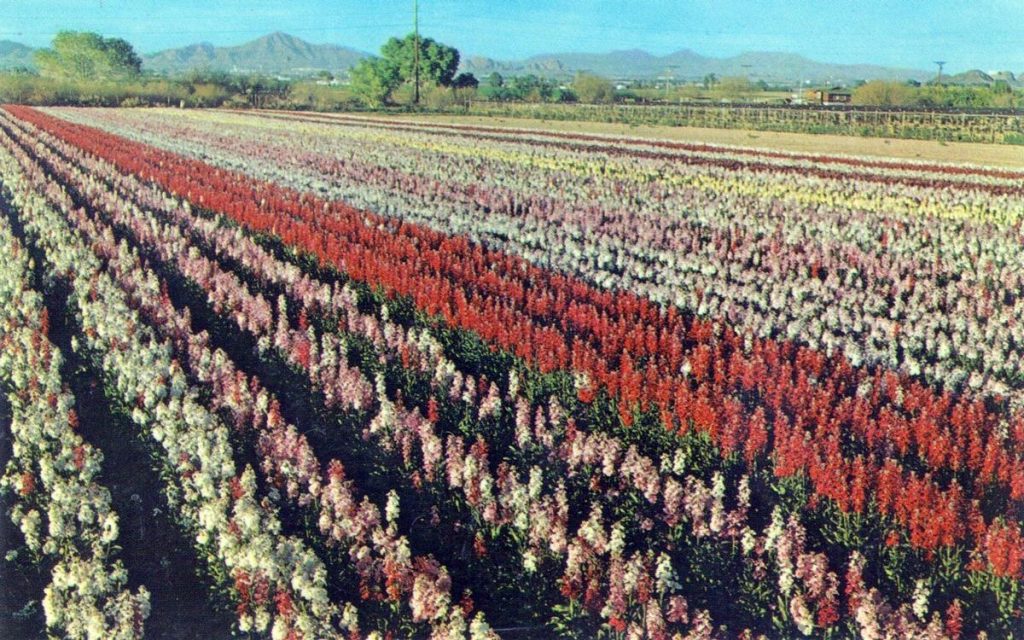
One of the most heartbreaking losses was the Japanese flower gardens along Baseline Road.(above). An agricultural trust could have prevented it. But the feral greed to replace it with faux Spanish-Tuscan crapola was too much to overcome.

A reminder: Phoenix is at or near the convergence of five rivers in the world's wettest desert. Scores of shade trees are native. With the alluvial soil of the Salt River Valley, anything will grow here.

But as on the national level (only 26,000 history majors now), the loss of memory is a dangerous thing. Milan Kundera, the Czech novelist, wrote that the struggle of man against power is the struggle of memory against forgetting. Thanks especially to the priceless McCulloch Bros. Collection at the ASU archives, we can struggle. I only wish more of these images were in color.

Here are a few views of authentic Phoenix. Click on an image for a larger view:

Present at the destruction

Present at the destruction

Dean_G._Acheson _U.S._Secretary_of_State
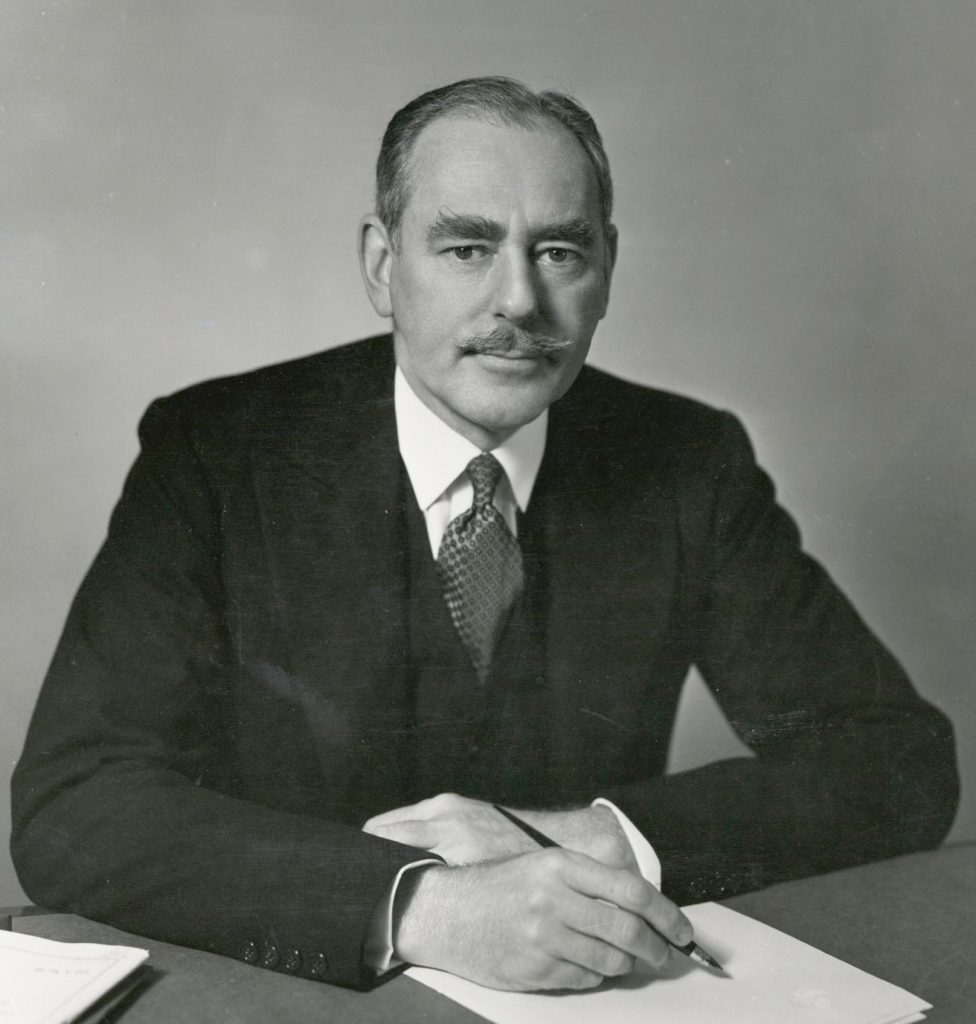
In 1969, Dean Acheson's memoir Present at the Creation was published, going on to win the Pulitzer Prize in History a year later. At more than 800 pages, the book remains essential reading, not least because today we are present at the destruction.

As President Truman's Secretary of State — "the clearest thinking, most effective Secretary of State of the twentieth century," as Yale's Gaddis Smith rightly said — Acheson was the lead architect of the post-World War II order. The Marshall Plan, NATO, Bretton Woods, World Bank, International Monetary Fund, and more.

As Tom Ricks wrote in Foreign Policy magazine:

It’s useful to remember that the international “system” as we know it today didn’t exist before World War II and would have been unthinkable except for the cataclysm of the war, the deployment of the atom bomb, and the aggression of an implacably hostile Soviet Union.

Truman and Acheson were in unknown territory, leading a country tired of war and ready to revert to its prewar isolation. “History is written backwards but lived forwards,” Acheson says, reflecting on the United States’ leap into the unknown. American leadership was never foreordained.