McCain, an assessment

McCain, an assessment

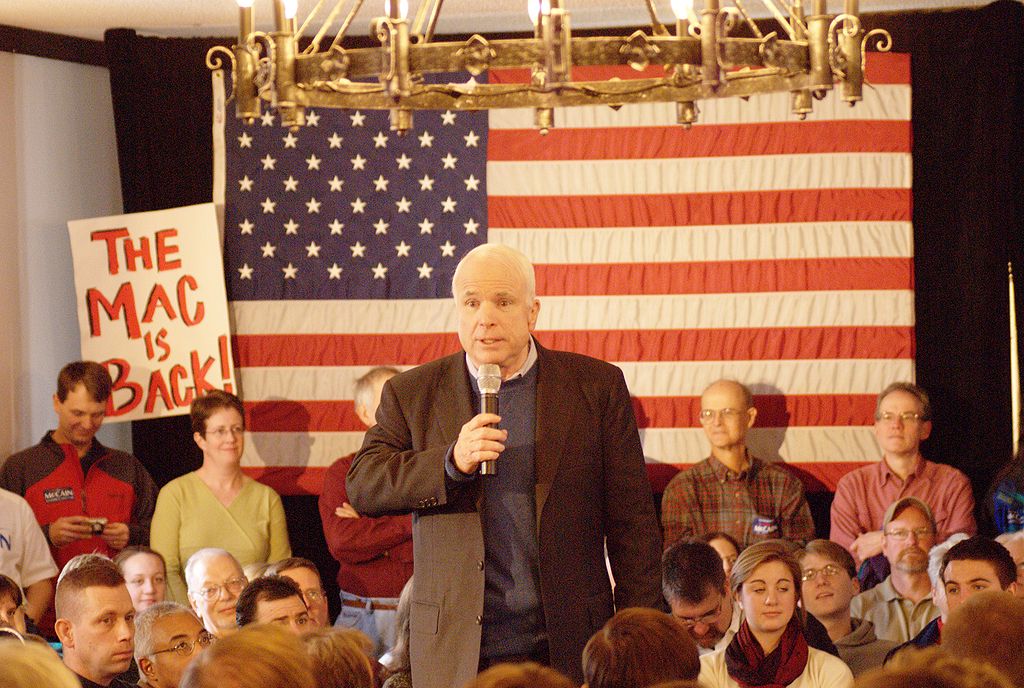
1024px-John_McCain_in_NH
A man who made “straight talk” one of his trademarks would surely not be satisfied with the flood of worshipful accolades enshrining him as a unique hero, statesman, and patriot for the ages. My aim is to remedy that.

I put my shoulder to this necessary task knowing that he was admired and even loved by people I respect. They range from Grant Woods to Alfredo Gutierrez and Neil Giuliano. I never much cared for John McCain, both because he did so little to use his prestige and power to help his adopted state, and because his conservatism helped set the table for today’s emergency.

More about that later.

McCain suffered terribly as a prisoner of war and heroically refused an early release as the son of the admiral in charge of Pacific forces. This denied a propaganda coup to the communists.

Still, hundreds of American soldiers, Marines, airmen, and naval aviators suffered at the hands of Hanoi as well.

In World War II, the treatment of Allied POWs by the Japanese was barbaric. After they were liberated, Gen. Jonathan Wainwright who surrendered the Philippines and British Gen. Arthur Percival who surrendered Singapore were positioned beside Douglas MacArthur on the deck of the U.S.S. Missouri for the Japanese surrender. Nearly walking skeletons in uniform, their presence was powerful. No one remembers them today.

McCain served 31 years in the Senate. But his legislative record was minimal. This is certainly so compared with giants such as Edward Kennedy, Hubert Humphrey, Henry Clay, Daniel Webster, Robert Taft, Robert La Follette Sr., Arthur Vandenberg, or Arizona’s Ernest McFarland.

Mac, who served as Senate Majority leader, was the father of the GI Bill. Along with Carl Hayden, another towering figure from Arizona, he worked tirelessly for the Central Arizona Project. So did Sen. Barry Goldwater and Reps. Stewart Udall, Mo Udall, and John J. Rhodes. 

Vacation

Vacation

I'll have new columns in September, barring compelling breaking news. In the meantime, enjoy the archives and use this as an open thread. The Front Page and Phoenix and Arizona…
Ghost railroads of Arizona

Ghost railroads of Arizona

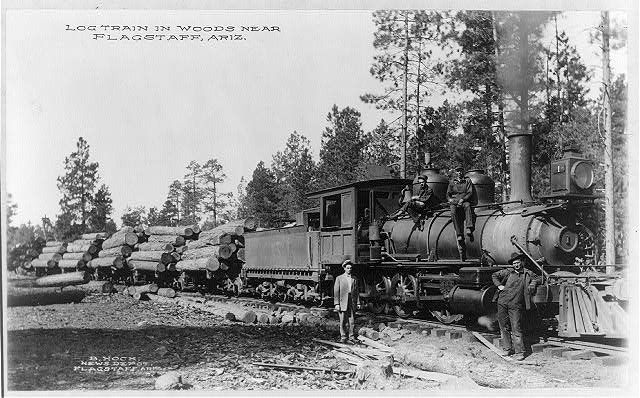
Log train
Today's railroad action in Arizona is largely confined to the Union Pacific across the southern part of the state and the BNSF "Transcon" across the north, along with branch lines from both to Phoenix. Long intermodal and merchandise freights power along with few stops, heading to California and the east. Freight yards, crew changes, roundhouses, and repair work that once bolstered railroad towns such as Ash Fork and Seligman have been eliminated or diminished. Arizona now posts some of the lowest levels of rail freight tonnage originating and being delivered in the nation.

It wasn't always that way. Railroads were essential to tapping the state's mineral wealth, especially copper, shipping produce from the Salt River Valley, and building towns that served as busy division and subdivision points.

Passenger trains ended the state's isolation, bringing new residents and tourists. Crack trains included Santa Fe's northern Arizona fleet of the Super Chief, El Capitan, Chief, San Francisco Chief, and Grand Canyon, and Southern Pacific's Sunset Limited, Golden State Limited, Californian, and Imperial among others traveling through Phoenix once the SP northern main line was completed in 1926. They delivered and picked up the mail, often sorted en route in Railway Post Office cars. Less-than-carload freight service with the Southern Pacific, Santa Fe and Railway Express Agency served scores of towns and cities, the FedEx and UPS of their day.

Railroads built Arizona.

Almost all of this is gone. But the ghosts linger. Here are a few: 

Retiring in Arizona

Retiring in Arizona

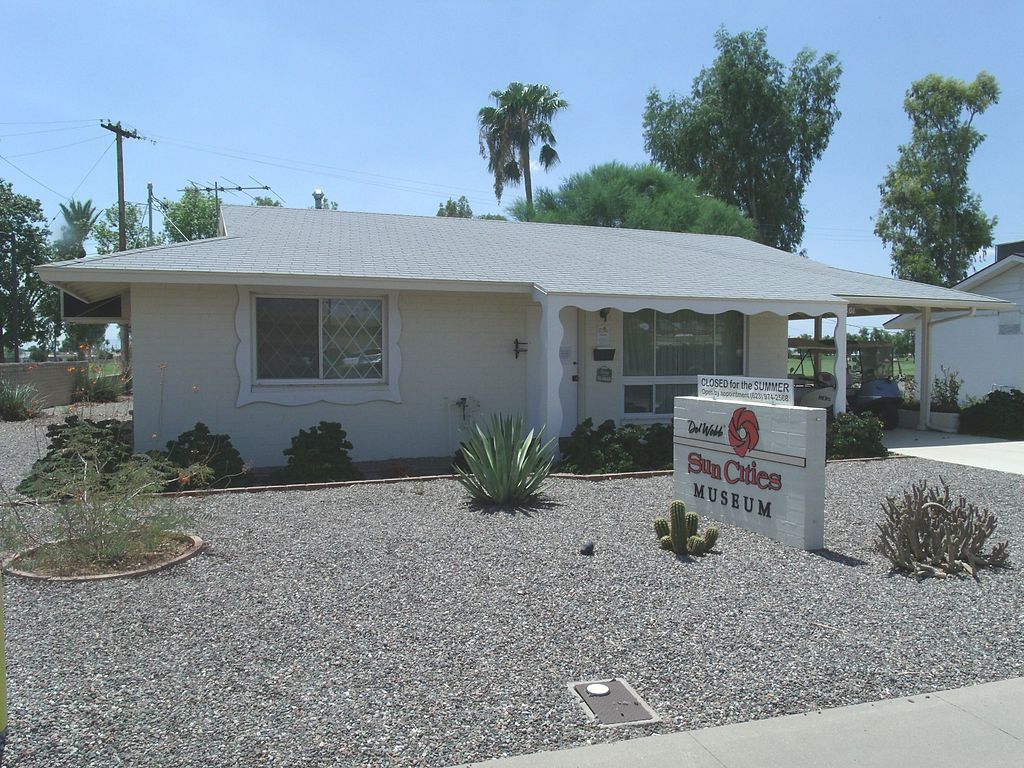
Sun_City-Sun_City_DEVCO_Model_-1-1959
Arizona is only the 29th "best state to retire in," according to a new survey by Bankrate. The consumer financial services company ranked cost of living, crime, culture, health-care quality, taxes, weather, and "well being." No 1? That would be South Dakota, followed by Utah, Idaho, New Hampshire, and Florida. The Grand Canyon State didn't even make the top 10 in weather.

If this is true, it's bad news for the retirement industry, which has been a lynchpin of the state's economy since Del Webb began Sun City in 1959. Social Security payments accounted for an astounding $1.4 trillion for nearly a million retirees in Arizona as of last year alone — not to mention the savings and other assets they bring from back home.

The survey is highly suspect, of course. South Dakota is a fascinating place, with Mount Rushmore and Deadwood, but between immense snowfall and isolation and being downwind from the ICBM fields of North Dakota should World War III erupt, it doesn't sound like the best place to spend one's sunset years.

Because of savage cuts that have destroyed 40 percent of newsroom jobs over the past decade, PR people now outnumber reporters by 5-1 or more. Every day at the Seattle Times, I get scores of pitches. Many are click bait such as this. I rely on more gold-standard information, such as that from the Federal Reserve, universities or authentic think tanks.

But that doesn't mean Arizona is quite out of the woods on retirement desirability. 

The permanent crisis

The permanent crisis

IMG_5340

Illustration by Carl Muecke.

A few random thoughts as we circle the drain.

The drumbeat asks, why don't Republicans do something about Trump? It's simple. First, he's giving them their heart's desire: A reactionary Supreme Court for decades to come; tax cuts; rollback of regulations; sabotage of the Affordable Care Act, and well on the way to repealing the Nixon administration, Great Society, New Deal, and the Enlightenment. Second, they fear his base. So all the outraged tweets by John McCain and Jeff Flake add up to nothing when they vote to approve Trump's corrupt cabinet and agenda. The GOP has become a cult, far from the party that sent Barry Goldwater, John Rhodes, and Howard Baker to the White House demanding Richard Nixon resign.

What does Putin have on Trump — because the Helsinki disaster resembled what spys call the handler and the asset? Pee tape aside, I suspect it has something to do with money. Speaking of which, one of the least-reported blockbusters was how retiring Justice Anthony Kennedy's son was Trump's banker at Deutsche Bank. Maybe this doesn't prove a quid pro quo over Kennedy leaving the court, but it's another suspicious correlation of forces. I stick with Robert Gates' assessment of Putin: "Stone cold killer."

What really happened at Helsinki, the summit that followed Trump's attack on NATO? We don't know because Trump was alone with the Russians, just as he was in the Oval Office with Foreign Minister Sergey Lavrov and Russian ambassador Sergey Kislyak in May 2017. Trump dismissed the conclusions of our intelligence agencies about the Russian attack on the 2016 election to favor him. He tried to walk it back, but the damage was done — except for his Fox-zombie base. Trump has long tried to deny the attack. In Helsinki, he initially appeared open to having the Kremlin interrogate former U.S. Ambassador Michael McFaul, a persistent critic. McFaul is only the second ambassador to Moscow to be declared persona non grata (the first being George Kennan, author of the Long Telegram and father of containment). Not even Stalin dared seek to "interview" our ambassador.

Meanwhile, Trump is aggressively destroying the American-led rules-based order that brought unprecedented prosperity and peace among the great powers since 1945. Pax Americana, gone.

It's impossible to be paying attention and not conclude that Donald Trump is a de facto agent of the Russian government. This is without precedent in American history. It is a national security and constitutional crisis. 

Why ‘haboob’ makes me stormy

Why ‘haboob’ makes me stormy

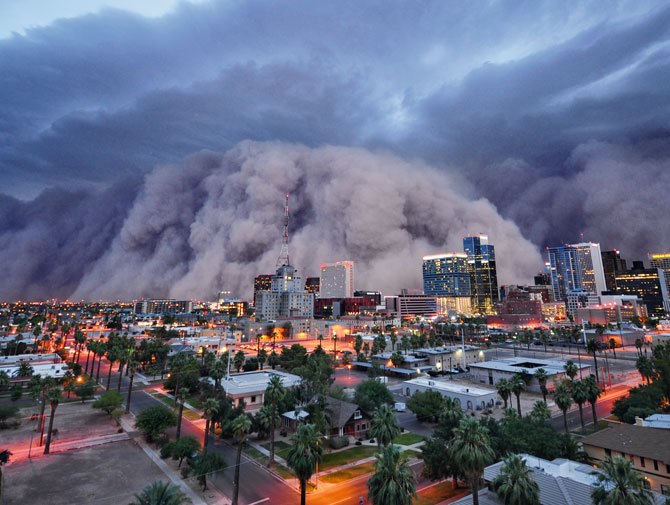
DustStormDaniel Bryant photo

My friend, the talented Richard Ruelas, wrote a diligently argued article in the Arizona Republic explaining why some dust storms here should properly be called "haboobs." He cites a 1972 article in the Bulletin of the American Meteorological Society and its use by the popular weatherman Dewey Hopper, among others. It's hard to argue with Ruelas' conclusions — but the term still drives me crazy.

The original haboob is native to the Sahara Desert, a completely different environment than the Sonoran Desert (until climate change works its sinister magic in the decades ahead). They're heavy on sand, unlike our situation, and of even more massive proportions. And sure, monsoon, another Arabic-origin word, has use worldwide and is a longstanding expression for the rainy season in Arizona.

Still, nobody besides Hopper used haboob when I was growing up. My grandmother, with memories back to the 1890s, never used it. These were called dust storms, a classic of the Old West. They weren't haboobs. They were dust storms. The phenomenon is especially prevalent in the Gila River basin between Phoenix and Tucson. When Interstate 10 was completed, the state installed a system of signs to alert drivers to an impending dust storm.

What makes me come off sounding like Gampa Simpson is that the widespread use of haboob seems like another out-of-town imposition on Phoenix. The city has lost so, so much of what made it unique and magical in all the world, why more? The influx of millions of newcomers left us with people who don't even know the location of downtown, fools who hike the mountains in high summer, often with fatal results. Sprawl has destroyed our citrus groves and farms, torn apart the civic fabric, left the enchanting Japanese flower gardens under miles of schlock development. The oasis has been paved over, with gravel and skeleton trees and a few heat-stressed plants dying amid the output of the Arizona Rock Products Association. People don't even realize what's been needlessly lost in this frenzy of vandalism. (Ruelas, a careful and fair journalist, is a Tempe native).

In this Phoenix, knowledge of history and customs is not merely ignored but scorned by too many. "Home" is where they came from. They only love Phoenix when they get defensive about any valid criticism of the place. There's not even consensus on what to call this sunscape. So instead of the magnificent and distinctive Phoenix, we get "the Valley." This even though there's Silicon Valley, the San Fernando Valley, the Red River Valley (of the North and of the South), and the Valley of the Jolly (Ho-Ho-Ho) Green Giant. Way to position yourself in the global economy. 

Mayors you should know

Mayors you should know

With Councilwoman Thelda Williams being a placeholder (for the second time) until a new Phoenix mayor is elected in November, it's a good time to reflect on her predecessors. Here is my admittedly subjective list of the most consequential:

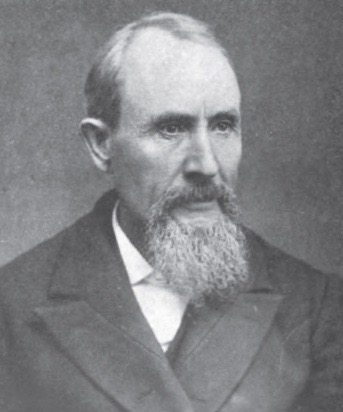
John_T_Alsap (1)John Alsap was Phoenix's first mayor, serving for a year in 1881 after incorporation. Dying five years later, age 56, Alsap, left, nevertheless compiled impressive accomplishments in the Territory. Kentucky born, Indiana raised, and a physician by training, he came to Prescott as a prospector and saloon operator. He began farming in the Salt River Valley in 1869 and was one of three commissioners who established the Phoenix townsite. In the territorial Legislature, he led the successful effort to create a new county — Maricopa — out of Yavapai County. He's buried in the old Pioneer Cemetery (now the Pioneer and Military Memorial Park, although its historic grass was removed).

Emil Ganz was the young town's first Jewish mayor and a two-term chief, serving from 1885-86 and 1899-1901. Ganz was born in Germany, emigrated to America and training as a tailor, seeing heavy action in the Civil War on the Confederate side, and moving to Phoenix in 1879. He ran the Bank Exchange Hotel, the town's first substantial hostelry. As mayor he pushed to establish a fire department and improve the water supply (his hotel burned in 1885 and the town was hit by a severe blaze a year later). 

I wanted to believe

I wanted to believe

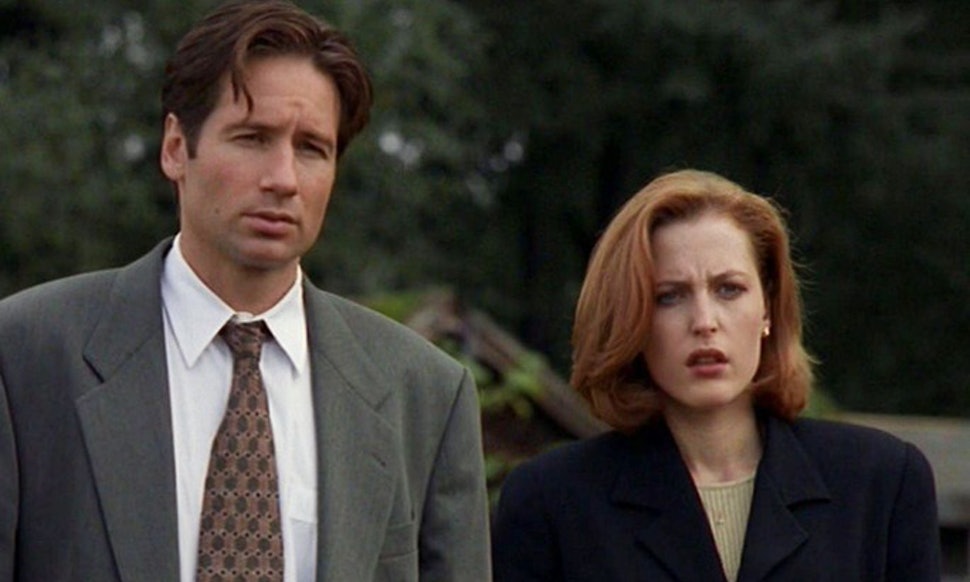
Scully and MulderI've been watching reruns of the original X-Files. Especially before it got too baroque weird in the later seasons, it was one of the best things on television in the 1990s. One thing that most strikes me is how good they look in their suits. We looked good in the '90s. I wore a suit and tie every day. Growing up without much money, this sartorial armor always made me feel wonderful. They were classy, too, not today’s clown short coats and flat-front slacks  

Admittedly, I now mostly live in Seattle, one of the worst-dressed cities in America. But norms are collapsing everywhere. When I boarded a flight recently from Phoenix to Seattle, my fellow passengers were a catalogue of the current American freak show, with their abundant tats, Civil War beards long enough to support a large ecosystem of vermin, and infantile "casual" clothes. Some of the richest businessmen now dress like 15-year-olds in T-shirts, or wreck the sexy design of a suit by going without a tie. It's all a sham. We're less casual in reality than in the 1950s, only the taboos are different and deviancy has not only been defined downward but mainstreamed.

But I watch the X-Files and think about the '90s — we looked good.

From today's perspective, the decade was the latest Fin de siècle, every bit the end of an age as the runup to the Great War. Bill Clinton was in the White House. The economy was enjoying its longest boom in history — widespread, too — and a modest tax increase put us on the way to the first federal surpluses in decades. The nation was at peace. Americans generally agreed on facts. Science was accepted and admired.

My professional life was good, too. Newspapers had yet to be "disrupted" by Craig's List and the internet. I was in demand as a turnaround business editor, and enjoyed helping build top business sections at the Rocky Mountain News, Cincinnati Enquirer, and Charlotte Observer. Living in Denver and Cincinnati turned me into a committed urbanite.

This isn't the whole story. 

Kooks and Kochs try to derail south Phoenix light rail

Kooks and Kochs try to derail south Phoenix light rail

062
It appears that the six mile light-rail line to south Phoenix is on life support. I say "appears" because much of the reporting on the issue has been inaccurate. The Arizona Republic's Jessica Boehm reported the immediate news correctly, but plenty still needs to be filled in.

If I understand correctly, the City Council — with transit-backers Mayor Greg Stanton gone and Councilmembers Kate Gallego and Daniel Valenzuela set to resign in August to run for the seat — voted to "redesign" the south line along Central Avenue. This is to address a "grassroots" opposition complaining that Central would lose two of four lanes for automobile traffic.

Redesign may well mean death and loss of federal funding, especially with the rump Council after August. Skillful/shameful maneuvering by Councilman Sal DiCiccio, an ardent light-rail opponent, even took hostage City Manager Ed Zuercher, threatening his job and the city budget. This is the shorthand to a very complex moving drama.

It's no secret that the Koch brothers and other dark money groups are working to kill transit projects around the country. The anti-rail fetish on the right has always puzzled me. The "You Bastards" part of WBIYB is intended for them and their thuggish opposition to the starter line. And it's always possible to find a few discontents for a "grassroots" front group. But south Phoenix voters approved this line by 70 percent. If the likes of Better Call Sal prevail, this would be a blunder of historic proportions. For the facts and context, please read on. 

Suffer the children

Suffer the children

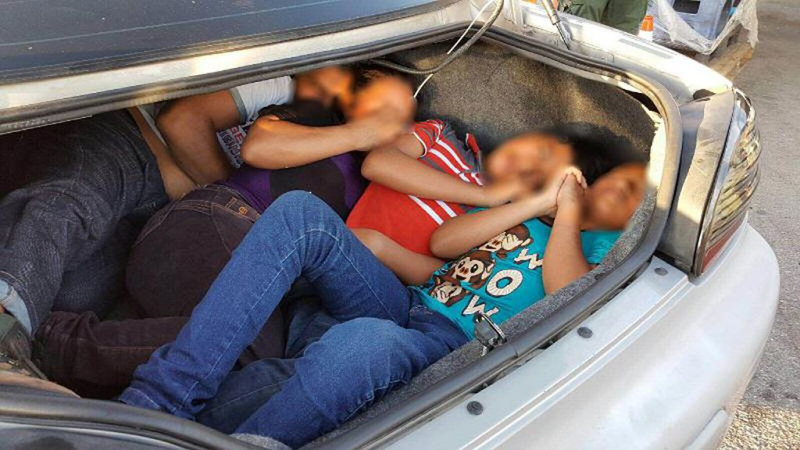
Everyone on my Twitter feed is in high moral dudgeon about the Trump administration's policy of separating children from illegal immigrant parents. It's compared unfavorably to the World War II…
Ten and no change

Ten and no change

Fredgraph
A
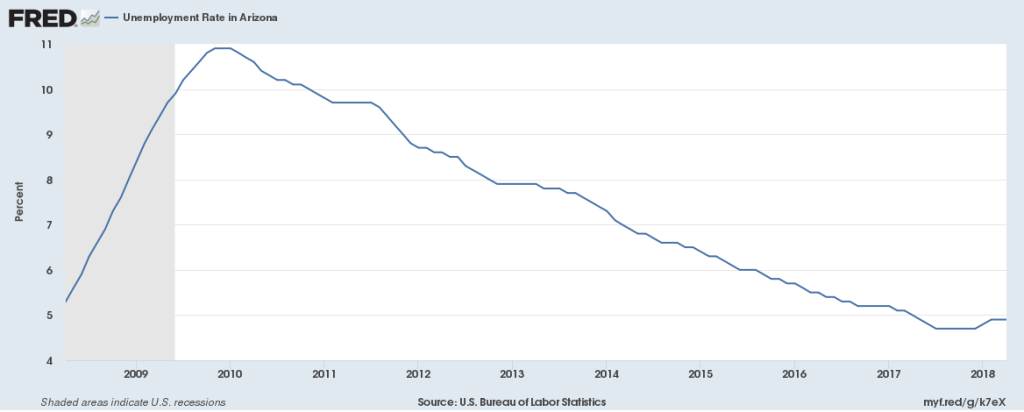
decade ago, Arizona and metropolitan Phoenix became an epicenter of the Great Recession, brought on by Wall Street hustles and Sun Belt overbuilding. Statewide unemployment reached a high of 10.9 percent, slightly less in Phoenix and Tucson. The speculative real-estate economy, which had become the economy, collapsed. House prices fell 50 percent or more, with historic levels of foreclosures or people being underwater on their mortgages. For many, this meant financial ruin. The overall damage was far worse than 1990 and both the state and metro area trailed their peers by years in recovering. Even now, the number of construction workers is at 1999 levels, even though population has grown considerably.

Ten years later, what's most remarkable is how little has changed. The one exception is real progress with central Phoenix infill, but it's a smidgen of the overall situation.

Sprawl development-driven economy? Check. Dependence on lower-skilled, lower-paid back office jobs? Check. The economic center in the car-dependent office "parks" of the East Valley? Check. Poorly-funded schools, more Big Sort Republican newcomers, Kooks in control of state government? Check, check, and check. Phoenix is the only major metropolitan area in North America that's building extensive new freeways, including the corruption-ridden South Mountain loop.

In other words, the vulnerabilities that drove Phoenix into a ditch a decade ago have been sustained and reinforced. No lessons learned. Nothing to see here, it's sunny with championship golf, so buy a tract house or move along. As Talleyrand said of the Bourbon dynasty, "They had learned nothing and forgotten nothing." 

The Canals of Phoenix

The Canals of Phoenix

AZ_Canal
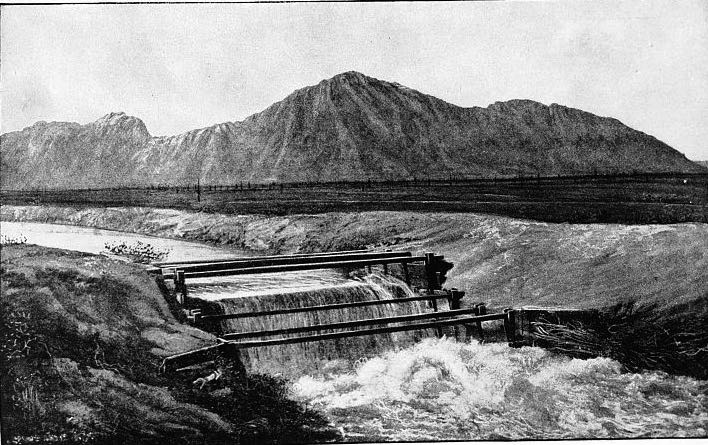
Beneath all the concrete, asphalt, and gravel of today's metropolitan Phoenix is some of the richest soil on earth. No wonder early settlers called it the Nile River Valley of the United States, or, with more aching pathos given what's happened, American Eden. Add water and anything will grow here. Getting the water from the Salt River was the challenge — one solved with canals.

The Hohokam (750-1450 AD) built at least 500 miles of canals in the Salt River Valley. The mileage might have been in the thousands. They created the most advanced irrigation civilization in the pre-Columbian Americas.

The genius of Jack Swilling — Confederate deserter, Indian fighter, prospector, drunk, opium addict, brawler, first town postmaster and justice of the peace, adoptive father of an Apache boy, cherished friend of many — was that he understood the significance of the Hohokam canals, which laid dormant for more than 400 years. They were not mere prehistoric curiosities. They were the means of building a modern empire, where a new civilization would arise from the ashes of its predecessor. (Why would you use the amorphous word "Valley" when you have the magical and appropriate name: Phoenix). 

The man from no hope

The most important story that likely didn't appear on the front page of your newspaper was that James Clapper, former Director of National Intelligence, has "no doubt" Russia swung the election for Donald Trump. Clapper, a retired Air Force lieutenant general, has spent his career in intelligence. He was unanimously confirmed to the position by the Senate in 2010. Yet aside from the Rachel Maddow show, this bombshell has barely received any coverage.

And so it goes. Almost every day, new incriminating information comes out about this treasonous, corrupt, malevolent presidency. You read it if you partake of the Front Page links on this site. And yet, almost every day I grow more fearful that it will make no difference. Forty-two percent (!) of respondents to the latest Gallup survey support Trump. And given the Bradley Effect, where people lie to pollsters, the number is probably higher.

As I've discussed before, whatever the outcome of the Mueller investigation, no legal action can likely be taken against Trump while he's president. The remedy is impeachment. But the Republican-controlled Congress won't use it. They are getting all their dreams come true — from tax cuts and gutting regulations to erasing the Obama presidency and wrecking the government from the inside. Also, they fear Trump's base.

The Framers put two mechanisms in place to prevent someone like Donald Trump from being president: the Electoral College and impeachment. Both have failed. So much for the GOP's reverence for "originalism" in the Constitution. And to think I'm old enough to remember when Republicans warned us that Democrats would surrender the country to Russia.

Filling in

Filling in

DSCN2449(1)
In the 2000s boom, central Phoenix saw many proposals and promises — including 60-story towers in Midtown — but hardly any private development happened. It took years of heavy lifting to get WilloWalk/Tapestry and One Lexington.

Finally, even though the local economy has yet to fully recover from the Great Recession, the central core is seeing major infill. One prime example is Lennar's Muse apartments, built on the long dormant empty lot at the northwest corner of Central and McDowell, once home to AT&T's offices.

Just south, and also near the light-rail (WBIYB) station is a massive apartment complex under way near the Burton Barr Central Library. The north side of Portland Park has a tall condo building. More apartments are complete around Roosevelt and Third Street, while a crane hovers over the former site of Circles Records, erecting Empire Group's 19-story apartments. South of One Lexington, the long construction of the Edison condos is nearing completion.

This is transit-oriented development and it's finally happening.

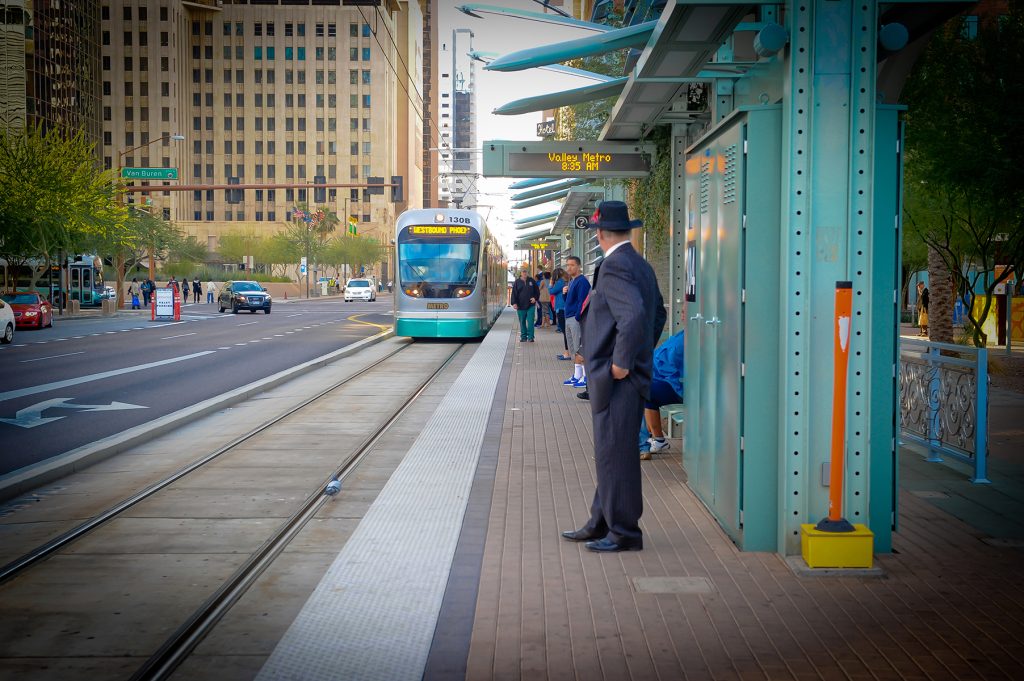
An aside: Why does the announcement on trains say, "McDowell and Central, cultural district" instead of "Phoenix Art Museum, Phoenix Central Library," and "Roosevelt and Central, arts district" instead of "Roosevelt Row arts district"? 

What is Grand Canyon University?

What is Grand Canyon University?

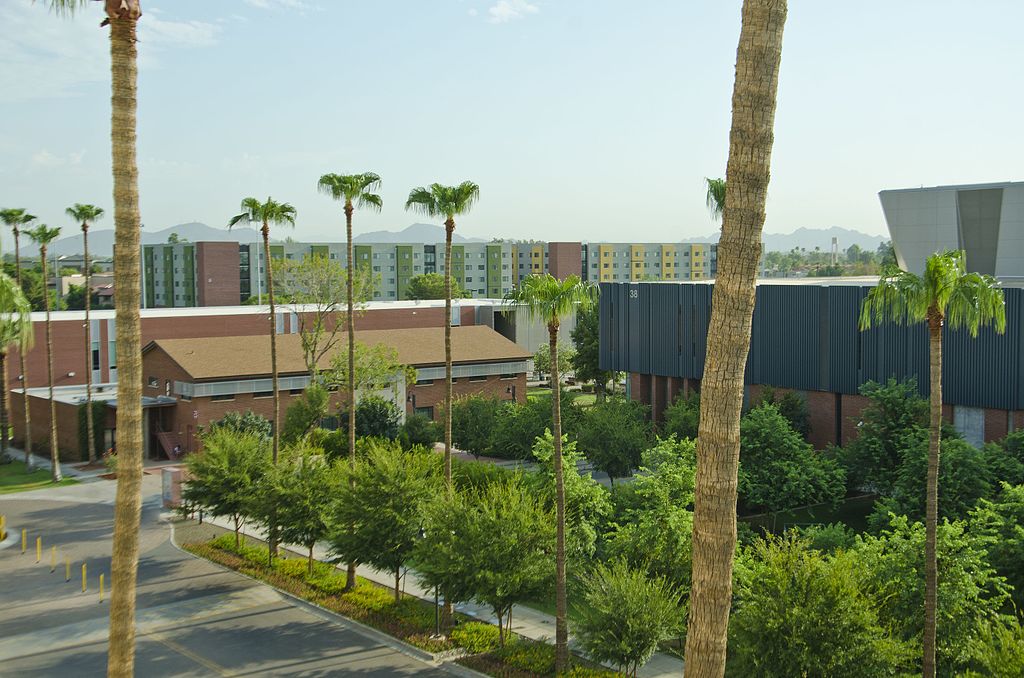
Grand_Canyon_University_Phoenix_Campus_-_panoramio_(4)
The university is one of the foundations of liberal Western Civilization. The concept of academic freedom originated at the University of Bologna in 1158. The University of Paris and University of Oxford were among the earliest institutions of higher learning. In America, Harvard was established in 1636. The United States typically had three types: private, church originated (the University of Southern California was affiliated with the Methodist Church), and those established by states. A very different Republican Party passed legislation in the 19th century for land-grant colleges and universities.

This landscape existed through most of American history. In addition, states created normal schools to train teachers — most became universities, the most notable being Arizona State University. Many also created institutions of higher learning for African-Americans. Beyond this, communities had junior colleges — Phoenix College was founded in 1920 — which morphed into community colleges. And entrepreneurs set up business schools or "colleges" to teach such basic skills as typing and bookkeeping. But this latter operation was a trade school, not a university.

When I was young, Grand Canyon College was a small liberal-arts Southern Baptist institution. It was the only other four-year or higher institution in metropolitan Phoenix besides ASU. Phoenix is by far the largest American city with so few real colleges and universities. This is a major drag on the metro's intellectual, research, and talent-attracting life. One cause is that Phoenix came of age after the era when wealthy patrons established universities (E.g. the University of Chicago, backed by John D. Rockefeller in 1890). The Church of Jesus Christ of Latter-day Saints bought land for a Brigham Young University in Phoenix in the 1960s but it was never built.

Now the Baptist affiliation is long gone and we have Grand Canyon University. But, as a former editor of mine was fond of saying, what does that mean?