‘The party of ideas’

‘The party of ideas’

1024px-CPVI_for_115th_Congress
Here's something that baffles me about this moment. The right-wing captured Republican Party has complete control over Congress and the White House, as well as growing numbers of federal judges. Damage abounds. But based on their rhetoric and the desire of their voters…

…Why not enact a new version of the Immigration Act of 1924? This was a backlash against decades of record immigration and set strict quotas on people allowed to come, based on their country of origin (hint: big plus for whites, but also no restrictions on Latin Americans). These were in place until 1965 and, uncomfortably for liberals, coincided with the zenith of the American middle class. Congress, firmly in Republican hands and facing no presidential veto, has the absolute power to do this.

…Abolish the Department of Education, Department of Energy, Department of Health and Human Services, Department of Transportation, Department of Housing and Urban Development, and the Environmental Protection Agency. Again, the Republicans have the complete power to do this. None of these entities existed in 1960, when America was "great." Devolve the responsibilities to the states.

…Repeal the Clean Air Act and the Clean Water Act. It's a longstanding article of faith among conservatives that these are both unconstitutional and bad for the economy. Poof! Gone. Strict interpretation of Article 10 would allow states to impose environmental laws — or try to, facing right-wing federal judges — but it's not something enumerated in the Constitution for the national government.

Republicans, never more in lock-step with the most extreme agenda of their party, could do this. It could avoid the third rail of Social Security. True, it can't outlaw abortion (and birth control), force prayer into public schools, or reverse the gains of LGBTQ people. But the above would be monumental victories, on the order of the New Deal, Great Society, or Trump's beloved Jackson era. They might last only two years — but maybe not, given GOP control of the Census, gerrymandering, vote suppression, and divisions among the Democrats.The GOP couldn't accomplish these sweeping changes under Reagan (when it branded itself as "the party of ideas") or George W. Bush. Now it could.

Yet it didn't. This is fascinating.

The stand

I'm the beneficiary of Arizona public schools. At Kenilworth in the 1960s, we never suffered textbooks falling apart or holes in the ceiling. No, this elementary school whose alumni included Barry Goldwater, Paul Fannin, and Margaret Hance, which was integrated and taught everyone from poor kids to the scions of the Palmcroft elite, had superb teachers. It had a library and a verdant playing fields — the monstrous freeway only a line on a planning map — presided over by a magnificent, inspiring building.

At Coronado High School in middle-class Scottsdale, the story was much the same. Some of the finest teachers anywhere, one of the top fine-arts departments in the country, and Ralph Haver's inspired mid-century architecture. None of my teachers at either school were forced to buy supplies. Neither school was surrounded by a prison-like fence — and the '60s and '70s were hardly peaceful decades. There was even a brief teachers' strike in Scottsdale in 1971.

Now a statewide walkout is occurring. It is about much more than some of the lowest teacher pay in the nation. More even than gutting a billion dollars from public schools while dolling out tax cuts to the wealthy and politically connected. More than teachers seeing through Gov. Doug Ducey's cynical promise to raise wages 20 percent — something that wouldn't even bring their pay to the national average, and would require the Legislature to take money from other critical needs. Because…tax cuts. Taxes must always be cut.

Teachers have finally made a stand.

I have no idea whether it will be successful. I doubt it can change Arizona's trajectory. But the stand needs to be made. 

Phoenix confidential: Miranda

Phoenix confidential: Miranda

MirandaIn our cultural memory, Ernesto Miranda was railroaded into a false confession by a thuggish and racist Phoenix Police Department. The wrong was rectified by the Supreme Court in the landmark Miranda v. Arizona lawsuit. This resulted in the Miranda Warning, especially its demand that suspects be told that they have the right to remain silent. Anyone who has watched cop shows, from Adam 12 to Law and Order knows it by heart.

The truth is far different — and more fascinating.

Miranda, who went by Ernie, was born in Mesa and mingled easily in the Anglo-dominated Phoenix of the early 1960s. His boss at United Produce in the Warehouse District praised his work ethic. All his brothers joined the armed forces, served honorably, and lived successful lives. But Ernie was in trouble in his teens, doing two stints at Fort Grant, once synonymous with the state Industrial School for Wayward Boys and Girls. In the 19th century, Billy the Kid worked as a ranch hand nearby for a time. Ernie joined the Army but was dishonorably discharged.

The cause was being AWOL multiple times — but also for being a peeping Tom. Miranda rationalized it to himself that the women wouldn't leave their curtains open unless they wanted to be watched. This compulsion — especially after he arrived back in Phoenix after a troubled wandering around the country — would turn him into a hard-core rapist (one crime as a teen had been "assault with intent to commit rape”).

Where to go in my Phoenix

Where to go in my Phoenix

Durants
Readers frequently tell me where to go, so it's my time to return the favor. Seriously, I get so many requests for restaurant and sights to visit from out-of-towners, especially Seattleites visiting for Mariners Spring Training. It will be easier to put it in a column and direct them here.

My suggestions don't focus on north Scottsdale or the asteroid belt of supersuburbs. Instead, I send them to my Phoenix, a vanishing place to be sure.

Restaurants:

Durant's: The legendary steakhouse, on the light-rail line in Midtown. If you drive, you can enter through the kitchen like a made man, as Jack Durant intended. The interior (above) is a 1950s throwback, the food is excellent, and the service is classy. Durant's features prominently in my David Mapstone Mysteries. Be sure to try a martini.

Also on light rail (WBIYB) and not to be missed: Fez, Forno 301, Switch, Lenny's Burgers, Wild Thaiger, Honey Bear's BBQ, and Macayo's.

Chef-driven Mexican food is big now, a trend started with Barrio Cafe. But I still love throw-down authentic Sonoran cuisine. My new fave, especially since Macayo changed its menu, is La Piñata on north Seventh Avenue, where Mary Coyle's used to be. Also be sure to check out the taco trucks you'll find all over. My enduring love is Los Olivos in Old Scottsdale, which has been there since before I was born.

Other favorites: The Persian Garden across from Phoenix College. Downtown, don't miss the historic Sing High Cafe on Madison Street, which once operated in the Deuce. The best pizza is Cibo at Fifth Avenue and Fillmore.

For fancy old Phoenix resort dining, I suggest Lon's at the Hermosa, T-Cook's at the Royal Palms, and any of the restaurants at the Arizona Biltmore.

You can breakfast like David, Lindsey, and Peralta at the First Watch at Park Central. The Farm at South Mountain offers a fine breakfast (as well as lunch and dinner). You can get a taste of the Eden that was once my hometown. 

‘Do I return to my home state?’

‘Do I return to my home state?’

Phoenix
I received a very articulate note from a young man who left to attend a well-regarded Midwestern university. He wrote in part:

I  lived in Phoenix my entire life, until I left … to study environmental engineering. I was going to learn as much as I could about the ecological problems facing Arizona, especially the inevitable water shortages that come from placing millions of people in the middle of the desert in an era of rapidly changing and warming climate, and then triumphantly return and solve them. At least, that was my naïve goal at 17 years old. 

Now, I’m about to graduate, and I see myself at a crossroads, as one often does at this age of relative innocence. Do I return to my home state and try to make it a better place, or do I abandon it for a better place?

This is what I wrote back:

Thank you for your heartfelt and compelling note. The answer, I'm sorry to say, is don't come back.
 
Of course, many factors come into play. Whether you want to be near family or thirst for endless sunshine, for example. But your idealism would be ground to dust by the reality that is Phoenix and Arizona. You might be able to get a job helping developers get around environmental regulations. Or, for a pittance, working for one of the few environmental advocacy groups.
 
But you can't change the place. It's a lesson I and so many others have learned. Phoenix breaks hearts. There is the illusion of the blank slate — I've watched so many architects, academics, artists and designers come there with this sense. In a few years, they leave in frustration.
 
Life is short. I was your age just yesterday, or so it seems. Your talents and training could be more rewardingly applied in a place that has an environmental ethic and has livability high on its agenda. And there are so many wonderful cities in America for a young person to grow, encounter new ideas, thrive. Alas, that's not our home state. I wish you the best.
 Allow me to explain further. 
When a light goes out

When a light goes out

Central_Methodist_Church_1875_N_Central_1950s
“It’s so much darker when a light goes out than it would have been if it had never shone.” — John Steinbeck

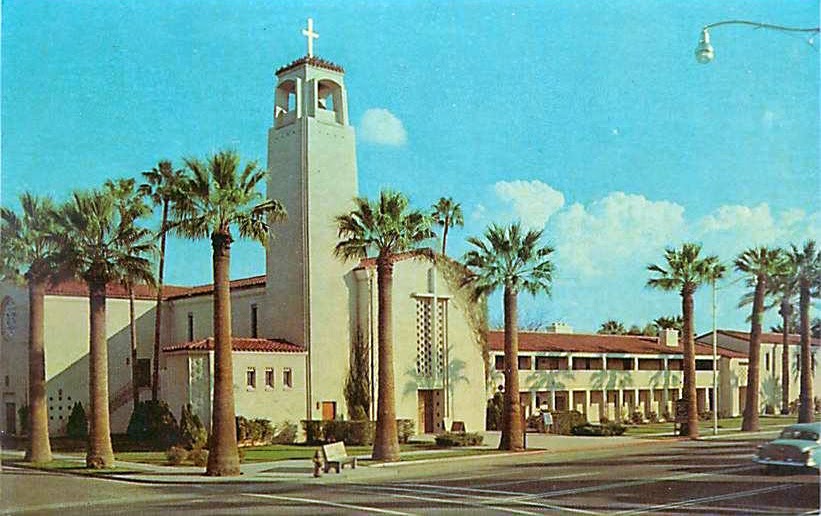
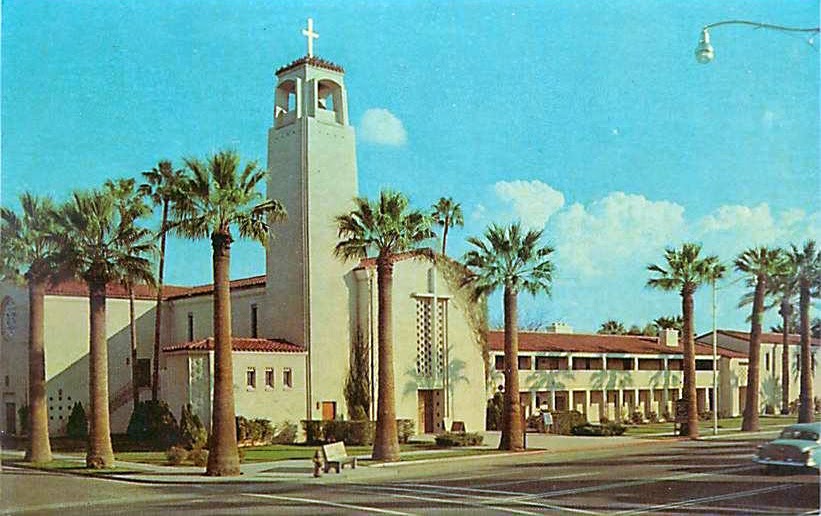
Central United Methodist Church, at Central Avenue and Palm Lane, will close at the end of June. It's a devastating event.

I was baptized here, so many decades ago. I remember Sunday school, attending services with my mother and grandmother. My mother had a glorious contralto and, a child prodigy trained as a concert pianist, sometimes played the immense pipe organ, with its 4 divisions, 28 stops, and 41 registers. In the 1960s, it was common for each service to see a thousand people or more, filling the sanctuary and its three balconies. Central was a prime posting for veteran ministers — only doctors of divinity reached the senior rank — and the choir was superb. I was confirmed there, age 13.

When I returned to Phoenix in 2000, I started attending Central again, this time with Susan. Getting a hundred people in the pews was a victory by that time. The quality of preaching was uneven, as individual ministers came and went (long gone from the days of a senior minister and others). But the music program was very strong under Don Morse.

The core, including the longstanding group of ushers, was committed. Important for us, Central still offered a traditional service, with the wonderful Methodist hymns. Christmas Eve could see five services in the soaring sanctuary, with luminarias in the courtyard. We continue to attend. When I lived in Charlotte, people would ask me if I had found "a church home." No — in that hotbed of religion, the question irritated the secular me. "I have a bar home," I would respond. But the truth was different. My church was here. It always was. Always will be.

But 2018 brought heartbreaking news. First, the music program was downgraded, with Morse and seemingly most of the choir gone. Finances were an issue; the church and Morse, who had already taken a pay freeze/cut, couldn't come to terms. But respect also seemed an issue, the lay leaders wanting to downgrade his position to "choirmaster." A botched remodel of the sanctuary was probably another cause, including the loss of the pipe organ and removal of two of the balconies. I don't claim special insight. I spent many years in United Methodist choirs, but tried to avoid church politics whenever possible. Next came word that the sanctuary would only be used for special occasions. A traditional service would be held in the small Pioneer Chapel and a contemporary one in Kendall Hall.

The sum of all fears

The sum of all fears

With the firing of Rex Tillerson as Secretary of State and H.R. McMaster as National Security Adviser, and their replacement by unfit, unqualified, and dangerous men…anyone paying attention has a pucker factor of 9.5. The only thing standing between us and World War III is Jim Mattis as Secretary of Defense, and how long until he is replaced by a Fox "News" personality?

The "positive" rejoinder can only be: Don't worry, we'll merely continue to see the President of the United States, run as an asset by the former KGB man in the Kremlin, undermine the norms of self-government, wreck the government from the inside, and shovel in private treasure like the head of a Third World failed state. Happy, brightsiders?

Sometimes, in this nightmarish period since Donald Trump won the second-most votes but still the presidency, I've tried to comfort myself with the notion that he's too lazy and obtuse to become a dictator. After all, Stalin was an intellectual and, as Simon Sebag Montefiore puts it, "a people person" in his rise to supreme power. Mussolini was smart, driven and shrewdly undermined democracy through populism (Republicans couldn't like this Fascism because they hate the trains that would run on time). Recep Tayyip Erdoğan of Turkey has been highly competent in setting up his strongman state. Trump, a reality television personality and often-failed developer, is none of these.

But going all the way back to paramedic days — even before,  noticing javelinas in the desert — the most unlikely mammal can react with unpredictable guile and violence if cornered. 

The kingdom and the power

The kingdom and the power

SRP

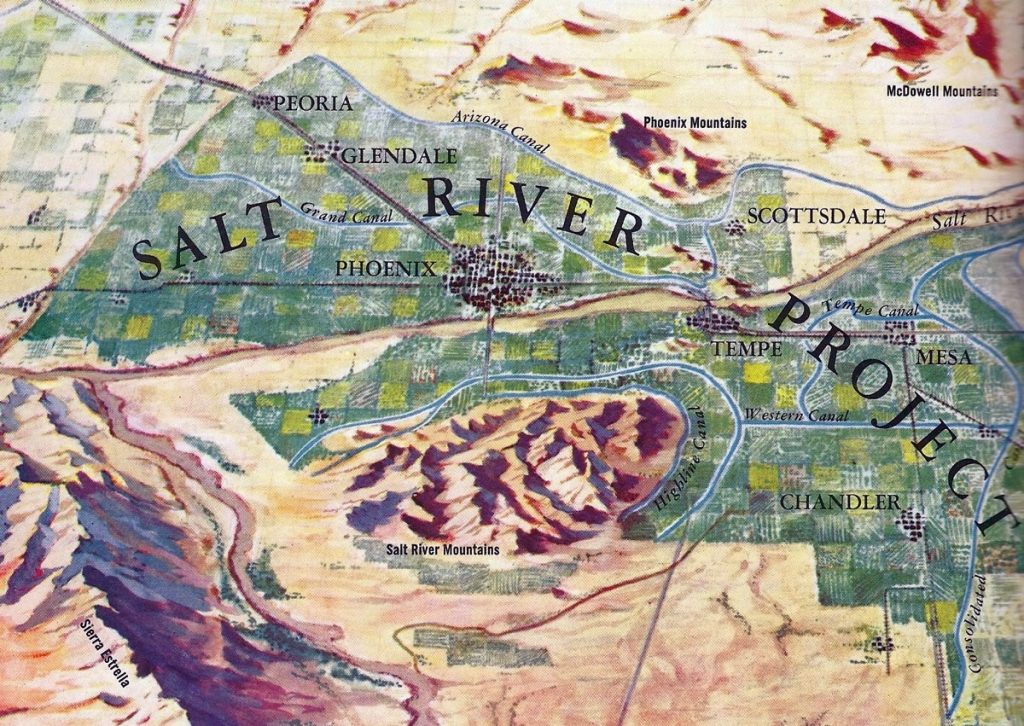
The Salt River Project was recently in the news, with proposed pay increases including $251,000 a year for board President David Rousseau. The story noted that this was more than Gov. Doug Ducey ($95,000) or Phoenix Mayor Greg Stanton ($88,000). SRP backed off following the news in the Arizona Republic. The real day-to-day boss in the new general manager, Mike Hummel, who will make $1.04 million. Despite the modest title, this is a position of immense influence. Former general managers include heavyweights Jack Pfister and Dick Silverman.

Phoenix lacks engaged moneyed stewards such as Bill Gates and Paul Allen in Seattle, or major headquarters such as Amazon. This only magnifies the power of SRP. It is no ordinary utility, even though it supplies electricity to the Phoenix metropolitan area along with Arizona Public Service. But much of what it does happens behind the scenes. SRP likes it that way. 

The Salt River Project is a unique entity. Unlike the Tennessee Valley Authority or the Bonneville Power Administration, both created during the New Deal as public works to address the Great Depression, SRP is not a federal agency.

Rather, it is a hybrid private-state organization consisting of two arms. First is the Salt River Valley Water Users Association, which began in 1903. The first Newlands Act reclamation project, the association consisted of farmers and ranchers who pledged their land as collateral for low-interest bonds to pay for Theodore Roosevelt Dam. This followed the disastrous droughts on the 1890s and the failure of private enterprise to build a waterworks, notably the Arizona Canal, to match the potential of the burgeoning agricultural empire of the Salt River Valley. The dam also provided hydroelectricity. 

We’ll be OK, right?

We’ll be OK, right?

512px-United_States_Capitol_at_sunset_2004
I don't know.

Arizona history has been a comforting topic of late. Writing on contemporary events is too much. I'm still poleaxed that Hillary Clinton isn't the president, that at best 70,000 voters in three states determined our nightmare, that it had even been that close. The evidence mounts — latest with a blockbuster article in The New Yorker by Jane Mayer —  that Trump is not merely uniquely unqualified for the Oval Office but a traitor, a Russian Quisling. I'm old enough to remember when the Republicans warned that the Democrats would surrender us to Russia. How does one write about these things, even read them, without a certain madness setting in?

David Brooks, the stopped clock of American pundits, recently wrote:

…once the norms of acceptable behavior are violated and once the institutions of government are weakened, it is very hard to re-establish them. Instead, you get this cycle of ever more extreme behavior, as politicians compete to be the most radical outsider. The political center collapses, the normal left/right political categories cease to apply and you see the rise of strange new political groups that are crazier than anything you could have imagined before…. Vladimir Putin’s admirers are surging. The center is still hollowing out. Nothing is inevitable in life, but liberal democracy clearly ain’t going to automatically fix itself.

Indeed. So will we be OK? I'm less worried about nuclear war than two months ago — but that could change in a late-night Trump tweetstorm. Otherwise, who knows. The Roman empire endured for almost 500 years in the West and another thousand years in the East after the death of the Roman Republic. So might it be with the American Empire. Or not, after one or more Sino-American wars and/or the disruption of climate change. But I'm not sure we're going back to the country we knew, flaws notwithstanding.

Arizona’s ‘boom’ (in charts)

Arizona’s ‘boom’ (in charts)

To hear the boosters tell it, Arizona is enjoying one of the most competitive economies in the nation. Let's take a look, using authoritative sources.

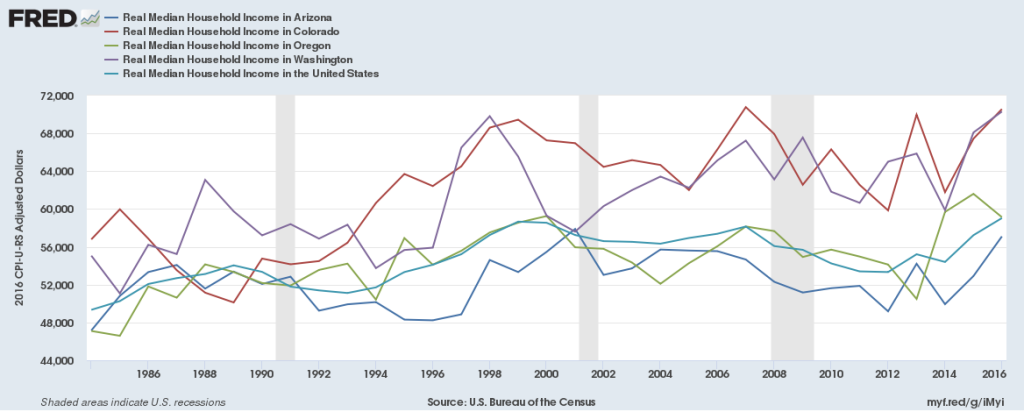
Median household adjusted for inflation income is up, with its second-best showing since 2000. Unfortunately, it trails the national average and peer competitors in the West:

MHI

The workforce is at a record near 2.8 million. Unfortunately growth has been sluggish, along with the national average. It is well below the level of growth for this point of an expansion compared with previous cycles:

Nonfarmpayrolls

Population growth, the holy grail of the state's economy is at its lowest levels since the Great Depression, even as Arizona passed 7 million people.

Population

‘Another Los Angeles’

‘Another Los Angeles’

Union_Station_profile _LA _CA _jjron_22.03.2012
It surprised me to still hear Phoenicians say, "We're becoming another Los Angeles" or "We don't want to become another LA." This vox local yokel reminds me that people in Phoenix don't get out much. To be fair, I used to think the same thing. That was until I was 10 years old, when my mother took me to the City of Angels on Southern Pacific's Sunset Limited, and we arrived at LA Union Passenger Terminal (above). I had never seen a building so grand — and the rest of the city was just as stunning. This was the first big city I'd been in, and it was nothing like little Phoenix.

I judge a city by its trains. Union Station has been restored to its grandeur and actually hosts more arrivals and departures than when it opened in 1939. In addition to Amtrak intercity trains to Chicago, Houston, New Orleans, and Seattle, it is the hub for LA Metrolink's six commuter rail lines, plus three subway and light-rail lines. All around it, downtown LA is undergoing a stunning renaissance — not only with new buildings such as the 1,099-foot Wilshire Grand but rehabbing its stock of majestic architecture from the early 20th century. It was never true that Los Angeles "didn't have a downtown." It had several, including Century City, Westwood, Hollywood, and downtown proper. All of them leave Phoenix looking like Hooterville by comparison. LA made a terrible mistake in tearing out the extensive Pacific Electric Railway, but it's making amends fast.

Phoenix becoming another Los Angeles? It should be so lucky. LA is one of America's three world cities, as defined by sociologist Janet Abu-Lughod's famous book of the same name. The influential Globalization and World Cities Network ranks it as an Alpha city, the third highest level of global power (only New York is Alpha ++ among North American cities). Phoenix is gamma, the ninth category. Phoenix peers Denver, Seattle, and San Diego rank Beta-minus. The LA metropolitan area's gross domestic product totaled more than $931 billion in 2017, second only to New York City in inflation-adjusted dollars. Phoenix, although the nation's fifth-largest city and 13th most populous metro ranked 17th, at $220 billion (again, behind peer metros). If LA were a nation, its output would rival Australia.

Lessons from Denver

Lessons from Denver

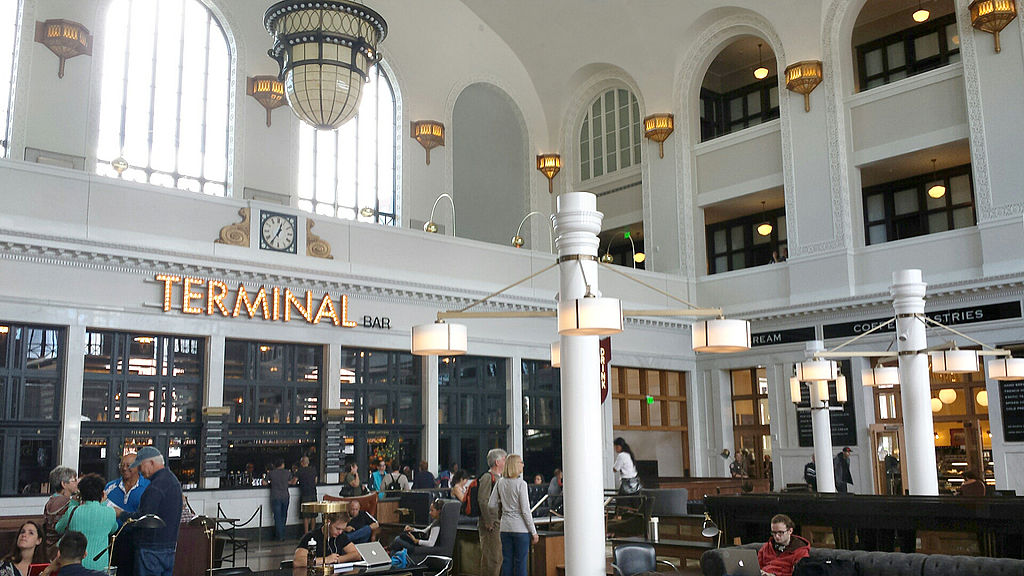
Denver_Union_Station_Great_Hall_Interior

One went to Denver and the other went wrong

— American folk ballad.

Last fall, we took the train from Seattle to my favorite adopted hometown, Denver. This form of travel is worth the trip — vacation begins when you settle into your seat. Arriving in Denver, I found the city much changed from when I lived here in the 1990s, working for the Rocky Mountain News, and all for the better. Getting off the California Zephyr, the restored Union Station greeted us. Not only is it the hub for Amtrak, but also for the light- and heavy-rail trains on the 122-mile network funded by the 2004 FasTracks referendum. Light rail preceded FasTracks, with the first line from downtown to suburban Littleton opening in 1994. As in Dallas, once people saw how light rail worked, everybody wanted it. Now an electric-powered commuter line also connects to Denver International Airport, along with six light-rail lines and more coming.

1024px-Denver_union_stationUnion Station, which recently underwent a $200 million renovation, is breathtaking. The exterior, with its iconic "Travel by Train" neon sign, is cleaned up and the center of vast amounts of mixed-use development. Inside, the once grimy waiting room, has been opened up into a wifi-equipped common area surrounded by shops and restaurants. We stayed at the Crawford Hotel in the station, named after the pioneering downtown developer Dana Crawford. It's a miraculous makeover from when I was among a small number of downtown residents and I would ride my bicycle around the deserted railyard behind the depot. Union Station is the anchor of Lower Downtown, or LoDo, where imposing warehouses from the 19th and early 20th centuries were renovated into lofts, offices, and restaurants. An early brewpub was started here by John Hickenlooper, who went on to become Denver mayor and Colorado governor.

It was a near-run thing. Although preservationists led by Crawford scored a win by saving Larimer Square in the 1960s as a tourist destination, many people were prepared to tear down the majestic but obsolete warehouses of LoDo. Only thanks to mayors Federico "Imagine a Great City" Peña and Wellington Webb, along with developers such as Crawford who had the skills to save and rehabilitate old buildings, was LoDo saved. Railyards made redundant by mergers were turned into a campus for Metropolitan State University, the Community College of Denver and the University of Colorado at Denver. LoDo and nearby areas also attracted Coors Field of the Colorado Rockies and the Pepsi Center where the NBA Denver Nuggets and NHL Colorado Avalanche play. What was mostly abandoned railroad property when I first arrived has been completely rebuilt and knitted into the city.

It's no surprise that Denver is among the 20 finalist cities for Amazon's HQ2, with 50,000 high-paid jobs and $5 billion investment. Denver is a comer, win or lose.

Distressed Arizona

Distressed Arizona

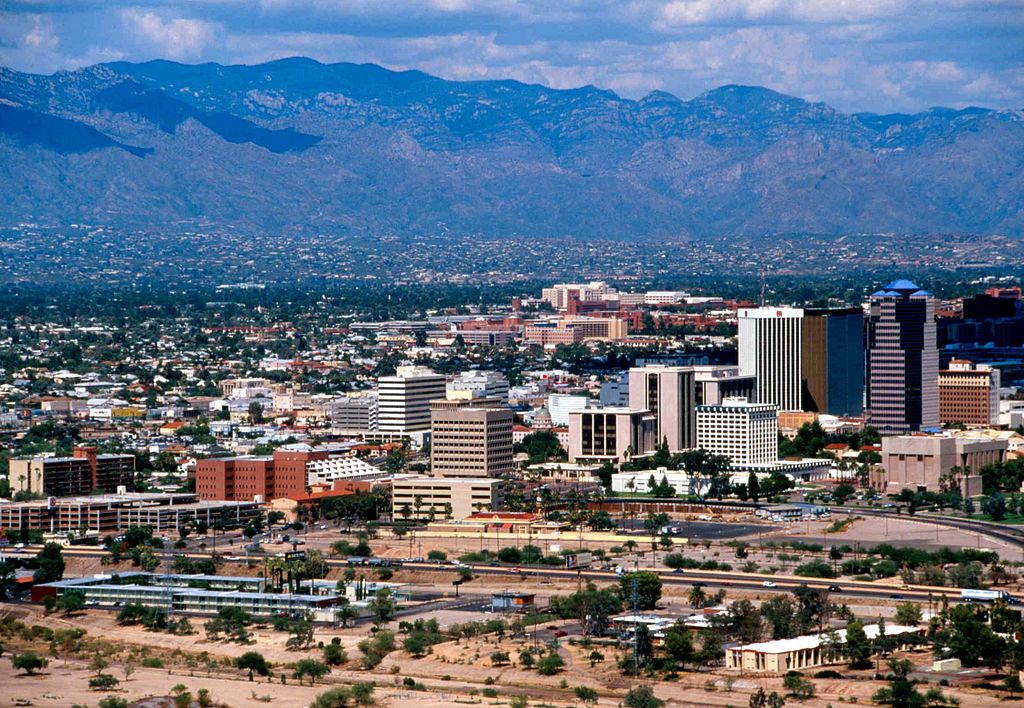
CatalinasAndTucsonAZ
It's tough all over. Well, not really.

In the latest Distressed Communities report, which digs down to the ZIP Code level nationally, Gilbert ranks as the least distressed among America's 100 largest cities. It has zero distressed ZIP codes and 99 percent of them are considered "prosperous." The report, by the Economic Innovation Group, considers seven metrics to rank areas "distressed," "at risk," mid-tier," "comfortable," and "prosperous." It's become one of the gold-standard reports as America struggles with sharply different economic and social outcomes.

Chandler also did very well, No. 4 nationally, with zero distressed and 65 percent prosperous ZIP codes. Scottsdale ranked No. 10, again with zero distressed and 61 percent prosperous. These showings are no mystery. All three jurisdictions are overwhelmingly higher-income Anglos, along with the preponderance of the state's high-end economic assets. (Someone once sniffed that he lived in south Chandler, as if this would impress me. My Chandler is circa 1977 and south Chandler is alfalfa fields.). Scottsdale has plenty of extremely rich retirees and part-year residents. Gilbert, and to a lesser extent Chandler, also benefits from the Church of Jesus Christ of Latter-day Saints.

Yet Tucson ranks a shocking 91 out of 100. Nearly 59 percent of the city's ZIP codes are distressed and less than 8 percent are prosperous. This is the kind of calamity more likely seen in famously troubled places — and indeed the other bottom 10 include Detroit, Buffalo, and Newark. 

Phoenix in the nineties

Phoenix in the nineties

Papago_Freeway_Tunnel
The new decade came upon a Phoenix beset with crisis. Charlie Keating, the most lionized Arizona businessman of the previous dozen years, was facing federal fraud and racketeering charges. His palatial Phoenician Resort was seized by a platoon of U.S. Marshals, lawyers, regulators, and locksmiths in November 1989. American Continental Corp., flagship of Keating's complex web of businesses, was forced into Chapter 11 bankruptcy reorganization. Among the casualties was his ambitious Estrella Ranch project south of then-tiny Goodyear.

Behind much of the trouble was the savings and loan scandal and collapse, a financial crisis that cost taxpayers about $132 billion. It also took down some of the Sun Belt's biggest institutions, including Phoenix's venerable Western Savings, controlled by the Driggs family, and Merabank, a subsidiary of Pinnacle West Capital Corp. meant to make big bucks for the holding company of Arizona Public Service. It would take the federal Resolution Trust Corp. years to sort out and dispose of all the properties and hustles. The worst of the S&L wrongdoing was the Keating Five scandal. Its U.S. Senator members, who leaned on regulators on behalf of Keating, included Arizona's Dennis DeConcini and John McCain (Disclosure: John Dougherty and I were the first to break this story at the Dayton Daily News).

The local trouble had been predicted in a December 1988, Barron's article about Phoenix's overheated real-estate market, fueled by S&L money. The headline: "Phoenix Descending: Is Boomtown USA Going Bust?" The boosters had been outraged. Barron's had been right. In an ominous foreshadowing of the future, the city hit a record 122 degrees on June 26, 1990.

For individuals, the worst was yet to come. Unemployment in Arizona rose from 5.3 percent in May 1990 to a peak of 7.8 percent in March 1992. This seems modest compared with the Great Recession (11.2 percent for the state); it was painful enough. State and city leaders committed to establishing a more diverse economy, weaning Arizona off its dependency on population growth and real estate. Economic development organizations were set up across the state for this purpose, including the Greater Phoenix Economic Council, led by the brilliant Ioanna Morfessis. It established goals to build strategic clusters around high-technology sectors with high-paying jobs.

Tragically, the effort failed. The 1990s, when the U.S. economy enjoyed its longest, strongest, most innovative economic expansion in history, saw Phoenix and Arizona double down on "growth." The state's population grew by a staggering 40 percent, 45 percent for metropolitan Phoenix. The cluster strategy lacked sustained focus. Yet none of this was obvious or inevitable as the decade began. 

The geography of madness

In 1994, James Howard Kunstler's The Geography of Nowhere was published. It remains the best critique of suburbia out there and I highly recommend it. But something Kunstler didn't touch on was the psychological effects of the isolation and thinning out of America in car-dependent subdivisions.

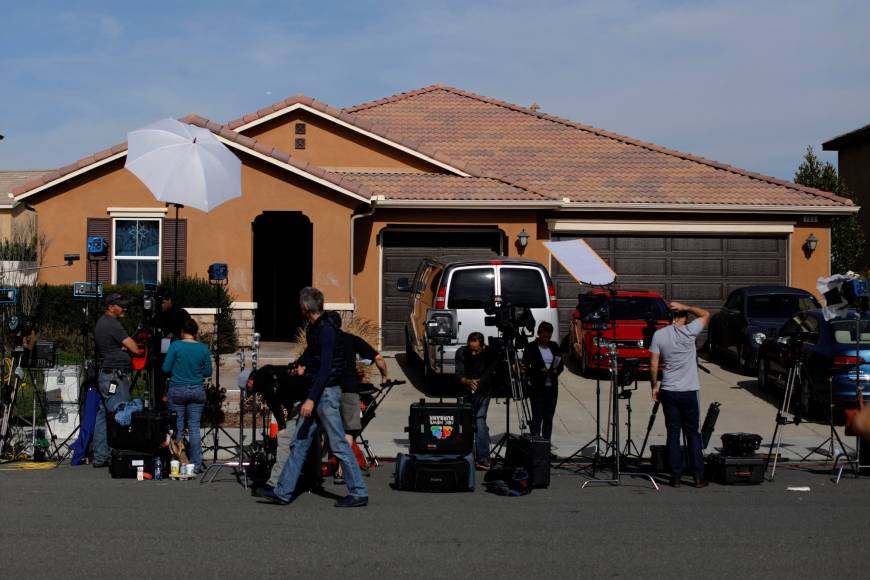
I thought about this when I read the horrific story of 13 siblings held captive and tortured by their parents in Perris, Calif., a piece of sprawl in Riverside County. Look at a photo of the house and it could be anywhere in metropolitan Phoenix outside of the real historic neighborhoods.

The 1999 Columbine High School massacre happened not in downtown Denver, or the city at all. Instead, the shooting that killed 12 students occurred in unincorporated Jefferson County. It is an upper-middle-class area, but filled with lookalike single-family houses, walls, totally dependent on the automobile. Same landscape with the murder of 12 and wounding of 58 at an Aurora, Colo., movie theater in 2012.

When 58 were shot to death last year at a concert on the Las Vegas strip, the shooter lived in Mesquite, Nev., a spread of lookalike tract houses off Interstate 15 near the Arizona line. Newtown, Conn, site of the Sandy Hook shooting, was founded in 1705 but is mostly sprawl residential pods. Dylann Roof grew up in suburban Lexington County, outside Columbia.

On and on. Many reasons drive America's increasing pathologies, but the spatial element shouldn't be ignored.