Copper Square

Copper Square

Morenci  Tom Blackwell

The Morenci mine in eastern Arizona, with one of the largest copper reserves in the world. It's owned by Freeport-McMoRan, formerly Phelps Dodge (Tom Blackwell photo).

One of the misbegotten efforts to revive downtown Phoenix in the early 2000s was to rename it. "Copper Square" was the monicker chosen on the, er, thinking that people in the metropolitan area didn't even know where the city's downtown was. Phoenix had nothing to do with copper — aside from the low dome of the Territorial Capitol and an occasional freight car going through with equipment to the mines — and thankfully the name went away.

But the story was far different for Arizona. Copper was one of the "Five Cs," along with cotton, citrus, cattle, and climate and for decades the most profitable. Arizona has by far the largest concentration of copper deposits in the nation — including Butte, Montana — and second only to southern Peru and northern Chile. Copper mining also produces such byproducts as gold, silver, and molybdenum.

Arizona is the only state with an elected Mining Inspector. His office estimates more than 100,000 abandoned mines dot the state. About 10 major copper mines remain today, with controversy over efforts to start the Resolution Mine near Superior.

No wonder the Grand Canyon State is also the Copper State.

Let's take a tour through the years (click for a larger image):

Jerome

Jerome, a classic mining town, on Cleopatra Hill in the 1930s (Library of Congress). 

United Verde Smelter Jerome 1909 LOC

The United Verde Mine in Jerome produced 2 billion pounds of copper, silver, and gold from the 1880s to 1953 (Library of Congress).

Jerome Hopewell tunnel

An ore train passes through Jerome's Hopewell Tunnel circa 1920s (Library of Congress).

‘Rim to River’

‘Rim to River’

R2R coverI don't do book reviews on this blog, but I'm making an exception for Tom Zoellner's superb Rim to River: Looking into the Heart of Arizona.

It deserves space on your Arizona history shelf along with Thomas Sheridan's Arizona: A History, Philip VanderMeer's Desert Visions and the Making of Phoenix, William Collins' The Emerging Metropolis: Phoenix: 1944-1973, Marshall Trimble and Jack August's works, and, I hope, my Brief History of Phoenix.

The book has urgency because Arizona matters more than ever. It holds 7.2 million people, compared with the mere 1 million when I was born. It's the third most populous state in the West behind California and Washington, and Phoenix is the fifth most populous city in the nation. Facing a historic drought, state leaders are unwilling to stop the second-biggest driver of the problem: Sprawl. The biggest, climate change, is sure to bring rough justice to the Grand Canyon State. The politics are as extreme as the weather. 

Magical thinking and Bolles

Magical thinking and Bolles

Two topics this week:

Water_desalination_plant_in_Eilat

• Above is a water desalination plant at Eilat, Israel, which turns Red Sea salt water into fresh water. Israel, Saudi Arabia, and the United Arab Emirates make up the biggest users of desalination, with 21,000 plants worldwide, even in Australia.

Now an Israeli company, IDE Technologies, proposes to bring such an operation to Arizona, from the Sea of Cortez at Rocky Point through the Mexican state of Sonora.

At a cost of $5 billion, it would deliver 1 million acre feet annually to Arizona. Or so is the plan. By comparison, the Central Arizona Project carries 1.4 million acre feet from the Colorado River. The CAP cost approximately $4 billion, with only $1.5 billion repaid to the federal government. 

In 2016, Scientific American proclaimed "Israel proves the desalination era is here," as one of the driest countries on earth makes more fresh water than it needs using this technology. 

Parades in old Phoenix

Parades in old Phoenix

From frontier days onward, who doesn't love a parade? Phoenicians certainly did. (Click on the image to enlarge).

Phx_Military_Parade
Date unknown, a military parade on Washington. That looks like the Ford Hotel on the left.

  CarnivalParade_ChineseDivision_1899

It's 1899 and the Chinese Division parades through Phoenix in the Winter Carnival. The name is obscure, so I welcome information in the comments.

Washington_1st_St_Goldberg_Bros_parade_Indian_and_Cowboy_Carnival_1903

The Indian and Cowboy Carnival Parade goes down Washington Street in 1903 (National  Archives).

February thoughts

February thoughts

IMG_0225

February was always my favorite month in Phoenix. I can't say exactly why. Winter was passing and the hot days hadn't yet arrived. Although the weather has changed because of ripping out citrus groves, shade trees, and grass ("turf") and replacing it with gravel and pavement, somehow this February remains magical. Above is a rainstorm over Park Central.

I'm here for the rest of the month, although between keeping up my day job as a columnist for the Seattle Times and seeing friends, I've been less attentive to the blog. Thanks for keeping things going on the previous open thread. Some thoughts:

• The Super Bowl came and went. Although it was played in the taxpayer-funded, developer subsidizing stadium in a former cotton field in west Glendale, almost all the festivities centered on downtown Phoenix and the deck park. (Regular readers know I refuse to call it Hance Park because of its namesake's destruction of the center city when she was mayor; name the mountain preserve for her, which she richly deserves).

Anyway, this was a triumph for central Phoenix, which has reasserted itself as the center of this sprawling metroplex of lookalike super-suburbs. Light-rail trains (WBIYB) were packed with visitors. Restaurants and hotels did a great business. Scottsdale was irrelevant except for the corporate jets at the Airpark (more than 200 private jets departed local airports after the big game). An Urber from Scottsdale to the cotton field was said to cost $500 on game day.

Aviation in old Phoenix

Aviation in old Phoenix

Balloon over Phoenix  Second St Adams 1911

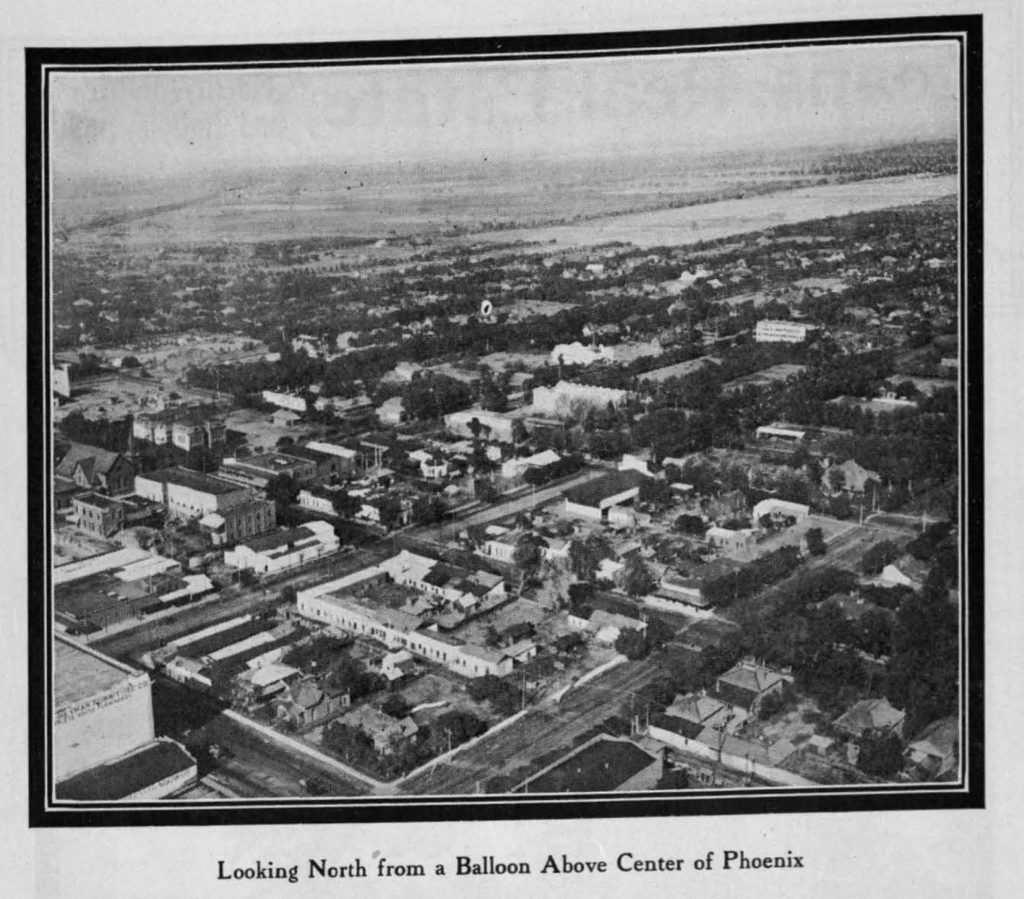
A year before statehood, a balloon went aloft to take this photo centered on Second Street and Adams (click for a larger image).

Frank_Luke

Fighter ace Lt. Frank Luke, a Phoenix native, gained fame in World War I as the "Arizona Balloon Buster" for his success against German observation balloons as well as enemy aircraft. Here he is with 13th confirmed kill. He was shot down and fatally wounded two months before the end of the war. German soldiers buried Luke in the Murvaux cemetery; Americans retrieved his body two months later. He received the Medal of Honor and Luke Air Force Base is named after him. 

Amelia Earhart at Phoenix S Central Airport  1931  UCS libraries

Amelia Earhart visiting Phoenix at the South Central Airport in 1931 (USC Libraries).

Sky_Harbor_aerial_looking_west_1930s

An aerial view of the land Phoenix purchased for its new airport in 1935, called Sky Harbor (McCulloch Bros. Collection/ASU Archives).

The omen

The omen

Rio Verde Footfills

The international news that Rio Verde Foothills has seen its water cut off by the city of Scottsdale is a drama in miniature for how the Arizona Ponzi scheme is going to play out on a larger stage in the coming years.

From the BBC and New York Times, to the Washington Post and local media, Rio Verde Foothills is invariably described as a "town," "suburb," or using typical sales language, "community." The Times even gave "Rio Verde" its own dateline.

In fact, it is a subdivision in the desert of about 2,000 houses ("homes" is sales language) north of Scottsdale. It's a wildcat subdivision, built by several developers who never had to comply with the Groundwater Act, with a "100 year guarantee" of water (itself an elaborate hoax).

As I've warned you for years, the developers are gone to more hospitable climes, leaving the foolhardy owners of these houses holding the bag.

Hospitals of old Phoenix

Hospitals of old Phoenix

Good Sam 1930s

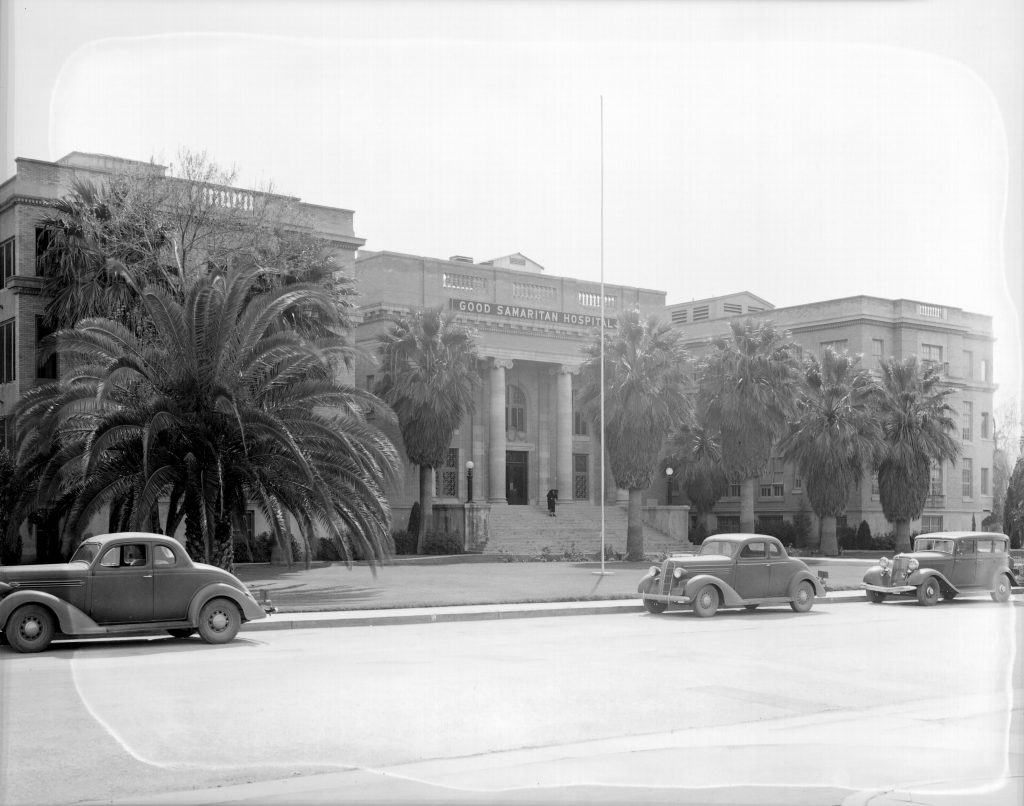
Good Samaritan Hospital facing McDowell Road in the 1930s. Its history can be traced to Lulu Clifton, a deaconess in the Methodist Church who established Deaconess Hospital in 1911. In 1917, it was moved to remote 10th Street and McDowell and renamed Good Samaritan in 1928 (McCulloch Bros. Collection/ASU Archives).

Deaconess_Hospital_1920s

Deaconess Hospital in the early 1920s before it was renamed.

Good Sam east wing 1930s

The east wing of Good Sam in the 1930s. The shady, grass cooled grounds of the hospital lasted into the 1970s (McCulloch Bros. Collection/ASU Archives).

GoodSam_1940s

A color postcard shows the hospital in the same era.

Lies we tell on the border

Lies we tell on the border

Nogales
The North American Leaders Summit in Mexico City came off with pledges of friendship and promises to address immigration, gangs, drug trafficking, economic cooperation, and  a nod to climate change.

“There can no longer be any question, none, in today’s interconnected world. We cannot wall ourselves off from shared problems,” President Biden said, in a news conference with his counterparts, Mexican President Andrés Manuel López Obrador and Canadian Prime Minister Justin Trudeau.

But many questions and lies linger.

It's a question and a lie that NAFTA was a total failure. Real personal gross domestic product for Mexico more than doubled since 1993. Mexico moved from a Third World nation to a First World nation. Did NAFTA cause disruptions? Yes, and on both sides of the border. Mexican agriculture was swamped by U.S. imports, while many U.S. manufacturing jobs were lost. But the authoritative studies show they were scrambled to other manufacturers exporting to Mexico. The big job losses can be blamed on the "China Shock" when Beijing joined the World Trade Organization.

Parks of old Phoenix

Parks of old Phoenix

Phoenix_Block_numbers_1881_map

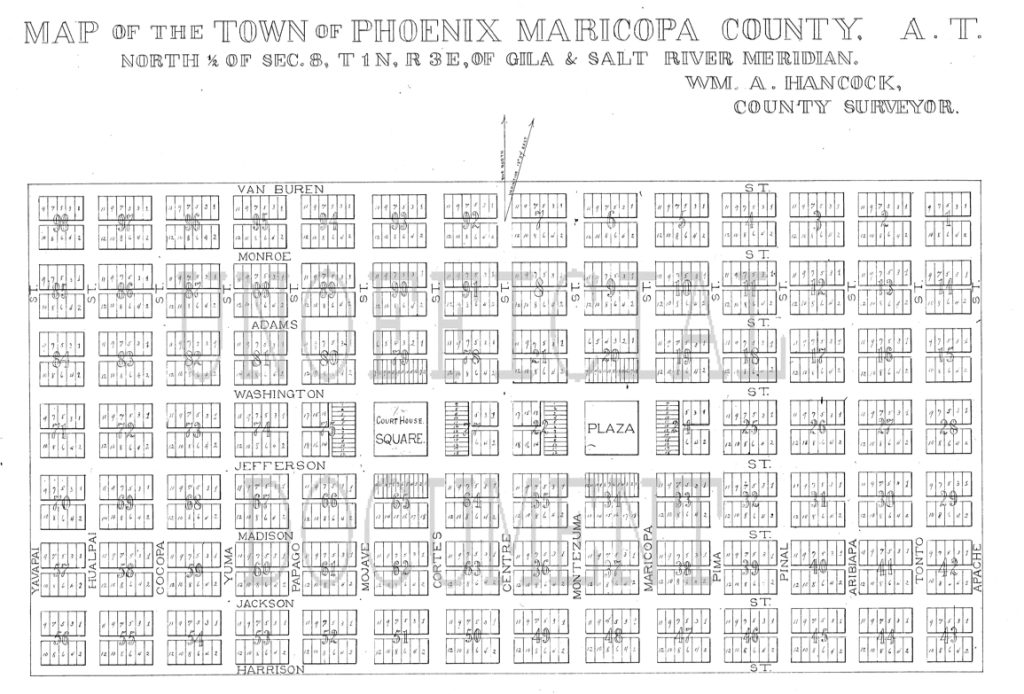
The original townsite set aside room for a park (plaza) on Block 23, site of today's downtown Fry's supermarket. You can click on each image for a larger view.

City_Hall_territorial_Washington_1st_St_front_view_gazebo_1912 copy

It became City Hall park, Phoenix's first, with a gazebo and shade trees (Brad Hall collection).

Gazebo_1905

In 1905, the park was welcoming people for a concert. Easy access was provided by the Washington Street streetcar (McCulloch Bros. Collection/ASU Archives).

The Central Arizona Project

The Central Arizona Project

Mark Wilmer Pumping Plant

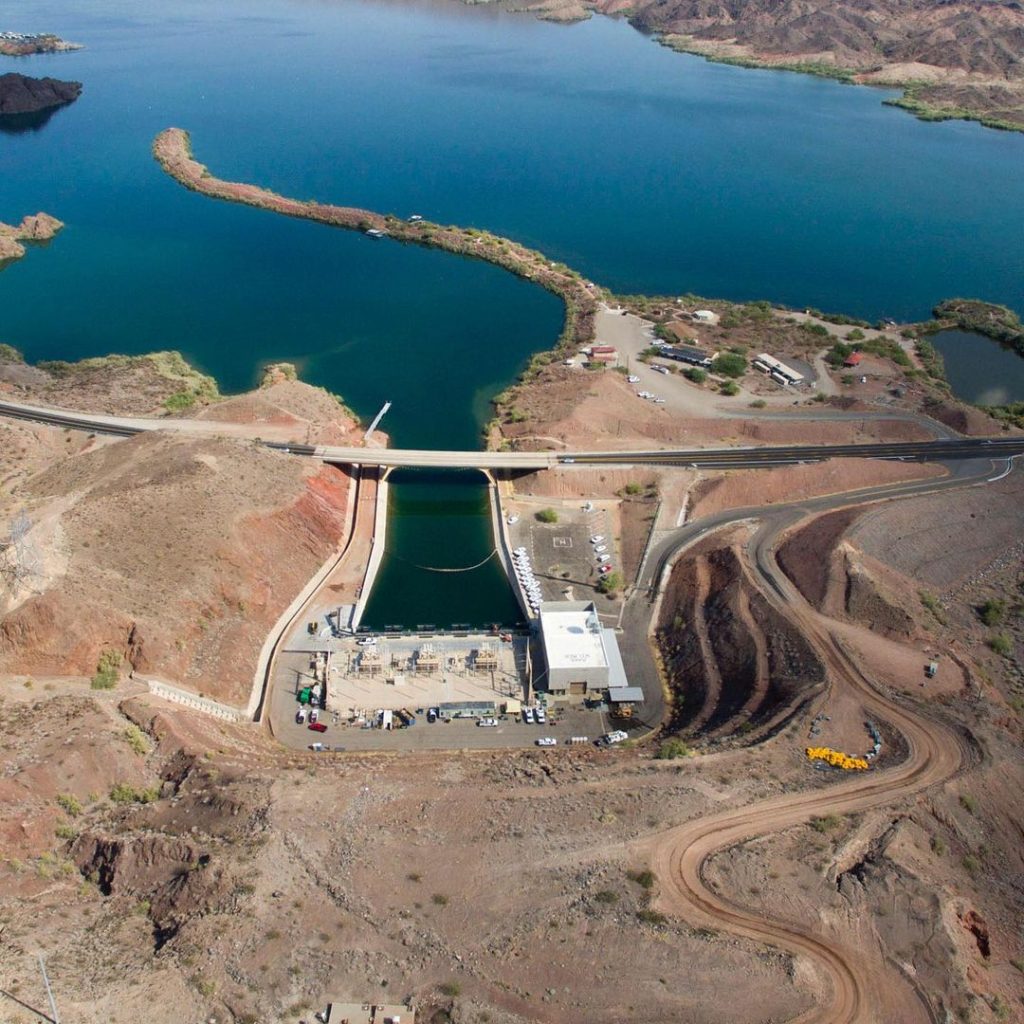
The Mark Wilmer Pumping Plant, which draws water from Lake Havasu and vaults it 3,000 vertical feet over the Buckskin Mountains on the way 336 miles to Phoenix and Tucson. Wilmer and Charlie Reed were the lead lawyers in winning the landmark Arizona v. California lawsuit, guaranteeing the CAP. The plant accounts for 50% of the $4 billion CAP's energy use (Central Arizona Project photo).

1922-Colorado-River-Compact-signed

In 1922 the Colorado River Compact — cornerstone of "the Law of the River” — was signed by states of the Upper and Lower basins. Arizona didn't ratify it until 1944, complaining it apportioned water to the basins rather than to individual states (Library of Congress).

Parker Dam looking southwest

Parker Dam, completed in 1938, impounding the Lake Havasu reservoir. California put the first "straw in the river" here with the Colorado River Aqueduct. It was conceived by the legendary William Mulholland and completed in 1939 (Library of Congress).

Sinema vérité

Sinema vérité

Kyrsten Sinema

I suppose readers expect me to comment on Sen. Krysten Sinema's switch from the Democratic Party to independent. Entire digital forests have already been felled examining it, as shown on the Phoenix and Arizona links over the past several days.

She was obviously afraid of losing a primary to someone such as Rep. Ruben Gallego. This allows her a chance to split the vote among her, the Democratic challenger, and the Republican Senate candidate — and maybe come out on top. Arizona Democrats are furious with her for tag-teaming with Sen. Joe Manchin, D-Coal, to undermine President Biden's agenda, and will do everything to ensure her defeat.

But don't be so sure. Behind the sophisti-cute nerd girl eyeglasses and abundant looks privilege is an ambitious brain. Her hole card is that although she's a Jack Mormon, she earned her bachelor's degree from Brigham Young University and the LDS never give up on their own. The Mormons remain a formidable voting bloc in Arizona.

The famous in old Phoenix

The famous in old Phoenix

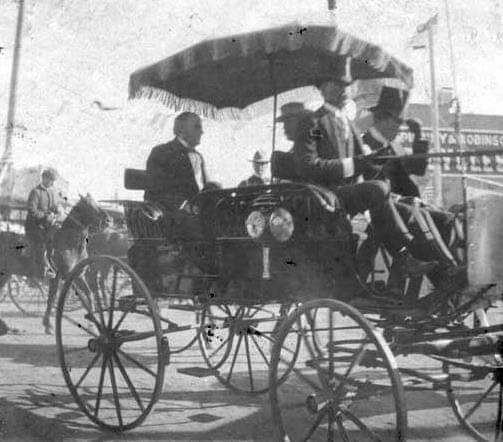
For a frontier town grown large, old Phoenix had its share of visiting statesmen, heroes, and celebrities. Here are a few (click for a larger image).

McKinley in Phoenix May 1901
President William McKinley visited the capital of Arizona Territory in 1901, a few months before his assassination.

First car 1902 Dr. James Swetnam Winton

Dr. James Swetnam Winton with the first automobile in Phoenix, 1902.

President Taft 1909 Melinda's Alley

President William Howard Taft passes Melinda's Alley in 1909.

Theodore_Roosevelt_Heard_home_Maie_1911

Theodore Roosevelt at the Heard home in 1911, here for the dedication of Theodore Roosevelt Dam.