February thoughts

February thoughts

IMG_0225

February was always my favorite month in Phoenix. I can't say exactly why. Winter was passing and the hot days hadn't yet arrived. Although the weather has changed because of ripping out citrus groves, shade trees, and grass ("turf") and replacing it with gravel and pavement, somehow this February remains magical. Above is a rainstorm over Park Central.

I'm here for the rest of the month, although between keeping up my day job as a columnist for the Seattle Times and seeing friends, I've been less attentive to the blog. Thanks for keeping things going on the previous open thread. Some thoughts:

• The Super Bowl came and went. Although it was played in the taxpayer-funded, developer subsidizing stadium in a former cotton field in west Glendale, almost all the festivities centered on downtown Phoenix and the deck park. (Regular readers know I refuse to call it Hance Park because of its namesake's destruction of the center city when she was mayor; name the mountain preserve for her, which she richly deserves).

Anyway, this was a triumph for central Phoenix, which has reasserted itself as the center of this sprawling metroplex of lookalike super-suburbs. Light-rail trains (WBIYB) were packed with visitors. Restaurants and hotels did a great business. Scottsdale was irrelevant except for the corporate jets at the Airpark (more than 200 private jets departed local airports after the big game). An Urber from Scottsdale to the cotton field was said to cost $500 on game day.

The omen

The omen

Rio Verde Footfills

The international news that Rio Verde Foothills has seen its water cut off by the city of Scottsdale is a drama in miniature for how the Arizona Ponzi scheme is going to play out on a larger stage in the coming years.

From the BBC and New York Times, to the Washington Post and local media, Rio Verde Foothills is invariably described as a "town," "suburb," or using typical sales language, "community." The Times even gave "Rio Verde" its own dateline.

In fact, it is a subdivision in the desert of about 2,000 houses ("homes" is sales language) north of Scottsdale. It's a wildcat subdivision, built by several developers who never had to comply with the Groundwater Act, with a "100 year guarantee" of water (itself an elaborate hoax).

As I've warned you for years, the developers are gone to more hospitable climes, leaving the foolhardy owners of these houses holding the bag.

Living with drought

Living with drought

1440px-Colorado_River_above_Hoover_Dam_-_panoramio
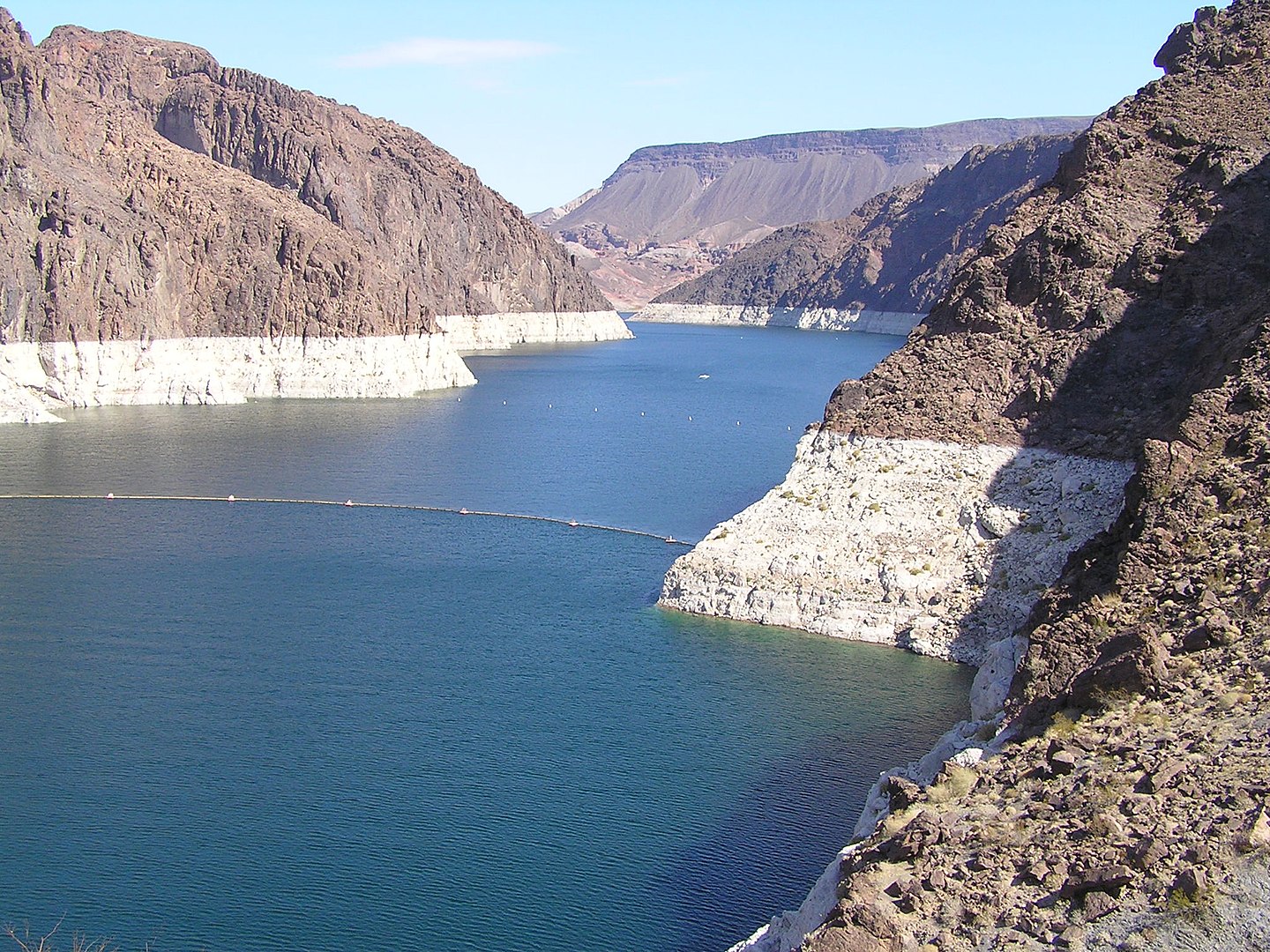
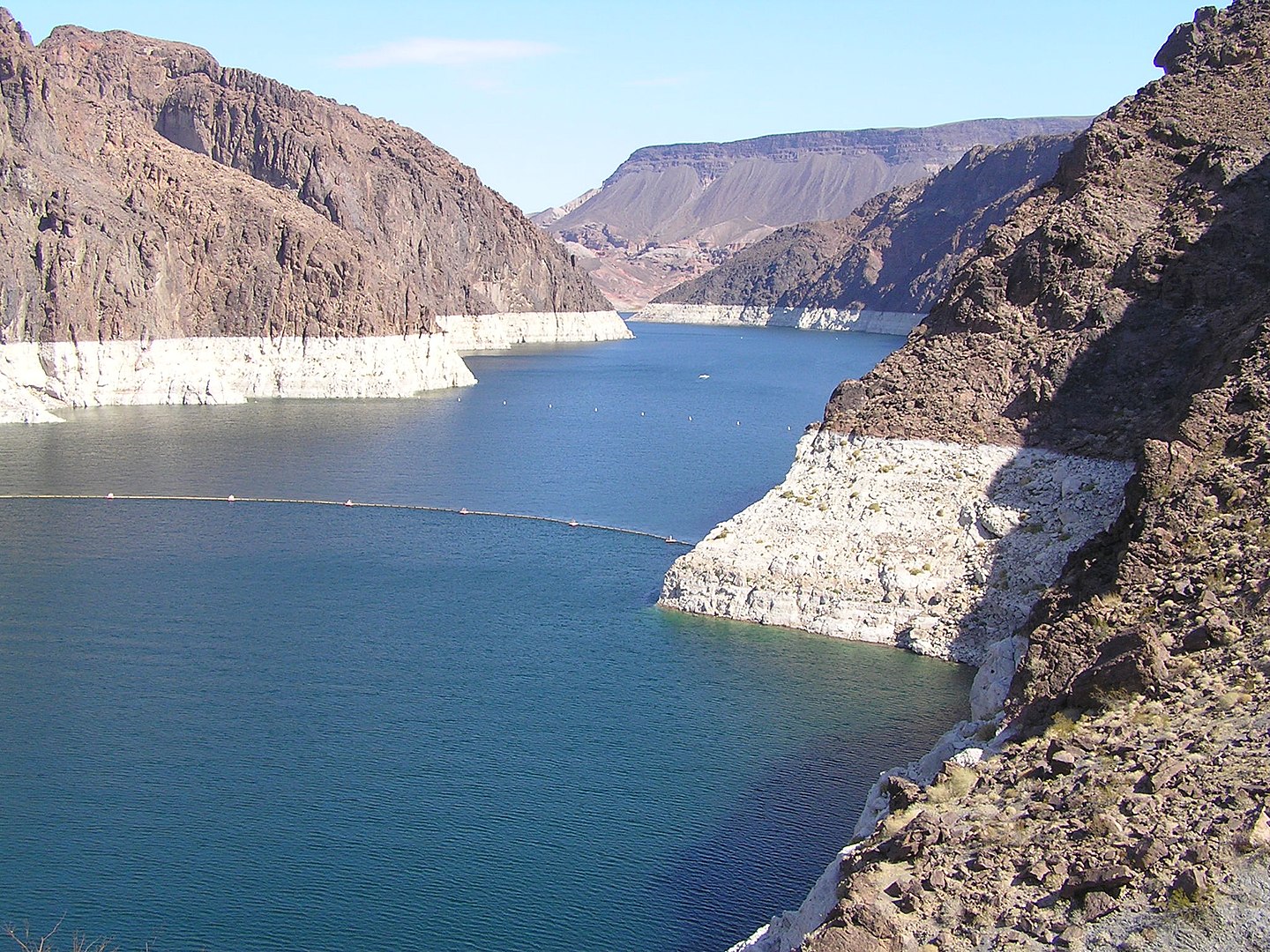
My new Gene Hammons Novel (a mystery due out in the next year or two) is set in 1936. In my research, I found that much of the Midwest and South suffered from a terrible drought, which claimed thousands of lives (separate from the Dust Bowl). But Arizona had plenty of rain that year — temperatures were also lower than today — and Phoenix was protected by the dams and reservoirs on the Salt River. And therein lies a tale.

 The population of Arizona was around 443,000 — fewer than live in today's Mesa. Phoenix clocked in at 55,000 or do, double that for the metropolitan area (remember, the city then was only around 17 square miles). Had today's mega-drought hit then, Phoenix would have been fine. Even with climate change.

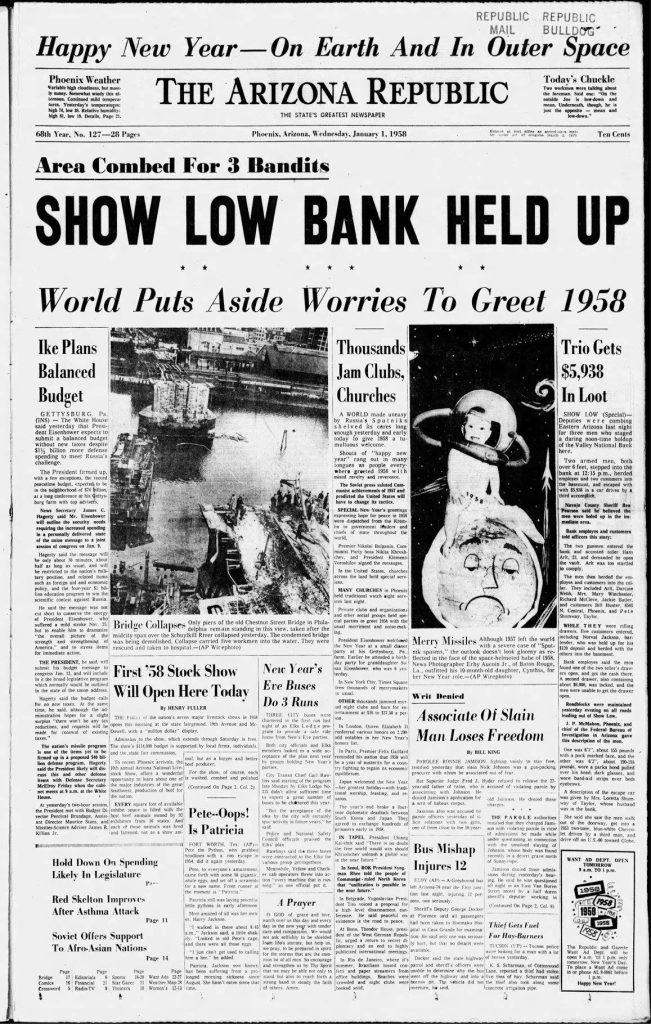
But population growth has long been the primary driver of Phoenix's leadership. On the flag of the Arizona Republic in 1936 was a bug headlined "How Phoenix Grows!" listing population increases and building permits (The "flag" is the name of the paper atop the front page; the "masthead" lists the newspapers leadership, typically on the editorial page). So as of 2020, Arizona's population is 7.2 million, with Phoenix the nation's fifth most populous city — though far from No. 5 in other measures of quality and influence.

What did I miss?

What did I miss?

IMG-8739

Carl Muecke illustration

Thanks for your patience. The novel is now completed and will be soon sent to the publisher. A few quick thoughts:

• It's astounding that the former local Fox newsreader Kari "Trump in a Dress" Lake stands a good chance of becoming Arizona's next governor. Or not. I've been skeptical of Arizona becoming a purple, much less blue state. For one thing, the GOP-controlled Legislature passed voter suppression laws, as I warned. And Hispanics are not a monolithic voting bloc. They don't want police defunded. Many are suspicious of woke Democratic virtue posturing.

• It's astounding that Republicans — the Party that Broke America with the Iraq war, Great Recession, and Trump — remain not only relevant but favored to win control of one or both houses of Congress. Trump could win the presidency again, in our last election. When Herbert Hoover and the GOP were blamed for the Great Depression (where I've been living writing the second Gene Hammons novel), the Republicans didn't win the White House for 20 years, and then under the moderate Ike. Not now.

• Similar astounding that Trump and his enablers have faced no consequences for the January 6th attack on the U.S. Capitol. Lake is an election denier.

Read on about this blog and its future:


Death and life of Sunbelt cities

Death and life of Sunbelt cities

Downtown Phoenix 2020
 
By Soleri
Guest Columnist
 
I hadn't been to Phoenix in several years, so my trip a couple of weeks ago was animated as much by curiosity as it was the desire to see old friends. I did know the city had more than recovered from the previous housing crash. Indeed, it was booming again. A dozen years ago, I predicted Phoenix would never recover from the crash. I don't like eating crow but if it's the sole item on the menu, so be it.
 
Much of what I did see made that crow taste better. Phoenix looked much healthier than when I moved to Portland in 2013.  The downtown had filled in with new high-rise apartment buildings and crowded clubs. The activity at night, in particular, was heartening to see.
 
What I didn't see were the thousands of "unhoused" mentally ill drug addicts who have turned much of Portland into a dystopian hellscape. Yes, street people were on the sidewalks of downtown Phoenix, but without the trash, tents, and drug paraphernalia that have so deeply damaged Portland. Phoenix is relatively litter-free and unmarred by graffiti.
 
Maybe it's the weather, or maybe it's because its political center of gravity is simply not in far-left field.

Year of living dangerously

Year of living dangerously

IMG-6607

Illustration by Carl Muecke

Everything that's good is at risk. Everything bad spreads and gets worse. 

It's difficult to avoid that conclusion, from my personal experience to the nation and the world. In Phoenix, Central Methodist Church — the "Mother of Arizona Methodism" for all the other congregations it established — is now just "Central Church." First it took away such comforting staples as the Apostles Creed, then ran out  the choir and excellent music program, shut the inspiring sanctuary and eliminated the traditional service with the glorious hymns — and has only a contemporary "Jesus, Java, and Jazz" service. I know all you smart agnostic and atheist readers don't care. I do.

The city keeps throwing down gravel and pavement, gutting shade trees, landscaping, and grass. It's ahistorical in the natural oasis of central Phoenix and adds to the deadly heat island. Newcomers lecture me that "we live in a desert" and "there's a drought." They don't care that investments in natural cooling such as shade trees keeps that water away from being wasted on more sprawl. I do.

And little indicates it will change in 2022. It will get worse. This is how we live now.

A Christmas letter

A Christmas letter

IMG-6308

Illustrations by Carl Muecke

Here we are, hurtling toward a Democratic shellacking in 2022. And based on the voter suppression laws being passed by Republican-controlled legislatures around the country, they may never be in power again. For example, the Arizona Legislature has stripped the Secretary of State of the ability to certify elections. Now the Legislature itself will decide electors — here comes Trump in 2024.

IMG-6335Electoral success depends on quick results by the Democrats, not only on infrastructure (which Trump never delivered) but also rebuilding the social-safety net and addressing climate change. Instead, the monstrous Sen. Joe Manchin has torpedoed much of President Biden's agenda. West Virginia is among the poorest states in the nation. It one of the biggest beneficiaries of Biden's Build Back Better programs, but no. Manchin revels in being essentially shadow president. The razor-thin Senate Democratic majority that leaves so much power in the hands of Manchin and Arizona's Sen. Kyrsten Sinema. Both should be Republicans for the damage they did. They are anything but centrists. But let's not forget the Democrat's self-inflicted wounds.

These are nicely encapsulated on Andrew Sullivan's Substack column. (It's well worth a subscription). Here's some of the salient points Sullivan makes:

The Interstate 11 boondoggle

The Interstate 11 boondoggle

0001
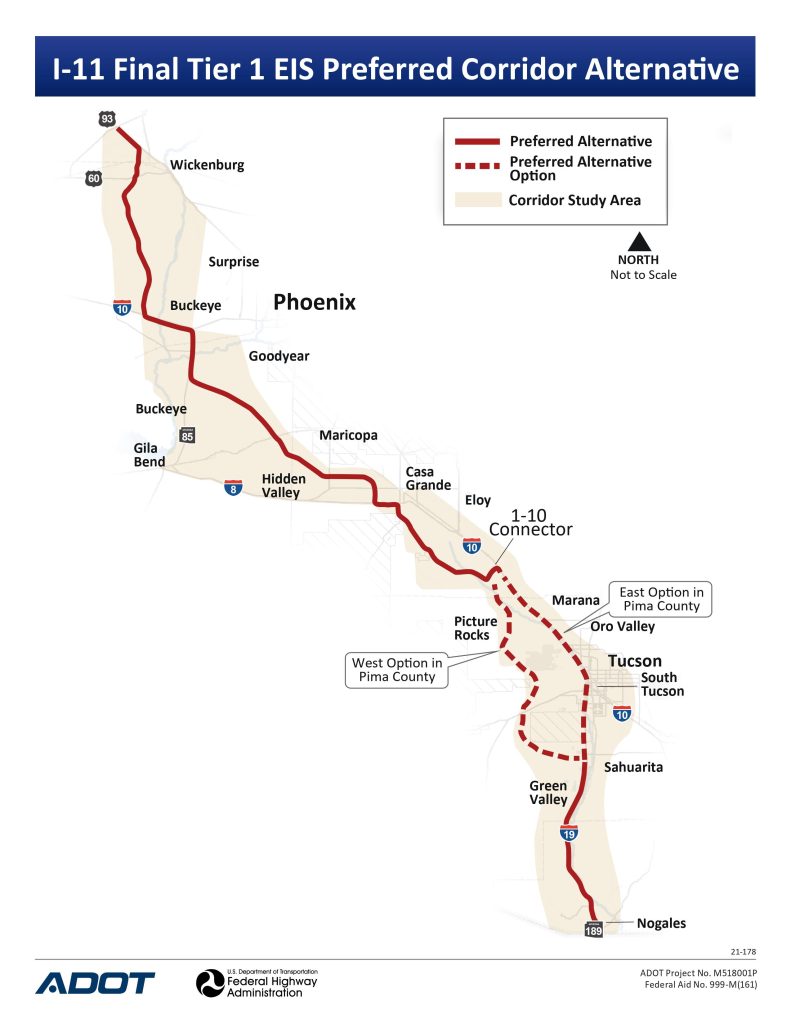
I don't know why they call the agency the Arizona Department of Transportation. It's the highway department, it's historic name. All it does is plan, build, expand, and maintain highways. No trains – Phoenix is the largest city in North America without intercity passenger rail. No commuter rail or light rail or transit. ADOT is all about highways. Behold its new creation.

Interstate 11 is planned to eventually run from Nogales to Reno, cutting the above swath through hundreds of miles of virgin desert as it winds to the west of Phoenix. I-11 could cost as much as $10 billion to build from Phoenix to Las Vegas alone. But this doesn’t include externalities: Air pollution, emissions that worsen climate change, loss of desert habitat, bladed desert plants, including increasingly vulnerable saguaros.

Kristen Mosbrucker in New Times reported on how the route will benefit Mike Ingram's holdings in Maricopa, as well as Douglas Ranch, acquired for $600 million by the Howard Hughes Corp. with Ingram and Jerry Colangelo as partners. Without freeways, this is worthless empty desert north and west of the White Tanks. With I-11, a goldmine — even though gold mines of the West play out quickly.

Writing off the news

Writing off the news

6a00e54fdb30b98834026bdefeb468200c

I know some friends of the blog are unenthusiastic when I post galleries of Phoenix history. But history is one of Rogue Columnist's missions. And the traffic goes through the roof. People love the photos. But back to the serious stuff.

The New York Times did an in-depth look at the astonishing lack of care in advance of the deadly crowd trampling at the rapper's concert on Friday. It says in part:

Concert organizers and Houston city officials knew that the crowd at a music festival planned by Travis Scott, a favorite local rapper turned megastar, could be difficult to control. That’s what happened two years earlier, the last time Mr. Scott held his Astroworld Festival.

For months, they braced themselves, adding dozens more officers from the Houston Police Department and more private security hired by Live Nation, the concert organizer.

The Houston police chief, who knows Mr. Scott personally and felt the musician had been trying to do good for his hometown, said that he visited Mr. Scott in his trailer before his show on Friday and conveyed concerns about the energy in the crowd, according to a person with knowledge of the chief’s account.

But I urge you to read the whole thing here. I'll wait.

Grant Woods, an appreciation

Grant Woods, an appreciation

Grant Woods

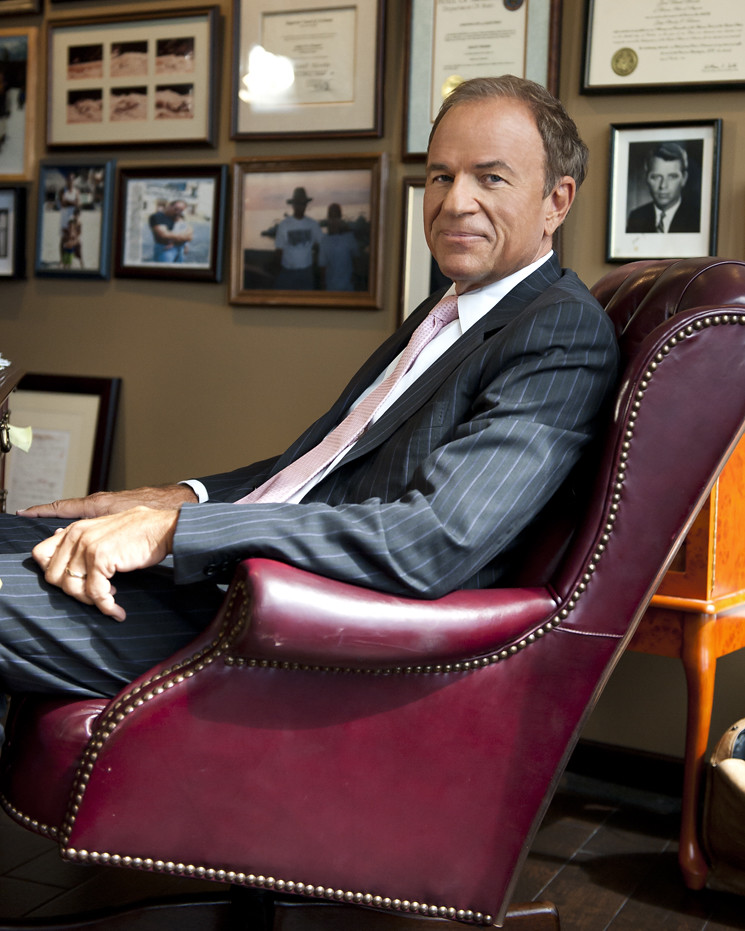
The spontaneous outpouring of grief on news of Grant Woods' death at 67, too too young, is a measure of the man. We'll never see the same for Doug Ducey or Kyrsten Sinema or almost any Arizona pol you can name. Something similar might happen for Janet Napolitano or Terry Goddard, but this is an elite club.

Woods and I became friends when I returned to Phoenix in 2000 as a columnist for the Arizona Republic. A graduate of Mesa's Westwood High, we had long-running jokes because I had graduated from rival Coronado High in Scottsdale. He was a valuable off-the-record source and I knew the score. He'd already been ridden out of the Republican Party as a RINO. The state party had been radicalized since he was Attorney General from 1990 to 1999.

He was an outlier from the start, forcing the eccentric Bob Corbin from the primary and emphasizing civil rights, including a Martin Luther King Jr. holiday. Gov. Evan Mecham had repealed his predecessor, Bruce Babbitt's holiday proclamation in 1987. The holiday didn't become state law until 1992.

How to read the news

How to read the news

Az Republic Jan. 1 1958

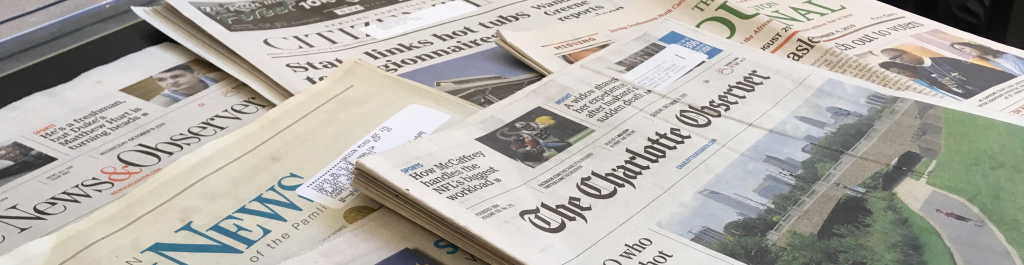
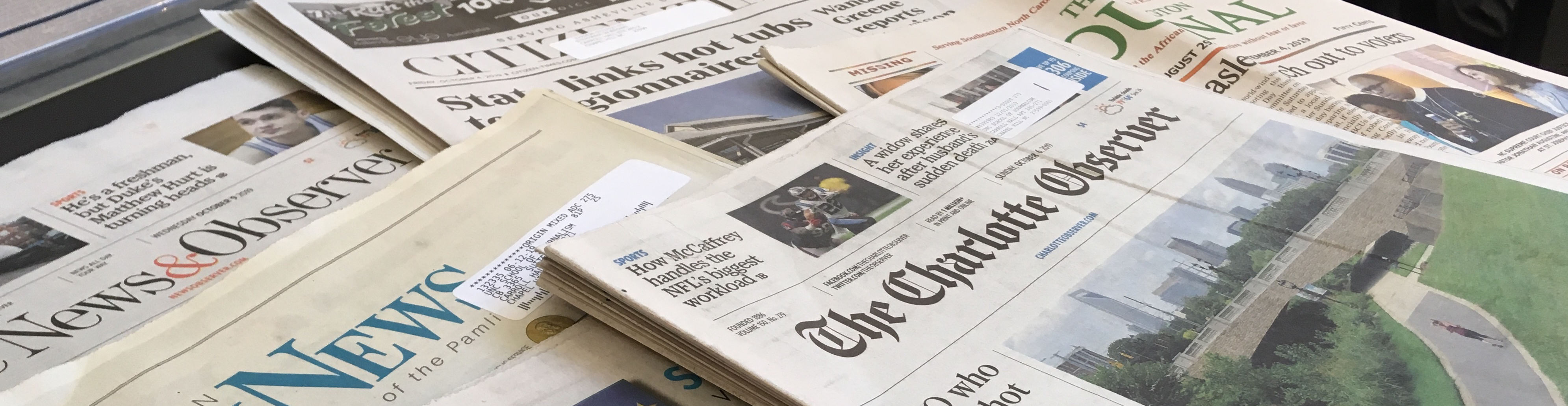
Penelope Abernathy at the University of North Carolina has been tracking the expansion of "news deserts" in the United States — counties with no local newspapers at all, and those with only one. Even the survivors are hanging on.

U.S. newspapers lost 48 percent of their journalists between 2008 and 2018, and the losses are now accelerated by the pandemic. More than 1,800 newspapers have closed since 2004. Arizona newspaper circulation dropped by 37% between 2004 and 2019. The Arizona Republic's circulation fell from nearly half a million at the turn of the century — 10th largest daily in the country — to 68,000 daily as of 2023. The Seattle Times is now the second-largest newspaper on the West Coast — larger than San Diego or San Francisco's newspapers.

Much of this this is because of the collapse of the old business model because of Craig's List and self-inflicted wounds. The trends reach further back. Circulation of all dailies peaked at more than 63 million in 1989. It was down to 46 million by 2009, then 26 million by 2020.

Many newspapers are now being sucked dry by hedge-fund owners. As a result, the most experienced journalists are being pushed out. What's left are cub reporters while institutional knowledge is lost. The alternative is television news/entertainment, which is typically a shooting, an auto collision, and Heather-with-the-weather. (An honorable exception is Brahm Resnik at 12 News, a newspaper-trained newsman).

Meanwhile, a gray area of news also exists. In Phoenix, this includes Cronkite News out of ASU, KJZZ, and AZ Big Media. Flagstaff and Tucson are served by Arizona Public Media. Each of these have plusses and minuses.

This situation has profound implications for a self-governing society. Only real journalism exposes corruption, shines a light on self-serving politicians, explains complicated issues, and knits together civil society. Let's look at how to read the news — I've been a reporter, editor, and columnist for nearly four decades.

The Census

The Census

Phx_skyline_2010

1024px-Skyline_of_Philadelphia

So Phoenix is officially the nation's fifth most populous city, surpassing Philadelphia in the 2020 Census. Much information and analysis awaits unpacking.

Phoenix grew 11.2% over the decade, the biggest increase of the 10 largest cities. Yet this was the second-slowest percentage growth rate in the city's history; only the 9.4% from 2000 to 2010, hobbled by the housing bust, was slower. By contrast, the city grew by more than 34% in the 1990s.

The contest with the City of Brotherly Love was close. Phoenix clocked in with 1,608,139 only 4,342 more than Philly. The latter also continued to reverse its population loss, growing at 5.1 percent. Philadelphia benefited from the "back to the city" movement, where talented millennials and empty nest boomers chose vibrant, high-quality cities and corporate headquarters followed.

Ground zero

Ground zero

1024px-Old_desert_ahead_sign_(8155680539)
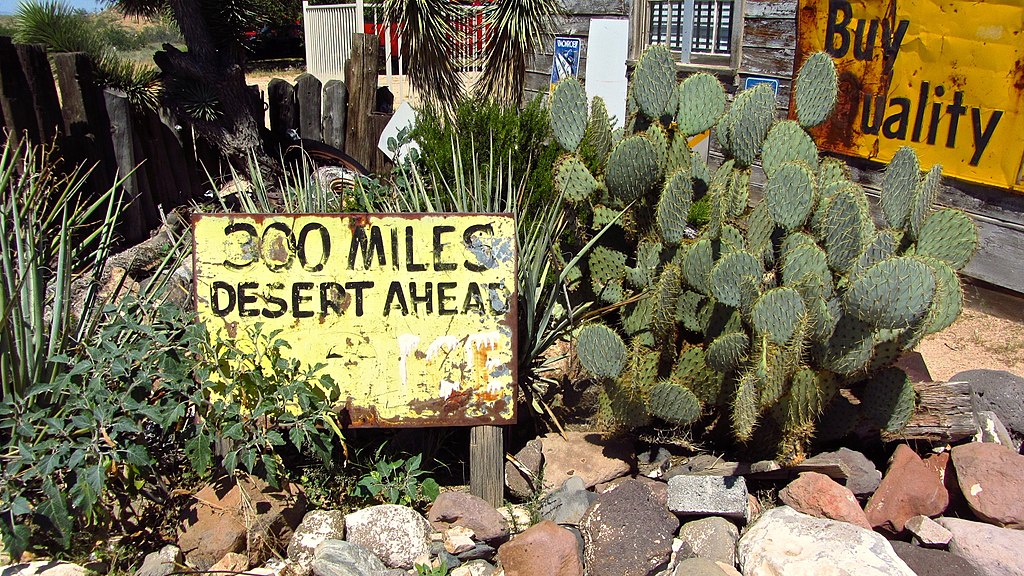
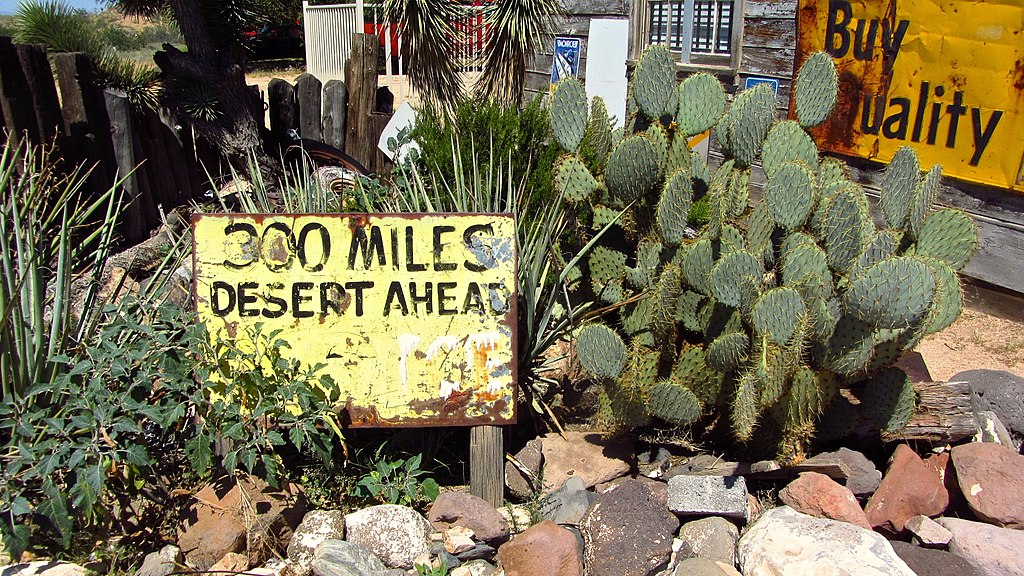
Have you noticed how many stories are generated out of Phoenix and Arizona by big national news organizations, including the New York Times, Washington Post, and Los Angeles Times? This is a big change from the days when we operated in relative obscurity. It is also no coincidence.

For one thing, the state is so different from the one I grew up in: 1.3 million population in 1960 vs. 7.2 million in 2020. Arizona was the 35th most populous state in the union in 1960. Now No. 14 — the third largest in the West — and Phoenix is the fifth most populous city. With size comes scrutiny.

But more important is that many of the crises of the future are being played out here. Climate change. Border pressures. Demographic shifts. The crisis of political legitimacy and our experiment in self-government. We have a front-row seat and are players. Yes, I'm happy for the Suns (and that the arena contract requires the team to keep the city name) and for the center-city infill. Happy for light rail (WBIYB).

But all is not well. Indeed, it's shocking how dark the future looks — and Arizona is ground zero.

The state of the state

The state of the state

171725099.w75y1AbV.AZStateOfDerangementW

Carl Muecke illustration

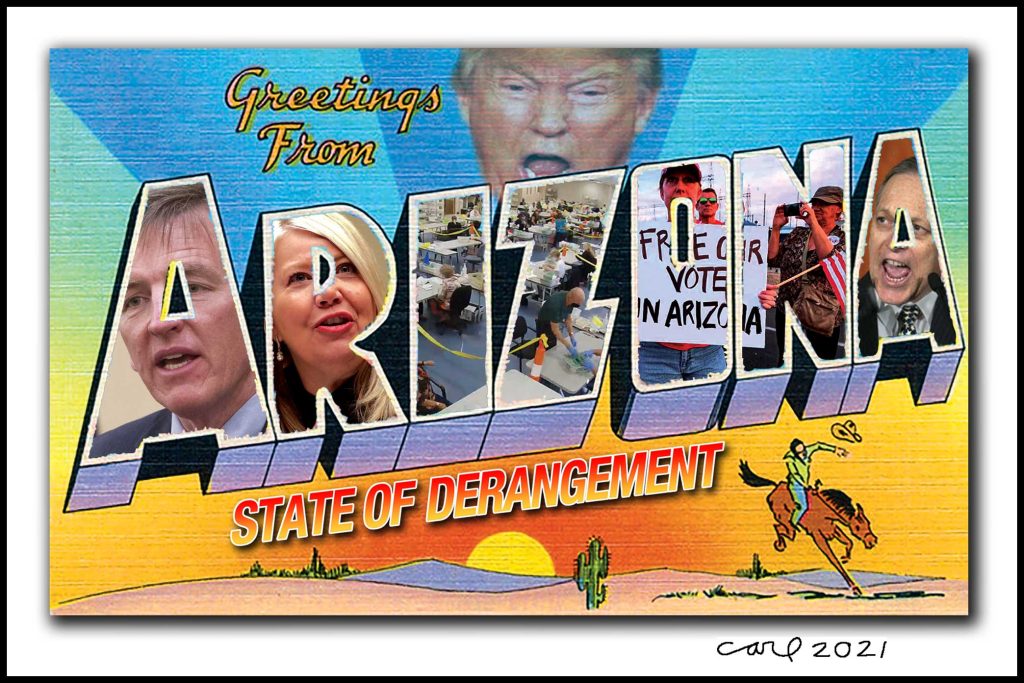
For all the talk about Arizona being flipped from red to blue, or at least purple, the reality on the ground is far different. That's because the most powerful branch of government, the Legislature, remains under Republican control — as it has for decades. The same situation is at work in the governor's office, where Doug Ducey is in his (term-limited) final stretch.

The most obvious result has been the "audit" of Maricopa County ballots, ordered by the Republican-run state Senate. Even if it eventually "validates" the election of Joe Biden as president, it has become a template for Republicans around the country and for any future elections they lose. It's hard to overstate the menace this presents to our experiment in self-government.

At the same time, the Legislature pressed two dozen voter suppression bills, intended to ensure that they continue to rule — widespread voting is the enemy of Republicans. One crafty measure will automatically purge by-mail voters who do not vote every two years. This happened even with mail voting widely popular in the state. Ducey took only a few hours before signing it into law.

Meanwhile, the body blows keep coming with such ferocity that it's difficult to keep up (see the daily headline links under "Phoenix and Arizona" to the left. The challenge is compounded by the hollowing out of local newspapers.

Signs and wonders

Signs and wonders

1440px-Colorado_River_above_Hoover_Dam_-_panoramio
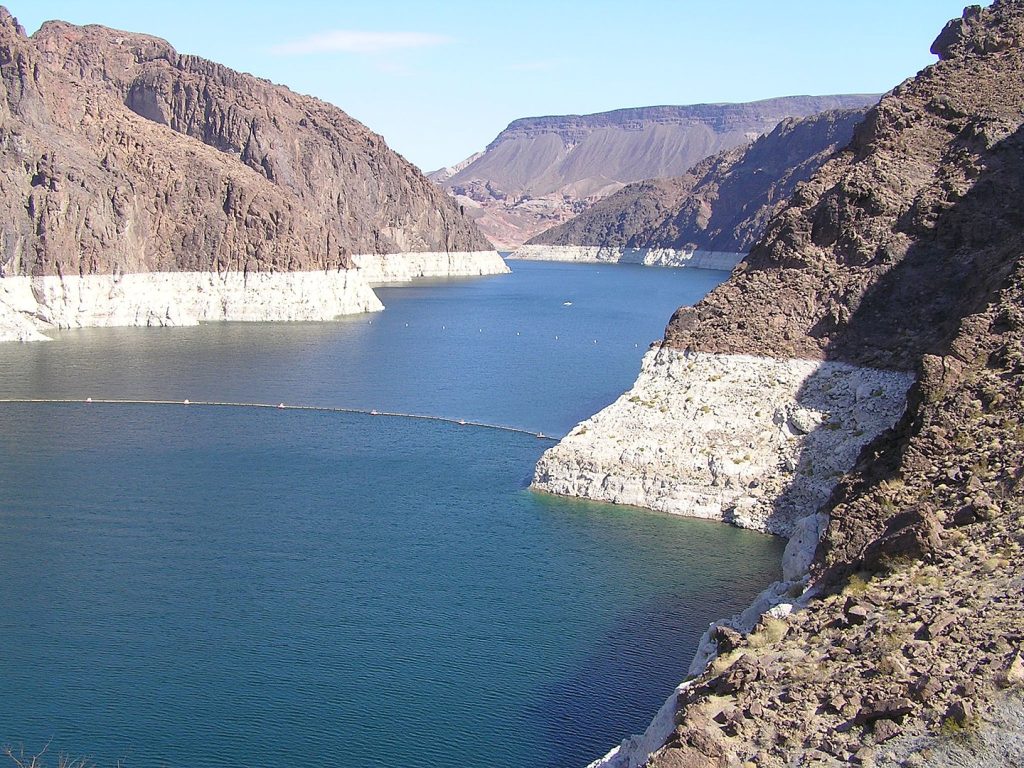
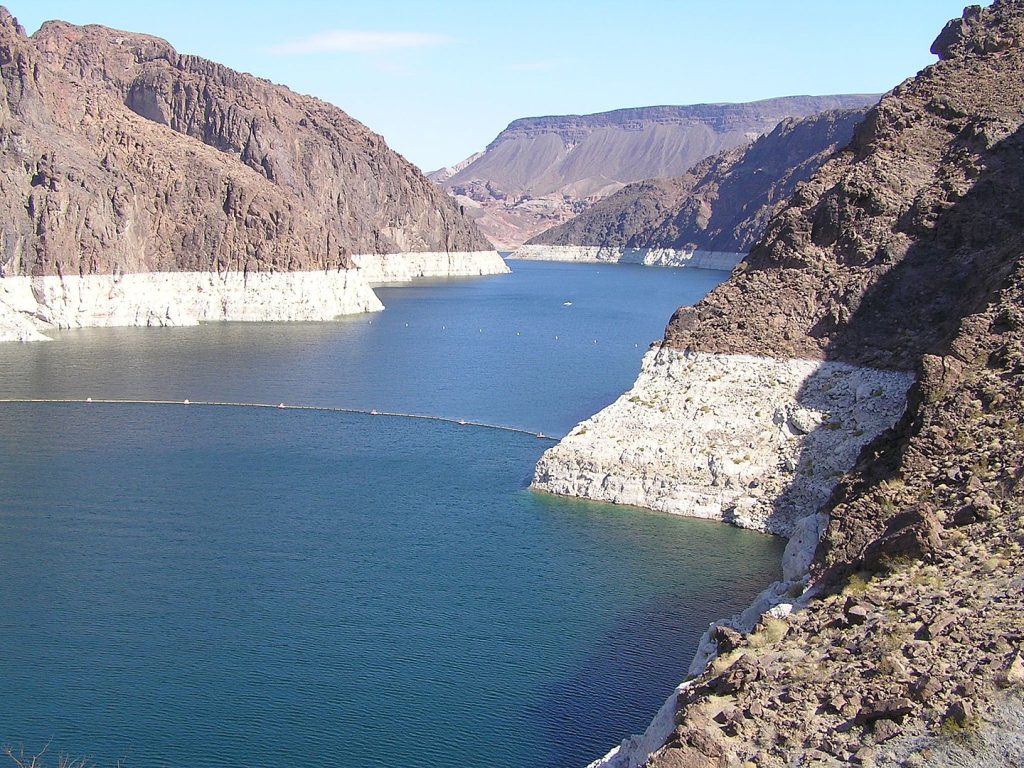
The media love to fixate on the "bathtub ring" of a diminishing Lake Mead. America's largest reservoir, contained by Hoover Dam, is at its lowest level since it first filled in the late 1930s. It's a potent sign of climate change. So is the expected string of record heat broiling central Arizona this week.

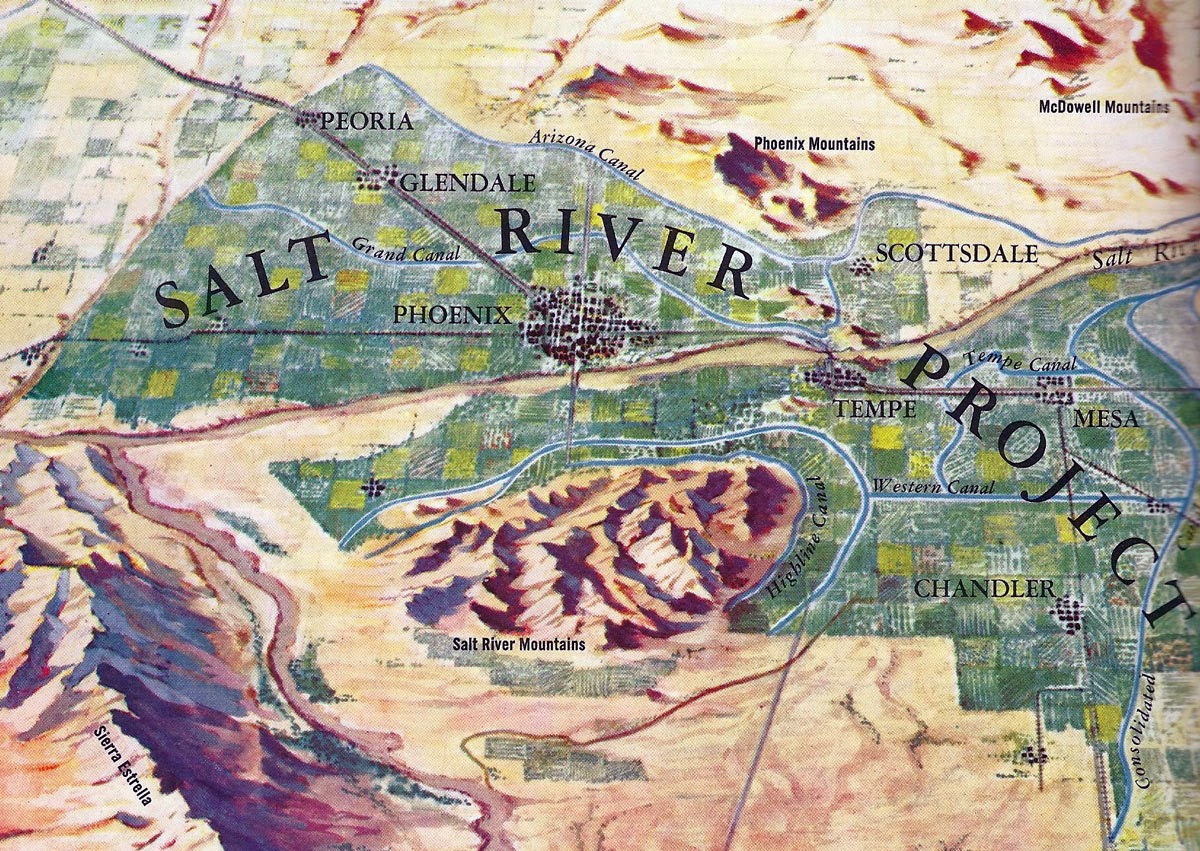
It makes me wonder, though. In 1960, Phoenix had a population of 439,170. The city encompassed 185 square miles. Importantly, it was entirely watered by the dams of the Salt River Project, providing a renewable source from snow runoff in watersheds that ran from the Coconino Plateau to the New Mexico border.

Looking back, that was probably peak sustainability for Phoenix. It looked like this:

Salt_River_Project_1960s