Live through this

If you want to argue about who or what is to blame for this catastrophe, I direct you to The Best of the Front Page, where the articles are as definitive as we can be at this point. I suspect mauch, much more will emerge in the coming months and years about Russian intelligence, Wikileaks, media malpractice, and the shenanigans of the FBI.

To the white working class voters in Pennsylvania, Ohio, Wisconsin, and Michigan who went for Trump: Fuck you. I refrain from profanity on this site, which has been overused to the point of being trivial, but how else to put it? Your situation is going to be so much worse as a result of what you did. I just wish you weren't taking the rest of us — those who made the majority of the popular vote that went to Hillary Clinton — and the planet down, too. My hope in this election was to avoid national suicide, not make any grand progressive gains which are impossible in this Cold Civil War. Even that modest aim proved impossible. I didn't sign up for this murder-suicide, but here I am.

If I were 30 and in better condition, I'd move to Scandinavia in a heartbeat. If I had been more careful in picking my parents, I'd drop out, go off the grid, keep subscribing to newspapers but not read them, read the great books and history, listen to classical music, opera, and jazz, be thankful for every day. I'd go back to school, learn a foreign language, become an amateur botanist, build a model railroad, re-read everything Shakespeare wrote, vote for what it's worth. I'd write my memoir, even if nobody would publish it.

Unfortunately, I have to work as long as I can, and do so in a calling that requires me to deeply immersed in the news. First as tragedy and then as farce? No, Karl. We're going to get both at the same time, good and hard.

Night falls on the republic

President-elect Trump. Roll that around in your mouth for awhile, see how it tastes.

This is what we get after the most portentous election in American history. The office of what was once quaintly called chief magistrate will be occupied by a temperamental narcissist hustler with no knowledge of statecraft, history, the world, or the Constitution. The republic is over, baby. You just need to decide how you'll live with it.

The pundits and pollsters were surprised. I was not.

For months, I've had a nagging worry. The cultural left grabbed the public square. Gay marriage, now accepted by most Americans, was not enough. We had Black Lives Matter shouting down opposing views and even taking the microphone from Bernie Sanders, whether a police shooting was uncalled for or righteous. The LGBTQI activists pushed into mainstream media to the point of a New York Times story on gender identity change in the first grade. The left weaponized language, such as "white privilege." As if all white people are the same and similarly "privileged." It celebrated the coming minority status of white people, demonized "white American history" through the lens of presentism as a cavalcade of nothing but genocide and oppression. Wrong-thinking academicians were badgered into silence or out of a job. The thought police aggressively patrolled social media.

And through all this, I thought: an increasingly angry number of whites were keeping eerily silent. Until they didn't on election day.

Yes, "fear of losing white privilege," "white nationalism," and no small amount of Obama Derangement Syndrome led to Trump's victory. It wasn't about the economy. But overreaching by the left was perhaps most consequential. And that kills the idea that Bernie Sanders would have been the better candidate. First, he would have been savaged by the right as SOCIALIST! (He was their preferred opponent). But like Hillary Clinton, he would have necessarily been the tribune of a changing country where the opponents of that change get a vote, too.

A version of the Bradley effect was surely at work here, too, where white likely voters told pollsters they were voting for Hillary — but when it came time to vote, the marked Trump. I warned about that, too. At the same time, years of Republican vote suppression efforts came together in this election, with results that were no doubt substantial and perhaps even decisive. As to this latter, most of the media will be so busy "normalizing" Trump that it will go unexamined.

A dozen historic elections

A dozen historic elections

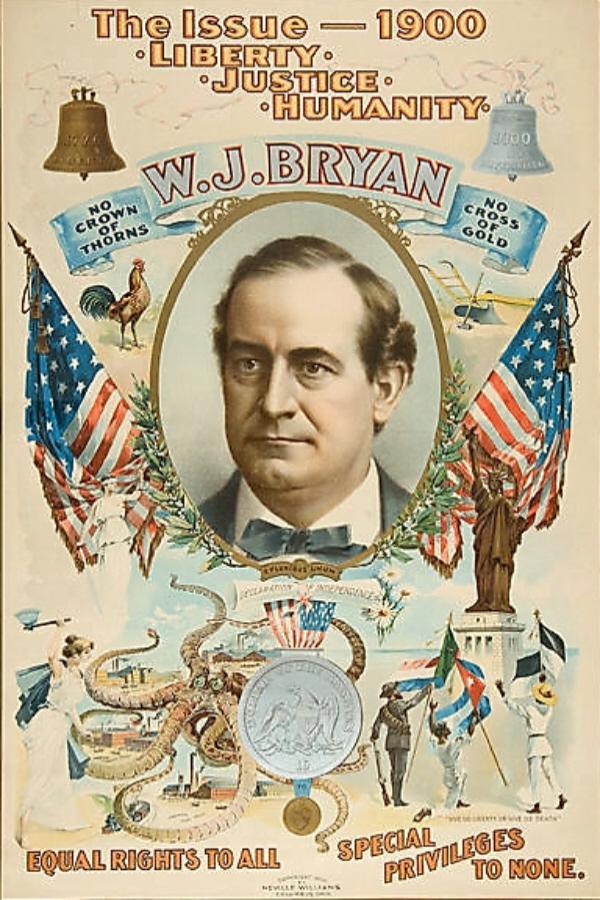
Bryan_in_1900
With Donald Trump, the most extreme and unqualified candidate of a major party, in striking distance of winning the presidency, we stand on the edge of the abyss. This election shouldn't be this close. You can use the comments section as an open thread as the next few days unspool. For my contribution, here are a dozen of the most consequential elections, nationally and in Arizona. At the least, they show that elections do indeed matter.

1828: John Quincy Adams vs. Andrew Jackson. Adams, the sitting Whig president, was defeated by war hero Jackson. The Whigs stood for the "American System" of internal improvements (infrastructure), a national bank and limiting the spread of slavery. Jackson was just the opposite. Jackson's victory led to the breaking of solemn treaties with the Five Civilized Tribes and their brutal relocation west (denounced by Adams) to open land for slaveholders, among many other ills.

1844: James K. Polk vs. Henry Clay. The defeat of "Harry of the West" not only doomed the American System but eliminated the last chance that the Civil War might have been postponed or avoided. One reason was the familiar partisan circular firing squad. Clay lost votes in New York and Pennsylvania to the abolitionist Liberty Party. It was the death of the Whigs.

With Polk, the nation again had a Southerner determined to extend slavery, including by prosecuting the highly unpopular Mexican War. At one point, Polk considered demanding all the territory to Tampico, but didn't want so many Mexicans brought into the union (they automatically became U.S. citizens with the Treaty of Guadalupe Hidalgo, which ended the war). On the other hand, in settling the Oregon Country dispute with Great Britain, he would have settled for the Columbia River as the northern border (in other words, Seattle would be in British Columbia). With Polk, the Civil War became inevitable.

‘I can’t wait for this to end’

I've heard this expression from so many people over the past two weeks, including some who are politically savvy. What world are you living in?

If Hillary Clinton wins the presidency, it's not going to end. Donald Trump might refuse to accept the results of the election. Although this might lack any foundation in law — unless the Republican Party had ground to challenge specific state results — it would embolden his hardcore, alt-right supporters. To do…well, they have the guns, don't they?

If she wins but Democrats fail to gain a majority in the Senate, it's not going to end. Republicans have stated explicitly that they will refuse to approve any Supreme Court nominee she puts before the upper house. President Obama's highly qualified, centrist-to-a-fault nominee Merrick Garland has not even been granted a hearing before the Senate.

This is only the beginning. The scorched-earth nihilism shown by a disciplined Republican Congress will only intensify if the party loses the White House yet again. Clinton's cabinet and agency nominees could conceivable be blocked for the next four years. The GOP will stop at nothing, because its members believe only they have the right to rule. This was the party willing to default on U.S. debt and bring on world depression to stick it to That (Black) Man in the White House. Its austerity has prolonged the suffering of millions.

In the elevator, a veteran politician said that Hillary had the ability to get things done LBJ-style. With all due respect, LBJ had solid Democratic majorities in Congress, a mass Republican party with plenty of liberals and centrists, the American liberal consensus still intact, and the nation's sympathy for the martyred John F. Kennedy. None of those things appertain today.

A looming constitutional crisis

A looming constitutional crisis

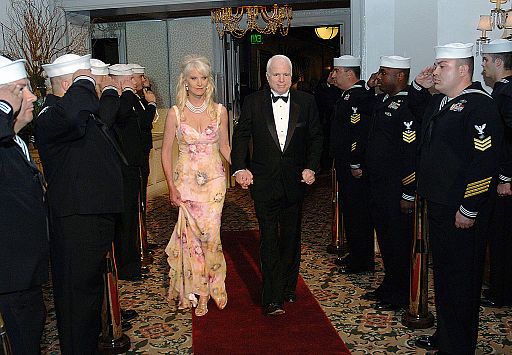
McCain
In an interview today with a Philadelphia radio station, wealthy Republican Sen. John Sidney McCain III said, "I promise you that we will be united against any Supreme Court nominee that Hillary Clinton, if she were president, would put up. I promise you. This is where we need the majority."

Any nominee.

Later, according to Talking Points Memo, McCain's office appeared to back slightly away from the statement, saying, "Sen. McCain believes you can only judge people by their record and Hillary Clinton has a clear record of supporting liberal judicial nominees. That being said, Sen. McCain will, of course, thoroughly examine the record of any Supreme Court nominee put before the Senate and vote for or against that individual based on their qualifications as he has done throughout his career."

Trust the original blurt as the truth. Trust it, too, because of the unprecedented refusal of the Republican-controlled Senate to even give a hearing to President Obama's nominee, the distinguished federal Judge Merrick Garland, as moderate as they get and recipient of the highest rating from the American Bar Association. It's 215 days and counting  

Before we examine the implications of McCain's statement and the behavior of the Republican Senate, it's worth reminding Arizonans exactly who John McCain is.

Now the action is downticket

Now the action is downticket

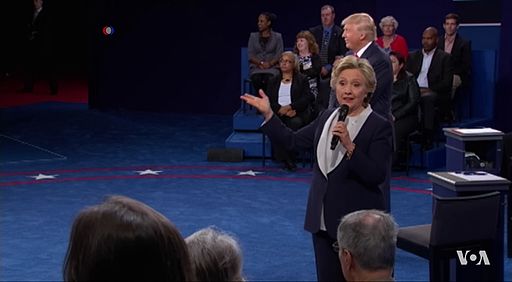
United_States_second_presidential_debate,_2016
A confession: Almost all my close friends as an adult have been women. I haven't spent much time in locker rooms, much less engaged in "locker-room talk," as the Republican presidential nominee excused his language about grabbing pussies. On the ambulance, contrary to the dialogue on the television series Emergency, we talked about only two things: calls and sex. This was even true of the female paramedics. Get two guys as partners and the talk could turn quite bawdy in assessing our lusts-of-the-moment. But it was never what Trump was saying, which was about sexual assault. It gives a sinister meaning to "binders full of women."

Anyone with a passing knowledge of Donald Trump knows he's a pig. If it takes the now infamous tape to bring him down, so be it. So many other statements, actions, and positions should have already done this, including his pledge to imprison his opponent if elected. Like so much else, it is unprecedented in American presidential politics. We're way beyond the need for a Godwin's Law warning when discussing Trump — he is on a Hitlerian path.

It's important to understand that little of the recent Republican abandonment of Trump is based on principle. Wealthy Republican John Sidney McCain III was apparently fine with draft-dodger Trump calling him a coward for being imprisoned and tortured by the North Vietnamese. With the primary behind him and Hillary Clinton potentially winning Arizona, suddenly it's OK for McCain to denounce him. And so it goes. They are acting strategically, to prevent losing control of the Senate or even the House.

Another critical fact is that Trump now embodies the GOP after decades of drift into extremism, slaughter of RINOs, and flight from reality ("We create our own reality."). With or without Trump, the party denies mainstream science on climate change, wants to privatize or give to the states our public lands, privatize Social Security and destroy the social safety net, pursue ruinous austerity, appoint activist judges and Supreme Court justices, suppress voting rights, carry on a war against cities, deny women reproductive choice, cut taxes on the richest, "starve the beast" to show "gub'ment is the problem," turn us into a fascist theocracy. Behold the Party of Lincoln. The basic policies would have been the same under nominees Rubio, Kasich, Cruz, Fiorina, Carson, Bush, Jindal, Graham, Perry, Walker, or the strangely still respected Paul Ryan. Remember this. Burn it in your brain.

Fate of the nation

I am writing this before the first presidential debate. I don't plan to watch. Too much brain damage. Nothing that would be said could change my vote for Hillary Clinton. The alternative is national suicide.

So far, the election is playing out pretty much as I suspected. Republicans, even the #NeverTrump crowd such as Sen. Ted Cruz, will dutifully line up and vote for Trump. If the GOP candidate were Dwight Eisenhower, Gerald Ford, or George H.W. Bush, I would give him a hearing. But one of our two great mass political parties has gone insane. Donald Trump is not an anomaly. He is the natural outcome of the paranoid style in American politics that long ago took over the Republicans. Ronald Reagan and Barry Goldwater could not win a GOP school-board primary today.

It doesn't matter that Trump is a serial liar, totally unqualified for national office, temperamentally unfit on a frightening level, the most dangerous candidate ever put forward by a major party. They will vote for him.

I don't want to hear about how things would have been different with Bernie. Had he won the nomination and been subjected to months of SOCIALIST!, he would be losing badly in the polls already. To me, your protest votes for Jill Stein or Gary Johnson are just short of treason. And if Trump wins, which he may well do, Mencken's quote that "democracy is the theory that the common people know what they want, and deserve to get it good and hard" will offer no comfort.

Flipping Arizona?

Flipping Arizona?

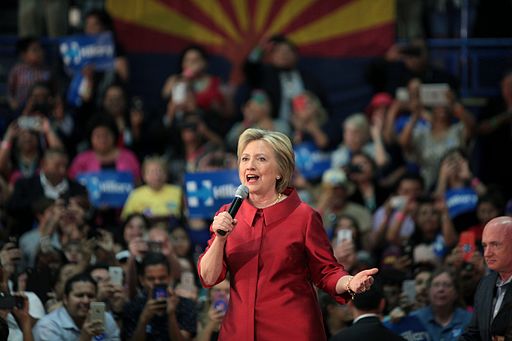
Hillary_Clinton_by_Gage_Skidmore_3
The new NBC News/Wall Street Journal/Marist poll has Hillary Clinton within one point of Donald Trump in Arizona. You read that right. This is in line with a polling average from Real Clear Politics, which even had Clinton slightly ahead during and after both parties' conventions. 

Is it possible that Hillary could flip Arizona to the Democrats? After all, her husband won the state in 1996. I am skeptical.

Bill Clinton won in a very different Arizona. The state was still competitive for Democrats and "experts" predicted that continued population growth would favor the party. Arizona's population expanded by 40 percent in that decade, but it was the "big sort," where people came seeking ideological co-religionists. It was almost entirely on the right. With the exception of the surprise election of St. Janet in 2002 and hopes for her "sensible center," Arizona politics trended ever more rightward. Today not a single statewide office is held by a Democrat.

From the 1980s on, Republicans patiently took control of school boards, municipal offices, tightened their control of the Legislature and Corporation Commission, built a massive infrastructure including fake "think tanks," the charter school racket, private prison racket, and the aid of the Real Estate Industrial Complex. The Democrats never knew what hit 'em. The best Napolitano could do was play defense.

In our Cold Civil War, with the nation more divided than any time since the eve of the Civil War, Arizona sits comfortably in the New Confederacy. I can still start a fight on Facebook by praising light rail (WBIYB).

A death observed

A death observed

13653277_10207087732531572_2561132962302956645_o

ObserverSite

Apparently, most Americans learned about the death spiral of metropolitan newspapers and the consequences from watching John Oliver. Then they went back to kitten videos on social media. None of this is new to readers of Rogue Columnist (see here and here). My aim today is more modest.

As Oliver's well-worth-watching segment was going viral, a few of us were following the demolition of the Charlotte Observer building in downtown (or as the boosters insist ahistorically, Uptown) Charlotte. The photo above shows the work about half done a few weeks ago. The building, which took up a city block, was once as substantial on the Tryon Street side (left) as it remained on the Stonewall Street side in the top photo. Below is the site as of August 29th — all gone.

During my 30 years (!) in the working press, I have been employed by 10 newspapers across the country. I never made it to the New York Times, but I was fortunate to work at some of the finest metro papers in America, among some of the best journalists. The Knight Ridder-owned Observer was one. It was here that I was able to hit my zenith of business-section turnarounds — and the credit goes to my gifted colleagues, I only pointed the way. If I live long enough, I'll tell some of the stories. Unlike the Rocky Mountain News, the Observer is still going, in much more modest leased space (the name isn't even on the building).

But today I mostly want to meditate on the building and its meaning. This classic piece of Knight Ridder hulking architecture was no beauty. But it symbolized the importance and power of the newspaper, which not only committed great journalism but was a large employer. Before the collapse, the typical metro daily could employ 1,500 people or more in real jobs, not "gigs," in a multitude of departments from advertising and dispatch to platemaking and the press room. In the lobby, through large windows, you could watch the massive presses run. From college graduates and creative bohemians to skilled blue-collar workers and high-school dropouts — a major newspaper offered secure work and paths up.

If you had paid your dues at little papers, if you earned a reporting or editing job at a well-respected metro, you knew you had arrived and had much proving to do in order to remain — the imposing building alone told you. The building housed not only a newsroom, but a sizeable manufacturing, advertising, marketing, and distribution center. At one time, trucks from here took bundles of the Charlotte Observer to places across the Carolinas every night. It was a major civic institution — Observer Publisher Rolfe Neill was one of the four or five titans who turned Charlotte from a middling Southern big town into a major metropolis of national consequence, and who revived downtown.

It can happen here

It can happen here

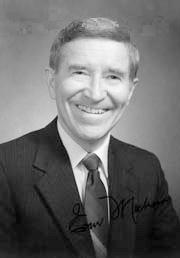
Evan_MechamClowns who say outrageous things, who are completely unqualified for office, are very capable of being elected in America. They are entertaining, underestimated, and disasters in office. The highest office reached so far has been governor — think Jesse Ventura in Minnesota and Lester Maddox in Georgia. Closer to home was Evan Mecham, the governor of Arizona from 1987 until he was impeached and removed from office less than 15 tumultuous months later.

Mecham was a clown, given to conspiracy theories and outrageous statements — his "pickanniny" comment and blaming working women for high divorce rates were only two. But he had support from the state's right wing, especially John Birchers and fellow Mormons. He was a populist, after his fashion. In Mecham's world, the government was the enemy and cause of all ills. He wanted to eliminate income taxes and turn over the public's lands to state interests. A theocrat, Mecham wanted to have prayer in public schools. Threats were everywhere, out to destroy real Americans and the real America.

The toupee'd Glendale car dealer and serially failed newspaper publisher gave Carl Hayden a scare in the 1962 U.S. Senate race. Among his issues was a demand that the United States withdraw from the United Nations. Hayden's longtime aide Roy Elson organized a campaign to "reintroduce" the senator to a state he had served in Washington since 1912, but had attracted large numbers of newcomers since 1956. Hayden won comfortably, but many old Arizonans were unsettled. That anyone could get 45 percent of the vote against the state's indispensable man in the fight for the Central Arizona Project was astounding and deeply disturbing.

Mecham ran outsider campaigns for governor again four times before winning. As in 1962, each election he explicitly ran an insurgent campaign against elites and "the establishment."

His election was a fluke. In the 1986 Republican primary, he faced the respected state House leader Burton Barr, who was supported by the establishment, from Barry Goldwater to the Pulliam press. But Barr, a legislative wizard, ran a sluggish campaign. Turnout was the lowest in 40 years. And Mecham cleverly exploited the grievances and paranoia of newcomer retirees, adding to his Bircher and LDS base — people who did vote. On the Democratic side, and back then Arizona was a competitive state, Carolyn Warner was sandbagged by apartment magnate Bill Schultz, who got out of the race only to reemerge as an independent.

Hillary’s moment?

Hillary’s moment?

Hillary_Clinton_March_2016Imagine how social media, cable "news," and talk radio in a misinformed nation would have portrayed some candidates in the past.

A failed one-term congressman, wishy-washy on his party's most important moral issue, no executive experience, too homely for television — and despite the media campaign to make him out as a simple, honest frontiersman, in reality he was a highly successful lawyer for the nation's most powerful industry. His own law partner noted, "his ambition was a little engine that knew no rest." You know him as Abraham Lincoln.

An elitist intellectual, hotheaded, jingoist warmonger, impetuous and too young to be even vice president. Otherwise known as Theodore Roosevelt. The white privilege dandy who concealed his crushing disability and constant pain, running on a balanced-budget promise but in reality holding no fixed ideology and depending on a coalition that included Southern segregationists. That was TR's cousin, Franklin Roosevelt.

On the other hand, there was "the great engineer," a self-made man, the rightly lionized savior of refugees in World War I — the only man who came out of the Paris peace conference of 1919 with his reputation enhanced, according to John Maynard Keynes. This progressive and pragmatic man seemed ideally cut for his time. Yet Herbert Hoover as president was overwhelmed by catastrophe.

You see how it goes. How the digital age distorts. How contingency and crisis reveal character. Now, with the republic facing its greatest danger since the eve of the Civil War, Hillary Diane Rodham Clinton steps forward to claim the presidential nomination of the Democratic Party.

1964

1964

Goldwater1964SanFranciscoKKK
Twenty years before the "San Francisco Democrats" were reviled with such devastating gusto by Jeane Kirkpatrick, there were the San Francisco Republicans. The Grand Old Party held its 1964 national convention in the cavernous Cow Palace that July. The nominee was Arizona Sen. Barry Goldwater. While Barry was no [real-estate developer], the party's path to Cleveland arguably began in San Francisco 52 years ago.

The Republican Party then was still a mass American political party, with conservatives, centrists, and liberals. As the Party of Lincoln, it retained the remnant of decades of support by African-Americans. In 1960, Richard Nixon, with a strong civil rights record and the initial backing of Daddy King, neglected to call Martin Luther King Jr. in jail (John F. Kennedy did), a blunder that some scholars have said cost him the presidency. Even so, Republicans, including conservatives from the Midwest, had been essential to enacting the 1964 Civil Rights Act and, a year later, the Voting Rights Act. Without them, Lyndon Johnson would never have been able to overpower the segregationist Southern wing of his own party.

But Goldwater and his supporters staged a revolution in the run-up to the convention, with conservatives capturing the party machinery for the first time since the 1930s. These were not conservatives such as Ohio Rep. William McCullough, a key leader in passage of the Civil Rights Act. Instead, their lineage went back to the reaction against the New Deal, Sen. Joe McCarthy, and "the paranoid style in American politics," a term coined by the political scientist Richard J. Hofstadter in his famous 1964 essay.

It had received little traction with Republican presidential candidates Wendell Willkie, Thomas Dewey, Dwight Eisenhower, or even anti-communist Dick Nixon. But thanks to William F. Buckley's National Review (founded in 1955) and Goldwater's 1960 book, The Conscience of a Conservative, ghostwritten by Brent Bozell, the movement had received new life. It was conservatism 2.0. Behind its appeal were more than anti-communism, a call for low taxes and smaller government, and the perennial claim of Democratic foreign-policy weakness. A special magnet for many disaffected white voters was the right's opposition to the civil rights gains of the era.

Interstate regrets

Interstate regrets

 Black_Canyon_Freeway_under_construction_1961 copy
Interstate 17, the Black Canyon Freeway, under construction in Phoenix in 1961.

Sixty years ago last month, President Dwight Eisenhower signed the Federal Highway Act of 1956. It marked the beginning of the Interstate Highway System, which now bear's Ike's name. It was completed 35 years later and now totals 47,835 miles. The cost: more than $506 billion in today's dollars.

In this era of austerity and gridlock, the Interstate System is like Project Apollo, the discoveries out of Bell Labs, the infrastructure built by the New Deal, and victory ensured by the Arsenal of Democracy and American armies and fleets triumphing in World War II. It was a model of what we could do together, before we became a venal and wicked people, paralyzed by greed, bigotry, and right-wing extremism.

But the Interstates came with a cost, some of it known at the time by a few forward or skeptical thinkers, more of it obvious today.

Walmart is often cast as the force that destroyed Main Street. But before the Beast of Bentonville were the Interstates. By taking traffic out of small towns, they deprived merchants of much-needed customers. As a result, those towns were dying long before Sam Walton's store became a monopolistic empire. You don't have to look far to see the consequences. Downtown Mesa was thriving before U.S. 60 diverted traffic to the Superstition Freeway. Although not officially part of the Interstate system, this showed the results. Mesa is still trying to recover the dense, authentic downtown that once existed. Downtown Kingman, Williams, and Winslow were all dealt death blows by Interstate 40. Flagstaff was a rare exception. Why did Prescott and Wickenburg keep lively, diverse cores? The lack of Interstates, and for many years even multi-lane highways.

Interstates, and freeways in general, did nothing but destroy big cities. In Seattle, for example, Interstate 5 severed Capitol Hill from downtown, causing hundreds of historic buildings to be demolished. As with cities across the country, it made flight from the city to new suburbs easy. The damage from the unnecessary Papago Freeway Inner Loop, Interstate 10, to central Phoenix has been well-documented in these columns. More often than not, these urban freeways became congestion generators — every widening only made traffic worse.

Trump and the GOP

Trump and the GOP

Donald_Trump_2016It's rich that star columnist George "Chickenlips" Will has left the Republican Party because of the likely nomination of Donald Trump. He told the Federalist Society on Friday that he would change his registration to unaffiliated because the party that would have such a standard-bearer "is not my party." In a later interview, he said, "Make sure he loses. Grit (your) teeth for four years and win the White House."

I usually decline to extend [the real-estate developer's] brand by calling him by name, but here I am making an exception for clarity and economy of writing.

Beyond the unseemliness of a working journalist being registered as anything but an independent, Will's statement and even its forum tell us much — but not as he intended.

Columnists such as Will and the vast right-wing infrastructure that includes the Federalist Society (its specialty is the law and courts) have spent decades creating this moment. Decades of seeding the politics of racial antipathy through the Southern Strategy. Decades of teaching Americans to hate their government and be misinformed about its essential place in our society, history, and economy. Decades of creating devils (Hillary!) — and, yes, the left is capable of this, but doesn't have the reach of right-wing media. Decades of pushing policies that defunded schools, ruined our infrastructure, destroyed the middle class. All this was funded by a dark conspiracy of billionaires intent on repealing everything from the New Deal through the Nixon administration.

512px-GeorgeWill06And this was mere prelude to the actions of the Republican Party in the Obama years. Even before Barack Obama was sworn in, we saw the frightening Nuremberg-lite rallies ginned up by Vice Presidential candidate Sarah Palin. Things got so bad that an embarrassed John McCain was forced to contradict an old bat who kept saying Obama was a Muslim terrorist. Palin led the party's final exodus from knowledge ("elitism!"), history, common sense. George Will didn't disown any of this; none of it offended his bow-tied Tory sensibility.

Then seven-and-a-half years of scorched-earth policy, where the GOP Congress regularly held the nation's economy and government hostage, even threatening default. Even minor appointments by the president were held up for years. The GOP-controlled House voted at least 60 times to repeal Obamacare, offering no alternative for uninsured Americans. Mr. Obama faced the unprecedented situation where his nominee to the Supreme Court could not even get a hearing. The party bigs and their puppetmasters helped fund the creation of the Tea Party — giving voice to an eager cohort of angry whites — ensuring a GOP so extreme that today Ronald Reagan couldn't win a Republican school-board primary. Not a peep from George Will. He was out to the ballgame.

No, tax cuts don’t help Arizona

No, tax cuts don’t help Arizona

My policy is to never make sport of a person's religion, however fanciful I may find it. So to the extent that Arizona's Republican leaders and their mouthpieces believe, as an article of faith, that tax cuts have made the state economy stronger…as Pope Francis would say, who am I to judge?

Now, if we're going to move beyond religion to facts, the story is different. The Arizona Republic reported that two decades of tax cuts will cost the state's general fund $4 billion this year. This comes from economists at ASU's W.P. Carey School of Business, hardly a hotbed of socialism or "you hate Arizona!"

This is a useful departure point to a deeper examination. Have tax cuts been good for Arizona's economy? Have they been good for Arizona?

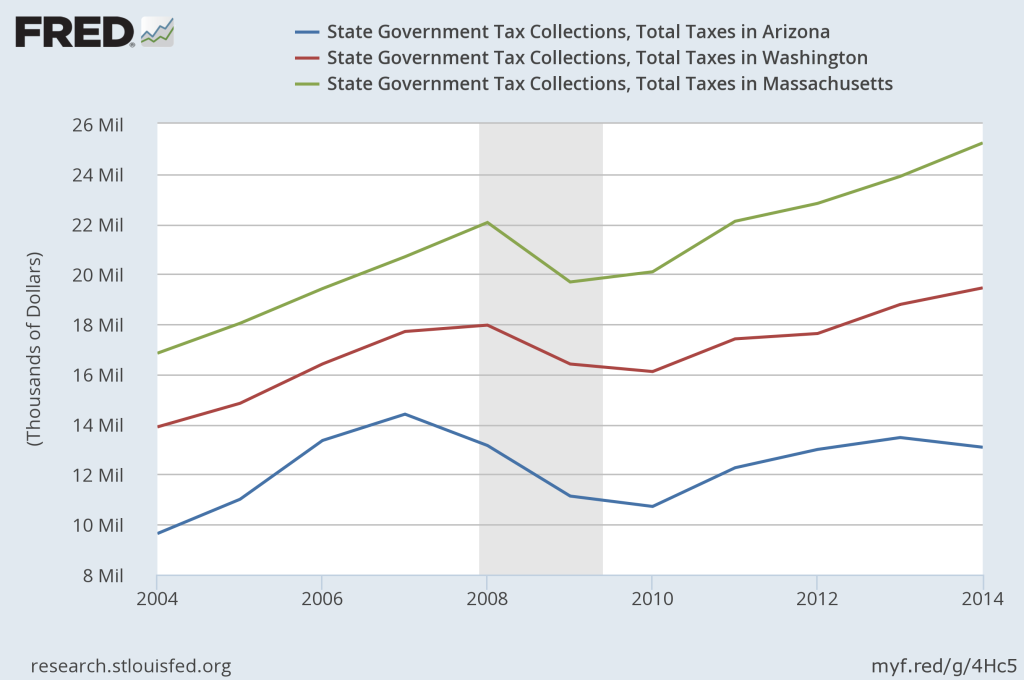
In general, the most authoritative study yet, published late last year by William Gale, Kim Rueben, and Aaron Krupkin at the Tax Policy Center, found no connection between cutting top income-tax rates and state growth.

The three researchers hone in on Kansas Gov. Sam Brownback's "real life experiment" in supply side economics for the Milken Institute. The Brownback cuts, enacted four years ago, have been a template for other Republican governors. But they have been a disaster and Kansas' economy is suffering. These GOP cuts also typically result in regressive sales taxes that fall heaviest on the working poor, widening inequality.

Now let's look at Arizona specifically: