Phoenix in the seventies

Phoenix in the seventies

Central_1972Central Avenue and Van Buren in 1972. Note the full block of businesses heading north to the Westward Ho. Central was still a two-way street.

No series of events better epitomized the 1970s and the turning point they marked in Phoenix than the fight over freeways, specifically the "inner loop" of the Papago Freeway.

Most Phoenicians had a vague idea that freeways were a possibility since the Wilber Smith & Associates plan was adopted in 1960. Interstate 10 had been completed to Tucson and was abuilding from the west. By mid-decade it had reached Tonopah, requiring a long drive over largely country roads to reach. Real-estate values plummeted along the path of the inner loop. But by 1970, Phoenix's freeway "system" consisted of only the Black Canyon (Interstate 17) which curved at Durango to become the Maricopa (I-10).

HelicoilsAll this changed as the new decade opened and the plan's stark reality became clear. Specifically, the Papago would vault into the air, reaching 100 feet as it crossed Central Avenue. Traffic would enter and exit via massive "helicoils" at Third Avenue and Third Street. The freeway was promoted as being Phoenix's defining piece of architecture.

It didn't take Eugene Pulliam and the anti-freeway advocacy of the Arizona Republic and Phoenix Gazette to make most Phoenicians horrified. In 1973, voters vehemently rejected the inner loop. They only had to look 372 miles west to see the destruction wrought by freeways. They didn't want Phoenix to "become another Los Angeles."

National suicide…really?

[UPDATE] The answer is yes. Join the open thread on the comments to discuss the election results.

Are you really going to do it, America? Give control of the Senate to The Party That Wrecked America?

If the polls are to be believed, the answer is "yes." It is true that polling undercounts Democratic votes. But the indications are not good. Consider that in Colorado, incumbent Gov. John Hickenlooper is trailing a full bore Krackpot who claims the IUD is an abortion device.

Andrew Sullivan wrote an interesting post on the midterms. Among his comments:

Republican candidates have made this election about (President Obama), while most Democrats (as is their wont) are running fast away; the GOP itself remains, however, also deeply unpopular; wrong-direction numbers are at a high. No great policy debate has defined these races, and when such issues have risen – such as illegal immigration or the ACA – they tend to be virulent reactions to existing law or proposed changes, rather than a constructive, positive agenda. I see no triumph for conservative or liberal ideas here, no positive coalition forming, no set of policies that will be vindicated by this election.

Better than nothing?

Better than nothing?

Central_Station_Tower_rendering

A rendering of Phoenix Central Station, the oval-shaped tower that would be built at Central and Van Buren.

This year, Seattle's core has seen 100 buildings permitted, under construction or recently completed. In central Phoenix, by my count, there's the proposed skyscraper above, the University of Arizona's 10-story research building on the Phoenix Biosciences Campus, the ASU college of law, and a 368-unit Lennar apartment complex in lower Midtown.

It's better than nothing, right?

Phoenix Central Station by Smith Partners would be the most interesting, rising 34 stories with 475 apartments, 30,000 square feet of commercial space and, of course, a parking garage.

The tower would rise above the homely central transit station, which nobody will miss, but retain the use as a transit hub. It has its virtues: more apartments for downtown residents, close proximity to ASU and a shape that would provide a bit of variety from the mostly dreary boxes that make up the skyline of the nation's sixth-largest city.

Young Phoenix

An interesting report, The Young and Restless and the Nation's Cities, came out recently from the City Observatory think tank. The premise is straight-forward:

The young and restless — 25 to 34-year-olds with a bachelor's degree or higher of education, are increasingly moving to the close-in neighborhoods of the nation's large metropolitan areas. This migration is fueling economic growth and urban revitalization…. Businesses are increasingly locating in or near urban centers to better tap into the growing pool of well-educated workers and because these center city locations enable firms to better compete for talent locally and recruit talent from elsewhere.

The top gainers of this coveted demographic from 2000 to 2012 are what you would expect: Washington, D.C., San Francisco, Boston, Silicon Valley, New York, the Research Triangle and Seattle.

But some among the leaders are cities against which Phoenix should benchmark itself and ought to be able to compete with: Denver, Austin, the Twin Cities and Columbus.

Instead, by a critical metric metropolitan Phoenix comes in 45th. Behind Orlando, Birmingham, Rochester and Indianapolis, hardly cities one would associate with urban cool.

J’accuse…!

The headline in Salon reads, "Baby Boomers Ruined America: Why Blaming Millennials is Misguided and Annoying." The column by Alexander S. Balkin that follows is no less shy:

From the time the baby boomers took over, the United States has experienced an economic environment plagued with unfounded asset and real-estate bubbles and collapses. The bubbles were caused by blind greed on the part of investors, and a blind eye on the part of regulators. The baby boomers forced the financial and banking system out of relative security to high-risk systems.

The perfect example of this was the 2008 collapse of the toxic housing debt market. In government, baby boomers ballooned the defense budget beyond the point of reason. They then raided government programs to pay for their mistakes…

You get the gist. Now, back when this boomer was starting as a journalist, there were these creatures called editors. If one existed today, she might point out to Mr. Balkin that the granddaddy of financial bubbles was Alan Greenspan, born 1926. Blinding and rolling back regulators was among the many anti-middle-class goals of the Powell Memorandum, written in 1971 by future Supreme Court Justice Lewis Powell, b. 1907, and carried into the public square with such success by Ronald Reagan, b. 1911.

Dick Cheney (b. 1941) and Donald Rumsfeld (b. 1932) led the "balloon(ing) of the defense budget beyond the point of reason" (An editor would also help the writer avoid cliches). Among those in politics and media who robustly supported both unfortunate turns are Rep. Paul Ryan (b. 1970), Sen. Ted Cruz (b. 1970), Michelle Malkin (b. 1970), and Jonah Goldberg (b. 1969). The algorithms that helped bring on the Great Recession and now cheat average investors in the stock market likely were written by X-ers or millennials.

The death of authentic Phoenix

The death of authentic Phoenix

Durants

Authentic Phoenix can still be found at Durant's.

The impending closure of Baker Nursery and Mary Coyle's raises an issue beyond losing beloved businesses or even the extreme struggle faced by locally owned firms in Phoenix. It cuts to something essential to a real city even if it is difficult to define: authenticity.

Critics may dismiss this as nostalgia, a cheap emotion for a golden past that never was (this is one way Very Serious People invalidate my arguments now). Or some academic fad of the latte-quaffing creative class elitists. Instead, it is critical to a city's success.

"Authentic" in connection with a city involves historic roots, local ownership, places that are valued, human scale and encouraging human interaction, aesthetics, a distinctive vibe ("cool"), and a strong degree of critical mass and density. The asteroid belts of suburbia with their chain restaurants and malls are not authentic — they annihilate it. No wonder educated young people, many empty nest boomers and world talent want to move to authentic cities.

As these losses continue (and Mary Coyle's had been dead to some since it left its 15th Ave. and Thomas location to flee north of Camelback), it's more than the city cratering or looking like Everyplace America. It is the death of a tangable part of the civilization, a concept beyond the MBAs that run the country or the real-estate grifters that run Phoenix.  A point comes where too much driving is required to reach this or that "iconic" survivor.

The same-sex marriage moment

The same-sex marriage moment

Major_Alan_G._Roger_at_Same-Sex_Wedding_Ceremony
What does same-sex marriage mean? This is not a rhetorical question. Nor am I trolling. So stay with me and please provide your thoughts in the comments section.

As I write, a majority of states recognize same-sex marriage and the federal courts keep striking down bans. On a personal level, the meaning is profound. Being able to marry whom you want. To be at his or her side in the hospital and have legal rights of spouses. It is also arguably the biggest civil-rights victory since 1965.

And yet, the same-sex marriage moment is happening as most of the country, geographically at least, is becoming not merely more conservative but rabidly reactionary.

The assault on women's reproductive rights is unlike anything seen since the dark age before the advent of the pill.

Republican governors and legislatures, which control a majority of the states, are engaged in an ongoing effort to suppress the vote.

And the last time I checked, the GOP has a 66 percent chance of taking control of the Senate in November. If so, our halting regress toward national suicide will get a tremendous boost.

Baker Nursery RIP

Baker Nursery RIP

BakerNursery
National readers of this blog will have to indulge me in writing again on sorrowful "news from home." Baker Nursery will be closing after 46 years in operation. Businesses come and go, we grow to love some of them, the verities of the marketplace don't care.

But this is a punch in the gut.

Baker's is a remnant of old Phoenix, the magical oasis, a garden city where people took special pride in bringing the bounty out of this timeless alluvial soil, where even the simplest apartments were lovingly landscaped. It is a remnant of the distinctive eastern part of the city that includes Arcadia but so much more. A remnant of when Phoenix was a very middle-class city, before the stark division of rich and poor, before the miles of linear slums.

What could have been more important for the garden city that once flourished here than nurseries? Phoenix once supported many, but Baker's was the best.

My mother was a Baker's customer from the start. Later, as a young man, I would take her to the nursery. She would select plants while I, well, admired the attractive Baker daughters.

Air war over Phoenix

Air war over Phoenix

PHX_tower_with_downtown
Friends in my old 'hood, the historic districts north of downtown Phoenix, have asked me to write about a change in the approach paths to Sky Harbor International Airport that is bringing airplanes lower and louder over these neighborhoods.

Coverage has not been lacking (see here and here). But I won't pile on repetitively because my initial reaction is to be…torn.

When I lived in Ocean Beach in San Diego, everybody knew when it was 6 a.m. That's because flight operations were commencing at Lindbergh Field whose one runway took outbound planes directly over our neighborhood. I lived a block-and-a-half from the beach, in a cool district the tourists usually missed — but the airplane noise came with the bargain.

Cities are noisy. As I write from the 10th floor of my downtown Seattle condo, I hear traffic, sirens, people yelling and, yes, airplanes approaching Sea-Tac (albeit from a higher altitude). During the daytime there is construction noise from one of the scores of new skyscrapers going up. The sounds are one of the energizing things about living in the heart of a city.

Central Phoenix, by contrast, is uncommonly quiet. There's the hum of the Papago Freeway. At night, the Santa Fe train whistles that remind me of my boyhood (one hardly hears the Union Pacific now compared to when it was the Southern Pacific years ago and Phoenix was a major point on its main line). Otherwise, especially if you are a block in from a major arterial, it is perhaps the quietest place in the metro area. It is much quieter than when I was a boy and central Phoenix was vibrant.

Bones

Bones

96524005_d2552555fc

The other night I was in a Twitter discussion with economist and blogger Noah Smith about the implosion of Las Vegas' hopes to create a vibrant "real" downtown (see the links on the City Desk). It's a sad moment, but I remarked that Vegas didn't have good bones. Smith asked a logical question for anyone not among the urbanophiles: What are good bones?

Since I now have more than 140 characters, let me answer more clearly. "Good bones" are a variety of architectural styles, especially pre-World War II — Art Deco, Beaux-Arts, Spanish Colonial Revival, Gothic Revival, Chicago School, Victorian, etc.

Good bones are dense downtowns and human-scaled neighborhood retail districts right up to the sidewalk. Parks designed by the likes of Frederick Law Olmsted or Adolph Strauch. Inspiring public spaces. Narrow streets and real boulevards. Palatial theaters and concert halls. Grand bridges. Infrastructure such as subways and magnificent railway terminals. Stately public buildings. Packed row houses. Downtown retail (especially a hat store). These are all good bones.

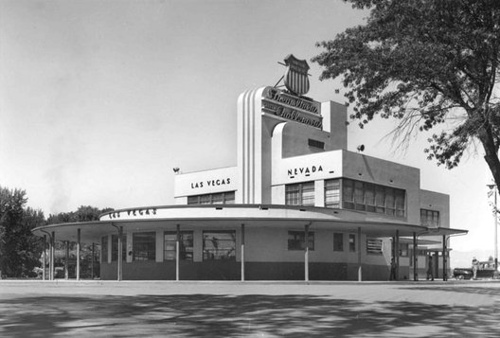
Here, Las Vegas is in an even worse position than Phoenix. In 1940, the end of the Art Deco era, its population was 8,422. The only architectural asset it gained was the lovely streamline moderne Union Pacific Railroad station above — demolished for a garish hotel in the 1960s.

Lies, damned lies and water

Lies, damned lies and water

Arizona_Spillway_-_Hoover_Dam,_Nv
Whiskey's for drinking and water's for fighting over
— old adage.

So Doug Ducey and Fred DuVal have laid out their plans for addressing a water shortage in Arizona. DuVal, naturally, comes off as the sanest, including asking the state Department of Water Resources "to develop a detailed analysis of the Groundwater Management Act and provide specific recommendations for improving the law."

That's good. I don't trust ADWR or have confidence that the law is being adequately enforced or monitored.

DuVal is less convincing when he told the Arizona Republic that the state needs to "go big" on new water projects, including desalination. As regular readers know, the feds aren't going to invest in more waterworks. California and the Upper Basin states would also resist them with all their might (see here and here).

Ducey comes off full kook, including his insinuation that trees are to blame for drought. The last thing Phoenix needs to do is further degrade its historic oasis. Central Phoenix, especially, needs more trees to offset the heat island and climate change.

But nobody dared wake the elephant. You know, the one in the room

Rogue's Front Page Editor sends his last link from the old bunker — "Confederate cavalry near," he reports. He'll be moving to a new Undisclosed Location.
The Arizona experiment

The Arizona experiment

Much has been made by "left-leaning" commentators, notably Thomas Frank, about the disaster created in Kansas by Gov. Sam Brownback's enactment of conservative policies. And yet check out this chart:

2fredgraph

And this:

3fredgraph

Not to diminish "What's the Matter With Kansas," but Arizona is in worse shape. It arguably offers the better example of what happens when orthodox right-wing policies are enacted in a state without the oil and massive federal investments enjoyed by Texas. That Arizona is a growing, highly urbanized state brings into even starker relief the complete bankruptcy of the Kookocracy's "conservative ideas."

And they own this mess. The interregnum of St. Janet saw a constitutionally weak governor playing defense and never tackling the sacred cows of land use, revenue or water. Arizona's ongoing woes are the work of the regressive right that has taken over the Republican Party.

And yet, polls show at best a dead heat between Democratic gubernatorial candidate Fred DuVal — in every way the superior contender — and Republican Doug Ducey. And no chance for Democrats to gain control of the truly powerful branch of government, the state Legislature.

Phoenix in The Great War

Phoenix in The Great War

Frank_Luke

Phoenix-born air ace Frank Luke Jr., Arizona's most famous hero from World War I, with his thirteenth official kill.

Arizona had been a state for little more than two years when the cataclysm broke out in Europe a century ago. When the United States finally entered the conflict in 1917, doughboys and sailors fought under the new flag bearing the perfectly symmetrical 48 stars created with the entry of the "Baby State." While the Great War was not as transformative here as its continuation in World War II, it still brought big changes to Phoenix.

Washington_1st_Ave_looking_northwest_Fleming_corner_1917When the guns of August 1914 commenced, Phoenix's population had clocked in at 11,314 in the Census four years before. By 1920, it would be more than 29,000. Although it was the state capital (and home of the "lunatic asylum," which in those days was separate from the Legislature), it was still smaller than Tucson. But downtown had become a thriving commercial center with multistory buildings.

The streetcar "suburb" of craftsman bungalows was taking shape in what are now the Roosevelt and F.Q. Story historic districts and the southeast corner of Willo. The city was tightly bound to the old township, with additions running out to the capitol, north above McDowell, south of Grant and east to around 16th Street. By 1917, bungalows were being built in the Bella Vista addition northeast of Osborn and Central. The Santa Fe and Southern Pacific had completed branch lines to the town, but civic leaders were lobbying hard for a mainline railroad.

In 1914, Phoenix adopted the reformist commissioner-manager form of government. It was meant to tame the corruption of the wide-open Western town. Soon, it was back to business as usual with compromised commissioners. It would be after World War II that meaningful reform would come to City Hall.

Arizona, with 204,354 in the 1910 Census, was still a wild place. It had been only 28 years since the surrender of Geronimo. The state's economy was based on mining, ranching and, in the Salt River Valley, a farming cornucopia.

What will Scotland mean?

What will Scotland mean?

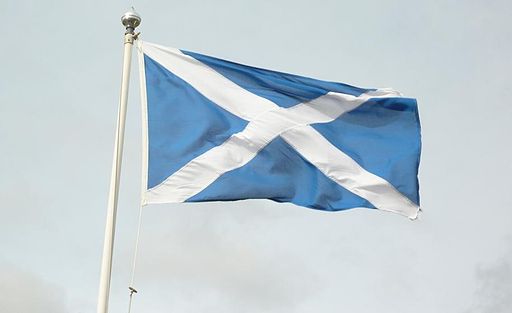
512px-Scottish_Flag_-_detailAs a true son of Scotland*, let me offer some opinions about the vote for independence sure to offend everyone.

In another Great Britain, independence vote leader Alex Salmond would have met a very different fate from the Blair-Cameron meek acquiescence. King James, the Scot who gained the throne of more powerful and richer Britain (and added the name "Great"), would have beheaded him. Churchill would have had him shot. During the high Empire, he would have been shipped off to the Raj or some other posting to work off his energies. Even during the height of the Cold War, when the U.S. Navy operated nuclear subs from Holy Loch, Salmond's vote would have never made it out of Parliament.

He strikes me as a bit of a scoundrel, a hustler politician making impossible promises. The economic risks are serious — pointing this out seems to have increased the "Yes" vote — but there will be unintended consequences, many unfortunate. And peaceful "Scottish Independence" seems like the kind of boutique hobby that is only possible in a place that is placidly, but unsustainably, divorced from the real world.