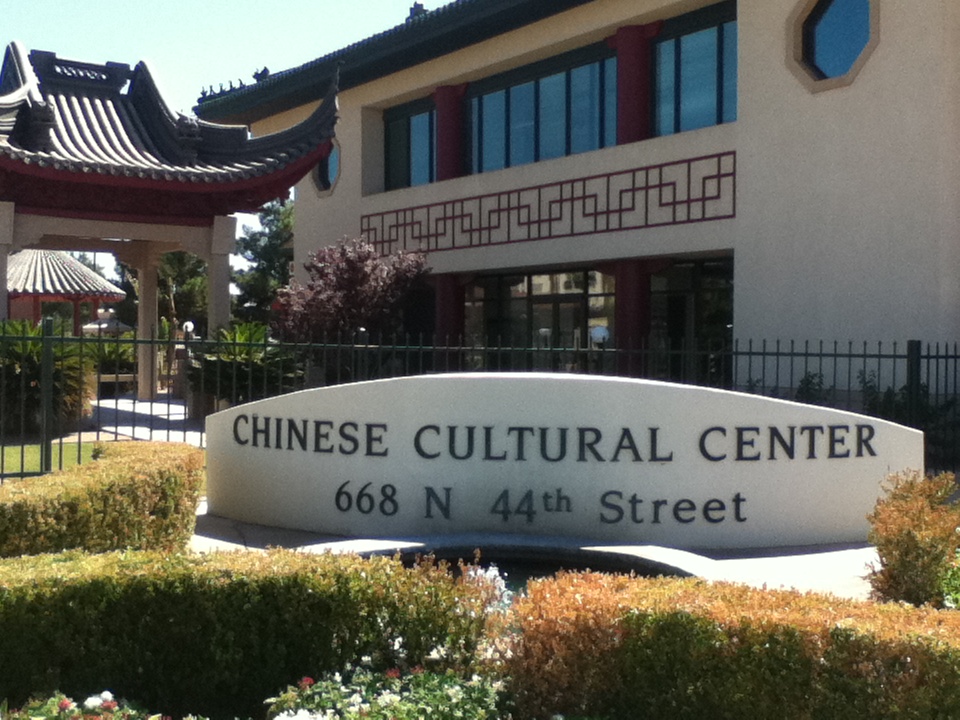
The Chinese Cultural Center

The Chinese Cultural Center

ChineseCulturalCenter
In the late 1990s, a couple of years before my fateful and in retrospect foolish decision to come home and write a column for the Arizona Republic, I noticed a freeway sign for the "Chinese Cultural Center" and took the exit.

The location, on 44th Street, was strange. It was far from the original locations of Phoenix's Chinatown in downtown. The central core was dead then and the only memory of Chinatown was the Sing Hi Cafe, relocated to west Madison Street from its original site in the Deuce. There was also the Sun Mercantile building, a former warehouse, beside the basketball arena. Land was plentiful and more of the warehouse district was intact. Why not put a Chinese Cultural Center here?

But, no. And although the sign was one of the brown historic markers that usually went with something public such as the Desert Botanical Gardens, the Cultural Center appeared to be a private, mixed-use real-estate development. Yes, it had some Chinese-influenced architectural features, garden, restaurants, and Asian market, but it wasn't really a museum or cultural center. Wikipedia says it was developed by the Chinese state-owned COFCO group, but I don't know if this is accurate.

Lately, the center has been in the news because of the building's purchase by a Scottsdale private-equity outfit which intends to redo it as a corporate headquarters. Most of the center is emptied out and it's surrounded by a chain-link fence. Protests from the Chinese community brought a temporary restraining order protecting the garden statues and roof — but it runs out Nov. 3rd. Then a new hearing will be held and demolition could begin. The Republic and New Times have slightly different takes on the state of play.

In all, it is so Phoenix: Disregard for history, car-dependent far from light rail (WBIYB) or the central core, and ultimately just another a real-estate play.

Additive history

Additive history

Brandon_Marshall_kneeling
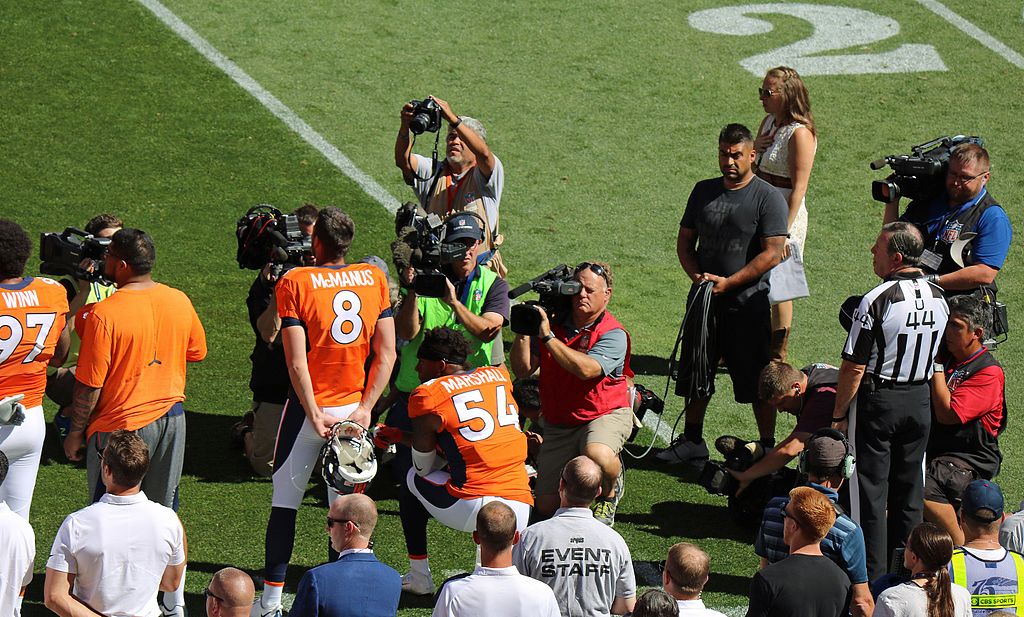
I've returned from a long a lovely train trip to Denver, one of adopted hometowns (and what a stunning job they've done with Union Station and LoDo). So I was blessedly off the grid during the latest culture-war battle, over standing or kneeling for the national anthem. At the risk of losing friends among right-thinking people, I am torn about this.

On the one hand, protest has a long history in sports and if one or many of the pro-football millionaires wants to kneel to protest racism, that's his prerogative. Jehovah's Witnesses don't stand. For the players, I'm not sure it's a First Amendment right. I can't write anything I want as a Seattle Times columnist. To be sure, my masters give me wide latitude but there is an invisible fence. I am an employee. Nobody thought my First Amendment Rights were being trampled when the Arizona Republic took away my column because my writings offended the boosters and Real Estate Industrial Complex. Let's also state at the outset that the quisling in the Oval Office has no standing to lecture on anyone's patriotism.

Yet I also couldn't shake two other impressions. First, beyond the symbolism, can anything make amends? What would it take? Even on police shootings of unarmed black men, I have yet to see journalism to tell me whether this is worse now than in, say, the 1960s. It's bad no matter what, but are things getting better as President Obama, who may be remembered as the last American president, said? Or not? This question is beyond my aim today. Second, can't we have any modest civic above politic war, such as standing for the national anthem? We once had a common culture that assumed such things, for all our flaws. I won't even ask if it's a given to stand during the "Hallelujah" chorus. On the anthem, the answer is apparently, no.

On Facebook, my friend Tom Zoellner, one of the smartest people I know, wrote:

Historical reminder: "The Star-Spangled Banner" was a baroque nationalist poem written by a lawyer who helped slaveowners recapture their escaped property. In the third verse (almost always unsung) a line celebrates the murder of African-Americans slaves who had been recruited to fight for their freedom on the British side in the War of 1812. Here's the line: "No refuge could save the hireling and slave/From the terror of flight or the gloom of the grave"

We don't just need to take a knee. We need to look honestly at our history, make hard amends for our national sin of racism, stop trying to pretend this festering wound doesn't exist, and make the USA live up to the sacred ideals implicit in its founding, even though their implementation has been messy, imperfect and painful over the course of 241 years.

Phoenix and Amazon HQ2

Phoenix and Amazon HQ2

Day_1_Tower_Seattle_WA_Jan_17
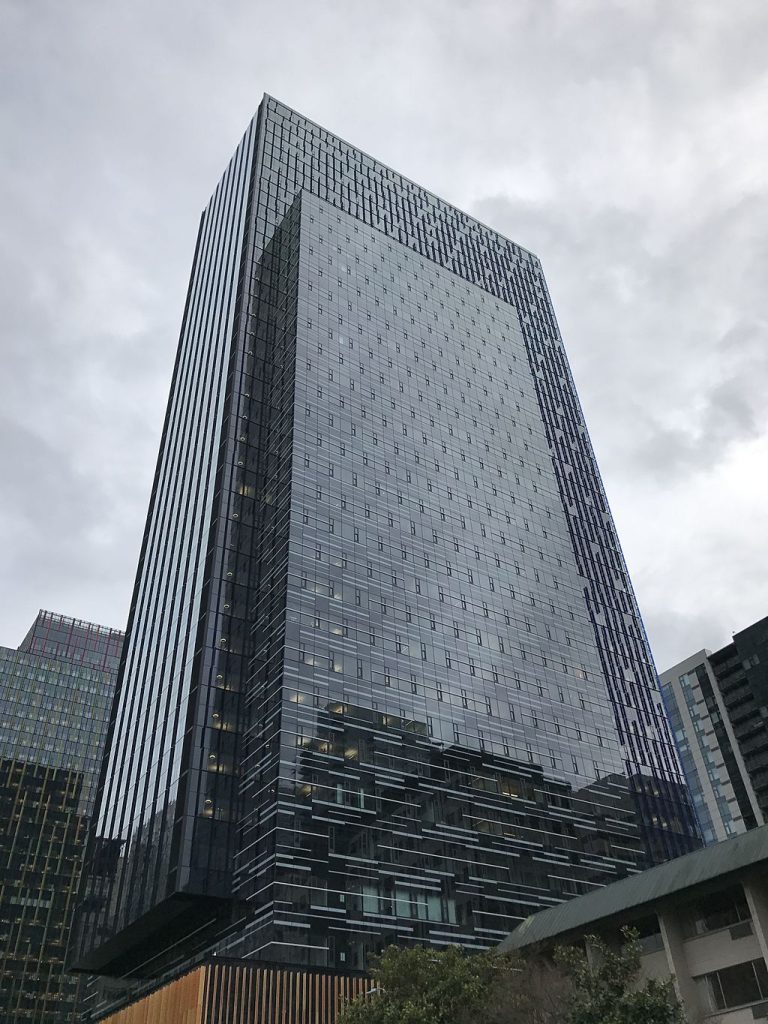
More than 240 locaties are contending to win the economic prize of the decade, Amazon's second, "equal in every way" to its Seattle home, headquarters. Some $5 billion in investment and 50,000 high-paid jobs are possible. Both Phoenix and Tucson are among them. Above is a photo of the Day One tower, part of Amazon's massive downtown Seattle footprint.

I've written about this highly unusual development in my Seattle Times columns here and here. In "Dear Amazon, we picked your new headquarters for you," the Upshot team narrows down cities based on the company's request for proposals (RFP) and comes up with Denver. That jibes with my top three candidates, the others being Toronto and Dallas-Fort Worth.

In the Upshot piece, Phoenix (and Tucson) is quickly eliminated: job growth isn't strong, plus lack of a highly skilled tech workforce, high quality of life (that attracts young, educated workers), strong mass transit, and willingness to "pay to play."

But let's not give up just yet. At the least, this could be an educational experience.

Returning to Rogue Columnist

Returning to Rogue Columnist

AhwatukeeDust
The book is not quite done, but I'm 90 percent there and at least know, finally, how it ends (probably). I promised readers that columns would return in mid-September.

Coming back isn't an easy decision.

I know that nothing I write will change Phoenix's trajectory. It will bring more of the "Talton hates Arizona" claptrap. Nothing I write will alter the nightmare that began after Election Day 2016. I'm so tired of losing so much of the time.

As much as I hate "both sides" false equivalency, I feel increasingly alienated from the loud left, while "conservatism" is not only nihilistic and destructive but in power. It's tempting to watch the past few months and think Trump and the GOP are the gang who can't shoot straight and will soon be swept away. Don't fall for it.

Also, I tend to write what is now put in the genre ghetto of "long-form commentary," so you won't find quick hits, videos, and digital "storytelling" here, either. The photos tend to be limited and mostly as historical galleries.

Book time open thread

* Please read below the jump for important new information.

With a hard September deadline for my next David Mapstone Mystery and the demands of my Seattle Times job, I must take a break from Rogue. I regret that I can't sustain the old 16-hour workdays any longer.

You may use this as an open thread to discuss the issues of the day in the comments section. If something major happens, I may try to write. Otherwise, I will also try to update the daily Front Page, as well as Arizona's Continuing Crisis.

As always, the site's archives offer plenty, especially the Phoenix 101 history section. See you in mid-September, God willing.

Being Number Five

Being Number Five

Phoenix_Skyline_from_South_Mountain_at_Night.2010
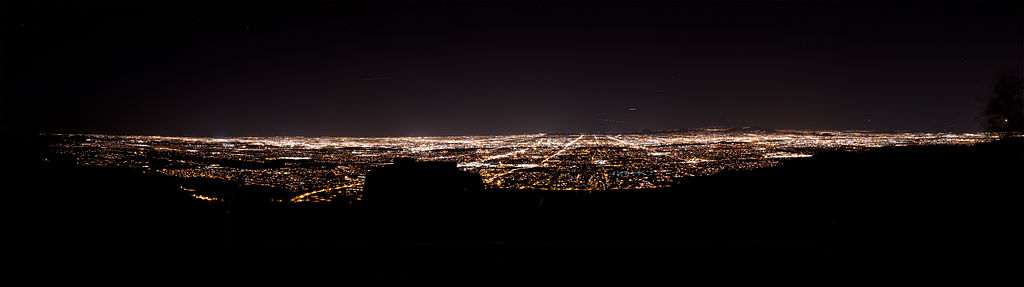
I remember in 2006, when Phoenix passed Philadelphia in a Census estimate to become the nation's fifth most populous city. As a columnist for the Arizona Republic, I accompanied then-Mayor Phil Gordon and a delegation to Philly. The Philadelphians were very gracious. At one event, they talked about visiting Phoenix where City Hall "looked like a building where honest business was being done." The City Hall that the statue of William Penn stands atop had seen its share of big-city corruption. Not knowing Phoenix's abundant history of criminality, they sounded envious.

Even so, it was obvious wandering around Philly, with its great urban bones, energy-filled downtown, corporate headquarters, extensive rail transit and commuter-train system, and world-class cultural and educational institutions, that any comparison with Phoenix was apples to gravel. Still, even though I had begun to assemble powerful enemies writing about the city's reality and pushing verboten projects such as light rail (WBIYB), I felt proud. My hometown was America's fifth-largest city!

You can take the boy out of Phoenix but you can't take Phoenix out of the boy. For much of its existence Phoenix wanted above all to get big. And now it was.

The city fell back to sixth place in the 2010 Census, but with the latest numbers it's back to No. 5, probably to stay. Many dreams and ambitions have been realized over the past near-decade. Downtown is filling in, thanks to the ASU campus. It sports a handsome convention center and new hotels. Roosevelt Row is a destination, not a handful of Resistance members fighting to survive. T-Gen and the biomedical campus are there and growing, although not at the speed I had wished. We built light rail (you bastards) and it will be extended. All this in the face of thuggish opposition by the right and the city's worst economic crisis since the Great Depression.

The Confederacy and us

The Confederacy and us

Flag_of_the_Confederate_States_of_America_(1861-1863)It would be most misguided to try to erase Confederate monuments and memory from Arizona, as some black leaders are suggesting. We need more monuments to African-Americans in Arizona, more African-American history taught about Arizona and the nation, more about all the rich strands of e pluribus unum — not today's neo-Soviet attempt to rewrite and eradicate the actual past.

As it happens, the Civil War and the Confederacy are critical elements of Arizona history. The CSA created the first Arizona Territory, claiming the lower half of New Mexico Territory which at the time contained both future states. The Stars and Bars flew above Tucson. An Arizona delegate sat in the Confederate Congress throughout its existence. When Union forces pushed most Confederate units out of Arizona, Abraham Lincoln took Jefferson Davis' clue and created a separate Arizona Territory.

Before secession, Davis played an important role in Arizona. As U.S. Secretary of War, he was instrumental in the Gadsden Purchase, acquiring land south of the Gila River, including Tucson, from Mexico. Davis supported a southern route for the transcontinental railroad that eventually became the Southern Pacific. The SP was essential to the development of the territory and state, connecting it to the nation. It is hardly surprising that Davis was memorialized with a stretch of highway. Cases can be made for all six Confederate monuments in the state. Phoenix, especially, was as much a Southern as a Western city for much of its existence. This accounts for a pleasant friendliness that's sometimes found, like the citrus blossoms. But with that also came segregation for the first half of the 20th century. Such is history.

Jack Swilling, the most important of Phoenix's founders because he understood the true significance and potential of the prehistoric Hohokam canals, was a Confederate officer. He deserted after Richmond demanded that he confiscate supplies from his neighbors. He helped the Union as an Indian fighter and discovered gold, which was sent to Lincoln to show the importance of Arizona. In Phoenix after the war, he became fast friends with John Y.T. Smith, a former Union officer who was growing hay near the Salt River to supply the Army at Fort McDowell. Such was the reconciliation, replayed countless times across the land, that made a new united nation possible. Like it or not.

Big Town

Big Town

Cartoon_illustration_Phoenix_1950s
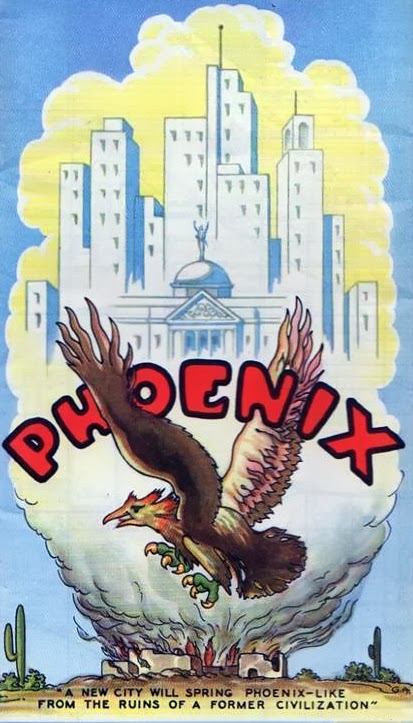
Big Town was a brand of melons and vegetables shipped by MBM Farms and Zeitman Produce from the Salt River Valley in its days as American Eden. One of scores of colorful labels on wooden crates, it had a stylized version of the Phoenix skyline in the background.

But I can't help wondering if it also caught a bit of the moment in 1950, when Phoenix entered the ranks of America's 100 largest cities. It was No. 99, with 106,818 people in 17 square miles. Phoenix landed 62 people ahead of No. 100 Allentown, Pa. But it was behind Scranton, Wichita, Tulsa, Dayton — not to mention its Southwest rival El Paso, No. 76.

In 1950, the nation's fifth most populous city was Detroit. According to new Census data, Phoenix has once again surpassed Philadelphia to claim the No. 5 spot it had by estimates in 2006 but lost in the 2010 count. I'll have more to write about this later.

For now, I want to linger on that moment when the Census Bureau made it official: Phoenix had crossed 100,000. The big town was definitely a city now, if not a big one (Even now, Phoenix has many characteristics of a small town, especially in power and power relationships).

As you can tell from the geographic size of the city, this Phoenix was convenient and walkable, with a true urban fabric. At 6,714 people per square mile, it was much more dense than today's 2,798. Surrounding it were citrus groves, farms, and small towns mostly dependent on agriculture (Tempe 7,684, Mesa, 16,790, Glendale 8,179, Gilbert 1,114, Scottsdale 2,032, and Buckeye 1,932). Arizona's total population was 756,000. Phoenix boasted an abundant shade canopy from the narrow streets to the enchanting canal banks. Downtown was the busiest central business district between El Paso and Los Angeles. As many as 10 passenger trains served Union Station in the golden age of streamliners.

America last

America last

TrumpLeashesPenceW
Illustration by Carl Muecke

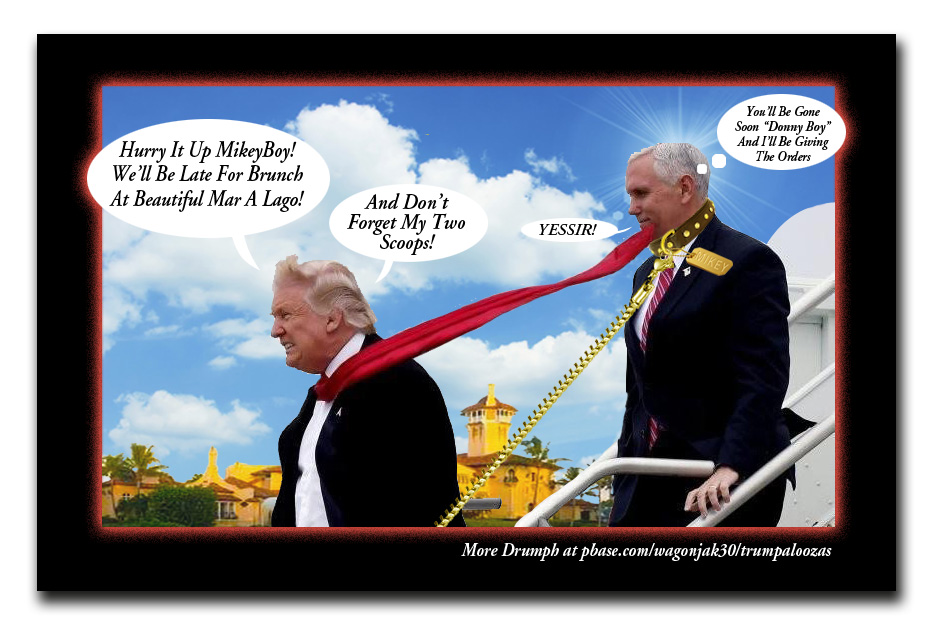
Four months into the Trump administration, it's clear that the president's agenda is anything but his promised "America First."

A budget that slashes Medicaid funding between $800 billion and $1.4 trillion won't just hurt "those people." To be sure, it disproportionately hurts minorities in certain states. But 42 percent of Medicaid recipients are white, many of them likely Trump supporters. Many Medicaid recipients have jobs — their employers are able to socialize their healthcare costs while privatizing the profits from the labor of the low-wage workers. America first?

The Republican repeal of Obamacare will leave 23 million Americans without health insurance. It has passed the GOP-controlled House and stopping it in the Senate is by no means assured, even likely. Remember, Obamacare was a market-based plan created by conservatives — but because it was proposed by President Obama, Republicans have devoted years to destroying it. They're doing it now, even though repeal has yet to pass, because of the uncertainty caused in the insurance markets. Every other advanced nation in the world has universal healthcare. We will lose even the modest gains of Obamacare. America will be even more last in healthcare. And all to ensure a tax cut to the rich and, well, because the Republicans like hurting people.

Other advanced, urbanized nations enjoy high-speed rail and modern subway systems in their cities. Trump wants to dismantle Amtrak — a longtime Republican goal — is holding up federal funding to help electrify the commuter-train line in the Bay Area, severely cut aid for transit, and do nothing to advance high-speed rail. Subways and mass-transit systems across the country are ailing. Only a nation with as many rubes as the United States would be oblivious to how far behind we are.

Maryvale begins

Maryvale begins

039
Through the first decades of Phoenix's history, housing was built on an almost artisanal level. Sometimes one at a time. Other times a dozen or two. Along with such fashions as the bungalow and period revival style, this is what gives the historic districts north of downtown their unique quality. It took decades, for example, for today's Willo to be filled with homes.

After World War II, heavy demand for housing — hardly any had been built during the Depression and World War II — and federal loan guarantees sparked a nationwide residential building boom. This was especially true with new suburbs, built on the Levittown mass-production model. With builders such as Ralph Staggs and John Hall in the lead, subdivisions just outside the 17 square miles of the city began to grow. By the mid-1950s, subdivisions averaged 180 houses, according to historian Philip VanderMeer.

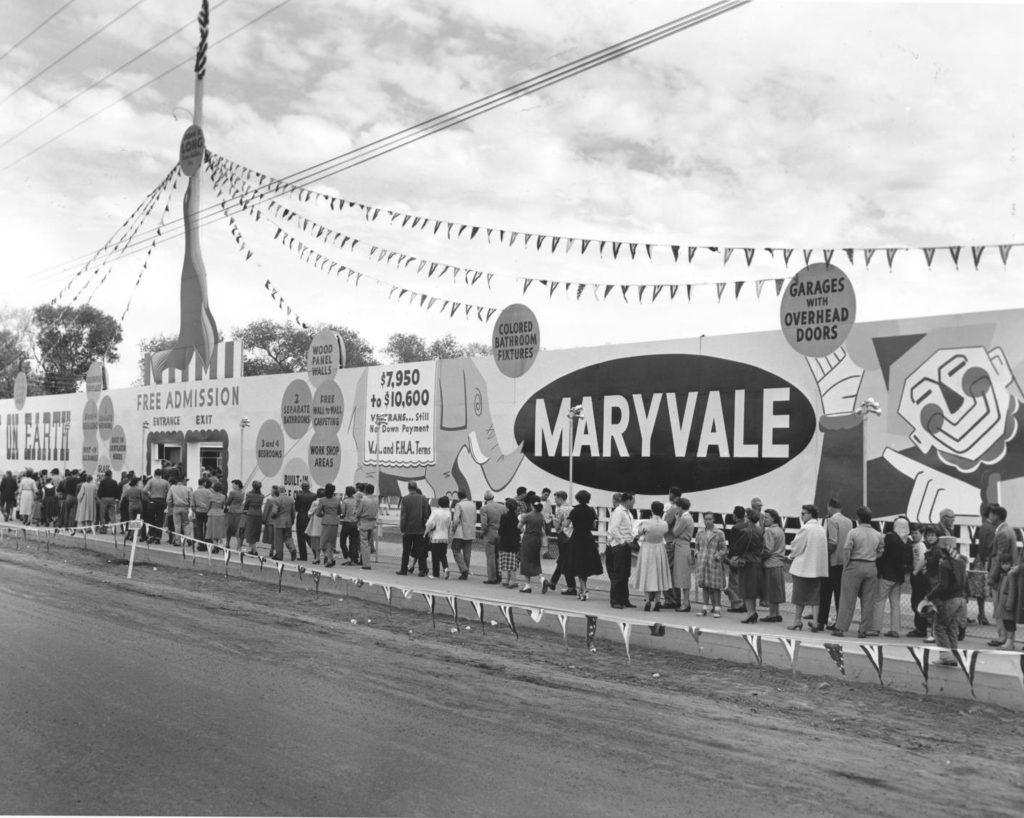
In 1954, John Frederick Long began quietly buying nearly 70 farms west of Phoenix. A Phoenix native, Long worked on the family farm, spent four years in the Army Air Forces during World War II, and came home to several failures as an aspiring businessman. In 1947, he married Mary Tolmachoff, who also grew up on a farm in the Valley. With a GI loan and some savings, they built a house on a lot on north 23rd Avenue.

Before even moving in, the Longs received an offer to sell the house for almost double the cost of $4,200 in materials. This launched him as a homebuilder, first on a very small scale. But with Phoenix growing — a sharp post-war recession had been reversed by the infusion of Cold War defense spending — Long had a vision for something much bigger.

Rule of law vs. rule of men

Rule of law vs. rule of men

Lavrov Trump KislyakMeetingFltWIllustration by Carl Muecke

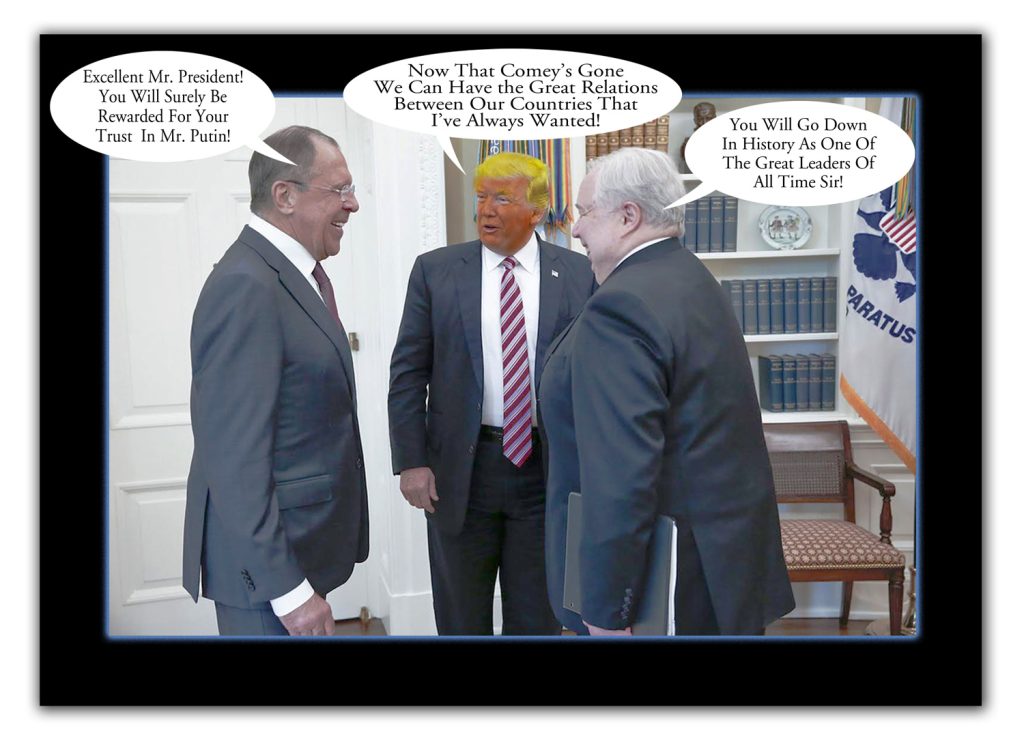
Let's be clear about James Comey. He was fired by the president who he was investigating for ties to Russia, in other words treason. Comey's FBI must have been getting close, so Donald Trump acted through his Attorney General Jefferson Beauregard Sessions, who had already recused himself from the Russia probe.

All the rest, about Comey and Hillary's emails (for God's sake), is a distraction or another of Trump's many lies.

At risk is the rule of law and a chilling future. Most immediately, it means Trump can install a crony as FBI Director (Rudy Giuliani?), as he has done in other federal agencies, to wreck from the inside. The independence of the premier federal law enforcement agency would be politicized and compromised. And the investigation into the depth of Trump's connections with the Kremlin — election meddling, money laundering, business connections, blackmail — would be stopped.

If the roles were reversed and the president was Hillary Clinton, she would already be facing impeachment and removal from office. But besides from some tut-tutting by the likes of wealthy Republican John Sidney McCain III and Jeff Flake — the Republican-controlled Congress is doing nothing. Senate Majority Leader Mitch McConnell (with a wife in the Trump cabinet) has defended Trump's action.

Great expectations

The local media have paid much attention to a nascent technology cluster in downtown Phoenix. Most recently came an Arizona Republic story headlined, "What's Driving a Downtown Phoenix Tech Boom." It reads in part:

A San Francisco tech company that announced an expansion from Silicon Valley to downtown Phoenix last week cited a lively business climate and a light-rail stop as primary factors in choosing the city.

Representatives of a semiconductor packaging company moving its corporate headquarters in May from California to south of Phoenix Sky Harbor International Airport said the city is cost-effective and has the workforce they need. These recent examples are part of what Phoenix leaders say is a flood of tech industry leaders and startups looking to open in the city. Mayor Greg Stanton highlighted the growth in his State of the City speech on April 25.

Stanton said the number of tech companies downtown has nearly quadrupled in the past five years. He credited adaptive reuse projects in the Warehouse District and new tech hubs as a source of the success.

Good for Phoenix. I hate to be the one who suns on the parade, but a reality check is necessary. For one thing, the top of the story lacks that basic of journalism, "How big is big"? As in, a quadrupling of companies from a baseline of one leaves us with not too many firms. Also, what is "tech"? When metropolitan Phoenix gets credit for technology jobs, they usually turn out to be call centers or back-office operations. Most pay poorly. By contrast, Seattle's tech jobs are actually undercounted because the tens of thousands of well-paid Amazon headquarters positions are classified under retail by statisticians.

The great tax-cut con

The great tax-cut con

16179578_10154877923043936_6217039481667486756_o
The nation's infrastructure is graded D-plus by the American Society of Civil Engineers. Bridges collapse with frightening regularity. Our transportation system is stuck back in the 1970s. While other advanced, urbanized nations have high-speed rail, we've struggled for years merely to keep Amtrak alive, a system that eliminated hundreds of passenger trains when it came into being. We have no manned space program aside from astronauts hitching rides with the Russians. The military is at a breaking point after more than 15 years at undeclared wars. All over the country, cities struggle to keep up or rebuild such basics as parks and bus service. Inequality is at historic highs. Our education system is a shambles. The share of national income going to labor is at historic lows. On and on.

Your tax cuts at work.

The greatest con perpetuated on the American people began with Ronald Reagan, continued with George W. Bush, and now comes again with Donald Trump. That taxes must always be cut, especially for the wealthy and for corporations (which "are people," as Mitt Romney said).

We can't have nice things because of tax cuts. We're rapidly falling into Third World status because of tax cuts. This religion is an unkillable zombie. While Democrats fight over LGBTQI rights, gay marriage, transgender bathrooms, homelessness, "privilege," Confederate monuments, Black Lives Matter, mass incarceration, gun violence, microaggressions and safe spaces on university campuses, free college, pronouns, universal healthcare, and, of course, Her Speeches, Republicans persist with a message as monotonous and simple as the words of the Aflac duck: tax cuts. And it has worked spectacularly as a political weapon.

The architects

The architects

Gammage
One of the troubles with Phoenix is that most of the metropolitan area has been built up over the past two decades or so. The result is a deadening sameness of off-the-shelf architecture for house-builders and retailers, the boxes you'd find in newer parts of anywhere, with some faux Spanish-Tuscan crap attached. This is added to plenty of boring cookie-cutter buildings erected from 1960 through the 1980s. And Phoenix has more than its share of prominent architectural disasters.

That's too bad because Phoenix was once known for its great architecture, from office and government buildings to the magical period-revival homes of the historic districts, and especially its effervescence as a capital of Mid-Century Modernism.

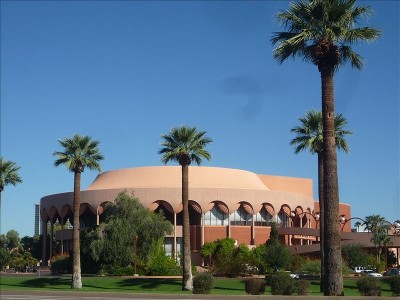
Frank Lloyd Wright (1867-1959) established his Taliesin West architecture school and home far out of town in 1937. A few Wright houses are left here, although contrary to popular myth he didn't design the Arizona Biltmore. The great Wright commission executed here was intended as the Baghdad opera house. You know it as Grady Gammage Auditorium (above), built after Wright's death.

But many more applied their calling here. This is an incomplete list, and I'm sure our smart commenters will have more:

The Deco masters and classicists:

Royal Lescher (1882-1957) and Leslie Mahoney (1892-1985) are responsible for some of Phoenix's most majestic public buildings, especially the 1929 Art Deco Phoenix City Hall (Edward Neild of Shreveport worked with them on the Maricopa County Courthouse portion). Lescher & Mahoney also designed the Orpheum Theater, Brophy College Chapel, the U.S. Post Office at Central and Fillmore, El Zariba Shrine Auditorium (former home to the Arizona Mining and Mineral Museum), the Phoenix Title and Trust Building (today's Orpheum Lofts), Hanny's, St. Joseph's Hospital, the Phoenix Civic Center, Veterans Memorial Coliseum, the tragically lost Palms Theater and many schools and landmarks.

Lee Mason Fitzhugh (1877-1937) and Lester Byron (1889-1963). The firm of Fitzhugh & Byron was the architects behind such landmarks as First Baptist Church (finally being renovated), First Church of Christ, Scientist, George Washington Carver High School, and the Lois Grunow Memorial Clinic.

Albert Chase McArthur (1881-1951), a protege of Frank Lloyd Wright, moved his practice from Chicago to Phoenix in 1925. Here he designed his most famous work, the Arizona Biltmore. Less well known is that McArthur also was the architect for several houses in the Phoenix Country Club estates and elsewhere.

The crisis of legitimacy

The crisis of legitimacy

TrumpSuckerBillW

Illustration by Carl Muecke

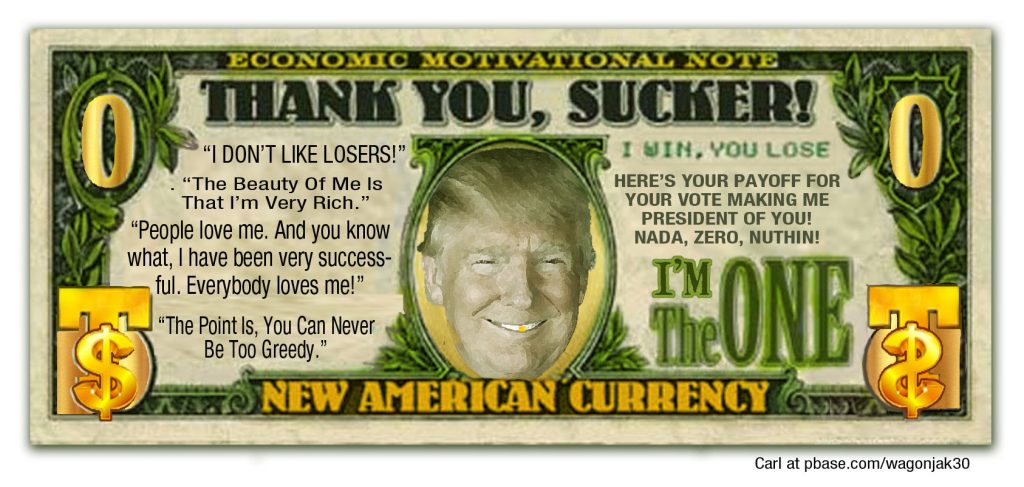
Donald Trump lost the popular vote by a historic margin, three million votes. He never released his tax returns. He asked for, and received, the help of Russian intelligence in hacking the Democrats and undermining his challenger, Hillary Clinton. He is in violation of the emoluments clause of the Constitution, has not stepped back from his tangled business interests, has stuffed his cabinet with similarly compromised billionaires. His first National Security Adviser was a Russian agent. The fate of 319 million Americans was decided by 77,744 votes in three states out of more than 136 million ballots cast nationwide. Now he has claimed a mandate to radically remake America.

For many, if not most, of Hillary Clinton voters, Trump is an illegitimate president.

Senate Majority Leader Mitch McConnell stymied President Obama's Supreme Court nominee, Merrick Garland, an unprecedented act. Garland received neither a hearing nor a vote. McConnell recently executed the "nuclear option," denying the filibuster to Democrats so he could assure the confirmation of the arch-conservative Judge Neil Gorsuch to the Supreme Court. For millions of Americans, we now have an illegitimate Supreme Court, too.

The reaction of Republicans is along the lines of, "This is how we felt during the Obama presidency, too." This is symptomatic of our Cold Civil War. But Obama was soundly elected and re-elected. He was careful to preserve continuity with his predecessor, George W. Bush, observed every norm, and governed from the center — even using the Republican health-care plan as the template for the Affordable Care Act.