How malls remade old Phoenix
 Sing a city of malls. Actually, the first modern mall west of the Mississippi was built in Dallas and the first suburban mall was Northgate in Seattle (now closed and turning into a dense development around light rail). But it's easy to imagine Phoenix invented them. They were not good for those of us who loved shopping at the great stores downtown, and how they contributed to the central core's collapse. But most Phoenicians loved them.
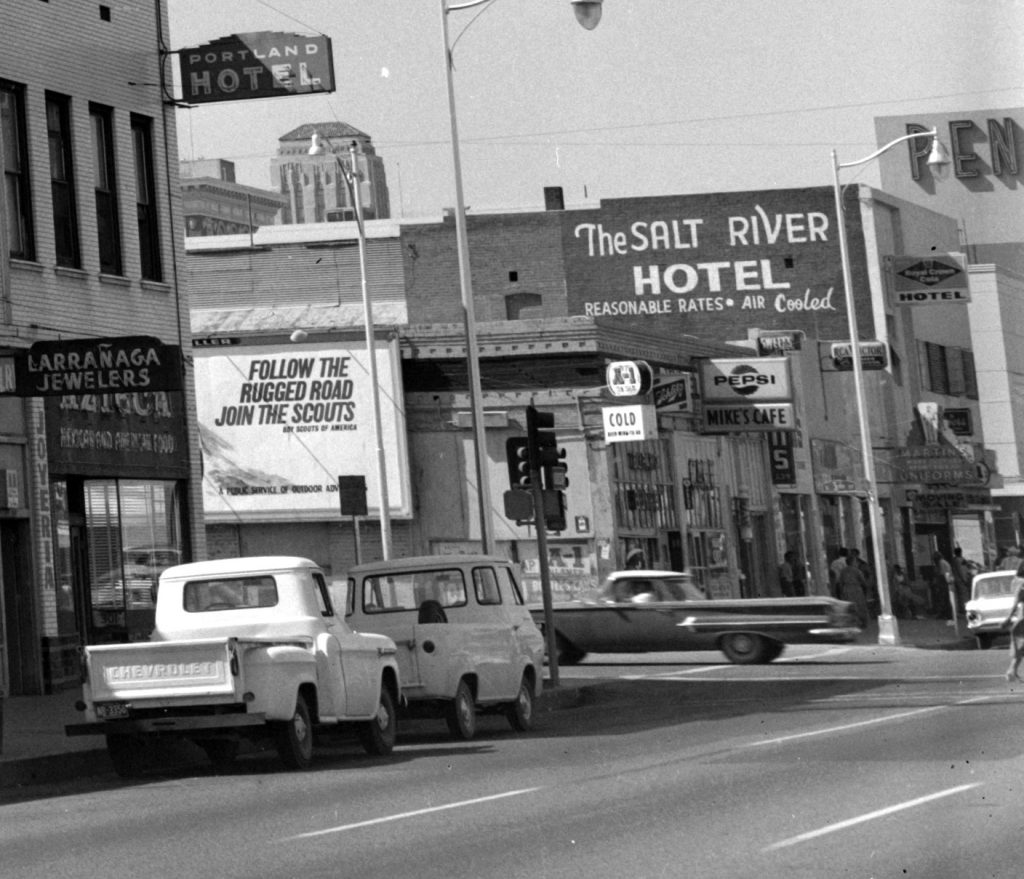
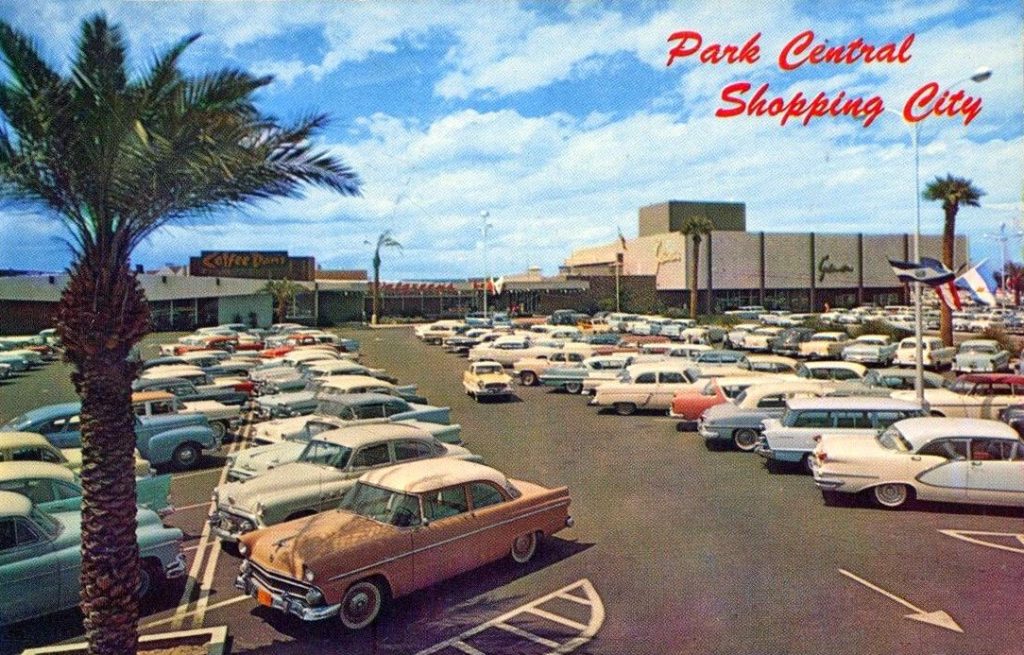
When I write "mall," I don't mean the beautiful 19th century Arcade in downtown Dayton. I mean a shopping complex built around the automobile. Park Central was Phoenix's first, developed by the Burgbacher brothers on the site of the former Central Dairy and opening in 1957. It was anchored by Diamond's, Newberry's and Goldwater's, the latter closing its downtown store two miles south and beginning the end of downtown retail.
Even so, in the early- and mid-1960s, downtown held its own as the state's busiest shopping destination — but the die was cast. Most natives don't even remember when Phoenix was more than a city of malls.
I grew up within bicycle distance of Park Central (had my bike stolen there, too). It was open air (the city was not yet devastated by the heat island), convenient and wildly popular. It anchored Midtown, along with the twin towers across the street, the taller of which sported an outside glass elevator and the shorter being home to the Playboy Club. Old Park Central was semi-urban, contiguous to the city and human-scaled.
It was followed by Biltmore Fashion Square, which until Westcor turned it into another lookalike suburban soul-killer, was also open air, with plenty of shade and in a pleasing scale. Across the street was the open-air Town and Country shopping center (which was not an empty name, for the city around it was still meshed with citrus groves and horse properties). Chris-Town became the first enclosed, air-conditioned mall in 1961 — the property has been a farm owned by the Chris family.
 78
78