Amtrak’s returning to Phoenix

Amtrak’s returning to Phoenix

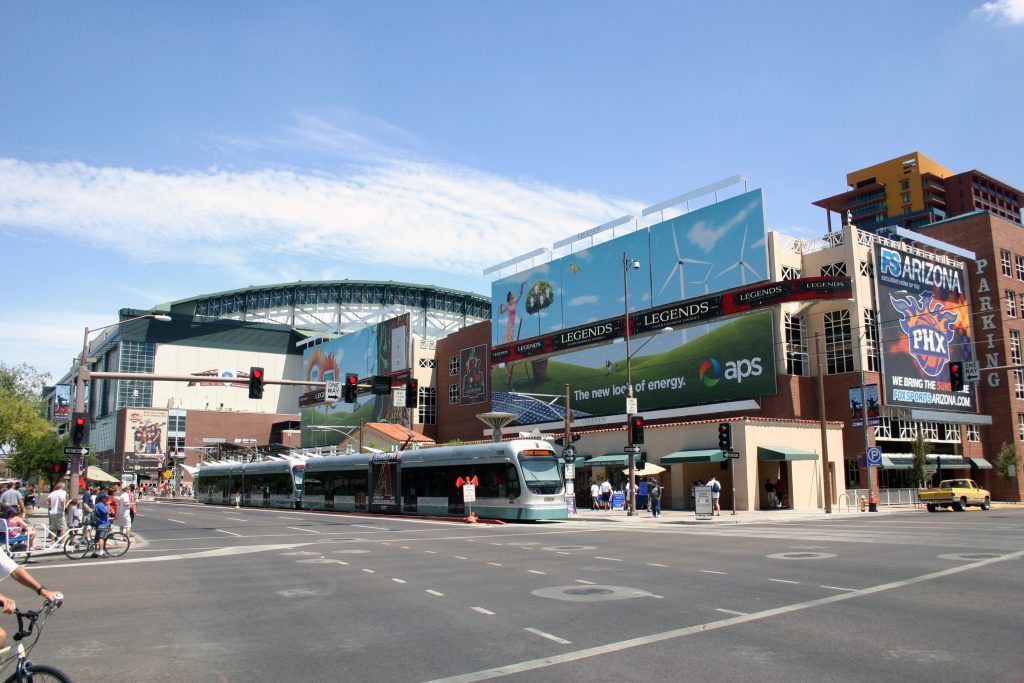
Union Sta EOr so go some headlines and social-media posts I've read. In today's denuded newspaper environment, with thousands of reporters laid off and spreading news deserts, in-depth reporting is hard to find. Anyway, this salutary news was reported by KJZZ, KPHO/KTVK, and other outlets.

As it turns out, Amtrak isn't returning anytime soon. The origin of the stories was a presentation in September to the Rail Passengers Association by an Amtrak official. It proposed establishing new corridors for intercity rail that would potentially reach Phoenix in … 2035. If that's not bad enough, the plan is mostly aspirational. No funding is available for the expansion. That might change under President "Amtrak Joe." But 2035. Really? Another plan in 2010 went nowhere.

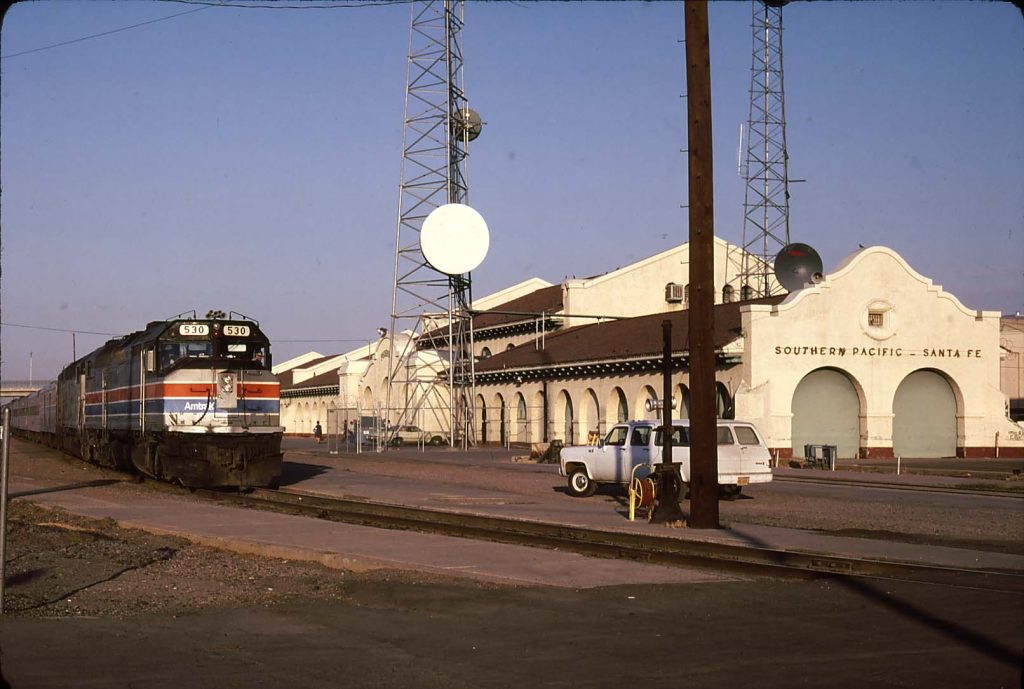
As late as the 1960s, Phoenix Union Station was served by multiple passenger trains of the Southern Pacific and Santa Fe railroads. They gradually died off, the casualty of decades of national transportation policies that subsidized automobiles and airliners while strangling railroads with regulations and high taxes. When the Postal Service ended mail contracts in September 1967, it left Phoenix with only an every-other-day Sunset on the SP Northern Main Line. This continued when Amtrak took over national passenger trains May 1st, 1971 (killing almost 200 trains that still ran).

Deliverance *

Deliverance *

Biden Harris
Whatever else, we had to defeat Donald Trump this year or it was curtains for the republic. And Joe Biden is now President-elect of the United States and Kamala Harris is Vice President-elect. As with climate change and the science of the pandemic, reality doesn't care what Trump and his cult "believe." A Supreme Court trick or other attempt to reverse the results would bring Civil War 2.0. But I don't think that will happen. At least not yet. Come January 20th, our long national nightmare will be over and America will trend back toward normality.

It was closer than it should have been, considering Trump's corruption, tens of thousands of lies, damage to the rule of law, antagonizing allies, and breaking norms. This wasn't Biden vs. Jerry Ford or even George W. Bush. But that was a different Republican Party. The Party of Lincoln is now the Cult of Trump.

The close election was partly the result of the "woke" extreme left. Every night of violence, looting, and arson in blue cities such as Seattle and Portland scared low-information voters in the Midwest and South into voting for Trump as the lesser of two evils. In their minds, a Biden victory would mean defunding the police! Reparations! Open borders! D.C. and Puerto Rico statehood! An immediate end to fossil fuels and confiscation of guns! Implementation of policies to favor BIPOC and LGBTQ-plus instead of equality and fairness and viewing people as individuals. And the drumbeat of America's "systemic racism," ignoring the huge leaps we've made or that every multiracial nation faces these challenges.

Judgment days

Judgment days

171168149.iJHMz1Uh.DonnyTurnsTheCornerW

Carl Muecke illustration


We are heading into an election like no other. So rather than writing an essay on another topic — which few would read because of the voting — or putting up a history gallery…here's a revolving open thread. Older but still relevant links will fall below the jump.

I'll be putting up election stories and links, while you can have the comments section to weigh in. The Front Page will have links to non-election stories. You can follow my Twitter comments @jontalton

Now we're at Friday and it appears "all over but the shouting" — and lawsuits, recounts, and damage Trump might do until January. Biden is President-elect. It's fitting that Philadelphia, especially, propelled Biden over the top. The city where the Constitution was born is where it was saved. Four years ago, I could not have imagined Joe Biden as a world historical figure. But here we are. And I am satisfied. Next week, I'll examine this nail-biter in more detail.

The New York Times: A Traditionalist Who Ran As Himself: "In many ways, he ran as the politician he has always been. And for one extraordinary election, that was enough."

The Washington Post: Kamala Harris, daughter of Jamaican and Indian parents, elected nation's first female vice president: "Black women helped propel Harris and president-elect Joe Biden to victory by elevating turnout in places like Detroit, Milwaukee and Philadelphia. Those women will finally see themselves represented in the White House as Biden and Harris replace President Trump, who started his political career by perpetuating a racist birther lie about President Barack Obama and has a long track record of making misogynistic comments."

The Washington Post: Five Takeaways of the Election: Winners and losers.

The Atlantic: America Won: "If, in 2016, Americans rewarded anger and extremism, in 2020 they handed victory to a man of moderation, one who stands up for progressive ideals without looking down on conservatives, and who believes that it is possible both to be honest about the country’s flaws and to take pride in its strengths. Biden won because he recognized that most Americans have far less appetite for political extremism than the country’s cable-news hosts and social-media celebrities seem to think."

Arizona in play

Arizona in play

1000px-ElectoralCollege2016.svg
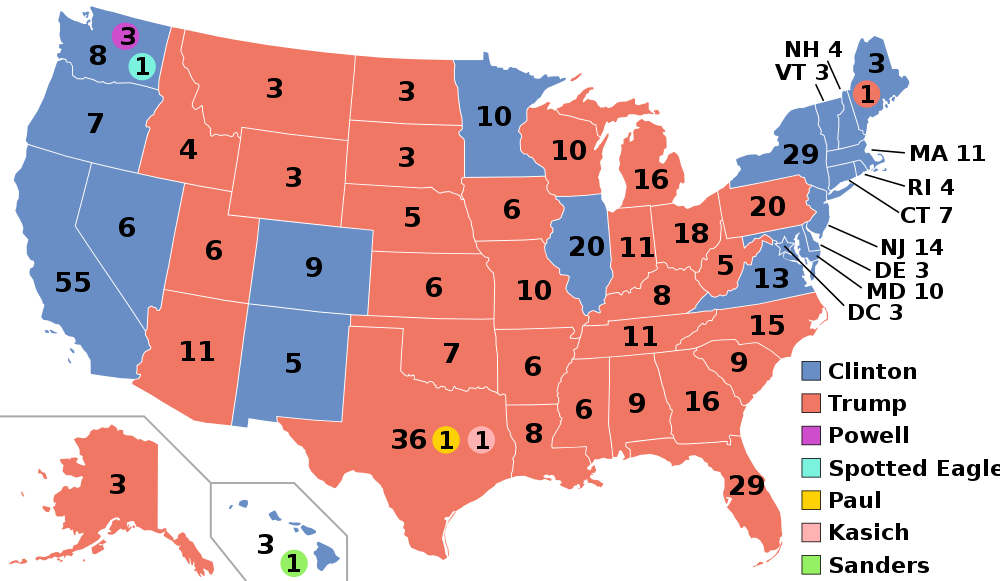
Hope springs eternal. Every election cycle since Bill Clinton carried Arizona in 1996, the narrative has gone like this: The state will change politically as newcomers bring their (more liberal) values. And thanks to Hispanics Arizona is on the cusp (always!) of becoming a purple or even deep blue electorate. The 2016 map above shows how that worked out in the most recent presidential race.

Might it finally happen this year?

Before getting there, a little history. Arizona was a solidly Democratic state until Harry Rosenzweig persuaded Barry Goldwater to run against incumbent Sen. Ernest McFarland in 1952. Political fixer Steve Shadegg switched parties to run Goldwater's campaign — and Barry stunned Mac, the Senate Majority Leader and father of the GI Bill, in a close race.

Shadegg was a talented campaign manager and had a good product: Handsome, authentic, charismatic, sexy, ran with a fast crowd (the real Barry was nothing like he was depicted by the national press). But Mac was dragged down by more than this, more even than changing demographics. The Korean War was still dragging on as a stalemate. Americans who had won World War II were angry over a "police action" that didn't yield victory. Whatever glow Harry Truman attained in recent decades, he was deeply unpopular in 1952 and this hurt Democrats.

Still, it wasn't a sea change. Mac came back to Arizona and became highly successful as governor. And for the next three-plus decades Arizona was a competitive state for both parties. Our longest serving Senator was a Democrat, Carl Hayden.

Clickbait, climate, and more

Clickbait, climate, and more

PhxCityHall
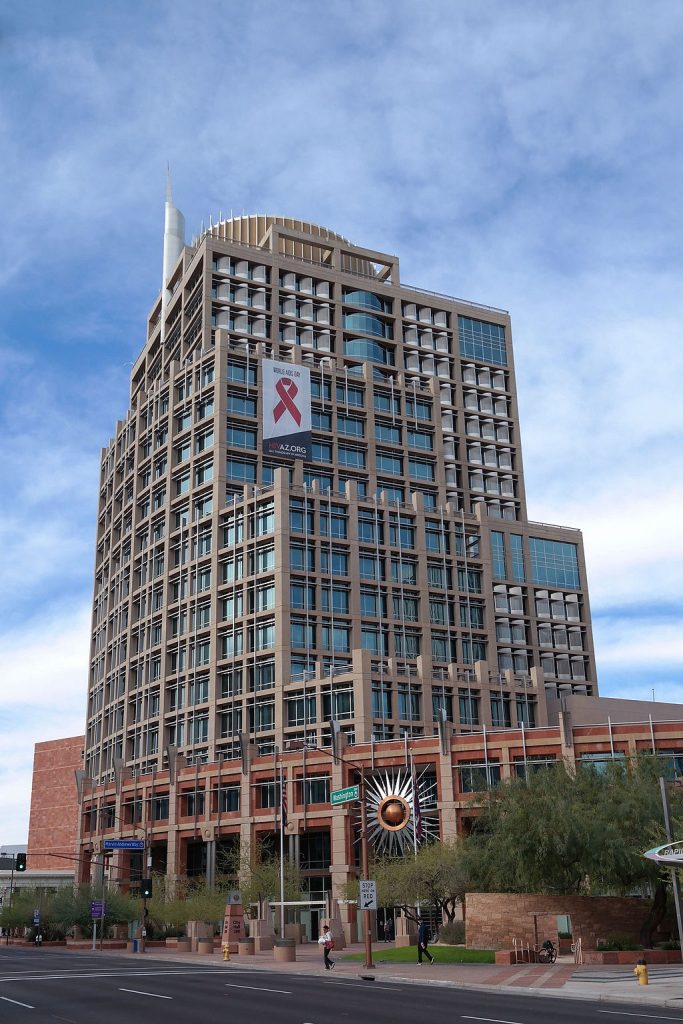
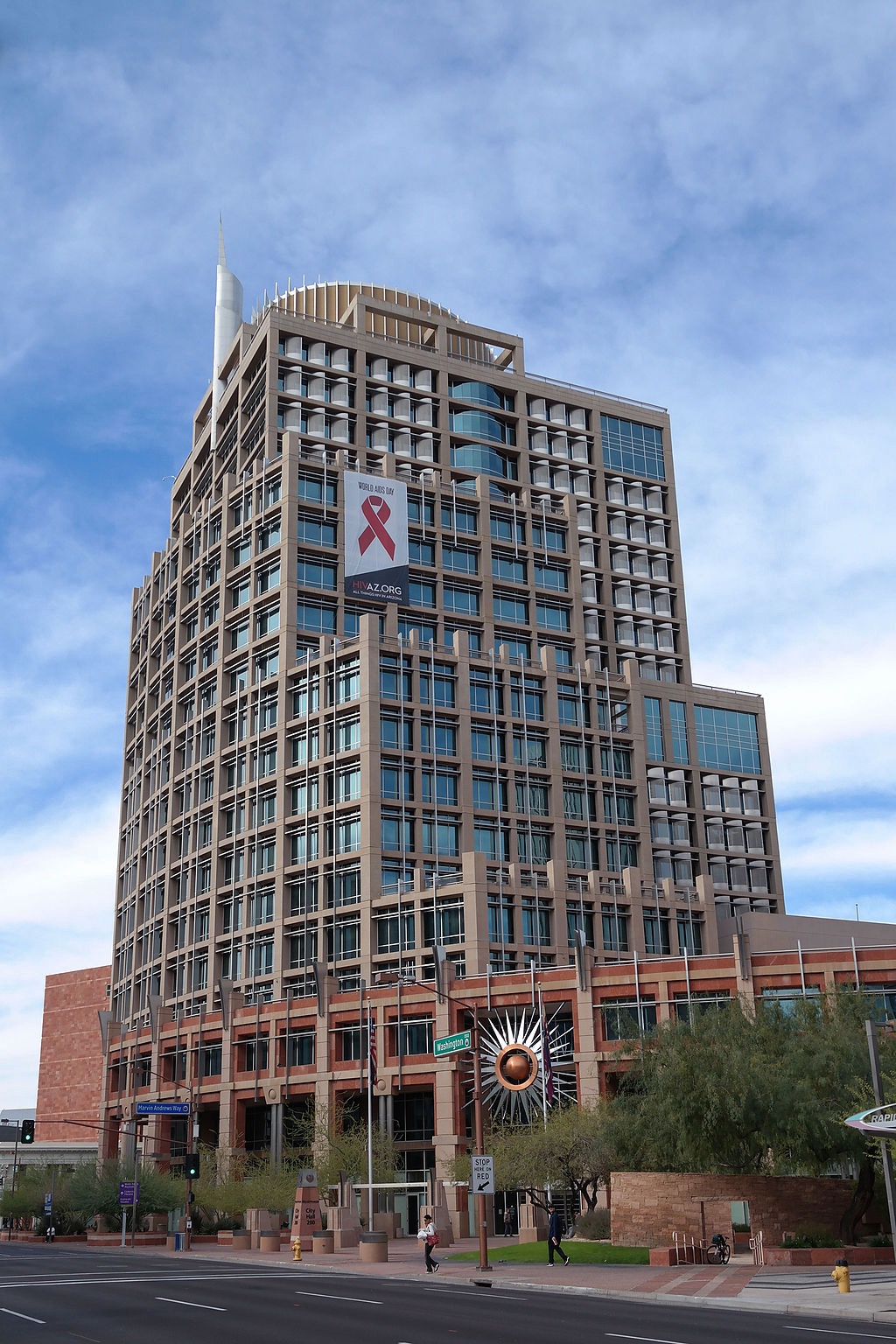
It's no coincidence that I've lately taken refuge in historical photo galleries. This is a dangerous time to write. Yes, my pen is still warmed up in hell, but fearless commentary is risky, as illustrated by the resignation of Bari Weiss from the New York Times and Andrew Sullivan being nudged out by New York Magazine. We're in a time of hysteria and thoughtcrime, made worse by social media.

So, a few nuggets that stay within the guardrails (I have a day job to protect).

Clickbait news releases fill my mailboxes every day. I don't use most because they're based on questionable premises and shoddy data. Unfortunately, too much struggling media do. Hence, the recent story ranking Phoenix as "the best city in the U.S. for working remotely." It was carried unquestioningly by KTAR and the Phoenix Business Journal, among other local outlets.

The tiny thread of this press release came from an outfit called HighSpeedInternet, claiming to rank cities or metro areas. "We looked at things like internet connectivity, cost of living, and commute time savings. We also looked at cities with access to coffee shops, libraries, and coworking space, which gives remote workers a chance to work from different locations – when a pandemic isn’t occurring." Phoenix was No. 1, followed by Atlanta, Kansas City, Raleigh, and Toledo.

Here's why the "survey" doesn't pass the smell test. If you don't have an economy geared to remote work (e.g. Seattle with tens of thousands of highly skilled Amazon, Microsoft, Apple, Google, and Facebook workers), you couldn't possibly get that rank. Res ipsa loquitur.

Arizona ends and odds

Arizona ends and odds

Grand_Canal_looking_towards_Brophy_School_1937
The Arizona Republic continues to tiptoe around the water issue. Most recent is a story about the uneven water availability for cities in metropolitan Phoenix. A day before, the paper ran a piece headlined "Buckeye is the nation's fastest growing city. But it doesn't have the water to keep it up."

Where to begin? First, Buckeye is not a city except on legalistic paper. It is a far-flung collection of real-estate ventures ("master-planned communities") connected by wide highways. Buckeye has an astounding 393 square miles of area for 74,000 people. As James Howard Kunstler puts it, "the matrix of single-family home subdivisions, arterial highways and freeways, chain stores, junk food dispensaries, and the ubiquitous wilderness of free parking — the last of these implying just one insidious side-effect of this template for living: mandatory motoring."

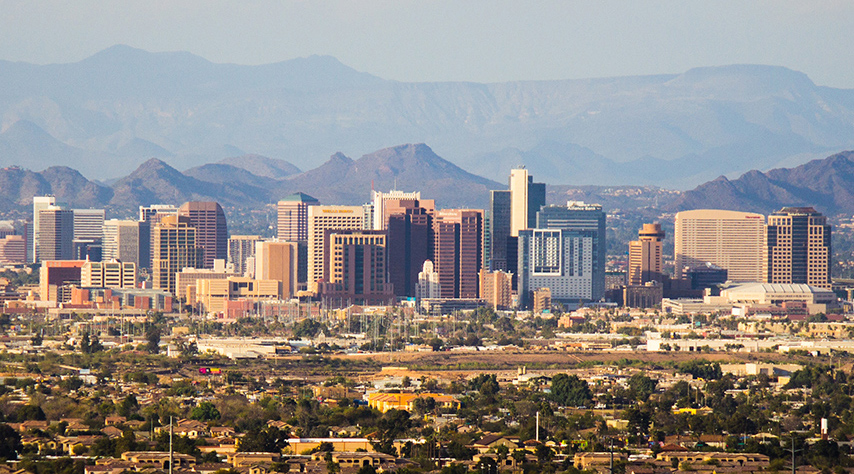
By contrast, the city of Phoenix consists of 519 square miles and 1.7 million people — that's a city. Buckeye, once tiny stop on the Southern Pacific Railroad was never meant to be a "city."

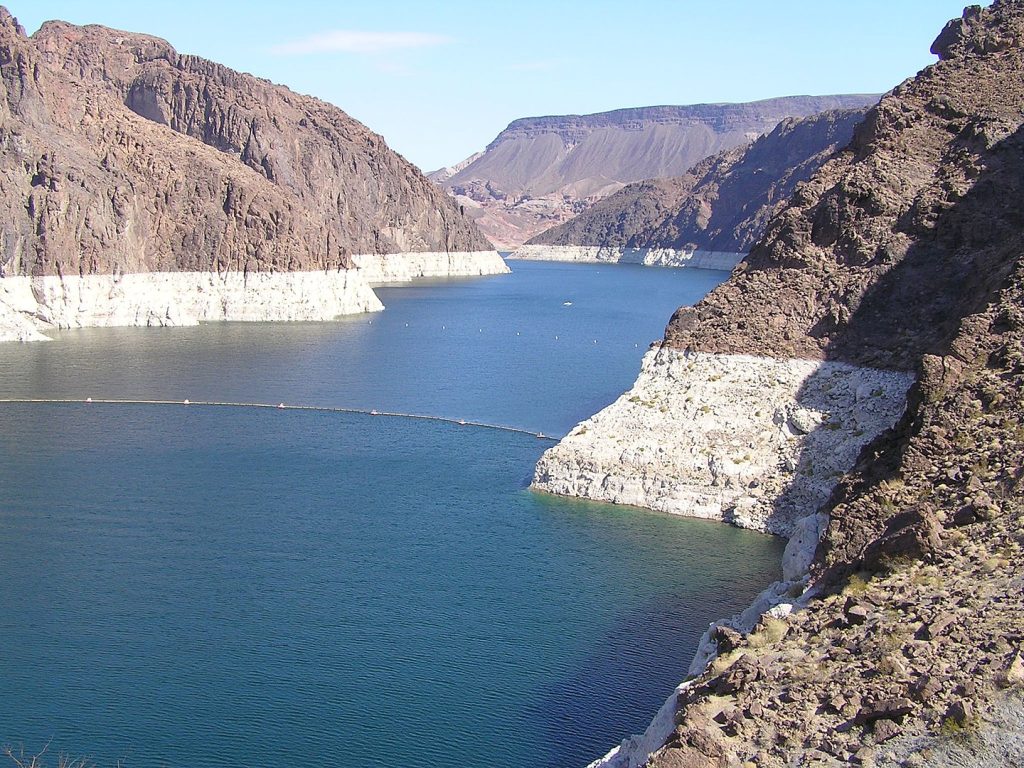
But the big enchilada is that Arizona doesn't have the water to continue unlimited sprawl. Who will tell the people? Who will stop the Real-Estate Industrial Complex?

• Phoenix opened the "Grand Canalscape" trail along 12 miles of the Grand Canal from Interstate 17 to Tempe. Mayor Kate Gallego said, “People are surprised when I tell them that Phoenix has more canal miles than Venice or Amsterdam. Today we are integrating the canals into our communities to improve neighborhood access, add new public art spaces and contribute to a healthier Phoenix by introducing them as a recreational amenity."

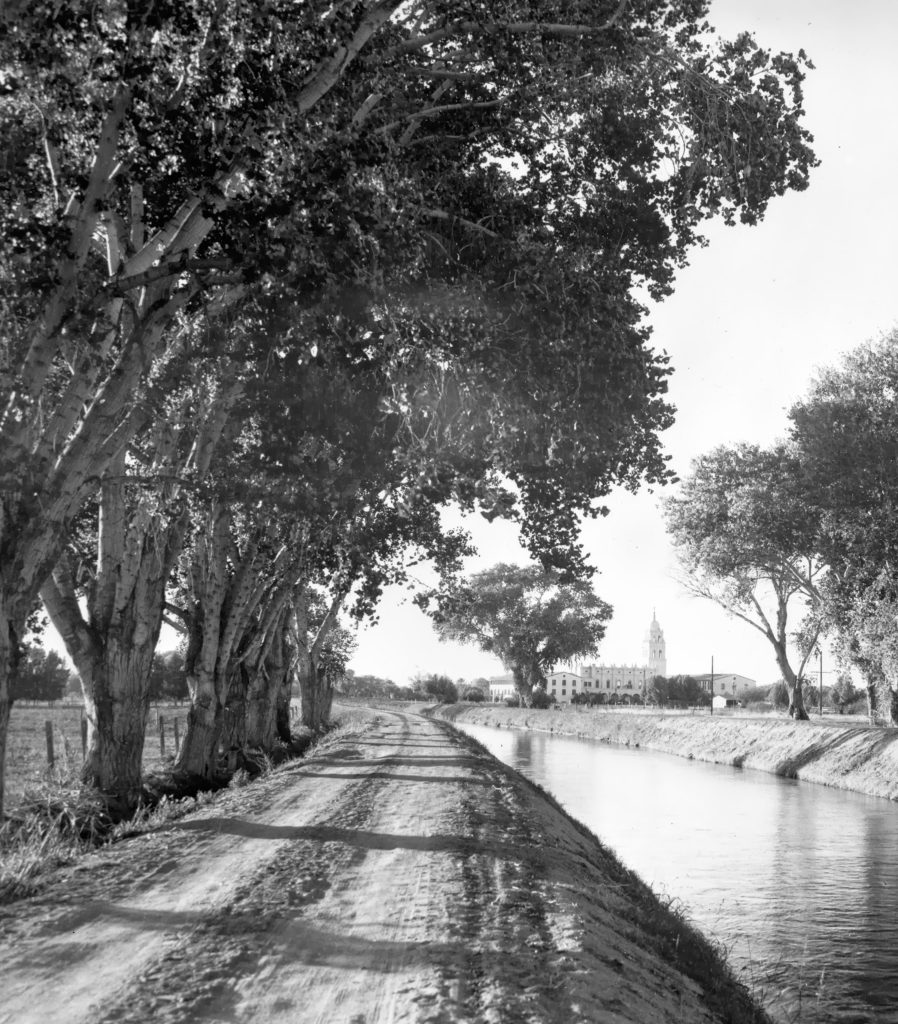
The Grand Canal, one of the original legacies of the Hohokam, once looked like the photo above. The new "safe, convenient route for bicyclists and pedestrians" is a sun-blasted emptiness. Phoenicians don't even know what they lost. Aside from road-widening, the ministrations of the Salt River Project is the biggest killer of Phoenix's once-abundant canopy of shade trees. And more sprawl is not worth the destruction of even one of those trees, much less tens of thousands. In the meantime, enjoy your skin cancer and heat exhaustion. It's heartbreaking to imagine a shaded canal, even in stretches. But, no.

The road ahead

The road ahead

Road_ahead
Oh, the temptation to put up another photo gallery of old Phoenix and let the traffic soar. But duty obliges me to put my shoulder to the task of commenting on our moment.

Forget a Democratic frontrunner. It's too early. I also know that some of you fervently want Bernie Sanders to win the nomination. Were the stakes for the republic and the planet not so enormous, I'd like to see it. When he got creamed, you would still believe — "He is the one!" — and make bitter excuses. But at least the zombie lies about how he wuz robbed in 2016 and would have triumphed if not for the eeevil DNC could finally expire.

America is not Seattle. Sanders can't win a general election. The angry shtick he honed on the Thom Hartmann radio program won't win a single swing-state vote that Hillary Clinton didn't carry and will alienate many that she did. He's not even a member of the Democratic Party and elides over the need for commanding Democratic majorities in the House and Senate to enact his sweeping agenda.

I generally agree with Sanders on many points. But he's not capable of winning. The American electorate is not me.

HRC lost the Electoral College in 2016 because of fewer than 80,000 votes in three Midwestern states. She won the popular vote by 3 million. And all this was in spite of Kremlin meddling, journalistic malpractice, vote suppression, Jill Stein, the Susan Sarandon cohort, and tepid support toward the end of the contest by Sanders. So few votes sealed our fate.

Phoenix in the ‘teens’

Phoenix in the ‘teens’

Phoenix circa 2010s
In 2010, Phoenix and Arizona were stuck in the worst (by most measures) bust since the Great Depression. Unemployment peaked at 10.9% in January statewide and 10.2% in metro Phoenix. Single-family housing starts in the metro area plunged from a monthly peak of 6,000 in 2004 to 854. Construction jobs fell from 183,000 in June 2006 to 81,000 in the summer of 2010. Phoenix was a national epicenter of the housing crash.

It was an eerie time. Freeways that had been clogged with tradesmen's pickup trucks were noticeably empty.

Now, nearly a decade later, the economy has recovered. Metro Phoenix joblessness was 4.1% in October, higher than the 3.6% nationally but still a marked improvement. Building permits clawed out of the 2009 trough but are still at levels of the early 1990s.

Population — the holy of holies worshipped by the local-yokel boosters — bounced back. After falling from 2008 to 2010, it rose by 653,000 by 2018 in the metro area. A much ballyhooed snapshot had the city itself the fastest-growing in the United States from 2017 to 2018. But the percentage rate of change looks to be slower this decade than the 2000s or the record 1990s.

True, the decade doesn't officially end until a year from now. But the "twenties" begin in the popular imagination this New Year's. So let's take stock of the "teens":

‘Solutions’ annotated

‘Solutions’ annotated

1440px-Colorado_River_above_Hoover_Dam_-_panoramio
From the Arizona Republic on Nov. 17th. My annotations are in black.

Headline: ‘We need to act fast’: Statewide forum focuses on climate solutions for Arizona. Journalists are pushed to seek solutions to largely insoluble problems. Steve Jobs was more on the mark when he critiqued Fox News to Rupert Murdoch: "The axis today is not liberal and conservative, the axis is constructive-destructive, and you’ve cast your lot with the destructive people. Fox has become an incredibly destructive force in our society."

Lede: With climate change cranking up the heat and intensifying droughts, more than 400 people from across Arizona gathered Friday and Saturday to brainstorm solutions for reducing planet-warming pollution and preparing for a hotter, drier future. What people? Doug Ducey? Developers? Republicans who have held control over the Legislature for decades? Elliott Pollack? Grady Gammage. No…

Second graf: Among them were young activists who see climate change as the defining issue for their generation. The time to act is now, they said. You bet. But what power do they have? Do they vote? Did they drive to the conference, adding to climate-causing emissions (rhetorical question)?

Next grafs: “This is rapid change and we should do something about it before it’s too late,” said Alicia Rose Clouser, a 13-year-old eighth-grade student from Sinagua Middle School in Flagstaff and a member of the Navajo Nation.

“My people will be suffering for generations on if we don’t do something,” she said. Mandatory inclusion of a woman and "marginalized person" but otherwise empty information calories.

Next: The two-day conference at Northern Arizona University in Flagstaff brought together the students and teenage activists along with academics, health officials, tribal representatives, environmentalists, representatives of farming businesses, urban planners and city officials, and people from the community who said they wanted to be part of the discussion. Now we finally get the "who" — none of whom have the power to enact policies that would address climate change.

The plot against light rail

The plot against light rail

LRT downtownThis is the reality of Phoenix's light-rail system: nearly 16 million passengers carried in the most recent fiscal year; expansion of the original 20-mile starter line to 26 miles; an essential link between ASU's Tempe and downtown campuses; 30 percent of riders use the train for work; large numbers use it to reach sporting events; $11 billion in private and public investment has occurred along the line since 2008.

Light rail has also proved essential in giving Phoenix, Tempe, and Mesa a fighting chance in an era where talented young people and high-quality companies want to be in city cores served by rail transit.

None — not one — of the hysterical predictions of opponents to light rail came true.

No wonder that voters backed light rail in three elections, in 2000, 2004, and 2015. We built it.

But destructive forces never sleep, never stop. Backed by dark money — including the Koch brothers and their nationwide war on transit — here comes Proposition 105 in the Aug. 27th special election. As is often the case, it's presented as an affirmative to deliberately confuse voters. "Vote yes!" hoping some will think they are supporting rail transit by marking that line. Signs say, "Yes on 105. Fix our roads" — but this has nothing to do with fixing roads; that's a different budget and roads are being fixed.

Don't fall for it. Vote no on Prop. 105 and its devilish companion, Prop. 106.

Mayor Gallego

Mayor Gallego

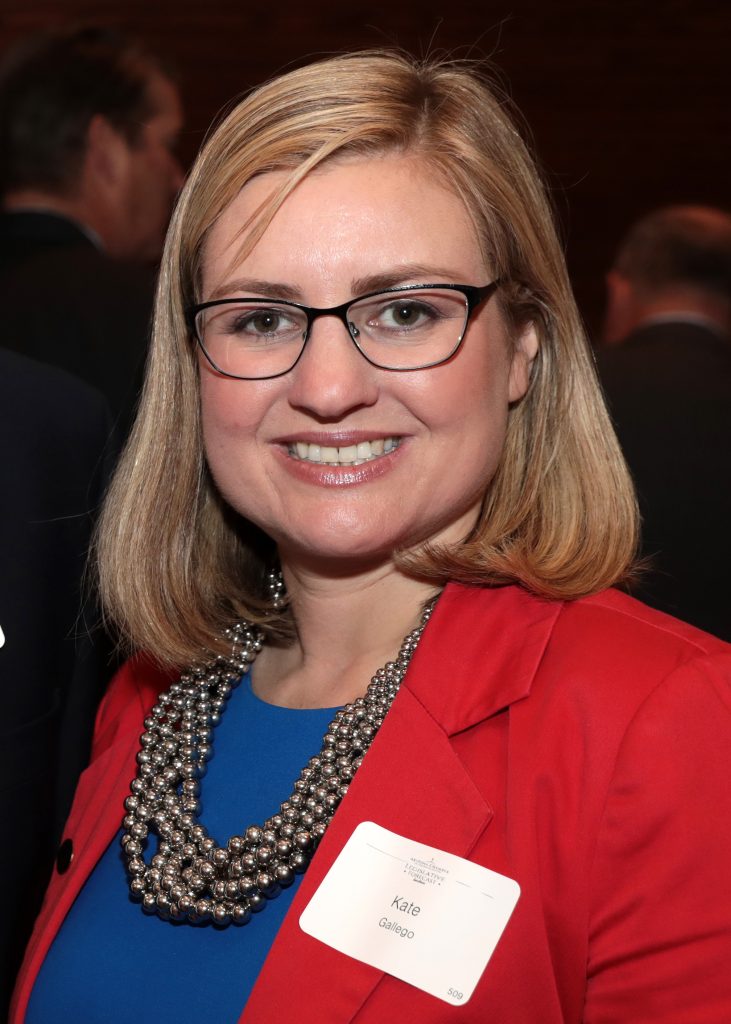
Kate_Gallego.Kate Gallego is the first mayor of Phoenix in 20 years who I don't know personally. That has disadvantages and advantages. The downside: I haven't spent hours over coffee or in city hall getting tips, sharing gossip, and taking the individual's measure. On the other hand, she's pretty much a blank slate to me, which allows me to see her totally from the perspective of an outsider.

All I know is what I read in the newspapers, and from Phoenix insiders, to paraphrase Will Rogers. She's not the first woman mayor of Phoenix — that distinction goes to Margaret Hance (and Thelda Williams was interim mayor). She's young — 37. She's smart, because she went to Harvard and everyone who's been touched by crimson is smart, or so we're told. On the Council, she supported transit but, wrongly to my mind, opposed upgrades to keep the Phoenix Suns downtown. Gallago is a relative newcomer. Otherwise, she's an unknown commodity.

The last time Phoenix had such a young mayor was the four years of Paul Johnson, who was in his early thirties when he took office in 1990. It was an unhappy tenure. Phoenix was hit with its worst recession since the 1930s and most projects from a big bond issue, which had been passed in the Goddard years, had to be postponed or downsized (one being a new City Hall). How much of this had to do with Johnson's youth is debatable — he was dealt a bad hand and to many did the best he could — but his relative lack of experience hurt him. To be extra fair, Terry Goddard was an impossible act to follow.

The next Phoenix mayor

The next Phoenix mayor

Phoenix_City_Hall (1)

I know that I should have a firm conviction about the mayoral election, but I don't. We can ignore the Republican and Libertarian candidates — their dogmas are totally unsuited to the needs of the nation's fifth-largest city. That leaves Kate Gallego and Daniel Valenzuela.

Both are supported by people I respect. According to the Arizona Republic, Gallego's backers include former U.S. representatives Harry Mitchell, Sam Coppersmith, Ron Barber and Anne Kirkpatrick, as well as former state Attorney General and Phoenix Mayor Terry Goddard. Valenzuela's big names include retired U.S. Rep. Ed Pastor, former Phoenix mayors Paul Johnson, Skip Rimsza and Phil Gordon, councilwomen Laura Pastor and Debra Stark, and business leaders Jerry Colangelo and Sharon Harper.

That makes a choice tough. Gallego may get a tilt in her favor because she represented central Phoenix on City Council. But I'd be interested in what commenters say.

Neither Gallego nor Valenzuela were on the transformative City Council of the 2000s that helped land T-Gen and supported light rail (WBIYB), the downtown ASU campus, Phoenix Convention Center, Sheraton and other civic goods that led to today's downtown revival. 

Carolyn Warner, an appreciation

Carolyn Warner, an appreciation

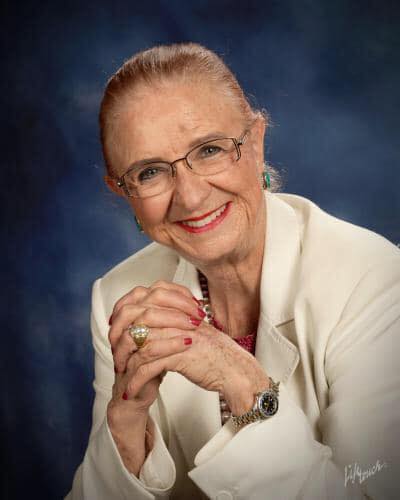
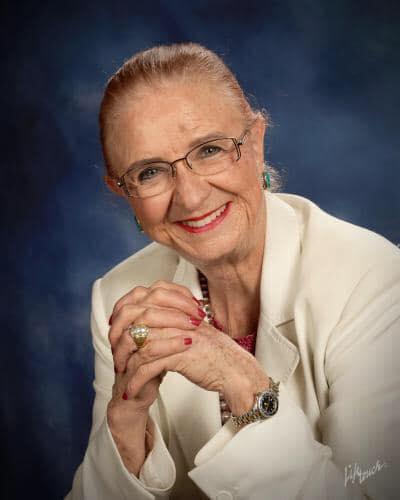
Carolyn WarnerI still subscribe unfashionably to the Great Man and Great Woman school of history. But history also carries cruel contingencies. Carolyn Warner, who passed away Monday night at 88 was a towering figure who might have saved Arizona from the Kookocracy, saved Arizona from itself.

Instead, Democrats split the gubernatorial vote in 1986, giving us Evan Mecham, then Fife Symington, and, with the Big Sort bringing ever more right-wingers and the old stewards passing, the die was cast.

Along with her ex-husband Ron, Warner ran the furniture and interior design store that bore their name at 28th Street and Osborn. It was for years the fanciest furniture store in town. A native of Ardmore, Okla., she came to Arizona in 1953.

As Superintendent of Public Instruction for 12 years, Warner oversaw the last period of great public schools in Arizona, long before the shameful charter-school racket. Although a Democrat, she worked well with pragmatic Republicans such as Burton Barr, in an era of both bipartisan compromise and competition. 

Brains, trains, and automobiles

Brains, trains, and automobiles

Convention_Center_METRO_South_Station_-_2011-07-11_-_North_West
The biggest local story of the week is the unanimous (!) decision by the Rump City Council to raid funding intended for light-rail extension to Paradise Valley Mall and use it for street maintenance. As disheartening is that, as far as I know, neither major candidate for mayor has spoken out against it.

This comes soon after the Council (6-2) bucked an aggressive astroturf campaign by the Koch interests to kill that south Phoenix light-rail line (yes, the Wichita billionaires are deeply involved in destroying local transit). One step up and one step back. What's going on? A few observations:

The Council has changed from the consensus of the 2000s that brought some of the most constructive measures in decades. These include light rail (WBIYB), the downtown ASU campus, T-Gen and the downtown biomedical campus, and the new convention center. In recent years, the Council is less visionary and more divided — a situation made more difficult by the departure of Mayor Greg Stanton, and mayoral candidates Kate Gallego and Daniel Valenzuela.

Phoenix's size and means are wildly unbalanced. The Arizona Republic reported that city staff estimated that "4,085 of the city's 4,863 miles of streets will fall below a ‘good’ quality level in the next five years and require maintenance. Currently, 3,227 miles are already in fair, poor, or very poor condition. Bringing all of the streets up to a 'good' level in five years would cost $1.6 billion that the city does not have."