Democratic magical thinking

Democratic magical thinking

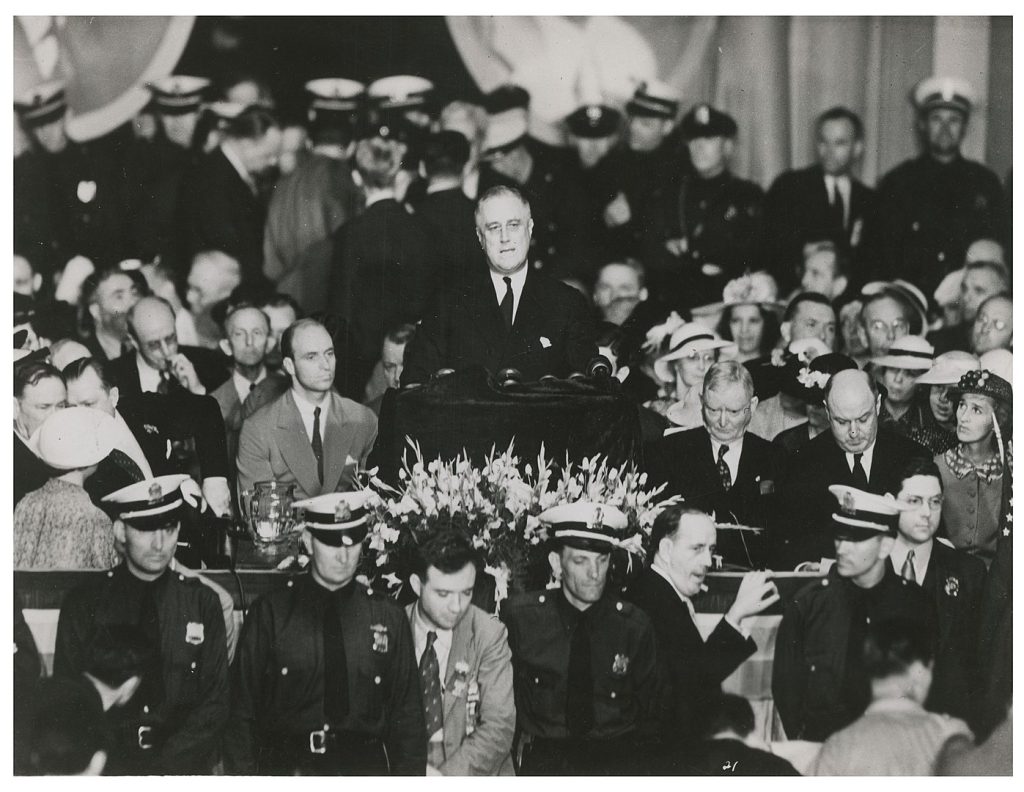
1397px-FDR_accepts_the_nomination_for_the_Presidency_in_speech_at_Franklin_Field _Philadelphia _PA._June_27 _1936
James Kwak has a new book that captures the zeitgeist of a Democratic Party that is trying to recreate a left-wing version of what the Republicans did in making itself an exclusively right-wing party. In Taking Back Our Party: Restoring the Democratic Legacy, he lays out our situation of inequality, business monopsonies, and complicit "third way" Democrats pioneered by Bill Clinton. Even Barack Obama bought a $12 million home on Martha's Vineyard.

Kwak writes:

And so, because this is a book about how to make things better, it’s a book about Democrats. It’s about how, in the wake of the Reagan Revolution, we latched onto the idea that a more modern, more sophisticated, more business-friendly Democratic Party could successfully compete for the White House. It’s about how this transformation, while paying off in victories in four of the past seven presidential elections (six if you go by the popular vote), has left us impotent in the face of growing inequality, even when in power, and incapable of making the case that we can help families struggling against economic insecurity and misfortune. And it’s about how a new Democratic Party, dedicated to a progressive economic agenda, can take up the challenge of ensuring a decent life for every American.

Bernie Sanders and Elizabeth Warren are on board. So are numerous Democratic activists, AOC and "the squad." I'm sympathetic to many of their positions, but I have some misgivings.

Phoenix in the ‘teens’

Phoenix in the ‘teens’

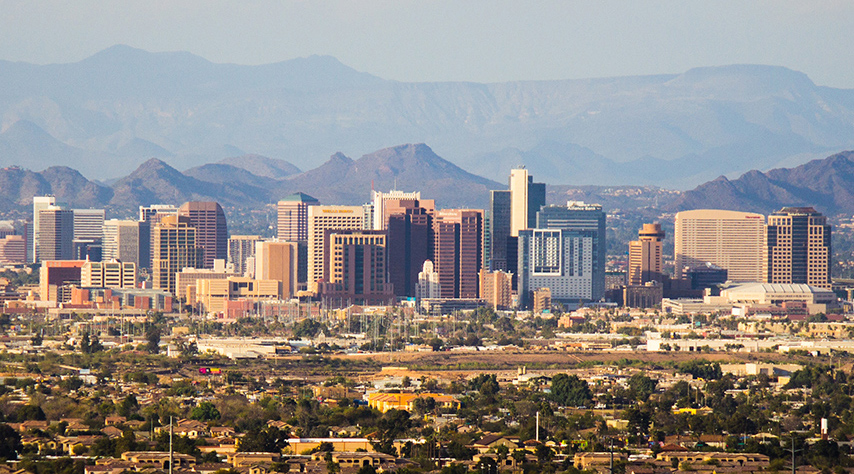
Phoenix circa 2010s
In 2010, Phoenix and Arizona were stuck in the worst (by most measures) bust since the Great Depression. Unemployment peaked at 10.9% in January statewide and 10.2% in metro Phoenix. Single-family housing starts in the metro area plunged from a monthly peak of 6,000 in 2004 to 854. Construction jobs fell from 183,000 in June 2006 to 81,000 in the summer of 2010. Phoenix was a national epicenter of the housing crash.

It was an eerie time. Freeways that had been clogged with tradesmen's pickup trucks were noticeably empty.

Now, nearly a decade later, the economy has recovered. Metro Phoenix joblessness was 4.1% in October, higher than the 3.6% nationally but still a marked improvement. Building permits clawed out of the 2009 trough but are still at levels of the early 1990s.

Population — the holy of holies worshipped by the local-yokel boosters — bounced back. After falling from 2008 to 2010, it rose by 653,000 by 2018 in the metro area. A much ballyhooed snapshot had the city itself the fastest-growing in the United States from 2017 to 2018. But the percentage rate of change looks to be slower this decade than the 2000s or the record 1990s.

True, the decade doesn't officially end until a year from now. But the "twenties" begin in the popular imagination this New Year's. So let's take stock of the "teens":

Spreading tech innovation

Spreading tech innovation

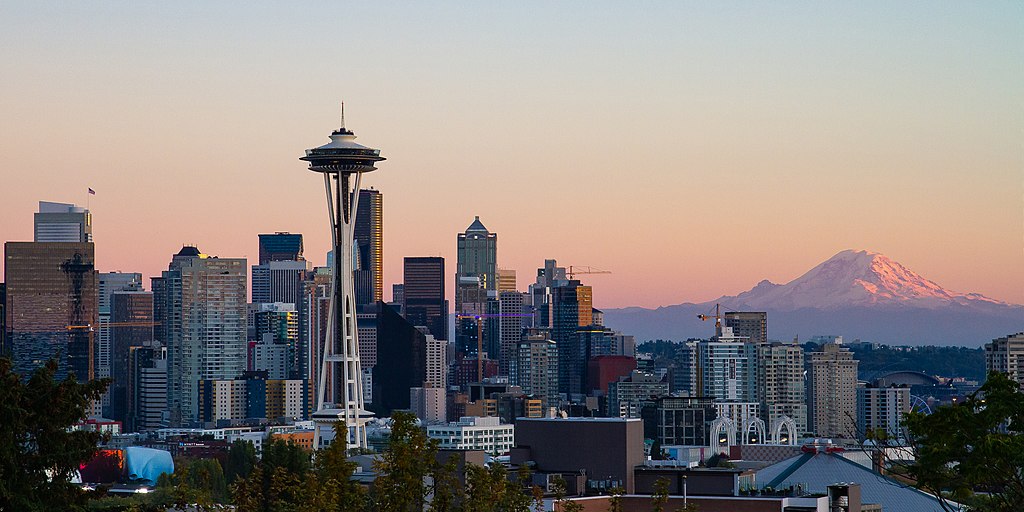
1024px-Seattle_Kerry_Park_Skyline
A new report from the Brookings Institution highlights how "Superstar Cities" — Boston, Seattle, San Diego, San Francisco and Silicon Valley — captured nine out of 10 jobs at the headwaters of advanced industries from 2005 to 2017. (See the coverage here and here). And it offers an ambitious plan to spread tech centers to "loser cities" in what is mostly considered flyover country.

An interesting footnote: One of the authors of the Brookings study is my friend Mark Muro, who worked at the Morrison Institute at ASU in the early 2000s.

One can't argue with this reality, particularly set against rising inequality and four decades of mergers that took away the economic crown jewels of hundreds of American cities. But some context is also necessary. In addition to these headwinds, many of the "loser cities" made their own fate.

And I'm not talking about Detroit or Cleveland. A better example can be found in Phoenix. Despite being the nation's fifth-largest city and 13th largest metropolitan area, Phoenix punches well below its weight. And no outside force has done this to Phoenix as much as Phoenix has done it to itself.

When Payson was small

When Payson was small

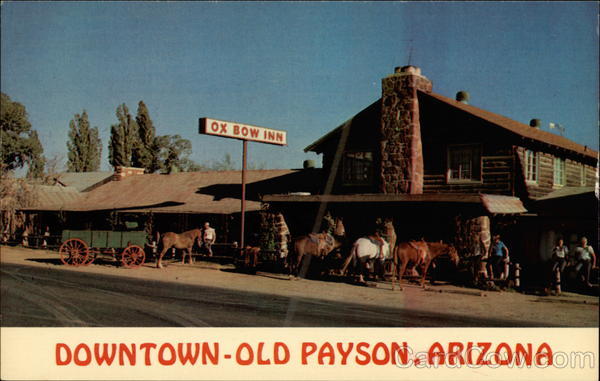
OxBow Inn
In 1967, my mother arranged for me, my friend Billy Warren, and my grandmother to spend much of the summer in Payson. It had not been connected to the outside world by a paved highway for even a decade. The population was around 1,500 and it was clustered around a real tiny town, the enchanting massif of the Mogollon Rim towering to the north above the forest. I was 10.

We lived in a rented house on what's now called Frontier Street, a few blocks west of Arizona 87 (the Beeline Highway). Like almost everything in town, it was built of wood. An early look around was a disappointment to this callow city kid: No trains, no chain restaurants, no easy biking to parks or soda fountains. I don't recall having television, either. Payson revolved around the two-lane highway, with logging trucks rumbling by and everything locally owned. At night, the darkness was primeval under the vault of billions of stars.

The fear of boredom didn't last more than 24 hours at most. The volunteer fire department had a new station a block south, a place to hang around, admire the apparatus, and talk to the firefighters. I got a library card and quickly became a darling of the librarians by being a bibliophile and checking out books every few days.

But the big show was outside.

Both Billy and I were in Scouts — Camp Geronimo was north of Payson — so my grandmother had no concerns about us spending most of the day wandering around the forest. And we did, armed with canteens, pocket knives and compass. She trusted our good sense and caution. In those days, child abductions were rare. Today, Arizona has 909 open cases of missing persons, many children.

Into the wild

Into the wild

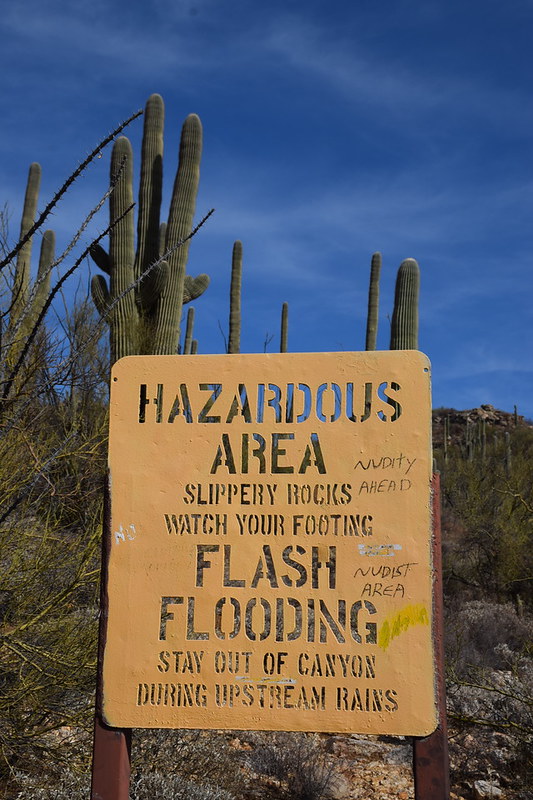
28026687999_a9c7db585e_cWhen I was about three, my family was driving from Tucson to Phoenix in those pre-Interstate times. I have three vivid memories. The first is the restaurant where we ate breakfast; it had ancient double doors with windows behind ancient double screens. The second is the fierce rainstorm that cut visibility severely, almost the desert version of a whiteout. We headed out of Coolidge, my mother behind the wheel, me between her and my grandmother. No other cars were on the two-lane road.

My third memory is of a vast torrent of fast-moving latte-colored water that suddenly appeared in front of us.

I'm sure it wasn't as wide or as biblical as I recall it. I had never seen water in a river before! But what was undeniable is that the bridge had washed out — perhaps at the Gila River — and only my mother's caution, slow speed, and fighter-pilot reflexes prevented our deaths.

As I write now, searchers are still trying to find six-year-old Willa Rawlings, lost when her father's "military-like truck" was swept away in flooding Tonto Creek. The bodies of her brother and cousin, both five, were found Saturday. Only Willa's shoe has been recovered. Her parents escaped.

The Republic's Laurie Roberts hit the right notes of sympathy and bafflement — that the driver would try to cross the flooded creek, and that the Legislature in its low-tax religion has failed to build a bridge. Yet I suspect little will change. Especially on the common-sense front, for bridges can be overwhelmed as anyone knows who remembers Scottsdale's comic attempts to span Indian Bend Wash in the 1970s.

‘Solutions’ annotated

‘Solutions’ annotated

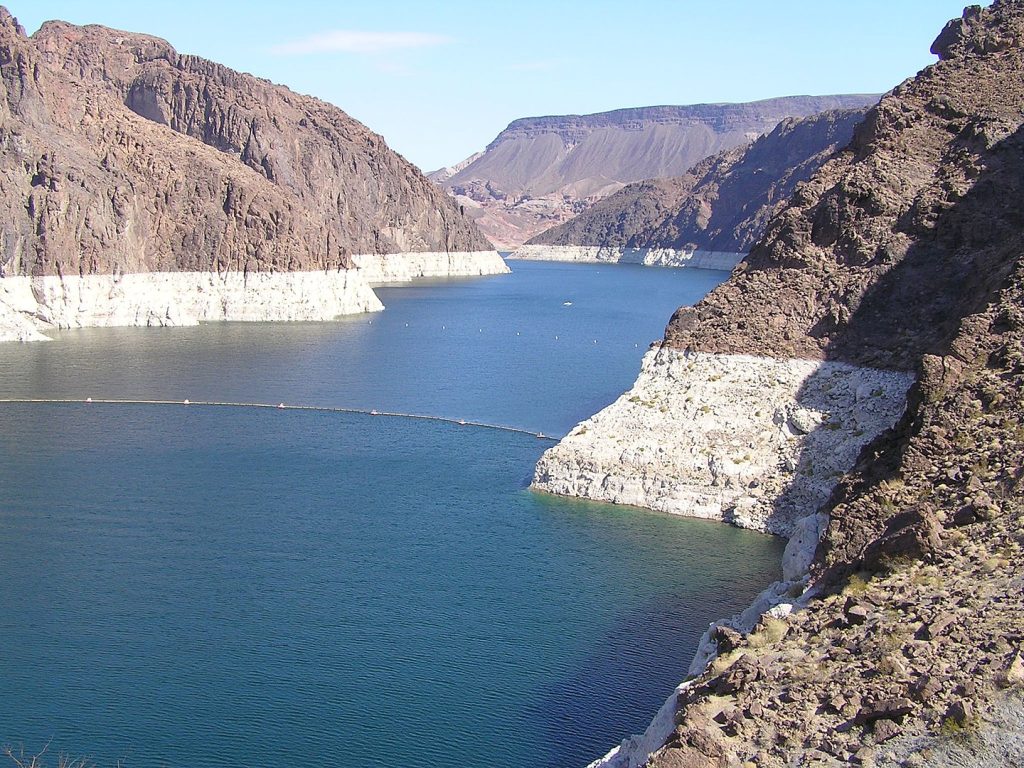
1440px-Colorado_River_above_Hoover_Dam_-_panoramio
From the Arizona Republic on Nov. 17th. My annotations are in black.

Headline: ‘We need to act fast’: Statewide forum focuses on climate solutions for Arizona. Journalists are pushed to seek solutions to largely insoluble problems. Steve Jobs was more on the mark when he critiqued Fox News to Rupert Murdoch: "The axis today is not liberal and conservative, the axis is constructive-destructive, and you’ve cast your lot with the destructive people. Fox has become an incredibly destructive force in our society."

Lede: With climate change cranking up the heat and intensifying droughts, more than 400 people from across Arizona gathered Friday and Saturday to brainstorm solutions for reducing planet-warming pollution and preparing for a hotter, drier future. What people? Doug Ducey? Developers? Republicans who have held control over the Legislature for decades? Elliott Pollack? Grady Gammage. No…

Second graf: Among them were young activists who see climate change as the defining issue for their generation. The time to act is now, they said. You bet. But what power do they have? Do they vote? Did they drive to the conference, adding to climate-causing emissions (rhetorical question)?

Next grafs: “This is rapid change and we should do something about it before it’s too late,” said Alicia Rose Clouser, a 13-year-old eighth-grade student from Sinagua Middle School in Flagstaff and a member of the Navajo Nation.

“My people will be suffering for generations on if we don’t do something,” she said. Mandatory inclusion of a woman and "marginalized person" but otherwise empty information calories.

Next: The two-day conference at Northern Arizona University in Flagstaff brought together the students and teenage activists along with academics, health officials, tribal representatives, environmentalists, representatives of farming businesses, urban planners and city officials, and people from the community who said they wanted to be part of the discussion. Now we finally get the "who" — none of whom have the power to enact policies that would address climate change.

‘OK Boomer’

‘OK Boomer’

IMG_3814

Carl Muecke illustration.

According to the New York Times, "OK Boomer" is the Gen Z/millennial declaration of war on the baby boom generation. Shannon O'Connor, who is selling T-shirts and hoodies with the phrase, said:

“The older generations grew up with a certain mind-set, and we have a different perspective. A lot of them don’t believe in climate change or don’t believe people can get jobs with dyed hair, and a lot of them are stubborn in that view." The younger generation is mad as hell and they're not going to take it anymore.

One problem, of course, is which boomers? The older cohort of this large and diverse generation got drugs, sex, rock'n' roll, and pensions. My cohort got the AIDS and STD scares, disco, and (if they're lucky enough) inadequate 401(k)s.

Is "OK Boomer" President George W. Bush or President Barack Obama (born 1961)? Such luminaries as Kareem Abdul-Jabbar, Sir Elton John, Michael Jordan, UA climate scientist Diana Liverman, chess grandmaster and Trump nemesis Garry Kasparov, Stephen King (who also relentlessly trolls Trump on Twitter), Elizabeth Warren, and yes, Hillary Clinton are all boomers.

I was a loner and never much identified with my g-g-g-generation. But I hate today's "woke" ideology of forcing people into groups that can be made into neat packages of victims or villains. That includes generations. No room for individuals in that ideology.

St. Luke’s memories

St. Luke’s memories

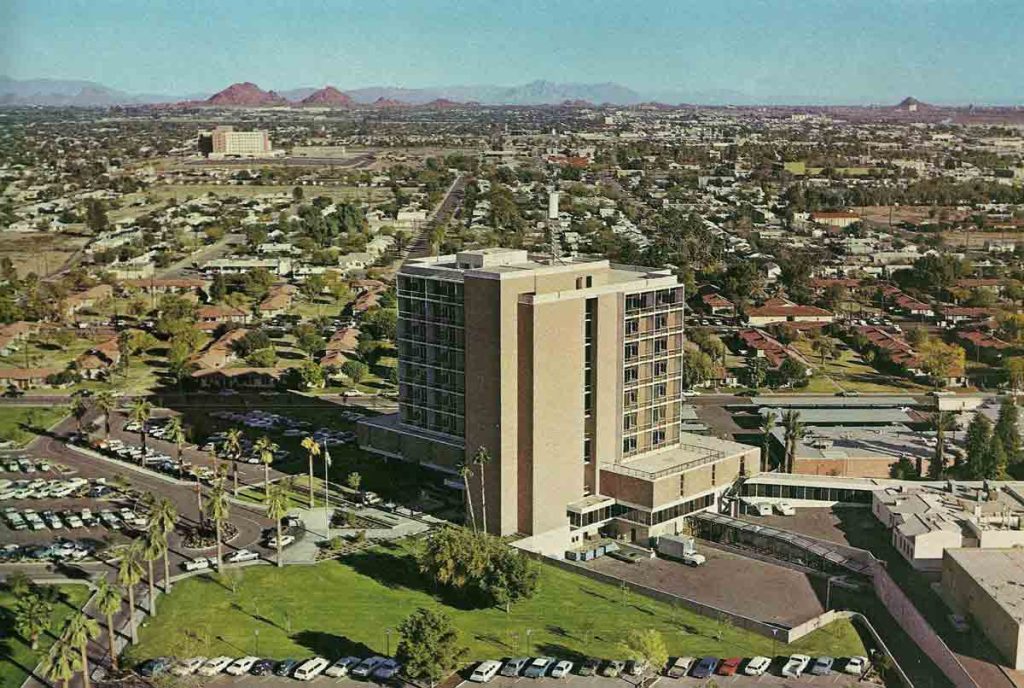
St_Lukes_Hospital_Fillmore_18th_Street_looking_east_1960s
Town DitchSt. Luke's Hospital was built on the ruins of the dense Hohokam village called La Ciudad. It tilts at an angle because it had to fit against the original canal dug by Jack Swilling and his gang from Wickenburg. The Town Ditch or Swilling's Ditch was covered in the 1920s but Villa Street preserved the angle. Today's St. Luke's extends all the way to Van Buren Street with a ghastly spread of rocks and gravel. Yet the hospital you see above was built in the shady Montezuma Heights barrio
of houses and public housing projects south of Edison Park. No gravel.

In my time on the ambulance, I spent a good amount of time at the emergency room of St. Luke's (or, as we called it with our dark humor, St. Puke's). In the New Testament, Luke the Evangelist was referred to as a physician.

Once, we heard an explosion outside and went to check what had happened. A patient had thrown himself off an upper floor and was well beyond our ministrations. On a happier note, we regularly had lunch (Code 7) at nearby Sevilla's (before it moved to McDowell), a family-owned Mexican restaurant surrounded by the 'Jects. The homeboys kept watched over our units so they wouldn't be broken into for drugs or stolen.

Off duty, I would visit my mother there, in her twice-annual stays as a patient, being treated for the emphysema that would kill her within a few years. The care was good.

I write all this because, after a century at this location, St. Luke's is closing.

Pushing the Pinal envelope

Pushing the Pinal envelope

MaricopaI attended kindergarten in Coolidge. Back then it was a compact town of 5,000 people. It boasted a charming little Spanish-style railroad depot on the Southern Pacific, with six passenger trains and many freight trains a day. My uncle showed me how to place a penny on the tracks to be mashed under a passing train.

Pinal County was home to about 63,000 people, most working in agriculture. Florence, the county seat, had a population of about 2,100, Casa Grande, another compact desert town on the SP, held 8,300, Eloy 4,900, and the remote crossroads of Maricopa a few hundred. Even then, Pinal County had a water problem: It was almost exclusively dependent on pumping groundwater. Coolidge Dam in neighboring Gila County wasn't enough for Pinal County's water needs even in 1960.

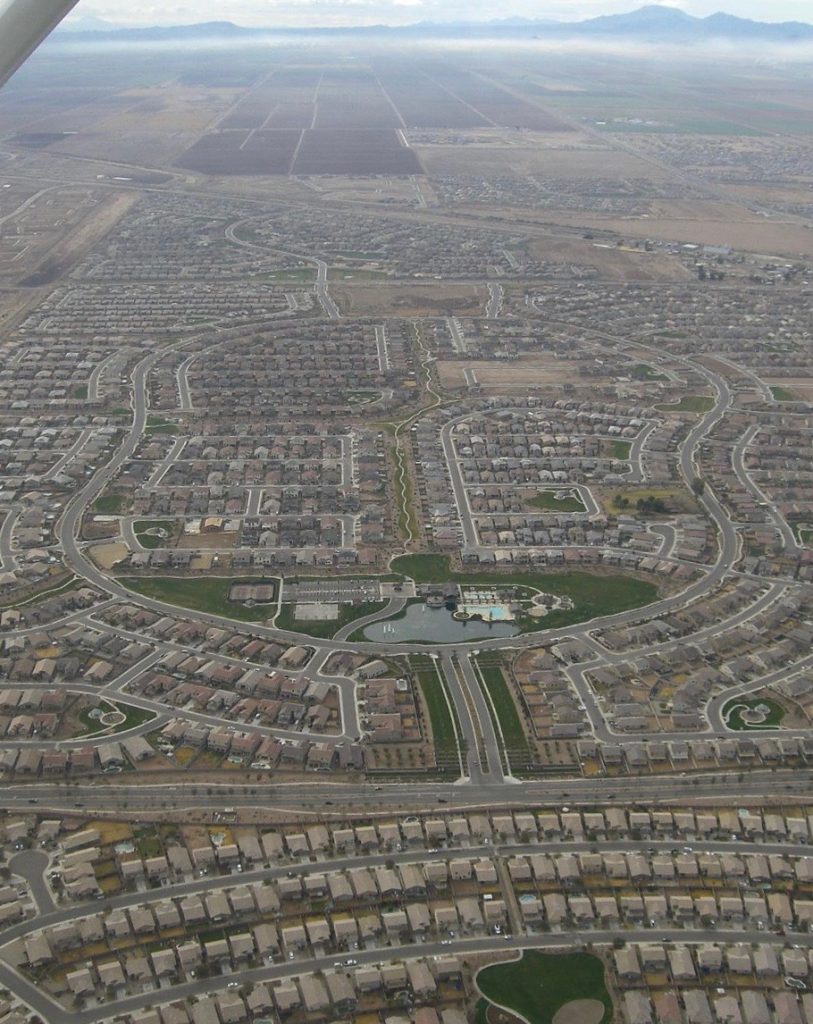
Fast forward to today. Pinal County holds an astonishing 447,000 people — more than the city of Phoenix in 1960. Maricopa alone (above) had an estimated population of more than 50,000 as of last year. This once-rural, once-distant county has become a Phoenix bedroom community — except the passenger trains are long gone. And, contrary to one of the key goals of the Central Arizona Project and Arizona Groundwater Management Act of 1980, it's still dependent on pumping from ever-diminishing aquifers.

Paving Arizona

Paving Arizona

South Mtn Freeway Estrella Drive roundout
Seattle recently completed demolition of the double-deck 1950s-era Alaskan Way Viaduct, which ran for more than 2 miles along the waterfront downtown. Now the traffic is in a tunnel and the city is preparing to enjoy unencumbered access to Elliott Bay. An even more ambitious goal is to put a long lid on Interstate 5 downtown, which is already covered by a park for a few blocks.

Meanwhile, in Southern California, the $8 billion, 63-mile High Desert Corridor freeway has been canceled. It would have been the first new freeway in LA County in a quarter century. According to Streetsblog, the project "would have spanned two counties connecting the north L.A. County cities of Palmdale and Lancaster with San Bernardino County cities of Victorville, Apple Valley, and Adelanto. The route would have gone through a patchwork of privately-owned undeveloped wild lands populated by Joshua Trees." The PIRG Education Fund named it one of the worst highway boondoggles in the nation.

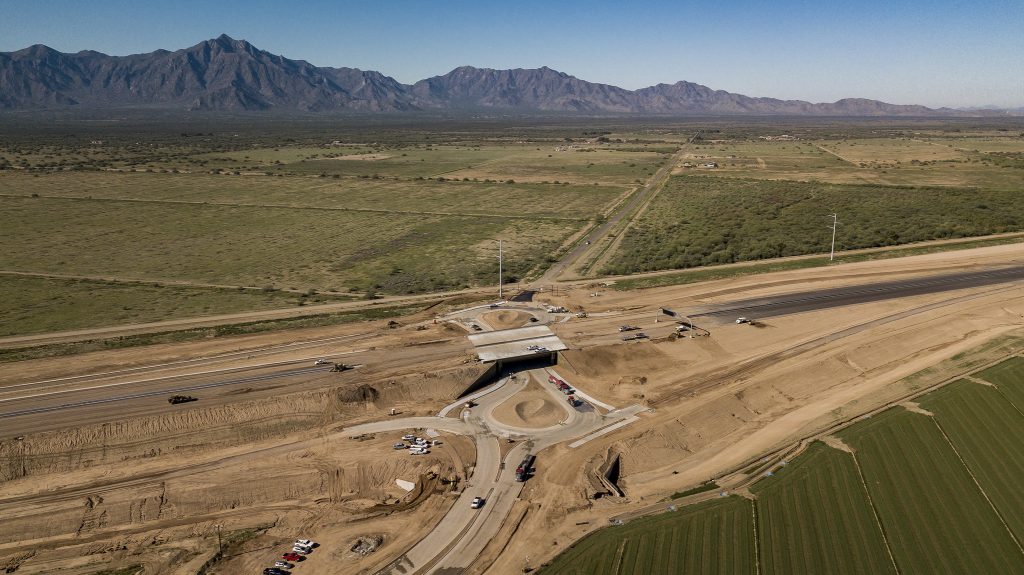
But that's not how we roll in central Arizona. In addition to the unneeded South Mountain Freeway (pictured above), the state Department of Transportation is planning a $55-mile freeway running from Apache Junction to Eloy. There it would connect with Interstate 10. When in a hole, keep digging.

Library late fees fade away

Library late fees fade away

Library_1950s
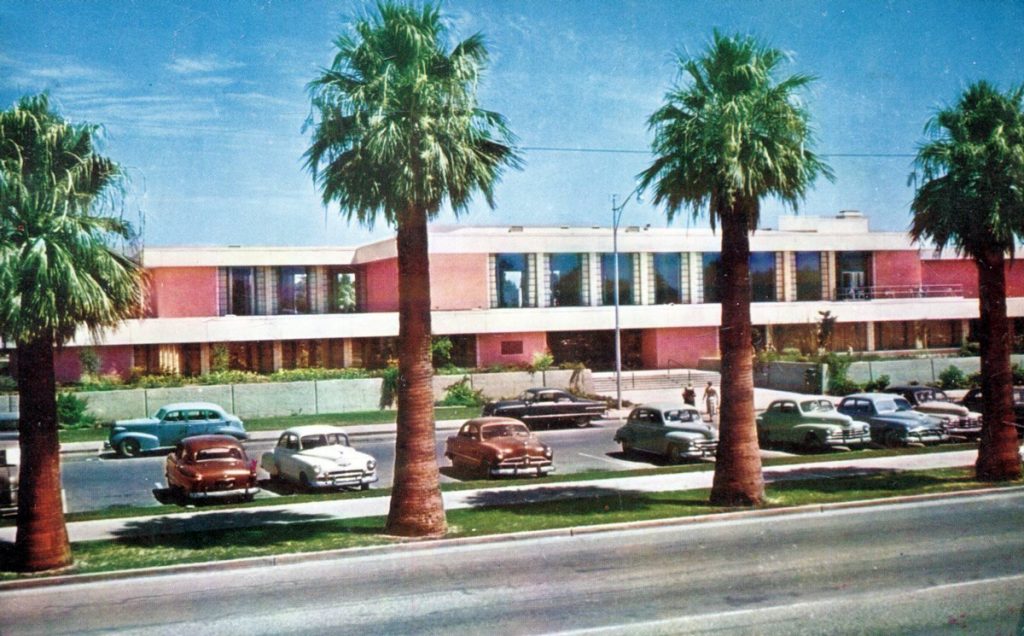
When I was nine years old, I went to the main branch of the Phoenix Public Library (a short bike ride from home) and applied for my youth library card (nine was the youngest one could apply). It was the most prized occupant of my wallet. It was also an important passage into growing up.

Kenilworth School had a well-stocked library. That was unlike today, where underfunded schools often lack what was once considered a basic. Along with the charter school racket, which operates out of anywhere without resources or much oversight (the better to siphon public money to the owners), the now rely on the city libraries. This is a shocking change from when I attended Arizona public schools.

1950 library interiorAnyway, my school library wasn't enough for this young bibliophile or for many of my friends. I wanted to wander inside the big coral-colored building at Central and McDowell (Barry Goldwater's name was on the plaque, from when he was a city councilman). The Arizona Room, stocked with history, beguiled me from the moment I walked in. I wanted to have borrowing privileges. Of course if one was late returning a book, a fine was attached. But I never got a fine (and we were broke, often hovering on the edge of financial catastrophe). I took my responsibility as a card holder seriously. Being a library-card holder was a privilege, not a right. I'm still a card-holder of the Phoenix Public Library, as I have been in the many cities and towns in which I lived. Even in little Payson, when I spent the summer of 1967, had a library and I got a card.

Turns out this is very 20th century/last millennium thinking.

The field

The field

Alf

Carl Muecke illustration


Even though seven have dropped out, 19 Democrats are still running for the presidential nomination. One of the many hard lessons of Donald Trump's Electoral College win is that anyone can run for president, whatever (insert pronoun-war choice here)'s qualifications.

I'm old enough to remember when each party put up their most experienced and accomplished people to become Leader of the Free World. Ike never held elective office, but as a five-star general he successfully managed the politically charged alliance that liberated Western Europe. Reagan was "just an actor" (so was I, so this dismissal always grated), but he served two terms as governor of the nation's then-third largest state. The same was true of W. His father was "Mister Resume." JFK's resume was thinner, but included war hero, congressman and Senator.

No more. Here's my take, and the comments section is below for your's:

Michael Bennet. Who? He's a Senator from Colorado, been in office for 10 years, and before that was Denver superintendent of schools. Enough said.

Joe Biden. While the former vice president is experienced and has a centrist temperament, he's bungled two previous presidential runs, wears a target for every opponent, and is a haphazard speaker. His handling of Anita Hill and support for bankruptcy "reform" would dog him. He'd be no match for Trump in a debate.

The war on shade

The war on shade

Arizona Ash 1

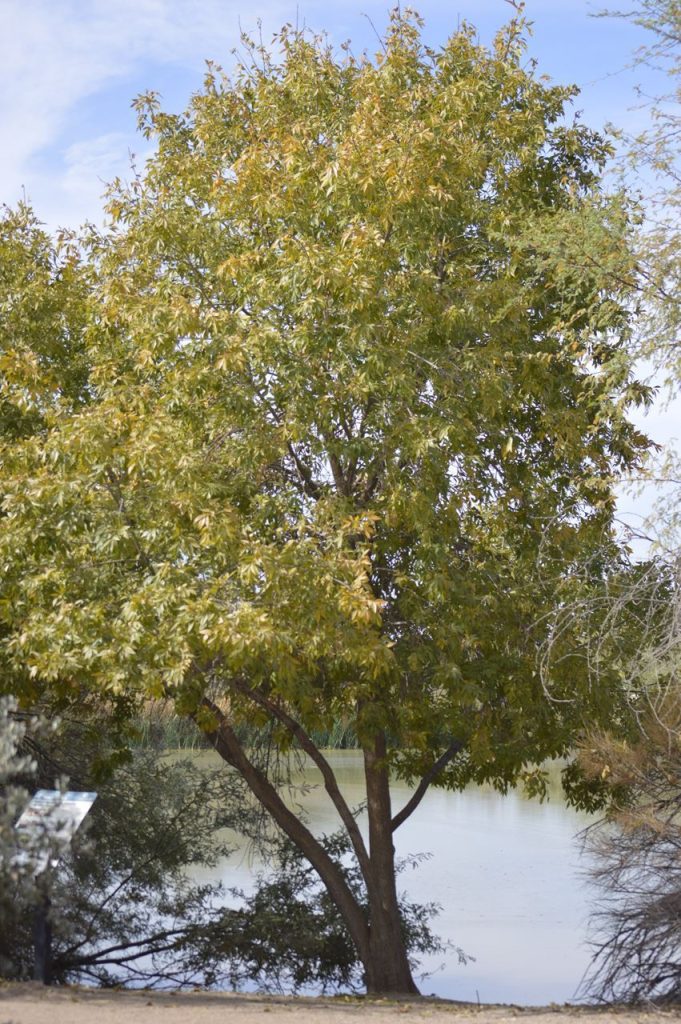
Behold the lovely Arizona ash tree in the photo above (thanks to Aimee Esposito, executive director of Trees Matter). Elsewhere, mature pine trees will soon be demolished if a plan is approved for Shepherd of the Valley Lutheran Church to use half its land in the Alhambra district for single-family houses in a gated property. WWJD?

Like the newspaper business, mainline Protestant churches are in such a catastrophic decline, much of it self-inflicted, that their most valuable earthly possessions are their property. But this latest abomination, reported by New Times, is part of an ongoing catastrophe that is going to help make Phoenix uninhabitable in the future — and is helping raise local temperatures now, not to mention making most of it remarkably ugly.

Most Phoenicians today likely have no memory of the old city, a lush Eden of trees, grass, hedges, flowers, citrus groves, farms, and the priceless Japanese gardens. This was made possible now only because of our federally funded water projects, but also because the heart of the Salt River Valley is a natural oasis, near the confluence of five rivers and sitting on some of the most fertile alluvial soil on earth. Growing up, I never saw one palo verde, most varieties of which provide zero shade, outside of going into the desert.

Today, Phoenix is ever more a paved monstrosity of asphalt, concrete, and grass, with the occasional "shade structure" which doesn't actually provide shade. Not surprisingly, overnight temperatures have risen 10 degrees in my lifetime. Losing the regular frosts once commonplace, West Nile virus is a new scourge, carried by mosquitoes that were once killed off in winter. And this is before the rising dangers of climate change.

Musing about the future

Musing about the future

1024px-Typewriter_Underwood_1945
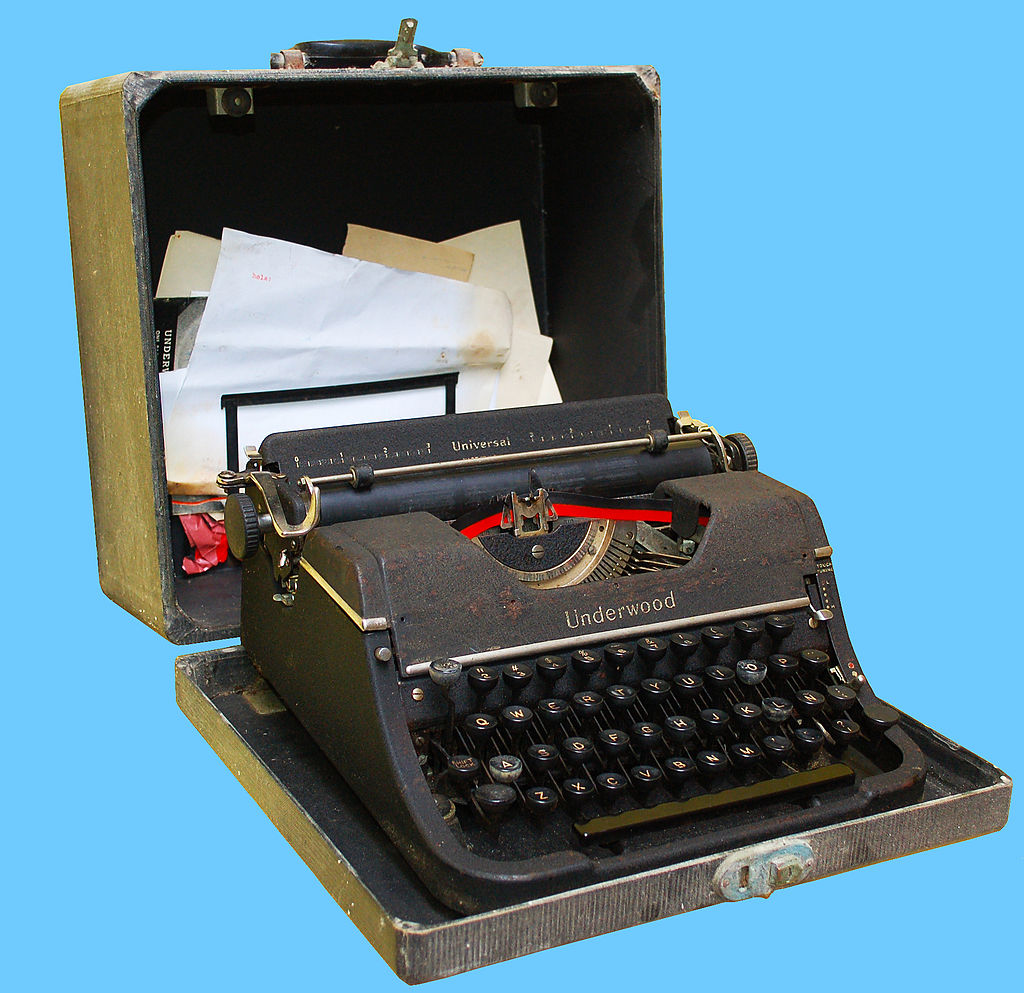
Most of our best commenters — people who made these columns worth writing and reading — have absented themselves in recent months. Traffic continues to rise modestly and I get nice emails from readers, for which I'm grateful. And I totally understand potential reasons the commenting A Team is gone. For example, ruminating over our situation is exhausting and perhaps toxic.

The outcome on the light rail vote (WBIYB) was a rare win. And I'm happy that the central core continues to fill in. Both these are longtime concerns of this column and, before that, when I wrote for the Arizona Republic. Otherwise, we keep losing. Phoenix and Arizona keep sprawling out, heedless of the cost and inefficiency of thinning out population; keep the "business model" of population growth and a low-end economy; keep extremist politics; keep throwing down gravel and ignoring the desperate need for shade trees in the city, etc.

When I started this blog in 2008, it was pro-bono work offering commentary, context, and history that wasn't being written elsewhere. That remains the case; if anything, institutional knowledge has declined sharply. But I have my day job at the Seattle Times and my novels, as well as feelers to write more history books. Without being anointed and becoming a best-seller, I would be content never to see my name in print again. But, as I've written before, I always felt I owed. That Phoenix was built on achieving impossible deeds — we made the desert bloom! — and it was my duty to carry the tradition on. I was raised that way. What a quaint concept today.