Historic red alert
Downtown living

Most of the historical photos on this site show the rise of a handsome small city, with commercial buildings, stores, churches, and warehouses.
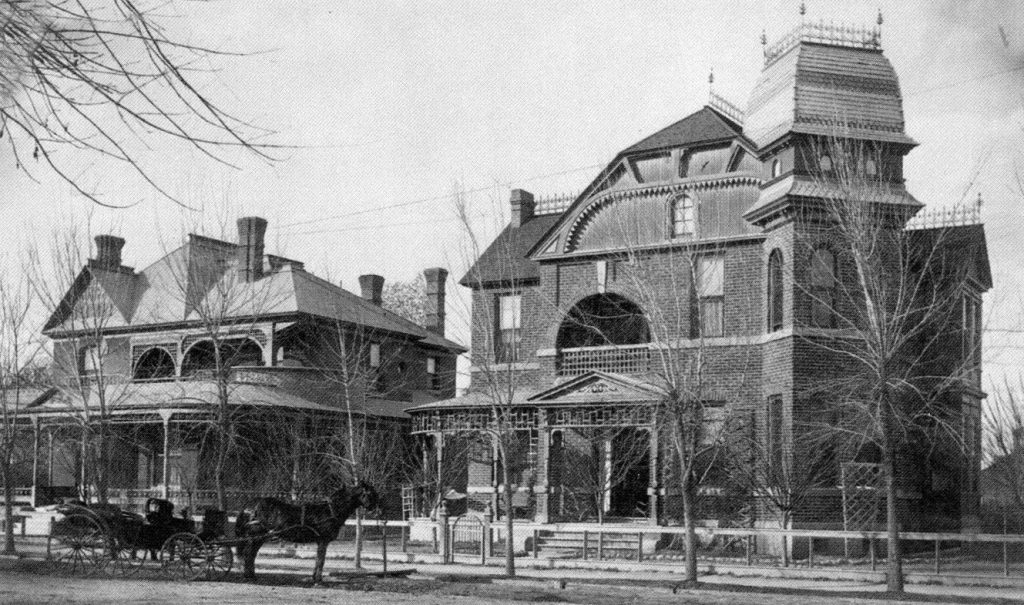
But single-family houses and apartments proliferated in and near the original townsite even as monuments such as the Heard Building and Luhrs Tower rose. People were living downtown before it became desirable again in recent years. Above are the Dennis and Jacobs Mansions on Monroe between Second and Third Streets along "Millionaires Row," built in the 1890s. They were demolished in the 1950s for surface parking lots.
Rosson House, restored in Heritage Square, was designed by architect George Franklin Barber — he sold his designs by mail order. It was completed in 1895 at 139 N. Sixth Street. The Stevens-Haustgen Bungalow is nearby, also restored.
Most of the residences downtown were more modest. For example, the 1935 City Directory shows homes for Mrs. Della Jeanette at 129 S. Third Avenue, Mr. Samuel Lopez at 133 S., and Mr. Nestor Chavez at 333 S. Third Ave. Some were businesses where the owners lived on an upper floor. But others were simple, single-story houses gradually giving way to the expanding Warehouse District. The same is true along south Second Street, including parts of Chinatown, connected by Madison and Jackson streets, Gold and Paris alleys.
Phoenix and skyscrapers
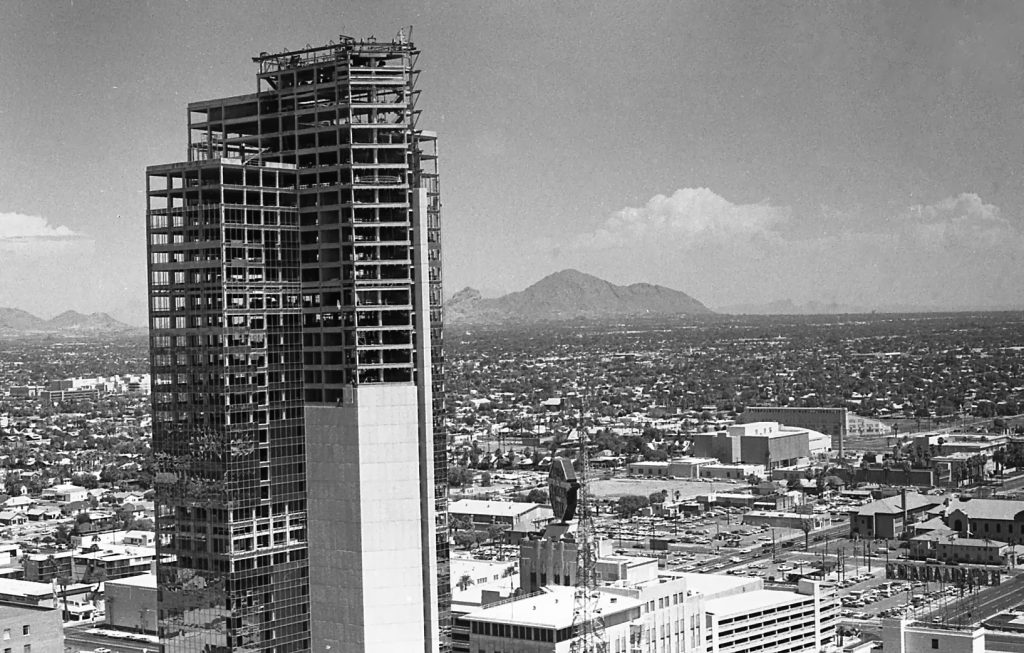
Valley Center, now the Chase Tower, under construction in 1972. At 483 feet, it remains the city's tallest building (Jeremy Butler photo).
The Republic recently ran a story to answer the question of why Phoenix lacks the skyscrapers that are one defining characteristic of other big cities. One of the problems of a place with so many newcomers is the loss of historical knowledge. So the story was, at best, incomplete.
The two big reasons given were automobile-based sprawl and a "polycentric" city with many cores. But both apply to other cities with much higher and more distinctive downtown skylines. Los Angeles comes to mind. It has "downtowns" in Century City, West LA, and Hollywood. It is a city built around the car, although it has rebuilt an extensive rail transit system.
But downtown LA, which is staging an astonishing comeback, is home to an impressive skyline. The Wilshire Grand, finished in 2017 and standing 1,100 feet with its spire is more than twice as tall as Phoenix's Chase Tower. The same is true of the U.S. Bank Tower, completed in 1989. About 28 skyscrapers there are taller than Chase.
Chicago, Dallas, Houston, and Charlotte have cheaper outlying land and sprawl, but each has a much more impressive skyline than Phoenix.
One big reason downtown Phoenix lacks taller buildings is its proximity to Sky Harbor International Airport. Valley National Bank wanted its new headquarters to be even taller, but the plan was quashed by the FAA. Sky Harbor is not much closer to downtown than Logan airport to downtown Boston, but Logan's runways primarily run southwest to northeast. In Phoenix, the runways are east-to-west and airplanes usually fly directly south of downtown. Gaining altitude means expending more jet fuel, especially in summer. And Sky Harbor has enormous influence at city hall. This has prevented doable towers at a higher number of floors at Third Avenue and Van Buren and further west.
Phoenix’s historic theaters
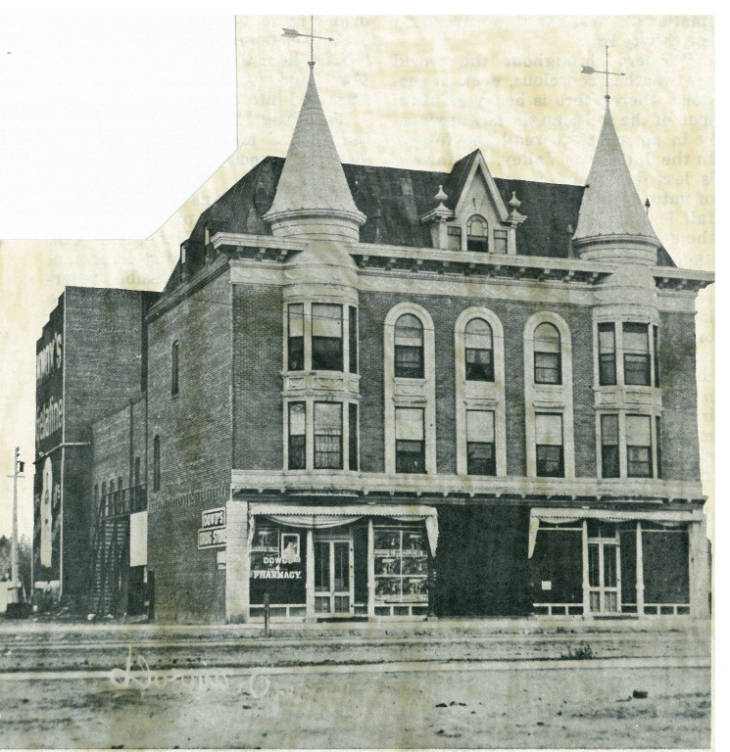
Today's Valdemar A. Cordova Municipal Court Building occupies the site of young Phoenix's first major theater, the Patton Grand, which opened in 1898. The new motion-picture industry was just getting started, so the theater hosted a variety of events such as plays and concerts.
It was also a point of pride in a town with a population of 5,544, which had made it through the national financial panics and local droughts and floods that characterized that decade. The theater sat 1,200 people. It also boasted hefty backstage spaces, based on the photo above, with room for curtains, lighting, and scenery.
E.M. Dorris, of the prominent merchant family, bought the theater at the end of 1899. It became the Dorris Opera House, the name by which most old Phoenicians and history buffs know it. Until the completion of the Phoenix Union High School Auditorium, the Dorris was the heartbeat of civic events, from traveling musicians, plays, and speakers, to political and union gatherings. It then settled in as a movie theater.
But, at Third Avenue and Washington, it was only one of many movie houses within walking distance of the city center or the streetcars. Let's take a stroll to some of them (click on photo for a larger image).
Trump 2020
Illustration by Carl Muecke
I provoked quite a reaction on Facebook when I predicted that Trump would get away with his many crimes and be reelected. Let me explain.
From the very beginning of winning the Electoral College by 80,000 votes, Trump began violating norms. Instead of "we have one president at a time," he was making all sorts of policy diktats and claiming to save Carrier jobs in Indiana. The media, the only commercial entity deemed so important to the republic's health that its protection was enshrined in the Constitution, largely gave him a pass.
Much worse norms were broken and evidence of massive malfeasance and unfitness for office piled up, and the pattern continued. Some exceptions arose, especially the Washington Post; even the New York Times, which downplayed Trump's known corruption and Russian interference while overplaying the nothingburger of Clinton emails, produced some worthy investigative journalism on the Don. But most people don't get their news from newspapers, and most newspapers are infected by toxic both-sidesism. So the outrageous has become normalized.
The most recent example was the media's pivot away from the Mueller investigation and report, based on a memo from an Attorney General handpicked by Trump to ensure his protection from the rule of law. The actual 400-page report hasn't been seen by reporters or the public. The fierce curiosity and fight for truth by journalists in Watergate has been replaced by, "Nothing to see here, move on."
Mayor Gallego
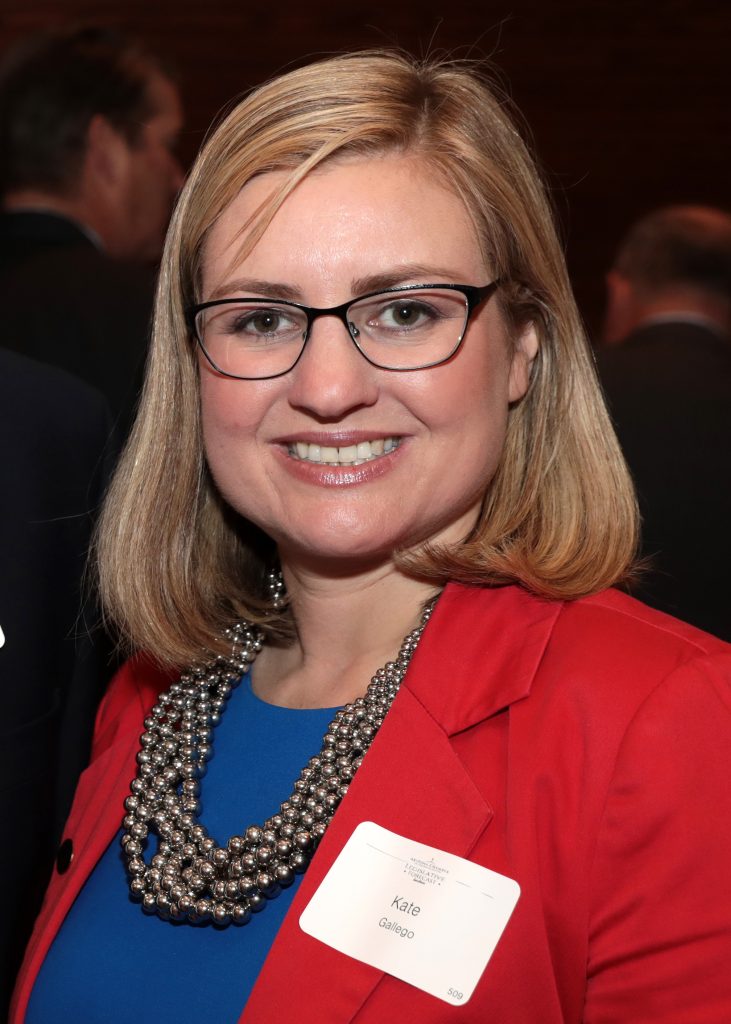
Kate Gallego is the first mayor of Phoenix in 20 years who I don't know personally. That has disadvantages and advantages. The downside: I haven't spent hours over coffee or in city hall getting tips, sharing gossip, and taking the individual's measure. On the other hand, she's pretty much a blank slate to me, which allows me to see her totally from the perspective of an outsider.
All I know is what I read in the newspapers, and from Phoenix insiders, to paraphrase Will Rogers. She's not the first woman mayor of Phoenix — that distinction goes to Margaret Hance (and Thelda Williams was interim mayor). She's young — 37. She's smart, because she went to Harvard and everyone who's been touched by crimson is smart, or so we're told. On the Council, she supported transit but, wrongly to my mind, opposed upgrades to keep the Phoenix Suns downtown. Gallago is a relative newcomer. Otherwise, she's an unknown commodity.
The last time Phoenix had such a young mayor was the four years of Paul Johnson, who was in his early thirties when he took office in 1990. It was an unhappy tenure. Phoenix was hit with its worst recession since the 1930s and most projects from a big bond issue, which had been passed in the Goddard years, had to be postponed or downsized (one being a new City Hall). How much of this had to do with Johnson's youth is debatable — he was dealt a bad hand and to many did the best he could — but his relative lack of experience hurt him. To be extra fair, Terry Goddard was an impossible act to follow.
Karl Eller, an appreciation
The last time I sat down with Karl Eller in his office on the Camelback Corridor, he said, "If I were 30, I'd move to China."
It was classic Eller: Ambitious, brash, optimistic, visionary. This was in the 2000s, before Xi Jinping's crackdown, when the People's Republic seemed to be an endless source of opportunity. Rather like the Phoenix of the 1960s and 1970s, when he was young.
Eller, age 90, died on Sunday. He was the last of the old Phoenix stewards — people such as Walter Bimson, Frank Snell, Eugene C. Pulliam, and John Teets who could knock heads and write checks, who saw their companies' interests as synonymous with the health of Phoenix. Those essential stewards no longer exist and Phoenix is crippled as a result.
If you grew up in that 1960s Phoenix — a new city of the future, or so it seemed — you couldn't drive down a street without seeing Eller's name on the bottom of a billboard. Eller Outdoor was his first big score, a business he bought from the outdoor advertising pioneer Foster & Kleiser, for whom he worked as a "lease man." With roots in the Northwest, F&K, by this time a division of Metropolitan Broadcasting, offered Eller the billboard business in Phoenix, Tucson, Bakersfield, and Fresno. The $5 million price seemed impossible for a young man with net worth of $50,000, but he rounded up investors and closed the deal. He turned it into his first empire.
Tucson, Microsoft, etc.

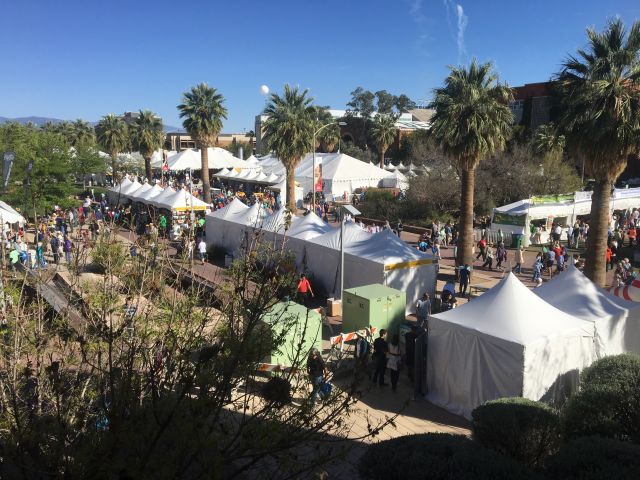
The Tucson Festival of Books has come a long way over the past decade. In a state where cultural institutions struggle, literature-loving is low, and in a city that punches way below its weight, one of the nation's premier book events has blossomed. I was honored to be there again earlier this month, on author panels and signing my books.
This is a bad look for Phoenix, as the hep cats say now. The state's population, economic, and governmental center of gravity cedes such a prize to a city it otherwise rarely even thinks about? Sadly for Phoenix, yes. Several years of festivals at the Carnegie Library never took off. Efforts to go big went nowhere.
In the Old Pueblo, the Arizona Daily Star, then led by my friend John Humenik, developer Bill Viner, and Frank Farias of the University of Arizona went big right from the start. The festival is held on the central mall of the UA, whose support has been essential. But so has that of the newspaper — something never forthcoming in Phoenix — and a growing array of corporate and individual donors, hotels and small businesses. The Tucson Medical Center is a major sponsor.
Admission is free. Helped by an army of volunteers, everything runs smoothly. The Festival treats its many authors very well. The CSPAN bus, always the sign of a prestigious book event, was there both days. What a gem for Tucson. And a treat for Phoenicians, if one can stand the Ugliest Drive in America (and mourn the passenger trains we once enjoyed between the two cities and beyond).
Phoenix overhead
When the Wright brothers made their first flight in 1903, Phoenix had a population of 5,544, finally larger than Prescott but still smaller than Tucson. Construction of Theodore Roosevelt Dam began the same year.
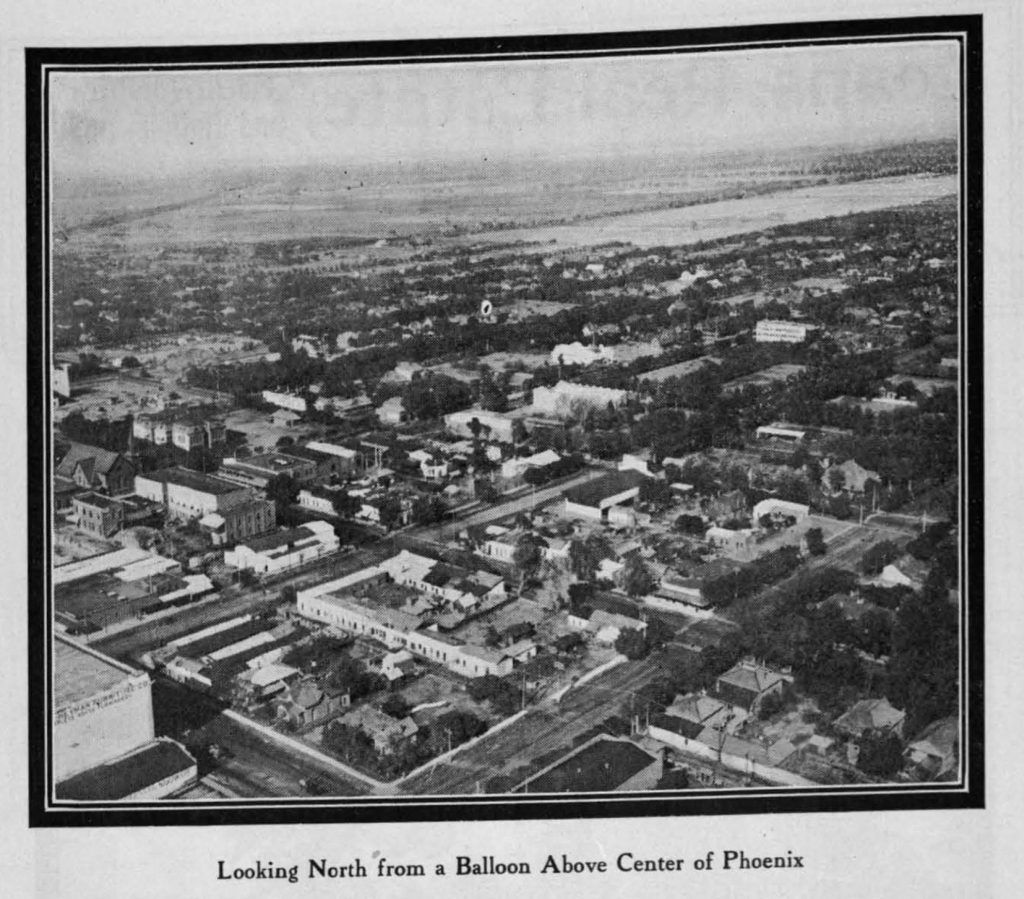
"Aeroplanes" — and even before that balloons — give us a great vantage point to track the city's growth. Most of these photos are collected by Brad Hall. Click for a larger image:
A balloon view over Second Street and Adams in 1911.
The same year an airplane captured this shot at Washington and Second Street. Block 23 is in the near lower right. A few blocks west is another block of shade trees — that's the county courthouse. The multi-story structure with raised awnings in the mid-upper-right is the Fleming Building.
The State Fairgrounds seen from a balloon in 1912, when Arizona was admitted to the union.
Here's the town in 1915, with a view looking south. Central Avenue is the street that goes all the way across the Salt River.
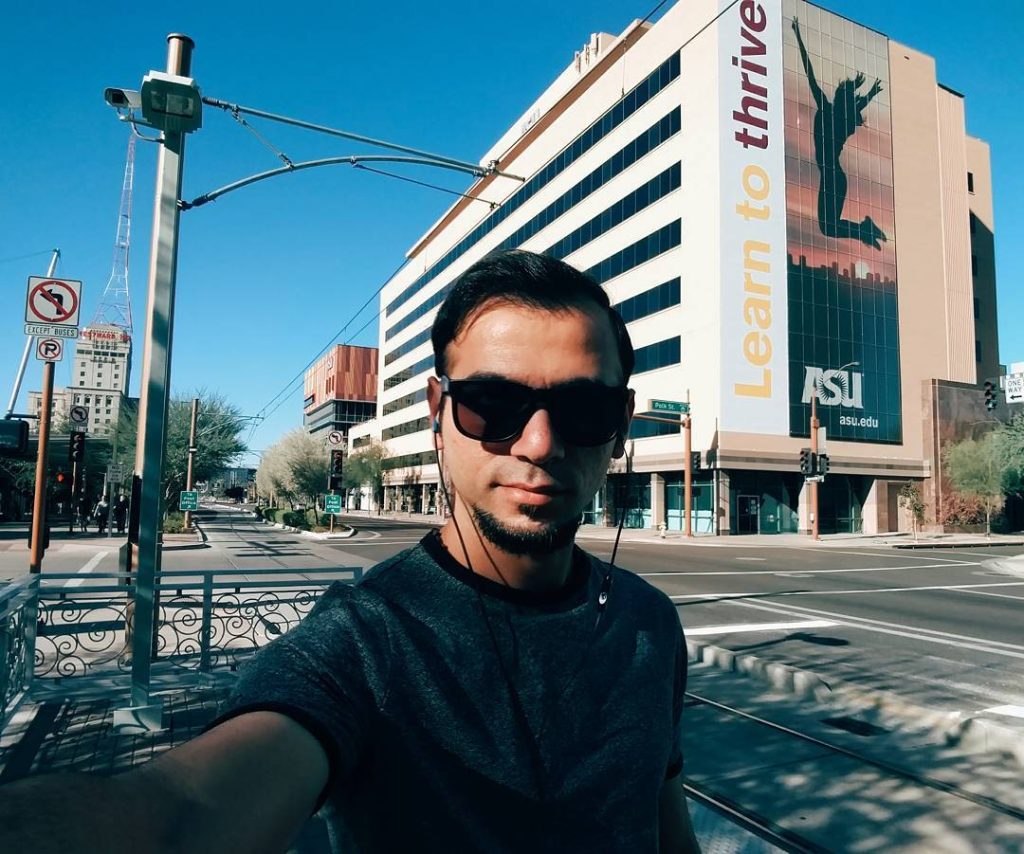
ASU Empire
Arizona State University President Michael Crow recently wrote an op-ed pushing back against the Republic's libertarian/"Goldwater" Institute columnist on funding for higher education. Crow wrote in part:
The Arizona Constitution is clear — public schools will be free and universities will be as close to free as possible. It is also clear in the Constitution that the state will use tax revenue to support the universities and to maintain them. But that’s not where we are today. In 2019, we have evolved to the point where nearly 90 percent of the financial support and maintenance of the university comes from sources other than the state.
And:
ASU is one of the most efficient universities in the country. Yet, with our mission of making tuition affordable and the limited state investment we still have a shortfall of $225 million per year to educate resident students. We subsidize the cost of their education through other means, including out-of-state and international student tuition.
If anything, Crow pulled his punches. Arizona's low funding for universities is a scandal decades in the making, as the Legislature paid for tax cuts in part by continually reducing general fund money for higher ed and slashing funding that was never replaced. This has had a profound effect on hurting the state's competitiveness, as well as its constitutionally mandated promise to in-state students. I'd love to see a lawsuit over this.
But under Crow's leadership, ASU has worked around the Kooks to build an empire.
Block 23, a history

The first downtown Phoenix grocery in decades is scheduled to open in October, part of a mixed-used project that will also include 330 apartments. This will be a major test for the revived central core. I’ve been skeptical as to whether demand exists — Bashas’ passed on the store during the Great Recession — but maybe ASU, more downtown residents, and proximity to light rail (WBIYB) will make the difference. Fry’s is owned by Kroger, which wouldn’t undertake such an enterprise without a good chance of success.
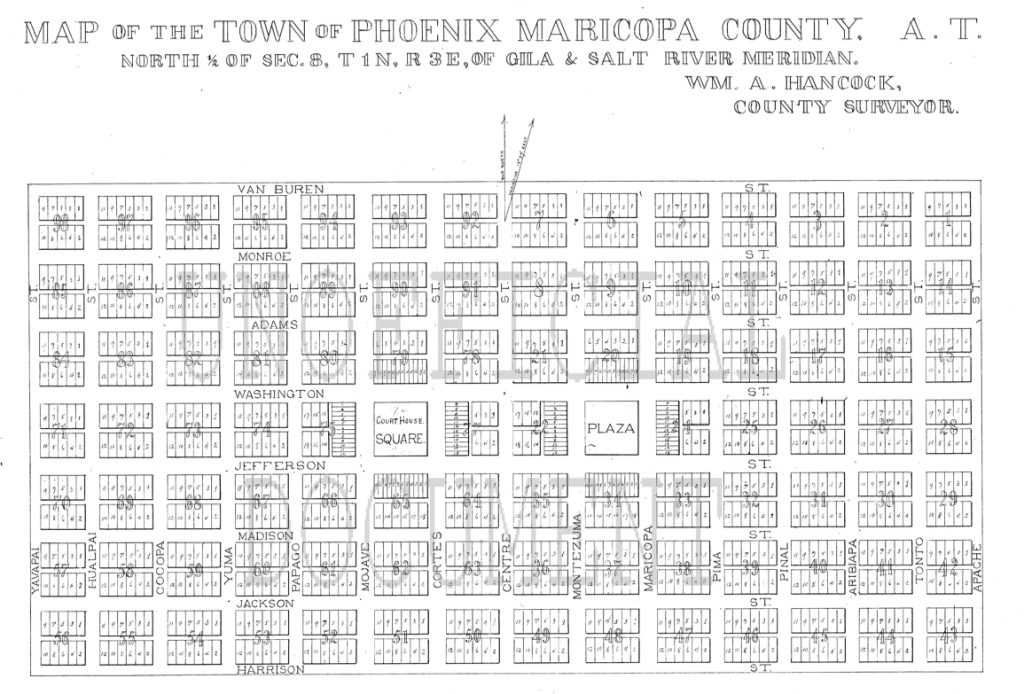
This is located on Block 23 of the original half-mile Phoenix townsite, laid out by William Hancock, one of the town’s most influential citizens and friend of Jack Swilling, in 1870. Two parcels were set aside for public uses. One was Block 76, located between Washington and Jefferson and Cortes and Mohave streets, and Block 23 between Washington and Jefferson and Montezuma and Maricopa streets.
The former was designated for the county courthouse square. Block 23 was labeled “plaza,” for municipal uses. In a turn of the 20th century renaming of streets, Cortes and Mohave became First and Second avenues. Montezuma and Maricopa became First and Second streets. In 1879, some 400 Phoenicians gathered on Block 23 to witness the hanging of two murderers.
Mean streets

I lost a good friend this week. John Bouma, the longtime managing partner of Snell and Wilmer and a towering figure among Phoenix lawyers, was struck and killed by two vehicles in the 7500 block of north Seventh Street. It was night. Maybe he strayed into the street to retrieve a lost item. The investigation is ongoing. He was first hit by a 2017 Toyota Tacoma, which apparently then threw him into the path of a 2017 Jeep Patriot.
Bouma and I had very different politics. But, brought together by the late Jack August, we enjoyed numerous lunches at Durant's talking about Phoenix history. He knew my mother, who worked closely with Mark Wilmer on Arizona v. California, the landmark suit that won Colorado River water. He could also name all the old bars, mob-ridden and otherwise, that once enlivened old Phoenix. As with Jack, I will miss him terribly.
When I posted this on Facebook, including a mention of Phoenix's deadly streets, I was surprised by the people who rushed to blame Bouma and say, essentially, "Nothing to see here, move along." Really? Your hair-trigger, defensive boosterism can't even acknowledge this reality? I shouldn't have been surprised. Social media is no less a cancer than the local-yokel sunny-championship golf denial.
In fact, Phoenix has a major problem with pedestrian injuries and fatalities. According to the Governors Highway Safety Association, Arizona has the highest rate of pedestrian deaths in the nation.
Sick leave
The water fix

The Arizona media have been producing many process stories (e.g. this one) about the federal government's insistence that states agree on a plan to use less Colorado River water at this time of historic drought. Resistant farmers in Pinal County have come in for special criticism, including an intelligent piece by the Arizona Republic's Joanna Allhands about Pinal likely to increase its pumping of groundwater.
At the same time, the same media have engaged in their usual growthgasm stories about Arizona once again being one of the nation's fastest-growing states in population. Arizona held 7,171,646 souls as of this past July. In 1970, two years after the funding for the Central Arizona Project was signed into law, the state's population was 1.7 million.
Yet I have yet to see any story connect the two.
The disconnect is staggering, matched only by the inattention to climate change as a prime driver of the ongoing Southwestern drought.
Arizona's "plan" is to keep adding people, no matter what. The entire economy's foundation is based on continuing large increases in population. Not only that, but to continue doing so in single-family housing sprawl far from historic urban centers. The Real Estate Industrial Complex hopes for 300,000-plus people west of the White Tanks. A monstrous development near Benson would destroy the San Pedro River, the last major free-flowing stream in the Southwest.