Commerce in old Phoenix

Commerce in old Phoenix

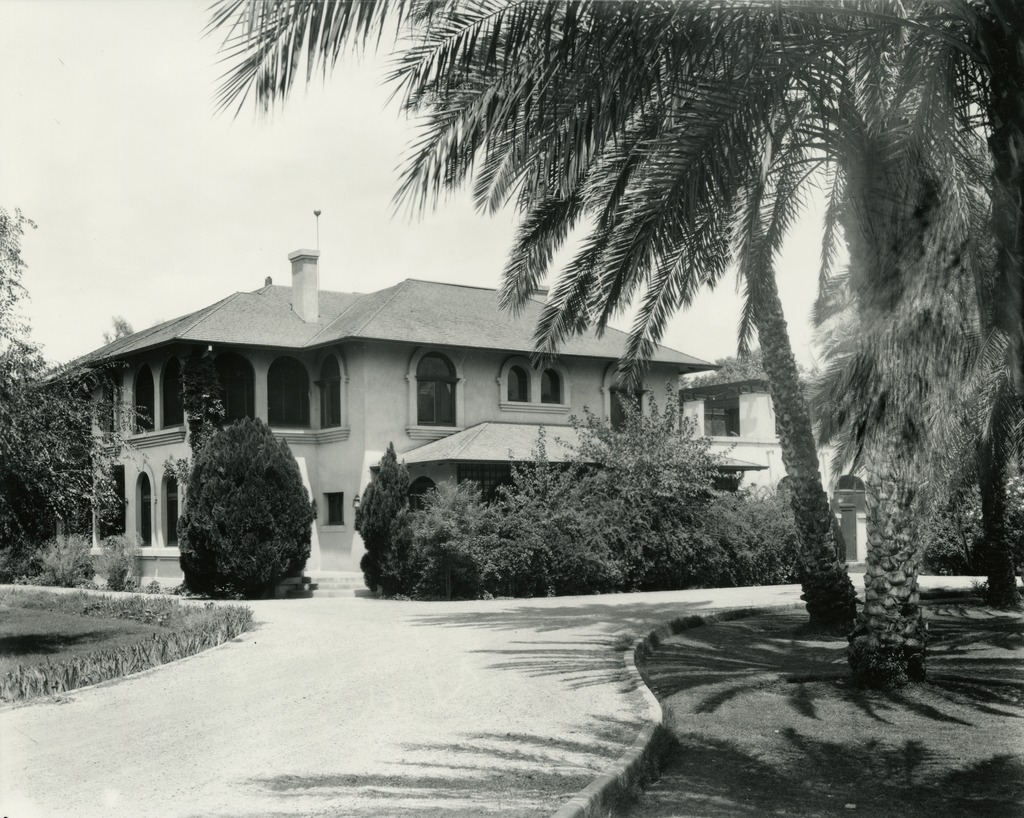
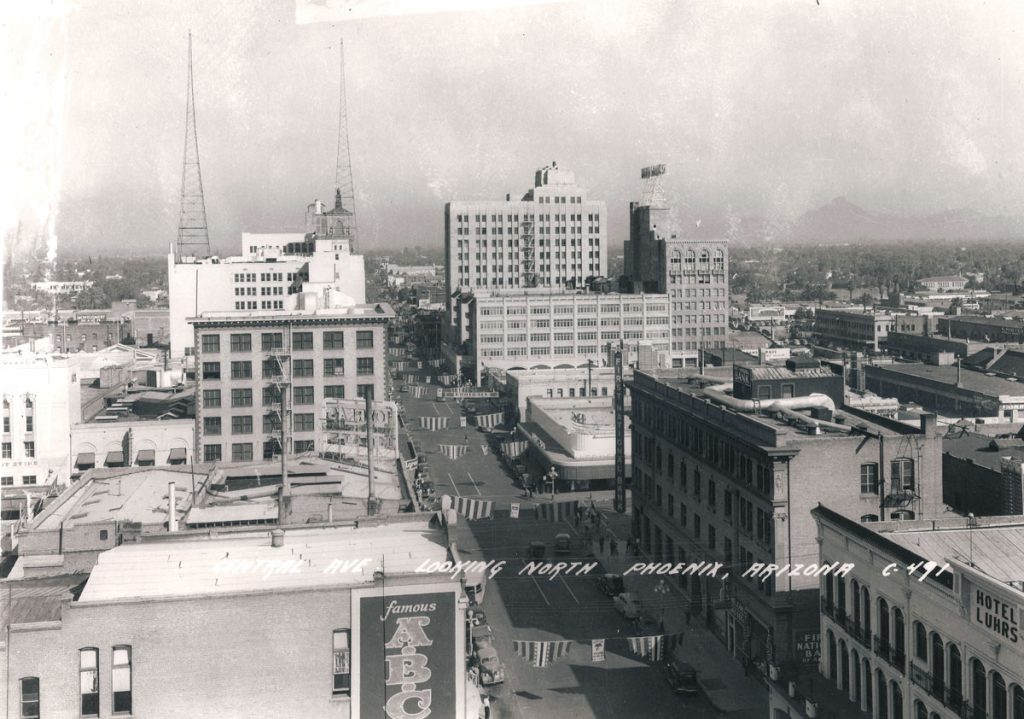
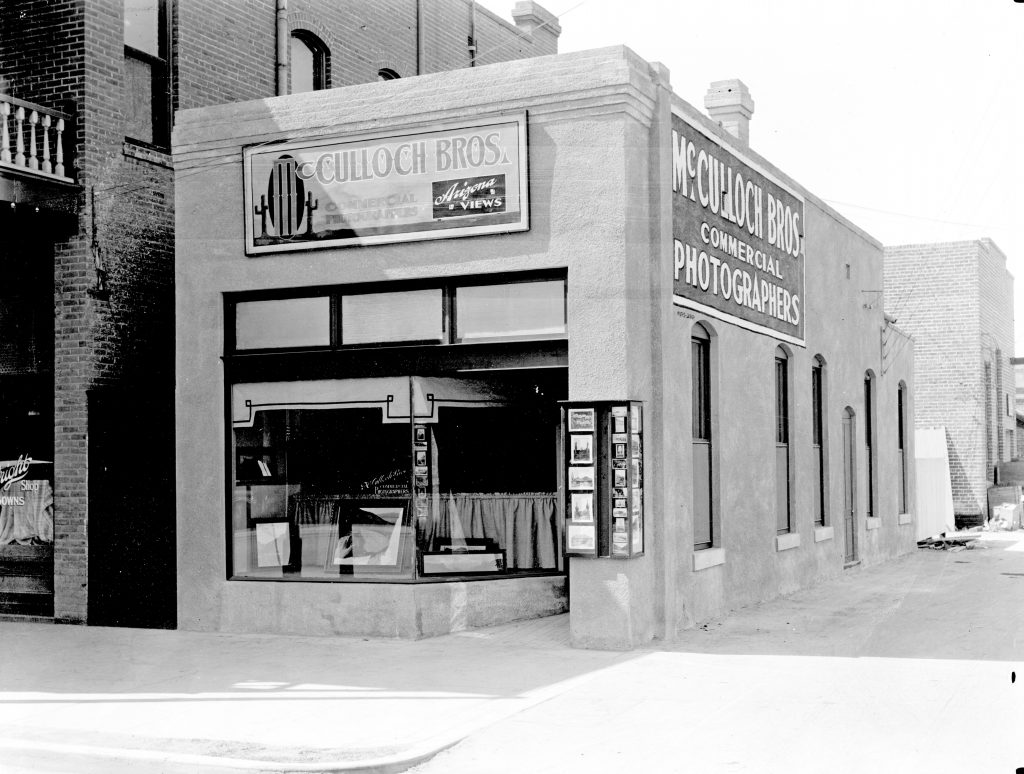
The McCulloch Brothers, who have left a priceless archive at ASU, were primarily commercial photographers. Their work, which spans from 1884 to 1947, offers a variety of images of business in the young, growing city. Most of this gallery is thanks to them.

You can read about the decades on these earlier history columns: Phoenix at statehood, the twenties, the thirties, the forties, and the fifties. Enjoy and click on the photo for a larger image.

McCulloch_Brothers_Photography_studio_18_N_2nd_Ave_1920s(1)

The McCulloch Brothers photography studio, 18 N. 2nd Avenue, in the 1920s.

Apache Trail Stage McC

A downtown sidewalk scene circa late 1910s with the Arizona Cigar Co. and the Apache Trail Auto Stage Co.

Washington St 1928Washington Street, the city's main commercial drag in 1928. Awnings helped keep pedestrians cool.

Floyd_Ikhard_Household_Appliances_831_N_1st_Ave_1945(1)

Floyd Ikhard Household Appliances, 831 N. 1st Avenue, in 1945.

Barker_Bakery_123_N_1st_Ave_1940s(1)

Barker Bakery, 123 N. 1st Avenue, in the 1940s.

OverlandMotors_10WVanBuren_1920sOverland Motors at 10 W. Van Buren in the 1920s. These blocks of the city would become the main location of auto dealers.

Phoenix_Motor_Company_Chevrolet_Buick_401_W_Van_Buren_1940sPhoenix Motor Co., a GM dealership, was at 401 W. Van Buren Street. It's been restored as The Van Buren, a concert venue.

Civil War 2.0

Civil War 2.0

11529v
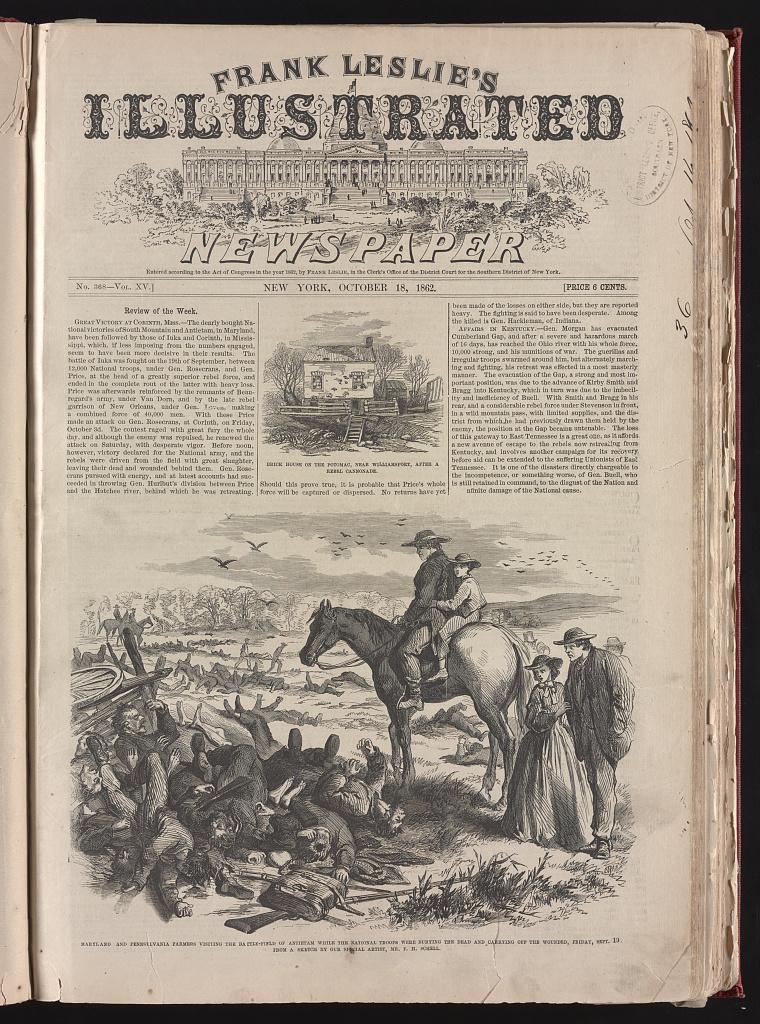
By comparison, 1861 seemed so easy.

The nation was neatly divided sectionally and politically, with compromises over expansion of slavery run out. No large standing army existed. Most Americans saw themselves first as residents of their sovereign states, with the United States of America often taking a plural verb. No wonder Robert E. Lee turned down Lincoln's offer of top command of the Union armies — his "country," Virginia, had seceded.

The break up wasn't that neat. Outside of the fire-breathing secessionists in South Carolina and the Deep South, the decision to leave the Union was agonizing for most states. Virginia lost its northwestern counties which became a state. North Carolina was always ambivalent. Sam Houston opposed it eloquently in Texas. The future Stonewall Jackson, then professor Thomas J. Jackson at Virginia Military Institute, was against it and prayed it would not come. But it did.

We've been in a Cold Civil War for some time — I'd place the start date as the Supreme Court unconstitutionally giving the presidency to George W. Bush in 2000. But as with the hot Civil War, the embers had been crackling for decades. This might be the most important election in American history. But the presidential race should not be this close, given Trump's abundant corruption, incompetence, lies, and treason. We may look back and see that 2016 was our last chance.

I bring this up because…what happens if Biden loses? Or Trump steals the election. Or is defeated and refuses to leave office? These have been the subject of many articles. Hillary Clinton, who won the popular vote by 3 million in 2016 but was deprived of the Electoral College by 80,000 votes in three states, said "Joe Biden should not concede under any circumstances because I think this is going to drag out…"

Miracle Mile

Miracle Mile

I don't know when the stretch of east McDowell from 10th Street to beyond 16th Street received this nickname. It's certainly not the legendary shopping destination of Chicago. But I do know it was Phoenix's first major retail-commercial artery outside of the downtown central business district. (Grand, Van Buren, and 17th Avenue/Buckeye were mostly motels, restaurants, and "curio" shops for travelers).

The Miracle Mile was special because it had an urban fabric missing from any other part of the city outside, even Midtown and Uptown on Central Avenue. The commercial buildings were densely packed, most right up on the sidewalk. McDowell was only four lanes wide. The result was walkability missing in most parts of a city built for the automobile.

McDowell's businesses continued beyond 16th Street and, going west, to Seventh Avenue. However, the Miracle Mile most exemplified urban authenticity. No wonder efforts are under way to reinvent the stretch. Included is a public art arch. Sadly, they face the headwinds of demolished buildings and a six-lane McDowell which is much more dangerous for pedestrians, especially at night.

A footnote: When I was around nine some friends and I rode our bikes along the mile, then turned around and came back — on the sidewalk but against traffic. I raced to catch up with them when a car pulled out from a side street. I hit the fender and tumbled over the hood, landing on the pavement. The terrified driver picked me up from the asphalt (which you shouldn't do) and carried me to the sidewalk. There an ambulance (Phoenix Ambulance, where I would work a decade later) took me to Good Sam to await my mother and grandmother. I got away with a mammoth bruise on my upper leg.

Come with me on a tour of the historic Miracle Mile (click for a larger image):

Arizona in play

Arizona in play

1000px-ElectoralCollege2016.svg
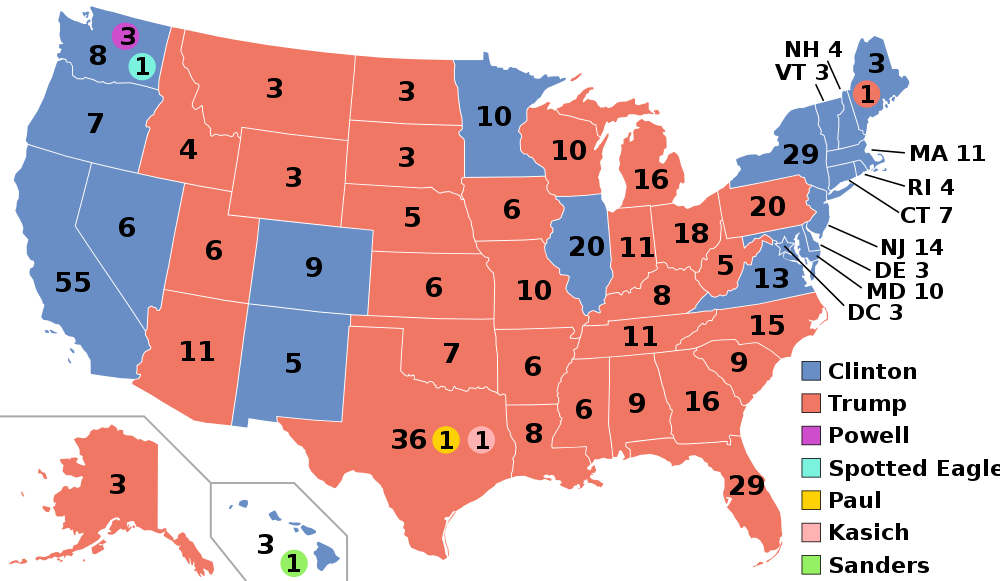
Hope springs eternal. Every election cycle since Bill Clinton carried Arizona in 1996, the narrative has gone like this: The state will change politically as newcomers bring their (more liberal) values. And thanks to Hispanics Arizona is on the cusp (always!) of becoming a purple or even deep blue electorate. The 2016 map above shows how that worked out in the most recent presidential race.

Might it finally happen this year?

Before getting there, a little history. Arizona was a solidly Democratic state until Harry Rosenzweig persuaded Barry Goldwater to run against incumbent Sen. Ernest McFarland in 1952. Political fixer Steve Shadegg switched parties to run Goldwater's campaign — and Barry stunned Mac, the Senate Majority Leader and father of the GI Bill, in a close race.

Shadegg was a talented campaign manager and had a good product: Handsome, authentic, charismatic, sexy, ran with a fast crowd (the real Barry was nothing like he was depicted by the national press). But Mac was dragged down by more than this, more even than changing demographics. The Korean War was still dragging on as a stalemate. Americans who had won World War II were angry over a "police action" that didn't yield victory. Whatever glow Harry Truman attained in recent decades, he was deeply unpopular in 1952 and this hurt Democrats.

Still, it wasn't a sea change. Mac came back to Arizona and became highly successful as governor. And for the next three-plus decades Arizona was a competitive state for both parties. Our longest serving Senator was a Democrat, Carl Hayden.

Worries of the fall

Worries of the fall

IMG_0528

Illustration by Carl Muecke.

Enough Phoenix history and historical photo galleries for awhile. Time to write about politics, with as much honesty as keeping myself viable allows. I promise you reality based commentary. So consider yourself given a trigger warning.

The Democratic National Convention was a hit, at least with Democrats, and contained many high notes, especially President Obama's speech and the acceptance address of Joe Biden.

We are in a moment of existential peril, both for our form of self-government and the planet. The Biden-Harris ticket is the answer, particularly if Democrats win the Senate, too. Trump, who won the Electoral College thanks to a mere 80,000 votes in three Midwestern states, has shown himself worse than unqualified for the job. He is a menace. As Obama said in his speech:

Donald Trump hasn't grown into the job because he can't. And the consequences of that failure are severe. 170,000 Americans dead. Millions of jobs gone while those at the top take in more than ever. Our worst impulses unleashed, our proud reputation around the world badly diminished, and our democratic institutions threatened like never before.

And yet, according to FiveThirtyEight, nearly 42% of poll respondents approve of him. This is no-doubt low because of a new version of the "Bradley Effect," where many Trump supporters lie to pollsters for fear of being labeled a racist, white supremacist, etc. He gets credit for a good pre-COVID economy even though his jobs and growth numbers trail the last three years of Obama.

How is this possible? How could anyone who has been paying attention to the lies, corruption, incompetence, and treason of the past three-and-a-half years support this man?

Kenilworth centennial

Kenilworth centennial

Kenilworth_Elementary_School_(2)
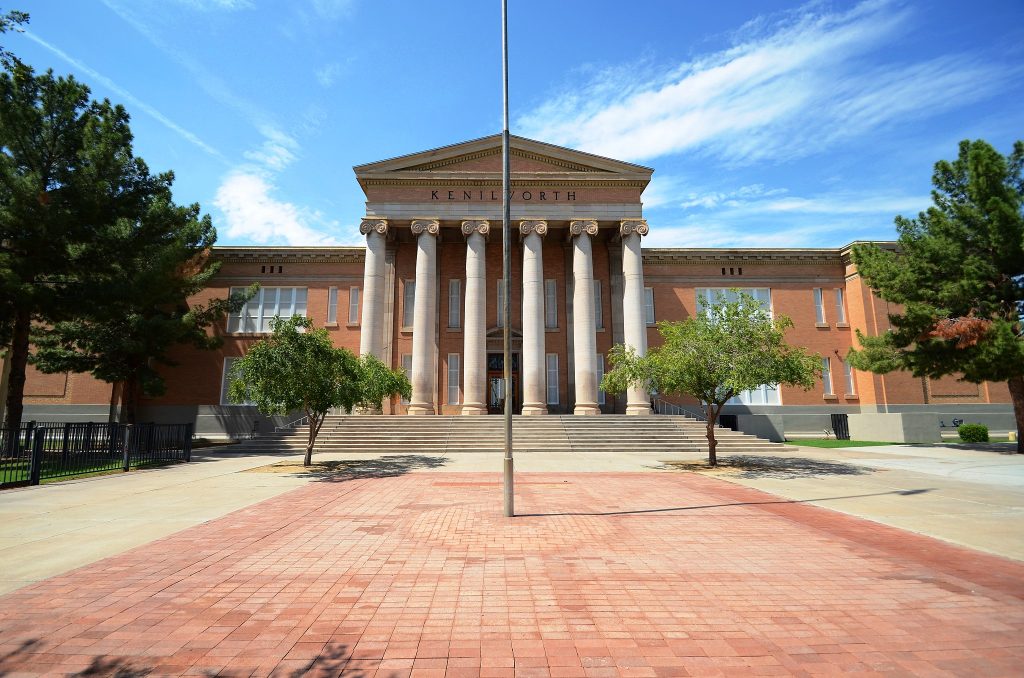
My name and graduation date are etched in one of these bricks, which were installed to mark the 80th anniversary of my alma mater. I was honored to be one of the speakers. As for the bricks, they looked poorly carved so you might have to look hard to find those of us who paid to have our names on them. But the important thing is that Kenilworth survives, thrives, and this year celebrates its 100th anniversary.

Kenilworth was the grandest of several handsome elementary schools completed in that era, including Monroe, Grace Court, and Booker T. Washington. It was in the neighborhood that initially had the same name, where Phoenix's elite moved. Now it's the Roosevelt and F.Q. Story historic districts. But that, and the ill-considered Papago Freeway inner loop, were far in the future in 1920. Then the streetcar ran along Fifth Avenue.

By the time I came along, in the 1960s, the streetcar was gone. But Third Avenue ran straight in front on the school, no curve for the freeway onramp. Seventh Avenue was only four lanes wide with a friendly crossing guard named Paul. We lived on Culver Street when I was in first and second grades, then moved to Cypress in today's Willo historic district for the remainder of my time there.

Railroads to Phoenix

Railroads to Phoenix

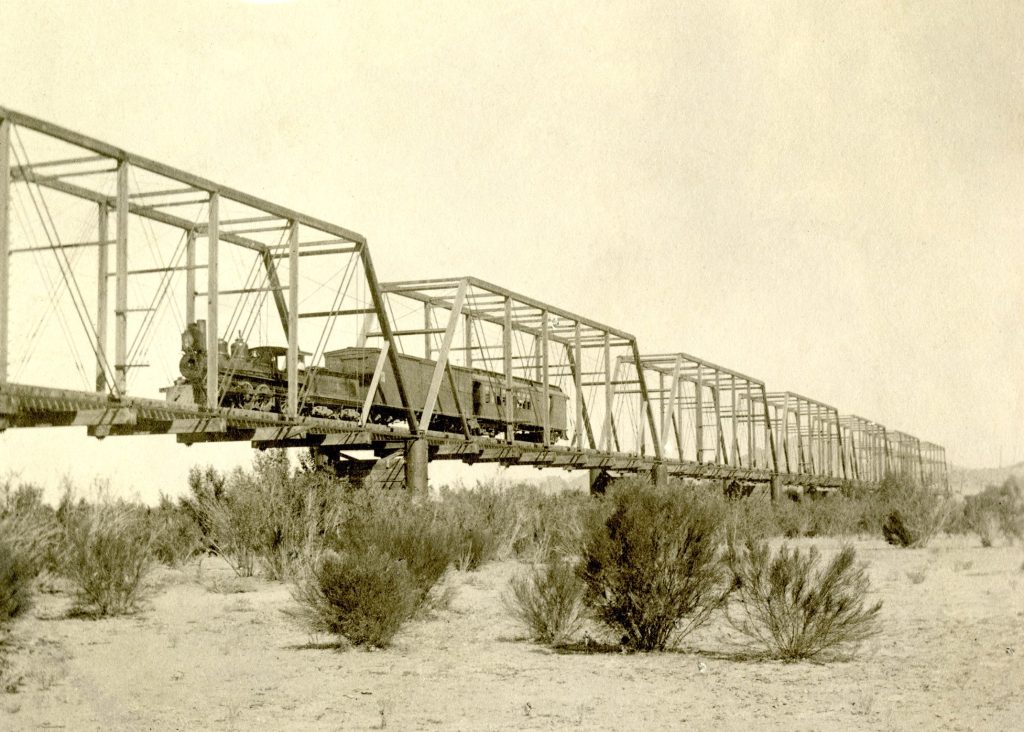
First Tempe RR bridgeTempe History Museum photo

The recent derailment and fire of a Union Pacific train on the Salt River bridge is a reminder that railroads still play a role in Phoenix, even if far less than in the past. As the late David Myrick explained in his seminal Railroad of Arizona: Phoenix and the Central Roads, eight attempts were made to build a line to the Salt River Valley before the Maricopa and Phoenix Railroad's first train arrived on July 4th, 1887.

Among the many impediments — capital, supplies, heat, permission of the Pima Indians to cross their reservation — bridging the fickle Salt River was among the most persistent. The bridge above shows a "ten-wheeler" steam locomotive and two cars on the second iteration of the span. The first saw a flood destroy its approach trestle in 1890, then was severed entirely by the Great Flood of 1891, which also did substantial damage to canals and farmland; adobe structures collapsed from the rain.

In 1902, part of the bridge gave way without warning, dropping the locomotive 20 feet into the riverbed, killing one and severely injuring another, and leaving a passenger car hanging precariously. In 1905, the flooded Salt washed away a segment of this second bridge just minutes after a passenger train had crossed it. Similar washouts plagued the railroad's crossing of the Gila River.

Finally, the current heavy steel truss bridge was built in 1912-1913. UP says it will rebuild it — or at least replace one of the truss spans — which is good news for continued freight and potential future passenger service. Given Wall Street's pressure to suck profits from major railroads and Phoenix's relative unimportance on the system, I'd be surprised if UP built an entirely new and modern bridge.

Such was not always the case.

Phoenix, 1968

Phoenix, 1968

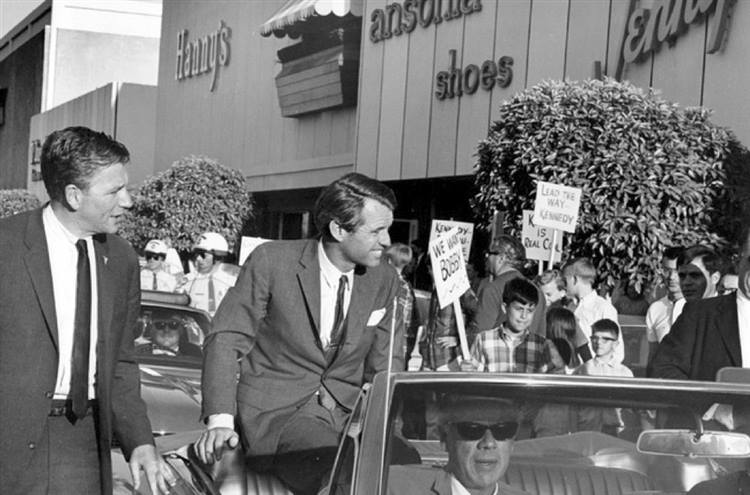
RFK Christown 1968Sen. Robert F. Kennedy campaigning at Chris-Town mall on March 30th, 1968, soon after announcing his candidacy for president. He would be dead from an assassin's bullet less than three months later.

Some are comparing this year's unrest to 1968 — not persuasively, to my mind — so it might be interesting to check in on Phoenix during that tumultuous year. Just what a different world this was is evident in a headline of the Arizona Republic on Monday, January 1st: "All The World Gay As Old Year Dies." Cultural language wasn't the only difference. The overnight low was 35 degrees, common then as Phoenix had several frosts each winter. The low would hit freezing later in the week. These are much more rare today amid the human-caused heat island. The paper carried Today's Prayer on the front page, as it had for years.

The sixties were a period of great change in Phoenix, where the magic of the old city's oasis was very much alive but the suburbanized future was coming — Maryvale and Sun City were abuilding. The city grew 32% during this decade. The city also entered the big leagues of sports in 1968 with the NBA expansion team Phoenix Suns.

Downtown was still a major retail center at the beginning of the decade, but it was in decline by 1968, hollowed out by Park Central and other malls, as well as low-cost retail buildings bulldozed to create Phoenix Civic Plaza with its convention center and Symphony Hall. This also leveled many single-room occupancy hotels and other parts of the Deuce. Critics warned the shattering of the city's skid row would send vagrants to nearby neighborhoods, which it did.

Clickbait, climate, and more

Clickbait, climate, and more

PhxCityHall
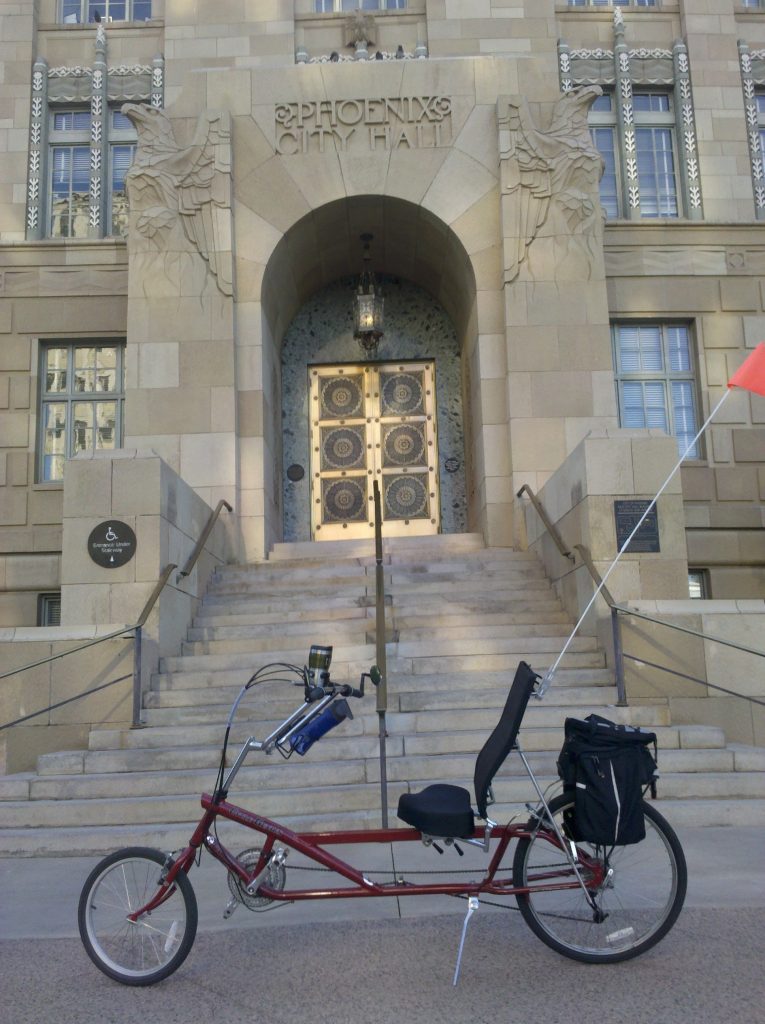
It's no coincidence that I've lately taken refuge in historical photo galleries. This is a dangerous time to write. Yes, my pen is still warmed up in hell, but fearless commentary is risky, as illustrated by the resignation of Bari Weiss from the New York Times and Andrew Sullivan being nudged out by New York Magazine. We're in a time of hysteria and thoughtcrime, made worse by social media.

So, a few nuggets that stay within the guardrails (I have a day job to protect).

Clickbait news releases fill my mailboxes every day. I don't use most because they're based on questionable premises and shoddy data. Unfortunately, too much struggling media do. Hence, the recent story ranking Phoenix as "the best city in the U.S. for working remotely." It was carried unquestioningly by KTAR and the Phoenix Business Journal, among other local outlets.

The tiny thread of this press release came from an outfit called HighSpeedInternet, claiming to rank cities or metro areas. "We looked at things like internet connectivity, cost of living, and commute time savings. We also looked at cities with access to coffee shops, libraries, and coworking space, which gives remote workers a chance to work from different locations – when a pandemic isn’t occurring." Phoenix was No. 1, followed by Atlanta, Kansas City, Raleigh, and Toledo.

Here's why the "survey" doesn't pass the smell test. If you don't have an economy geared to remote work (e.g. Seattle with tens of thousands of highly skilled Amazon, Microsoft, Apple, Google, and Facebook workers), you couldn't possibly get that rank. Res ipsa loquitur.

More shots in the ’30s and ’40s

More shots in the ’30s and ’40s

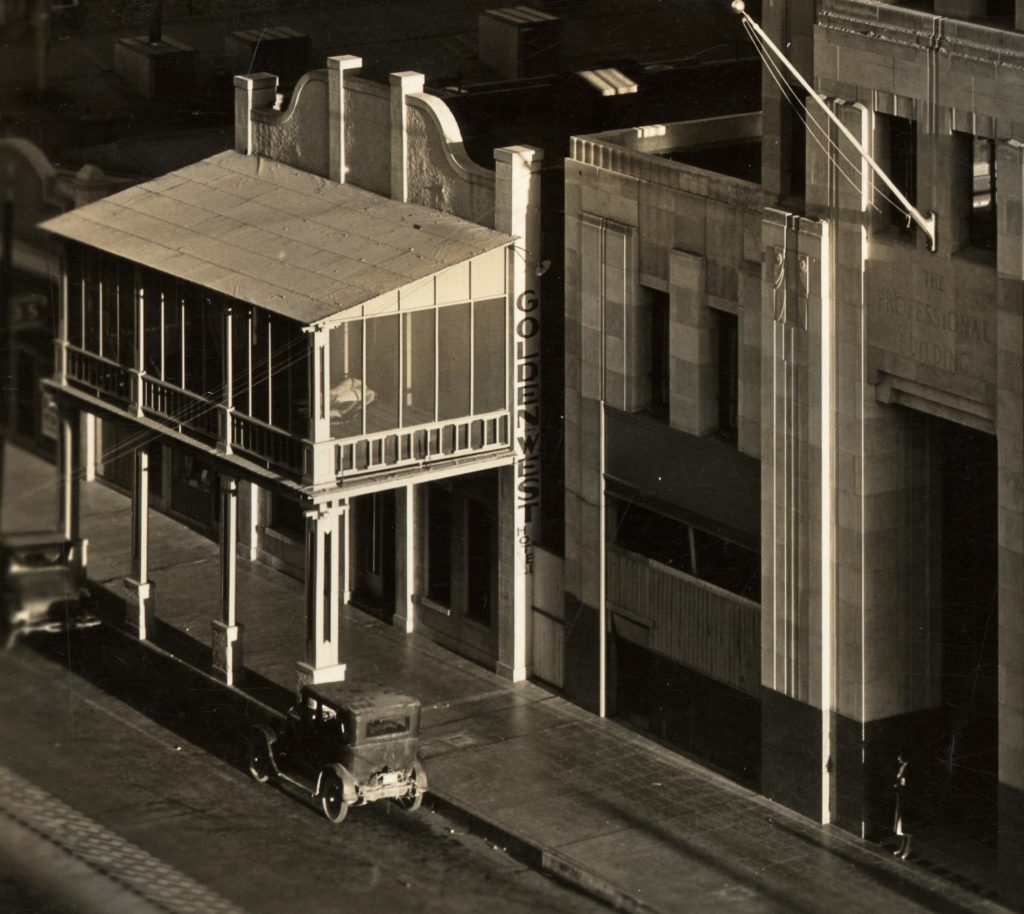
Golden West Hotel
A few days ago, we lost the Golden West Hotel, formerly the Steinegger Lodging House, at 27 E. Monroe Street and built in 1889. It held Newman's cocktail lounge as late as 2005. But even with all of Phoenix's losses, the preservation police could not save the oldest building in downtown. Duran Lugo documented this act of civic vandalism on Facebook's Phoenix Shadetree History page.

In memory, let me clear my desktop of some historic Phoenix photos that likely haven't been on this site before (click for a larger view)

. And a final thought: If the Golden West isn't safe, what about Union Station?

7th_Ave_looking_north_towards_Osborn_1940sThis is Seventh Avenue looking north toward Osborn in the 1940s. The image perfectly captures old rural Phoenix, including abundant shade trees. No palo verdes of gravel to be seen.

Busy Central-Washington 1940sBusy Central and Washington in the same decade. Unlike today's suburban feel, downtown looked like the business core of a real city.

Central_Monroe_looking_south_South_Mountain_1940s(1)Thanks to Brad Hall, here's a high-resolution shot from Monroe and Central looking toward the South Mountains in the '40s. Note the Santa Fe Railway ticket office in the Professional Building. A few steps farther to the left is the Golden West. South of the Professional Building is the Hotel Adams, demolished in the 1970s.

The skyline through time

The skyline through time

In a column last year, I explained why Phoenix lacks the skyscrapers that are the defining feature of big cities. Why? It's complicated. Now, let's look at the Phoenix skyline through the years. Click on the image for a larger view.

Phoenix_downtown02Looking north on Central from Jefferson Street, we see Phoenix's first real skyline that emerged in the 1920s building boom. At left with radio towers is the Heard Building and beyond it the cap of the Security Building. At left, beyond the Hotel Adams, is the Professional Building.

Luhrs Tower from parkSeen from the Courthouse Park, the Luhrs Building and art deco Luhrs Tower were among the most iconic structures from the 1920s skyline.

LuhrsBuildingAnother shot, this time from the Hotel Luhrs balcony, showcases the Luhrs Building and beyond it the Luhrs Tower.

David William Foster, an appreciation

David William Foster, an appreciation

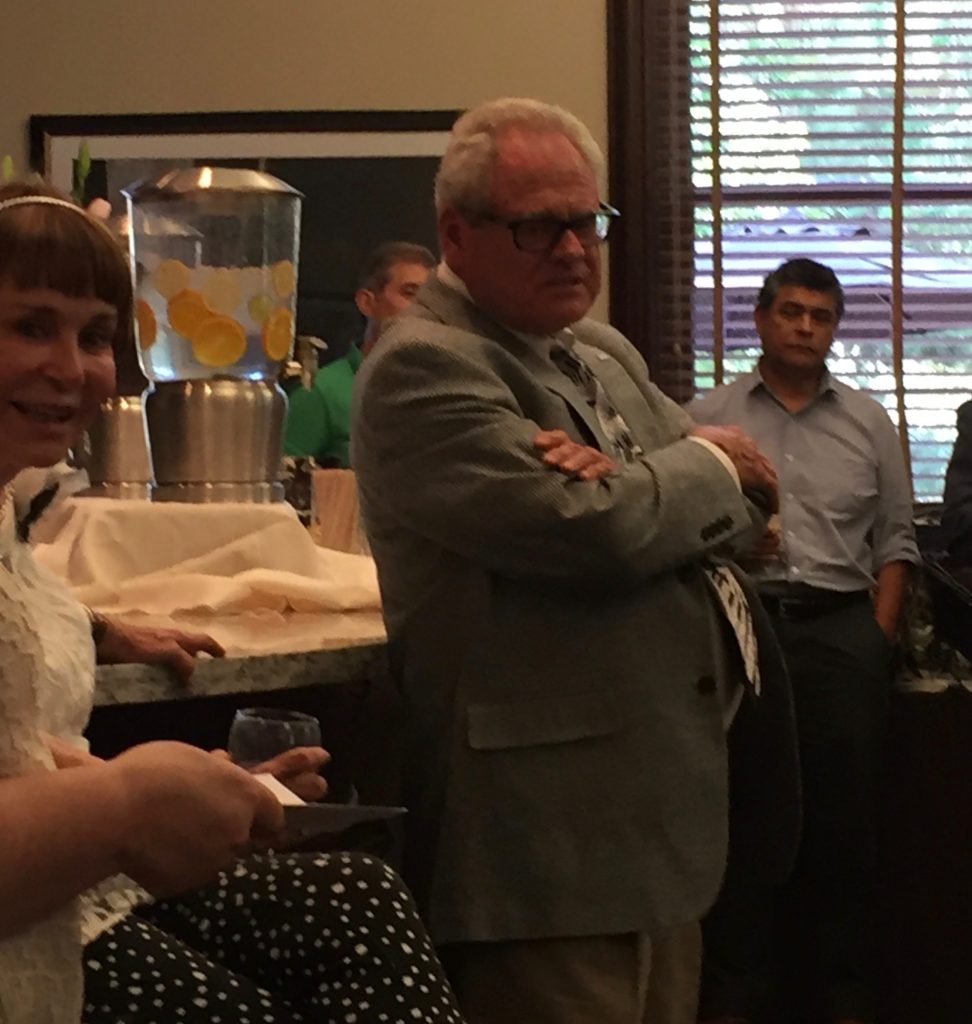
IMG_0403 (1)David W. Foster in 2016 at a celebration of his 50th year teaching at ASU, in the Old Main building. At left is his wife, Virginia.

My dear friend, David William Foster, Regents Professor at Arizona State University, died peacefully last night at age 79. His ASU bio doesn't begin to capture the man in full, but it's worth quoting at length because of the depth and breadth of his accomplishments:

David William Foster is a Regents Professor of Spanish and women and gender studies at Arizona State University. He has written extensively on Argentine narrative and theater, and he has held Fulbright teaching appointments in Argentina, Brazil, and Uruguay. He has also served as an Inter-American Development Bank professor in Chile. Foster has held visiting appointments at Fresno State College, Vanderbilt University, University of California-Los Angeles, University of California-Riverside, and Florida International University. He has conducted six seminars for teachers under the auspices of the National Endowment for the Humanities, the most recent in Sao Paulo in summer 2013.

In 1989, Foster was named the Graduate College's Outstanding Graduate Mentor, and in 1994 he was named Researcher of the Year by the Alumni Association. He received the 2000 Armando Discepolo Prize for theater scholarship awarded annually by GETEA (Grupo de Estudios de Teatro Argentino y Latinoamericano) of the Universidad de Buenos Aires.In 2010, Foster was honored for his lifetime work on Argentine culture by the Centro de Narratoloia at a program held at the Argentine National Library. He is past president of the Latin American Jewish Studies Association.

We've lost a man of astounding achievements, and this comes atop the crushing loss of historian Jack August in 2017. Arizona, and the world, are less for these passages.

The Groundwater Act

The Groundwater Act

Subsidence sign flickr
History is written by the victors.

This marks the 40th anniversary of the Arizona Groundwater Management Act. The state Department of Water Resources said in a press release:

The 1980 Act was – and remains — the most sweeping state law in the Nation governing groundwater use. In addition to creating a coherent, manageable system for helping wean Arizona’s most populous regions from groundwater use, it enacted the framework for long-term groundwater-use reduction that continues to the present.

“In Arizona, we stand on the shoulders of giants — pragmatic, visionary leaders whose achievements have shown us the way and enabled our high quality of life,” said Governor Doug Ducey.

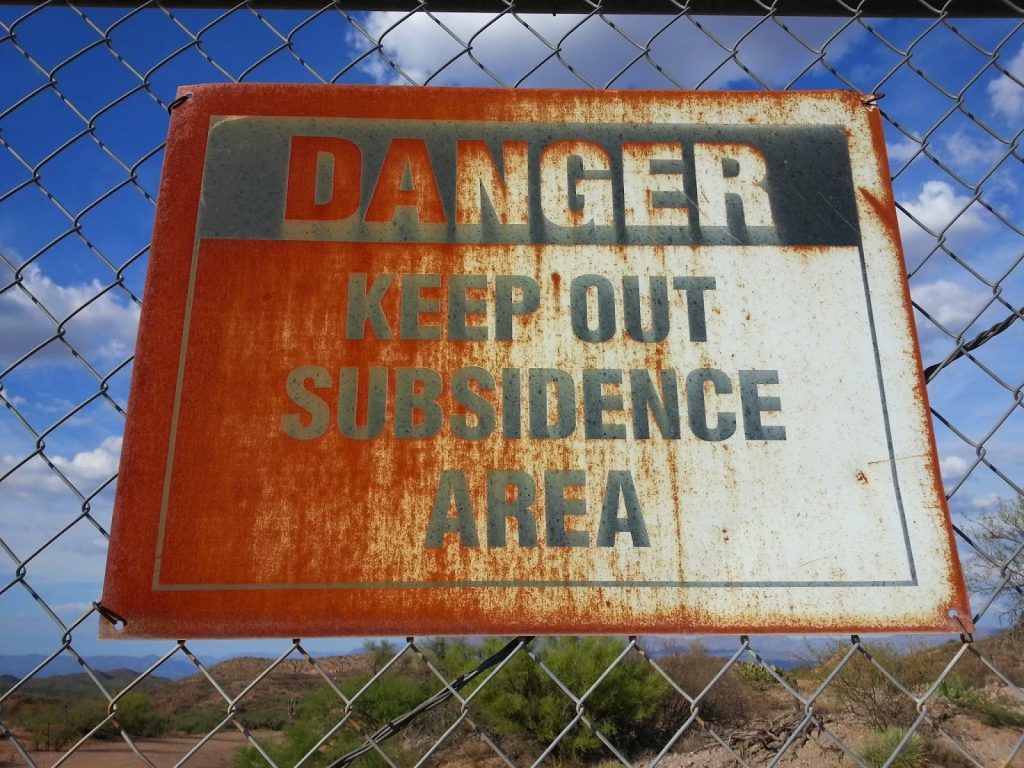
If today's Arizonans know of the landmark law at all, it's via the shorthand that new developments were required to show a 100-year supply of water. But it was primarily intended to stop groundwater depletion, which was frighteningly reducing aquifers that had taken centuries or millennia to fill. The most noticeable sign of this phenomenon is subsidence, the collapse of the earth and opening of fissures as groundwater is pumped away.

Groundwater pumping was particularly problematic in Pinal County, which depended on it heavily for agriculture. The irrigation district from Coolidge Dam wasn't nearly enough for the demands of farming there, rapidly giving way to tract houses. The resulting dead landscape along I-10 between Phoenix and Tucson makes it The Ugliest Drive In America.

More from early Phoenix

More from early Phoenix

This post piggybacks on the Phoenix at Statehood column from this past year. This time the emphasis is on photography, most from the Library of Congress and the McCulloch Brothers collection at the ASU Archives. Click in the image for a larger view. Enjoy.

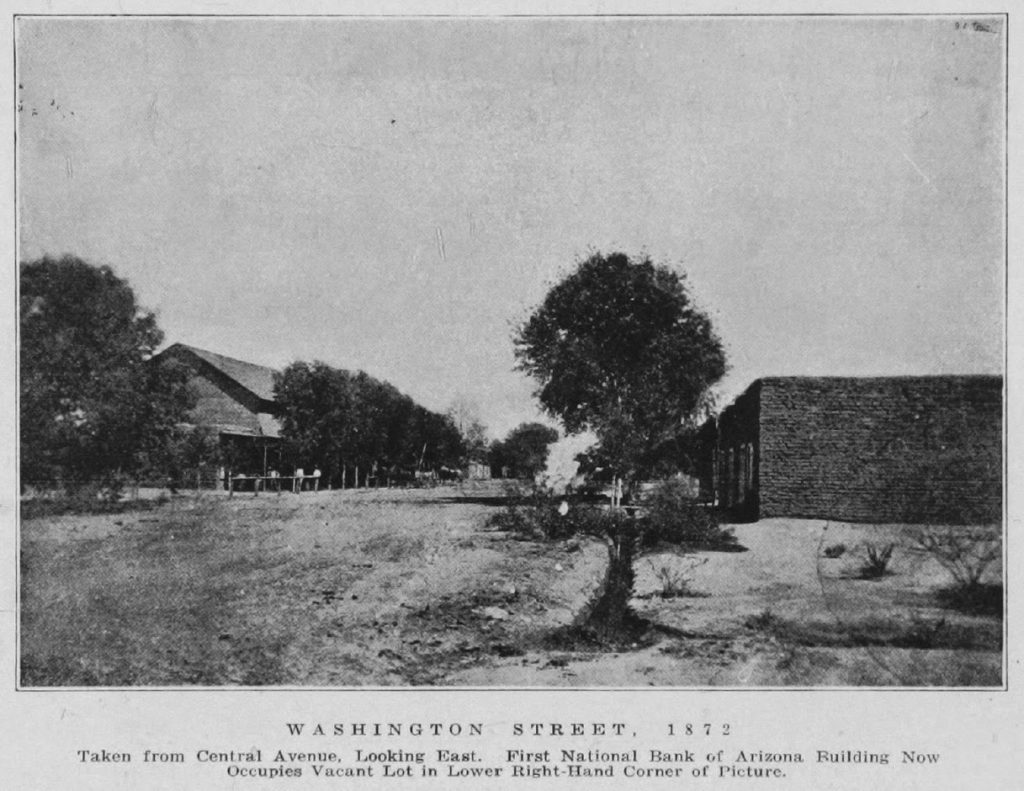
Washington_Central_looking_east_1872Washington and Center streets in 1872. The town wasn't even incorporated until nine years later. Note the abundance of shade trees even at this early stage.

2nd St and Jeff 10-mule team freighter 1880sBefore the arrival of the railroads, mule teams hauled freight to and from Phoenix — in this case headed for "the mines." This is the 1880s at Jefferson and Second Street (Maricopa Street).

12-mule teams 1st and Jefferson 1880sAnother view of mule teams hauling freight along Jefferson Street in the 1880s.

1st Ave and Adams 1890s

First Avenue and Adams (Cortes Street) in the 1890s. The 1889 Fleming Building is recognizable at right. Today the boxy Wells Fargo tower stands there.

More midcentury Phoenix

More midcentury Phoenix

I continue to feed the endless appetite for photographs of Phoenix. The value I try to add on this site is telling some of the story behind the images. I get these from a variety of sources but one of the best is Brad Hall's History Adventuring on Patreon — pledge a dollar or more and you can get access to far more photography. Click on the image for a larger view.

Celebrity_Theatre_Star_Theatre_440_N_32nd_St_1960s(1)

Celebrity Theater, the city's main concert venue, built in the 1960s on 32nd Street north of Van Buren, a sign of the hollowing out of downtown.

1970s_Central_Osborn_looking_south(1)Here's the southwest corner of Central and Osborn in the 1970s before the two bank towers were built. This was when the city was still litigating its long battle against billboards, hence the Eller sign advertising an early gated property around 27th Street and Osborn. Behind it is an old Phoenix stucco apartment. To the right are the Mayer towers, the short one with the Playboy Club on top and the tall one with the outside elevator, headquarters of First Federal Savings.

Arizona Bank Central Cypress 1960s.jpgFrom when I was growing up, here's the Arizona Bank at Central and Cypress Street. The shady area to the north surrounds a beautiful building that now houses the Inter-Tribal Council of Arizona. Most of these trees were ripped out for palo verdes.

Blue_Cross_Blue_Shield_under_construction_321_W_Indian_School_Rd_1971(1)The Blue Cross-Blue Shield headquarters at Third Street and Indian School, completed in 1970. This midcentury masterpiece was lost, replaced by a gas station.