I will be traveling Friday in advance of my event Monday with Scott Turow at the Sandra Day O'Connor College of Law at ASU. The blog will be updated as…
Mesa rising

Mesa rising

Mayor_smith1

Mesa Mayor Scott Smith, right, with federal officials at the new Able Engineering facility, announcing an Obama administration initiative to boost manufacturing.

Mesa has landed an Apple factory and 2,000 jobs (provided the Gilbert school board goes along with the tax incentives), the latest in a series of triumphs as Phoenix falls into eclipse and the big issues are "pension spiking" and the "food tax."

Is "the city of wide streets and narrow minds" finally starting to punch at its weight?

Unlike most of the "boombergs" that have encircled Phoenix despite the aggressive annexation intended to prevent just that, Mesa always had a special identity. Settled by Mormons, Mesa had a distinctive set of small-businesses and agriculture-based industries and was surrounded by miles of citrus groves.

This began to change in the 1970s when the Superstition Freeway, as it built east, killed Main Street shops. Worse, the city inflicted a series of wounds on itself even as it notched huge population growth.

Election postmortem

The mainsteam media looked at Tuesday's results and see big trouble for Democrats.

In Virginia, Clintonista and former Democratic National Committee Chairman Terry McAuliffe outspent his opponent, state Attorney General Ken Cuccinelli, by three-to-two and only won by 2.5 percentage points. In New Jersey, Republican Gov. Chris Christie won a commanding victory in a blue state.

In this narrative, the president looms large. Obamacare suffered a troubled rollout. His approval rating has hit a new low. Unstated: He's black.

Progressives shouldn't whistle past the graveyard, but I'm not sure how much this is true.

For example, Virginia held the capital of the old Confederacy and is not a swing state anyone should count on. Some experts like to see the Old Dominion and North Carolina as at least potentially purple states. I'm not so sure.

District 4

[UPDATE: As of 9:30 p.m. MST Tuesday, Pastor held a 498 vote lead over Johnson and counting may continue until Friday]

The race for Phoenix City Council District 4 might seem like small ball for this blog, but it tells us much about where Phoenix stands and where it is going.

One candidate is Laura Pastor, daughter of Rep. Ed Pastor, without whose efforts we would not have a popular light-rail system (WBIYB*). The other is Justin Johnson, son of former Mayor Paul Johnson. (Another race pits Kate Widland Gallego against the Rev. Warren Stewart, but for simplicity's sake, I will focus on District 4).

The contest has been distinguished by mudslinging, with Pastor, for example, being compared with Paris Hilton — and a remarkable lack of substance.

Early Obamacare soundings

I'm hesitant to draw many broad conclusions about the Affordable Coverage Act based on early glitches to the federal Web site. Much of the journalism has been shoddy, lazy or driven by politics.

Readers of this blog know I had my doubts. If universal coverage was not politically possible — not even a public option — then was it worth it for President Obama to stake his presidency on this.

This: A conservative, "market-based" plan that originated in the Heritage Foundation when it had more integrity and implemented at the state level by the GOP's most recent presidential nominee. This: A massive giveaway to the private insurance industry.

But it's done and I want it to succeed as far as is possible with the many compromises that were necessary to achieve a portion of what is considered a basic human right in other advanced countries.

At this point, here is what I know:

Phoenix 101: What went wrong

Phoenix 101: What went wrong

If you think "everything's fine" or that Phoenix has no troubles that aren't common to other cities, this is not your post. Spoiler alert: Everything is not fine.

City_of_phoenix_logoWe discuss problems and challenges, as well as intelligent responses, frequently in this space. A previous column sought to debunk the excuses, myths and lies about the place. But reading the comments on the most recent post made me wonder: Is Phoenix uniquely troubled? If so, how and why?

Sprawl doesn't explain it. What Kunstler calls "cartoon architecture" has befouled the nation from sea to sea. Good civic design was lost everywhere. The best cities in the country are surrounded by soul-killing suburbs, office "parks," malls, shopping strips, parking lagoons and laced up with freeways.

Car culture, per se, isn't the answer, either. Oklahoma City ranks lowest in non-vehicle commuting, yet the entire metro has long backed a levy that has impressively rebuilt downtown. Freeway-mad Dallas also boasts the nation's largest light-rail system.

The First Street challenge

The First Street challenge

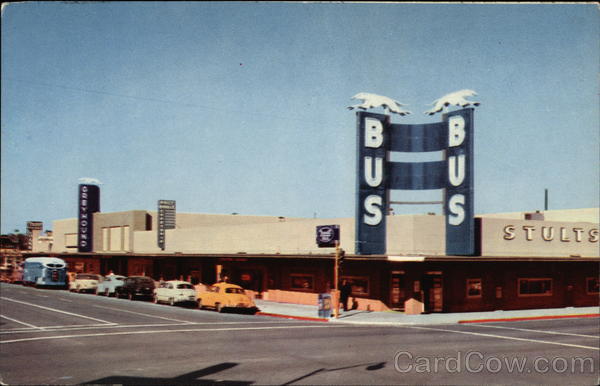
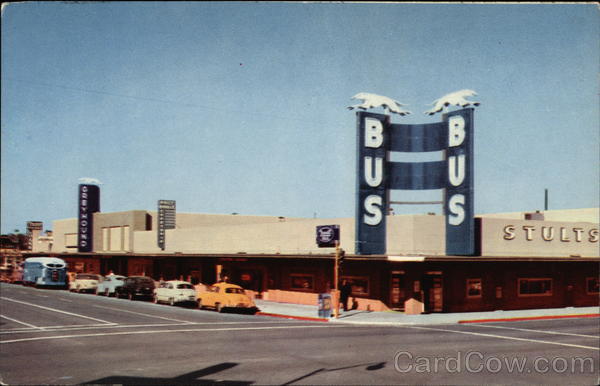
GrayhouseDepot  The Greyhound bus depot at First Street and Van Buren, one of the many destinations along First Street in old Phoenix.

It's nice to read that the city of Phoenix is spending $560,000 on a facelift for First Street, including "street improvements, decorative sidewalks, new trees and pedestrian-friendly upgrades."

Unfortunately, my first reaction is that City Hall is about 50 years too late.

Into the 1960s, First Street, like much of downtown, was a thriving commercial avenue. Essential to this was affordable space for shops and a streetscape that meant every few feet you landed at the door to another business.

Let me give you an example. In 1956, between Washington and Monroe streets, two blocks, First was home to Russell Stover Candies, David's Shoes, Goldwater's, Hanny's, Dorris Hayman, Montgomery Ward, Porter Mercantile, Barney's Garage, Cole Home Supply, Morris Athletic Supply, Richards Dean Jewelery, Tony's Shoe Shop, The Normandie Hotel, Thompson's Indian Shop and Phoenix Stamp and Coin. All in two blocks.

That delightful commercial density was killed by "improvements" since then: Brutalist parking structures, hulking hotels that open onto other streets, teardowns and the Valley Center (Chase Tower) skyscraper. These destroyed literally scores of human-scale buildings and helped run retail out of downtown.

Secession with benefits

Secession with benefits

512px-Battle_of_Antietam2
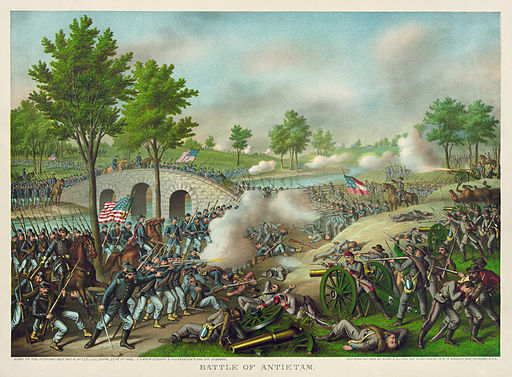
 The Battle of Antietam, 1862, where my great- great-uncle, fighting in the Confederate division from Texas under Gen. John Bell Hood, was fatally wounded.

What "Soleri" called the Cold Civil War is underway. The game of shutdown/default chicken, with grave consequences for America's economy and standing in the world, is only the latest manifestation. Although the worst was avoided, it is only a temporary truce. Republican House members representing about 18 percent of the population, were able to hold 100 percent of the nation hostage.

There is talk in places such as Texas of secession, and in Arizona and other states of nullification, choosing which federal laws to follow, hearkening back to the crises the preceded the Civil War. But these and the fetish about the debt and deficit, as well as the size of government, are carried out with high hypocrisy.

The reality is that almost all states of the New Confederacy — the old South, plus parts of the Great Plains and intermountain West — are net takers. In other words, they receive more federal money than they pay in taxes. For example, Arizona, whose entire Republican delegation voted against the compromise to reopen the federal government, received $1.60 for every dollar paid. In South Carolina, the cradle of secession, the ratio is $2.13 to $1.

The Friday saloon

[Saturday update] "12News" tweeted "Arpaio says crime sweep leads to 22 arrests." My first reaction: Why are journalists, even television journalists, still taking dictation from this publicity-mad sheriff who has…

What this is

In the 14th day of the federal shutdown and the media, traditional and new, with honorable exceptions, have done a terrible job of explaining things to the American people. It's a football game: The Republicans have fumbled and the Democrats would retake the House. Wait, the Republicans just did a quarterback sneak and are back on top…

False equivalency abounds: "Both side are to blame." Or it is the soccer mom explanation: They need to grow up and play well together.

It is none of these things.

We are in the midst of a constitutional crisis, the worst since the eve of the Civil War.

The Friday saloon

Several readers have asked me to comment on the Arizona Republic closing its East Valley bureaus and leaving the reporters as "mobile reporters" to work from wherever they can find…

Scandal for schools

Last week, two items came my way. I learned that Andre Goodfriend, my buddy from grade-school days, has become the United States chargé d'affaires, or deputy chief of mission, at our embassy in Budapest, Hungary. Meanwhile, it was reported that enrollment in the Phoenix Union High School District reached a 36-year high.

The district is 80 percent Hispanic and only 5 percent Anglo. As recently as 1990, the demographics were 41 percent Anglo and 40 percent Hispanic. Some 81 percent of students qualify for free or reduced-price lunches — and based on my research, this is often the only meal some of them receive in a day.

What these tidings have in common is the scandalous trajectory of failure in our public education system.

This is a huge topic, and I recommend Diane Ravitch's Rein of Error and The Death and Life of the Great American School System for anyone seeking some of the best examinations of the topic by one of our great scholar-advocates. My aims are more modest.

The Friday saloon

• The best piece I have seen on the extremism driving the government shutdown — and worse to come — is from Andrew Sullivan. "I regard this development as one…

The nostalgia rap

I was made aware of this recent conversation. My name came up, and an Influential Person said, "But he hates Arizona." The other person responded: "No, he actually likes it quite a bit." Influential person: "OK, but he's blinded by nostalgia."

Nostalgia has its appeal. Indeed, it can be healthy, as an article in the New York Times recently pointed out:

Nostalgia has been shown to counteract loneliness, boredom and anxiety.
It makes people more generous to strangers and more tolerant of
outsiders. Couples feel closer and look happier when they’re sharing
nostalgic memories. On cold days, or in cold rooms, people use nostalgia
to literally feel warmer.

Nostalgia does have its painful side — it’s a bittersweet emotion — but
the net effect is to make life seem more meaningful and death less
frightening. When people speak wistfully of the past, they typically
become more optimistic and inspired about the future.

“Nostalgia makes us a bit more human,” Dr. Sedikides says. He considers
the first great nostalgist to be Odysseus, an itinerant who used
memories of his family and home to get through hard times, but Dr.
Sedikides emphasizes that nostalgia is not the same as homesickness.
It’s not just for those away from home, and it’s not a sickness, despite
its historical reputation.

But nostalgia is not what attracts people to Rogue Columnist, why traffic here keeps growing every month, or why people — even the Kooks — consider this a must-read.

The Friday Saloon

• The most interesting thing I learned on this Phoenix trip is how Gannett has removed Eugene C. Pulliam's name from the masthead of the Arizona Republic. (I typically read…