Economic report card

I arrived back in Phoenix to find the local newspaper editorializing, "Now is the time to invent a new Arizona." I thought the "new Arizona" was what came together to put St. Janet in power and had since been cleansed from the capitol by the Kookocracy. Anyway, on a Page One snippet (the highly formatted "product" is full of "snippets") we read, "Arizona stands on the threshold of a shimmering future…This place is redolent of change — Arizona is primed for progress." While it talks of "lift(ing) off the dead weight of the Great Recession and … start(ing) now to ambitiously reinvent our state," the overall tone of the package is very cheerleader-y. No edge. Kid gloves. The reliable developer-economist Elliott Pollack is quoted. Gov. Jan Brewer is given a column. The status quo smiles. Everything's fine.

No disrespect. The people that remain there are nice folks doing the best they can within the constraints of the huge corporate owner, right-wing extremists and Real Estate Industrial Complex. But the Arizona Republic under Sue Clark-Johnson had a few years of sterner stuff, when I and others wrote seriously about the state's opportunities — and the challenges it would take to achieve them. We had a few successes: ASU downtown, the Phoenix Convention Center, T-Gen, Science Foundation Arizona, all-day kindergarten and light rail (WBIYB). But the moment was fleeting, the opposition ferocious and the real progress was stymied or rolled back. It has been a decade since Mary Jo Waits of a more muscular Morrison Institute wrote the Five Shoes Waiting to Drop report. While it helped spur some action back then, the rise of the Kookocracy stopped it. All shoes dropped. As Waits repeatedly warned, "Arizona will become the Appalachia of the 21st century."

Back in the 1980s, when the Republic was independent, publisher Pat Murphy led similar efforts to get the city and state's attention. Powerful civic leaders — and Phoenix once had them — used the 1990-91 crash to form a new economic strategy and go after high-wage clusters. In every case, the growth machine overwhelmed reform. Why should the Great Recession, which hit Phoenix worse than most places, be any different. But my intention today is a deeper examination of where the state and metro actually stand.

The Friday saloon

• I keep eclectic company. Arizona's piano-playing, car-clipping-to-hide-canoodling, legal-troubled but ambitious Attorney General Tom Horne has put me on his list. So I get the "Cracking down on polygamist abuses…

Exceptionalism

Patriotism is the last refuge of a scoundrel — Samuel Johnson, 1775

Poor Nikita Khrushchev, banging his shoe at the UN, threatening to "bury" us — America just got stronger. Ike's Secret Service wouldn't even let the Soviet leader visit Disneyland on his trip here. Instead, he should have hired a public relations outfit to place an engagingly written op-ed in the New York Times. When the new czar, Vladimir Putin, pulled this off last week, American pols and opinion leaders went crazy. The detonation didn't come from Putin appearing statesmanlike (even when off-base), but when he challenged President Obama's assertion about American exceptionalism. "It is extremely dangerous to encourage people to see themselves as exceptional, whatever the motivation."

Peggy Noonan was nearly hysterical. "Putin is telling the world he knows how to correct America, tell it off, criticize it for its conceit," she blogged, and of course had to blame President Obama: The Russian president is "attempting to show the world he’s its reliable voice, its real leader, not those other guys. Would he have done this in the past? No. A truly historic level of foreign policy incompetence on the part of
the White House got us to this point." The right-wing talking-points email must have gone out because Charles Krauthammer made much the same argument, adding: "I mean, the chutzpah of writing that, by a KGB thug…" Wealthy Republican Sen. John Sidney McCain III, R-Fox News, vowed to give Putin some of his own back by writing an op-ed in Pravda.

Even the Washington Post's Dana Milbank felt compelled to explain to the Russian president the gravity of his transgression:

Americans aren’t better than others, but our American experience is
unique — exceptional — and it has created the world’s most powerful
economy and military, which, more often than not, has been used for good
in the world. When you question American exceptionalism, you will find
little support from any of us, liberals or conservatives, Democrats or
Republicans, doves or hawks.

The Friday saloon

Conversation starters for the open thread: • If we're so eager to bomb Syria to enforce "international norms" (such as things, you know, like torture), let's learn a few things…

The permanent crisis

Five years ago this week, the giant investment bank Lehman Brothers collapsed. This set in train the worst economic crisis since the Great Depression. The world barely avoided a second depression. Now, the United States is technically in a recovery. It doesn't feel that way to most people. Unemployment, at 7.3 percent, is at a level that would have been considered a crisis in the post-World War II era. Now it's the new normal. The one-tenth of a percentage point drop in August came for the wrong reason, 312,000 people dropping out of the labor force — and these are not mostly baby boomers headed for secure retirement. Most of the jobs being created are in low-wage industries and many are part-time. Even if we continued to see 169,000 jobs per month added — unlikely — it would take until mid-2023 before we regained the employment level of 2008. A recession comes along about every seven years, so even that horrid timeline is unrealistic.

Something has gone drastically wrong in America. We no longer have a manned space flight program, even as China prepares a moonshot. We're not reaching for the stars, literally or metaphorically. The sequester ensures research funding is being slashed. The Large Hadron Collider, the greatest triumph of modern physics, is in Europe, not America. A "Manhattan Project" for renewable energy? Building high-speed rail and other advanced job-creating, productivity enhancing projects? Such all-American efforts are beyond today's America. Our infrastructure is in deadly bad shape. But we're incapable of doing more than patching a road-heavy transportation system — and we have too many roads already — geared to a much less populous nation with 1960s gasoline prices. A real college education is now the province of the well-off. So are good jobs. The ladders up that were so abundant here are mostly gone. No wonder about one third of the people stuck in minimum-wage jobs are age 40 or above. Adjusted for inflation, 40 percent of American workers earn less than the minimum wage in 1968. The shift of national income from labor to capital is startling, with the result being historic and rising inequality.

This state of the nation is inextricably tied to the situation in Washington, D.C. It is typically described as "gridlock" and the media are at pains to find the "extremes" of both parties holding up intelligent responses to our cascading troubles. This is not true.

The Friday saloon

The Friday saloon

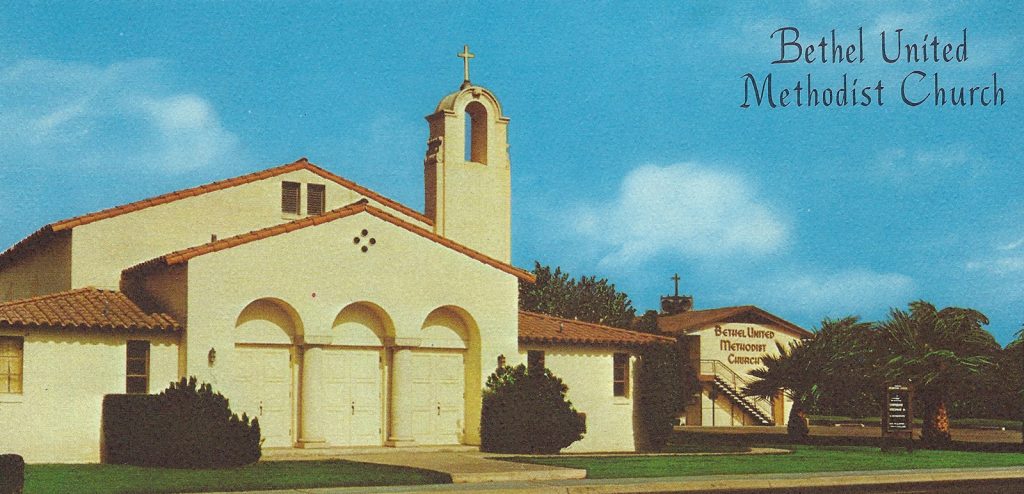
Pouring for the weekend open thread: • To beat the parched horse about Phoenix's unique and valuable oasis: the replacement for the Bethel Methodist Church at Osborn and Seventh Street…
Phoenix: The oasis city

Phoenix: The oasis city

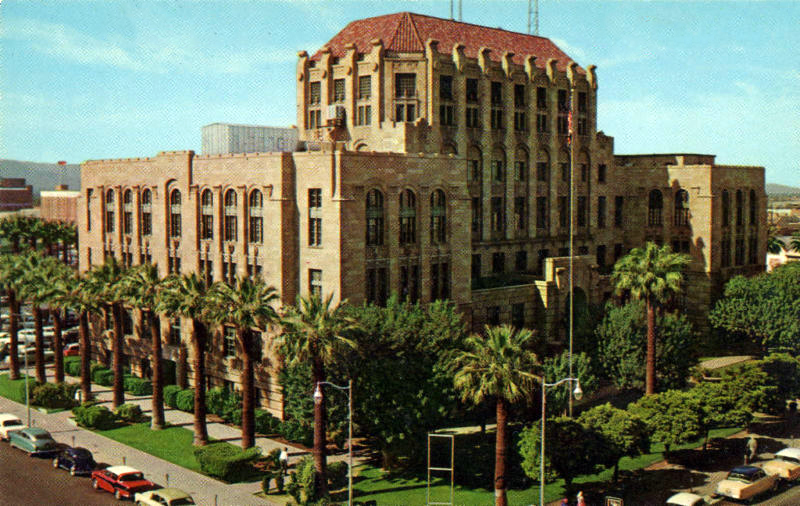
Oasis_CityCountyBldg
The 1929 Maricopa County Courthouse and Phoenix City Hall when it was surrounded by shade trees and manicured lawns (Photographer unknown).

Alone among the cities of the American Southwest, Phoenix is the oasis. It has always been so, but whether it remains an oasis city is starting to come into doubt. A common narrative is that Phoenix attracted Midwesterners who wanted to recreate the landscape from which they came.

This is untrue. In fact, the early Anglo residents were from many regions, especially the South. And the oasis predates American settlement. The archeology of the region is in flux, but it appears that "plant husbandry" was being performed by prehistoric tribes as early as 3,000 or 1,500 B.C. (or BCE if you are trapped in the politically correct precincts of academia). By the first millennium A.D., the most advanced irrigation in the New World was being perfected by the Hohokam.

The Salt River Valley was an ideal location, with rich alluvial soil that would grow anything — just add water. The altitude and weather in the modern climate era allow for two or more growing seasons depending on the crop. Maize was imported from Mesoamerica. Cottonwoods, willows and other native shade trees grew along the riverbank and its subsidiary creeks. I have no doubt that Hohokam dwellings were well-shaded. The new settlers merely took it to a higher level.

The photo above captures the oasis city at its zenith, in the 1960s. Note the inviting public space provided by shade and grass surrounding an inspiring art deco building. This was the Phoenix I grew up in. At 10,000 feet, you would have seen a green city surrounded by bands of citrus groves, farm fields and horse pastures. And then: The majestic, largely untrammeled Sonoran Desert. What a place to live. The older neighborhoods were graced by mature trees and parking lawns, a grassy area between the curb and sidewalk. Encanto Park was an oasis within an oasis. Central, as you see below, was lined with palm trees. North of Camelback were shady acreages, often along streets with an abundant shade canopy, set back behind irrigation "laterals." My great aunt lived in one: It was a wonder of shade and tranquility behind oleander hedges on Seventh Avenue. Well into her eighties, this daughter of the frontier would walk out every Sunday evening to turn the valve and "take her water," the flood irrigation from the Salt River Project.

In our neighborhood, what is now Willo, few families had pools but most put in winter lawns to give the sweet season its magical green. Even driveways had grass between two narrow concrete strips. This was not the Midwest. It wasn't LA, although the parking lawns were imported from there. Instead, Phoenix created its own unique urban aesthetic. It wasn't planned. This Eden just happened. If you missed it, you have my deepest sympathy. Many areas of oasis beauty remain. If you want a sense of the practical benefit, drive south from Osborn on Fifteenth Avenue some summer evening with the windows down. When you cross Thomas into Encanto Park, the temperature will drop by ten degrees or more.

The Friday saloon

• So the first round of Phoenix City Council elections attracted 21 percent of registered voters compared with less than 16 percent four years ago. Turnout was lowest in central…
The dam problem

The dam problem

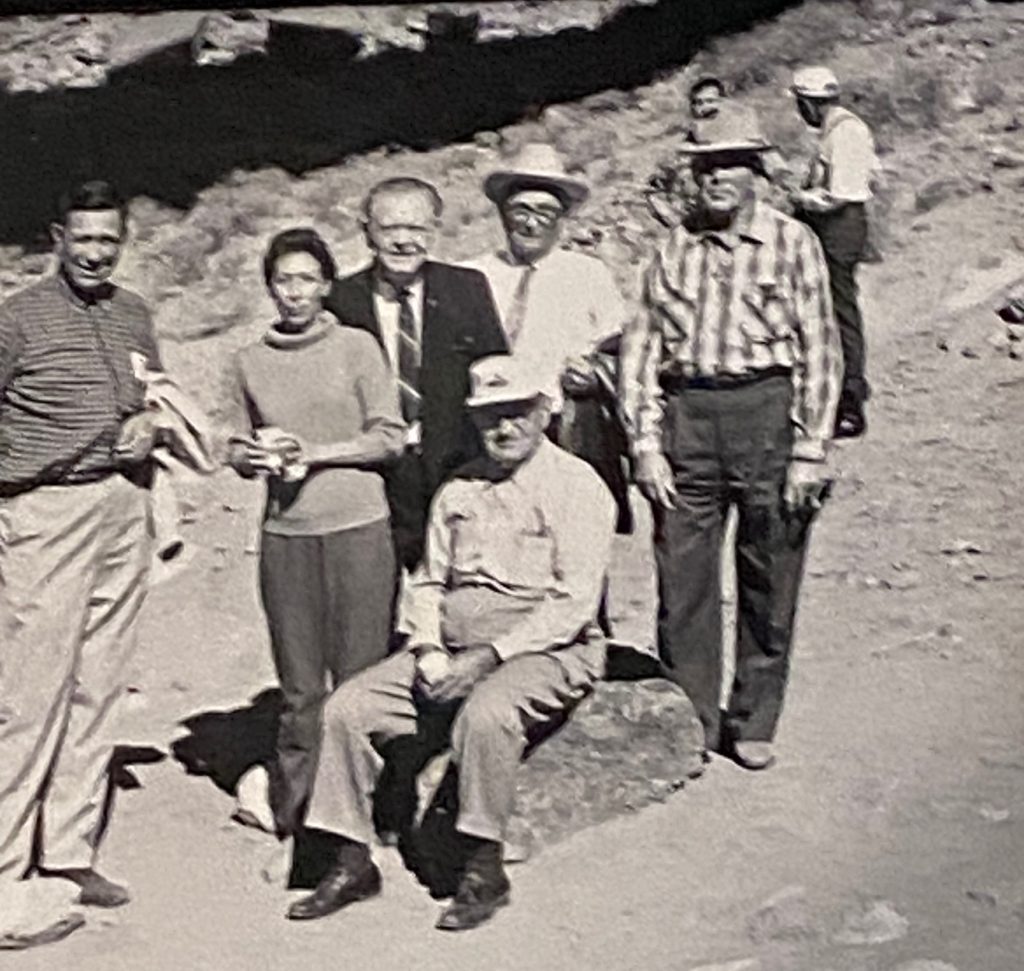
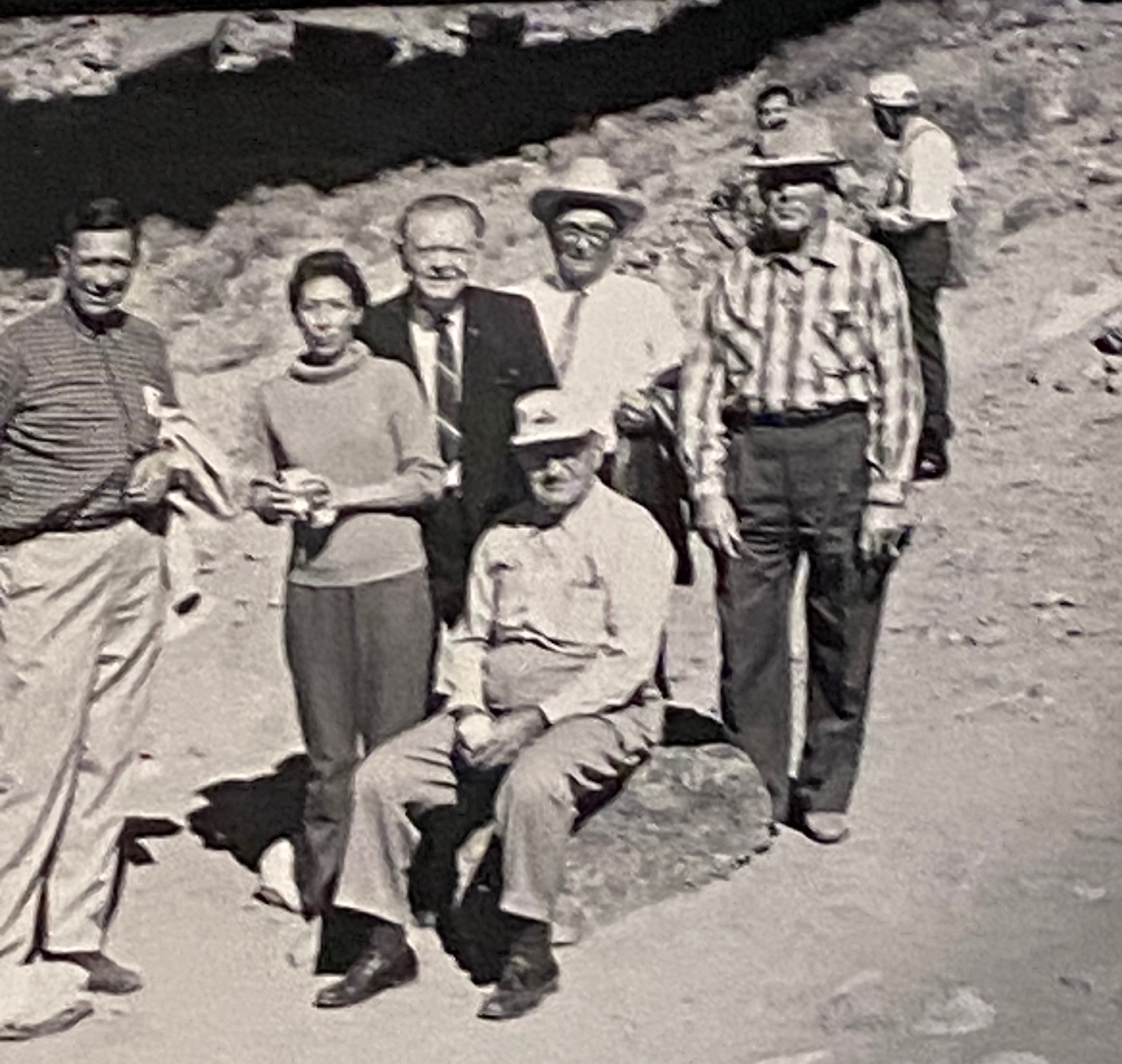
IMG_0246A photo hangs in my study showing my mother at Glen Canyon Dam, posing with officials of the U.S. Bureau of Reclamation, Interior Department and Arizona State Senate. She is the only woman in the group and represents the Arizona Interstate Stream Commission, the quiet but powerful state agency fighting for the Central Arizona Project. The year is 1965 and the 710-foot-tall stark white (at the time) arched structure that impounds Colorado River water in Lake Powell will begin full operations a year later.

She has the satisfied expression of a woman who never met a dam she didn't like (that would change later, as it would for many involved, when they realized the unintended consequences of what they had wrought). But she and some of her colleagues also knew they were pulling a kind of confidence game on California and the Upper Basin states. More about that later.

I've been studying that photo as Phoenicians who are paying attention read about how persistent drought is reducing the water released from Lake Powell. A Bureau of Reclamation study says the drought is the worst in a century (it is actually worse than that, but such is the record keeping), and less water will be sent downstream to Arizona, Nevada and California than at any time since when Powell filled — when that photo was taken.

It is a big deal.

The Friday saloon

First, some business: I am going to take an actual vacation until August 26th. Rogue will not be updated, but feel free to browse the archives and special topic pages.…

Solar dreams II

After I wrote the first column on this topic, the Arizona Republic rolled out a creditable series on solar energy in the state. Among other things, it examined the recent setbacks solar has faced; did a close-up on what will be one of the nation's largest solar arrays on three square miles near Gila Bend, the $2 billion Solana Generating Station, and the forces that will challenge solar, such as cheap natural gas. It properly points out that Phoenix's two utilities get a small fraction of their energy from solar, and the "action" is on rooftop installations for relatively well-off house-owners — and even here the numbers are small. One is left to wonder who is running a hustle, a la the alt-fuels scandal from the early 2000s…

In any event, my intention has always been to dig deeper. The alpha tragedy is that the solar power movement was born in Arizona and the state let it get away. The International Solar Energy Society, one of the premier organizations in the field, was founded in 1954 in Phoenix. The original name was the Association for Applied Solar Energy. Among the founders were executives of Arizona Public Service. More than 1,000 scientists, engineers and government officials from 36 different countries attended the first two meetings in Phoenix and Tucson. The organization went on to become accredited by the United Nations and was based at ASU until 1970, when the headquarters moved to Melbourne and finally to Freiburg, Germany. The early research gathered by the organization is still in the ASU library collections. But the headquarters, brainpower and influence is long gone.

Neither fact is surprising. Old Phoenix had a progressive streak and an ambitious nature. This was before changes in the economy and a zombie-like focus on adding population and housing took over everything. Yet solar energy was very primitive and a gallon of gasoline cost 21 cents ($1.85 in today's money). There was no way solar could compete. It's still difficult. And the leaders of the state were primarily focused on winning the Central Arizona Project. But when people wonder why sunny Arizona isn't the center of the world's solar power efforts, the answer is simple and sad: It once was.

The Friday saloon

The big, big Phoenix story is the resignation of City Manager David Cavazos, who is leaving to accept the same position in Santa Ana, Calif. Everyone is pleading surprise. This is almost certainly not true. Cavazos put out a prepared statement that was both graciously restrained and yet also appeared to be highly lawyered. There may prove to be much more to this than meets the eye.

With the local paper continuing to lay off people and institutional knowledge fading, here are a few pieces of important background. The council/manager form of government is one of Phoenix's proudest achievements, having done away with the corruption not only of cities "back East" but also old Phoenix. The council sets policy and the manager implements it, running the city from day-to-day. The mayor is a relatively weak position and one vote on council. Once a person assumes the purple of the city manager, he is expected to serve for many years. Frank Fairbanks, who Cavazos succeeded in 2009, served for two decades. One simply doesn't walk away, and certainly not to little Santa Ana (pop. 329,427). So this is a bombshell even if there's nothing more to it. If there is, it's explosive, including for Mayor Greg Stanton.

There was a stupidly nasty fight over giving Cavazos a raise to bring his pay up to $315,000. The next largest city with a council/manager form, San Antonio, pays a base $355,000 to Sheryl Sculley, the capable former deputy city manager in Phoenix who was shown the glass ceiling by Phil Gordon and the firefighters union (over an old grudge). The council is more divided and kooky now, more small ball. A sense of stagnation is felt, although the light rail extension is happening (WBIYB). The Legislature has made life even more difficult for cities. Phoenix is struggling relative to the prosperous suburbs. The Phoenix polity is much more limited compared with the other most populous cities. Any of these — or the blowback from previous controversies — could have driven Cavazos to leave at the prime of his professional life. Also, he was caught up in the minor expense-account scandal in the mid-2000s. I always wondered if Cavazos had the chops for the job, not to mention the quiet, genial ruthlessness of Frank Fairbanks.

The immigration con

The immigration con

BorderJeep
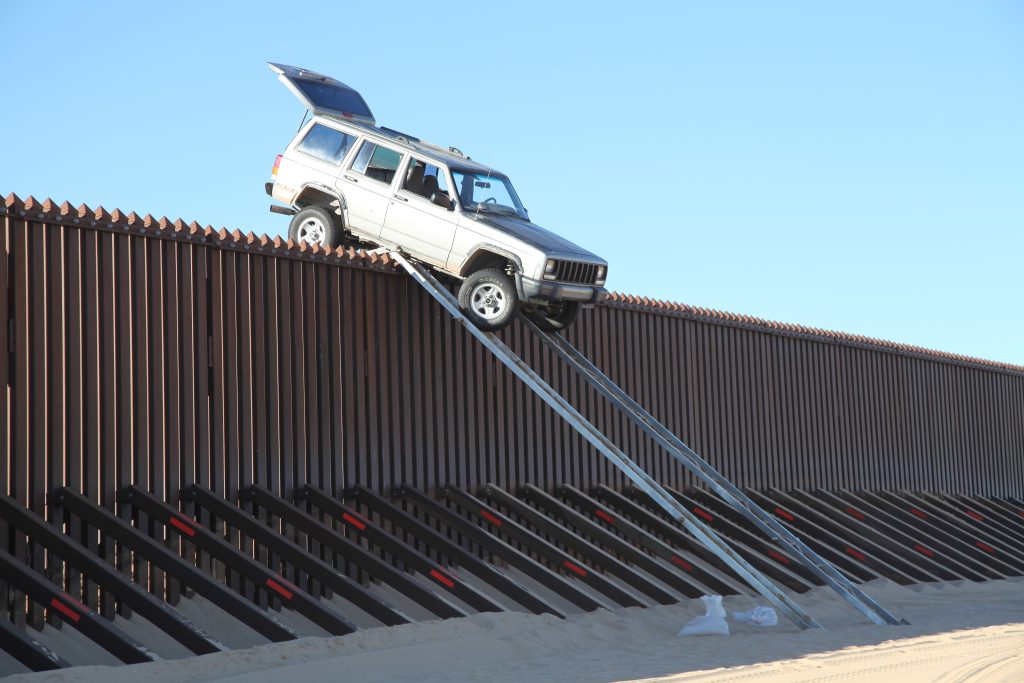
A smuggler's Jeep found stuck on the border fence near Yuma in 2012.

As I write, here are some of the latest headlines: "Looming Budget Fight Could Doom Immigration Reform"; "Cecilia Munoz: Quarterback of Obama's Immigration Reform Efforts," and "Immigration Reform Supporters Ask for Help From Businesses."

Does any serious person believe there was ever a chance for "sweeping immigration reform," as it was called with a repetition of a bubblegum rock station playlist? I know, I know: This was how the GOP would save itself from extinction as demographic trends appear to shift against old, bitter, suburban and rural white people. Thus, at least in the minds of the oblivious D.C. pundits depicted with such savage accuracy in the new book This Town, wealthy Republican Sen. John Sidney McCain III would reclaim his mantle as a statesman, a maverick, and herd his party to a deal with President Obama.

But this failed the smell test from the start. Even McCain, who at certain points in his career had favored immigration reform (when he didn't and vice versa), kept prattling on about "a secure border" being the foundational element of any deal. After an amendment to the so-called Gang of Eight's immigration bill in the Senate, McCain said, "We'll be the most militarized border since the fall of the Berlin Wall." It says something about today's pretzel of a Republican Party that the once despised symbol of oppression ("Mister Gorbachev, tear down this wall!") is now offered as reassurance against an invasion of Brown People. And all that to get a deal that would somehow raise Republican favorables among voting Brown People. Next step: President Rubio!

Detroit and us

Detroit and us

DetroitSkyline
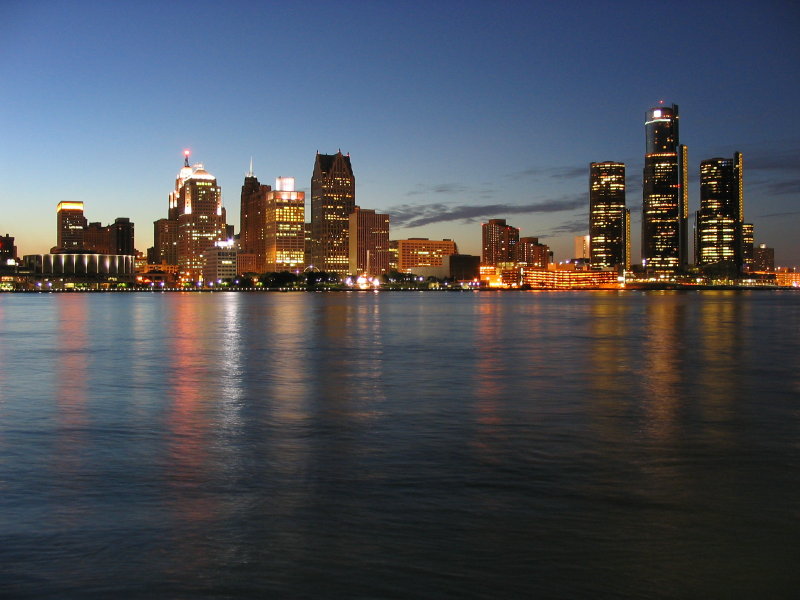
Detroit's skyline seen from Windsor, Ontario

[NOTE TO READERS: We will resume the Friday Saloon next week; in the meantime, feel free to hijack this thread if you wish.]

When some of you asked me to write on Detroit, I wasn't sure I could add much to the many stories and columns that have been produced after the city filed for bankruptcy. But many were the proverbial blind men trying to describe an elephant. Something big has happened, but what? How did things get so bad? And is this a foreshadowing of calamities to come? As one reader put it, "The Detroit default woke me up to the impending train wrecks we're facing elsewhere. What happened? Another oversight calamity?"

Back to the elephant, as in, the elephant in the room. No discussion of Detroit can avoid race and the city's toxic racial history. At a little more than 700,000 population, Detroit is the only major city in the nation with a staggering concentration of African-American poverty. It is 83 percent black compared with 14 percent for Michigan. The poverty rate of more than 36 percent is twice the state level. Median household income is 57 percent of the state average. There is no other American city so populous facing such an imbalance.

Solar dreams I

Arizona Public Service is engaged in a campaign to undercut solar power in the state. The 18,000 APS customers with solar panels essentially get a credit on their bill for the energy they don't use from the regular electrical grid. APS complains, as an Arizona Republic story put it, "customers with solar often see their bills reduced to the point that they are no longer contributing toward routine costs associated with maintaining the power grid. That, they say, forces customers without solar to pay the entire cost of maintaining the grid, even though solar customers use the grid to get power at night or when clouds pass overhead and to distribute their excess electricity." APS is asking the Corporation Commission to allow it to charge new solar customers an average of $50 to $100 more.

This has produced protests and at least one critical editorial. It is happening against a backdrop of efforts to "deregulate" the state power market (California, Enron, hello…?). Even the long arm of the Koch brothers is reaching in to support APS. The state's nascent solar industry is fighting on the other side. But with the powerful and little-scrutinized Corporation Commission now firmly in the hands of the Kookocracy — I'll make an exception for Susan Bitter-Smith — APS may well win. It would be one more headwind facing solar power in the sunniest state in the union. Perhaps worse, it distracts from the conversations we ought to be having about solar. With most of the reporting being "he said/she said" stories intended to avoid irritating powerful APS, it's difficult for most Arizonans to get the facts or explore the larger issues. I'll try to make a beginning in the next few columns. But today I'll focus on APS.

The company's argument is bunk. All customers must pay a basic fee that includes maintenance of the grid. But the attempt to kill solar in the crib — 18,000 customers out of more than 1 million — shows how the state's largest utility is accustomed to wielding influence and getting what it wants.