The Friday saloon

Emil is buying a round of drinks, so stick around. Comment on anything you wish. As for me, I am surprised at the vacuousness of questions (we offered some good ones) and debate facing prospective Phoenix City Council candidates. I am surprised that the city is moving forward with the short, ugly, hot Sprawl Needle. I am the eternal optimist-naif. And speaking of architecture, news arrives that the John Roll Federal Courthouse has been completed in Yuma. Take a look. With all due respect to the builder: That's it? Let us hope the finished building at least has screening from the merciless Yuma sun. Judge Roll was universally respected. He was among those murdered during the — tho' we dare not call it thus — political assassination attempt on Rep. Giffords. It's too bad we couldn't honor him and grace Yuma with a structure more inspiring than a suburban super Wal-Mart.

On the national front, here's an interesting piece from John Cassidy about why the GOP needs to lose the presidency for a third straight election. But embedded in it is anything but triumphalism for the other side:

Thirty states—including seven of the ten most populous—have Republican
governors, and twenty-nine have G.O.P.-controlled legislatures. With
this firm grip on local power, the party is able to gerrymander
Congressional districts to assure itself of continued success in the
House of Representatives. Despite opinion polls showing the last
Congress to be one of the least popular on record, there was never any
real prospect of the Democrats overturning the G.O.P. majority. And in
next year’s midterms, the Republicans may well gain more seats.

More conversation starters may be found on Arizona's Continuing Crisis. Now, I turn the saloon over to Emil, who has a Kook Watch update:

Local Rogue readers may recall Linda Turley, the iceberg who served as a news anchor on KPHO (Channel 5) a couple of decades ago. She retired to the "East Valley" but has kept busy in local Republican circles agitating against moderation. Back in 2011, in a column supporting then Arizona Senate President Russell Pearce for reelection during his recall campaign, Turley grossly exaggerated Arizona's job growth and credited Pearce for taking Arizona from 49th to 2nd in job growth.

The bedroom and the commons

We're often having the wrong argument in this cold civil war. The most recent example was the farm bill that came out of the Republican-controlled House of Representatives. For the first time in decades, it stripped away food stamps from the legislation. The rationale was to cut federal spending. And yet the bill ended up giving away even more taxpayer dollars to already highly profitable big agribusiness than was proposed by the Senate or the White House. A useful lens for understanding the battles in America might focus on two areas: The bedroom and the commons.

Republicans are obsessed with legislating what happens in the bedroom. Along with their conservative Democrat fellow travelers, they gave us the Defense of Marriage Act and later rode fear of "the gay" to triumph in 2004. Even though the Supreme Court recently struck down DOMA and more Americans are embracing same-sex unions, Republicans keep trying to introduce or defend so-called anti-sodomy laws. One is Virginia's Ken Cuccinelli, who wants to be governor.

The conservative movement is now moving aggressively against abortion in state legislatures, most prominently in Texas and North Carolina. And they are succeeding. No gentle outreach for bipartisanship here: These Republican-controlled statehouses are ramming through draconian legislation, the opposition be damned. In Ohio, Gov. John Kasich signed abortion restrictions, placed in a budget bill, surrounded by only men. Kasich is more popular than ever in a state that was once vigorously competitive and he is heavily favored to win re-election.

The Friday saloon

Perhaps the Zimmerman verdict makes all that follows from me less relevant, and if so, get on the thread and weigh in. Otherwise: The crowd still hasn't finished their martinis…
Phoenix 101: Summer

Phoenix 101: Summer

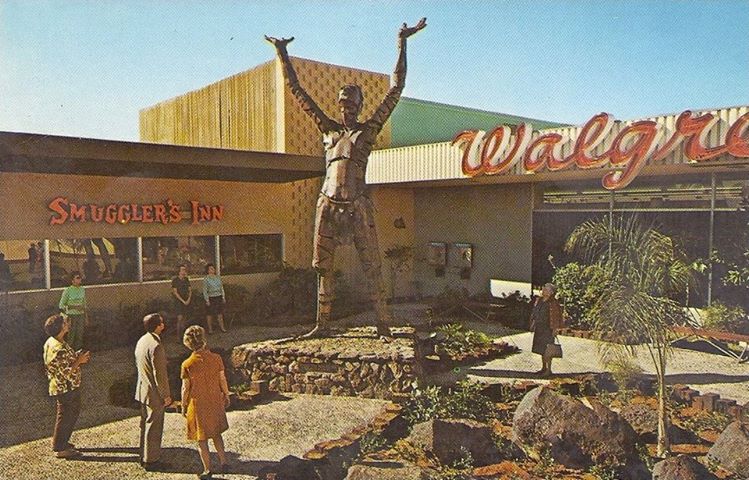
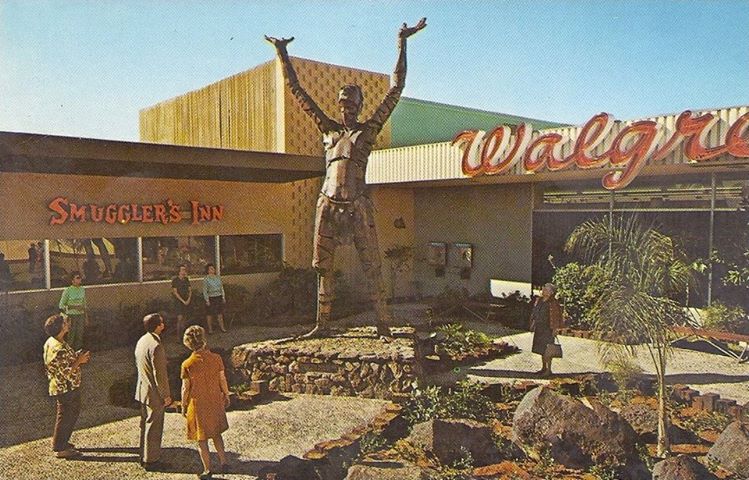
Sun_WorshipperThe Sun Worshiper at Park Central mall in Midtown Phoenix, circa 1960. 

Summertime, and the livin' is easy," Gershwin wrote. I never understood that. Movies and television shows with children scampered through meadows in the noonday summer sun similarly baffled me. I was a Phoenician. Summer was the oven. It was a force that demanded respect. Summer could kill you.

We might have ridden bicycles without helmets and freely roamed our neighborhoods without "play dates," but we were also expert in desert survival. So in summertime the livin' was careful. My friends and I avoided going out in mid-day and paced our roams in high summer. I read so many books in a soothingly dim, air-conditioned room at home, or at the public library, where the blast of heat was only apparent if you came close to the windows.

The rhythm of the city changed, slowed down. Aside from the morning and evening rush hour, most people stayed off the streets. Mailmen wore pith helmets. Street work and construction was mostly done early in the morning or not at all. Bank signs flashed triple-digit temperature readings.

Summer did have its charms. For example, most of the snowbirds and tourists — the ones who would ask you where they could find a good "Spanish" restaurant — were gone. It was just us desert rats. The cold-water fountains at every gas station were heaven. Enough money to buy a milkshake or ice-cream cone at one of the drug-store fountains was a cloud above that.

The Friday saloon

Plenty to talk about this week, from the Yarnell and other wildfires to the prolonging of the Coyotes hustle in Glendale. I guess they'll change the name to the "Arizona…
Young men and fire

Young men and fire

Smokejumpers
Unless we are willing to escape into sentimentality or fantasy, often the best we can do with catastrophes, even our own, is to find out exactly what happened…
— Norman Maclean 

Smokejumpers and other wildfire-fighters call them "shake and bakes," the portable shelters they carry. These cocoons of foil and fiberglas offer the firefighters at best a 50%  chance of survival and are deployed as a last resort, as when the wind shifts and the living devil of fire traps and turns on them.

The hope is that the fire will pass over quickly. Otherwise, "the only thing your shake and bake will do is allow you to have an open-casket funeral,” one crew supervisor told Wired. Such dark humor is a necessary component of dangerous, sometimes deadly jobs. The Prescott Fire Department's Granite Mountain Hotshots team reportedly deployed its shake-and-bakes Sunday in a conflagration at Yarnell, amid triple-digit temperatures and high winds. Nineteen died. As I write, the fire is at zero containment.

This is the deadliest event for wildfire-fighters in modern history. Deadlier than Colorado's South Canyon fire in 1994 on Storm King Mountain. Deadlier than the 1949 Mann Gulch blaze in Montana, which inspired Norman Maclean's classic study, Young Men and Fire. a book both elegiac and forensically definitive.

Here is what I don't want: Cheap sentimentalizing and cynical religiosity from politicians who are otherwise hostile to public employees, adequate government budgets and sensible land-use policies. The ones who use public pensions and unions as evil hand-puppets to distract citizens from the screwing they are getting from the plutocrats. The tax cutters and climate-change "deniers."

Please spare me your sudden compassion for public servants and first responders. Spare me your flags and "USA! USA!" and endless evocation of "heroes" if this is mere denial and lazy thinking.

Look: I get the shock and grief. I used to be a first responder myself, cross-trained to deploy with forestry fire teams, and more than once was nearly killed (in the city). I know those men are with the Lord and all their tears have been dried, and I pray that their families are given comfort and grace. But I am not going to endlessly tweet this or post it on Facebook. We owe them more. Read on if you agree. This will not be a popular column. It is a necessary one.

The Friday saloon

Just remember, if it's 118 degrees, that's in the shade at Sky Harbor. The pavement temp is closer to 140. Memo to transplant fools: Don't go hiking (and don't reach…

Midtown blues

Midtown Phoenix runs from Fillmore Street north to Indian School and from Seventh Avenue to Seventh Street. It's a big, diverse district that contains some of the city's finest assets: The Roosevelt, Willo and Alvarado historic districts; central library, Phoenix Art Museum and Heard Museum; the deck park and the boundary with Steele Indian School Park; a dozen skyscrapers, and the spine of the Metro light rail. And much of it is in trouble.

The Phoenix Corporate Center is facing foreclosure after its anchor tenant, Fennemore Craig, left for new space at 24th Street and Camelback. It was originally the Mayer Central Plaza, then the First Federal Savings Building, the tallest in the city when it opened in the early 1960s and featuring an outside elevator. The Midtown office vacancy rate at the end of last year was 28 percent vs. downtown's 15 percent. Most of the towers are now considered less-desirable B-class and C-class office space. Like much of the Central Corridor, it also suffers from large blighted empty lots, such as the northwest corner of McDowell and Central and the east side of Central north of the punch card building and south of McDonald's. Only the mile between McDowell and Thomas is filled in, and shows it as an appealing urban space. What should be a prime location, the northwest corner of Central and Thomas, is a billboard behind which the homeless camp (much like the astoundingly empty space on the southwest corner of Central and Camelback).

This is not just another story of the ongoing linear slum-ization of the nation's sixth-largest city. For one thing, it's happening in the heart of the city. Second, it is the prime example of the failure of light rail transit-oriented development. Finally, it shows how City Hall is not paying attention to jobs and private investment, both of which are moving to the suburbs.

The Friday saloon

Our weekly open thread, seeded by Rogue's Front Page Editor and Director of Competitive Intelligence. (His printable comments are in parentheses). Join in on the comments. Conversation starters:

Proposed changes to Social Security would make a majority of seniors 'economically vulnerable' || Economic Policy Institute

Booz Allen — the world's most profitable spy organization || BusinessWeek

Paul Krugman: How are these times different? || NY Times

In Syrian chemical weapons claim, criticism of lack of transparency || Washington Post (Niger yellow cake?)

More vines, please

More vines, please

The physician can bury his mistakes, but the architect can only advise his clients to plant vines. — Frank Lloyd Wright

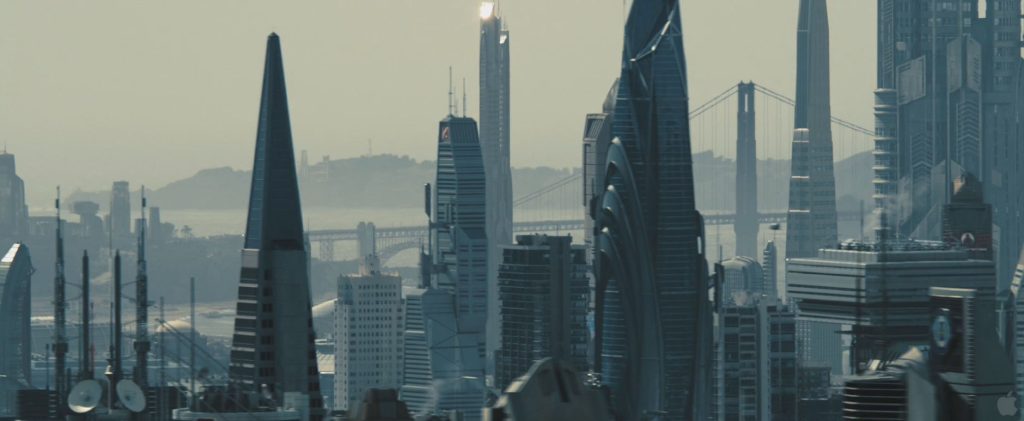
STThe most depressing part of Star Trek Into Darkness is not the many liberties that the filmmaker takes with some of the foundational conceits and tropes of the franchise. Only trekkers will notice (for example, a starship is not built to enter a planet's atmosphere, much less hide in the ocean, etc. etc.). No, what really bummed me out was the architecture. I mean, this is the 23rd century and we're stuck with taller versions of the insipid buildings of today? At least Blade Runner has some variety and gigantic Japanese-style electronic billboards in its vision of the future. We've got interstellar travel, transporters, phasers — and civilization is stuck with the progeny of John Portman, David Childs and Cesar Pelli. And that's if we're lucky. No art deco revival? No reinterpretations of the Chicago school? Gah! If this is the future, no wonder they want to leave the planet.

That's just movie fantasy. In the real world, there's no shortage of lists of the world's ugliest buildings (see here and here), along with Jim Kunstler's cringeworthy-but-must-see Eyesore of the Month. And to be sure, I'm treading into matters of taste, where many valid viewpoints must be considered. Still, architecture matters a great deal. It is the most important physical testimony about a civilization and its trajectory. It constitutes the built environment that at its best informs, inspires or defines so much of our lives. At its worst, it is, as Kunstler says, a landscape not worth caring about. And unfortunately a stupendous amount of our total buildings have been put up in recent decades, with most exercises in copycat banality or starchitect sculptures with little to offer humans or the surrounding streetscape.

The lives of others

[UPDATED] Rogue's Front Page Editor and Director of Competitive Intelligence has filled my in-box with some of the best stories about the extent of our national security state. We learn about the private companies that profit from analyzing your personal data. Our outsourced spy force is enormous. Not only that, but the National Security Agency, building a huge secret data farm in Utah, is recruiting a new generation of Stasi geeks. The administration's constitutional amnesia. How members of Congress are not outraged about the invasion of your privacy, but instead are turning on leaker Edward Snowden. How what was intended as a "transformational presidency" has turned into a soiled presidency instead: George W. Obama. Pro Publica offers the five things we still don't know about NSA snooping. One of the most on-point comments came from Tom Ricks, the former military correspondent for the Washington Post:

As for the assurances of intelligence officials that we
should not worry because they will be careful: I don't buy them. The
intelligence community has not come clean about the torture of captives, so why
should it have credibility on this? At any rate, the health of our Bill of
Rights should not be dependent upon the constitutional interpretations and
tender mercies of secret policemen and their staff lawyers.

And yet, I have heard people say variations of words spoken in 1930s Germany and the Soviet Union: "I don't mind this if it keeps us safer. I haven't done anything wrong, so I don't have anything to fear." According to a poll from the highly respected Pew Research Center, 56 percent of those surveyed say the government spying is acceptable. So-called conservatives unfurl their protest banners over slight attempts to limit assault weapons or raise adequate revenue for the commons. Most are silent in this very real reach into tyranny. Liberals are so marginalized as to be out of the public square, not least with President Obama.

Barry Goldwater

Barry Goldwater

Barry_at_31_1940

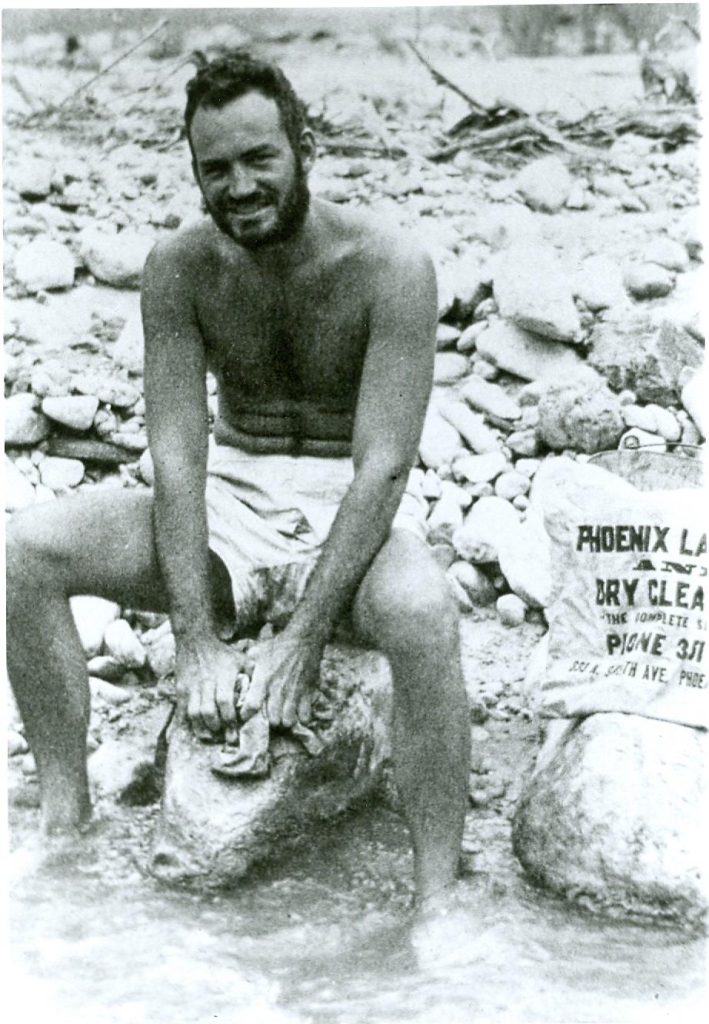
Barry Goldwater in 1941.

Phoenix would benefit from some heroic statues to enrich the downtown streetscape. It's not as if we're lacking in heroes and audacious history. Instead, we get a bronze of Barry Goldwater in Paradise Valley, unreachable by pedestrians but with an adjacent parking lot. Then there's terminal four at Sky Harbor named after Goldwater. And a street in Scottsdale. A newcomer might think the only history worth remembering, if badly painted, concerns the long-serving senator and 1964 presidential candidate.

Readers of this blog know better. But understanding Goldwater's place in Arizona is a daunting challenge. The magisterial biography remains to be written. And for most of his public career, Goldwater was a national figure. We must also contend with a good deal of nostalgia and hagiography concerning the hero. An example of the latter was a recent article in National Review about how Barry was a leader in Phoenix's school desegregation before the Brown decision. The former goes something like this: Barry was no Kook, he fought the religious right and one shouldn't conflate today's conservatism with that of Goldwater. Even I have been guilty. But the reality is more complex and interesting.

Just a teacher

Just a teacher

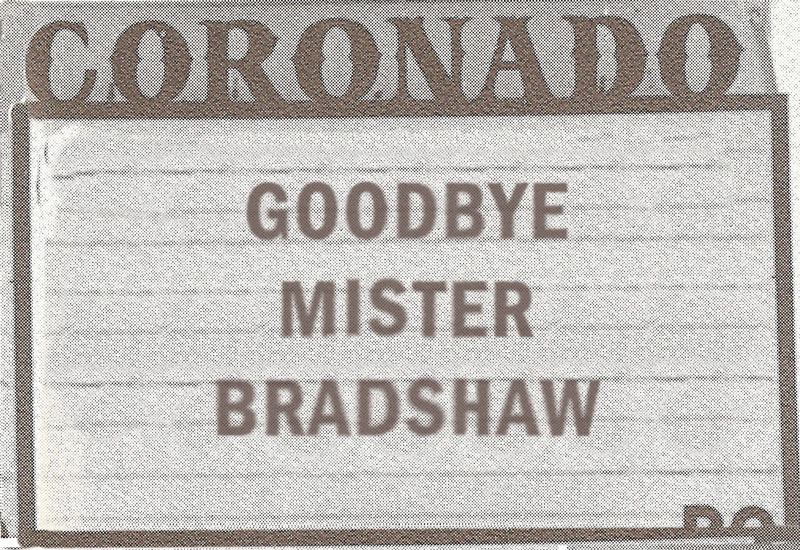
Ralph Bradshaw died Wednesday night. He was just a teacher.

I had him for junior English at Coronado High School, where he pushed a young man with miniskirted coeds on his mind to read serious novels. I told him they were boring and reading them was hard. He made no attempt to make them relevant to me or dumb them down. Instead, he told me that I must read them because they were hard and if I was willing to find the tunnel into them they would be anything but boring. He was right, of course, and years later I realized he was teaching from "the great books," the canon. In his early thirties at the time, Mister Bradshaw sported fashionably longish hair and a moustache, looking almost a hippie compared with some of his older peers. But beneath this was an incisive mind, a setter of high standards, passionate supporter of quality and something of a square (in a good way). A sponsor of many extracurricular activities and sometime director in the theater, he was also great fun. He was just a teacher.

He contacted me when I returned to Phoenix in 2000 as a columnist for the Arizona Republic with a first novel coming out. By then retired, he had lost none of his intellect, dry wit and interest in his students. I have some mixed feelings about that decision to come back home. At the time, I was riding higher in my newspaper career than I ever would again and had offers and feelers from around the country, including one that might have resulted in attaining my lifelong dream of going to New York City. And things didn't exactly turn out well after speaking truth to power. But if I hadn't returned, I never would have gotten to know Mister Bradshaw with the gift of years to illuminate all that I owed him.

Field notes

Catching up from my recent visit "back home…"

• Many people asked me why Gov. Jan Brewer was backing a Medicaid expansion in apparent defiance of GOP orthodoxy. Has she finally shown a conscience? No. The major calculus is that what remains of the business leadership in Arizona leaned on her to accept the Obamacare/Romneycare deal, where the feds will pay for most of the expansion anyway. The biggest employers in Arizona provide no or minimal health-care coverage, so they offload (socialize) those costs to the public through AHCCCS. Among the big employers are health companies that profit from the system, and would make even more under an expansion.

Most of the New Confederacy is not participating, a calculated move to sabotage the Affordable Care Act. So why is Brewer different? My suspicion is the composition of the economy. The other populous, urbanized states have plenty of corporate headquarters and well-paid jobs (and in the case of Texas, oil and big government spending). So it's easy to say, "devil take the hindmost." In Arizona, the hindmost is the economy — Wal-Mart is the largest employer. That and health care. Of course, Brewer might simply be playing a game, knowing the Legislature will prevent Arizona's participation. But I think she's sincere. If she goes "Full Kook," the business interests might do an Ev Mecham on her.

Questions for Phoenix candidates

I received a query from a group called Democracy for America-Maricopa County asking me to suggest questions for Phoenix City Council candidates. I always try to be obliging, and this issue is of special importance.

It seems as if Council has lost its consensus and focus, virtues that were essential to the progress made with T-Gen, ASU's downtown campus, the Phoenix Convention Center and light rail (WBIYB). Nothing could be worse for the city than a right-wing takeover or blocking minority on Council. And members who think civic greatness is filling potholes and collecting trash ("listening to the neighborhoods) are not much better. Phoenix is at a critical tipping point. Here are the questions I suggested:

1. Please detail your connections to the real-estate
industry: Properties you own; do you work in the industry and if so,
doing what?; have you served on boards that make recommendations on land
use?; have you profited from land-use decisions made by public bodies,
including the approval and siting of freeways?