It’s a scandal

It's a scandal. It's an outrage.

On our manhood it's a blot!


Where is the leader who will save us


And be the first man to be shot?

— Rodgers and Hammerstein

The "scandals" of the past week — Benghazi and the IRS — have two purposes: To destroy Hillary Clinton, the presumptive/feared Democratic nominee in 2016 and "to break him," as the secesh former South Carolina Sen. Jim DeMint said of President Obama on another issue. Whether the tempests can rise out of their right-wing teapot remains to be seen. Ruining Hillary and seeking to impeach Mr. Obama will be the Republican enterprise for the next three-and-a-half years. It's a tired playbook, but it keeps working for the right.

Little of what the right claims about Benghazi is correct. And, as Rogue's Front Page Editor tells me (and he's a man who knows about such things), the truth will never be known because the CIA will never come clean about its part in the mess. It is interesting that we've been spending more on the military than during the Cold War and yet we couldn't get help to the consulate/CIA safe house during the attack. I know there's a Marine FAST unit (Fleet Antiterrorism Security Team) based right across the Med in Rota, Spain. FAST is specifically designed for these crises. Why has the press never raised the question about why it was not mobilized? The narrative has it that the nearest help was in the Balkans. But I don't blame Hillary for this tragedy. John Boehner's House ensured that funds for State Department security was cut back. 

Reinventing Hance Park

I'm in Phoenix this week for my new novel, The Night Detectives (you can find a schedule of signings on my author Web site). One remarkable thing is how the conversations I have with friends never really change much when it comes to the topic of Phoenix and Arizona. Searching for something new…an effort is under way to produce a "new master plan" for Margaret Hance Park.

The site irritates me at the outset by claiming Hance Park is located "in the heart of down downtown Phoenix," whatever that means. It is in Midtown, a deck sitting atop the Papago Freeway from Third Street to Third Avenue. All together now: Downtown runs from the railroad tracks to Fillmore and from Seventh Avenue to Seventh Street. One could be very liberal and extend it to Roosevelt — no farther. You outlanders would be offended if I said the Loop in Chicago extended to Winnetka; you don't get to rewrite the geography of my hometown.

In any event, the deck park was the compromise when Interstate 10 was rammed through the heart of Phoenix, resulting in the demolition of 3,000 houses, many of them irreplaceable historic homes, as well as the shady Moreland Parkway. Originally, the Wilbur Smith plan called for the freeway to soar 100 feet over Central Avenue and traffic to exit by "helicoils" winding down to Third Avenue and Third Street. So things could have been much worse

On National Train Day

On National Train Day

King_street_station
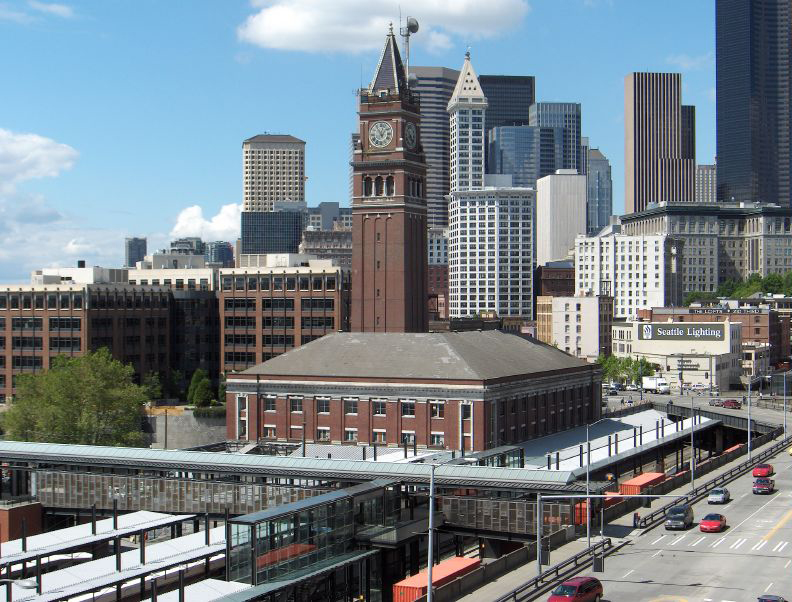
Saturday is National Train Day with events scheduled in all 50 states, including in Seattle at the beautifully restored King Street Station (above). I was a guest on this topic today on KUOW's The Conversation With Ross Reynolds, but time being what it is, much more needs to be said. Some of this may be familiar to Rogue readers, but it can't be stated often enough.

1. Seattle is better served by passenger rail than most American cities. It is the terminus of two long-distance Amtrak trains, the Coast Starlight and the Empire Builder. I've ridden both and they are the best way to see the country. In addition, it is served by the Amtrak Cascades, a regional corridor with multiple trains a day south to Portland and Eugene and north to Vancouver, B.C. You can enjoy a relaxing, spacious ride alongside spectacular scenery, have a meal or adult beverage, and work using onboard wi-fi. Sound Transit operates commuter rail via its Sounder service north and south in the metropolitan area. Finally, Seattle has both light rail and one streetcar line with more to come. Phoenix is by far the largest American city with no passenger rail service at all (although it has — WBIYB — light rail).

2. Passenger rail is the most environmentally friendly way to move large numbers of people, an advantage that matters even more if we're going to reduce greenhouse gases associated with climate change. Cars are terrible polluters, but so are airplanes. Trains also help ease congestion on highways and airline routes, as well as reducing the safety costs associated with cars and freeways. Commuter rail helps ease the horrible traffic of rush hours that impedes productivity, belches pollution and causes costly wrecks.

Rogue open thread

Conversation starters: Keystone XL's John Kerry connections. The Census data that should terrify Republicans (at least for presidential elections). What Darrell Issa really wants out of the Benghazi hearings. Meet…

Freeway to hell II

I thought my 2010 post on the proposed South Mountain Freeway was all that needed to be said, not that it would stop this abomination. But the great thing about Phoenix is how it continues to inspire new material.

Thus, the newly released "environmental impact statement" on the $2 billion project claims that if it isn't built Phoenix's air will grow worse. I am not making this up. Here's the "logic" behind the claim: “In some instances, impacts under the No-Action
Alternative would be greater than those that would occur under the action alternatives. As a specific example, energy use — in terms of annual fuel consumption — would be greater.” The Arizona Republic's Sean Holstege writes, "It is a key finding, because many freeway opponents have argued that building nothing, the only available planning alternative, would be better for the environment. All the environmental consequences are typical of freeway projects and can be mitigated, the report found."

First, a little background. Building new freeways is essential to perpetuating the sprawl hustle of the Real Estate Industrial Complex. Without them, empty land on the fringes would be worth much less and be more valuable for agriculture or even as empty desert. It's an old racket, with the added benefit being that the cost, through sales taxes, falls most heavily on the working poor.

Rogue open thread

My author Web site is now updated with reviews and signing dates and times for my new mystery, The Night Detectives. Meanwhile: Conversation starters (feel free to add your own):…

The ‘Goldwater’ Institute

When Hillary Clinton lashed out in 1998 at "the vast right-wing conspiracy," most people laughed. I certainly did. Then I returned to Phoenix two years later to see how correct she was. Exhibit A was the "Goldwater" Institute, motto: "Where freedom wins." Before he died, Barry wanted his name removed from the organization, but he backed off because it was dear to his brother. So I have always referred to it with Goldwater in quotes or as the Bob Goldwater Institute. Either way, it has played a pivotal role in damaging Arizona and holding back progress.

After its founding in 1988, local media accorded the institute respect as a "think tank." Robert Robb, a political operative who came out of the "Goldwater" Institute, was hired as an editorial columnist for the Arizona Republic. After the departure of Ricardo Pimentel and me, he became the only real editorial columnist after the 2007 newsroom organization. Unlike most entrusted with a position of such influence, Robb did not spend 20 years gaining experience and accolades as a journalist for a major newspaper. He was always a member of "the vast right-wing conspiracy." And the institute itself was regularly quoted in news stories as an authority on virtually every issue.

The trouble is that the "Goldwater" Institute is not a think tank as conventionally understood, an organization where scholars pursue research with open minds and produce material that is vigorously peer reviewed (think The Brookings Institution). Instead, it is an advocacy organization such as the NRA or the Sierra Club. It is rarely identified as such in the media — unless I am writing about it, which I try to avoid, aside from one takedown in the early 2000s.

Rogue open thread

Conversation starters (feel free to add your own): Nice to see ASU moving baseball to give new life to Phoenix Muni, after spring training all but abandoned the city, also…

Magical thinking

James Hamilton on the Econobrowser blog recently offered a post titled, "The Death of Peak Oil." It pivots off an article by Colin Sullivan wondering if it has "gone the way of the Flat Earth Society." Sullivan continues, "Those behind the theory appear to have been
dead wrong, at least in terms of when the peak would hit, having not
anticipated the rapid shift in technology that led to exploding oil and
natural gas production in new plays and areas long since dismissed as
dried up."

Hamilton does a capable job of dismantling Sullivan. Comments from the expert readership of the Oil Drum do excellent mop-up. Still, the exchange seemed an opportune time to re-examine where we stand on several fronts amid what I had termed the Great Disruption. This blog shouldn't be a church. It is not a prisoner of any closed-loop ideology. I don't have all the answers. We should always remember the exchange John Maynard Keynes had with a man who demanded to know why his position on a certain issue had shifted. Said Keynes, "When the facts change, I change my mind. What do you do, sir?"

After all, no less an authority figure than the President of the United States has assured us that America has a one-hundred-year supply of natural gas and his administration is fast-tracking all manner of fossil-fuel production. Approval of the Keystone XL pipeline to bring tar-sands oil from Alberta to the refineries of the Gulf Coast seems a given. The housing industry is coming back, even in the overbuilt suburbs of places such as Phoenix and California's "Inland Empire." The recession slowed "job sprawl," but hardly stopped, much less reversed it. New freeways are being built. American life is going on much as before 2008. Could it be that all the notions of a "great reset" in the wake of the crash were magical thinking?

A note to readers

Since this blog was launched in January 2008, I have attemped to do two columns a week, generally one for national readers and another focused on Phoenix for the thousands…
Why they came

Why they came

Washington&Central

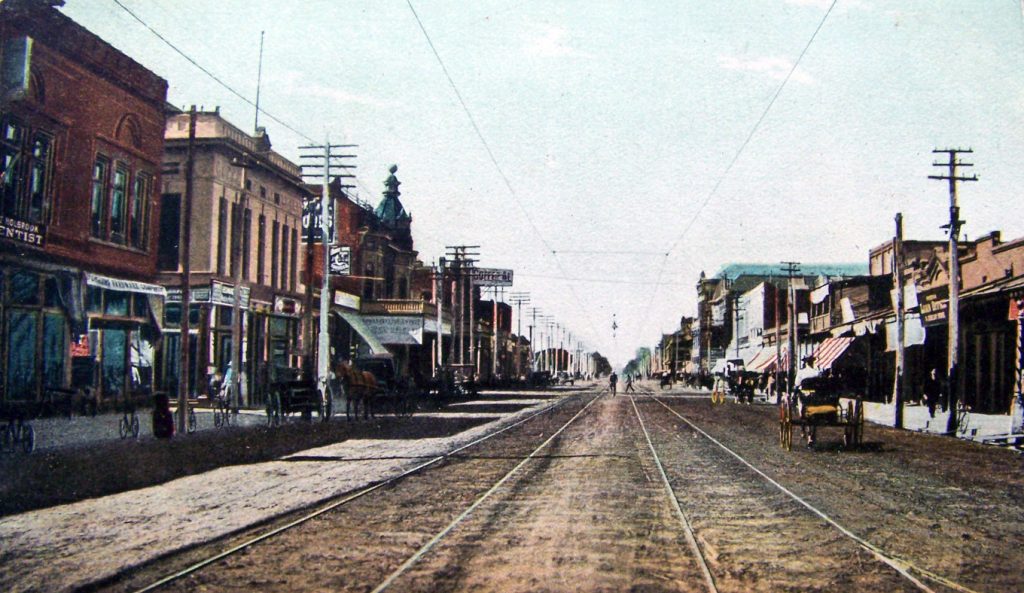
Washington Street in Phoenix, 1890. The trees and adobe buildings of 1870 were mostly gone from this view.

My grandmother, Sarah Ella Darrow, was born in 1889 in the Chickasaw Nation, Cumberland, Indian Territory. Her parents had come to I.T., as the postal address read for today's eastern Oklahoma, as Presbyterian missionaries. Then they ran a small store.

Earlier, on the Texas frontier, her mother (my great-grandmother), Emma Caroline Hulse, had been scalped as a baby during a Comanche attack after troops were withdrawn for the Civil War — she survived and went on to marry my great-grandfather, Francis Marion Darrow who hailed from the Midwest.

Indian Territory, home of the Five Civilized Tribes, was fine country for farming and timber, well watered, with growing towns and new railroads. But whites couldn't own land and that was Darrow's dream. The Chickasaw governor (chief) loved my great-grandfather and wanted to adopt him (thus putting him on "the rolls" as a tribal member), but Darrow declined. Then the store and their home were destroyed by a tornado, with one daughter killed.

They went west, to Arizona, to the Salt River Valley. They and hundreds like them came for relatively cheap land and good farming. Like much of the West, Phoenix was heavily publicized to draw settlers. One thing was even true: This was one of the world's great alluvial valleys, fanning out in mostly flat, irrigable land from a river that flowed year-round, or so it seemed.

Here the Hohokam had created the most advanced irrigation system in the New World, with at least 200 miles of canals, before that civilization faded. The Pima, likely the descendants of the Hohokam, had moved south to the Gila River and beyond, partly to escape raids by the Apache.

In the late 1850s, Charles Trumbull Hayden noticed this vast, mysterious valley with its tree-lined river while hauling freight to Tucson. He would be back. He would name his son Carl.

By the 1890s, the phoenix was stirring from the ashes. The Apache had been subdued by the U.S. Cavalry. Thousands of acres were under cultivation, especially for wheat, barley and fruit trees. Anything would grow in this soil, provided water was added. The project of clearing out and extending the old Hohokam Canals was well along by then. Phoenix as a settlement was more than 20 years old.

The first railroad had arrived on Independence Day, 1887. In 1890, the Census Bureau declared the American frontier closed. By the time my family arrived, the chance to start fresh and live the Jeffersonian dream of yeoman farmer was fading most places. Not here.

Nowhere man

Nowhere man

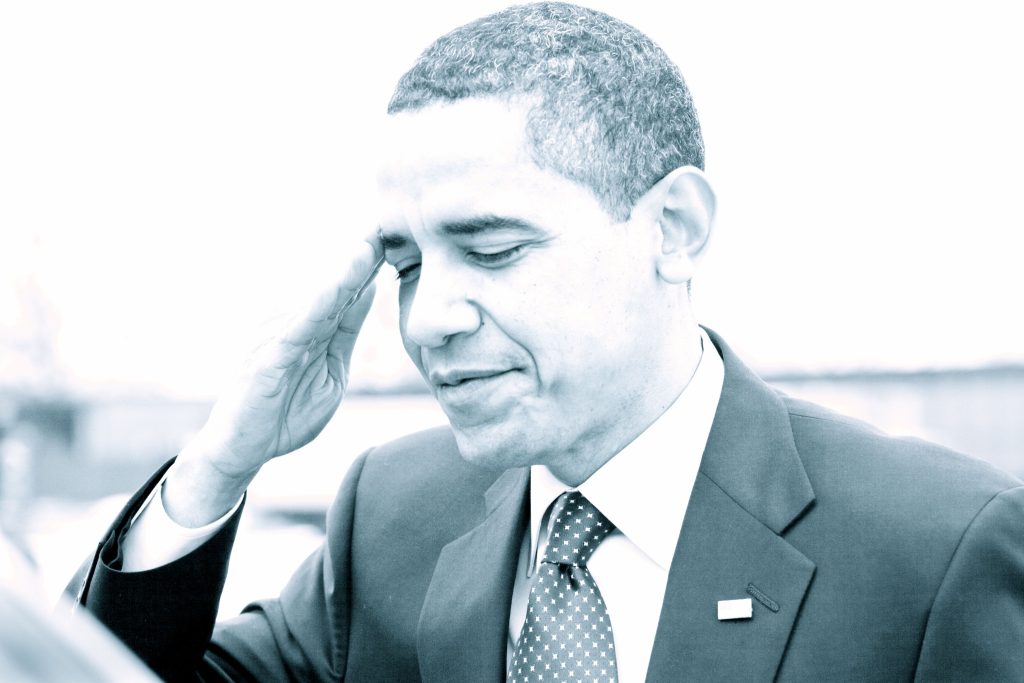
Obama_salutes2It's been less than three months since Barack Obama was sworn in for a second term, and yet it feels as if he's fading from the scene. About the best thing I can find in his proposed budget is $40 billion for passenger rail over the next five years. That would be about the same as the U.S. was, until recently, throwing away every four or five months in Afghanistan. And it's contingent on getting through a House of Representatives with the usual anti-rail Republican fetish. But it's something.

Meanwhile, Mr. Obama wants to begin what will no doubt be a series of cutbacks to the social safety net. If Nixon can go to China, the Democratic heir to Franklin Delano Roosevelt can begin dismantling Social Security. As yet another attempt to prove reasonable and make the Republicans like him, this will fail, as Paul Krugman eloquently points out. Indeed, he is a Robert Rubin Democrat: He's been aiming at "entitlements" for a long time. Meanwhile, expenditures on the military are essentially unchanged.

I don't know if this is the power of the Military-Industrial Complex or a Democrat afraid of looking weak on "national security," but nobody seems willing to concede that a nation cannot be powerful without first and foremost a strong economy. The private sector is either poleaxed by the financialized economy and the powers of monopolies and cartels — or among the latter and sitting on record profits and cash but doing no hiring of Americans. So this would be the point where an energetic and sensible federal government would embark on a 21st century infrastructure project and "Project Apollo" to create the technologies to address climate change — but nothing from Mr. Obama. He seems content to see America becalmed for the next three years. The suffering unemployed and poor, after all, won't affect the chief executives he lunches with, or his fellow Ivy Leaguers, or the parents who send their children to Sidwell Friends.

Phoenix’s new normal

Let's take a random walk through the "news from home." Much rejoicing must have come to the Real Estate Industrial Complex from the recent BusinessWeek story headlined, "A Phoenix housing boom forms in hint of U.S. recovery." Maybe it's even real and Homey was wrong when he predicted that the old growth machine — with championship golf! — isn't coming back. If so, a new housing boom would be the worst possible event in the long run. Any chance to learn the lessons of the crash will be lost, along with the opportunity to reset for a more sustainable future.

I suspect the bluster of a "boom" cloaks a recovery from a very deep bottom, so naturally the percentage gains will look impressive. In addition, we don't have the research to indicate the subdivisions that are being abandoned to "investors" — or just abandoned — as qualified buyers snap up the new stuff from the likes of Pulte. Population has increased, but not at the rates of the 1990s and 2000s. Also, the labor force for the metropolitan area is only slightly larger than it was in 2006, hardly the spectacular growth seen in the previous decades.

Some macro realities will not go away: most Americans are much poorer after the recession; wages are stagnant and have been falling on average for years; unemployment remains high and many may never find work again; "consumers" are still carrying more debt than historic norms; changing tastes and demographics, with talented young people and many boomers preferring real cities, not Sun City; Phoenix still has a low-wage economy. All these factors will be headwinds against the triumphal return of the Growth Machine.

Hair on fire

The conventional wisdom holds that North Korea is mostly bluster, the young dictator trying to solidify his power and distract his starving subjects, gaining negotiating leverage, and about the worst that might happen is the Crazy Aunt in the Asian Attic will have one of her periodic violent outbursts, deadly perhaps but contained. The "saber rattling" might be a sign of a troubled regime in Pyongyang. The United States will project a "show of force," along with a promise to deploy more missile interceptors (of dubious reliability) in the coming months and years. And the situation will cool down.

I'm not sure much of this is true.

David Kang and Victor Cha, writing in Foreign Affairs, are among the few to challenge the view that North Korea isn't that dangerous. A Stalinist state with one of the world's largest armies, and a capable one at that, attains nuclear weapons of a sort and launches a satellite — in other words, achieves at least the beginnings of an intercontinental ballistic missile. Then its leaders make it repeatedly clear they intend to attack South Korea, Japan, Guam and the continental United States. Just the same old-same old, sixty years after the armistice that ended the Korean War? Prepare to be surprised.

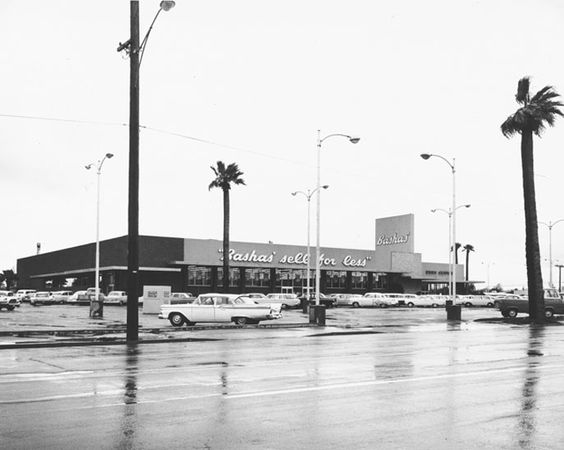
Eddie Basha, an appreciation

Eddie Basha, an appreciation

Bashas

Editor's Note: Eddie Basha, the last of the hometown merchant princes, died last week at age 75. The following article was originally published in 2008 but captures Basha well.

By Jack L. August, Guest Rogue

I answered the cell phone as I headed north on I-17 en route to Prescott. "This is Raul Lopez," the caller said in a heavy accent, "and I saw you on that Channel 8 program Horizon last night, Dr. August." Not knowing the caller I mumbled something about the then-host Michael Grant, but was interrupted with a string of criticisms about my discussion of former senators Carl Hayden, Barry Goldwater and Dennis DeConcini and, to add insult to injury, Mr. Lopez offered, "I don't like that moustache either." I tried to recover but the mystery called moved forward without pause: "The Haydens, Goldwaters and DeCincinis were not responsible for Arizona's growth and development but instead," he continued, "the miners and laborers in the copper mines of Morenci, Miami and Globe, should receive a lot more credit than those three politicians." He was contentious and irritated and I tried to find a diplomatic way to diffuse the situation. This Lopez character, though, seemed unbalanced and out to insult me at any cost.

He then said I could afford to lose a couple pounds and told me to wear a blue shirt and red tie the next time I was on television because what I wore that night had hurt his eyes. Finally, I exploded, asked him for his location, because I was going to turn around, head back to Phoenix, and confront him. I was furious and angrily terminated the call after hurling a few pejoratives of my own. The mystery tormentor tried three more times to call back but I refused to answer. Later, after I arrived in Prescott, I listened to my voice messages and heard, "Geez, Jack, this is Eddie Basha. I didn't mean to piss you off." He got me. I was the next in a long line of innocents caught in the Eddie Basha world of phone pranks.