When Midtown cooked

When Midtown cooked

GB Bldg 1964


Midtown wasn't planned. It simply escaped…any coherent city planning, zoning, or vision. Some say it was Phoenix's attempt at Los Angeles' Wilshire Boulevard, the nearly 16-mile avenue from downtown LA's financial district to Santa Monica. Maybe. But Phoenix never had the economic power or urban assets to support its version of Museum Row on the Miracle Mile, Century City, Koreatown, Beverly Hills, Westwood with UCLA, and subway lines. Wouldn't want to become another LA.

The two are comparable in that both were the sites of a majority of post-1960 skyscrapers. In Phoenix, it began with the building above. A turquoise-skinned International-style box, the Guaranty Bank Building opened in March 1960, designed by architect Charles Polacek and built by contractor David Murdock (who lived a remarkable life). At 252 feet, it dethroned the Hotel Westward Ho as the tallest building in Phoenix and the Southwest. On the top floor the Cloud Club offered a spectacular view.

Over the next thirty or more years, this was the heart of the city. For better and for worse.

The Camelback Towers was also complete in the photo (a mile north at Pierson). Park Central Shopping Center had replaced the Central Dairy in the late 1950s. Del Webb's Phoenix Towers at Central and Cypress Street, one of the few co-ops in the city, opened in 1957. Twin mid-rise office buildings were opened two blocks south of Thomas; they eventually included U-Haul's headquarters. Midtown, still unnamed, was coming together haphazardly. The central business district, including most shops and department stores, were still downtown (Fillmore to the railroad tracks, Seventh Avenue to Seventh Street).

Cold Civil War Turns Hot

Cold Civil War Turns Hot

6a00e54fdb30b988340263e987e976200b

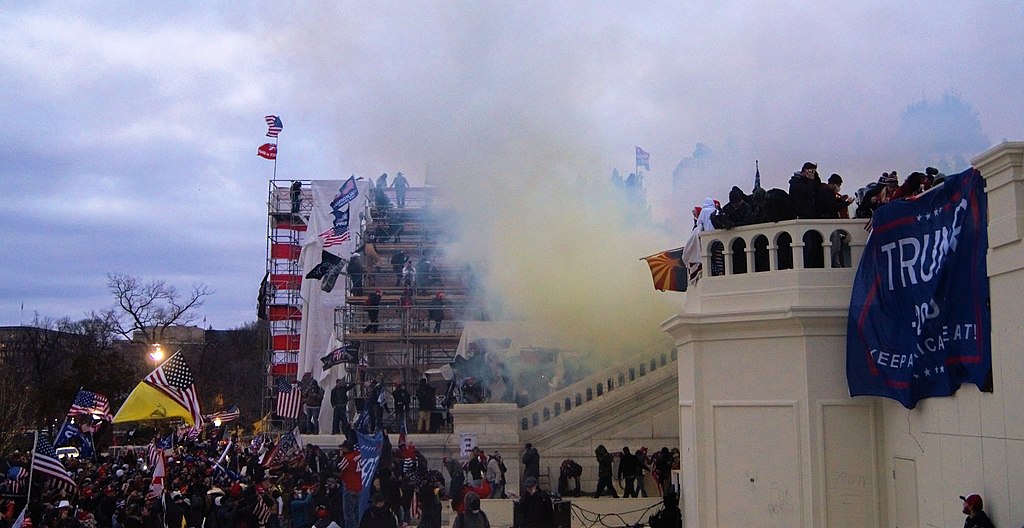
Remember, remember the Sixth of January! For the first time since the foolish War of 1812, the U.S. Capitol was invaded. In this case, the attackers were not the redcoats but American citizens, whipped up by the president to overturn certifying the Electoral College that he lost.

Rogue readers have made some excellent points on the open thread which I put up this past week. I urge you to read them.

We have a mob president who not only specifically incited the putsch but then declined to respond to lawmakers' desperate pleas for help inside the besieged Capitol. These are not debatable points but objective facts. So is the fact that the FBI warned of a "war" planned to halt certification of the election.

Hitler used a beer hall. Trump used social media.

Arizona played a big role, from the Barbarian King Jake Angeli in his horned cap, as part of the mob to the likes of U.S. Reps. Andy Biggs and Paul Gosar helping organize the rally that led to insurrection. The event has a body count: Five dead, along with the members of Congress huddled in fear, then evacuated — House members were shut up in a room where some Republicans refuse to wear masks and at least one (a Democrat) getting COVID.

Insurrection open thread

Insurrection open thread

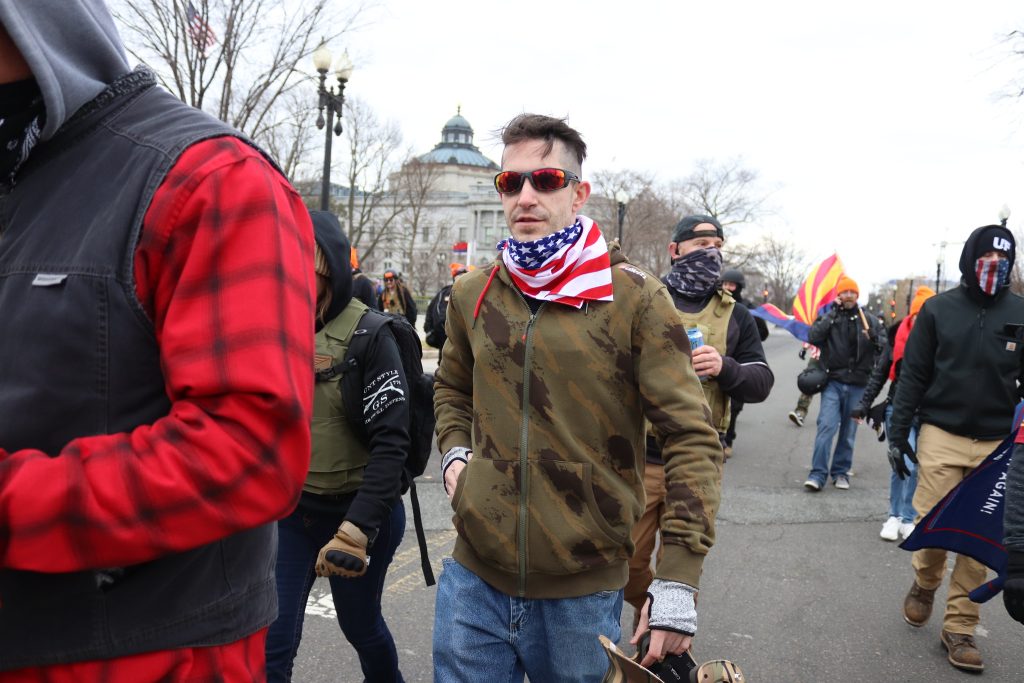
Proud Boys march in front of the Supreme Court in Washington, D.C., on Wednesday morning. Soon a rightwing mob, incited by Donald Trump, stormed the U.S. Capitol. (Elvert Barnes photo).…
Arizona’s pandemic economy

Arizona’s pandemic economy

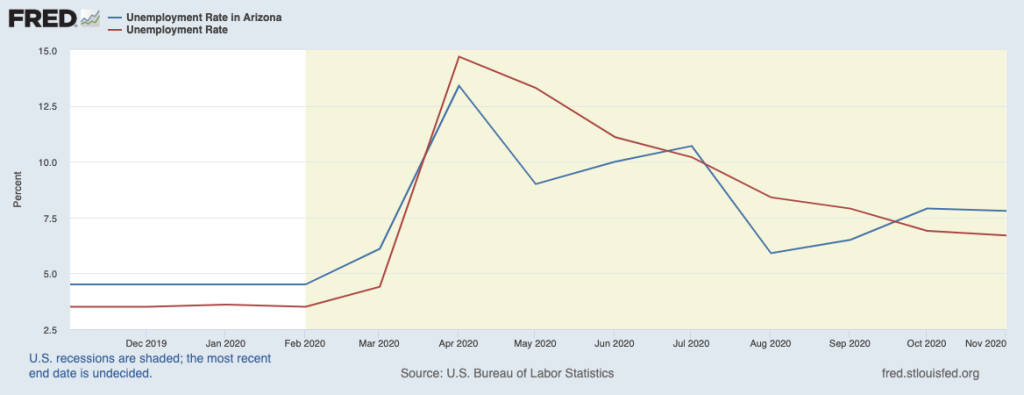
The longest economic expansion in history crashed into recession this spring because of the COVID-19 pandemic. Unemployment skyrocketed to Depression-era levels before recovering…some. Industries such as airlines, hotels, tourism, restaurants, and brick-and-mortar retailers were savaged.

I've written about this extensively in my Seattle Times columns. But let's narrow the lens to Arizona and Phoenix with help from the invaluable data collected by the Federal Reserve Bank of St. Louis (FRED). Click on the chart for a larger view.

Unemployment:

FredgraphUNEMP

FredgraphPHXjobs

Population growth (by numbers and year-over-year percentage change:

FredgraphAZPOP

FredgraphAZPOP2

Phoenix’s historic schools

Phoenix’s historic schools

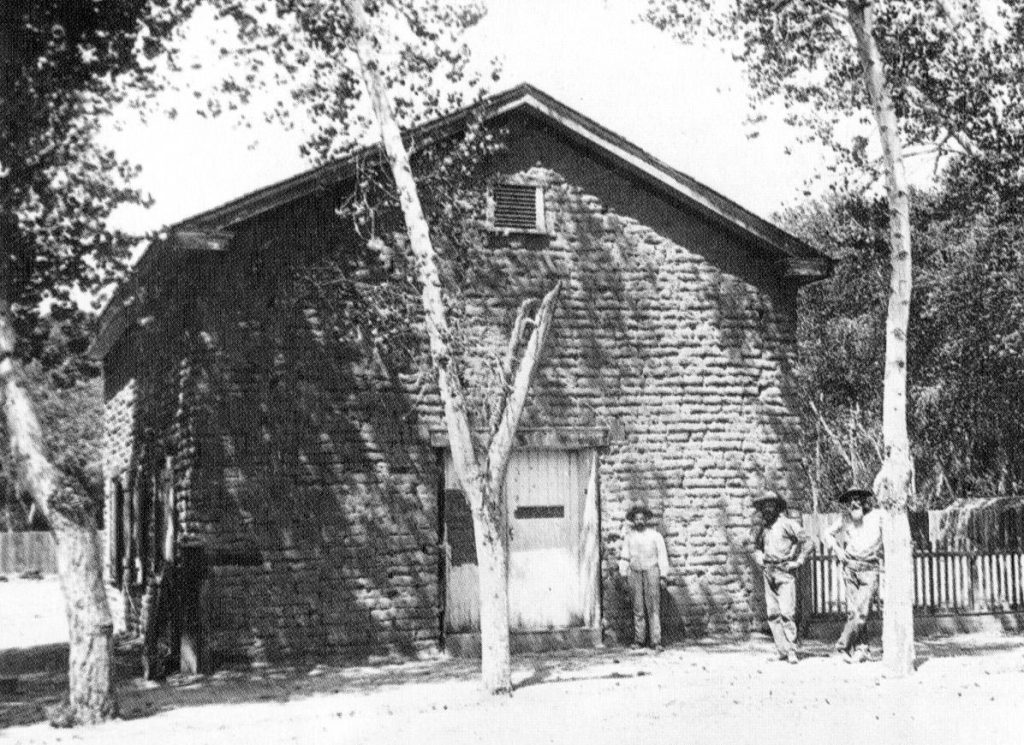
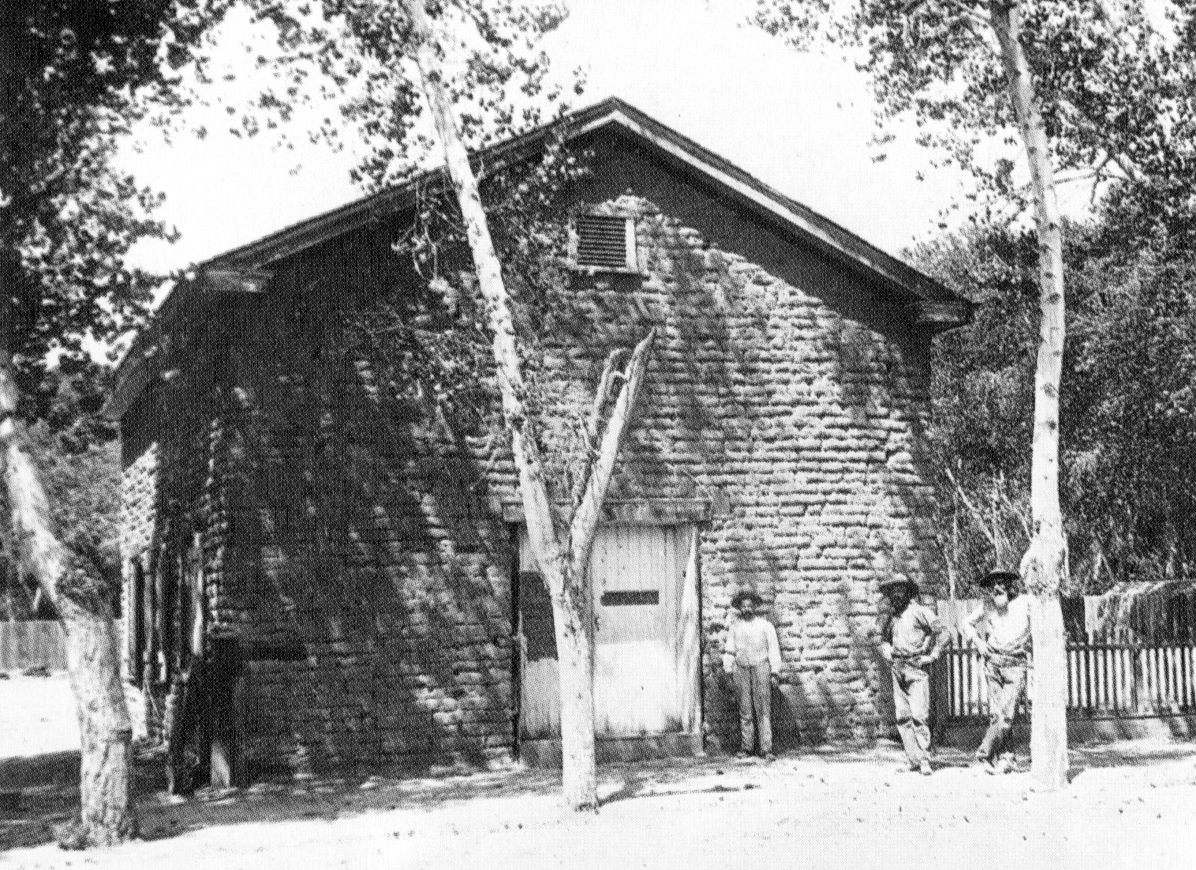
1873 adobe schoolhouse Central Monroe

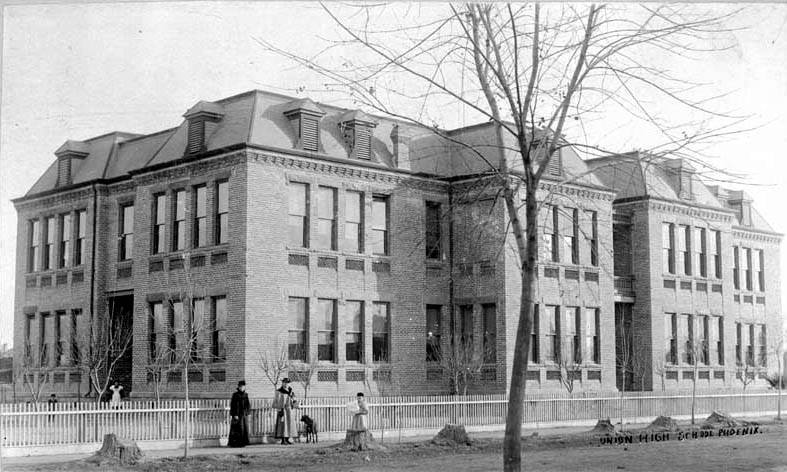
Once upon a time, schools weren't built to resemble prisons with walls and steel fences, along with no shade and heat-radiating concrete and gravel. Even in early Phoenix, most were built to inspire. In 1873 (above) an adobe school at Central and Monroe was the beginning of better to come. Here are a few — click on the photo for a larger view:

Central School  Central and Monroe  1899

Central School, shown in 1899, replaced the adobe structure. The town's population was about 5,500.

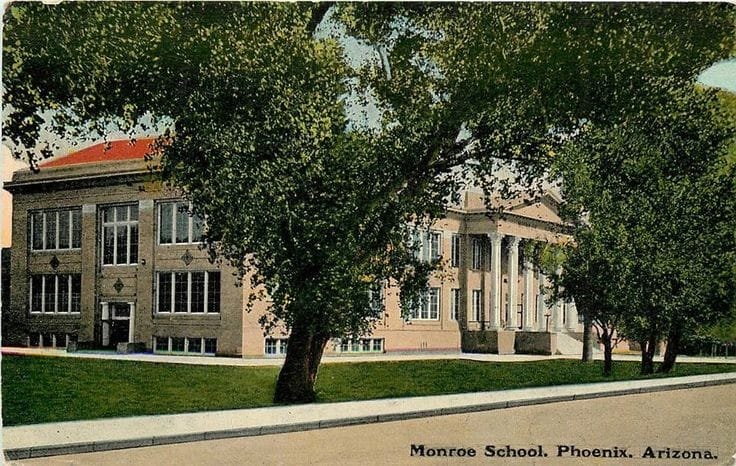
Monroe School 1914 postcard

Monroe School at Seventh Street and Monroe, 1914. The building was preserved and is now the Children's Museum of Phoenix, alas without the shade trees and grass.

‘The homeless’

‘The homeless’

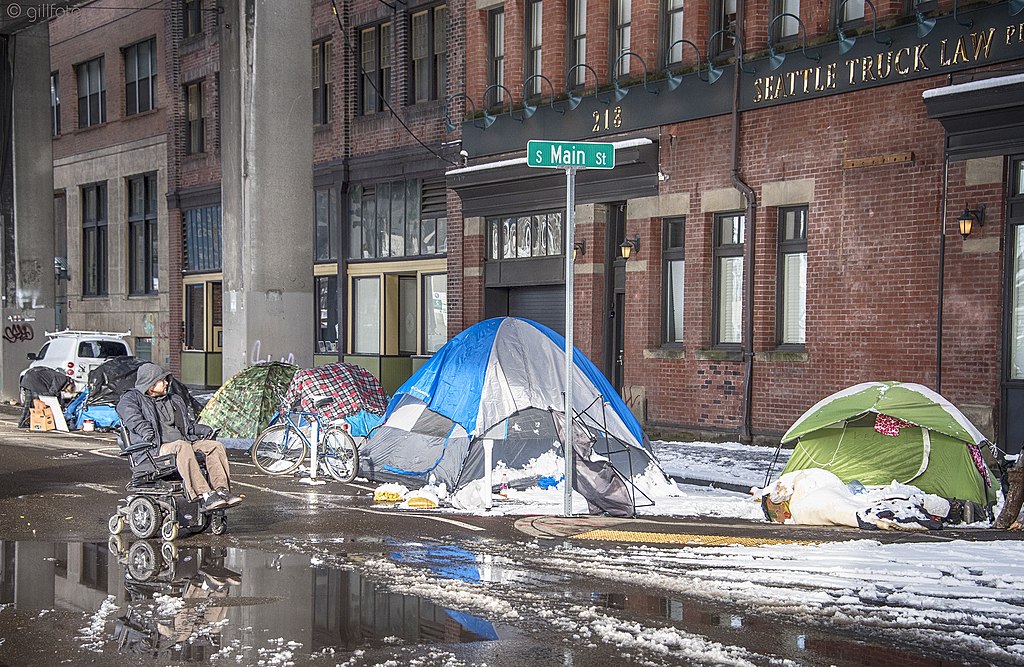
6a00e54fdb30b988340263e980a894200b

I use quotation marks because this term encompasses many distinct — sometimes overlapping — conditions. Its continued use makes it difficult to seriously explore this phenomenon, much less propose constructive actions ("solutions" aren't possible). Worse, it makes the situation appear simple: All they need are homes. In fact, it is among the most complex and intractable of social problems.

In the Depression, many people who lost their homes and farms were consigned to shantytowns outside cities ("Hoovervilles") or long trips to uncertain new places, immortalized by Steinbeck's Grapes of Wrath. They were not welcome many places, including Phoenix, which couldn't even care for its own, much less provide for "gas moochers." But this was a temporary emergency, eased by the New Deal and cured entirely by the demand for jobs in the ramp-up to World War II. Interestingly, crime was very low during the Great Depression.

At the other end of the spectrum were hoboes, vagrants, and bums riding the rails, living off the land and handouts, sometimes settling in the skid rows of cities. In Phoenix, this district was called the Deuce. They had cheap single-room-occupancy (SRO) hotel rooms, cheap grocery stores, cheap bars. This population was almost exclusively male. Vagrancy laws were strictly enforced. They could find temporary work in such places as the Phoenix warehouse district's produce sheds.

Color Arizona

Color Arizona

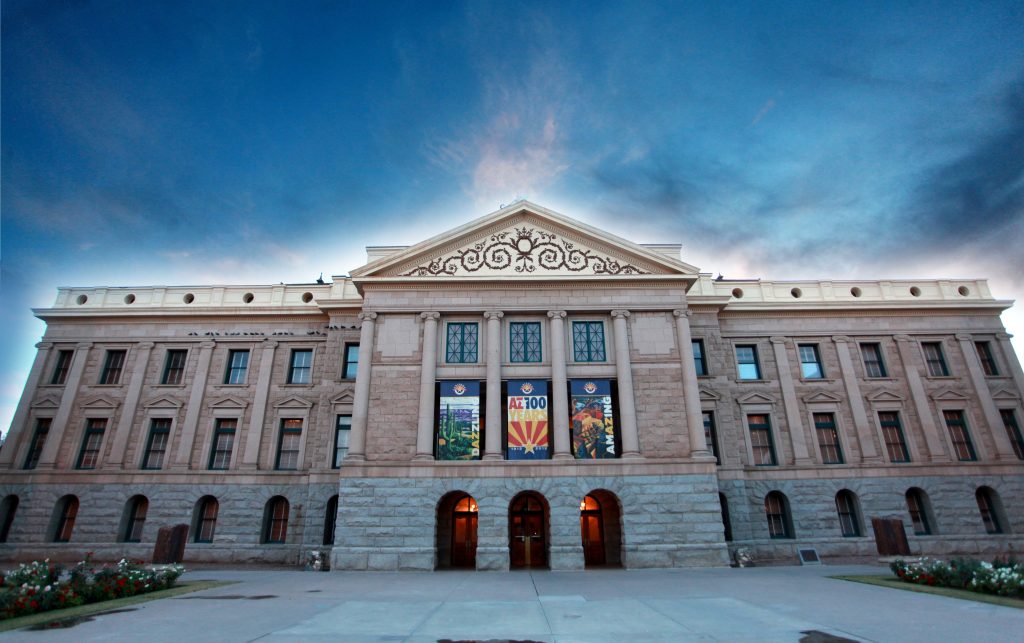
Arizona_Capitol_Museum_2014. Gage Skidmore
Joe Biden won Arizona. But, as the Duke of Wellington said of the Battle of Waterloo, "it was the nearest run thing you ever saw in your life." Biden prevailed with about 11,000 votes, or 0.3 percentage points, over the most criminal and dangerous president in American history.

Mark Kelly's victory in the Senate race was easier to foresee. Kelly is a former combat pilot and NASA astronaut, as well as husband of former Rep. Gabby Giffords, who was the victim of an assassination attempt.

Martha McSally, his opponent, had already lost a Senate race to Kyrsten Sinema and was appointed Senator by Gov. Doug Ducey in a cynical partisan attempt to give her the advantage. Didn't work, Doug. For the first time since 1952, Arizona has two Democratic U.S. Senators. Otherwise, of the nine congressional districts in the state Democratic incumbents won five.

So does Arizona become a "magenta state," as the New York Times put it? Not quite.

Despite heavy Democratic turnout and Latino activism, Republicans maintained control over the Legislature. More about this later.

More Arizona railroad images

More Arizona railroad images

In addition to my popular column and gallery on Phoenix Union Station, I've written about the Ghost Railroads of Arizona, the many lines that helped build the state that have mostly disappeared. Another column detailed the difficult enterprise of building railroads to Phoenix, ending its isolation. And most recently photographer Jack Delano's trip across northern Arizona during World War II. Many of these have additional photos, so check them out even if you read the text.

Now, a grab bag of railroad photos from the 1950s to today. A reminder: Phoenix is by far the largest city in North America without intercity passenger trains, mostly a failure of state government.

Click on the photo for a larger image:

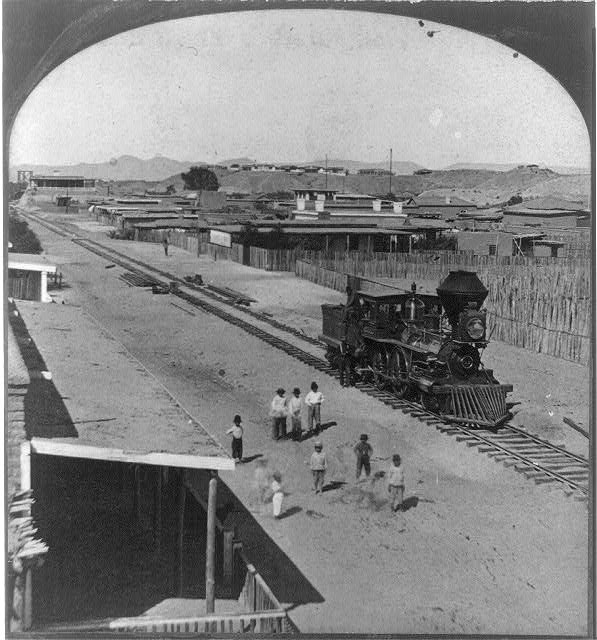
1877 first locomotive in Arizona

The arrival of the first locomotive to Arizona Territory, Yuma 1877 (Library of Congress).

Sunset Limited 1950

The Sunset Limited, premier train of the Southern Pacific, on its way to Phoenix in 1950.

Black Widow

The only Southern Pacific passenger train that didn't take the Northern Main Line through Phoenix was the Argonaut, shown above with three "Black Widow" diesels up front and plenty of mail and express cars. The Argonaut passed through Casa Grande. The Black Widows were usually reserved for freight service.

Argonaut at Tucson

Baggage carts are waiting as the Argonaut arrives in Tucson in the 1960s (Bob Knoll photo).

Sunset Tucson 1970

In 1970, a year before the inception of Amtrak, Southern Pacific's Sunset awaits the highball at Tucson. Operating only every other day, the train was a shell of the former premier passenger train of the SP.

Reefer blocks Topock 1953

A Santa Fe train hauling a block of refrigerated boxcars ("reefers") near the Colorado River crossing at Topock in 1953. These cars also hauled Salt River Valley produce by the trainload when Phoenix was an agricultural empire.

Williams railroad yard

When Williams was still on the Santa Fe main line, it had a busy yard with a roundhouse, as well as a Harvey House passenger station. A line rerouting around 1960 left the town on the "Peavine" to Phoenix, losing the fleet of mainline passenger trains.

ATSF near Holbrook 1962 new U25BSanta Fe freight action on the double-track main line near Holbrook in 1962. The lead locomotive is a new U25B, General Electric's first independent entry into the American diesel market. It was nicknamed the U-Boat.

Amtrak’s returning to Phoenix

Amtrak’s returning to Phoenix

Union Sta EOr so go some headlines and social-media posts I've read. In today's denuded newspaper environment, with thousands of reporters laid off and spreading news deserts, in-depth reporting is hard to find. Anyway, this salutary news was reported by KJZZ, KPHO/KTVK, and other outlets.

As it turns out, Amtrak isn't returning anytime soon. The origin of the stories was a presentation in September to the Rail Passengers Association by an Amtrak official. It proposed establishing new corridors for intercity rail that would potentially reach Phoenix in … 2035. If that's not bad enough, the plan is mostly aspirational. No funding is available for the expansion. That might change under President "Amtrak Joe." But 2035. Really? Another plan in 2010 went nowhere.

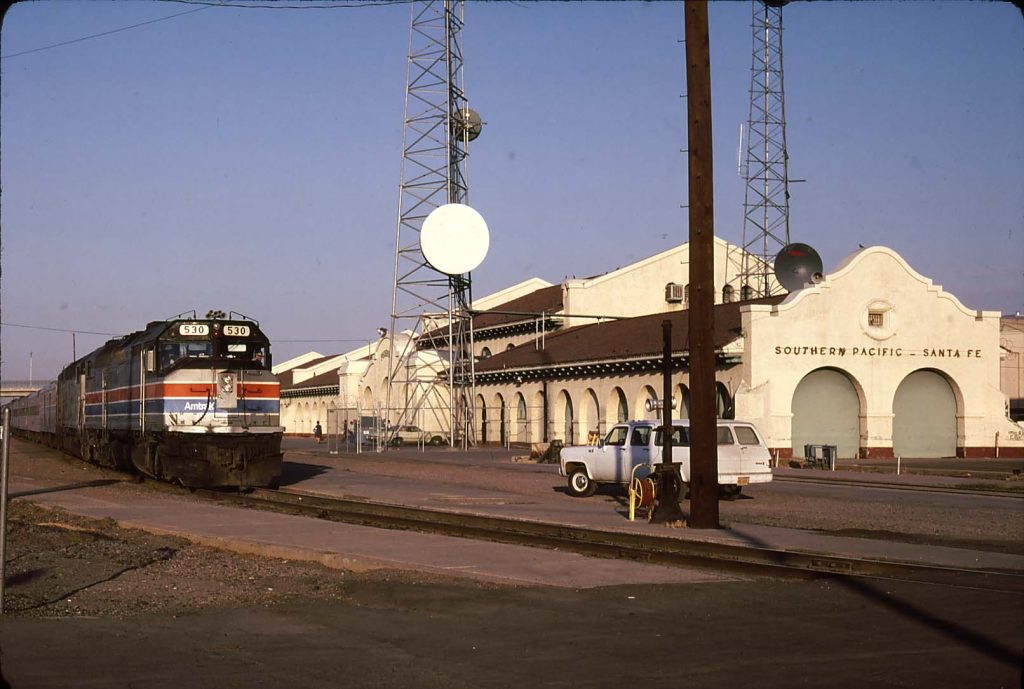
As late as the 1960s, Phoenix Union Station was served by multiple passenger trains of the Southern Pacific and Santa Fe railroads. They gradually died off, the casualty of decades of national transportation policies that subsidized automobiles and airliners while strangling railroads with regulations and high taxes. When the Postal Service ended mail contracts in September 1967, it left Phoenix with only an every-other-day Sunset on the SP Northern Main Line. This continued when Amtrak took over national passenger trains May 1st, 1971 (killing almost 200 trains that still ran).

Deliverance *

Deliverance *

Biden Harris
Whatever else, we had to defeat Donald Trump this year or it was curtains for the republic. And Joe Biden is now President-elect of the United States and Kamala Harris is Vice President-elect. As with climate change and the science of the pandemic, reality doesn't care what Trump and his cult "believe." A Supreme Court trick or other attempt to reverse the results would bring Civil War 2.0. But I don't think that will happen. At least not yet. Come January 20th, our long national nightmare will be over and America will trend back toward normality.

It was closer than it should have been, considering Trump's corruption, tens of thousands of lies, damage to the rule of law, antagonizing allies, and breaking norms. This wasn't Biden vs. Jerry Ford or even George W. Bush. But that was a different Republican Party. The Party of Lincoln is now the Cult of Trump.

The close election was partly the result of the "woke" extreme left. Every night of violence, looting, and arson in blue cities such as Seattle and Portland scared low-information voters in the Midwest and South into voting for Trump as the lesser of two evils. In their minds, a Biden victory would mean defunding the police! Reparations! Open borders! D.C. and Puerto Rico statehood! An immediate end to fossil fuels and confiscation of guns! Implementation of policies to favor BIPOC and LGBTQ-plus instead of equality and fairness and viewing people as individuals. And the drumbeat of America's "systemic racism," ignoring the huge leaps we've made or that every multiracial nation faces these challenges.

Judgment days

Judgment days

171168149.iJHMz1Uh.DonnyTurnsTheCornerW

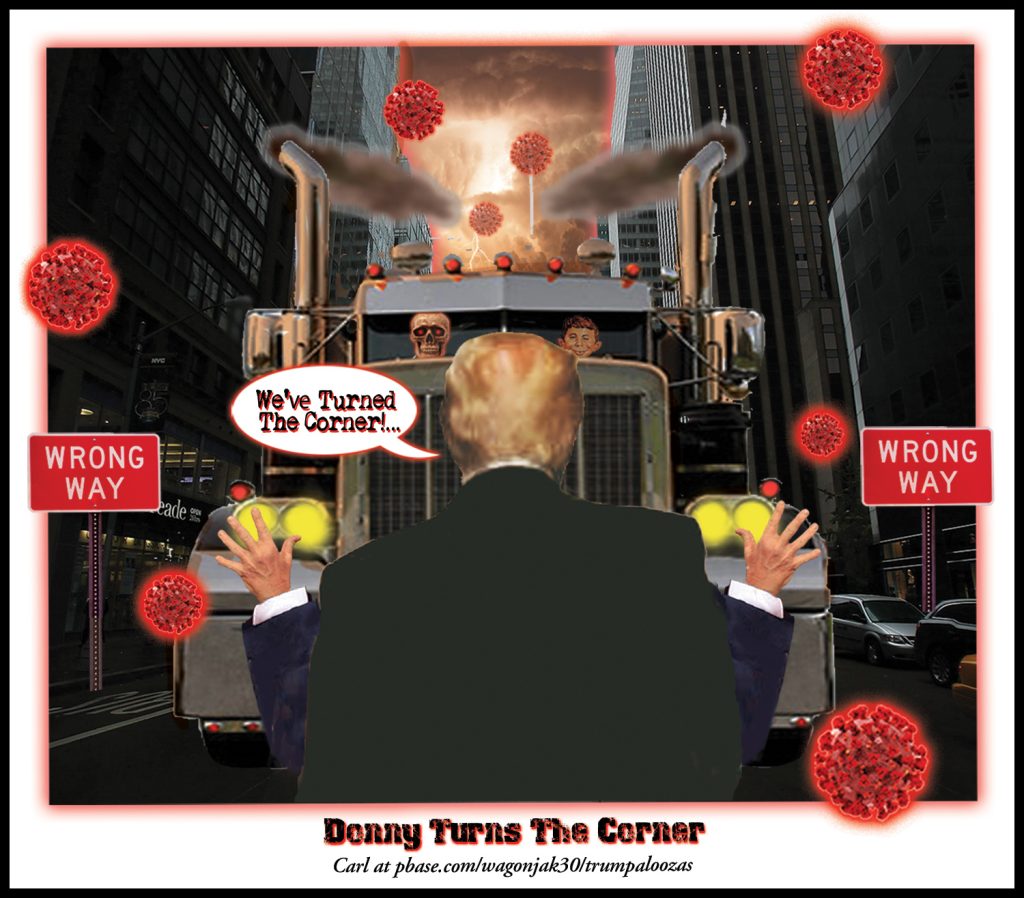
Carl Muecke illustration


We are heading into an election like no other. So rather than writing an essay on another topic — which few would read because of the voting — or putting up a history gallery…here's a revolving open thread. Older but still relevant links will fall below the jump.

I'll be putting up election stories and links, while you can have the comments section to weigh in. The Front Page will have links to non-election stories. You can follow my Twitter comments @jontalton

Now we're at Friday and it appears "all over but the shouting" — and lawsuits, recounts, and damage Trump might do until January. Biden is President-elect. It's fitting that Philadelphia, especially, propelled Biden over the top. The city where the Constitution was born is where it was saved. Four years ago, I could not have imagined Joe Biden as a world historical figure. But here we are. And I am satisfied. Next week, I'll examine this nail-biter in more detail.

The New York Times: A Traditionalist Who Ran As Himself: "In many ways, he ran as the politician he has always been. And for one extraordinary election, that was enough."

The Washington Post: Kamala Harris, daughter of Jamaican and Indian parents, elected nation's first female vice president: "Black women helped propel Harris and president-elect Joe Biden to victory by elevating turnout in places like Detroit, Milwaukee and Philadelphia. Those women will finally see themselves represented in the White House as Biden and Harris replace President Trump, who started his political career by perpetuating a racist birther lie about President Barack Obama and has a long track record of making misogynistic comments."

The Washington Post: Five Takeaways of the Election: Winners and losers.

The Atlantic: America Won: "If, in 2016, Americans rewarded anger and extremism, in 2020 they handed victory to a man of moderation, one who stands up for progressive ideals without looking down on conservatives, and who believes that it is possible both to be honest about the country’s flaws and to take pride in its strengths. Biden won because he recognized that most Americans have far less appetite for political extremism than the country’s cable-news hosts and social-media celebrities seem to think."

Wartime on the Santa Fe

Wartime on the Santa Fe

Flagstaff Rt. 66 from. depot 1943
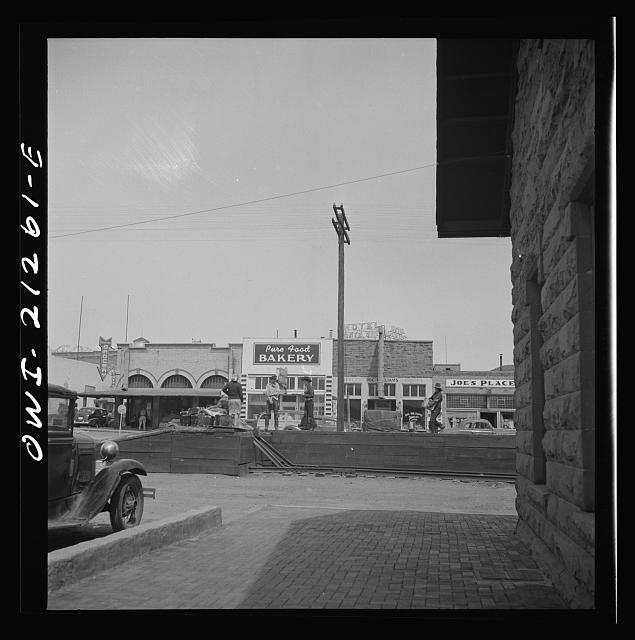
In March 1943, the photographer Jack Delano made a remarkable journey across northern Arizona on the main line of the Atchison, Topeka and Santa Fe Railway. He was working for the federal Office of War Information, documenting the massive work railroads were doing bringing troops and war materiel to both the European and Pacific theaters. In the process, he gave us images of small-town Arizona stretched along the railroad and U.S. Route 66. For example, above is downtown Flagstaff seen from the old depot looking across "the Mother Road." Flag's population was about 5,000.

Between 1941 and 1944, American railroads carried 83% of the increase in all traffic, along with 91% of all military freight and 98% of military personnel. Pullman put its thousands of sleepers into the effort and built thousands more troop sleepers and kitchen cars. The Santa Fe through northern Arizona, a critical route to the West Coast, saw a 175% spike in freight traffic. More than 1,000 cars a day went through the Albuquerque division headquarters of Winslow, with its 33-track yard and massive roundhouse and shops, along with passenger and troop trains.

The Southern Pacific through southern Arizona, including wartime Phoenix, saw similar challenges. But it didn't have a Jack Delano to document it.

This gallery comes from the Library of Congress. Click on a photo to see a larger image.

ATSF tank train 1943Passing a freight train carrying M-3 Lee tanks from the Arsenal of Democracy.

Superstition Vistas

Superstition Vistas

Superstition_Mountains_1940s
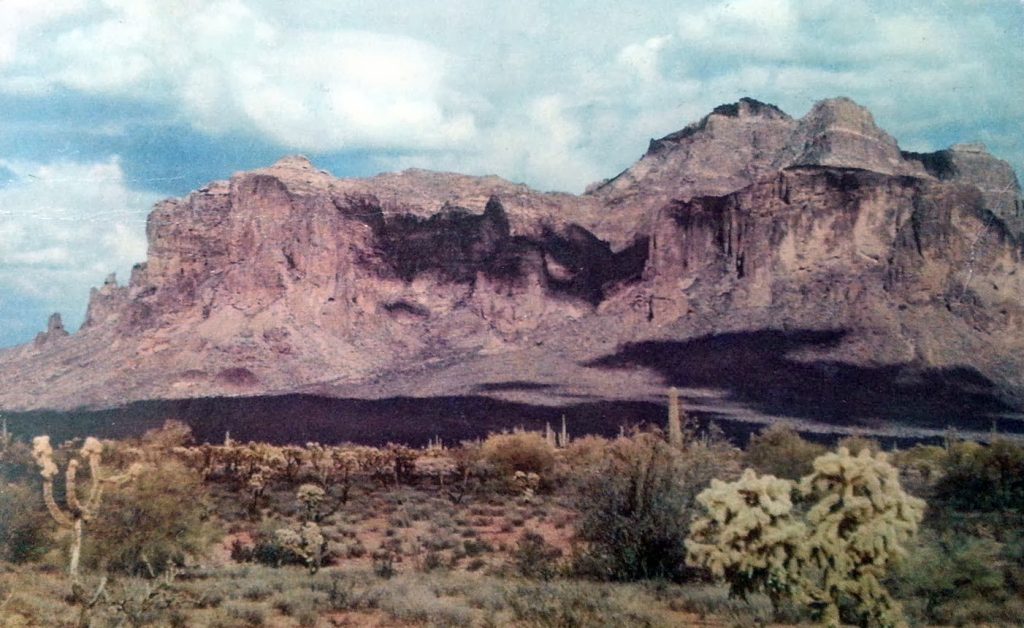
In 1977, when I was working on the ambulance as an EMT-paramedic, I was temporarily exiled from the city and worked for Aids Ambulance (the former Mesa Ambulance Service). This involved rotating to stations in Mesa, Tempe, Chandler, and Apache Junction. At the latter, two 24-hour units were maintained and the crews could expect major trauma calls, even lake rescues, in largely empty country. We proclaimed ourselves the Junction Medics. Superstition Mountain loomed to the east, not unlike the late 1940s photo above.

In those days, we left behind Mesa around Gilbert Road and were enveloped by massive citrus groves. This continued for about 12 miles, broken only by an occasional trailer park. Not much was out here. AJ's population was closing in on 9,000.

We christened Rossmoor Leisure World, a pioneering gated property, "Seizure World" because of the nature of calls from its elderly retired population. Williams Air Force Base sat miles to the south, down two-lane roads crossing farmland. Completion of the freeway was years away, so Main Street in the Maricopa County part of our territory wasn't even named or part of Mesa. It was four-lane U.S. 60, primevally dark at night, no curbs or sidewalks, lethal to pedestrians. Otherwise, it was empty desert all the way to the iconic mountain.

I couldn't imagine it would be anything else.

Fast forward to the 2000s. Mesa had ballooned from 63,000 in 1970 to nearly 400,000, grown all the way to the Pinal County line. The little suburbs I served had grown supersized and merged together into a sprawling conglomeration called the East Valley. The groves and farms were gone. Superstition's slopes were profaned by subdivisions. And all that empty desert was the most coveted piece of land in central Arizona. The boosters called it Superstition Vistas.

The finish line

The finish line

Carl Muecke illustration Joe Biden appears to have a commanding lead in the polls. This gives me little comfort. Hillary Clinton held what appeared to be a similar unstoppable advantage…
Central through the years

Central through the years

The trouble with Central Avenue is it's not central to anything now." So a real-estate mogul told me in 2001. He was totally bought into endless sprawl at the expense of Phoenix, but he was also wrong. With the metroplex spread from Buckeye to Gold Canyon, Phoenix's most important street is more important and convenient than ever, as has been shown by light rail (WBIYB)  and growing infill.

I've written about Central before. But let's take a photo journey, thanks to Brad Hall's collection, the McCulloch Bros. Collection/ASU Archives, and Library of Congress. Click for a larger image.

Central_Washington_road_construction_looking_south_1890s

When it was Center Street, a southward look at Washington in the 1890s. Construction workers are installing water lines.

CentralAdams1909Here's a view of the Hotel Adams in 1909. It burned down a year later and was replaced by a "fireproof" hotel.

Center Street BridgeThe Center Street, the first across the Salt River. Completed in 1910, the 2,120-foot-long span was claimed to be the longest reinforced concrete bridge in the world.