Jim Newcomer, an appreciation

Jim Newcomer, an appreciation

Newcomer2
Like the elves departing Middle Earth they are now leaving us, the gifted teachers who helped make us the men and women we became. No loss has been tougher than the recent death of James E. Newcomer.

He was a towering figure among the giants assembled by Eugene Hanson at the Fine Arts Department of Coronado High School in Scottsdale, including Robert Frazier and Joseph Gatti. In those days, Scottsdale taxpayers happily funded public education. Coronado built one of the most respected fine arts programs in the nation. While other schools had a "senior play," we had seven or eight productions a year in the glory days of the 1970s, when I was blessed to be a student. These included a major musical and spring repertory, with productions at a level of sophistication and skill that could match university or professional theater. This was in no small part because of Jim Newcomer.

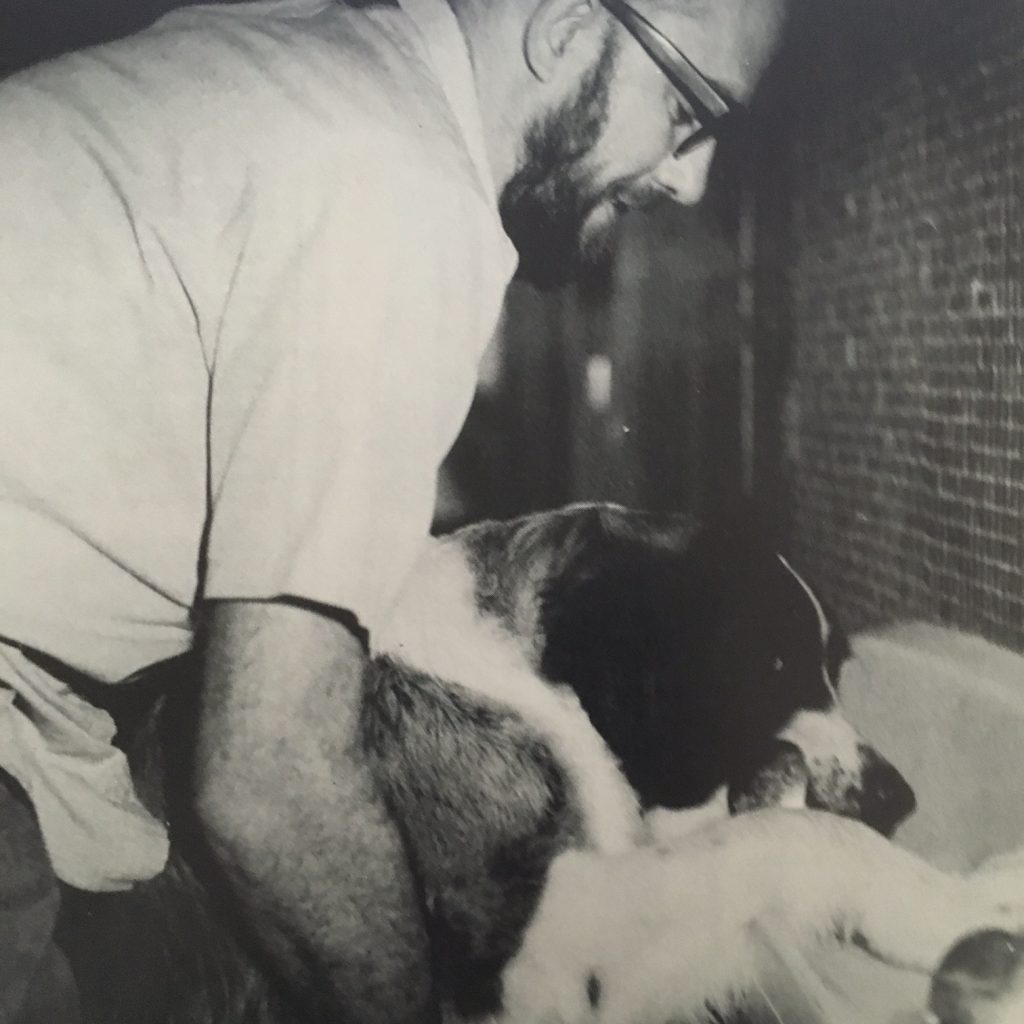
He drove a little red Beetle — one always knew he was on the job when it was parked behind the big roll-up door at the rear of the auditorium, even on weekends. He kept company with an enormous St. Bernard named Hildegard.

As the senior theater arts teacher, he taught acting as well as technical theater (lighting, set design and construction, props, costuming, makeup, etc.) Working in the stunning performance space designed by famed Phoenix architect Ralph Haver, we were repeatedly told by Newcomer that we might never again work in such an excellent facility. He was right. Most Broadway theaters were dumps. Plays at ASU were performed in the former college boiler room, the Lyceum Theater.

Newcomer was charismatic and striking, a tall man with a booming voice and laugh, a beard and long legs that splayed out whenever he sat down. Even the shyest student could find a place in Coronado theater, be it in property management or costuming. Yet all were a part of an enterprise that was demanding and professional. Excellence was Newcomer's true north and he got it.

The Kooks back down (a little)

Last week, in an unprecedented move, Republicans who control the Arizona House of Representatives banned reporters from the House floor. Then they said the press would have to undergo extensive background checks. They finally relented on Tuesday, saying the floor would be open to journalists — at least for the rest of this session.

As usual, this embarrassment has a back story. Earlier this year, Hank Stephenson of the Arizona Capitol Times, revealed that House Speaker David Gowan had used a state vehicle to travel to events for his congressional campaign. Even in compromised Arizona, this action has left Gowan in deep doo-doo.

The ban was an explicit retaliation. It included a provision that if a reporter had been convicted of even a misdemeanor, he or she could be kept off the floor for a decade. Conveniently, Stephenson had pleaded guilty to misdemeanor trespassing in 2014, apparently after a bar fight in Wickenburg (my kind of reporter).

Gowan is a typical Kook mediocrity. He's connected to the extremist "Oath Keepers." A-plus rating from the NRA. As usual, he wants to perpetuate his sucking at the gub'ment teet by moving up in gub'ment. With incumbent Ann Kirkpatrick (to my mind misguidedly) challenging wealthy Republican John Sidney McCain III for the U.S. Senate, the First Congressional District seat is open.

Questions for nominee Sanders

Questions for nominee Sanders

Bern
Outside the social media echo chamber of #FeelTheBern, Sen. Sanders is even less competitive than he appears in the race for delegates. But the willingness to burn down the party if he doesn't get what he wants, something discussed in an earlier column, has become even more apparent.

Earlier this week, Sanders said Hillary Clinton is not qualified to be president. Also that she is willing to destroy the party to attain her ambitions. Her response was appropriate. He also lied about Clinton saying the same about him. By the end of the week, he walked back the assertion but the damage was done. A quarter of Sanders supporters said they would not support Clinton if she is the nominee, compared with 14 percent of Clinton backers if Bernie is the standard bearer.

So, assuming Sanders wins the nomination, I have a few questions. These are serious inquires and I hope they will draw out equally serious responses in the comments section.

1. After the vicious campaign against Hillary Clinton, which involved recycling Republican attack points as well as questioning her integrity, intelligence, and fitness for office (and ascribing the worst possible motives to her supporters), how does the Sanders campaign plan to unify the Democratic Party for the general election?

2. Does the Sanders campaign realize that the United States is closely divided between red and blue — the Cold Civil War — with an edge to the Republicans because of their control of statehouses and increasing voter suppression measures? What is the general election strategy to reach 50.01 percent and win the Electoral College?

3. A "political revolution" is not a political program unless you are advocating bloodshed and extra-constitutional means. Sanders has raised no money for down-ticket Democrats and has been coy as to whether he will at all. So what's the plan to assemble a House and Senate solidly controlled by lawmakers who would actually pass the bills to create Sanders' social democracy?

Phoenix Confidential: the mob’s master of the skim

Phoenix Confidential: the mob’s master of the skim

GreenbaumThe most notorious gangster of mid-century Phoenix was Gus Greenbaum, but most people only know the end of the story. Where, in 1958, he and his wife were cooking steaks at their Palmcroft home on Monte Vista Drive when hitmen killed both.

Greenbaum's body was found in a bedroom, nearly decapitated in having his throat slit. His wife Bess' throat was cut, too. She was on a sofa facing the fireplace in the living room, trussed from behind and badly beaten in the face with a heavy bottle. Police discovered her propped face-down on pillows, which prevented blood from dripping on the carpet. They also found evidence that the assassins stayed on that December evening and ate the steaks.

Phoenix as a back office to Las Vegas and second home for Chicago Outfit mobsters (Willie Bioff, the notorious movie-industry hustler and Mafia turncoat for example), is often traced to Greenbaum. But he was actually sent to Phoenix in 1928 to run illegal liquor and betting; the latter eventually became southwest hub of the Outfit's gambling wire service, the Trans-America Publishing and News Service (Western Union would have frowned on accepting illegal telegraphs). This proprietary circuit also gave the Outfit an edge in national bookmaking rackets over rivals in New York and Detroit.

Gambling wouldn't be legalized in Nevada until 1931. Las Vegas was a village on the Union Pacific's main line from Salt Lake City to Los Angeles, population little more than 5,000. Legalization came because Nevada, whose population was centered around Reno and Carson City, was losing people and economic power as its mines played out and were destroyed by falling demand from the Great Depression.

Gus Greenbaum, a protege of the infamous Meyer Lansky, was 34. In Phoenix, he found a city of almost 48,000 and wide open. Gambling and prostitution flourished, with city commissioners and detectives taking a cut. The police department was deeply corrupt. Rail connections to Chicago were plentiful on the Santa Fe and Southern Pacific. Before the end of Prohibition, liquor was plentiful, too, thanks to Al Capone. Rising local leaders such as the Goldwater and Rosenzweig brothers and contractor Del Webb befriended Greenbaum. No wonder the Outfit thought it was the ideal home for Trans-America.

Voter suppression

Arizona has become a bellwether in recent years. Before the Tea Party, well funded by Republican oligarchs, surprised Democrats in the 2010 elections, Arizona had led the way with the passage of SB 1070 and crazy, racist political movements. The result was a takeover of all statewide offices by right-wing extremists.

Now we have the disaster of the primary election, where voters were forced to wait for hours in lines. The number of polling places in Maricopa County was cut from 200 in 2012 to only 60. These closures fell heaviest in poor and minority areas. Details are contained in the Arizona's Continuing Crisis news vertical on this site.

Elvia Diaz of the Arizona Republic correctly writes that this was not a bureaucratic mistake by County Recorder Helen Purcell but "a well-orchestrated plan to keep … Latinos from voting." Purcell had a green light when Arizona was among the states exempted from long-standing federal oversight after Republicans dismantled the Voting Rights Act:

Advocates and academics have documented concrete examples of discrimination against minority voters since statehood to the March 22 Republican and Democratic presidential preference elections. Those in power have adeptly used cultural and language barriers as a weapon. For instance, in the early 1900s, Arizona enacted its first English literacy test.

“The literacy test was enacted to limit ‘the ignorant Mexican vote’ … As recently as the 1960s, registrars applied the test to reduce the ability of Blacks, Indians and Hispanics to register to vote,” according to historian David R. Berman.

If you think about it, little has changed throughout Arizona’s history. Conservatives have incessantly targeted minorities and typically intensify their efforts during economic recessions or political turmoil.

Indeed, future Chief Justice of the United States William Rehnquist participated in Operation Eagle Eye, a voter suppression tactic aimed at minorities in south Phoenix in the 1960s. Remember, Arizona was long as much a Southern as a Western state. So its inclusion in Justice Department oversight of voting was well deserved.

Snakebit

Snakebit

Chase_Field-3
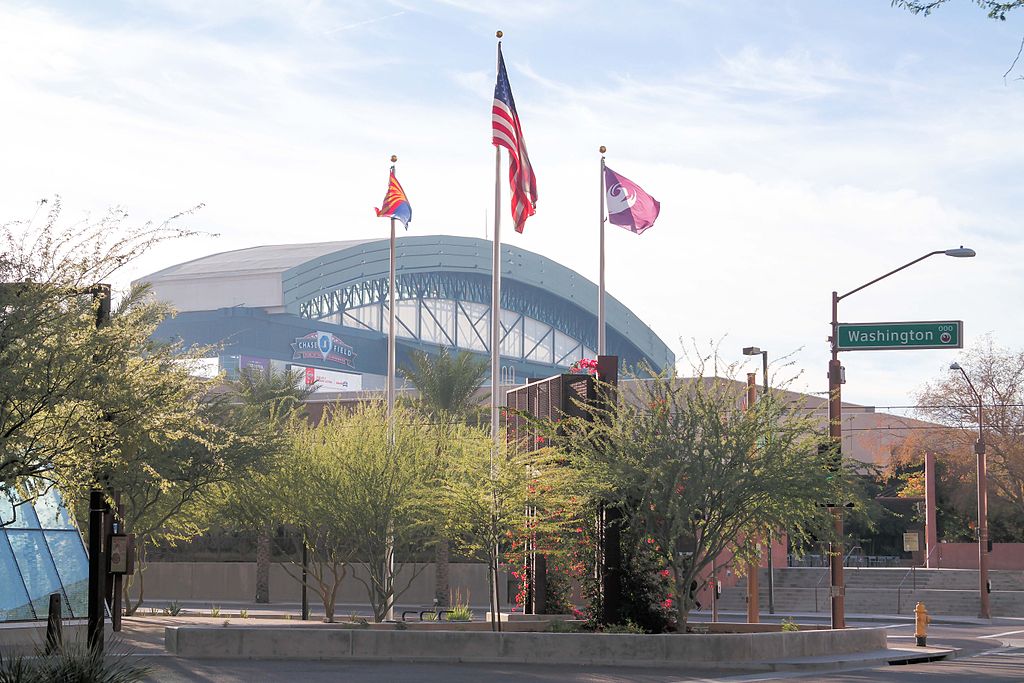
As with the Suns arena, the Diamondbacks stadium never would have been built downtown if it weren't for the unfairly reviled Jerry Colangelo. He was the last remaining civic steward who could knock heads and write checks in the tradition of the Phoenix 40.

Other sites were proposed, including on the Glendale fringe and at 40th Street and the Red Mountain Freeway. But Colangelo saw both venues as essential to the revival of the heart of the city. It was telling that with all the old headquarters gone or going, a sports executive was the last man standing. But it was enough and both facilities played pivotal roles in saving downtown.

BOB/Chase Field is not a handsome stadium, looking more like an airplane hanger than Camden Yards, Safeco Field, or Coors Field. It led to the demolition of numerous historic structures in the Warehouse District and Chinatown, including the Arizona Citrus Growers Coop building. On the other hand, a successful archeological dig was undertaken there. And the finished product is convenient to the entire region and located on light rail (WBIYB). Significantly, its air conditioning proved that Major League baseball could succeed in Phoenix.

Now, under Managing General Partner Ken Kendrick, the Diamondbacks are demanding that the county provide $187 million in upgrades — "current and future maintenance obligations" — or the team will seek a way out of its lease and leave.

I have long suspected that Kendrick, and his Suns counterpart Robert Sarver, have longed to depart downtown for the suburbs. Neither has a deep affinity to Phoenix or commitment to the health of downtown. Kendrick was already behind the lavish Spring Training facilities on the Salt River Pima-Maricopa Indian Community close to north Scottsdale. His wife, Randy, is a major right-wing money figure and both give to Koch causes and the "Goldwater" Institute — stances guaranteed to be anti-city.

The war on cities

The war on cities

001(Michael Ging photo)

"Local control" is one of the bedrock principles of the Republican Party. But as Arizona shows, this only applies when Republicans are in control locally.

Thus, the Legislature has passed laws forbidding cities from banning plastic bags, threatening to withdraw revenue sharing from those that mandate sick leave, and retroactively prohibiting Roosevelt Row from forming a business improvement district. In each case, these were pushed by suburban lawmakers.

For Arizona, this is a retrograde move from the 1960s and 1970s. Before the Supreme Court's 1964 "one man, one vote" decision, state policy was ruled by powerful rural state senators who consistently voted against education, transportation, and other infrastructure." With a Legislature that actually represented the population, Republican leader Burton Barr in the House and Democratic leader Alfredo Gutierrez in the Senate pushed through a slew of modernizing bills.

In recent decades, it's been moving in the opposite direction, from continued funding for sprawl-producing freeways to some of the worst cuts in education funding in the nation. It has fought and sabotaged light rail (WBIYB). Land-use restrictions are non-starters. Commuter rail or passenger service between Phoenix and Tucson are pipe dreams. New "takings" laws have severely limited cities' economic development and preservation efforts.

Arizona is one of the nation's most urbanized states, with 80 percent of the population living in the Phoenix and Tucson metro areas and most of the rest in smaller metros such as Flagstaff. Almost all of the intelligent responses that Arizona needs are to urban problems. Yet the Legislature is adamantly anti-city and growing more so with each session. (And, of course, it is against any mention of climate change).

Trump country

Trump country

MM-and-SK-on-Voter-Anger--Manufacturing-Employment-Decline1

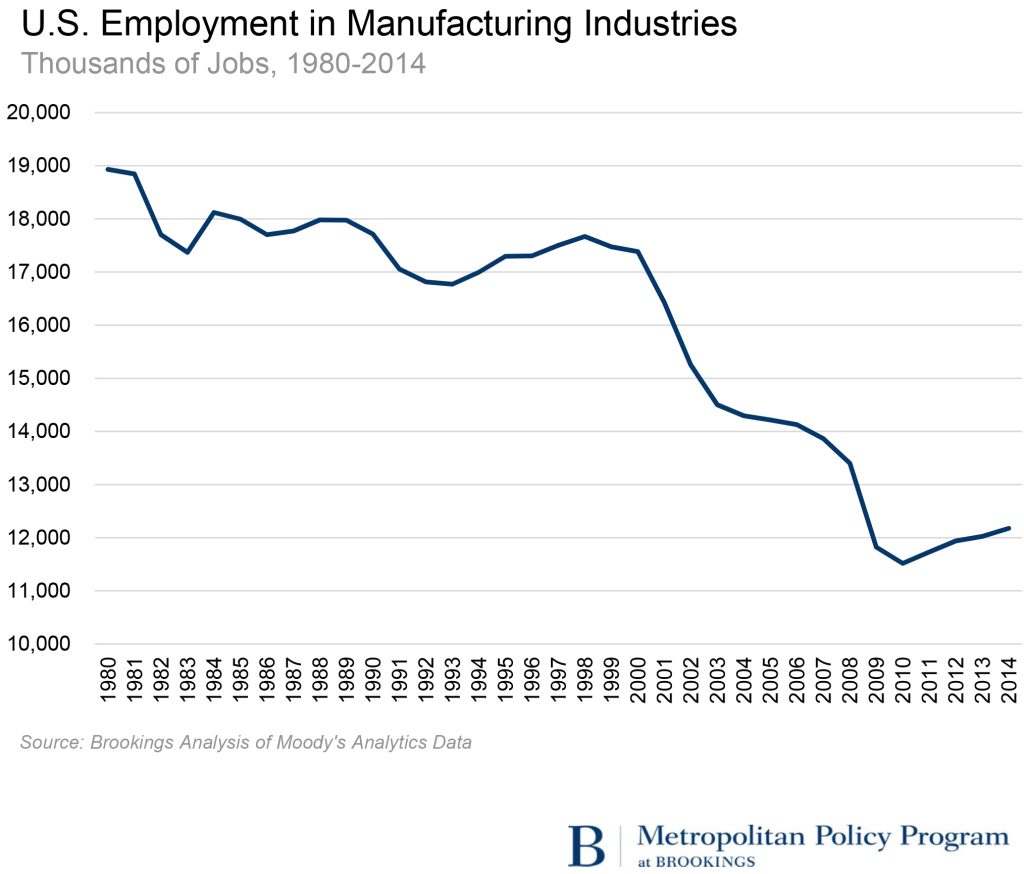
The chart above is pimped on Twitter as "Voter anger explained — in one chart."

With all due respect to my friends at Brookings, it doesn't explain the lead enjoyed in Arizona by [the real-estate developer]. The Wall Street Journal is closer to the mark in a story headlined, "Arizona Primaries to Stress Immigration."

[The real-estate developer] has made illegal immigration a centerpiece of his campaign since the day he entered the presidential race last June. He’s said many illegal immigrants from Mexico are “criminals” and “rapists.”

He’s also called for the mass deportation of all 11 million illegal immigrants currently living in the U.S. One of his top applause lines at rallies is that he will build a wall along the entire U.S.-Mexican border and force the Mexican government to pay for it. His rivals, including Texas Sen. Ted Cruz, have made similar comments.

“Border security is not just rhetoric here in Arizona,” said Christine Jones, a businesswoman and Republican activist who ran unsuccessfully for governor in 2014. “It will always be among the top issues because it’s an issue that people live” in their day to day lives in the state, said Ms. Jones, who is currently neutral in the 2016 race.

Mr. Trump has won the endorsements of the popular former governor of the state, Jan Brewer, as well as Maricopa County Sheriff Joe Arpaio, who has built a national reputation for his tough stances on undocumented immigrants and his unorthodox treatment of prisoners in his custody, including housing inmates in tents and forcing them to wear pink underwear.

Phoenix 101: Before superblocks

Phoenix 101: Before superblocks

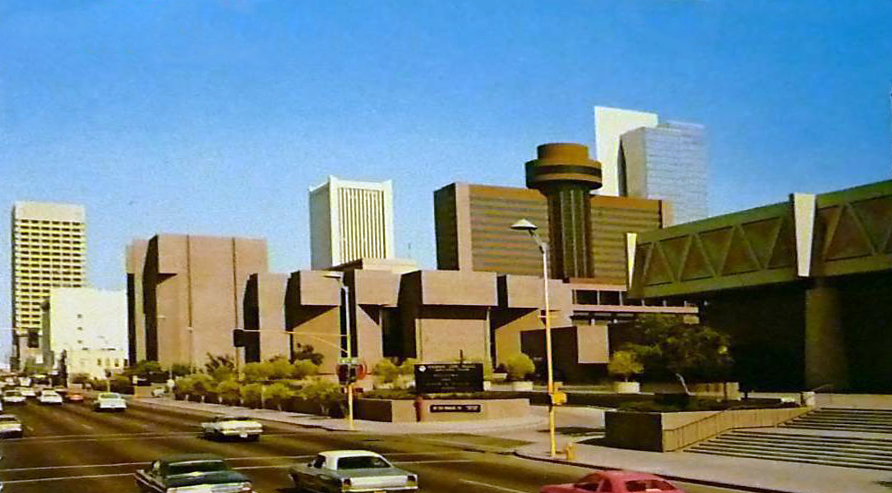
Washington_looking_west_1970s"Superblocks," with one project, be it an office, apartment, or parking garage, taking up an entire block, are one of the biggest enemies of a vibrant downtown. Think of old Civic Plaza (right) or the Chase Tower and its parking hulk. Even CityScape, which has many shops, offices, and restaurants (unfortunately facing inward), consists of superblocks that once held dozens of individual buildings, each with distinctive architecture and attitude to the street.

This is not a problem confined to central Phoenix — superblocks are profitable for developers. But this is a Phoenix-centric blog and no other major city lost more of its good urban bones to teardowns and, in many cases after decades, rebuilding into massive projects that are nearly dead at street level.

It's important to recall what Phoenix had. Not for nostalgia, but for lessons in how good cities really work (which is usually the opposite of what urban planners want) and because so few Phoenicians even know what once existed.

So thanks to the new digital archive of the McCulloch Brothers collection at ASU and other shots archived by Brad Hall, let's examine the energetic, walkable, full-of-life-and-commerce Phoenix:

Bern down the house

I thank readers for keeping traffic and comments going while I was juggling tasks this week. The debate on the previous post concerning the Democratic primary is quite remarkable and worth reading. At the risk of alienating some of you, I come down squarely with Soleri regarding Sanders.

I use the clause "at the risk…" because this battle has turned amazingly ugly. Friendships will be lost over Sanders vs. Clinton. Despite being a Democrat only since 2015, the senator from Vermont has the potential to burn the party to the ground if he doesn't get his way — or, because he probably wouldn't pull a Ralph Nader, his supporters do.

The invective hurled at Hillary from social media to my in-box is so over-the-top as to make me wonder, what's going on here? Clinton and Sanders debates have been far more elevated and reality-based than the GOP klown kar. But the Hillary hatred is astonishing. She is never mistaken, or disagreed with, or made some head-scratching bad judgment calls — she is evil, despicable, a "war bitch"… you get the idea. That she was leading the effort to achieve single-payer health coverage when Sanders had only been in Congress for two years merely gets her more contempt from this crowd. The vast right-wing infrastructure has spent nearly 25 years trying to destroy her, mostly with lies. How sad if they get the final inches across the goal line from putative Democrats.

When I drove more often, I used to listen to Sanders on Thom Hartmann's progressive radio show. His views were bracing appraisals of our national situation, especially regarding Wall Street, inequality, and fair play — basically his stump speeches of today. He was preaching to the crowd. Now the crowd is much bigger. Yet he never seemed presidential material.

Punked again?

I was going to write about [the real-estate developer], but that can wait until next week.

Here on the ground in Phoenix, there are new apartments but mostly rumors of new apartments.

For example, the property on the southwest corner of First Avenue and Roosevelt across from Trinity Cathedral is a dark hulk. Two five-story stairway shafts and one floor have been built. But it looks much the same as it did three months ago. No work seems to be happening.

The Edison, just south of One Lexington on Central, has a fence up, some grading done, and that's it. Lennar's apartments at Central and McDowell are moving very sloooowww.

Maybe I'm spoiled by Seattle. About 200 buildings, many of them skyscrapers, have been completed, permitted, or are under construction just downtown over the past couple of years. Things come out of the ground fast.

The great hotels of old Phoenix

The great hotels of old Phoenix

Before the neon gateways of motels and auto courts, before the resorts, Phoenix welcomed visitors at a handful of elegant hotels. They succeeded the one-, two- and three-story hostelries mostly built in the late 19th and early 20th centuries, which gradually became single-room occupancy properties catering to those with few means.

All were located downtown, easily walkable for shopping, entertainment, and restaurants. They were convenient to travelers arriving by train at the Southern Pacific and Santa Fe depots, and after 1923 at Union Station. Once the town was easily accessible by rail, it attracted everyone from "health seekers" to Hollywood movie stars.

Let's take a tour. Click on the photo for a larger image. These images come from the McCulloch Bros. Collection/ASU Archives and the Brad Hall collection.

The Adams:

Adams_Central_looking_east_Gooding_Adams_Hotel_1908

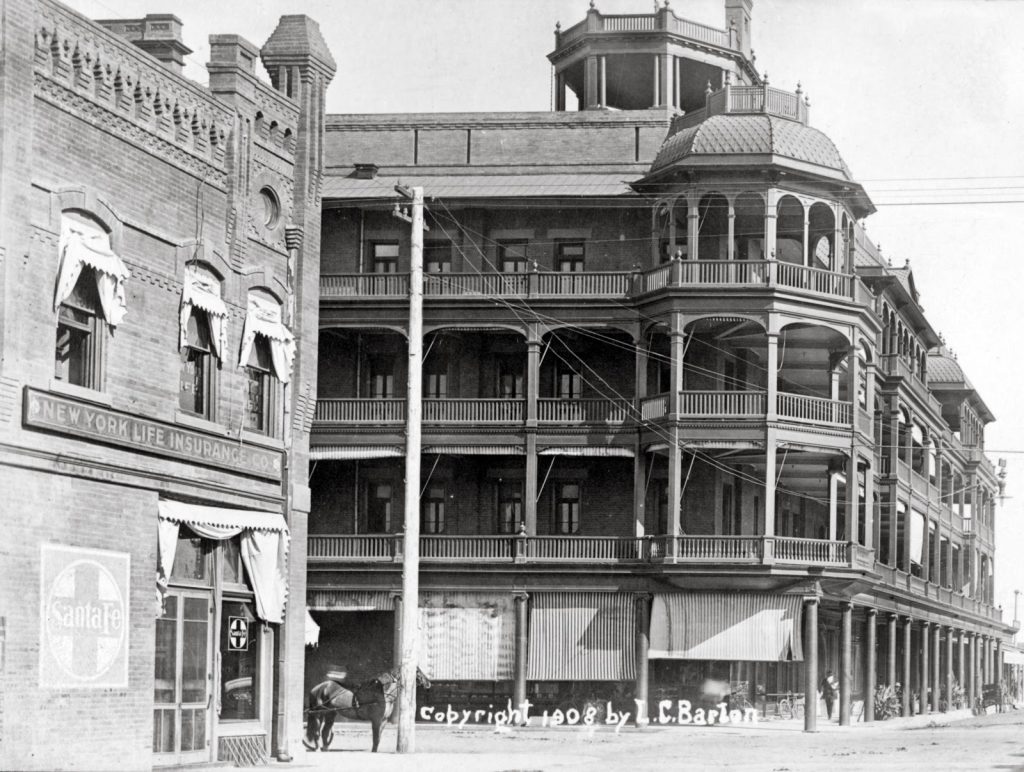
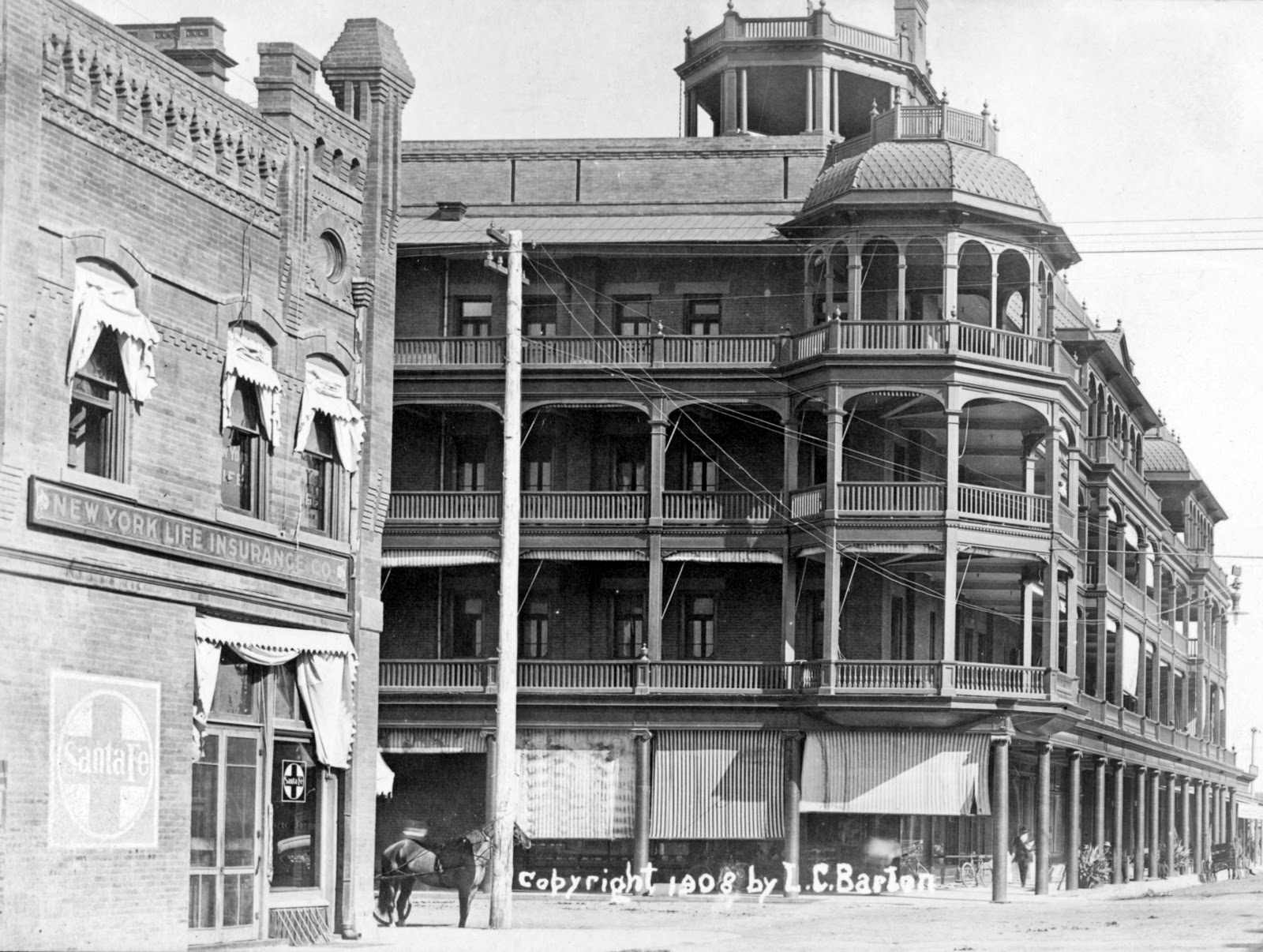
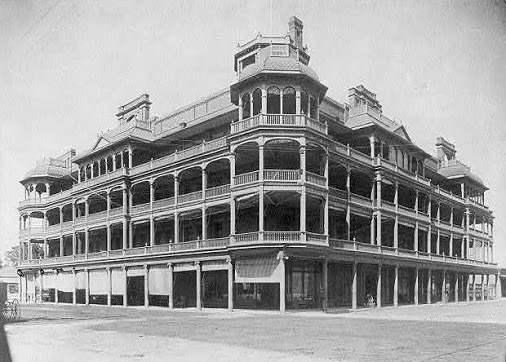
The Hotel Adams, at Center (Central) and Adams Street, was completed in 1896, the largest and grandest hotel in the territory. Phoenix's population was only 5,000. Owner John Adams came from Chicago and twice served as Phoenix's mayor.

Washington_1st_Ave_looking_northeast_Monihon_Adams_Hotel_Clark_Churchill_Camelback_1899(1)

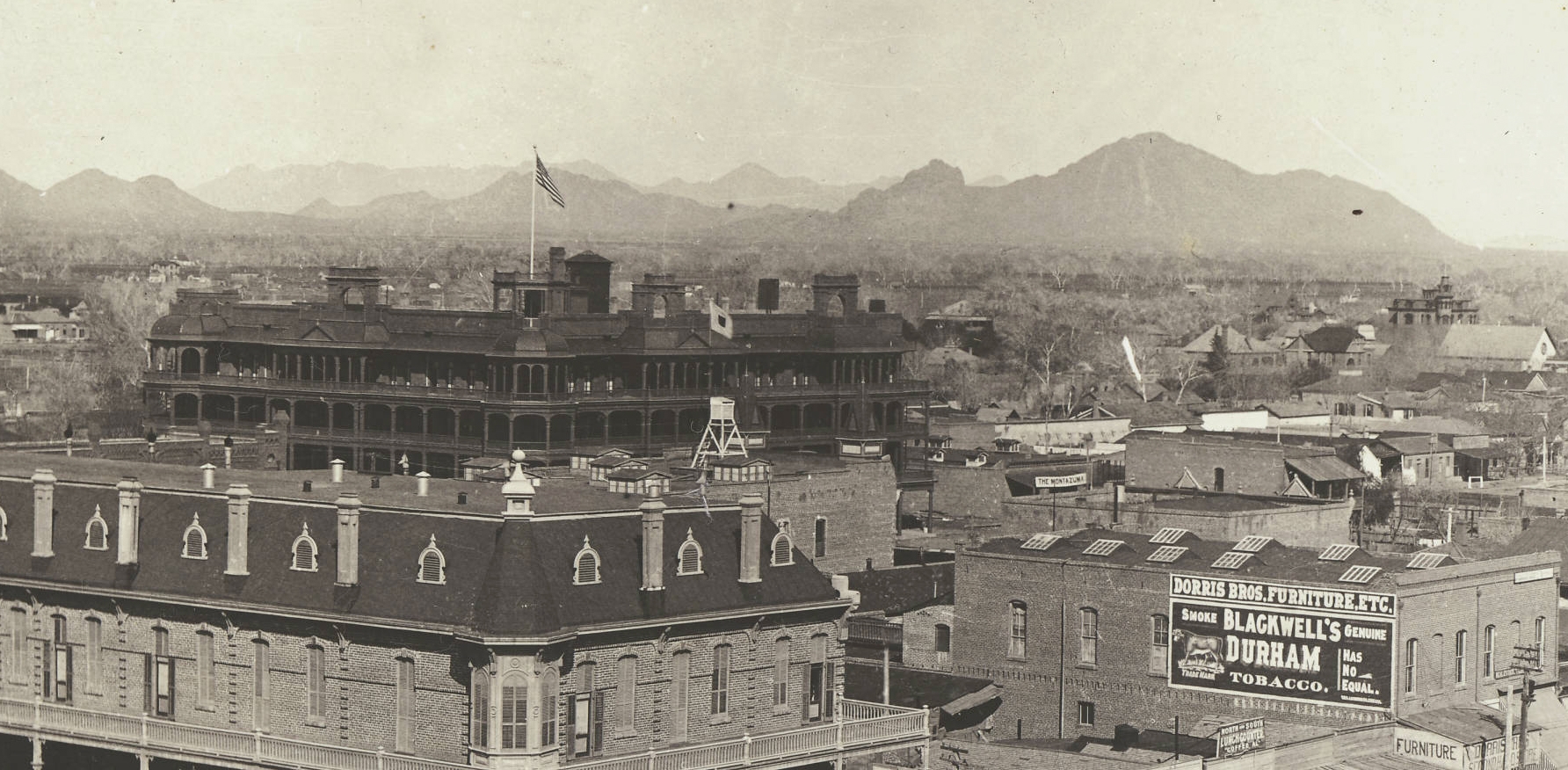
In 1899, looking over the Monihon Building (which features in my mystery City of Dark Corners), the Adams is the most impressive building in town.

Hotel_Adams_1900s

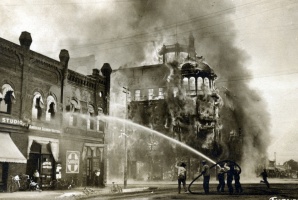
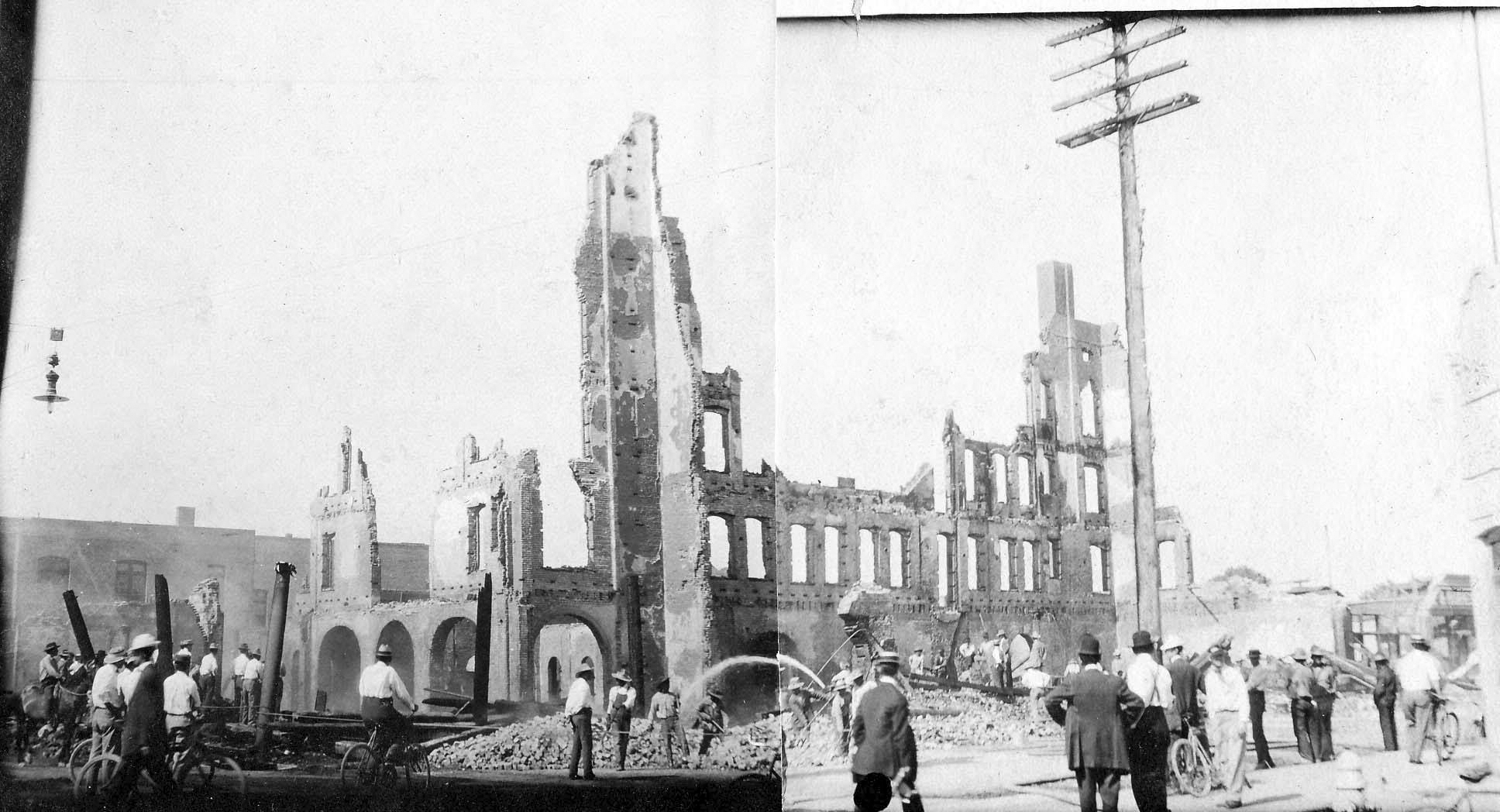
Hotel Adams fireHere's a glamour shot of the hotel soon after its completion. Without air conditioning, its awnings, balconies, and sleeping porches helped keep guests cool in the summer. Unfortunately, the original mostly wooden building was completely destroyed by a fire in 1910. The blaze was so intense that it was fortunate — and thanks to the efforts of the young Phoenix Fire Department, that it didn't spread through downtown, becoming a Great Phoenix Fire.

After the blaze was extinguished, only rubble remained. Adams immediately began rebuilding.

Adams_Hotel_after_fire_northeast_corner_Central_Adams_1910

The reckoning

The reckoning

Donald_Trump_-_Caricature_(18058245844)
Let's deal with [the real-estate developer] first.

Many on the left see him as the second coming of Adolf Hitler. Despite Godwin's Law, Jim Kunstler wrote, "As for [the real-estate developer], he remains what I said at the campaign’s outset: worse than Hitler, lacking the brains, charm, and savoir faire of the Ol’ Fuhrer, and with his darkness even more plainly visible."

Google [the real-estate developer] and Hitler, and you got 5.6 million results as of today.

In an interview, New Left warhorse Noam Chomsky gave a more nuanced but still Weimar-y assessment of the reasons behind [the real-estate developer's] surprising strength:

Fear, along with the breakdown of society during the neoliberal period. People feel isolated, helpless, victim of powerful forces that they do not understand and cannot influence. It’s interesting to compare the situation in the ‘30s, which I’m old enough to remember. Objectively, poverty and suffering were far greater. But even among poor working people and the unemployed, there was a sense of hope that is lacking now, in large part because of the growth of a militant labor movement and also the existence of political organizations outside the mainstream.

But let's calm down for a moment and note a few important differences.

Unchangeable you

I've been writing about Phoenix and Arizona for 15 years now, first as a columnist for the Arizona Republic and then in this space.

We've had some victories to be sure, and I'll take a little credit for being in the fight, often against the worst kind of civic thugs and wreckers. Among them: revitalizing central Phoenix, building the new Convention Center, winning T-Gen and making a start, albeit so slow, on the Phoenix Biomedical Campus, creating the downtown ASU campus, and light rail (WBIYB). Under Michael Crow, ASU gained stature and I was writing in support all the way.

I worked hard to provide history and context to a place rich in both, but where so many people think they don't exist — indeed, that they are dangerous. Amid the rackets, my job was not to be a cheerleader for the short hustle but to call balls and strikes.

And yet, nothing much has changed in the big picture. We keep losing.

Despite a brief moment of hope when St. Janet became governor, the extreme right has become more dominant than ever. The charter school racket. Cutting public school funding while giving tax breaks to private schools and money to rich districts. The private prison racket. The refusal to consider sustainability in the face of climate change. Continuing to depend on sprawl real estate as the main engine of growth. Further profaning the deserts and forests. It's a long list. And nothing changes. Indeed, it gets worse.