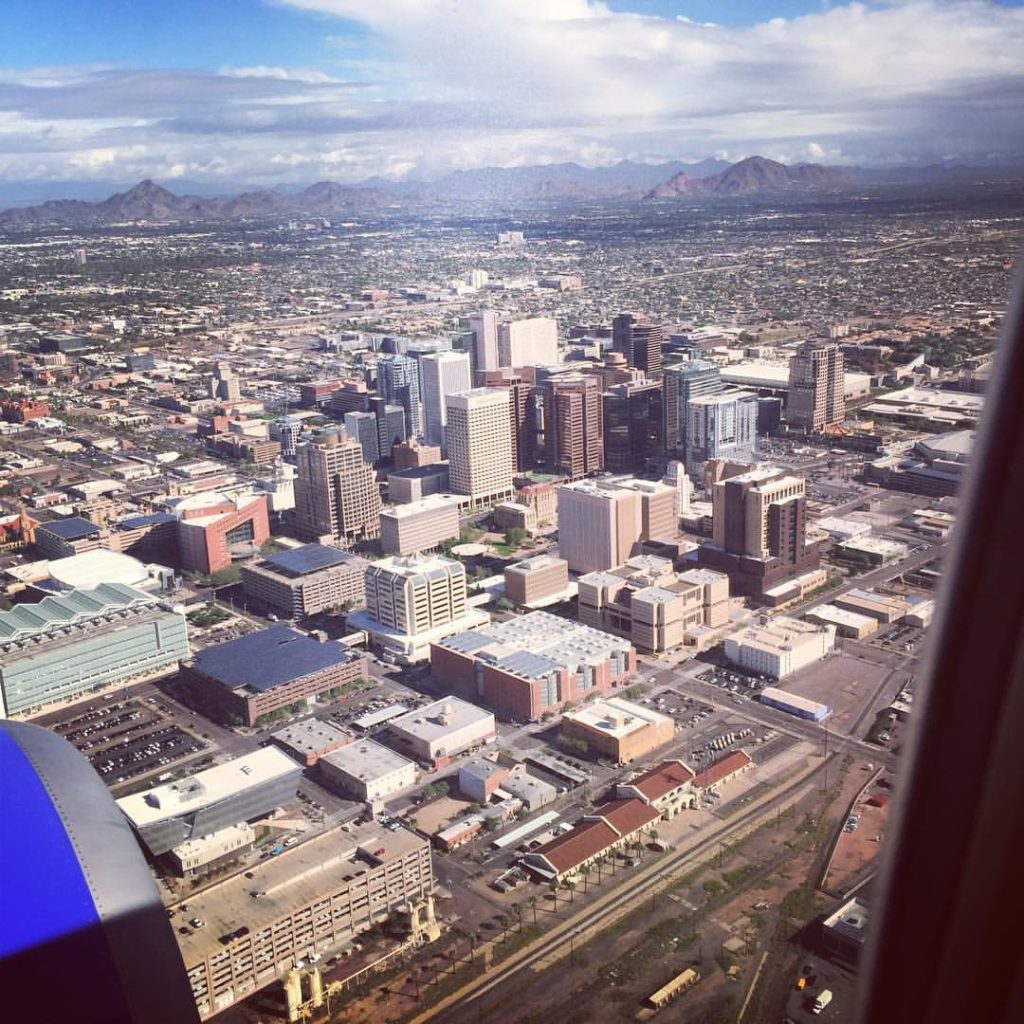
Phoenix Confidential: Frenchy

Phoenix Confidential: Frenchy

Frenchy_graveThe 1944 murder of Phoenix Police Officer David "Star" Johnson by Detective "Frenchy" Navarre is well-known to regular readers here (if you're new, you can read this real-life-pulp-fiction tale here). For years, the police department and city tried to forget the incident — and subsequent retribution by Johnson's partner in killing Navarre — not least because of its racial component. Johnson and his partner, Joe Davis, were black. Navarre was white.

Now that it's more in the open, Johnson deserves to be recognized by the department as an in-the-line-of-duty death.

But mysteries continue to linger about the shooting on May 2, 1944 in the Deuce, and the cascade effect it had, resulting in two trials, Navarre's acquittal, and Davis taking revenge inside police headquarters. For example, how did Navarre post bail of $10,000 after his arrest on a city detective's modest pay?

A big part of the answer is that Navarre was friends with Gus Greenbaum, the high-ranking member of the Chicago Outfit who had been posted to Phoenix in 1928 and later became infamous at Las Vegas casinos and the victim of a high-profile assassination in Palmcroft in 1958.

The Republican ‘mainstream’

The Republican ‘mainstream’

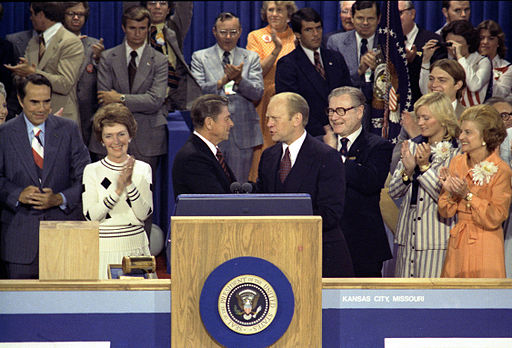
512px-1976_Republican_National_Convention

A truly mass party: The 1976 Republican Convention shows the triumphant centrist Gerald Ford over the conservative Ronald Reagan. Liberal Nelson Rockefeller, Ford's vice president, is to his right. Next to him is Ford's daughter, Susan.

The media have constructed a narrative for their campaign horse race stories, the ones all about the positioning of candidates and little about real issues. It goes something like this: The Republican "establishment," apparently represented by the likes of Ohio Gov. John Kasich and Florida Sen. Marco Rubio, is contending with an "insurgency" from Ted Cruz and especially Donald Trump.

Things are so dire that the idiot David Brooks, who traveled to the sprawl abortion of Verrado in the mid-2000s and saw "the future" rather than the dangerous housing bubble, to write a column (kinda) missing President Obama.

This, of course, is nonsense from a cowed national media.

The "moderate" Kasich is obsessed with a balanced budget achieved by cutting federal spending, attacking women's reproductive rights and charter schools. At least he said climate change is real — once. His ambition has him back denying mainstream science and he opposes EPA regulation of carbon emissions.

Kasich cut more than $84 million from Ohio's public schools. He removed a modest amount of state funding that had been slated for the Cincinnati streetcar and deep-sixed Ohio's plans for high-speed rail. Ohio boasted some of the finest public universities in the nation, including "public ivies" Miami University and Ohio University. Kasich threatened to "take an ax" to them if they didn't cut costs and raise tuition.

As a presidential candidate, he says he wants to keep Medicaid expansion, but favors "repealing and replacing" the rest of Obamacare (with what is murky). He wants to cut taxes and reduce union bargaining power. He wants "boots on the ground" to fight the Islamic State.

University of nowhere

So it has come to this: Private equity will buy Apollo Education, the parent of the Unaiversity of Phoenix. It is "a move," the Wall Street Journal reports, "that would take the beleaguered company out of the eye of public investors."

But perhaps not out of peril from criticism by the White House and investigations by federal and California regulators. Maybe. The "for-profit education" sector is a contributor in politics (see here and here); even better, it fits the ideological bias of the ruling Republican Party (and neoliberal Dems) that the "free market" is the solution to everything.

The former, especially in Arizona, has spent years defunding public institutions of higher education. In other words, real universities, where one received a "universal" education under greater or lesser but real rigorous standards. Where students often had their first real experience with people from different countries, ethnicities and, if they were fortunate, different life paths. Places with real campuses, libraries, and traditions.

Nor will the controversial "business model" of the University of Phoenix likely change much. For all the "free market" triumphalism, the company depended on the U.S. taxpayers for 81 percent of its revenue. Most of this was in the form of federal student loans. The graduation rate is poor. Either way, students are disproportionately on the hook for debt. Since 2010, when the "university" had 477,000 students, it has been bleeding enrollment (See Business Insider's useful primer here).

Of all the hustles and rackets in Arizona that needed a lengthy proctological exam by the press, this is one of the top opportunities not primarily involving water or land use (even more so than public pensions or expense account padding!). Yet it has never, to my knowledge, received it.

The trouble with Hillary

The trouble with Hillary

2015_03_10_Hillary_Clinton_by_Voice_of_America_(cropped_to_collar)The trouble with Hillary Clinton was painfully captured in a New Hampshire town hall, carried on CNN and moderated by Anderson Cooper, Wednesday night. I'll let Chris Cillizza of the Washington Post take it from here:

For 59 minutes of it, she was excellent — empathetic, engaged and decidedly human. But, then there was that other minute — really just four words — that Clinton is likely to be haunted by for some time to come.

"That’s what they offered," Clinton said in response to Cooper's question about her decision to accept $675,000 in speaking fees from Goldman Sachs in the period between serving as secretary of state and her decision to formally enter the 2016 presidential race.

Clinton is both seemingly caught by surprise and annoyed by the question all at once. Neither of those is a good reaction to what Cooper is asking. Both together make for a uniquely bad response.

Here's the thing: I'm not sure there is a great answer, politically speaking, for Clinton on the question of her acceptance of huge speaking fees from all sorts of groups — from colleges and universities to investment banks. She took the money because these groups were willing to pay it. And who wouldn't do the same thing in her shoes?

The problem is that you can't say that if you are the front-running candidate for the Democratic nomination, a front-runner facing a more-serious-than-expected challenge from a populist liberal who has made your ties to Wall Street a centerpiece of his campaign.

And that's just part of the trouble with Hillary Clinton.

The governor from Koch

No one should be surprised that Arizona’s governor, wealthy Republican Douglas A. Roscoe Jr., aka Doug Ducey, attended yet another conference sponsored by a Koch brothers front group.

As Howard Fischer reports, in the gubernatorial election the Koch organization American Encore spent more than $750,000 on attack ads against Democrat Fred DuVal. Another $650,000 was plowed into pro-Ducey efforts.

This is chump change in the multi-decade effort by right-wing reactionary billionaires to take control of American politics and game policy to their ends. Jane Mayer of the New Yorker does an excellent job of exposing its reach in the book, Dark Money.

The Democrats, much less liberals, have nothing that can compete.

Bernie’s Goldwater moment?

Bernie’s Goldwater moment?

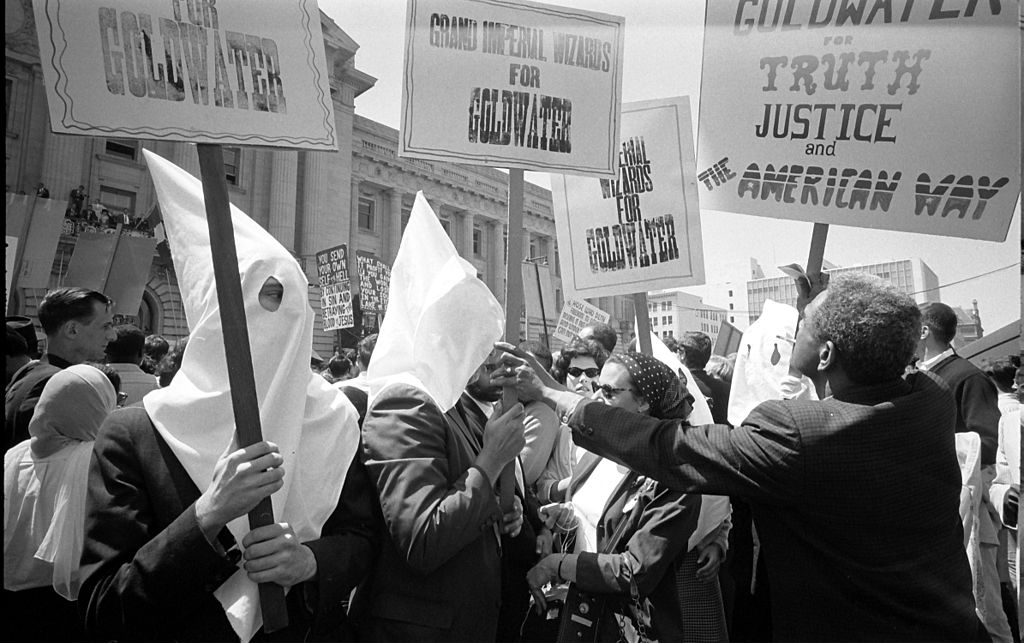
1024px-Goldwater1964SanFranciscoKKK
As every student of American politics knows, Arizona Sen. Barry Goldwater led a conservative insurgency that captured the Republican Party in 1964.

The GOP was a mass political party then, with liberals, centrists, and conservatives — the latter had been defeated and marginalized since 1932. The 1952 nomination fight loss of Sen. Robert Taft, "Mr. Republican," to the centrist Dwight Eisenhower had been especially embittering to the right.

The party was controlled by the generally liberal Eastern establishment. But in the 1964 national convention, its leading candidate, New York Gov. Nelson Rockefeller, was smashed by the Goldwater machine at the Cow Palace in San Francisco.

The department store heir embraced the reactionary right's agenda to roll back the New Deal and confront the Soviet Union much more aggressively. Goldwater opposed federal civil rights legislation, a stance he later came to regret but it attracted Southern whites. He didn't want to run against the ghost of the recently martyred John F. Kennedy (who, when alive, had worried about a Goldwater challenge). But he felt it was his duty to the party and his conservative principles.

Goldwater-Reagan_in_1964Of course Goldwater went down in one of the worst drubbings in the history of presidential elections. He carried only six states: Arizona (despite Eugene C. Pulliam endorsing LBJ) but more significantly for the future four states in the Deep South and South Carolina. Of equal significance was the visible support of actor Ronald Reagan, especially his famous "Time for Choosing" speech on the eve of the election. It made Reagan a political star and Goldwater's heir presumptive.

We can wonder what Barry and Dutch would think of Donald Trump, Ted Cruz, et al, and I have speculated that both would now be seen as "too liberal" to win a GOP school-board election. But the fact is that they built today's white, extreme-right Republican Party and everything it has brought to our national politics, life, and future. Much of Reagan's 1964 speech echoes eerily into our present.

Which brings us to Sen. Bernie Sanders.

The Warehouse District

The Warehouse District

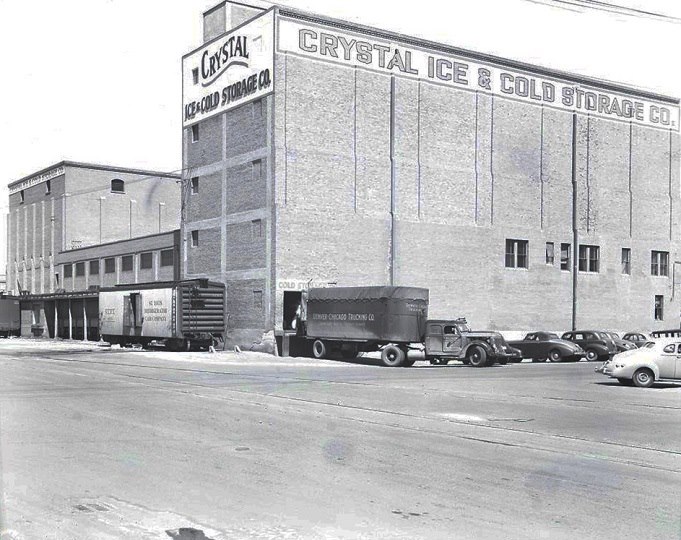
Crystal IceRailroad tracks running to Crystal Ice at Fourth Avenue and Jackson in the heart of the district. The plant not only provided ice deliveries to businesses and homes, but produced blocks to fill the bunkers of railroad refrigerator cars. The blocks were dragged and placed through roof doors in the railcars by workers on catwalks using hooks.  (McCulloch Bros./ASU Archives).

Phoenix's Warehouse District is finally seeing a payoff after years of destruction and false starts. How big a renaissance remains to be seen; coverage I've seen such as this doesn't quantify the new businesses. But something is happening. Most important, it involves creative firms and tech startups, not only restaurants.

The area saw an effervescence before, when artists discovered the historic buildings in the 1980s. But they were driven out by the arena, ballpark, Joe Arpaio's relentless jail expansions, Phoenix's ethos of tear-downs, and the city's lack of an effective preservation policy. The Job Corps moved into several buildings.

Some of the best buildings were lost. This helped fuel the successful fight in the mid-2000s to save the Sun Mercantile building, part of the city's old Chinatown. A few developers with stamina and perseverance, notably Michael Levine, refurbished some buildings. Another comeback attempt came with the opening of the unfortunately named Bentley Projects (the old Bell Laundry) in the 2000s, which included a restaurant, galleries, and a Poisoned Pen Bookstore. Too far from the core, that didn't take, either.

Phoenix never boasted a warehouse district with the size and great bones of, say, Denver, which has become a tremendous asset for an area anchored by the restored and expanded Denver Union Station. Phoenix was too small and limited in its economic heft. Still, what remains of the area is one of the city's treasures. It's one of the few places in Phoenix where you can find that coveted urban authenticity, with a variety of old buildings, narrow streets and density, that talented creatives seek.

The bitter taste in Flint

The bitter taste in Flint

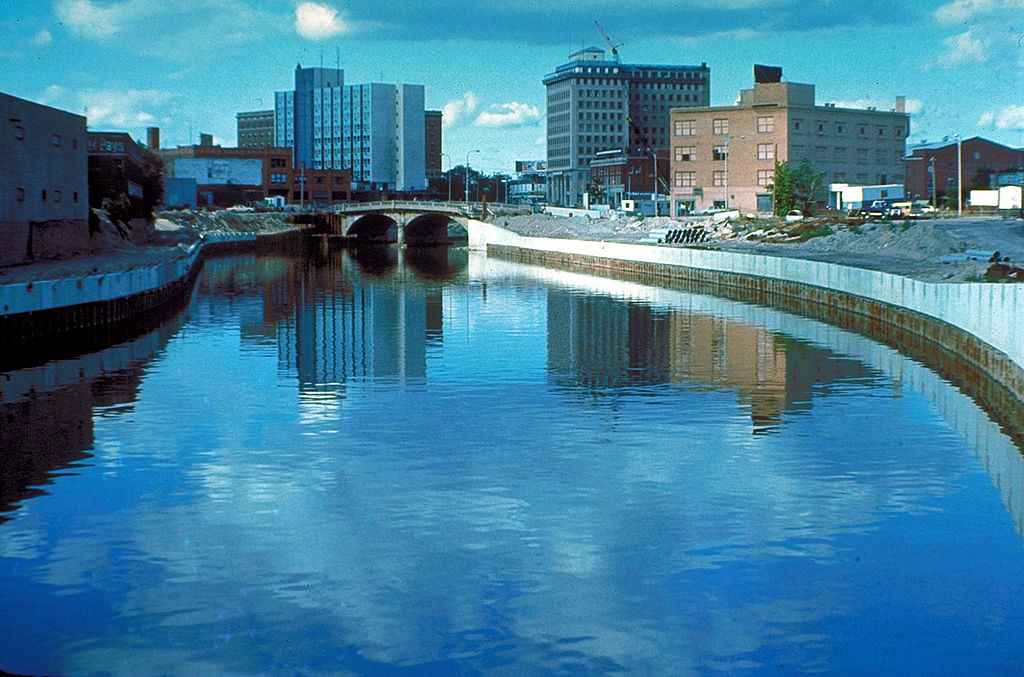
1024px-Flint_River_in_Flint_MIchigan
Although wealthy Republican Rick Snyder, the governor of Michigan, personally apologized for the catastrophe in Flint, he emphasized this, "Government failed you — federal, state and local leaders — by breaking the trust you place in us."

Well, no.

As Juan Cole made clear, Flint's water from Lake Huron has been fine under the city's elected government. But "Snyder staged a coup in Flint and appointed a city caretaker,or Emergency Manager, one Ed Kurtz, depriving the citizens of their voting rights. And Snyder’s appointee decided that a little money could be saved by switching the city’s water source from the Detroit Water and Sewage Dept. to the local Flint River. DWSD complained bitterly about Kurtz setting the two cities against one another."

As emails from the governor's staff also make clear, the crisis was dismissed by his top aides as unmerited complaints from antagonists in the majority black, Democratic city. In an echo of the GOP anti-science mentality, a pediatrician's study of lead in the water and its hazards was blown off as "data." Data, as we know, has a left-wing bias.

Behold, government run like a business.

When Ducey met Cali

When Ducey met Cali

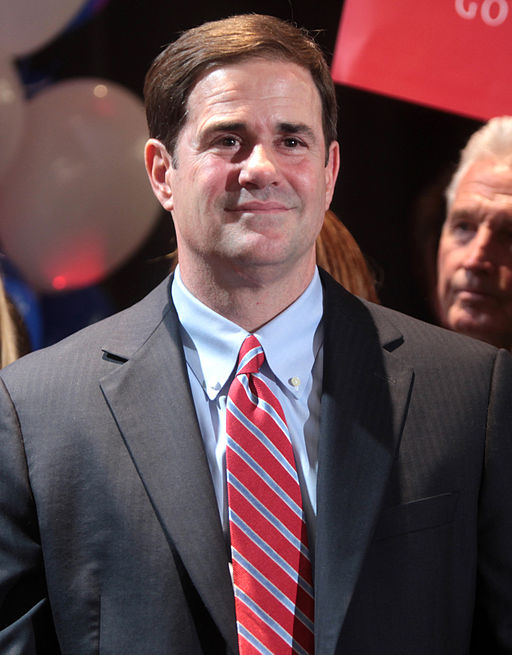
Doug_DuceyHe opened the door, so let's walk through.

He being wealthy Republican Douglas A. Roscoe Jr., aka "Doug Ducey," the governor of Arizona. In his State of the State address, he made a special point of contrasting Arizona's supposedly booming economy vs. the alleged economic disaster of the Golden State. As in, "So the goal is simple – to grow our economy, to take full advantage of our geography to better address the needs of businesses fleeing California and other states on the decline, and to ensure job creators who are already here, stay and thrive."

Let's look at the facts.

In November, the most recent month for which statistics are available, California's unemployment rate was 5.7 percent. Arizona's was 6 percent.

As of 2014, the most recent year available, Californians enjoyed a per capita personal income of $50,109; Arizonans struggled with $37,895. Median household income was $60,487 in California vs. $49,254 in Arizona. These are the "job creators," citizens with the incomes to spend and invest.

California has added 2 million new jobs over the past six years to reach a new record high. So much for companies "fleeing." Indeed, it is one of the most robust states for company formation and startups.

Arizona's gross domestic product is still below its pre-recession peak and stumbled along with 1.4 percent growth in 2014. California's GDP is at new record highs and grew more than 2.5 percent annually.

The bus strike

The bus strike

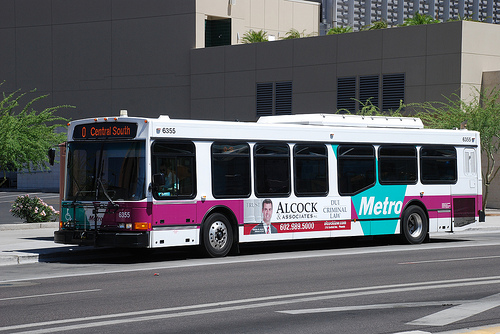
AbusAs a tentative agreement is reached to end the bus strike, is it the longest in Phoenix history? No — the record goes to a ruinous 56-day walkout in 1962. Tucson went through a 42-day strike last year, where Sun Tran drivers were particularly concerned about improvements to their safety. Once again, the strike was against Transdev, the multinational company that also operates many of Phoenix's routes (another operator is First Transit, which handles Valley Metro routes mostly in the suburbs).

Let's hope the drivers — who hardly make princely wages — get clean, safe restroom stops. That's not too much to ask.

The Republic has done a good job of laying out the issues and maintaining daily coverage. So I'll try to piece together some added context, questions, and thoughts.

The strike appears confusing because it affects 34 routes that carry 80,000 daily boarders. This has taken out almost all of the routes in the city and those that run east-west, except for the busy McDowell, Thomas and Indian School buses. With scabs, Transdev is operating some on reduced schedules. But according to the now-always-accurate Wikipedia, Valley Metro has 101 routes.

Part of the confusion may stem from Valley Metro merely being a brand for the city of Phoenix and the Regional Public Transportation Authority, an amalgamation created in 1993 from the old Phoenix Transit (Tico!) and other operations in Mesa, Tempe and Scottsdale. Most of the actual organizational expertise comes from the City of Phoenix Public Transit Department. Throw in the private-sector contract operators and light rail (WBIYB) and things get even more confusing.

Year of illusions

Year of illusions

Anazi
This is the time of year when writers are making their predictions. The Archdruid Report foresees the election of Donald Trump as president. Gail Tverberg has a thoughtful post about oil. The usually delightful, politically incorrect, and trenchant James Howard Kunstler is worth quoting at length:

Given where we are in human history — the moment of techno-industrial over-reach — this crackup will not be easy to recover from; not like, say, the rapid recoveries of Japan and Germany after the brutal fiasco of World War Two. Things have gone too far in too many ways. The coming crackup will re-set the terms of civilized life to levels largely pre-techno-industrial. How far backward remains to be seen.

Those terms might be somewhat negotiable if we could accept the reality of this re-set and prepare for it. But, alas, most of the people capable of thought these days prefer wishful techno-narcissistic woolgathering to a reality-based assessment of where things stand — passively awaiting technological rescue remedies (“they” will “come up with something”) that will enable all the current rackets to continue. Thus, electric cars will allow suburban sprawl to function as the preferred everyday environment; molecular medicine will eliminate the role of death in human affairs; as-yet-undiscovered energy modalities will keep all the familiar comforts and conveniences running; and financial legerdemain will marshal the capital to make it all happen.

Oh, by the way, here’s a second element of the story to stay alert to: that most of the activities on-going in the USA today have taken on the qualities of rackets, that is, dishonest schemes for money-grubbing. This is most vividly and nauseatingly on display lately in the fields of medicine and education — two realms of action that formerly embodied in their basic operating systems the most sacred virtues developed in the fairly short history of civilized human endeavor: duty, diligence, etc.

I don't make predictions in my Seattle Times column. "It's tough to make predictions, especially about the future" as Yogi Berra said. Instead, I have laid down markers, written about the perilous prospects ahead for workers, and the chance of a recession.

The ‘gub’ment land’ hustle

The ‘gub’ment land’ hustle

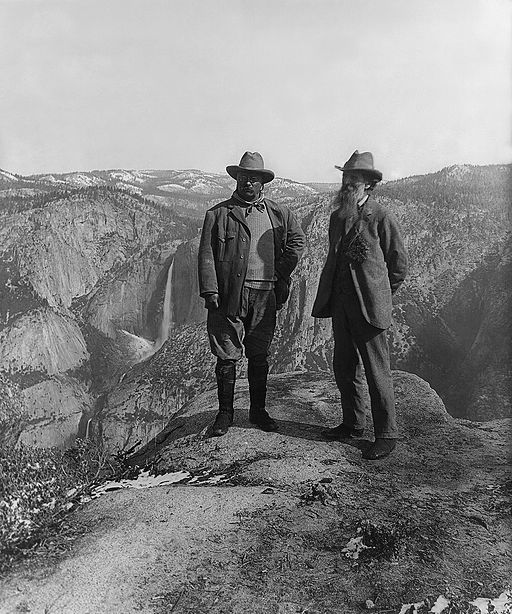
TR
Even many Republicans are distancing themselves from the Y'All Queda/Vanilla ISIS theater in Oregon. And many liberals have rightly made a contrast with the authorities' likely response if a band of armed black militants would have taken over a federal building.

Beneath it, however, is a longstanding dislike of the federal government by many Western landowners and cattlemen. They wanted the perks that came from Washington: the Homestead and Desert Land acts, conquest of native tribes, land-grant railroads and reclamation.

They eagerly exploited the favorable terms of the General Mining Act of 1872, as well as price supports and other goodies for farmers and ranchers and timberlands in the 20th century. Developers wanted federal Interstates and other highways, flood control and murky, corruption-tainted land swaps of public land. And they demand taxpayer-funded firefighting to protect their "cabins" (read exurban subdivisions where they shouldn't have been built).

Ammon Bundy, son of welfare-queen rancher Cliven and "mastermind" of the Oregon takeover, is a taker himself. He received $530,000 through a tyrannical federal loan guarantee program for his truck-repair business in…wait for it…Phoenix.

Otherwise, these rugged individualists wanted the government gone. Some of Arizona's leading statesmen opposed making a National Park at Grand Canyon.

The notion of an oppressive federal government controlling the land, and hence the destiny, of the West has been political fuel for the Republican Party since the so-called Sagebrush Rebellion of the 1970s. One of its prominent arsonists was Nevada Sen. Paul Laxalt, a friend of Ronald Reagan. Now the issue is back.

Earlier this year, Arizona Republican Congressman Paul Gosar said, "For every acre of land declared public, there is an acre of private land lost, and in Arizona, only about 18 percent of the land remaining in the state is privately held."

He's right (it's 18.2 percent), yet very misleading.

WWII home front: Phoenix

WWII home front: Phoenix

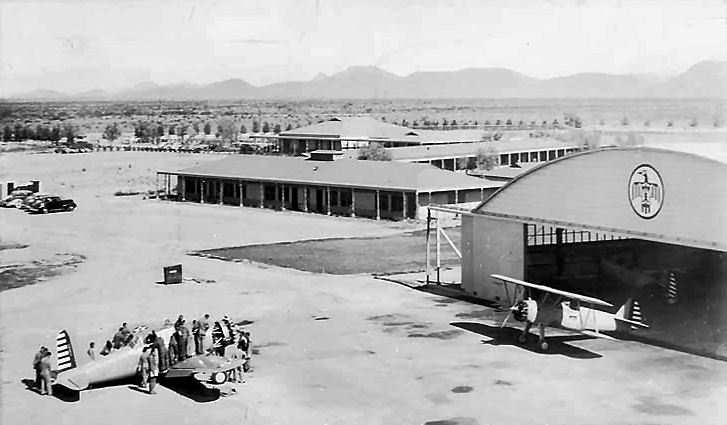
Thunderbird field
In the conventional telling of Phoenix history, World War II marks the pivot between the "old" and "new" city. The reality is not quite so neat. But the war does deserve its own niche, separate from the more expansive decade of the 1940s.

As with the Great War, the most immediate local beneficiaries of the outbreak of hostilities in Europe in 1939 (China had been fighting for its life against Japan since 1937) were the cotton farmers of the Salt River Valley. Even with America nominally neutral, Washington tilted policy toward Britain and France, and our extra-long staple cotton was critical to making tires.

But unlike World War I, the Second World War would touch Phoenix much more profoundly. It would bring military bases and new industries. Population increases would strain the city. Simmering racial hostilities would break through. One of the great injustices of American history would literally run through the heart of town.

The valley's destiny lay not merely with the land but in the sky. It, along with Tucson, was identified as an ideal place to train military pilots thanks to the abundant clear days. Even before America entered the war — and in spite of a large isolationist sentiment in the Congress and the country — FDR's War Department began seeking locations for air bases in the Southwest. They were meant to enhance "preparedness," Roosevelt's armed neutrality, but also train British, Canadian and Chinese pilots.

The best of Rogue 2015

The best of Rogue 2015

11113955_473971796114940_6472959220703346943_oPhoto by Eugene Scott

Phoenix should leave the Greater Phoenix Economic Council: "GPEC can't serve the special needs of Phoenix and the appetite of the sprawl boyz. Maybe a few projects to far north Phoenix. But what has GPEC done for downtown, the Central Corridor or to fill abundant empty land along the light-rail line in the city? Not much if anything."

The evolution of the press, radio, and television in Phoenix: "It is an open question of how much power "the Pulliam press" actually had in post-war Phoenix. The city was attracting large numbers of middle-class Anglos from the Midwest that already shared his larger political philosophy. Pulliam was a civic leader, but hardly the only one, and most shared a common vision of a "business friendly" low-rise city with minimal restrictions on individuals. At least on white people."

Still got Dick Nixon to kick around: "For decades, Richard Nixon has been the devil to the left. But the left isn't politically relevant anymore (Jerry Ford Republicanism is what passes for "the left" in today's broken political spectrum). What's more consequential is that Nixon is now the devil to the right, which is more powerful than ever. So in the public square today, we are relitigating not Watergate but the domestic achievements of Tricky Dick."

Man behind the curtain

It seemed like the 1980s and 1990s all over again, the recent Arizona Republic story about a speculator ordered to pay $86.4 million arising from a lawsuit over the "Road to Nowhere" land play west of the White Tanks. The project promised housing for 300,000 residents. It was never built.

I urge you to read the story. The labyrinthine deal and long-running court battle defy easy explanation and benefit from the authoritative writing of veteran Republic reporter Dennis Wagner. If you're outraged by a government official padding his expense account, you should see how the private sector rolls in Arizona.

Unfortunately, local journalists rarely venture into alleged wrongdoing by corporations, much less the enormously powerful elements that comprise the Real Estate Industrial Complex. When this happens, however, the curtain rises, ever so slightly on how "the system" really works, how power is used.

This is one of those rare moments. And, not surprisingly, at the center of this story is the fascinating Conley Wolfswinkel. At about age 65, he is the Energizer Bunny — or the Terminator ("That's what he does! That's all he does! You can't stop him!") — of central Arizona land speculation.