Scandal for schools

Last week, two items came my way. I learned that Andre Goodfriend, my buddy from grade-school days, has become the United States chargé d'affaires, or deputy chief of mission, at our embassy in Budapest, Hungary. Meanwhile, it was reported that enrollment in the Phoenix Union High School District reached a 36-year high.

The district is 80 percent Hispanic and only 5 percent Anglo. As recently as 1990, the demographics were 41 percent Anglo and 40 percent Hispanic. Some 81 percent of students qualify for free or reduced-price lunches — and based on my research, this is often the only meal some of them receive in a day.

What these tidings have in common is the scandalous trajectory of failure in our public education system.

This is a huge topic, and I recommend Diane Ravitch's Rein of Error and The Death and Life of the Great American School System for anyone seeking some of the best examinations of the topic by one of our great scholar-advocates. My aims are more modest.

The nostalgia rap

I was made aware of this recent conversation. My name came up, and an Influential Person said, "But he hates Arizona." The other person responded: "No, he actually likes it quite a bit." Influential person: "OK, but he's blinded by nostalgia."

Nostalgia has its appeal. Indeed, it can be healthy, as an article in the New York Times recently pointed out:

Nostalgia has been shown to counteract loneliness, boredom and anxiety.
It makes people more generous to strangers and more tolerant of
outsiders. Couples feel closer and look happier when they’re sharing
nostalgic memories. On cold days, or in cold rooms, people use nostalgia
to literally feel warmer.

Nostalgia does have its painful side — it’s a bittersweet emotion — but
the net effect is to make life seem more meaningful and death less
frightening. When people speak wistfully of the past, they typically
become more optimistic and inspired about the future.

“Nostalgia makes us a bit more human,” Dr. Sedikides says. He considers
the first great nostalgist to be Odysseus, an itinerant who used
memories of his family and home to get through hard times, but Dr.
Sedikides emphasizes that nostalgia is not the same as homesickness.
It’s not just for those away from home, and it’s not a sickness, despite
its historical reputation.

But nostalgia is not what attracts people to Rogue Columnist, why traffic here keeps growing every month, or why people — even the Kooks — consider this a must-read.

Economic report card

I arrived back in Phoenix to find the local newspaper editorializing, "Now is the time to invent a new Arizona." I thought the "new Arizona" was what came together to put St. Janet in power and had since been cleansed from the capitol by the Kookocracy. Anyway, on a Page One snippet (the highly formatted "product" is full of "snippets") we read, "Arizona stands on the threshold of a shimmering future…This place is redolent of change — Arizona is primed for progress." While it talks of "lift(ing) off the dead weight of the Great Recession and … start(ing) now to ambitiously reinvent our state," the overall tone of the package is very cheerleader-y. No edge. Kid gloves. The reliable developer-economist Elliott Pollack is quoted. Gov. Jan Brewer is given a column. The status quo smiles. Everything's fine.

No disrespect. The people that remain there are nice folks doing the best they can within the constraints of the huge corporate owner, right-wing extremists and Real Estate Industrial Complex. But the Arizona Republic under Sue Clark-Johnson had a few years of sterner stuff, when I and others wrote seriously about the state's opportunities — and the challenges it would take to achieve them. We had a few successes: ASU downtown, the Phoenix Convention Center, T-Gen, Science Foundation Arizona, all-day kindergarten and light rail (WBIYB). But the moment was fleeting, the opposition ferocious and the real progress was stymied or rolled back. It has been a decade since Mary Jo Waits of a more muscular Morrison Institute wrote the Five Shoes Waiting to Drop report. While it helped spur some action back then, the rise of the Kookocracy stopped it. All shoes dropped. As Waits repeatedly warned, "Arizona will become the Appalachia of the 21st century."

Back in the 1980s, when the Republic was independent, publisher Pat Murphy led similar efforts to get the city and state's attention. Powerful civic leaders — and Phoenix once had them — used the 1990-91 crash to form a new economic strategy and go after high-wage clusters. In every case, the growth machine overwhelmed reform. Why should the Great Recession, which hit Phoenix worse than most places, be any different. But my intention today is a deeper examination of where the state and metro actually stand.

Phoenix: The oasis city

Phoenix: The oasis city

Oasis_CityCountyBldg
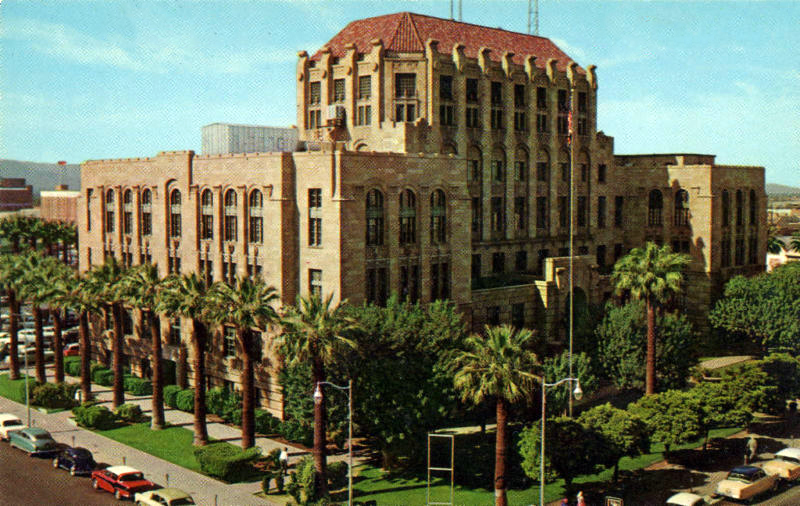
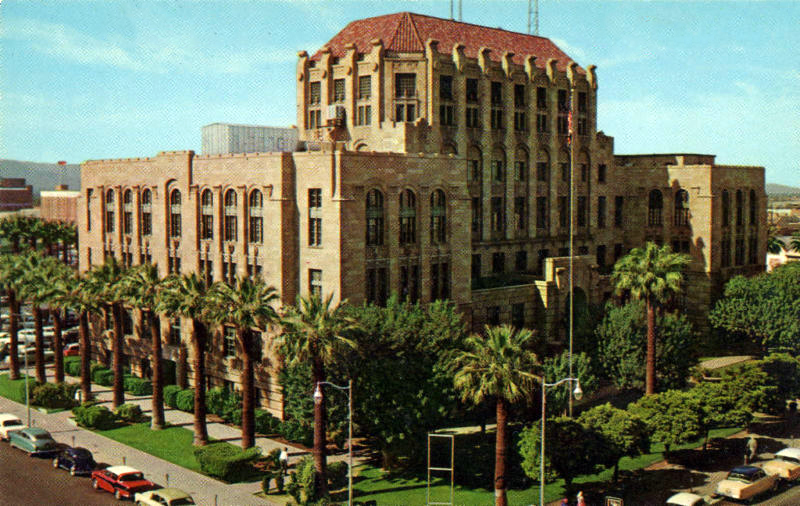
The 1929 Maricopa County Courthouse and Phoenix City Hall when it was surrounded by shade trees and manicured lawns (Photographer unknown).

Alone among the cities of the American Southwest, Phoenix is the oasis. It has always been so, but whether it remains an oasis city is starting to come into doubt. A common narrative is that Phoenix attracted Midwesterners who wanted to recreate the landscape from which they came.

This is untrue. In fact, the early Anglo residents were from many regions, especially the South. And the oasis predates American settlement. The archeology of the region is in flux, but it appears that "plant husbandry" was being performed by prehistoric tribes as early as 3,000 or 1,500 B.C. (or BCE if you are trapped in the politically correct precincts of academia). By the first millennium A.D., the most advanced irrigation in the New World was being perfected by the Hohokam.

The Salt River Valley was an ideal location, with rich alluvial soil that would grow anything — just add water. The altitude and weather in the modern climate era allow for two or more growing seasons depending on the crop. Maize was imported from Mesoamerica. Cottonwoods, willows and other native shade trees grew along the riverbank and its subsidiary creeks. I have no doubt that Hohokam dwellings were well-shaded. The new settlers merely took it to a higher level.

The photo above captures the oasis city at its zenith, in the 1960s. Note the inviting public space provided by shade and grass surrounding an inspiring art deco building. This was the Phoenix I grew up in. At 10,000 feet, you would have seen a green city surrounded by bands of citrus groves, farm fields and horse pastures. And then: The majestic, largely untrammeled Sonoran Desert. What a place to live. The older neighborhoods were graced by mature trees and parking lawns, a grassy area between the curb and sidewalk. Encanto Park was an oasis within an oasis. Central, as you see below, was lined with palm trees. North of Camelback were shady acreages, often along streets with an abundant shade canopy, set back behind irrigation "laterals." My great aunt lived in one: It was a wonder of shade and tranquility behind oleander hedges on Seventh Avenue. Well into her eighties, this daughter of the frontier would walk out every Sunday evening to turn the valve and "take her water," the flood irrigation from the Salt River Project.

In our neighborhood, what is now Willo, few families had pools but most put in winter lawns to give the sweet season its magical green. Even driveways had grass between two narrow concrete strips. This was not the Midwest. It wasn't LA, although the parking lawns were imported from there. Instead, Phoenix created its own unique urban aesthetic. It wasn't planned. This Eden just happened. If you missed it, you have my deepest sympathy. Many areas of oasis beauty remain. If you want a sense of the practical benefit, drive south from Osborn on Fifteenth Avenue some summer evening with the windows down. When you cross Thomas into Encanto Park, the temperature will drop by ten degrees or more.

The dam problem

The dam problem

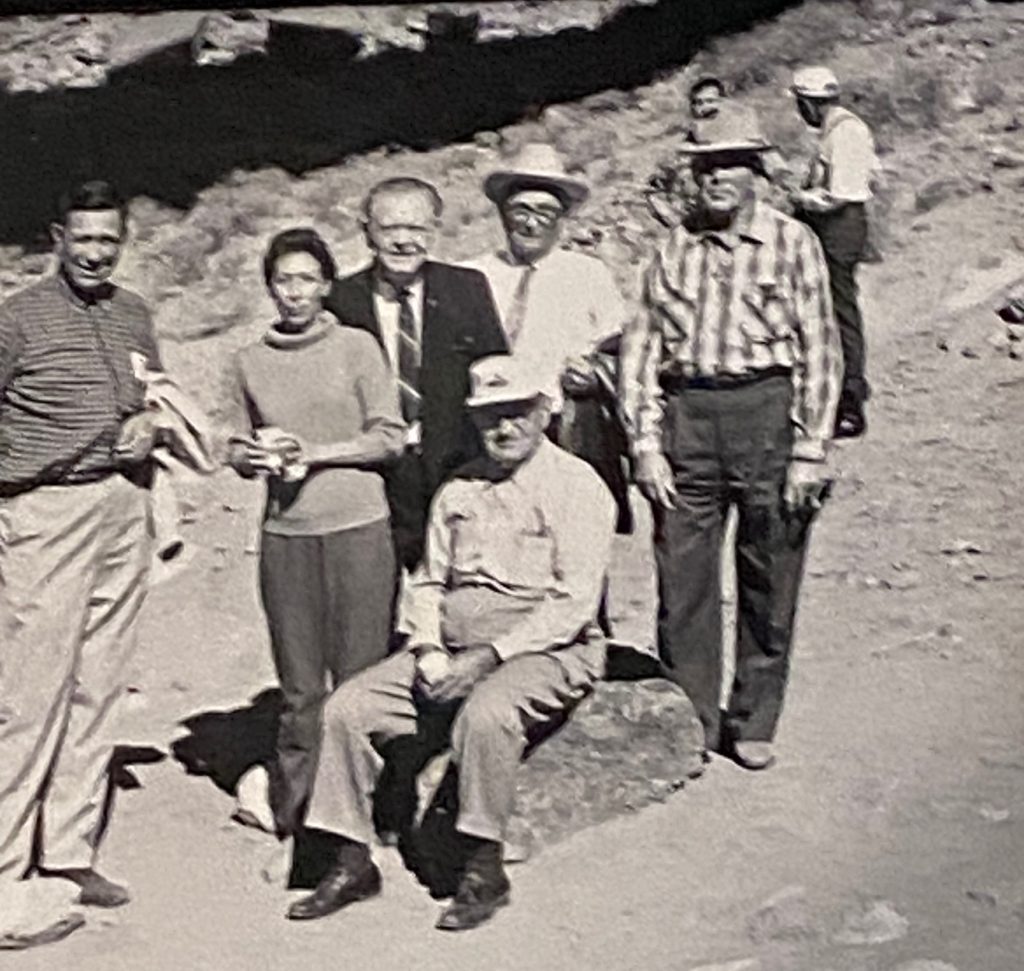
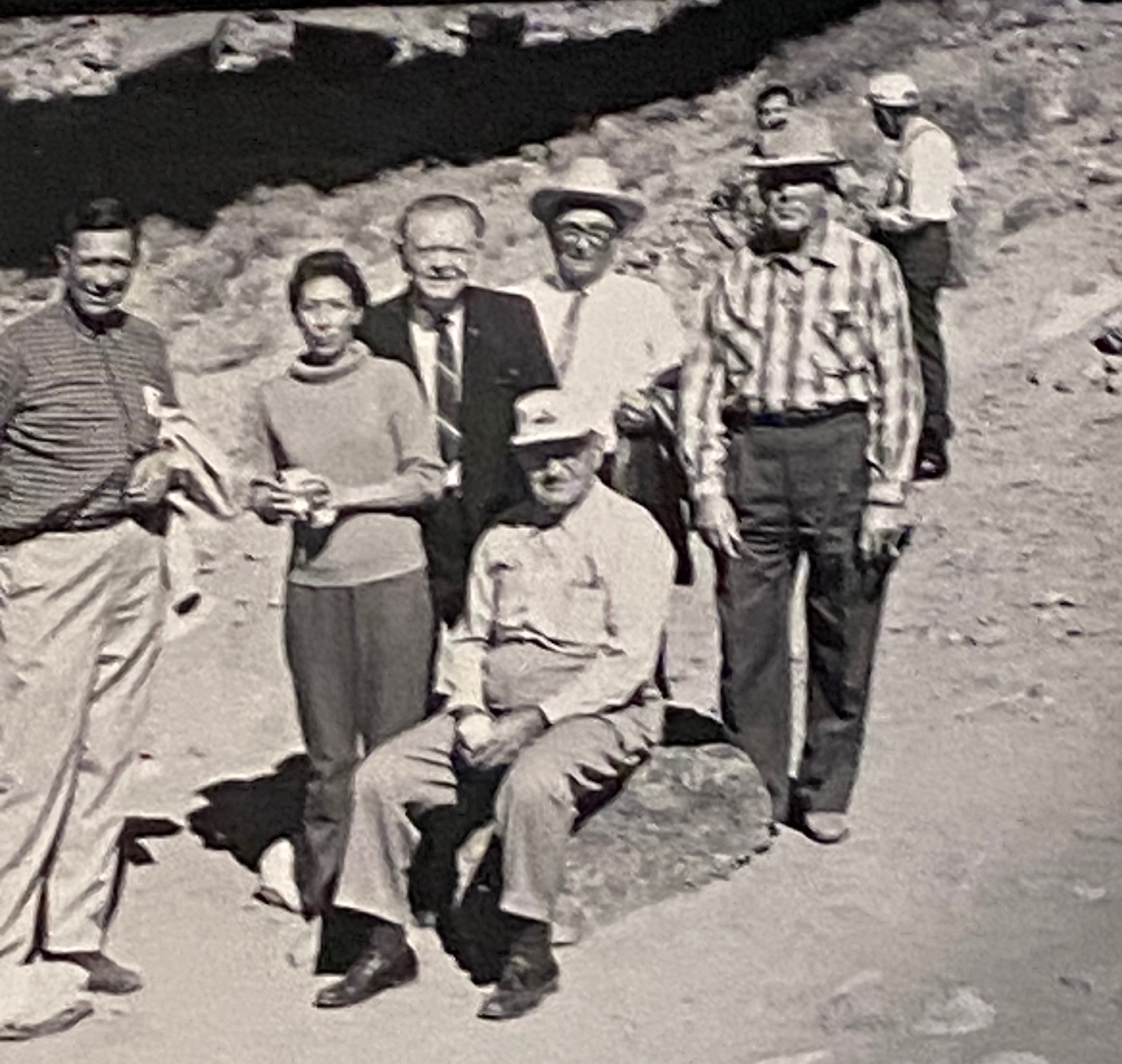
IMG_0246A photo hangs in my study showing my mother at Glen Canyon Dam, posing with officials of the U.S. Bureau of Reclamation, Interior Department and Arizona State Senate. She is the only woman in the group and represents the Arizona Interstate Stream Commission, the quiet but powerful state agency fighting for the Central Arizona Project. The year is 1965 and the 710-foot-tall stark white (at the time) arched structure that impounds Colorado River water in Lake Powell will begin full operations a year later.

She has the satisfied expression of a woman who never met a dam she didn't like (that would change later, as it would for many involved, when they realized the unintended consequences of what they had wrought). But she and some of her colleagues also knew they were pulling a kind of confidence game on California and the Upper Basin states. More about that later.

I've been studying that photo as Phoenicians who are paying attention read about how persistent drought is reducing the water released from Lake Powell. A Bureau of Reclamation study says the drought is the worst in a century (it is actually worse than that, but such is the record keeping), and less water will be sent downstream to Arizona, Nevada and California than at any time since when Powell filled — when that photo was taken.

It is a big deal.

Solar dreams II

After I wrote the first column on this topic, the Arizona Republic rolled out a creditable series on solar energy in the state. Among other things, it examined the recent setbacks solar has faced; did a close-up on what will be one of the nation's largest solar arrays on three square miles near Gila Bend, the $2 billion Solana Generating Station, and the forces that will challenge solar, such as cheap natural gas. It properly points out that Phoenix's two utilities get a small fraction of their energy from solar, and the "action" is on rooftop installations for relatively well-off house-owners — and even here the numbers are small. One is left to wonder who is running a hustle, a la the alt-fuels scandal from the early 2000s…

In any event, my intention has always been to dig deeper. The alpha tragedy is that the solar power movement was born in Arizona and the state let it get away. The International Solar Energy Society, one of the premier organizations in the field, was founded in 1954 in Phoenix. The original name was the Association for Applied Solar Energy. Among the founders were executives of Arizona Public Service. More than 1,000 scientists, engineers and government officials from 36 different countries attended the first two meetings in Phoenix and Tucson. The organization went on to become accredited by the United Nations and was based at ASU until 1970, when the headquarters moved to Melbourne and finally to Freiburg, Germany. The early research gathered by the organization is still in the ASU library collections. But the headquarters, brainpower and influence is long gone.

Neither fact is surprising. Old Phoenix had a progressive streak and an ambitious nature. This was before changes in the economy and a zombie-like focus on adding population and housing took over everything. Yet solar energy was very primitive and a gallon of gasoline cost 21 cents ($1.85 in today's money). There was no way solar could compete. It's still difficult. And the leaders of the state were primarily focused on winning the Central Arizona Project. But when people wonder why sunny Arizona isn't the center of the world's solar power efforts, the answer is simple and sad: It once was.

The Friday saloon

The big, big Phoenix story is the resignation of City Manager David Cavazos, who is leaving to accept the same position in Santa Ana, Calif. Everyone is pleading surprise. This is almost certainly not true. Cavazos put out a prepared statement that was both graciously restrained and yet also appeared to be highly lawyered. There may prove to be much more to this than meets the eye.

With the local paper continuing to lay off people and institutional knowledge fading, here are a few pieces of important background. The council/manager form of government is one of Phoenix's proudest achievements, having done away with the corruption not only of cities "back East" but also old Phoenix. The council sets policy and the manager implements it, running the city from day-to-day. The mayor is a relatively weak position and one vote on council. Once a person assumes the purple of the city manager, he is expected to serve for many years. Frank Fairbanks, who Cavazos succeeded in 2009, served for two decades. One simply doesn't walk away, and certainly not to little Santa Ana (pop. 329,427). So this is a bombshell even if there's nothing more to it. If there is, it's explosive, including for Mayor Greg Stanton.

There was a stupidly nasty fight over giving Cavazos a raise to bring his pay up to $315,000. The next largest city with a council/manager form, San Antonio, pays a base $355,000 to Sheryl Sculley, the capable former deputy city manager in Phoenix who was shown the glass ceiling by Phil Gordon and the firefighters union (over an old grudge). The council is more divided and kooky now, more small ball. A sense of stagnation is felt, although the light rail extension is happening (WBIYB). The Legislature has made life even more difficult for cities. Phoenix is struggling relative to the prosperous suburbs. The Phoenix polity is much more limited compared with the other most populous cities. Any of these — or the blowback from previous controversies — could have driven Cavazos to leave at the prime of his professional life. Also, he was caught up in the minor expense-account scandal in the mid-2000s. I always wondered if Cavazos had the chops for the job, not to mention the quiet, genial ruthlessness of Frank Fairbanks.

Solar dreams I

Arizona Public Service is engaged in a campaign to undercut solar power in the state. The 18,000 APS customers with solar panels essentially get a credit on their bill for the energy they don't use from the regular electrical grid. APS complains, as an Arizona Republic story put it, "customers with solar often see their bills reduced to the point that they are no longer contributing toward routine costs associated with maintaining the power grid. That, they say, forces customers without solar to pay the entire cost of maintaining the grid, even though solar customers use the grid to get power at night or when clouds pass overhead and to distribute their excess electricity." APS is asking the Corporation Commission to allow it to charge new solar customers an average of $50 to $100 more.

This has produced protests and at least one critical editorial. It is happening against a backdrop of efforts to "deregulate" the state power market (California, Enron, hello…?). Even the long arm of the Koch brothers is reaching in to support APS. The state's nascent solar industry is fighting on the other side. But with the powerful and little-scrutinized Corporation Commission now firmly in the hands of the Kookocracy — I'll make an exception for Susan Bitter-Smith — APS may well win. It would be one more headwind facing solar power in the sunniest state in the union. Perhaps worse, it distracts from the conversations we ought to be having about solar. With most of the reporting being "he said/she said" stories intended to avoid irritating powerful APS, it's difficult for most Arizonans to get the facts or explore the larger issues. I'll try to make a beginning in the next few columns. But today I'll focus on APS.

The company's argument is bunk. All customers must pay a basic fee that includes maintenance of the grid. But the attempt to kill solar in the crib — 18,000 customers out of more than 1 million — shows how the state's largest utility is accustomed to wielding influence and getting what it wants.

Phoenix 101: Summer

Phoenix 101: Summer

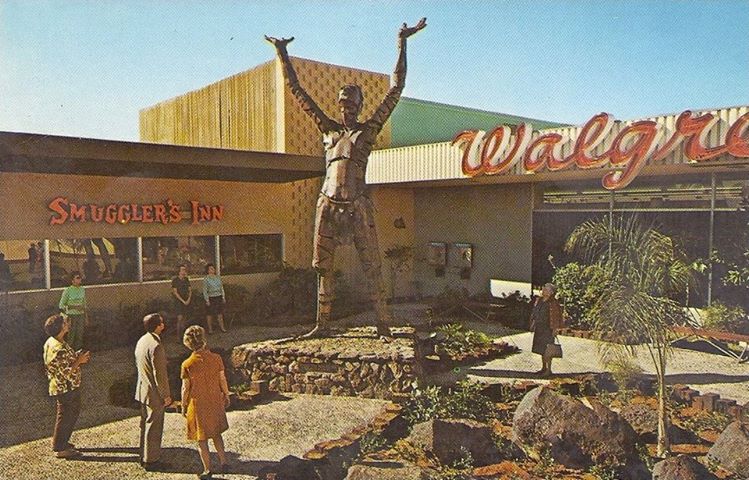
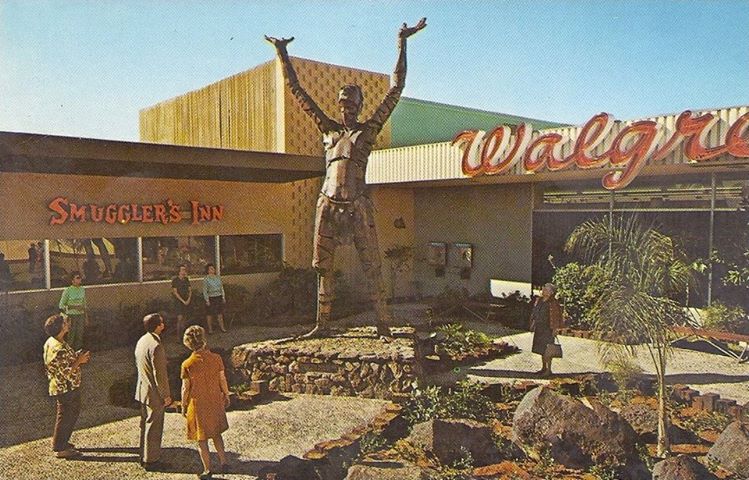
Sun_WorshipperThe Sun Worshiper at Park Central mall in Midtown Phoenix, circa 1960. 

Summertime, and the livin' is easy," Gershwin wrote. I never understood that. Movies and television shows with children scampered through meadows in the noonday summer sun similarly baffled me. I was a Phoenician. Summer was the oven. It was a force that demanded respect. Summer could kill you.

We might have ridden bicycles without helmets and freely roamed our neighborhoods without "play dates," but we were also expert in desert survival. So in summertime the livin' was careful. My friends and I avoided going out in mid-day and paced our roams in high summer. I read so many books in a soothingly dim, air-conditioned room at home, or at the public library, where the blast of heat was only apparent if you came close to the windows.

The rhythm of the city changed, slowed down. Aside from the morning and evening rush hour, most people stayed off the streets. Mailmen wore pith helmets. Street work and construction was mostly done early in the morning or not at all. Bank signs flashed triple-digit temperature readings.

Summer did have its charms. For example, most of the snowbirds and tourists — the ones who would ask you where they could find a good "Spanish" restaurant — were gone. It was just us desert rats. The cold-water fountains at every gas station were heaven. Enough money to buy a milkshake or ice-cream cone at one of the drug-store fountains was a cloud above that.

Young men and fire

Young men and fire

Smokejumpers
Unless we are willing to escape into sentimentality or fantasy, often the best we can do with catastrophes, even our own, is to find out exactly what happened…
— Norman Maclean 

Smokejumpers and other wildfire-fighters call them "shake and bakes," the portable shelters they carry. These cocoons of foil and fiberglas offer the firefighters at best a 50%  chance of survival and are deployed as a last resort, as when the wind shifts and the living devil of fire traps and turns on them.

The hope is that the fire will pass over quickly. Otherwise, "the only thing your shake and bake will do is allow you to have an open-casket funeral,” one crew supervisor told Wired. Such dark humor is a necessary component of dangerous, sometimes deadly jobs. The Prescott Fire Department's Granite Mountain Hotshots team reportedly deployed its shake-and-bakes Sunday in a conflagration at Yarnell, amid triple-digit temperatures and high winds. Nineteen died. As I write, the fire is at zero containment.

This is the deadliest event for wildfire-fighters in modern history. Deadlier than Colorado's South Canyon fire in 1994 on Storm King Mountain. Deadlier than the 1949 Mann Gulch blaze in Montana, which inspired Norman Maclean's classic study, Young Men and Fire. a book both elegiac and forensically definitive.

Here is what I don't want: Cheap sentimentalizing and cynical religiosity from politicians who are otherwise hostile to public employees, adequate government budgets and sensible land-use policies. The ones who use public pensions and unions as evil hand-puppets to distract citizens from the screwing they are getting from the plutocrats. The tax cutters and climate-change "deniers."

Please spare me your sudden compassion for public servants and first responders. Spare me your flags and "USA! USA!" and endless evocation of "heroes" if this is mere denial and lazy thinking.

Look: I get the shock and grief. I used to be a first responder myself, cross-trained to deploy with forestry fire teams, and more than once was nearly killed (in the city). I know those men are with the Lord and all their tears have been dried, and I pray that their families are given comfort and grace. But I am not going to endlessly tweet this or post it on Facebook. We owe them more. Read on if you agree. This will not be a popular column. It is a necessary one.

Midtown blues

Midtown Phoenix runs from Fillmore Street north to Indian School and from Seventh Avenue to Seventh Street. It's a big, diverse district that contains some of the city's finest assets: The Roosevelt, Willo and Alvarado historic districts; central library, Phoenix Art Museum and Heard Museum; the deck park and the boundary with Steele Indian School Park; a dozen skyscrapers, and the spine of the Metro light rail. And much of it is in trouble.

The Phoenix Corporate Center is facing foreclosure after its anchor tenant, Fennemore Craig, left for new space at 24th Street and Camelback. It was originally the Mayer Central Plaza, then the First Federal Savings Building, the tallest in the city when it opened in the early 1960s and featuring an outside elevator. The Midtown office vacancy rate at the end of last year was 28 percent vs. downtown's 15 percent. Most of the towers are now considered less-desirable B-class and C-class office space. Like much of the Central Corridor, it also suffers from large blighted empty lots, such as the northwest corner of McDowell and Central and the east side of Central north of the punch card building and south of McDonald's. Only the mile between McDowell and Thomas is filled in, and shows it as an appealing urban space. What should be a prime location, the northwest corner of Central and Thomas, is a billboard behind which the homeless camp (much like the astoundingly empty space on the southwest corner of Central and Camelback).

This is not just another story of the ongoing linear slum-ization of the nation's sixth-largest city. For one thing, it's happening in the heart of the city. Second, it is the prime example of the failure of light rail transit-oriented development. Finally, it shows how City Hall is not paying attention to jobs and private investment, both of which are moving to the suburbs.

More vines, please

More vines, please

The physician can bury his mistakes, but the architect can only advise his clients to plant vines. — Frank Lloyd Wright

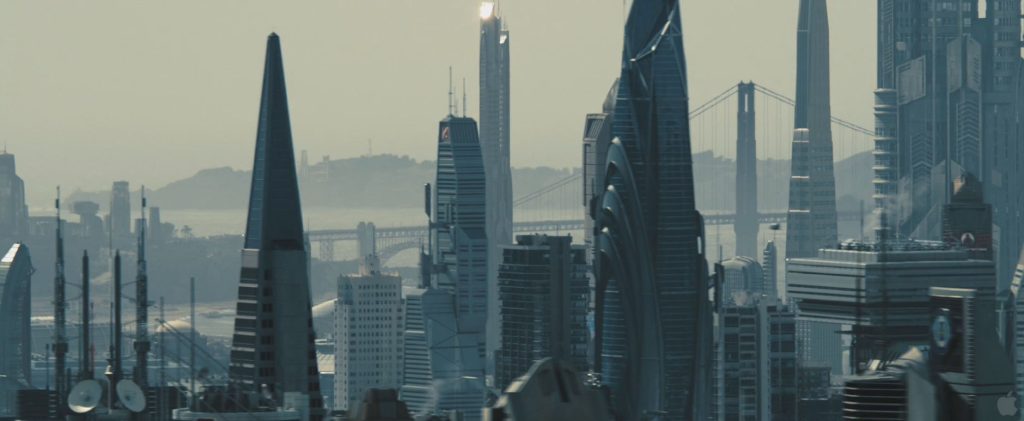
STThe most depressing part of Star Trek Into Darkness is not the many liberties that the filmmaker takes with some of the foundational conceits and tropes of the franchise. Only trekkers will notice (for example, a starship is not built to enter a planet's atmosphere, much less hide in the ocean, etc. etc.). No, what really bummed me out was the architecture. I mean, this is the 23rd century and we're stuck with taller versions of the insipid buildings of today? At least Blade Runner has some variety and gigantic Japanese-style electronic billboards in its vision of the future. We've got interstellar travel, transporters, phasers — and civilization is stuck with the progeny of John Portman, David Childs and Cesar Pelli. And that's if we're lucky. No art deco revival? No reinterpretations of the Chicago school? Gah! If this is the future, no wonder they want to leave the planet.

That's just movie fantasy. In the real world, there's no shortage of lists of the world's ugliest buildings (see here and here), along with Jim Kunstler's cringeworthy-but-must-see Eyesore of the Month. And to be sure, I'm treading into matters of taste, where many valid viewpoints must be considered. Still, architecture matters a great deal. It is the most important physical testimony about a civilization and its trajectory. It constitutes the built environment that at its best informs, inspires or defines so much of our lives. At its worst, it is, as Kunstler says, a landscape not worth caring about. And unfortunately a stupendous amount of our total buildings have been put up in recent decades, with most exercises in copycat banality or starchitect sculptures with little to offer humans or the surrounding streetscape.

Barry Goldwater

Barry Goldwater

Barry_at_31_1940

Barry Goldwater in 1941.

Phoenix would benefit from some heroic statues to enrich the downtown streetscape. It's not as if we're lacking in heroes and audacious history. Instead, we get a bronze of Barry Goldwater in Paradise Valley, unreachable by pedestrians but with an adjacent parking lot. Then there's terminal four at Sky Harbor named after Goldwater. And a street in Scottsdale. A newcomer might think the only history worth remembering, if badly painted, concerns the long-serving senator and 1964 presidential candidate.

Readers of this blog know better. But understanding Goldwater's place in Arizona is a daunting challenge. The magisterial biography remains to be written. And for most of his public career, Goldwater was a national figure. We must also contend with a good deal of nostalgia and hagiography concerning the hero. An example of the latter was a recent article in National Review about how Barry was a leader in Phoenix's school desegregation before the Brown decision. The former goes something like this: Barry was no Kook, he fought the religious right and one shouldn't conflate today's conservatism with that of Goldwater. Even I have been guilty. But the reality is more complex and interesting.

Just a teacher

Just a teacher

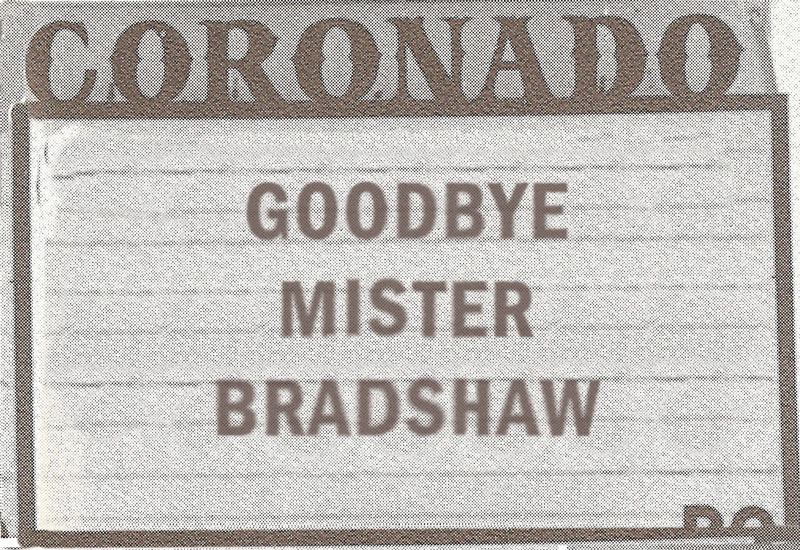
Ralph Bradshaw died Wednesday night. He was just a teacher.

I had him for junior English at Coronado High School, where he pushed a young man with miniskirted coeds on his mind to read serious novels. I told him they were boring and reading them was hard. He made no attempt to make them relevant to me or dumb them down. Instead, he told me that I must read them because they were hard and if I was willing to find the tunnel into them they would be anything but boring. He was right, of course, and years later I realized he was teaching from "the great books," the canon. In his early thirties at the time, Mister Bradshaw sported fashionably longish hair and a moustache, looking almost a hippie compared with some of his older peers. But beneath this was an incisive mind, a setter of high standards, passionate supporter of quality and something of a square (in a good way). A sponsor of many extracurricular activities and sometime director in the theater, he was also great fun. He was just a teacher.

He contacted me when I returned to Phoenix in 2000 as a columnist for the Arizona Republic with a first novel coming out. By then retired, he had lost none of his intellect, dry wit and interest in his students. I have some mixed feelings about that decision to come back home. At the time, I was riding higher in my newspaper career than I ever would again and had offers and feelers from around the country, including one that might have resulted in attaining my lifelong dream of going to New York City. And things didn't exactly turn out well after speaking truth to power. But if I hadn't returned, I never would have gotten to know Mister Bradshaw with the gift of years to illuminate all that I owed him.

Field notes

Catching up from my recent visit "back home…"

• Many people asked me why Gov. Jan Brewer was backing a Medicaid expansion in apparent defiance of GOP orthodoxy. Has she finally shown a conscience? No. The major calculus is that what remains of the business leadership in Arizona leaned on her to accept the Obamacare/Romneycare deal, where the feds will pay for most of the expansion anyway. The biggest employers in Arizona provide no or minimal health-care coverage, so they offload (socialize) those costs to the public through AHCCCS. Among the big employers are health companies that profit from the system, and would make even more under an expansion.

Most of the New Confederacy is not participating, a calculated move to sabotage the Affordable Care Act. So why is Brewer different? My suspicion is the composition of the economy. The other populous, urbanized states have plenty of corporate headquarters and well-paid jobs (and in the case of Texas, oil and big government spending). So it's easy to say, "devil take the hindmost." In Arizona, the hindmost is the economy — Wal-Mart is the largest employer. That and health care. Of course, Brewer might simply be playing a game, knowing the Legislature will prevent Arizona's participation. But I think she's sincere. If she goes "Full Kook," the business interests might do an Ev Mecham on her.