The plot against light rail

The plot against light rail

LRT downtownThis is the reality of Phoenix's light-rail system: nearly 16 million passengers carried in the most recent fiscal year; expansion of the original 20-mile starter line to 26 miles; an essential link between ASU's Tempe and downtown campuses; 30 percent of riders use the train for work; large numbers use it to reach sporting events; $11 billion in private and public investment has occurred along the line since 2008.

Light rail has also proved essential in giving Phoenix, Tempe, and Mesa a fighting chance in an era where talented young people and high-quality companies want to be in city cores served by rail transit.

None — not one — of the hysterical predictions of opponents to light rail came true.

No wonder that voters backed light rail in three elections, in 2000, 2004, and 2015. We built it.

But destructive forces never sleep, never stop. Backed by dark money — including the Koch brothers and their nationwide war on transit — here comes Proposition 105 in the Aug. 27th special election. As is often the case, it's presented as an affirmative to deliberately confuse voters. "Vote yes!" hoping some will think they are supporting rail transit by marking that line. Signs say, "Yes on 105. Fix our roads" — but this has nothing to do with fixing roads; that's a different budget and roads are being fixed.

Don't fall for it. Vote no on Prop. 105 and its devilish companion, Prop. 106.

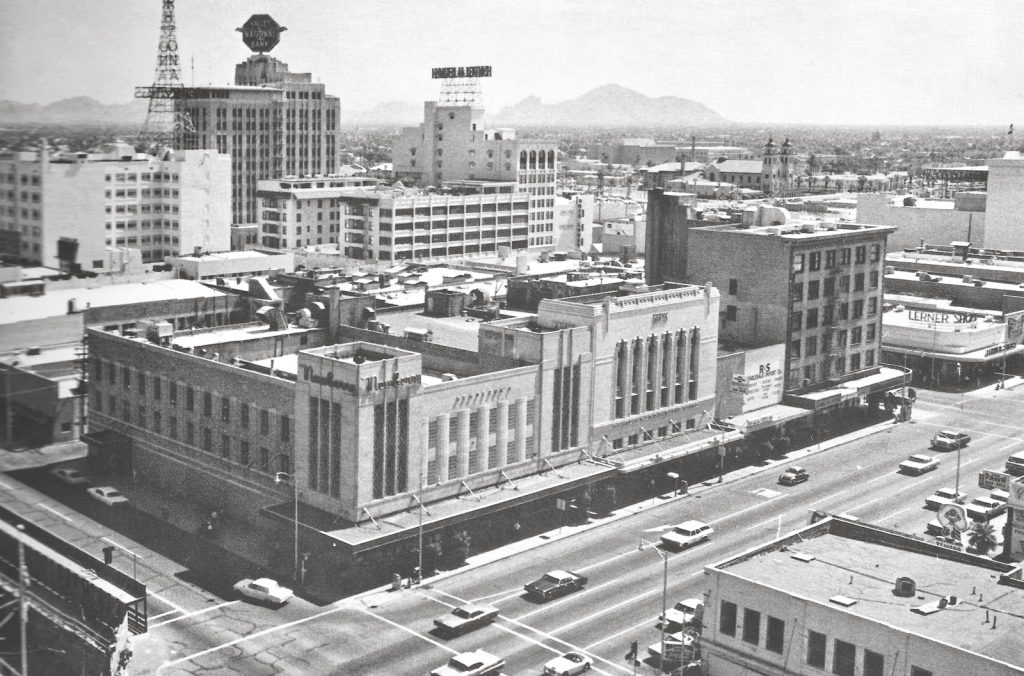
Phoenix, 1969

Phoenix, 1969

Downtown1969
I watched the Apollo 11 landing and moon walks in Phoenix with my grandmother. She was born on the frontier with horses and buggies, was alive when the Wright brothers first flew, when Lindbergh crossed the Atlantic…and now this. The entire trajectory of her life had been one of American progress (sliced bread! air conditioning! paper towels!). Mine was different.

Fifty years ago, Phoenix was on the cusp of nearly 582,000 people and Maricopa County of 971,000, increases over the decade of 32 percent and 46 percent respectively. The aggressive annexation that took the city from its compact 17 square miles in 1950 to 188 square miles a decade later continued. By 1970, Phoenix would spread over 248 square miles, all the way to the two lanes of Bell Road.

Charter government was still firmly in control of City Hall with little foreshadowing that its era was coming to an end. Milt Graham was still mayor. Young and popular, Graham had helped seed Charter's demise by running for a third two-year term, breaking the promise that the Charter Government Committee put up civic stewards, not career politicians, and mayors only served two terms. Importantly for the city's future, Graham was vehemently anti-transit.

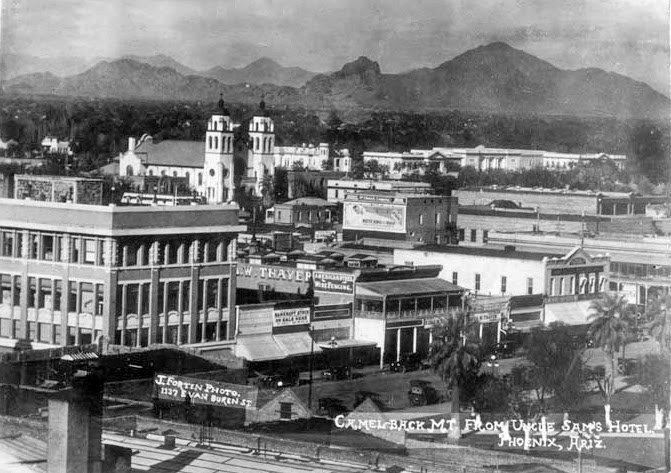
Phoenix at statehood

Phoenix at statehood

Washington_1st_St_looking_northeast_from_Jefferson_Hotel_Salim_Ackel_1915
On Feb. 14th, 1912, Phoenix became the capital of the 48th state — Arizona would remain the "Baby State" until 1959, when Alaska and Hawaii were admitted to the union. With 11,314 people in the 1910 Census, it was still less populous than Tucson but would soon surpass the Old Pueblo, with growth of nearly 166 percent in this decade.

The new state capital was still fairly isolated. A transcontinental railroad main line wouldn't arrive until 1926. Still, in 1887 a branch from Maricopa had been completed by a subsidiary of the Southern Pacific, although it was plagued by flood wash-outs. The Santa Fe's Peavine branch had arrived from the ATSF main line at Williams via Prescott in 1895. A streetcar network was growing, too.

Phoenix was far from the powerhouse it would become. Arizona's economy was primarily driven by mining, so towns such as Bisbee and Jerome generated spectacular wealth with their copper mines. The same was true of the mining district around Globe. Railroads were also major players. All were controlled by out-of-state interests, a major reason the Progressive-era state constitution established a Corporation Commission to regulate at least rail lines (and later utilities).

Economy update

Economy update

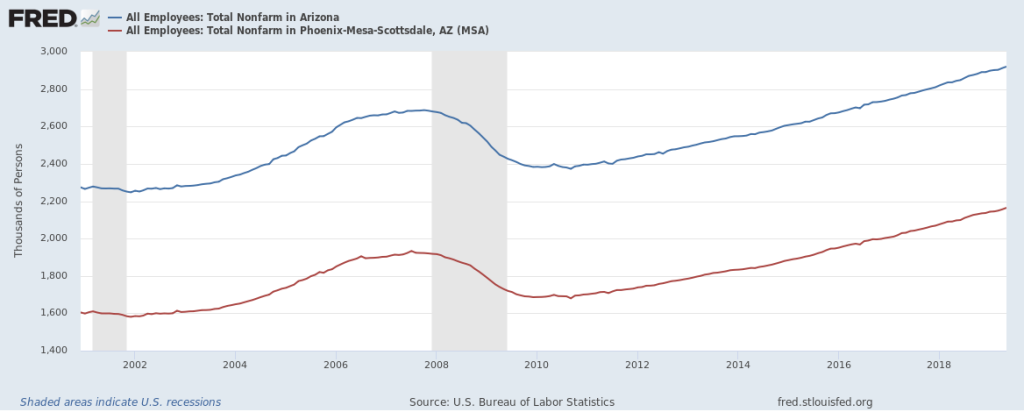
The expansion is now the longest in American history. According to the Arizona Commerce Authority, metro Phoenix posted the largest job gain from May 2018 to May 2019, at 3.2 percent. Let's take a closer look:

Arizona and metro Phoenix reached a historic high in seasonally adjusted civilian jobs as of May (click on the charts to enlarge):

AZjobs

Median household income adjusted for inflation also showed gains:

MHI

So far, not so bad…

Hot enough

Hot enough

Tumblr_mabisuDNgr1r9o57uo1_1280
It's not true that Phoenix has no seasons. Not even the joke that they are "hot, hotter, hottest, and hell." They just change with a sublime nuance. Or this was once the case. Leaving the delightful 70s in Seattle, I am here for 110, headed to 111. This is five to six degrees hotter for this time of year than normal. Summer temperatures have risen about 10 degrees in my lifetime, especially the overnight lows. And summer is lasting longer.

This is mostly the result of "local warming," where the farms, groves, and desert have been replaced by sprawl and gravel, along with the destruction of thousands of shade trees and the grass and landscaping that made the city more beautiful and livable. I suspect that few people know this or even notice it. For one thing, Phoenix suffers from a high rate of population churn. And many of today's residents are here for the heat, "the hotter the better." Advanced automobile air conditioning and air-conditioned houses cloak the danger of this human-made environment. So when all the asphalt, concrete, and fruit of the Arizona Rock Products Association release the accumulated heat after sunset, so what?

Consequences abound. Several large wildfires have raged. I also notice on the Phoenix Fire Department regional dispatch site a significant uptick in brush fires, requiring significant commitment of apparatus to knock down. One reason is the expanding exurban development into the desert. Fools go hiking and mountain climbing in this weather. That was once rare. Summer was the time to spend inside, especially during the day (when the nights cooled down). When I was a paramedic in the 1970s, a summer mountain rescue was extremely rare. No more. Now, multiple rescues happen every day, putting first responders at risk and the "victims" often near death.

Growth and its discontents

Growth and its discontents

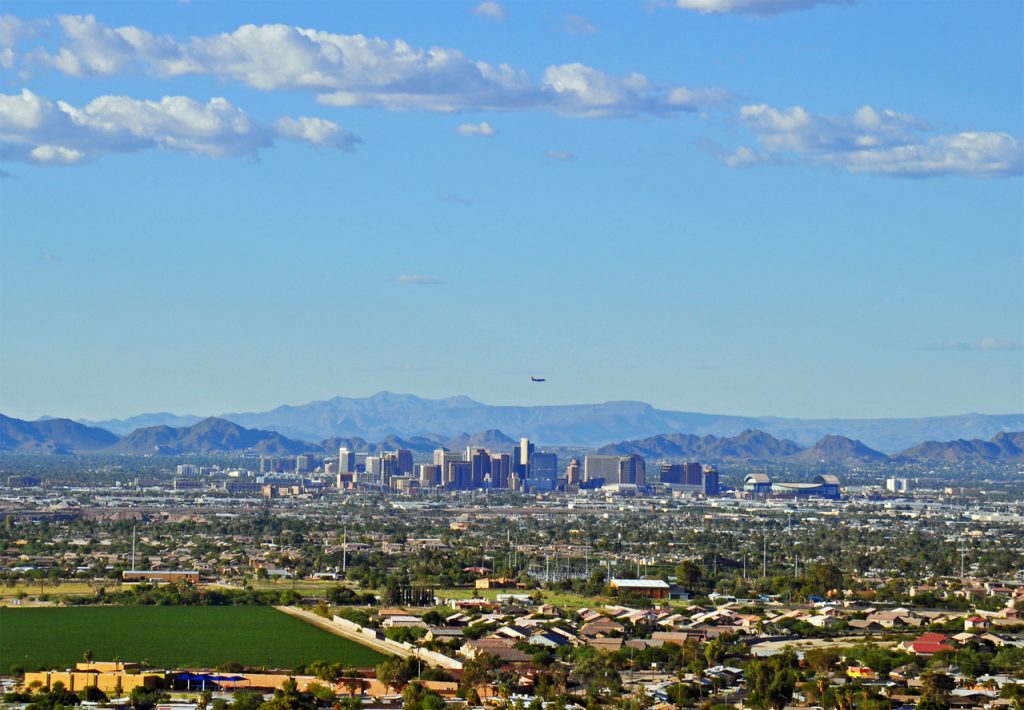
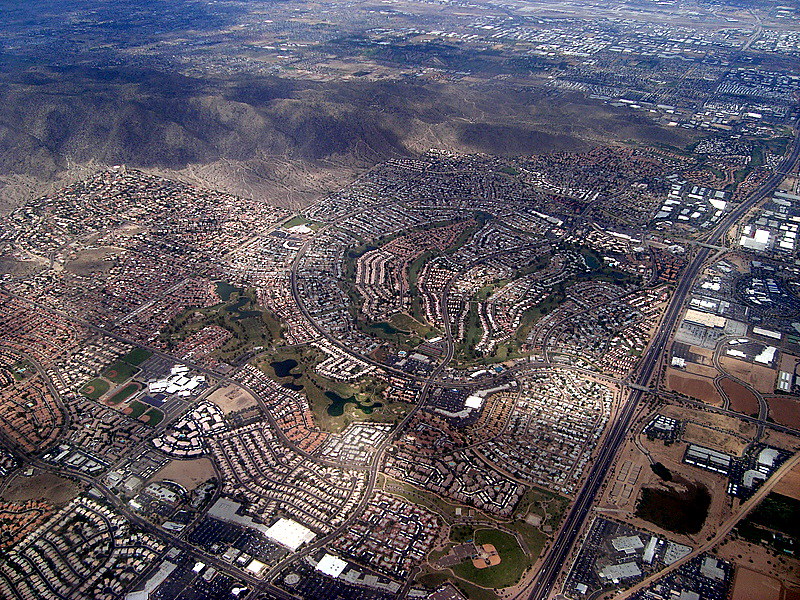
South Mountain sprawl
The Census reported earlier this spring that Phoenix was the fastest-growing city in the country. During the Great Recession, I wrote in jest the prayer of the Arizona developer: "Please God, give me one more boom, with championship golf." And the prayer has been answered, or so it seems on the surface.

The city added 25,288 new residents between 2017-2018. But even adding in fast-growing suburbs such as Buckeye and the "town" of Gilbert, the metropolitan area is far below the 100,000-plus it was growing in the 1990s and early 2000s. A glowing Forbes article talked of "a business-friendly environment, plentiful job opportunities and affordable cost of living." But the reality is closer to the one elucidated by commenter Concern Troll: Most of the population increase in Phoenix can be attributed to retirees and the low-wage service jobs that cater to them.

Permits for new housing units in metro Phoenix haven't recovered to their pre-crash levels; they're about where they stood in the early 1990s. Construction employment is only where it stood at the turn of the century, far below the mid-2000s. If the local-yokel boosters — "things must be good because people keep moving here" — are having a growthgasm, they're faking it.

Big preservation alert

Big preservation alert

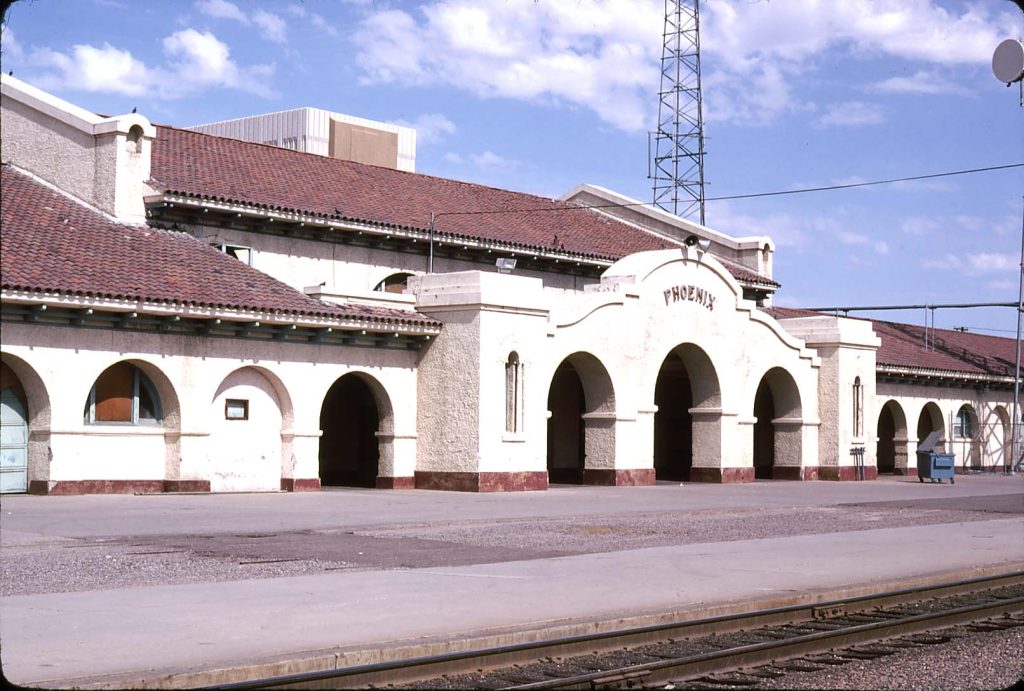
Union Sta arches
The most precious treasure of old downtown Phoenix is in flux. This could provide the city a long-overdue opportunity. Or it could go sideways in a hurry. I'm writing, of course, about Union Station.

According to CBRE, the big real-estate services firm "has been retained as exclusive representative to offer qualified investors the opportunity to purchase fee interest in the iconic…Union Station site in downtown Phoenix at 401 W. Harrison Street." It goes on, "Depending on the vision of a new owner, the Property may be eligible for a myriad of monetary and tax advantaged programs…"

Sprint, which has used the station to house switching equipment since the late 1980s, intends to move out before the end of next year. The Union Pacific Railroad's ground lease ends in March 2023, a century after the building was completed. Now what?

One of the most popular columns on this site is my history of Union Station (with photos) — you can read it here. The Spanish revival building brought together the Southern Pacific and Santa Fe railroads in one full-service station. Three years after its completion, the SP finished its northern main line and routed most of its passenger trains through Phoenix. The city was served by multiple intercity trains a day through the 1960s.

The last Amtrak train called here in 1996. The state refused to partner with the SP (merged with Union Pacific the same year) to maintain the west line between Phoenix and Wellton to passenger-train standards. Phoenix became the largest American city by far with no intercity rail service. Sprint — which was started by the SP — using the depot for switching equipment helped protect and save it. Being on the National Register of Historic Places wouldn't have stopped Joe Arpaio's jail-building mania and other losses in the Warehouse District. Mesa lost its lovely SP depot to arson…no one cared.

Who will care now?

The Post Office

The Post Office

Phoenix-US_Post_Office-1932-1
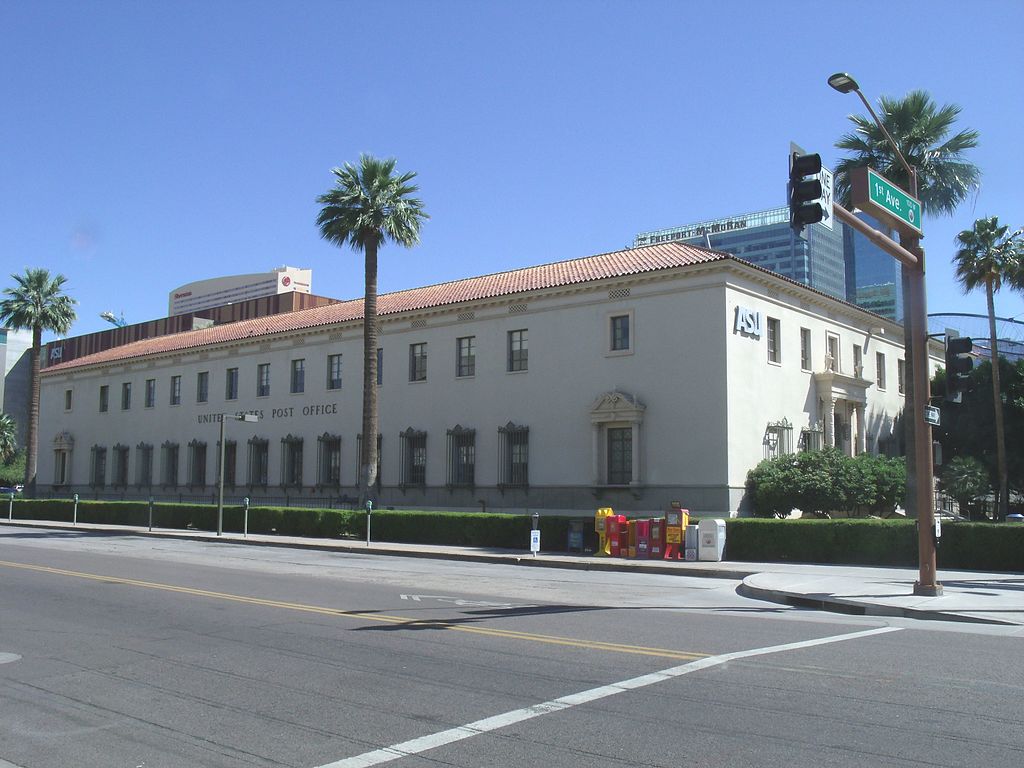
A conversation on one of the Phoenix history pages of Facebook got me thinking about the thousands of cuts that bled downtown nearly to death. It was about the old Main Post Office at Central and Fillmore, now mostly used by ASU but contained some incomplete or wrong information. Still, a useful jumping off point.

Back in 2013, I wrote a three-part series entitled "What Killed Downtown" (see here, here, and here). It's still the gold standard on the subject. But the tale of the Post Office illuminates it in microcosm.

This lovely Spanish-revival building was completed in 1936, designed by Lescher & Mahoney, the architects responsible for many of Phoenix's finest buildings. Among them are the Orpheum Theater, Brophy College Chapel, El Zariba Shrine Auditorium (former home to the Arizona Mining and Mineral Museum), Phoenix Title and Trust Building (today's Orpheum Lofts), Hanny's, and the Palms Theater.

It was planned in the 1920s to replace the Post Office segment of the old Federal Building in the government block at Van Buren and First Avenue. With Sen. Carl Hayden's backing, it was originally intended to be six stories tall and closer to the central business district. But because of expensive land, the site was move north across from the new Westward Ho and the height was lowered. Building it was among the myriad federal projects that lifted Phoenix out of the Great Depression.

The oasis, in photos

The oasis, in photos

40&Baseline_1970s jpg
My mother told me I was "a city kid" and a "desert rat." She was right about the first, but not the second. I was a child of the oasis, growing up in what are now the historic districts north of downtown and in the old city.

It's almost all gone now. Every time I'm back in Phoenix, I am struck my how ugly it is, especially with the proliferation of skeleton trees and heat-radiating gravel in places they should not be. If this is the price paid to accommodate ever-expanding sprawl, it's a devil's bargain, a short hustle. With the enormous numbers of newcomers and population churn, people don't even know what has been lost.

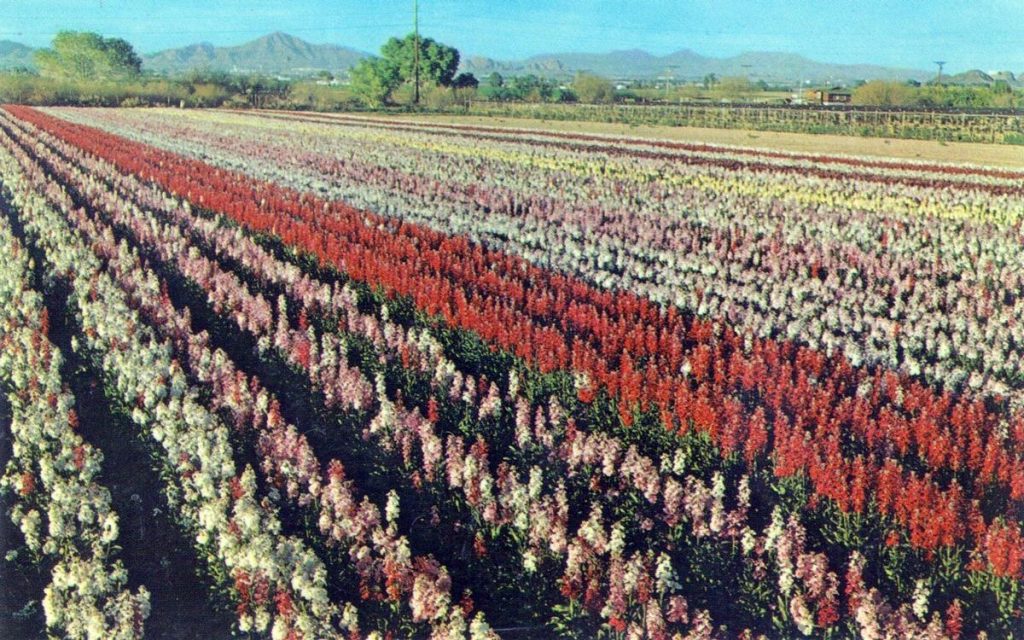
One of the most heartbreaking losses was the Japanese flower gardens along Baseline Road.(above). An agricultural trust could have prevented it. But the feral greed to replace it with faux Spanish-Tuscan crapola was too much to overcome.

A reminder: Phoenix is at or near the convergence of five rivers in the world's wettest desert. Scores of shade trees are native. With the alluvial soil of the Salt River Valley, anything will grow here.

But as on the national level (only 26,000 history majors now), the loss of memory is a dangerous thing. Milan Kundera, the Czech novelist, wrote that the struggle of man against power is the struggle of memory against forgetting. Thanks especially to the priceless McCulloch Bros. Collection at the ASU archives, we can struggle. I only wish more of these images were in color.

Here are a few views of authentic Phoenix. Click on an image for a larger view:

Historic red alert

Historic red alert

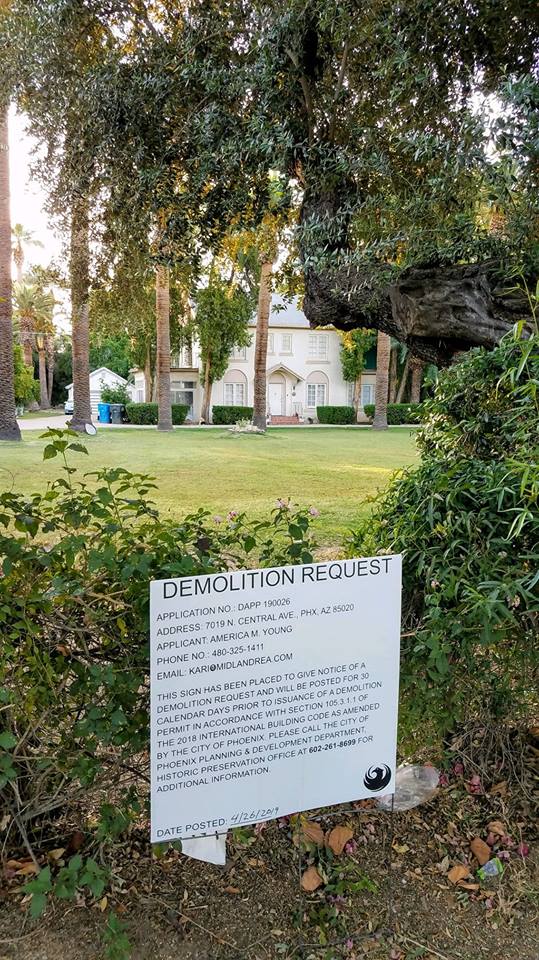
This priceless, century-old house at 7019 N. Central Ave. has a demolition permit. The Preservation Police and every citizen needs to contact their council members, planning commission, "village" poobahs —…
Downtown living

Downtown living

Jacobs_JT_Dennis_houses_between_2nd_St_3_St_Monroe_1890s
Most of the historical photos on this site show the rise of a handsome small city, with commercial buildings, stores, churches, and warehouses.

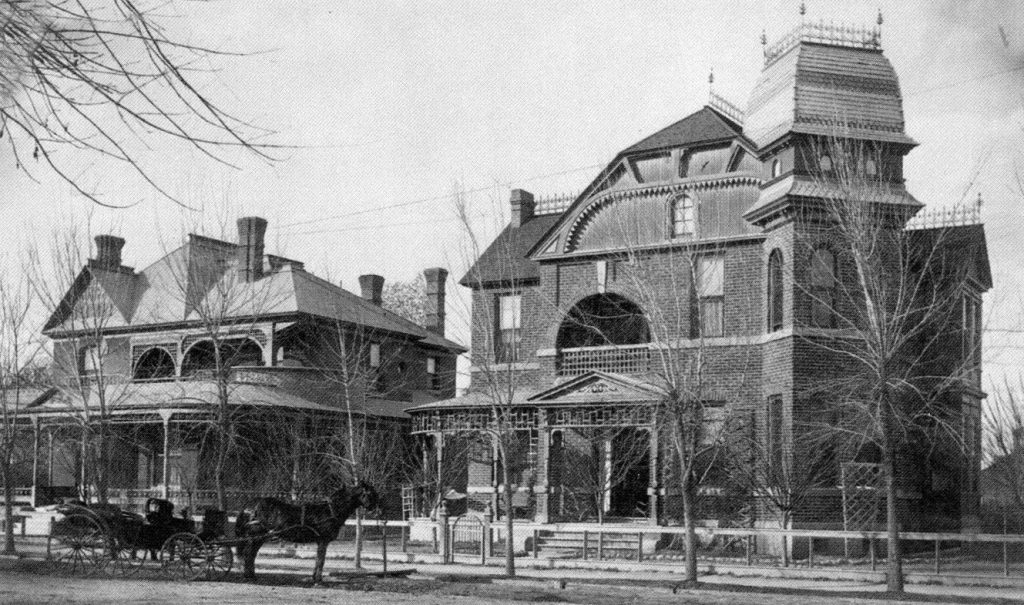
But single-family houses and apartments proliferated in and near the original townsite even as monuments such as the Heard Building and Luhrs Tower rose. People were living downtown before it became desirable again in recent years. Above are the Dennis and Jacobs Mansions on Monroe between Second and Third Streets along "Millionaires Row," built in the 1890s. They were demolished in the 1950s for surface parking lots.

Rosson House, restored in Heritage Square, was designed by architect George Franklin Barber — he sold his designs by mail order. It was completed in 1895 at 139 N. Sixth Street. The Stevens-Haustgen Bungalow is nearby, also restored.

Most of the residences downtown were more modest. For example, the 1935 City Directory shows homes for Mrs. Della Jeanette at 129 S. Third Avenue, Mr. Samuel Lopez at 133 S., and Mr. Nestor Chavez at 333 S. Third Ave. Some were businesses where the owners lived on an upper floor. But others were simple, single-story houses gradually giving way to the expanding Warehouse District. The same is true along south Second Street, including parts of Chinatown, connected by Madison and Jackson streets, Gold and Paris alleys.

Phoenix and skyscrapers

Phoenix and skyscrapers

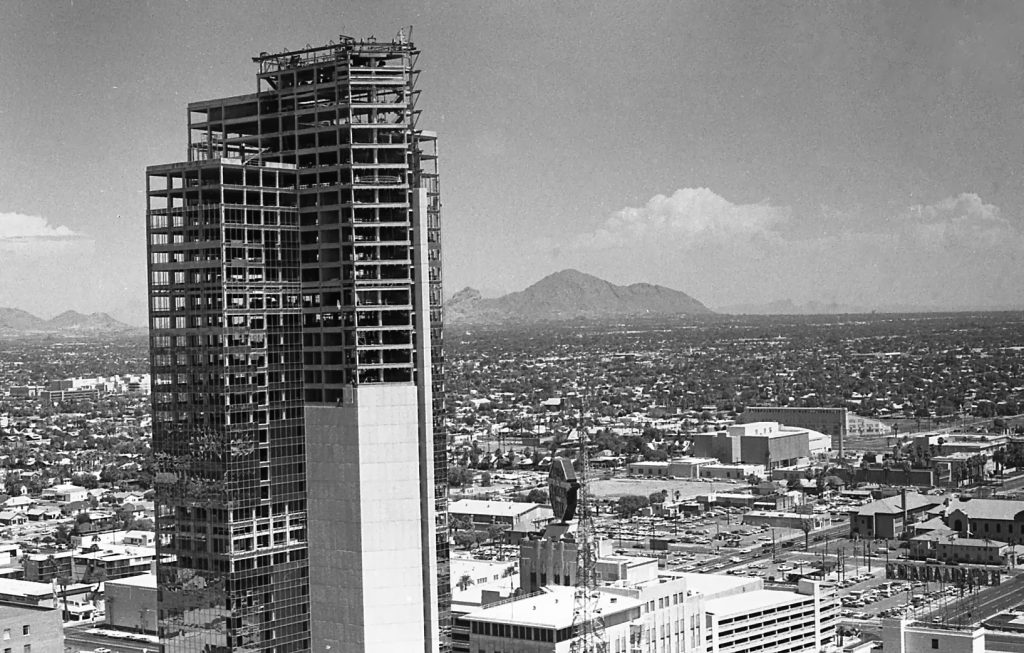
Valley_Center_under_construction_Camelback_Mountain_1972Valley Center, now the Chase Tower, under construction in 1972. At 483 feet, it remains the city's tallest building (Jeremy Butler photo).

The Republic recently ran a story to answer the question of why Phoenix lacks the skyscrapers that are one defining characteristic of other big cities. One of the problems of a place with so many newcomers is the loss of historical knowledge. So the story was, at best, incomplete.

The two big reasons given were automobile-based sprawl and a "polycentric" city with many cores. But both apply to other cities with much higher and more distinctive downtown skylines. Los Angeles comes to mind. It has "downtowns" in Century City, West LA, and Hollywood. It is a city built around the car, although it has rebuilt an extensive rail transit system.

But downtown LA, which is staging an astonishing comeback, is home to an impressive skyline. The Wilshire Grand, finished in 2017 and standing 1,100 feet with its spire is more than twice as tall as Phoenix's Chase Tower. The same is true of the U.S. Bank Tower, completed in 1989. About 28 skyscrapers there are taller than Chase.

Chicago, Dallas, Houston, and Charlotte have cheaper outlying land and sprawl, but each has a much more impressive skyline than Phoenix.

One big reason downtown Phoenix lacks taller buildings is its proximity to Sky Harbor International Airport. Valley National Bank wanted its new headquarters to be even taller, but the plan was quashed by the FAA. Sky Harbor is not much closer to downtown than Logan airport to downtown Boston, but Logan's runways primarily run southwest to northeast. In Phoenix, the runways are east-to-west and airplanes usually fly directly south of downtown. Gaining altitude means expending more jet fuel, especially in summer. And Sky Harbor has enormous influence at city hall. This has prevented doable towers at a higher number of floors at Third Avenue and Van Buren and further west.

Phoenix’s historic theaters

Phoenix’s historic theaters

Dorris Opera House

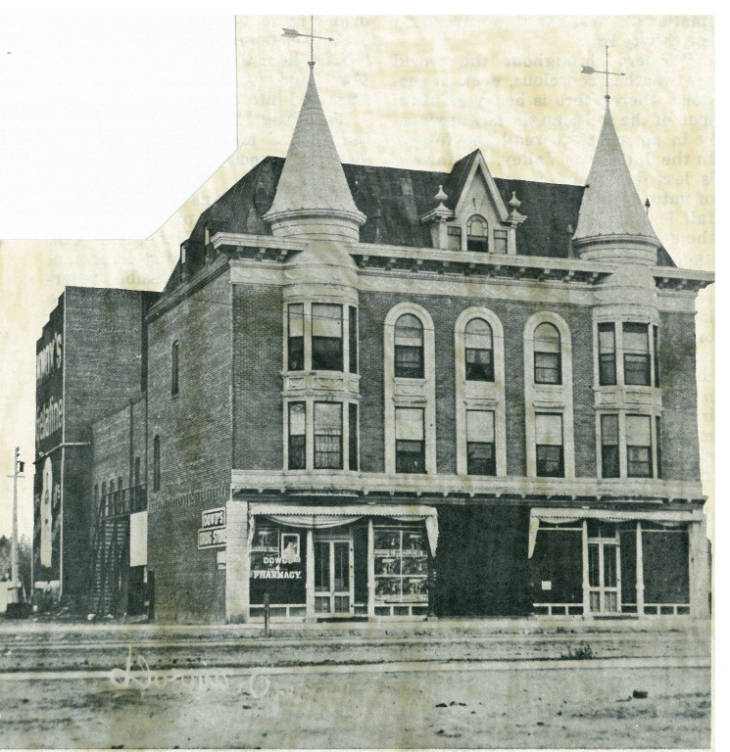
Today's Valdemar A. Cordova Municipal Court Building occupies the site of young Phoenix's first major theater, the Patton Grand, which opened in 1898. The new motion-picture industry was just getting started, so the theater hosted a variety of events such as plays and concerts.

It was also a point of pride in a town with a population of 5,544, which had made it through the national financial panics and local droughts and floods that characterized that decade. The theater sat 1,200 people. It also boasted hefty backstage spaces, based on the photo above, with room for curtains, lighting, and scenery.

E.M. Dorris, of the prominent merchant family, bought the theater at the end of 1899. It became the Dorris Opera House, the name by which most old Phoenicians and history buffs know it. Until the completion of the Phoenix Union High School Auditorium, the Dorris was the heartbeat of civic events, from traveling musicians, plays, and speakers, to political and union gatherings. It then settled in as a movie theater.

But, at Third Avenue and Washington, it was only one of many movie houses within walking distance of the city center or the streetcars. Let's take a stroll to some of them (click on photo for a larger image).

Mayor Gallego

Mayor Gallego

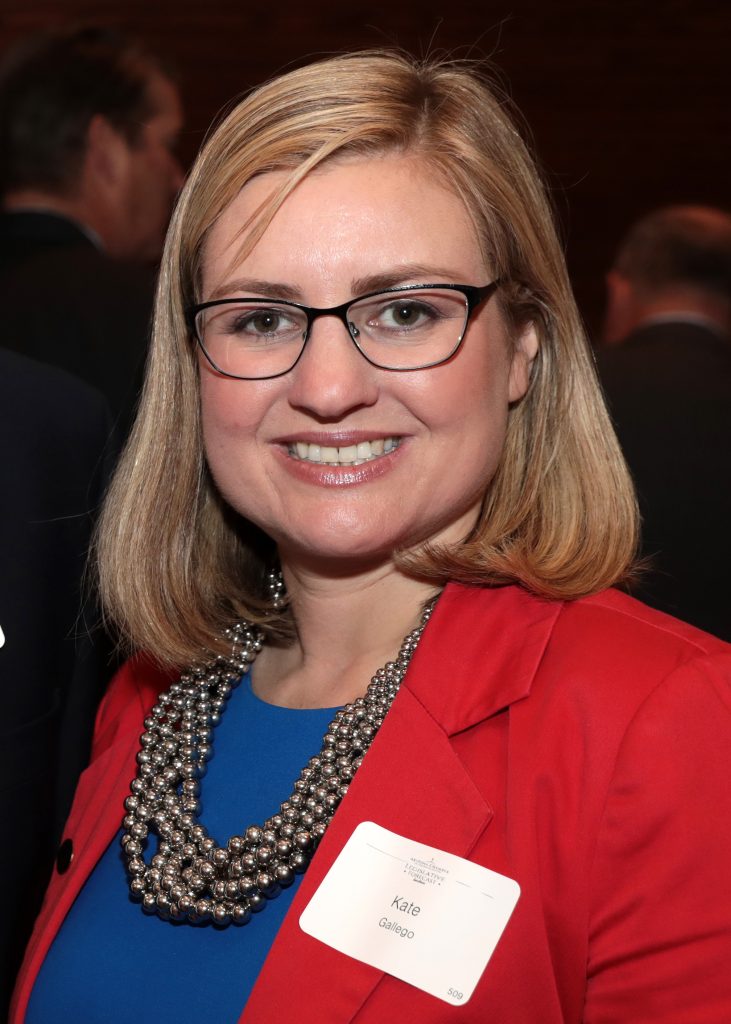
Kate_Gallego.Kate Gallego is the first mayor of Phoenix in 20 years who I don't know personally. That has disadvantages and advantages. The downside: I haven't spent hours over coffee or in city hall getting tips, sharing gossip, and taking the individual's measure. On the other hand, she's pretty much a blank slate to me, which allows me to see her totally from the perspective of an outsider.

All I know is what I read in the newspapers, and from Phoenix insiders, to paraphrase Will Rogers. She's not the first woman mayor of Phoenix — that distinction goes to Margaret Hance (and Thelda Williams was interim mayor). She's young — 37. She's smart, because she went to Harvard and everyone who's been touched by crimson is smart, or so we're told. On the Council, she supported transit but, wrongly to my mind, opposed upgrades to keep the Phoenix Suns downtown. Gallago is a relative newcomer. Otherwise, she's an unknown commodity.

The last time Phoenix had such a young mayor was the four years of Paul Johnson, who was in his early thirties when he took office in 1990. It was an unhappy tenure. Phoenix was hit with its worst recession since the 1930s and most projects from a big bond issue, which had been passed in the Goddard years, had to be postponed or downsized (one being a new City Hall). How much of this had to do with Johnson's youth is debatable — he was dealt a bad hand and to many did the best he could — but his relative lack of experience hurt him. To be extra fair, Terry Goddard was an impossible act to follow.

Karl Eller, an appreciation

Karl Eller, an appreciation

Karl_ellerThe last time I sat down with Karl Eller in his office on the Camelback Corridor, he said, "If I were 30, I'd move to China."

It was classic Eller: Ambitious, brash, optimistic, visionary. This was in the 2000s, before Xi Jinping's crackdown, when the People's Republic seemed to be an endless source of opportunity. Rather like the Phoenix of the 1960s and 1970s, when he was young.

Eller, age 90, died on Sunday. He was the last of the old Phoenix stewards — people such as Walter Bimson, Frank Snell, Eugene C. Pulliam, and John Teets who could knock heads and write checks, who saw their companies' interests as synonymous with the health of Phoenix. Those essential stewards no longer exist and Phoenix is crippled as a result.

If you grew up in that 1960s Phoenix — a new city of the future, or so it seemed — you couldn't drive down a street without seeing Eller's name on the bottom of a billboard. Eller Outdoor was his first big score, a business he bought from the outdoor advertising pioneer Foster & Kleiser, for whom he worked as a "lease man." With roots in the Northwest, F&K, by this time a division of Metropolitan Broadcasting, offered Eller the billboard business in Phoenix, Tucson, Bakersfield, and Fresno. The $5 million price seemed impossible for a young man with net worth of $50,000, but he rounded up investors and closed the deal. He turned it into his first empire.