Retiring in Arizona

Retiring in Arizona

Sun_City-Sun_City_DEVCO_Model_-1-1959
Arizona is only the 29th "best state to retire in," according to a new survey by Bankrate. The consumer financial services company ranked cost of living, crime, culture, health-care quality, taxes, weather, and "well being." No 1? That would be South Dakota, followed by Utah, Idaho, New Hampshire, and Florida. The Grand Canyon State didn't even make the top 10 in weather.

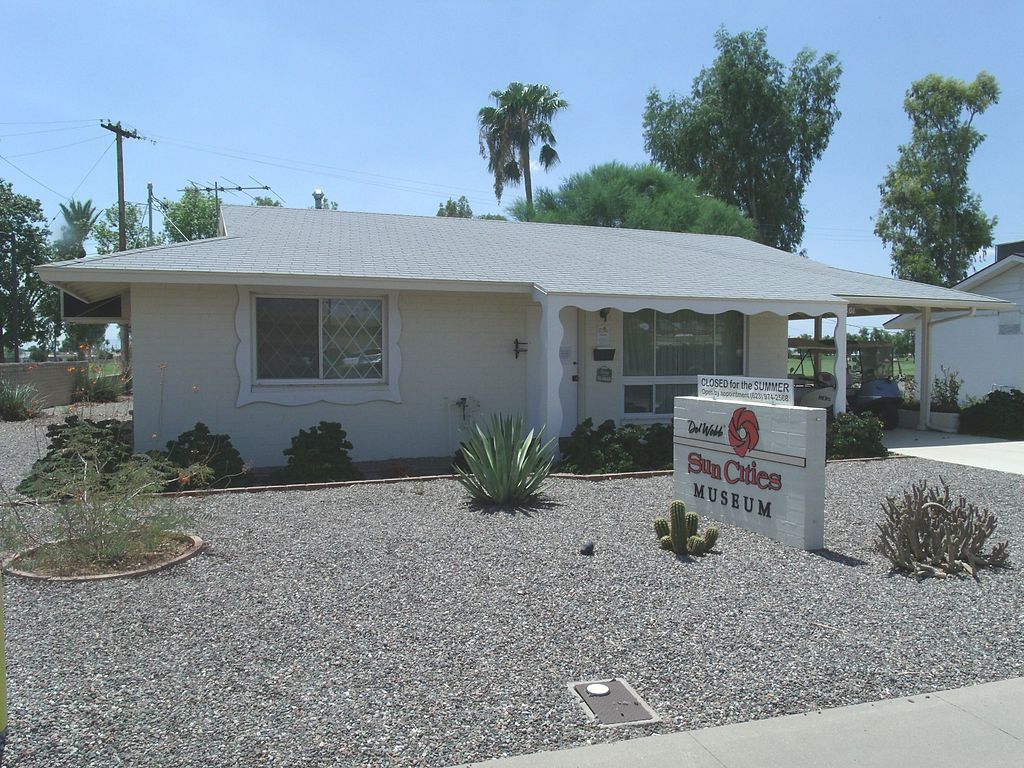
If this is true, it's bad news for the retirement industry, which has been a lynchpin of the state's economy since Del Webb began Sun City in 1959. Social Security payments accounted for an astounding $1.4 trillion for nearly a million retirees in Arizona as of last year alone — not to mention the savings and other assets they bring from back home.

The survey is highly suspect, of course. South Dakota is a fascinating place, with Mount Rushmore and Deadwood, but between immense snowfall and isolation and being downwind from the ICBM fields of North Dakota should World War III erupt, it doesn't sound like the best place to spend one's sunset years.

Because of savage cuts that have destroyed 40 percent of newsroom jobs over the past decade, PR people now outnumber reporters by 5-1 or more. Every day at the Seattle Times, I get scores of pitches. Many are click bait such as this. I rely on more gold-standard information, such as that from the Federal Reserve, universities or authentic think tanks.

But that doesn't mean Arizona is quite out of the woods on retirement desirability. 

Why ‘haboob’ makes me stormy

Why ‘haboob’ makes me stormy

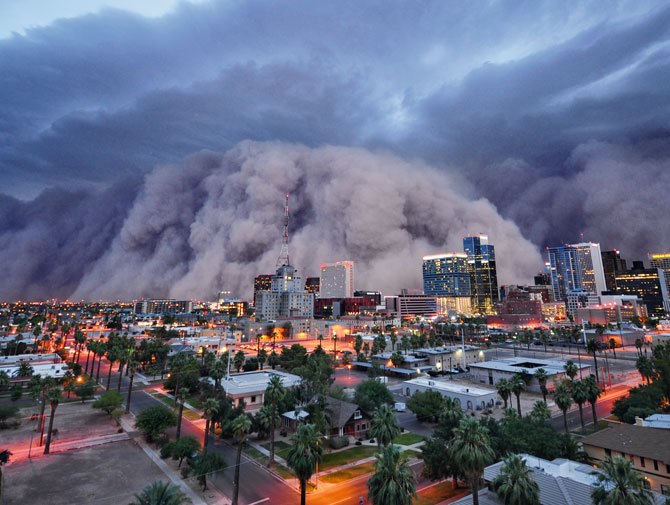
DustStormDaniel Bryant photo

My friend, the talented Richard Ruelas, wrote a diligently argued article in the Arizona Republic explaining why some dust storms here should properly be called "haboobs." He cites a 1972 article in the Bulletin of the American Meteorological Society and its use by the popular weatherman Dewey Hopper, among others. It's hard to argue with Ruelas' conclusions — but the term still drives me crazy.

The original haboob is native to the Sahara Desert, a completely different environment than the Sonoran Desert (until climate change works its sinister magic in the decades ahead). They're heavy on sand, unlike our situation, and of even more massive proportions. And sure, monsoon, another Arabic-origin word, has use worldwide and is a longstanding expression for the rainy season in Arizona.

Still, nobody besides Hopper used haboob when I was growing up. My grandmother, with memories back to the 1890s, never used it. These were called dust storms, a classic of the Old West. They weren't haboobs. They were dust storms. The phenomenon is especially prevalent in the Gila River basin between Phoenix and Tucson. When Interstate 10 was completed, the state installed a system of signs to alert drivers to an impending dust storm.

What makes me come off sounding like Gampa Simpson is that the widespread use of haboob seems like another out-of-town imposition on Phoenix. The city has lost so, so much of what made it unique and magical in all the world, why more? The influx of millions of newcomers left us with people who don't even know the location of downtown, fools who hike the mountains in high summer, often with fatal results. Sprawl has destroyed our citrus groves and farms, torn apart the civic fabric, left the enchanting Japanese flower gardens under miles of schlock development. The oasis has been paved over, with gravel and skeleton trees and a few heat-stressed plants dying amid the output of the Arizona Rock Products Association. People don't even realize what's been needlessly lost in this frenzy of vandalism. (Ruelas, a careful and fair journalist, is a Tempe native).

In this Phoenix, knowledge of history and customs is not merely ignored but scorned by too many. "Home" is where they came from. They only love Phoenix when they get defensive about any valid criticism of the place. There's not even consensus on what to call this sunscape. So instead of the magnificent and distinctive Phoenix, we get "the Valley." This even though there's Silicon Valley, the San Fernando Valley, the Red River Valley (of the North and of the South), and the Valley of the Jolly (Ho-Ho-Ho) Green Giant. Way to position yourself in the global economy. 

Mayors you should know

Mayors you should know

With Councilwoman Thelda Williams being a placeholder (for the second time) until a new Phoenix mayor is elected in November, it's a good time to reflect on her predecessors. Here is my admittedly subjective list of the most consequential:

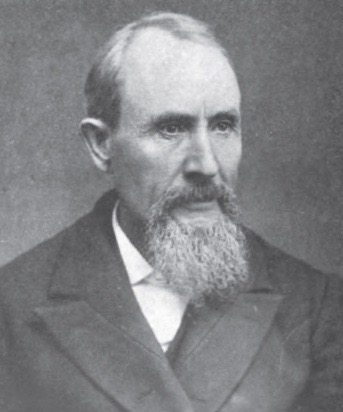
John_T_Alsap (1)John Alsap was Phoenix's first mayor, serving for a year in 1881 after incorporation. Dying five years later, age 56, Alsap, left, nevertheless compiled impressive accomplishments in the Territory. Kentucky born, Indiana raised, and a physician by training, he came to Prescott as a prospector and saloon operator. He began farming in the Salt River Valley in 1869 and was one of three commissioners who established the Phoenix townsite. In the territorial Legislature, he led the successful effort to create a new county — Maricopa — out of Yavapai County. He's buried in the old Pioneer Cemetery (now the Pioneer and Military Memorial Park, although its historic grass was removed).

Emil Ganz was the young town's first Jewish mayor and a two-term chief, serving from 1885-86 and 1899-1901. Ganz was born in Germany, emigrated to America and training as a tailor, seeing heavy action in the Civil War on the Confederate side, and moving to Phoenix in 1879. He ran the Bank Exchange Hotel, the town's first substantial hostelry. As mayor he pushed to establish a fire department and improve the water supply (his hotel burned in 1885 and the town was hit by a severe blaze a year later). 

Kooks and Kochs try to derail south Phoenix light rail

Kooks and Kochs try to derail south Phoenix light rail

062
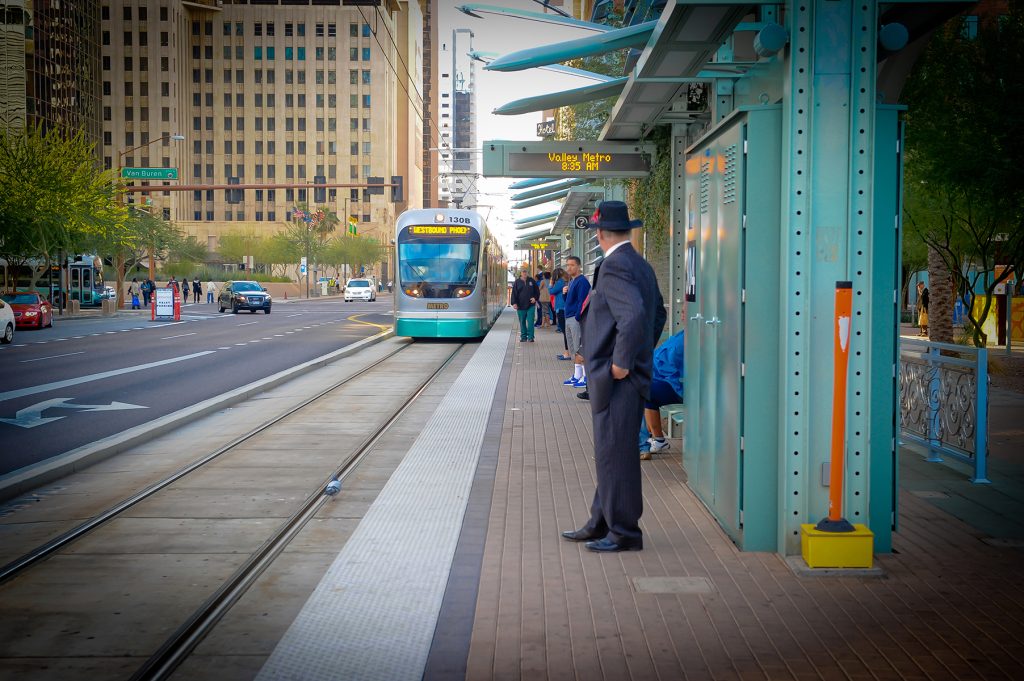
It appears that the six mile light-rail line to south Phoenix is on life support. I say "appears" because much of the reporting on the issue has been inaccurate. The Arizona Republic's Jessica Boehm reported the immediate news correctly, but plenty still needs to be filled in.

If I understand correctly, the City Council — with transit-backers Mayor Greg Stanton gone and Councilmembers Kate Gallego and Daniel Valenzuela set to resign in August to run for the seat — voted to "redesign" the south line along Central Avenue. This is to address a "grassroots" opposition complaining that Central would lose two of four lanes for automobile traffic.

Redesign may well mean death and loss of federal funding, especially with the rump Council after August. Skillful/shameful maneuvering by Councilman Sal DiCiccio, an ardent light-rail opponent, even took hostage City Manager Ed Zuercher, threatening his job and the city budget. This is the shorthand to a very complex moving drama.

It's no secret that the Koch brothers and other dark money groups are working to kill transit projects around the country. The anti-rail fetish on the right has always puzzled me. The "You Bastards" part of WBIYB is intended for them and their thuggish opposition to the starter line. And it's always possible to find a few discontents for a "grassroots" front group. But south Phoenix voters approved this line by 70 percent. If the likes of Better Call Sal prevail, this would be a blunder of historic proportions. For the facts and context, please read on. 

Ten and no change

Ten and no change

Fredgraph
A
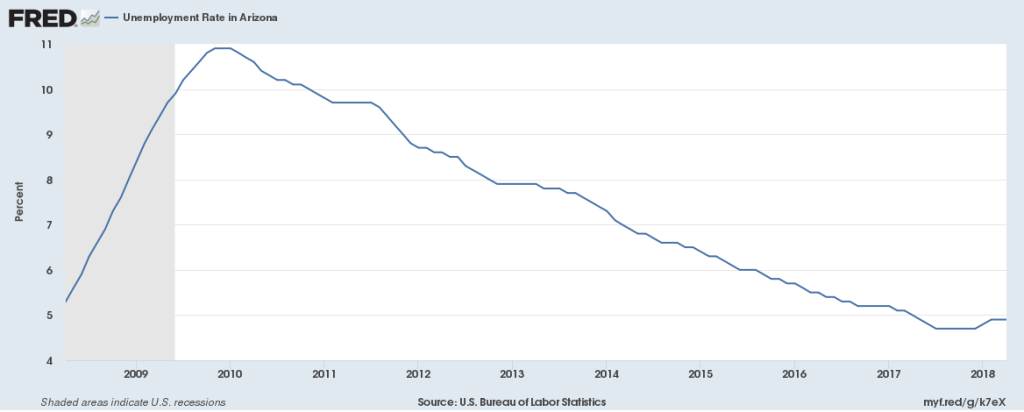
decade ago, Arizona and metropolitan Phoenix became an epicenter of the Great Recession, brought on by Wall Street hustles and Sun Belt overbuilding. Statewide unemployment reached a high of 10.9 percent, slightly less in Phoenix and Tucson. The speculative real-estate economy, which had become the economy, collapsed. House prices fell 50 percent or more, with historic levels of foreclosures or people being underwater on their mortgages. For many, this meant financial ruin. The overall damage was far worse than 1990 and both the state and metro area trailed their peers by years in recovering. Even now, the number of construction workers is at 1999 levels, even though population has grown considerably.

Ten years later, what's most remarkable is how little has changed. The one exception is real progress with central Phoenix infill, but it's a smidgen of the overall situation.

Sprawl development-driven economy? Check. Dependence on lower-skilled, lower-paid back office jobs? Check. The economic center in the car-dependent office "parks" of the East Valley? Check. Poorly-funded schools, more Big Sort Republican newcomers, Kooks in control of state government? Check, check, and check. Phoenix is the only major metropolitan area in North America that's building extensive new freeways, including the corruption-ridden South Mountain loop.

In other words, the vulnerabilities that drove Phoenix into a ditch a decade ago have been sustained and reinforced. No lessons learned. Nothing to see here, it's sunny with championship golf, so buy a tract house or move along. As Talleyrand said of the Bourbon dynasty, "They had learned nothing and forgotten nothing." 

The Canals of Phoenix

The Canals of Phoenix

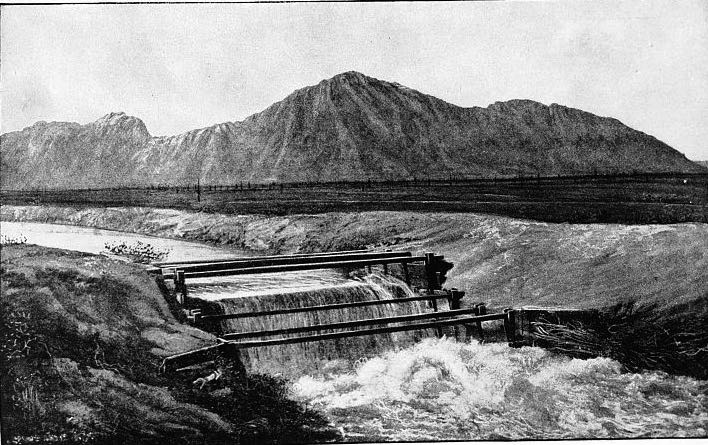
AZ_Canal
Beneath all the concrete, asphalt, and gravel of today's metropolitan Phoenix is some of the richest soil on earth. No wonder early settlers called it the Nile River Valley of the United States, or, with more aching pathos given what's happened, American Eden. Add water and anything will grow here. Getting the water from the Salt River was the challenge — one solved with canals.

The Hohokam (750-1450 AD) built at least 500 miles of canals in the Salt River Valley. The mileage might have been in the thousands. They created the most advanced irrigation civilization in the pre-Columbian Americas.

The genius of Jack Swilling — Confederate deserter, Indian fighter, prospector, drunk, opium addict, brawler, first town postmaster and justice of the peace, adoptive father of an Apache boy, cherished friend of many — was that he understood the significance of the Hohokam canals, which laid dormant for more than 400 years. They were not mere prehistoric curiosities. They were the means of building a modern empire, where a new civilization would arise from the ashes of its predecessor. (Why would you use the amorphous word "Valley" when you have the magical and appropriate name: Phoenix). 

Filling in

Filling in

DSCN2449(1)
In the 2000s boom, central Phoenix saw many proposals and promises — including 60-story towers in Midtown — but hardly any private development happened. It took years of heavy lifting to get WilloWalk/Tapestry and One Lexington.

Finally, even though the local economy has yet to fully recover from the Great Recession, the central core is seeing major infill. One prime example is Lennar's Muse apartments, built on the long dormant empty lot at the northwest corner of Central and McDowell, once home to AT&T's offices.

Just south, and also near the light-rail (WBIYB) station is a massive apartment complex under way near the Burton Barr Central Library. The north side of Portland Park has a tall condo building. More apartments are complete around Roosevelt and Third Street, while a crane hovers over the former site of Circles Records, erecting Empire Group's 19-story apartments. South of One Lexington, the long construction of the Edison condos is nearing completion.

This is transit-oriented development and it's finally happening.

An aside: Why does the announcement on trains say, "McDowell and Central, cultural district" instead of "Phoenix Art Museum, Phoenix Central Library," and "Roosevelt and Central, arts district" instead of "Roosevelt Row arts district"? 

What is Grand Canyon University?

What is Grand Canyon University?

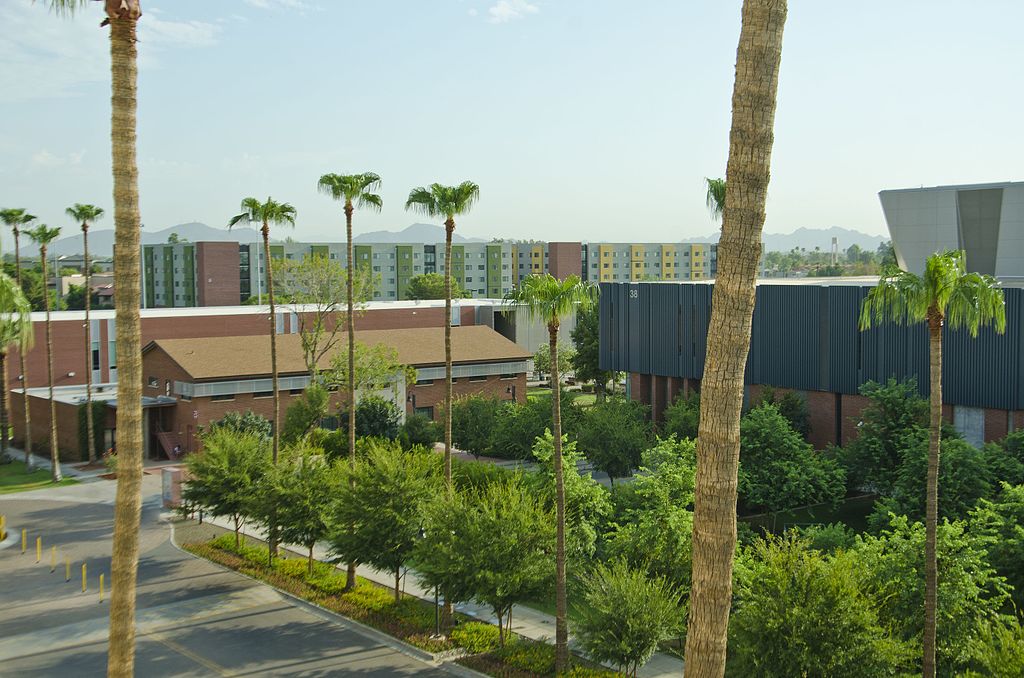
Grand_Canyon_University_Phoenix_Campus_-_panoramio_(4)
The university is one of the foundations of liberal Western Civilization. The concept of academic freedom originated at the University of Bologna in 1158. The University of Paris and University of Oxford were among the earliest institutions of higher learning. In America, Harvard was established in 1636. The United States typically had three types: private, church originated (the University of Southern California was affiliated with the Methodist Church), and those established by states. A very different Republican Party passed legislation in the 19th century for land-grant colleges and universities.

This landscape existed through most of American history. In addition, states created normal schools to train teachers — most became universities, the most notable being Arizona State University. Many also created institutions of higher learning for African-Americans. Beyond this, communities had junior colleges — Phoenix College was founded in 1920 — which morphed into community colleges. And entrepreneurs set up business schools or "colleges" to teach such basic skills as typing and bookkeeping. But this latter operation was a trade school, not a university.

When I was young, Grand Canyon College was a small liberal-arts Southern Baptist institution. It was the only other four-year or higher institution in metropolitan Phoenix besides ASU. Phoenix is by far the largest American city with so few real colleges and universities. This is a major drag on the metro's intellectual, research, and talent-attracting life. One cause is that Phoenix came of age after the era when wealthy patrons established universities (E.g. the University of Chicago, backed by John D. Rockefeller in 1890). The Church of Jesus Christ of Latter-day Saints bought land for a Brigham Young University in Phoenix in the 1960s but it was never built.

Now the Baptist affiliation is long gone and we have Grand Canyon University. But, as a former editor of mine was fond of saying, what does that mean? 

The stand

I'm the beneficiary of Arizona public schools. At Kenilworth in the 1960s, we never suffered textbooks falling apart or holes in the ceiling. No, this elementary school whose alumni included Barry Goldwater, Paul Fannin, and Margaret Hance, which was integrated and taught everyone from poor kids to the scions of the Palmcroft elite, had superb teachers. It had a library and a verdant playing fields — the monstrous freeway only a line on a planning map — presided over by a magnificent, inspiring building.

At Coronado High School in middle-class Scottsdale, the story was much the same. Some of the finest teachers anywhere, one of the top fine-arts departments in the country, and Ralph Haver's inspired mid-century architecture. None of my teachers at either school were forced to buy supplies. Neither school was surrounded by a prison-like fence — and the '60s and '70s were hardly peaceful decades. There was even a brief teachers' strike in Scottsdale in 1971.

Now a statewide walkout is occurring. It is about much more than some of the lowest teacher pay in the nation. More even than gutting a billion dollars from public schools while dolling out tax cuts to the wealthy and politically connected. More than teachers seeing through Gov. Doug Ducey's cynical promise to raise wages 20 percent — something that wouldn't even bring their pay to the national average, and would require the Legislature to take money from other critical needs. Because…tax cuts. Taxes must always be cut.

Teachers have finally made a stand.

I have no idea whether it will be successful. I doubt it can change Arizona's trajectory. But the stand needs to be made. 

Where to go in my Phoenix

Where to go in my Phoenix

Durants
Readers frequently tell me where to go, so it's my time to return the favor. Seriously, I get so many requests for restaurant and sights to visit from out-of-towners, especially Seattleites visiting for Mariners Spring Training. It will be easier to put it in a column and direct them here.

My suggestions don't focus on north Scottsdale or the asteroid belt of supersuburbs. Instead, I send them to my Phoenix, a vanishing place to be sure.

Restaurants:

Durant's: The legendary steakhouse, on the light-rail line in Midtown. If you drive, you can enter through the kitchen like a made man, as Jack Durant intended. The interior (above) is a 1950s throwback, the food is excellent, and the service is classy. Durant's features prominently in my David Mapstone Mysteries. Be sure to try a martini.

Also on light rail (WBIYB) and not to be missed: Fez, Forno 301, Switch, Lenny's Burgers, Wild Thaiger, Honey Bear's BBQ, and Macayo's.

Chef-driven Mexican food is big now, a trend started with Barrio Cafe. But I still love throw-down authentic Sonoran cuisine. My new fave, especially since Macayo changed its menu, is La Piñata on north Seventh Avenue, where Mary Coyle's used to be. Also be sure to check out the taco trucks you'll find all over. My enduring love is Los Olivos in Old Scottsdale, which has been there since before I was born.

Other favorites: The Persian Garden across from Phoenix College. Downtown, don't miss the historic Sing High Cafe on Madison Street, which once operated in the Deuce. The best pizza is Cibo at Fifth Avenue and Fillmore.

For fancy old Phoenix resort dining, I suggest Lon's at the Hermosa, T-Cook's at the Royal Palms, and any of the restaurants at the Arizona Biltmore.

You can breakfast like David, Lindsey, and Peralta at the First Watch at Park Central. The Farm at South Mountain offers a fine breakfast (as well as lunch and dinner). You can get a taste of the Eden that was once my hometown. 

‘Do I return to my home state?’

‘Do I return to my home state?’

Phoenix
I received a very articulate note from a young man who left to attend a well-regarded Midwestern university. He wrote in part:

I  lived in Phoenix my entire life, until I left … to study environmental engineering. I was going to learn as much as I could about the ecological problems facing Arizona, especially the inevitable water shortages that come from placing millions of people in the middle of the desert in an era of rapidly changing and warming climate, and then triumphantly return and solve them. At least, that was my naïve goal at 17 years old. 

Now, I’m about to graduate, and I see myself at a crossroads, as one often does at this age of relative innocence. Do I return to my home state and try to make it a better place, or do I abandon it for a better place?

This is what I wrote back:

Thank you for your heartfelt and compelling note. The answer, I'm sorry to say, is don't come back.
 
Of course, many factors come into play. Whether you want to be near family or thirst for endless sunshine, for example. But your idealism would be ground to dust by the reality that is Phoenix and Arizona. You might be able to get a job helping developers get around environmental regulations. Or, for a pittance, working for one of the few environmental advocacy groups.
 
But you can't change the place. It's a lesson I and so many others have learned. Phoenix breaks hearts. There is the illusion of the blank slate — I've watched so many architects, academics, artists and designers come there with this sense. In a few years, they leave in frustration.
 
Life is short. I was your age just yesterday, or so it seems. Your talents and training could be more rewardingly applied in a place that has an environmental ethic and has livability high on its agenda. And there are so many wonderful cities in America for a young person to grow, encounter new ideas, thrive. Alas, that's not our home state. I wish you the best.
 Allow me to explain further. 
When a light goes out

When a light goes out

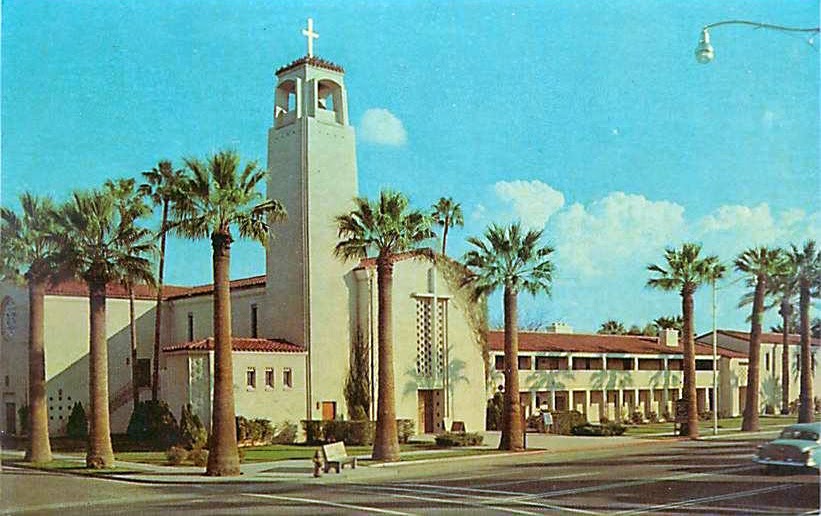
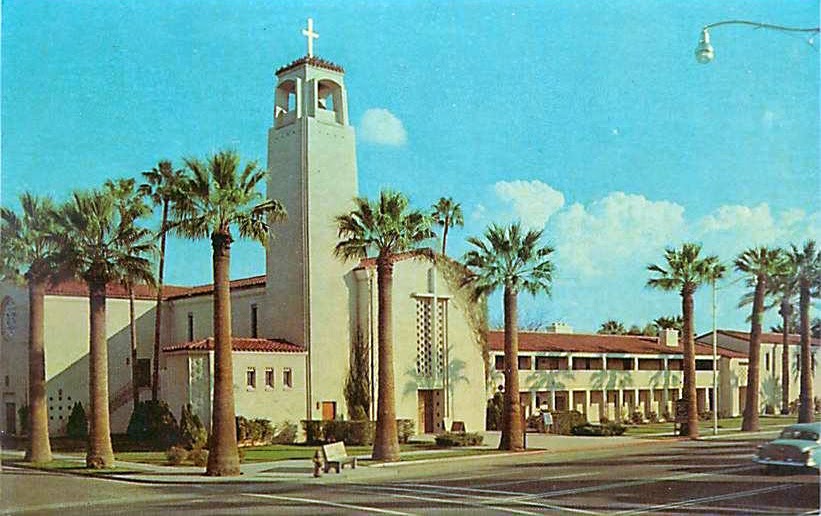
Central_Methodist_Church_1875_N_Central_1950s
“It’s so much darker when a light goes out than it would have been if it had never shone.” — John Steinbeck

Central United Methodist Church, at Central Avenue and Palm Lane, will close at the end of June. It's a devastating event.

I was baptized here, so many decades ago. I remember Sunday school, attending services with my mother and grandmother. My mother had a glorious contralto and, a child prodigy trained as a concert pianist, sometimes played the immense pipe organ, with its 4 divisions, 28 stops, and 41 registers. In the 1960s, it was common for each service to see a thousand people or more, filling the sanctuary and its three balconies. Central was a prime posting for veteran ministers — only doctors of divinity reached the senior rank — and the choir was superb. I was confirmed there, age 13.

When I returned to Phoenix in 2000, I started attending Central again, this time with Susan. Getting a hundred people in the pews was a victory by that time. The quality of preaching was uneven, as individual ministers came and went (long gone from the days of a senior minister and others). But the music program was very strong under Don Morse.

The core, including the longstanding group of ushers, was committed. Important for us, Central still offered a traditional service, with the wonderful Methodist hymns. Christmas Eve could see five services in the soaring sanctuary, with luminarias in the courtyard. We continue to attend. When I lived in Charlotte, people would ask me if I had found "a church home." No — in that hotbed of religion, the question irritated the secular me. "I have a bar home," I would respond. But the truth was different. My church was here. It always was. Always will be.

But 2018 brought heartbreaking news. First, the music program was downgraded, with Morse and seemingly most of the choir gone. Finances were an issue; the church and Morse, who had already taken a pay freeze/cut, couldn't come to terms. But respect also seemed an issue, the lay leaders wanting to downgrade his position to "choirmaster." A botched remodel of the sanctuary was probably another cause, including the loss of the pipe organ and removal of two of the balconies. I don't claim special insight. I spent many years in United Methodist choirs, but tried to avoid church politics whenever possible. Next came word that the sanctuary would only be used for special occasions. A traditional service would be held in the small Pioneer Chapel and a contemporary one in Kendall Hall.

Arizona’s ‘boom’ (in charts)

Arizona’s ‘boom’ (in charts)

To hear the boosters tell it, Arizona is enjoying one of the most competitive economies in the nation. Let's take a look, using authoritative sources.

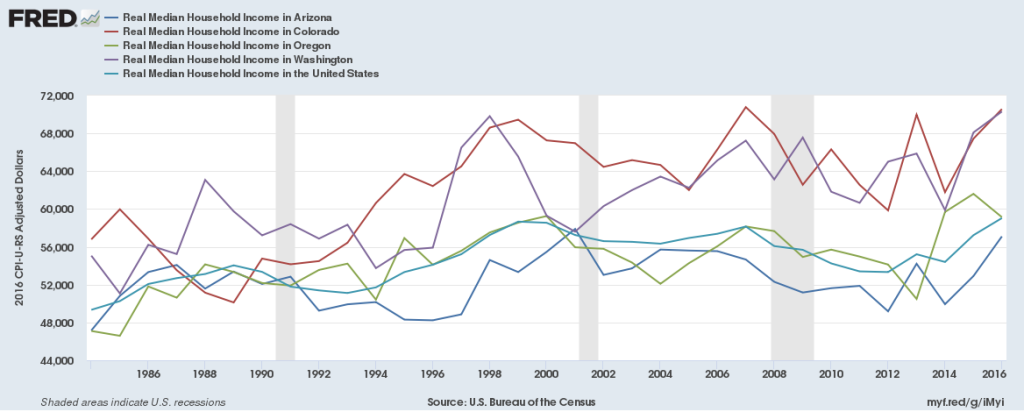
Median household adjusted for inflation income is up, with its second-best showing since 2000. Unfortunately, it trails the national average and peer competitors in the West:

MHI

The workforce is at a record near 2.8 million. Unfortunately growth has been sluggish, along with the national average. It is well below the level of growth for this point of an expansion compared with previous cycles:

Nonfarmpayrolls

Population growth, the holy grail of the state's economy is at its lowest levels since the Great Depression, even as Arizona passed 7 million people.

Population

‘Another Los Angeles’

‘Another Los Angeles’

Union_Station_profile _LA _CA _jjron_22.03.2012
It surprised me to still hear Phoenicians say, "We're becoming another Los Angeles" or "We don't want to become another LA." This vox local yokel reminds me that people in Phoenix don't get out much. To be fair, I used to think the same thing. That was until I was 10 years old, when my mother took me to the City of Angels on Southern Pacific's Sunset Limited, and we arrived at LA Union Passenger Terminal (above). I had never seen a building so grand — and the rest of the city was just as stunning. This was the first big city I'd been in, and it was nothing like little Phoenix.

I judge a city by its trains. Union Station has been restored to its grandeur and actually hosts more arrivals and departures than when it opened in 1939. In addition to Amtrak intercity trains to Chicago, Houston, New Orleans, and Seattle, it is the hub for LA Metrolink's six commuter rail lines, plus three subway and light-rail lines. All around it, downtown LA is undergoing a stunning renaissance — not only with new buildings such as the 1,099-foot Wilshire Grand but rehabbing its stock of majestic architecture from the early 20th century. It was never true that Los Angeles "didn't have a downtown." It had several, including Century City, Westwood, Hollywood, and downtown proper. All of them leave Phoenix looking like Hooterville by comparison. LA made a terrible mistake in tearing out the extensive Pacific Electric Railway, but it's making amends fast.

Phoenix becoming another Los Angeles? It should be so lucky. LA is one of America's three world cities, as defined by sociologist Janet Abu-Lughod's famous book of the same name. The influential Globalization and World Cities Network ranks it as an Alpha city, the third highest level of global power (only New York is Alpha ++ among North American cities). Phoenix is gamma, the ninth category. Phoenix peers Denver, Seattle, and San Diego rank Beta-minus. The LA metropolitan area's gross domestic product totaled more than $931 billion in 2017, second only to New York City in inflation-adjusted dollars. Phoenix, although the nation's fifth-largest city and 13th most populous metro ranked 17th, at $220 billion (again, behind peer metros). If LA were a nation, its output would rival Australia.

Lessons from Denver

Lessons from Denver

Denver_Union_Station_Great_Hall_Interior

One went to Denver and the other went wrong

— American folk ballad.

Last fall, we took the train from Seattle to my favorite adopted hometown, Denver. This form of travel is worth the trip — vacation begins when you settle into your seat. Arriving in Denver, I found the city much changed from when I lived here in the 1990s, working for the Rocky Mountain News, and all for the better. Getting off the California Zephyr, the restored Union Station greeted us. Not only is it the hub for Amtrak, but also for the light- and heavy-rail trains on the 122-mile network funded by the 2004 FasTracks referendum. Light rail preceded FasTracks, with the first line from downtown to suburban Littleton opening in 1994. As in Dallas, once people saw how light rail worked, everybody wanted it. Now an electric-powered commuter line also connects to Denver International Airport, along with six light-rail lines and more coming.

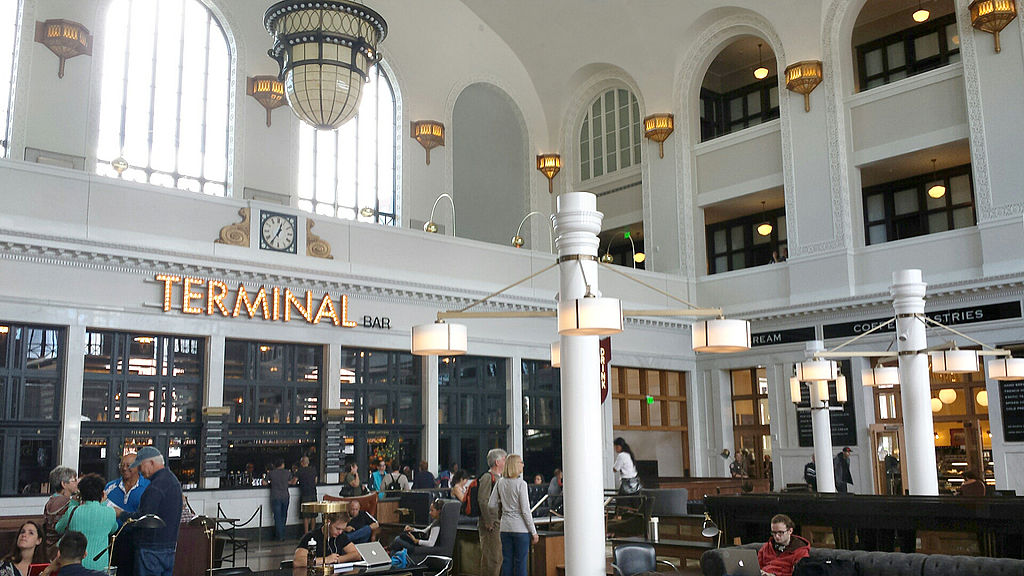
1024px-Denver_union_stationUnion Station, which recently underwent a $200 million renovation, is breathtaking. The exterior, with its iconic "Travel by Train" neon sign, is cleaned up and the center of vast amounts of mixed-use development. Inside, the once grimy waiting room, has been opened up into a wifi-equipped common area surrounded by shops and restaurants. We stayed at the Crawford Hotel in the station, named after the pioneering downtown developer Dana Crawford. It's a miraculous makeover from when I was among a small number of downtown residents and I would ride my bicycle around the deserted railyard behind the depot. Union Station is the anchor of Lower Downtown, or LoDo, where imposing warehouses from the 19th and early 20th centuries were renovated into lofts, offices, and restaurants. An early brewpub was started here by John Hickenlooper, who went on to become Denver mayor and Colorado governor.

It was a near-run thing. Although preservationists led by Crawford scored a win by saving Larimer Square in the 1960s as a tourist destination, many people were prepared to tear down the majestic but obsolete warehouses of LoDo. Only thanks to mayors Federico "Imagine a Great City" Peña and Wellington Webb, along with developers such as Crawford who had the skills to save and rehabilitate old buildings, was LoDo saved. Railyards made redundant by mergers were turned into a campus for Metropolitan State University, the Community College of Denver and the University of Colorado at Denver. LoDo and nearby areas also attracted Coors Field of the Colorado Rockies and the Pepsi Center where the NBA Denver Nuggets and NHL Colorado Avalanche play. What was mostly abandoned railroad property when I first arrived has been completely rebuilt and knitted into the city.

It's no surprise that Denver is among the 20 finalist cities for Amazon's HQ2, with 50,000 high-paid jobs and $5 billion investment. Denver is a comer, win or lose.