Downtown through the years

Downtown through the years

512px-Downtown_Phoenix_Aerial_Looking_Northeast
Follow this visual history of downtown Phoenix through the decades. I use the historic boundaries of downtown: Fillmore Street to the north; the railroad tracks to the south; Seventh Avenue and Seventh Street to west and east respectively. Click on a photo to see a larger image.

The early 1900s:

Washington_2nd_Ave_looking_east_Ford_Hotel_1915

Looking east on Washington Street from the Ford Hotel. Redewill's music store was owned by the family that built the 1914 bungalow where we lived in Willo in the 2000s. We placed an Interior Department National Register of Historic Places plaque on it, the A.C. Redewill House.

The twenties:

Central_Ave_looking_south_from_Monroe_1920s

Central Avenue heading south from Monroe Street, with the Hotel Adams the multi-story building on the left, and Central Methodist Church (ME, South), Heard Building, and Luhrs Building on the right.

Second Ave and Washington 1929 McC

Second Avenue and Washington in 1929. The awnings are on the red-brick Fleming Building. From left to right in the distance are the new Hotel Westward Ho, the Professional Building, and the Hotel Adams annex (McCulloch Bros. Collection/ASU Archives).

Read more about this decade here.

How to read the news

How to read the news

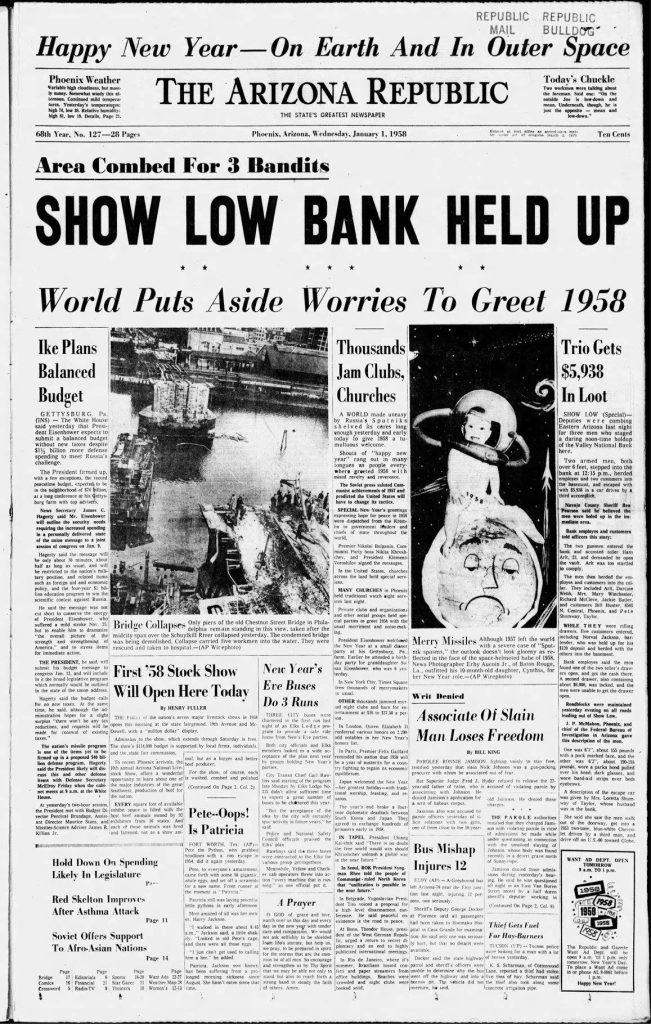
Az Republic Jan. 1 1958

Penelope Abernathy at the University of North Carolina has been tracking the expansion of "news deserts" in the United States — counties with no local newspapers at all, and those with only one. Even the survivors are hanging on.

U.S. newspapers lost 48 percent of their journalists between 2008 and 2018, and the losses are now accelerated by the pandemic. More than 1,800 newspapers have closed since 2004. Arizona newspaper circulation dropped by 37% between 2004 and 2019. The Arizona Republic's circulation fell from nearly half a million at the turn of the century — 10th largest daily in the country — to 68,000 daily as of 2023. The Seattle Times is now the second-largest newspaper on the West Coast — larger than San Diego or San Francisco's newspapers.

Much of this this is because of the collapse of the old business model because of Craig's List and self-inflicted wounds. The trends reach further back. Circulation of all dailies peaked at more than 63 million in 1989. It was down to 46 million by 2009, then 26 million by 2020.

Many newspapers are now being sucked dry by hedge-fund owners. As a result, the most experienced journalists are being pushed out. What's left are cub reporters while institutional knowledge is lost. The alternative is television news/entertainment, which is typically a shooting, an auto collision, and Heather-with-the-weather. (An honorable exception is Brahm Resnik at 12 News, a newspaper-trained newsman).

Meanwhile, a gray area of news also exists. In Phoenix, this includes Cronkite News out of ASU, KJZZ, and AZ Big Media. Flagstaff and Tucson are served by Arizona Public Media. Each of these have plusses and minuses.

This situation has profound implications for a self-governing society. Only real journalism exposes corruption, shines a light on self-serving politicians, explains complicated issues, and knits together civil society. Let's look at how to read the news — I've been a reporter, editor, and columnist for nearly four decades.

Growing up, in photos

Growing up, in photos

I wrote a column in 2010 about growing up in central Phoenix in the 1960s. Along with the old city column, they sum up an experience that few had, fewer still remember. Now I have enough photos to show a bit what my lost world looked like. 

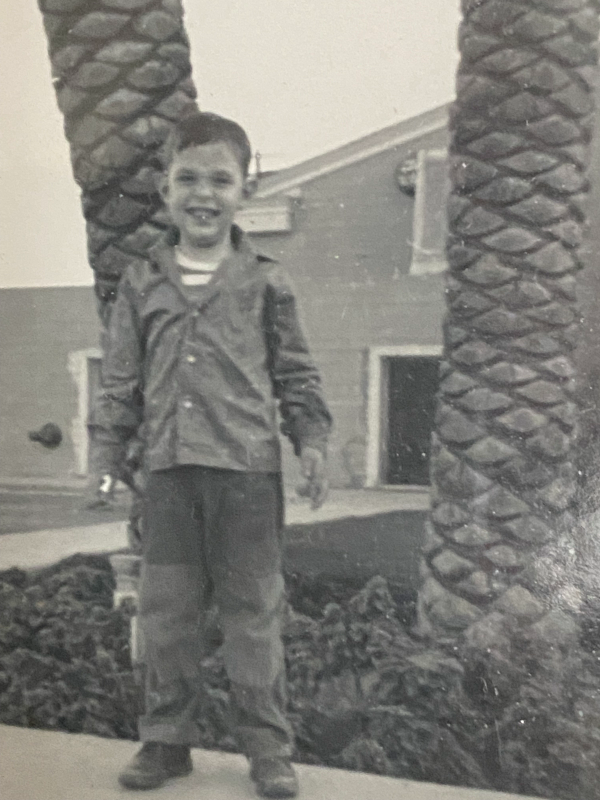
Me age five

Me around the age of five, taken at the Ramada Inn on east Van Buren.

314 W. Cypress-JT

The house on west Cypress in today’s Willo Historic District, looking much as it did when I grew up with my mother and grandmother. It’s also David Mapstone’s house in the Mapstone Mysteries (Willo Historic District photo).

Central_Palm_Lane_looking_south_Central_United_Methodist_Church_1960s

Central and Palm Lane looking south. I was baptized and confirmed in Central Methodist Church in the foreground, and spent hours in the central library, middle left (Brad Hall collection).


The Census

The Census

Phx_skyline_2010

1024px-Skyline_of_Philadelphia

So Phoenix is officially the nation's fifth most populous city, surpassing Philadelphia in the 2020 Census. Much information and analysis awaits unpacking.

Phoenix grew 11.2% over the decade, the biggest increase of the 10 largest cities. Yet this was the second-slowest percentage growth rate in the city's history; only the 9.4% from 2000 to 2010, hobbled by the housing bust, was slower. By contrast, the city grew by more than 34% in the 1990s.

The contest with the City of Brotherly Love was close. Phoenix clocked in with 1,608,139 only 4,342 more than Philly. The latter also continued to reverse its population loss, growing at 5.1 percent. Philadelphia benefited from the "back to the city" movement, where talented millennials and empty nest boomers chose vibrant, high-quality cities and corporate headquarters followed.

Maps of Phoenix

Maps of Phoenix

When I was a child, I loved to get the maps from my Great Aunt's monthly National Geographic magazines. And the Arizona Room at the Phoenix Public Library had more maps, but of the state and city. 

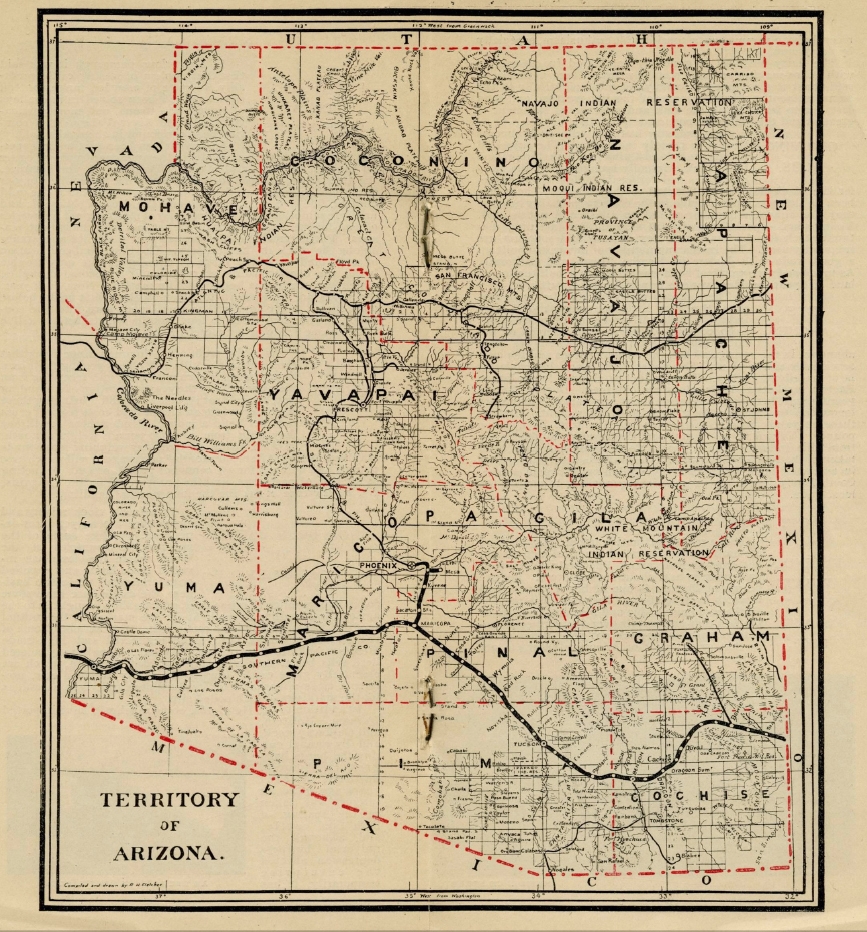
Now Phoenix is the nation's fifth most populous city and runs nearly into Yavapai County. Here's a snapshot of how it got there (click on the map for a larger image). 

Territory_of_Arizona_1895(1)

Arizona Territory, 1895.
 

Maricopa_Wells_1867

1867: No Phoenix yet, and no railroads. The Overland Mail Route follows rugged country to the south past Maricopa Wells.

Phoenix_Block_numbers_1881_map

1881: The original. township. with two public squares. The north-south streets are named, not numbered.

Map_Salt_River_Valley_Tempe_1892

1892: The Salt River Valley with platted land and canals (Mostly Hohokam).

Maricopa_County_map_18841884: Phoenix in the center of a multi-county map. The Gila and Salt River Base Line is prominent. It governed the surveys of Arizona Territory and became Baseline Road.

Phoenix’s Art Deco gems

Phoenix’s Art Deco gems

Art Deco architecture flowered in America in the 1920s and 1930s, epitomized by New York's Chrysler Building and the Los Angeles City Hall. Phoenix, population 29,053, was too small to gain as much as Deco fans like me would have wished. But it managed to preserve most of its masterpieces of the era.

Here they are (click on the photo for a larger image):

The Luhrs Tower:

Luhrs_Tower_southeast_corner_standing_on_Jefferson_1st_Ave_1930s

When most people think of Phoenix Deco they think of this 14-story masterpiece, the brain child of George Luhrs Jr. and connected to the Luhrs Building by an arcade. Located at First Avenue and Jefferson Street, it was designed by Trost & Trost of El Paso.

Luhrs Tower lobby

Luhrs_Tower_lobby_elevator_Jefferson_1st_Ave_1954(1)

Luhrs_Tower_facade(1)

Ground zero II

Ground zero II

170458225.TguEkGmc.TrumpInHellW

Carl Muecke illustration

In Phoenix this past weekend, Trump said, "If I lost the election, I could handle it pretty easily. But when they steal it from you and rig it, that’s not easy, and we have to fight!"

The location and big-lie language are no random coincidence. For the past several months the Republican-controlled state Senate has been conducting an "audit" of Maricopa County ballots. The goal is to show the presidential election was stolen here from Trump (When Fox "News" called Arizona for Biden, something approved by Rupert Murdoch himself, Trump exploded).

The "stolen election" and the January 6th insurrection to prevent the results from being certified by Congress, is a national Republican narrative. But, as with climate change, Arizona is ground zero.

The deeper consequence of the "audit" is to kneecap Arizona from turning purple or blue. It sets a blueprint by which any future election that goes Democratic can be challenged and even reversed. No wonder Republicans from other states have been watching closely and trying to install their own "audits."

It's not the only way Republicans are working to ensure they maintain power, whatever the changing demographics and politics of the nation.

Eden in photographs

Eden in photographs

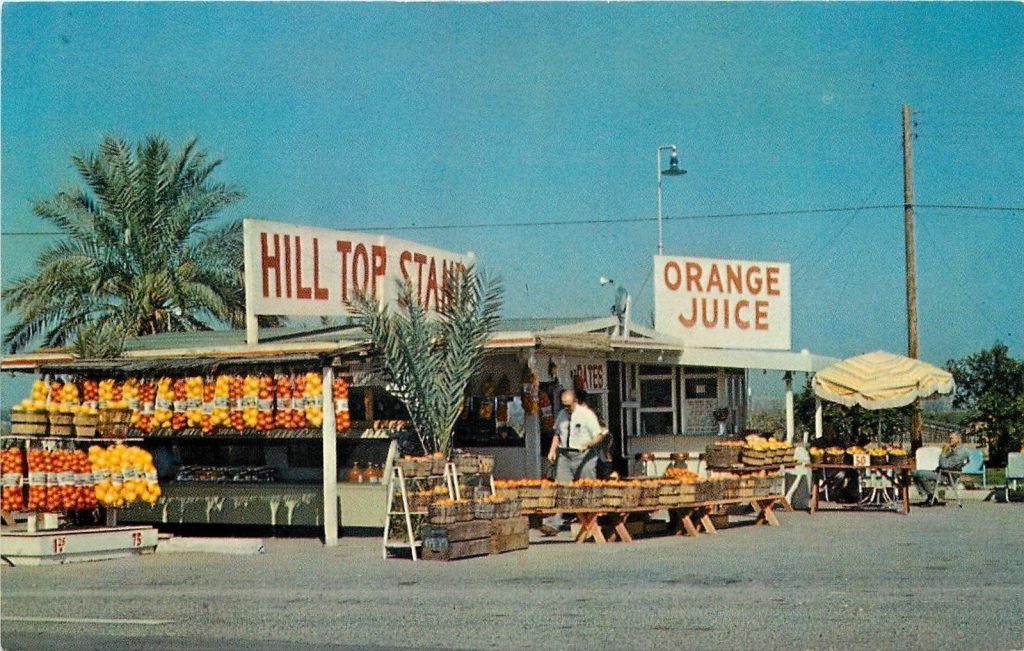
One of the most popular columns on this site is American Eden. Before red-tile-roof subdivisions built at an acre an hour. Before pavement, gravel, and longer, hotter summers, the Salt River Valley was an agricultural empire. Anything would grow here — just add water — and we shipped it across the country. Also, compared with today's 10,000-mile supply chain, we could feed ourselves.

Here's a sampling of images. Click on one for a larger view. Most are from the McCulloch Bros. Collection at the ASU Archives.

41st_Baseline

Fruit stands were ubiquitous into the 1970s. This stood at 41st Street and Baseline Road (Photographer unknown).

Sunny_Hills_Ranch_and_Fruit_Stand_3224_E_Baseline_Rd_1960s(1)

The Sunny Hills Fruit Stand at 32nd Street and Baseline in the 1960s (Photographer unknown).

Billboard_Ryan-Evans_Phils_Market_5121_E_McDowell_1960s(1)

Another one at 51st Street and McDowell in the 1960s. Phoenicians could ship fresh oranges and grapefruits to family and friends (Brad Hall collection/ Photographer unknown).

Alfalfa 1923

Alfalfa fields in 1923 (McCulloch Bros. Collection/ASU Archives).

Ground zero

Ground zero

1024px-Old_desert_ahead_sign_(8155680539)
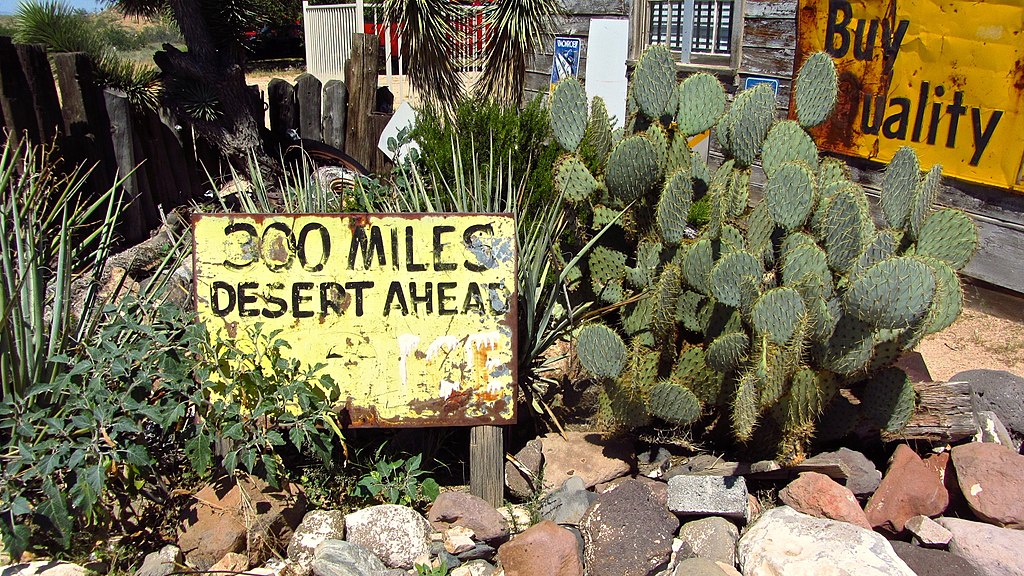
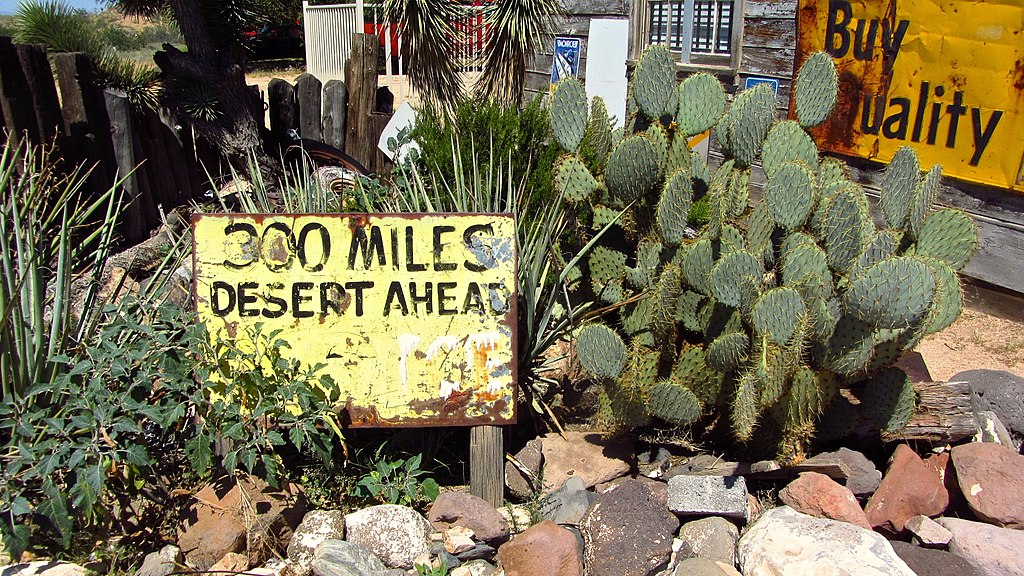
Have you noticed how many stories are generated out of Phoenix and Arizona by big national news organizations, including the New York Times, Washington Post, and Los Angeles Times? This is a big change from the days when we operated in relative obscurity. It is also no coincidence.

For one thing, the state is so different from the one I grew up in: 1.3 million population in 1960 vs. 7.2 million in 2020. Arizona was the 35th most populous state in the union in 1960. Now No. 14 — the third largest in the West — and Phoenix is the fifth most populous city. With size comes scrutiny.
But more important is that many of the crises of the future are being played out here. Climate change. Border pressures. Demographic shifts. The crisis of political legitimacy and our experiment in self-government. We have a front-row seat and are players. Yes, I'm happy for the Suns (and that the arena contract requires the team to keep the city name) and for the center-city infill. Happy for light rail (WBIYB).

But all is not well. Indeed, it's shocking how dark the future looks — and Arizona is ground zero.

Churches of early Phoenix

Churches of early Phoenix

Churches_and_other_views_1884(1)

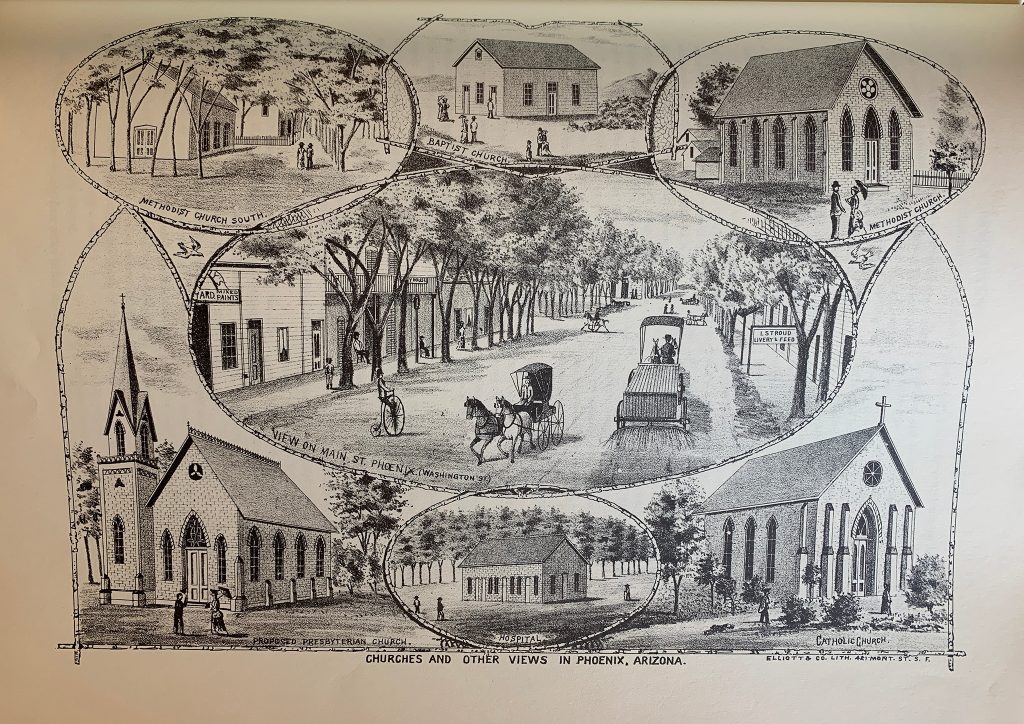
Phoenix in the 1880s boasted 16 saloons and four dance halls on Washington Street's notorious Whiskey Row. But as the town grew, the number of churches weren't too far behind. Here are a few (click the image for a larger photo):

Central Methodist was the oldest Protestant church in Phoenix, founded in 1872.

Central_Methodist_Church_color_Central_Monroe_1904
The postcard shows it in 1904 at Central and Monroe Street. It was founded by the Methodist Episcopal Church, South, part of the Methodist split before the Civil War. North and South churches reunited in 1939.

Central Methodist 1942 McC

Here's the building in 1942 although the congregation has moved farther north on Central (McCulloch Bros. Collection/ASU Archives).

The state of the state

The state of the state

171725099.w75y1AbV.AZStateOfDerangementW

Carl Muecke illustration

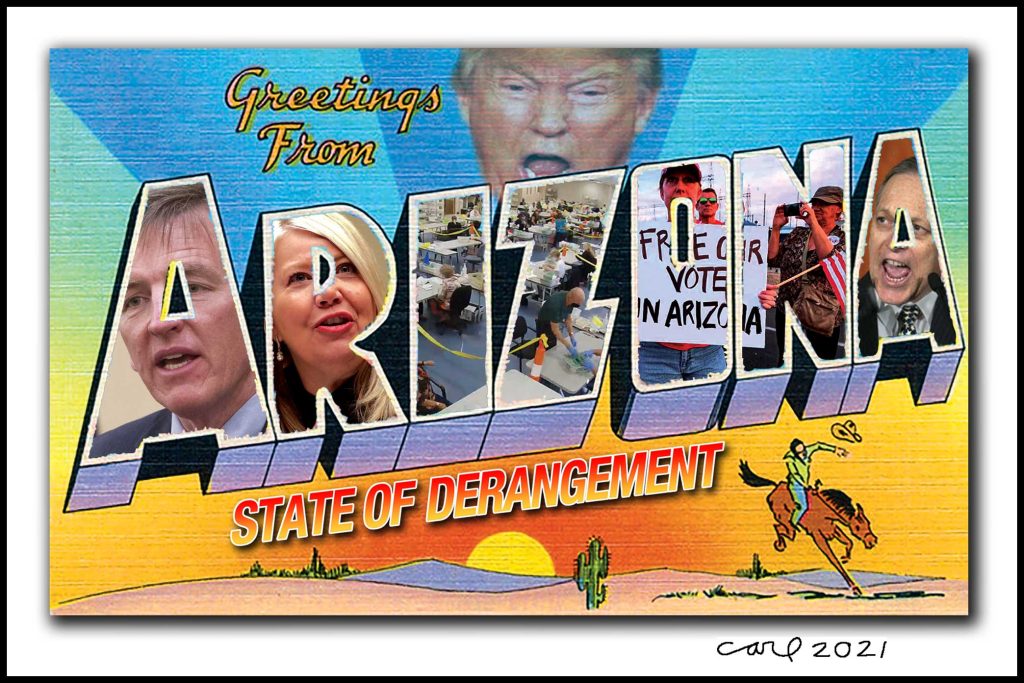
For all the talk about Arizona being flipped from red to blue, or at least purple, the reality on the ground is far different. That's because the most powerful branch of government, the Legislature, remains under Republican control — as it has for decades. The same situation is at work in the governor's office, where Doug Ducey is in his (term-limited) final stretch.

The most obvious result has been the "audit" of Maricopa County ballots, ordered by the Republican-run state Senate. Even if it eventually "validates" the election of Joe Biden as president, it has become a template for Republicans around the country and for any future elections they lose. It's hard to overstate the menace this presents to our experiment in self-government.

At the same time, the Legislature pressed two dozen voter suppression bills, intended to ensure that they continue to rule — widespread voting is the enemy of Republicans. One crafty measure will automatically purge by-mail voters who do not vote every two years. This happened even with mail voting widely popular in the state. Ducey took only a few hours before signing it into law.

Meanwhile, the body blows keep coming with such ferocity that it's difficult to keep up (see the daily headline links under "Phoenix and Arizona" to the left. The challenge is compounded by the hollowing out of local newspapers.

When the river ran free

When the river ran free

Salt River pre-dam 1 THM

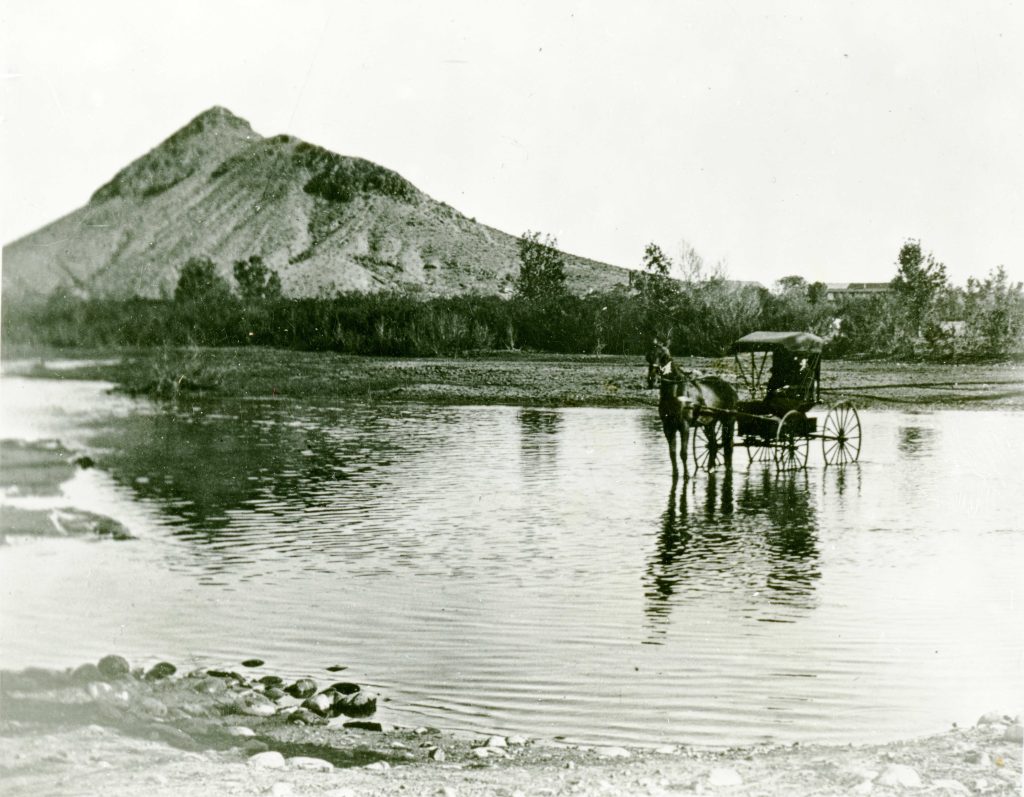
The Salt River flows without the impediment of upstream dams, pre-1911 (Tempe History Museum).


The first settlers to the region found a Salt River running as it had for millennia, free from its headwaters in the White Mountains to the northeast 200 miles to its meeting with the Gila River southwest of modern Phoenix. My family arrived in the 1890s.

The river had sustained the most advanced irrigation civilization in the pre-Columbian New World, although mysteriously gone for 500 years. The River brought not only with water, but also some of the planet's richest alluvial soil to its valley. Anything would grow here. These pioneers, especially Jack Swilling who saw the potential of the abandoned Hohokam canals and hired miners from Wickenburg to clean them out, hoped it would do the same for them.

There was, however, a catch. The Salt was a fickle river. It could run at a healthy flow much of the year, then turn nearly dry at the height of summer, interspersed with floods that destroyed the primitive diversion dams and irrigation systems of the pioneers. Archaeologists estimate that great floods had occurred on the river for two million years.

Floods hit in 1880, 1884, 1886, and 1889. The 1890s, when my family arrived, were particularly tough years. Against a backdrop of national "panics" (financial recessions), the Salt River rampaged and nearly dried up. The 1890 flood was followed a year later by a monster that breached its banks by miles, nearly reaching the Phoenix townsite and inundating crops.

The pioneers began to wonder if they would go the way of the Hohokam.

Signs and wonders

Signs and wonders

1440px-Colorado_River_above_Hoover_Dam_-_panoramio
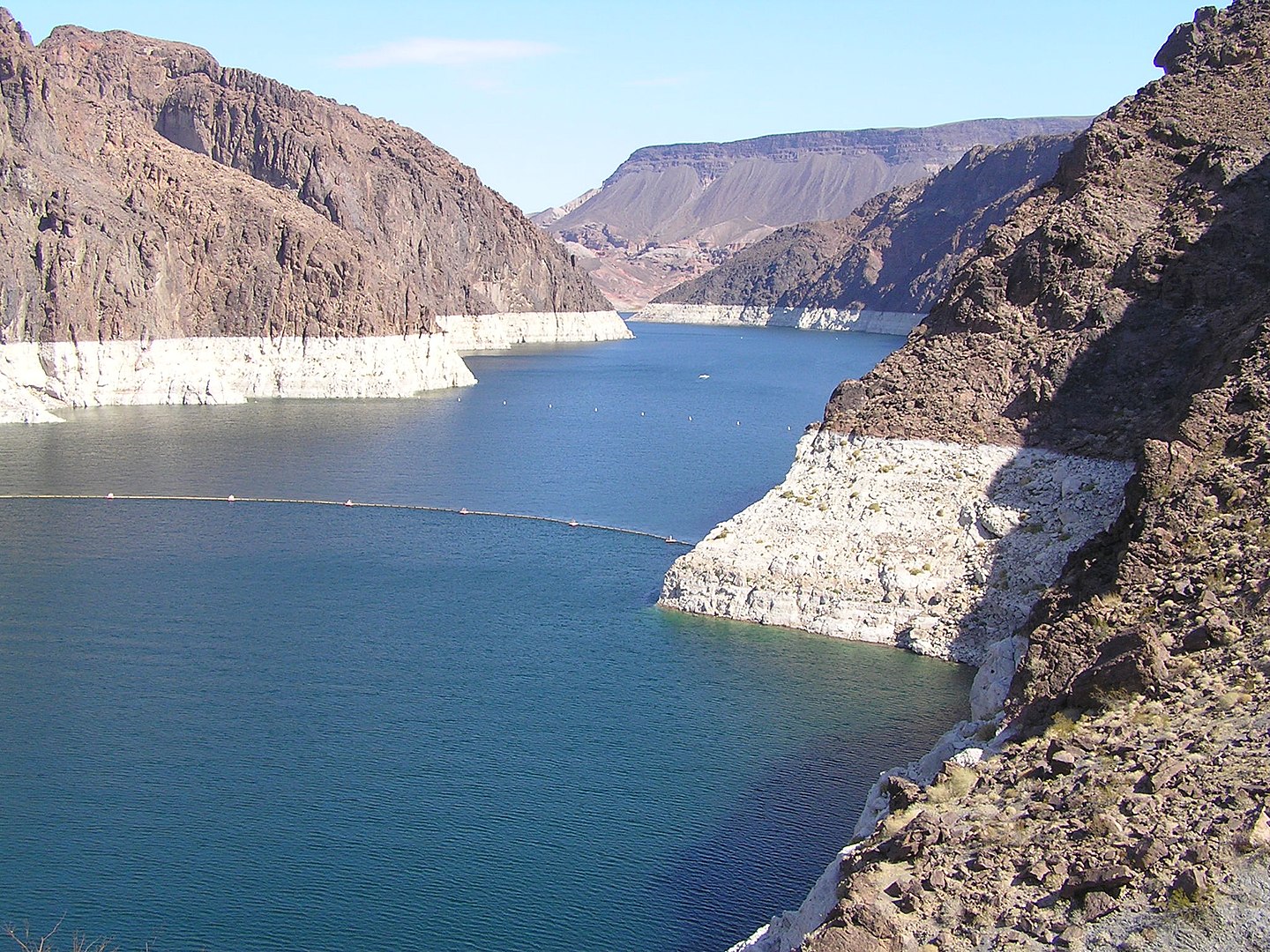
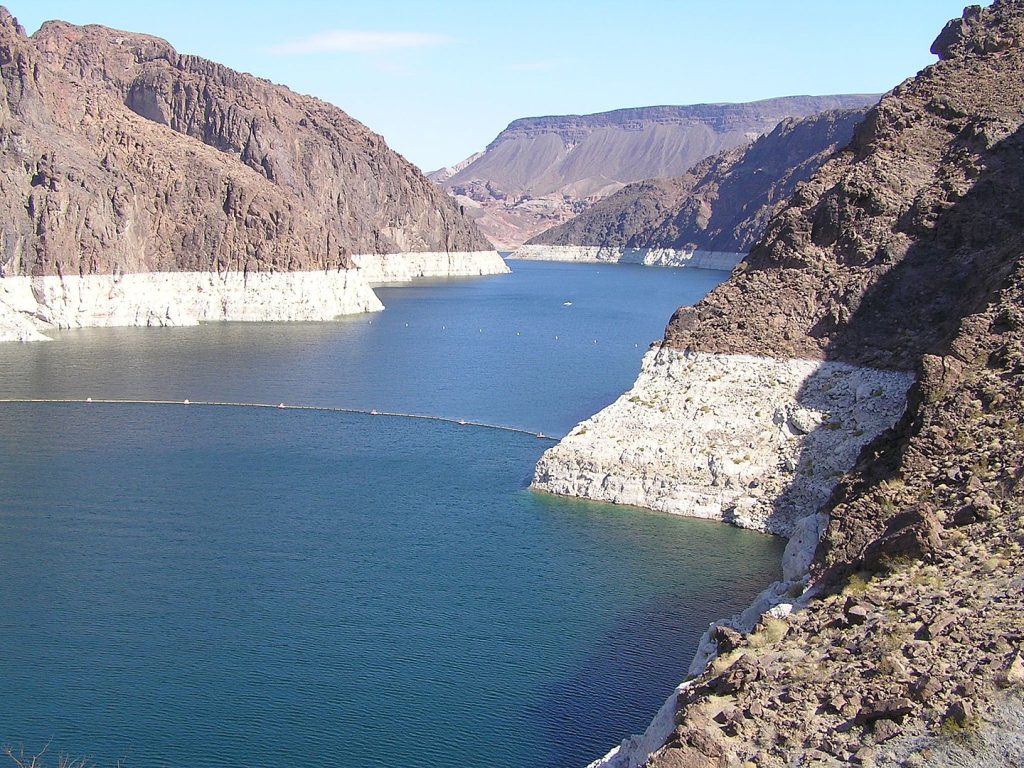
The media love to fixate on the "bathtub ring" of a diminishing Lake Mead. America's largest reservoir, contained by Hoover Dam, is at its lowest level since it first filled in the late 1930s. It's a potent sign of climate change. So is the expected string of record heat broiling central Arizona this week.

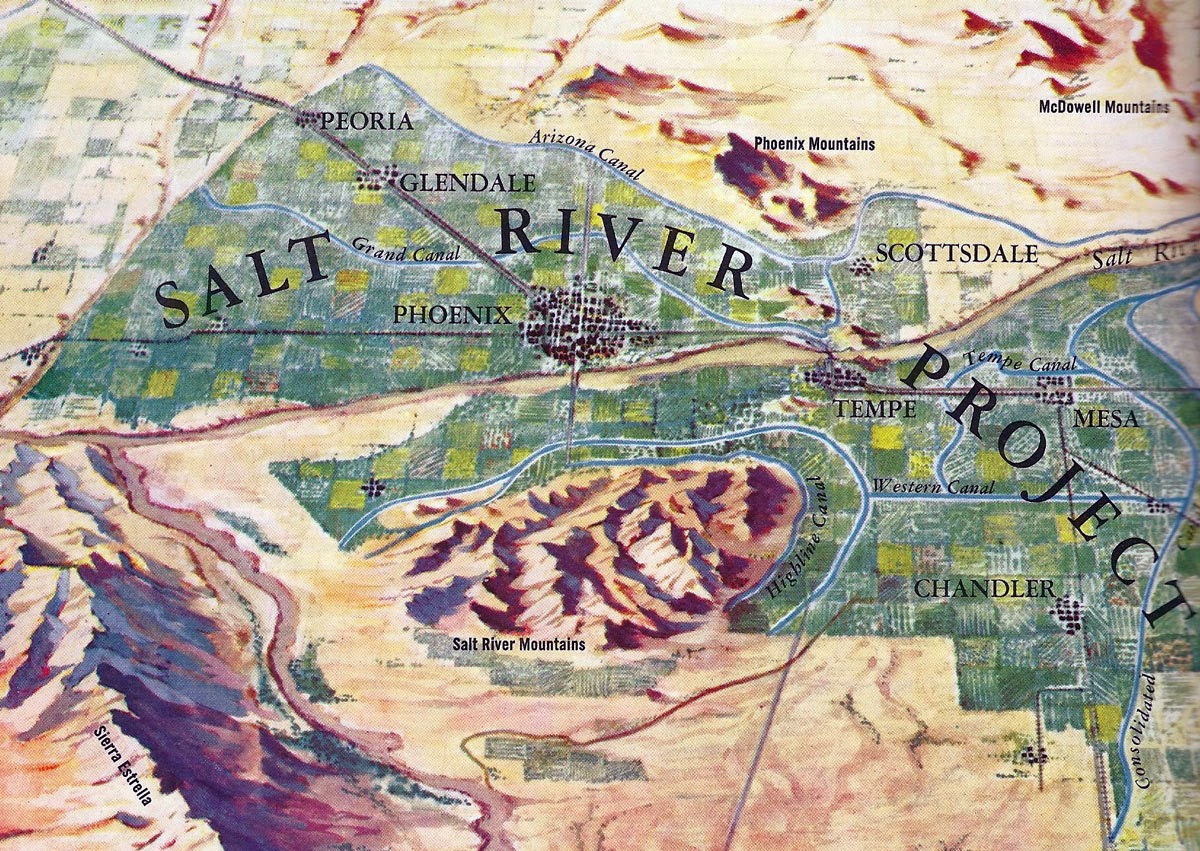
It makes me wonder, though. In 1960, Phoenix had a population of 439,170. The city encompassed 185 square miles. Importantly, it was entirely watered by the dams of the Salt River Project, providing a renewable source from snow runoff in watersheds that ran from the Coconino Plateau to the New Mexico border.

Looking back, that was probably peak sustainability for Phoenix. It looked like this:

Salt_River_Project_1960s

Washington through the years

Washington through the years

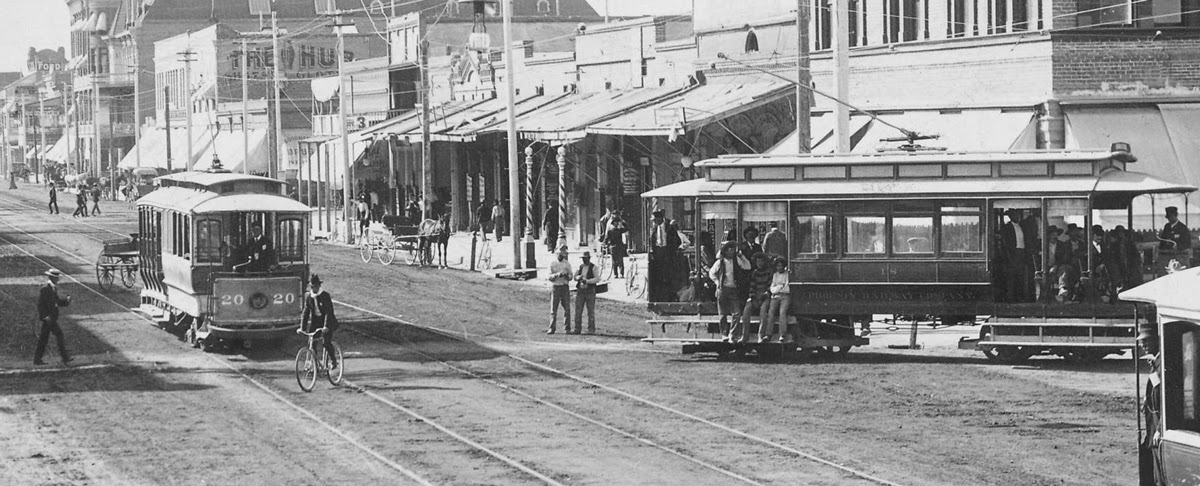
No east-west street was more important to early Phoenix than the one named after our first president. It carried streetcars, was the heart of the business district, held important buildings, and was movie-theater row. Washington remains the north-south dividing line for street addresses (Central is east-west). Let's take a tour through time.

Washington_Central_north_side_of_Washington_19011901: A dusty road with horses and mule-drawn streetcars.

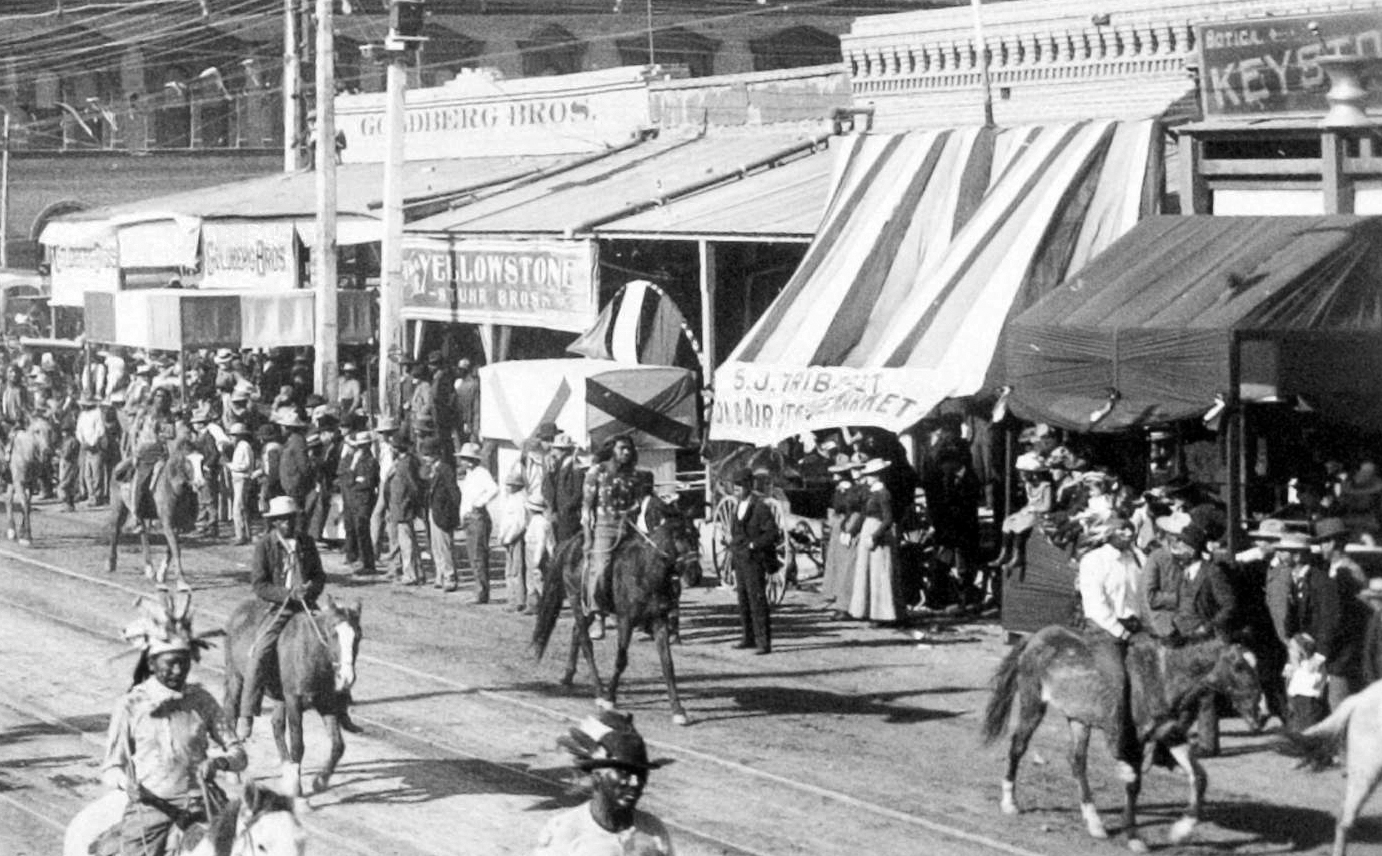
Washington_1st_St_Goldberg_Bros_parade_Indian_and_Cowboy_Carnival_19031904: The Indian and Cowboy Carnival Parade.

Washington_1st_St_looking_west_street_cars_19051905: At First Street looking west.

The data center hustle

The data center hustle

Datacenter
Data centers becoming dominant force in Mesa," reads the headline on a recent East Valley Tribune story. The lede: "It may never rival Silicon Valley, but Mesa is fast becoming Data Center Alley." 

This "Alley" isn't transforming struggling west Mesa and it's nowhere near the light-rail line. Instead, it's centered on the "Elliott Avenue Technology Corridor" in far southeast Mesa, the location of agriculture, desert, and the former Williams Air Force Base. Now, with abundant concrete, gravel, and asphalt, it will expand the increasingly dangerous Phoenix urban heat island. The "Corridor" is entirely car dependent.

Data centers are lowest on the ladder of the tech economy: necessary, but bringing few jobs — much less high-end jobs — and several headaches. This is why they are usually found in rural areas desperate to replace their lost millwork, manufacturing, or railroad jobs. States and localities shell out huge incentives and disappointment follows.

But to see the proliferation of data centers in a city the size of Mesa (518,000 in 2019), in the 10th most populous metropolitan area in the nation, is curious.