Filling in

Filling in

DSCN2449(1)
In the 2000s boom, central Phoenix saw many proposals and promises — including 60-story towers in Midtown — but hardly any private development happened. It took years of heavy lifting to get WilloWalk/Tapestry and One Lexington.

Finally, even though the local economy has yet to fully recover from the Great Recession, the central core is seeing major infill. One prime example is Lennar's Muse apartments, built on the long dormant empty lot at the northwest corner of Central and McDowell, once home to AT&T's offices.

Just south, and also near the light-rail (WBIYB) station is a massive apartment complex under way near the Burton Barr Central Library. The north side of Portland Park has a tall condo building. More apartments are complete around Roosevelt and Third Street, while a crane hovers over the former site of Circles Records, erecting Empire Group's 19-story apartments. South of One Lexington, the long construction of the Edison condos is nearing completion.

This is transit-oriented development and it's finally happening.

An aside: Why does the announcement on trains say, "McDowell and Central, cultural district" instead of "Phoenix Art Museum, Phoenix Central Library," and "Roosevelt and Central, arts district" instead of "Roosevelt Row arts district"? 

Where to go in my Phoenix

Where to go in my Phoenix

Durants
Readers frequently tell me where to go, so it's my time to return the favor. Seriously, I get so many requests for restaurant and sights to visit from out-of-towners, especially Seattleites visiting for Mariners Spring Training. It will be easier to put it in a column and direct them here.

My suggestions don't focus on north Scottsdale or the asteroid belt of supersuburbs. Instead, I send them to my Phoenix, a vanishing place to be sure.

Restaurants:

Durant's: The legendary steakhouse, on the light-rail line in Midtown. If you drive, you can enter through the kitchen like a made man, as Jack Durant intended. The interior (above) is a 1950s throwback, the food is excellent, and the service is classy. Durant's features prominently in my David Mapstone Mysteries. Be sure to try a martini.

Also on light rail (WBIYB) and not to be missed: Fez, Forno 301, Switch, Lenny's Burgers, Wild Thaiger, Honey Bear's BBQ, and Macayo's.

Chef-driven Mexican food is big now, a trend started with Barrio Cafe. But I still love throw-down authentic Sonoran cuisine. My new fave, especially since Macayo changed its menu, is La Piñata on north Seventh Avenue, where Mary Coyle's used to be. Also be sure to check out the taco trucks you'll find all over. My enduring love is Los Olivos in Old Scottsdale, which has been there since before I was born.

Other favorites: The Persian Garden across from Phoenix College. Downtown, don't miss the historic Sing High Cafe on Madison Street, which once operated in the Deuce. The best pizza is Cibo at Fifth Avenue and Fillmore.

For fancy old Phoenix resort dining, I suggest Lon's at the Hermosa, T-Cook's at the Royal Palms, and any of the restaurants at the Arizona Biltmore.

You can breakfast like David, Lindsey, and Peralta at the First Watch at Park Central. The Farm at South Mountain offers a fine breakfast (as well as lunch and dinner). You can get a taste of the Eden that was once my hometown. 

When a light goes out

When a light goes out

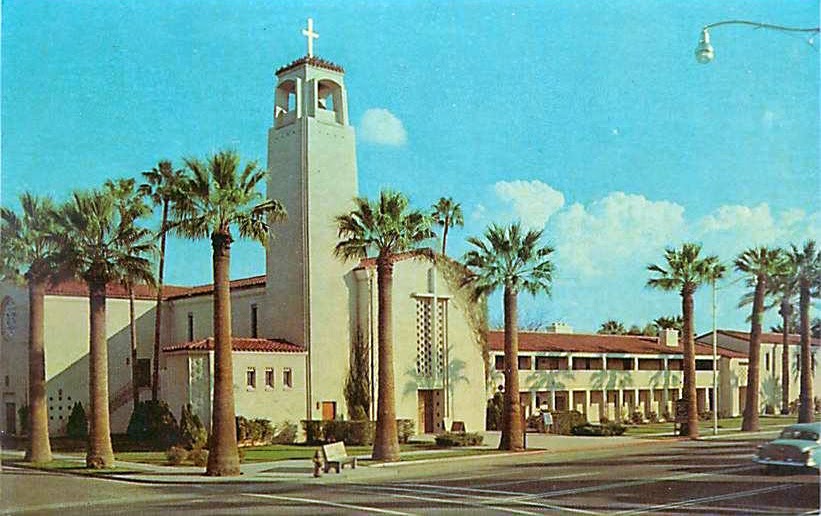
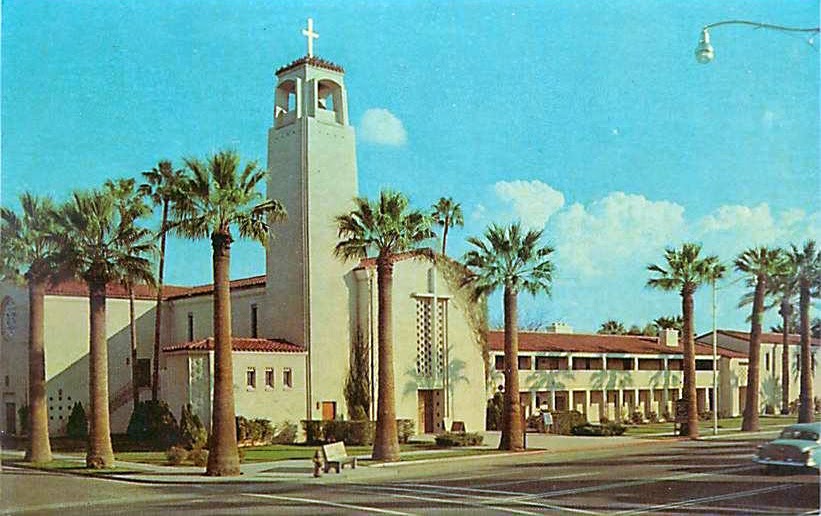
Central_Methodist_Church_1875_N_Central_1950s
“It’s so much darker when a light goes out than it would have been if it had never shone.” — John Steinbeck

Central United Methodist Church, at Central Avenue and Palm Lane, will close at the end of June. It's a devastating event.

I was baptized here, so many decades ago. I remember Sunday school, attending services with my mother and grandmother. My mother had a glorious contralto and, a child prodigy trained as a concert pianist, sometimes played the immense pipe organ, with its 4 divisions, 28 stops, and 41 registers. In the 1960s, it was common for each service to see a thousand people or more, filling the sanctuary and its three balconies. Central was a prime posting for veteran ministers — only doctors of divinity reached the senior rank — and the choir was superb. I was confirmed there, age 13.

When I returned to Phoenix in 2000, I started attending Central again, this time with Susan. Getting a hundred people in the pews was a victory by that time. The quality of preaching was uneven, as individual ministers came and went (long gone from the days of a senior minister and others). But the music program was very strong under Don Morse.

The core, including the longstanding group of ushers, was committed. Important for us, Central still offered a traditional service, with the wonderful Methodist hymns. Christmas Eve could see five services in the soaring sanctuary, with luminarias in the courtyard. We continue to attend. When I lived in Charlotte, people would ask me if I had found "a church home." No — in that hotbed of religion, the question irritated the secular me. "I have a bar home," I would respond. But the truth was different. My church was here. It always was. Always will be.

But 2018 brought heartbreaking news. First, the music program was downgraded, with Morse and seemingly most of the choir gone. Finances were an issue; the church and Morse, who had already taken a pay freeze/cut, couldn't come to terms. But respect also seemed an issue, the lay leaders wanting to downgrade his position to "choirmaster." A botched remodel of the sanctuary was probably another cause, including the loss of the pipe organ and removal of two of the balconies. I don't claim special insight. I spent many years in United Methodist choirs, but tried to avoid church politics whenever possible. Next came word that the sanctuary would only be used for special occasions. A traditional service would be held in the small Pioneer Chapel and a contemporary one in Kendall Hall.

‘Another Los Angeles’

‘Another Los Angeles’

Union_Station_profile _LA _CA _jjron_22.03.2012
It surprised me to still hear Phoenicians say, "We're becoming another Los Angeles" or "We don't want to become another LA." This vox local yokel reminds me that people in Phoenix don't get out much. To be fair, I used to think the same thing. That was until I was 10 years old, when my mother took me to the City of Angels on Southern Pacific's Sunset Limited, and we arrived at LA Union Passenger Terminal (above). I had never seen a building so grand — and the rest of the city was just as stunning. This was the first big city I'd been in, and it was nothing like little Phoenix.

I judge a city by its trains. Union Station has been restored to its grandeur and actually hosts more arrivals and departures than when it opened in 1939. In addition to Amtrak intercity trains to Chicago, Houston, New Orleans, and Seattle, it is the hub for LA Metrolink's six commuter rail lines, plus three subway and light-rail lines. All around it, downtown LA is undergoing a stunning renaissance — not only with new buildings such as the 1,099-foot Wilshire Grand but rehabbing its stock of majestic architecture from the early 20th century. It was never true that Los Angeles "didn't have a downtown." It had several, including Century City, Westwood, Hollywood, and downtown proper. All of them leave Phoenix looking like Hooterville by comparison. LA made a terrible mistake in tearing out the extensive Pacific Electric Railway, but it's making amends fast.

Phoenix becoming another Los Angeles? It should be so lucky. LA is one of America's three world cities, as defined by sociologist Janet Abu-Lughod's famous book of the same name. The influential Globalization and World Cities Network ranks it as an Alpha city, the third highest level of global power (only New York is Alpha ++ among North American cities). Phoenix is gamma, the ninth category. Phoenix peers Denver, Seattle, and San Diego rank Beta-minus. The LA metropolitan area's gross domestic product totaled more than $931 billion in 2017, second only to New York City in inflation-adjusted dollars. Phoenix, although the nation's fifth-largest city and 13th most populous metro ranked 17th, at $220 billion (again, behind peer metros). If LA were a nation, its output would rival Australia.

Phoenix in the nineties

Phoenix in the nineties

Papago_Freeway_Tunnel
The new decade came upon a Phoenix beset with crisis. Charlie Keating, the most lionized Arizona businessman of the previous dozen years, was facing federal fraud and racketeering charges. His palatial Phoenician Resort was seized by a platoon of U.S. Marshals, lawyers, regulators, and locksmiths in November 1989. American Continental Corp., flagship of Keating's complex web of businesses, was forced into Chapter 11 bankruptcy reorganization. Among the casualties was his ambitious Estrella Ranch project south of then-tiny Goodyear.

Behind much of the trouble was the savings and loan scandal and collapse, a financial crisis that cost taxpayers about $132 billion. It also took down some of the Sun Belt's biggest institutions, including Phoenix's venerable Western Savings, controlled by the Driggs family, and Merabank, a subsidiary of Pinnacle West Capital Corp. meant to make big bucks for the holding company of Arizona Public Service. It would take the federal Resolution Trust Corp. years to sort out and dispose of all the properties and hustles. The worst of the S&L wrongdoing was the Keating Five scandal. Its U.S. Senator members, who leaned on regulators on behalf of Keating, included Arizona's Dennis DeConcini and John McCain (Disclosure: John Dougherty and I were the first to break this story at the Dayton Daily News).

The local trouble had been predicted in a December 1988, Barron's article about Phoenix's overheated real-estate market, fueled by S&L money. The headline: "Phoenix Descending: Is Boomtown USA Going Bust?" The boosters had been outraged. Barron's had been right. In an ominous foreshadowing of the future, the city hit a record 122 degrees on June 26, 1990.

For individuals, the worst was yet to come. Unemployment in Arizona rose from 5.3 percent in May 1990 to a peak of 7.8 percent in March 1992. This seems modest compared with the Great Recession (11.2 percent for the state); it was painful enough. State and city leaders committed to establishing a more diverse economy, weaning Arizona off its dependency on population growth and real estate. Economic development organizations were set up across the state for this purpose, including the Greater Phoenix Economic Council, led by the brilliant Ioanna Morfessis. It established goals to build strategic clusters around high-technology sectors with high-paying jobs.

Tragically, the effort failed. The 1990s, when the U.S. economy enjoyed its longest, strongest, most innovative economic expansion in history, saw Phoenix and Arizona double down on "growth." The state's population grew by a staggering 40 percent, 45 percent for metropolitan Phoenix. The cluster strategy lacked sustained focus. Yet none of this was obvious or inevitable as the decade began. 

Phoenix’s lost gems

Phoenix’s lost gems

We spend much time on this site discussing urbanism, including the architectural losses and disasters of Phoenix. More than history or sentimentality is at stake. Much of the economic power in cities such as Seattle, Denver and even Los Angeles has come from the "back to the city" movement and restored historic masterpieces.

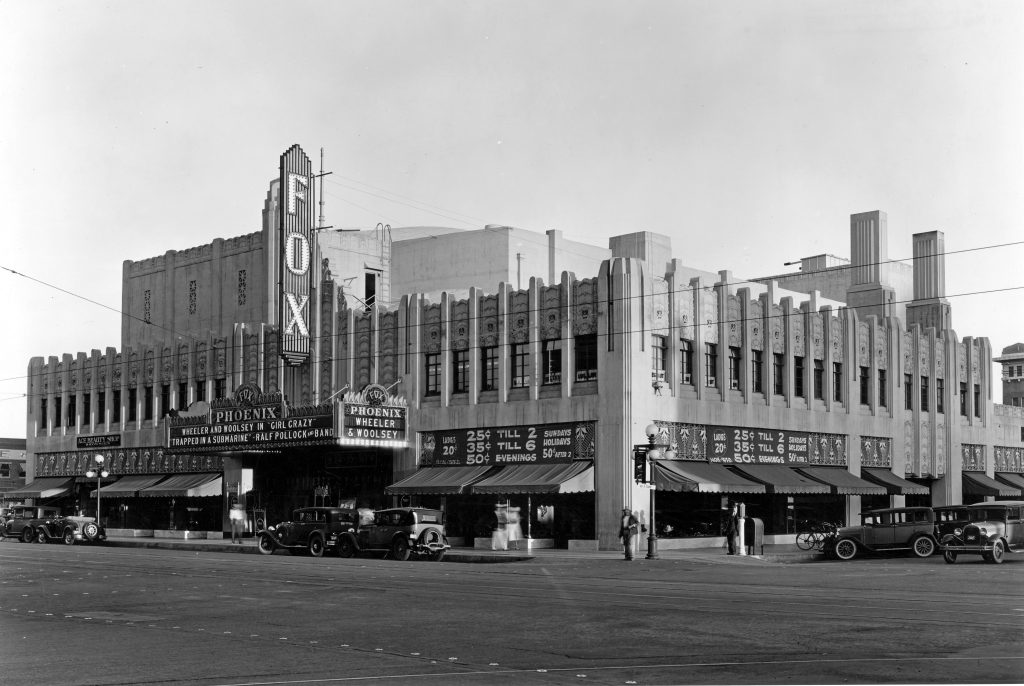
Phoenix was smaller and poorer at the zenith of Art Deco. But it did have a real cityscape before the post-World War II automobile era, subsidized sprawl, and municipal malpractice of massive teardowns created today's suburbanized mess. It had some saves, including the Orpheum Theater, Orpheum Lofts, San Carlos Hotel, Luhrs Tower and Luhrs Building, old Post Office, Kenilworth School and the County Courthouse/City Hall.

Thanks to Rob Spindler and the ASU archives, along with the collecting by the indefatigable Brad Hall, we're getting more photographs of the old city. I realize some of this is familiar  territory for regular readers, but the images tell more than words about what Phoenix lost (click for a larger image). They include:

The Fox Theater:

Fox_Theater_Girl_Crazy_1932_SHR

Regrets? I have a few…

Regrets? I have a few…

Holly
In 1999-2000, I was offered the business editor jobs at the San Diego and San Francisco papers. I also had feelers about coming to work at the New York Times and the Los Angeles Times. After nearly five years at Knight-Ridder's Pulitzer-winning Charlotte Observer, I was more than ready to leave a city where they ask if you've found a "church home," wanted to get back to the West. That was when John D'Anna at the Arizona Republic called and offered me a columnist job at my hometown newspaper.

Warning signs abounded: Downtown Phoenix was dead, corporate Arizona had moved out to north Scottsdale, and the Republic had recently been purchased by Gannett, known for its small newspaper mentality, suspicion of serious journalism, and obsession with fads (I had worked for the company as assistant managing editor for business news at the Cincinnati Enquirer and saw its bad and OK sides). On the other hand, downtowns were making impressive comebacks elsewhere — I had seen them first-hand in Denver and even Charlotte. Brahm Resnik, the business editor at the Republic, assured me the changes had been minimal. After years as a turnaround specialist editor, I longed to be out of management. And every journalist's dream is to write a column in his hometown.

So I took the job, following in the footsteps of the fine business columnist Naaman Nickell.

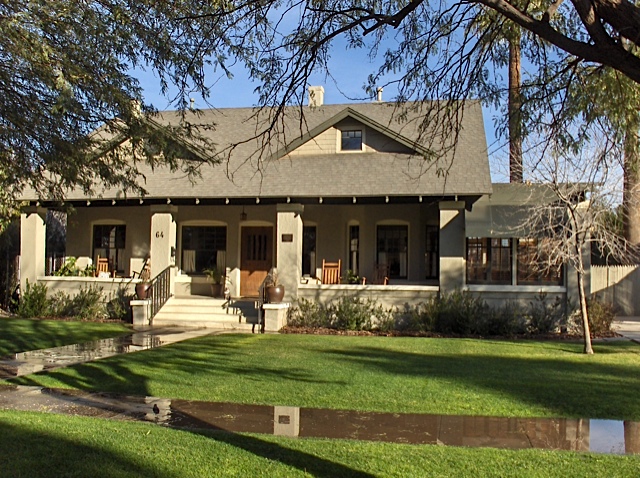
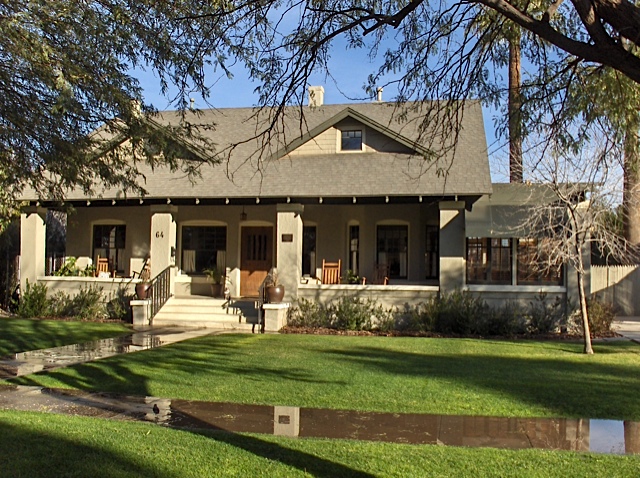
Susan and I bought one of the most beautiful historic houses in Phoenix, in Willo a block from where I grew up. And for the next nearly seven years I wrote one of the most popular columns in the paper. "Never thought I would read this in the Arizona Republic," was a common reader accolade. I enjoyed a position of prominence, leadership, and celebrity totally out of proportion with the job — at least in other cities. The parties we hosted at the 1914 bungalow on Holly Street attracted a who's who of Arizona. And then, in 2007, it was gone. We had to sell that beloved house as no other local jobs materialized and make our primary base in Seattle (we still have a Midtown condo and some lifelong friends).

Could I have found a way to stay?

Assessing Greg Stanton

Assessing Greg Stanton

1024px-Greg_Stanton_(35674107711)
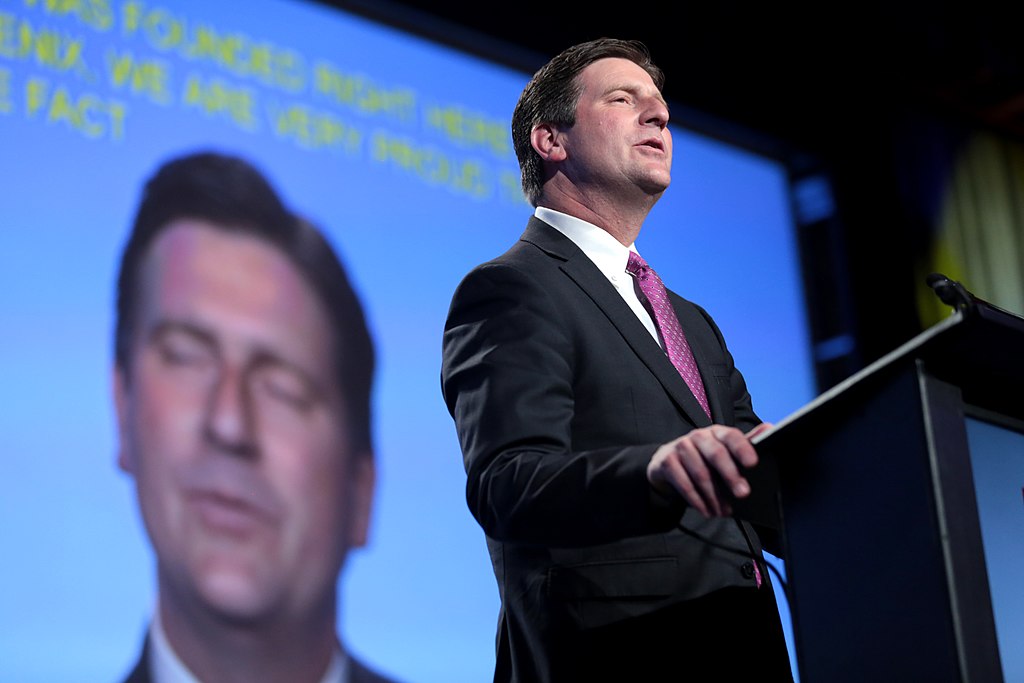
Now that he's announced he will resign as Phoenix mayor to run for Congress, it's not too early to at least make a preliminary evaluation of Greg Stanton's tenure.

Whether they like it not, all Phoenix mayors since the mid-1980s have been judged on what we could call the Goddard Scale. Terry Goddard was a transformational Phoenix leader who swept away the last of the CharterMargaret Hance status quo, led the change to a district system of council representation, saved the historic districts, and began to salvage downtown. He was bold! He was visionary! He got cities and had a clear-eyed view of Phoenix's situation!

And this is actually true. But even Terry Goddard wasn't Terry Goddard at first, or how he would mature as a leader and urban thinker after he left office (it was a terrible loss for Arizona that he didn't become governor). So on the Goddard scale, even Terry wasn't a 10. Let's say 9.1. Give Paul Johnson a 6.5 — Goddard was a hard act to follow, and Johnson faced the worst recession in decades here, up to that point. Skip Rimsza, who served from 1994 to 2004, gets a solid 8 in my book, although some would disagree. The same for Phil Gordon, especially his more productive first term.

And Stanton, who assumed office in 2012? I'd also give him an 8. Phoenix has been fortunate in its mayors.

The light-rail divide

The light-rail divide

PhxLRT
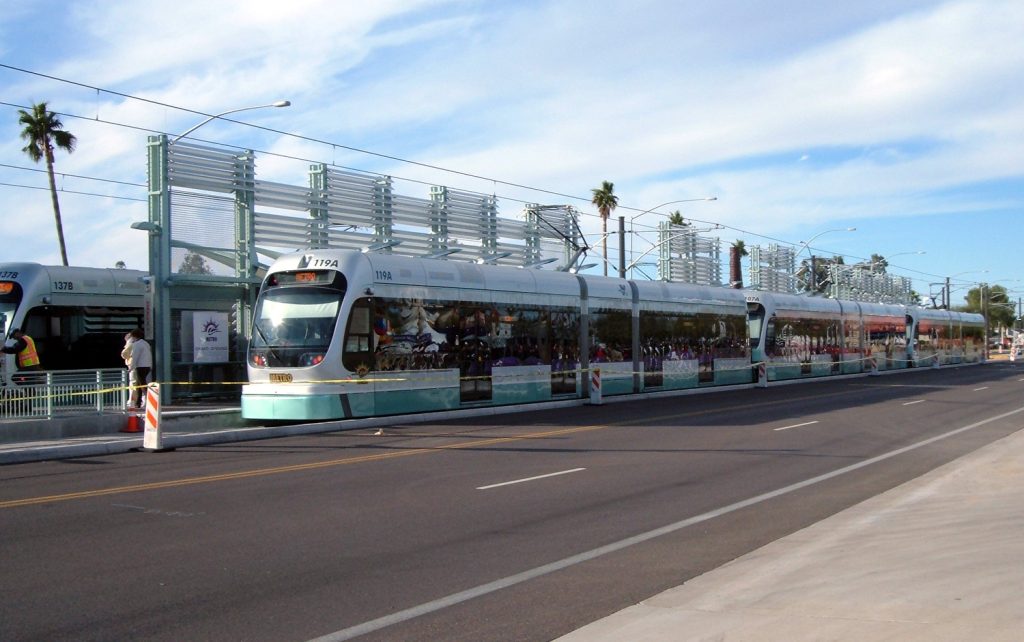
Glendale's city council killed an extension of light rail into the suburb, even though a majority of voters want it. Even though We Built It, You Bastards (WBIYB) — the epithet referring to the hysterical, thuggish opposition to the starter line, metropolitan Phoenix remains divided over mobility. The city, Tempe, and Mesa have embraced light rail. The other suburbs remain against it, crazy-so in the case of Scottsdale.

Phoenix did not benefit from the "Dallas effect." There the suburbs wanted nothing to do with light rail — until they saw the first line in action. Then they were clamoring to be included. Today, Dallas has the largest light-rail system in the United States.  Similar success stories are found in Denver, San Diego, Portland, and Los Angeles. The closest we came was Mesa. There, then-Mayor Keno Hawker convinced a skeptical council to pay for the starter line to go to Sycamore Street. Otherwise, Mesa would have been cut off — Tempe was only going to build to McClintock — and facing a costly future connection. Instead, Mesa saw the benefit and has extended the line to Mesa Drive with plans to go beyond.

Otherwise, the divide remains solid. It is driven in no small measure by racism and classism. The suburbs don't want "those people" coming on trains. And it's true that the poor and minorities heavily use transit in Phoenix. The criminal element of "those people" drive cars, but the white-right apartheid that defines metro Phoenix decisively defines the light-rail resistance. Another problem is the Republican fetish against rail of all kinds. It keeps us stuck with a 1971 transportation system when other advanced urbanized nations have high-speed rail and subways abuilding. Considering that the Republican Party began as the advocate of transcontinental railroads, this is an astounding but not surprising turnabout. It goes along with denying settled science on climate change. Anything, anything, to keep happy motoring going. Anything to keep the tax-cut scam going.

Light rail succeeded in Phoenix differently than in most cities. For example, in Seattle, where a majority of people use transit, light rail connects people to the major employment, retail and entertainment center of downtown, as well as the airport, sports venues, and the University of Washington. It's packed all the time and more lines are under construction despite efforts by Republicans in the Legislature and the suburbs to kill it. Most jobs in Phoenix are out on the freeways, especially in the East Valley. Instead, Phoenix's light rail found the sweet spot connecting the downtown and Tempe ASU campuses, as well as hauling people to Suns and (for now) Diamondbacks games. It helped reestablish downtown as a center of activity.

Phoenix and Amazon HQ2

Phoenix and Amazon HQ2

Day_1_Tower_Seattle_WA_Jan_17
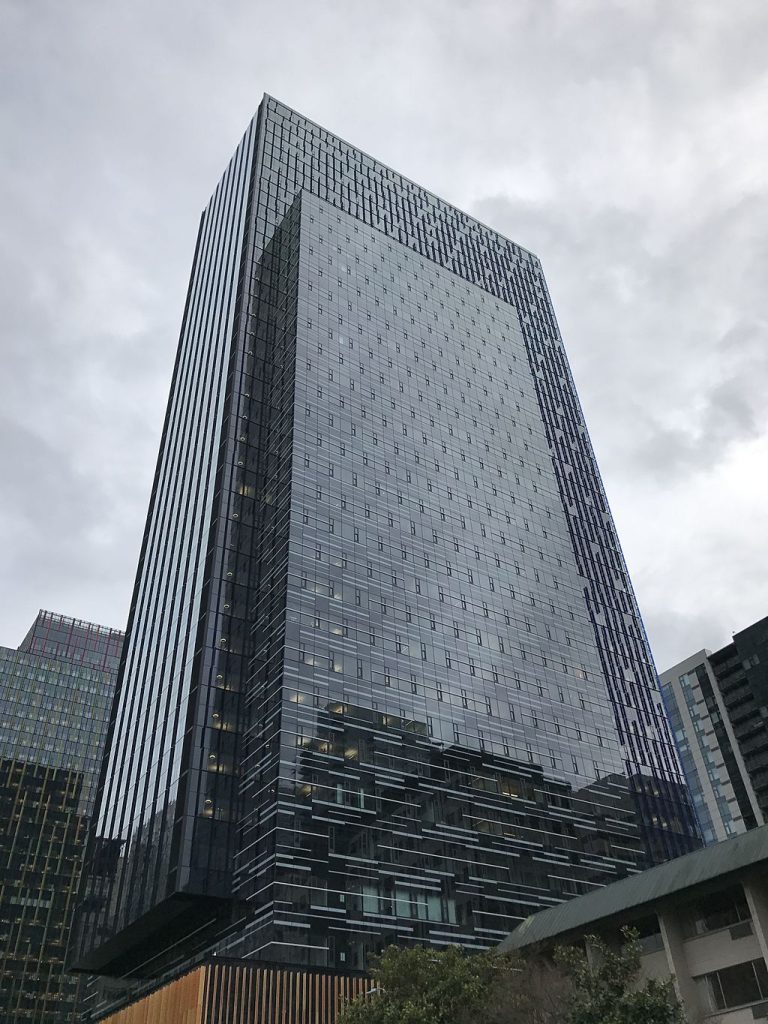
More than 240 locaties are contending to win the economic prize of the decade, Amazon's second, "equal in every way" to its Seattle home, headquarters. Some $5 billion in investment and 50,000 high-paid jobs are possible. Both Phoenix and Tucson are among them. Above is a photo of the Day One tower, part of Amazon's massive downtown Seattle footprint.

I've written about this highly unusual development in my Seattle Times columns here and here. In "Dear Amazon, we picked your new headquarters for you," the Upshot team narrows down cities based on the company's request for proposals (RFP) and comes up with Denver. That jibes with my top three candidates, the others being Toronto and Dallas-Fort Worth.

In the Upshot piece, Phoenix (and Tucson) is quickly eliminated: job growth isn't strong, plus lack of a highly skilled tech workforce, high quality of life (that attracts young, educated workers), strong mass transit, and willingness to "pay to play."

But let's not give up just yet. At the least, this could be an educational experience.

Big Town

Big Town

Cartoon_illustration_Phoenix_1950s
Big Town was a brand of melons and vegetables shipped by MBM Farms and Zeitman Produce from the Salt River Valley in its days as American Eden. One of scores of colorful labels on wooden crates, it had a stylized version of the Phoenix skyline in the background.

But I can't help wondering if it also caught a bit of the moment in 1950, when Phoenix entered the ranks of America's 100 largest cities. It was No. 99, with 106,818 people in 17 square miles. Phoenix landed 62 people ahead of No. 100 Allentown, Pa. But it was behind Scranton, Wichita, Tulsa, Dayton — not to mention its Southwest rival El Paso, No. 76.

In 1950, the nation's fifth most populous city was Detroit. According to new Census data, Phoenix has once again surpassed Philadelphia to claim the No. 5 spot it had by estimates in 2006 but lost in the 2010 count. I'll have more to write about this later.

For now, I want to linger on that moment when the Census Bureau made it official: Phoenix had crossed 100,000. The big town was definitely a city now, if not a big one (Even now, Phoenix has many characteristics of a small town, especially in power and power relationships).

As you can tell from the geographic size of the city, this Phoenix was convenient and walkable, with a true urban fabric. At 6,714 people per square mile, it was much more dense than today's 2,798. Surrounding it were citrus groves, farms, and small towns mostly dependent on agriculture (Tempe 7,684, Mesa, 16,790, Glendale 8,179, Gilbert 1,114, Scottsdale 2,032, and Buckeye 1,932). Arizona's total population was 756,000. Phoenix boasted an abundant shade canopy from the narrow streets to the enchanting canal banks. Downtown was the busiest central business district between El Paso and Los Angeles. As many as 10 passenger trains served Union Station in the golden age of streamliners.

Great expectations

The local media have paid much attention to a nascent technology cluster in downtown Phoenix. Most recently came an Arizona Republic story headlined, "What's Driving a Downtown Phoenix Tech Boom." It reads in part:

A San Francisco tech company that announced an expansion from Silicon Valley to downtown Phoenix last week cited a lively business climate and a light-rail stop as primary factors in choosing the city.

Representatives of a semiconductor packaging company moving its corporate headquarters in May from California to south of Phoenix Sky Harbor International Airport said the city is cost-effective and has the workforce they need. These recent examples are part of what Phoenix leaders say is a flood of tech industry leaders and startups looking to open in the city. Mayor Greg Stanton highlighted the growth in his State of the City speech on April 25.

Stanton said the number of tech companies downtown has nearly quadrupled in the past five years. He credited adaptive reuse projects in the Warehouse District and new tech hubs as a source of the success.

Good for Phoenix. I hate to be the one who suns on the parade, but a reality check is necessary. For one thing, the top of the story lacks that basic of journalism, "How big is big"? As in, a quadrupling of companies from a baseline of one leaves us with not too many firms. Also, what is "tech"? When metropolitan Phoenix gets credit for technology jobs, they usually turn out to be call centers or back-office operations. Most pay poorly. By contrast, Seattle's tech jobs are actually undercounted because the tens of thousands of well-paid Amazon headquarters positions are classified under retail by statisticians.

Phoenix’s historic streetcars

Phoenix’s historic streetcars

Streetcars_1945
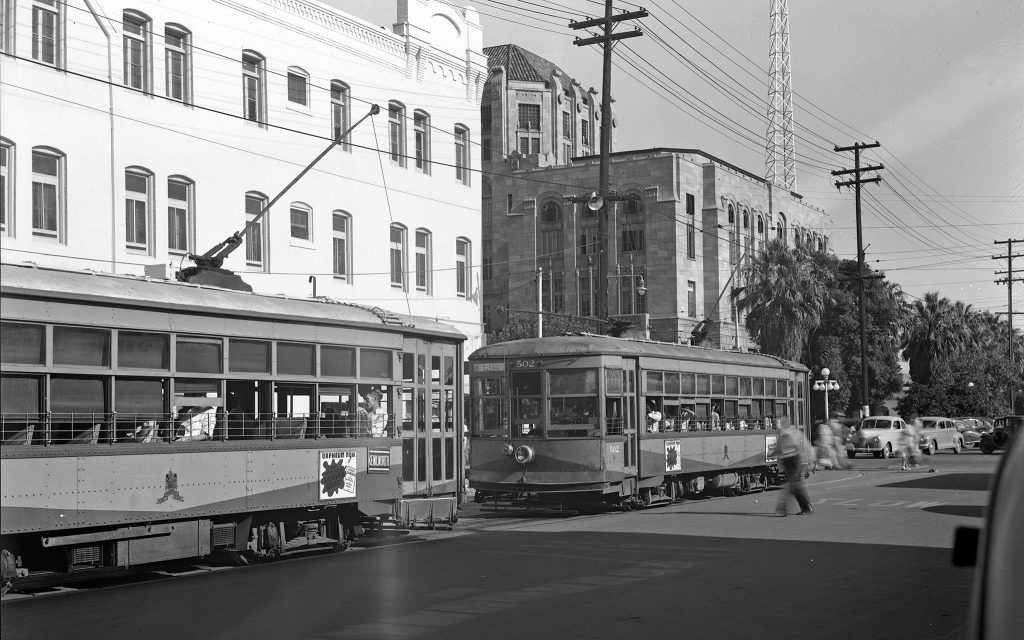
Moses Hazeltine Sherman was a teacher from Vermont who made his way to Arizona Territory in 1874. While teaching, he also made money in land and mining. Later, he would move to Los Angeles and become a millionaire. But before that, he and M.E. Collins founded the Phoenix Street Railway in 1887.

Originally the streetcars were pulled by mules. But electric cars took over in 1893. The new Territorial capital had a little more than 3,000 people. By 1925, the system boasted nearly 34 miles of track on six lines. It had two major spines. One ran west to the Capitol and on to 22nd Avenue, and east to the State Hospital along Washington Street. The other operated north and south from downtown to the Phoenix Indian School.

A long addition ran east from the Indian School to 12th Street, then cut north and west, eventually terminating in Glendale. Other routes went to the Fairgrounds; north through the new Kenilworth district to Encanto Boulevard, and over to the east side ending at 10th Street and Sheridan. Most of the streetcar lines ran down the middle of the streets.

Through the middle of the 20th century, most American cities and large towns had extensive streetcar networks. Numerous electrified interurban railways were also build, competing with the steam railroads of the time. They carried freight in addition to passengers on larger cars. The largest system was in Los Angeles, the Pacific Electric, known for its iconic red cars. Owned by the Southern Pacific Railroad, it operated more than a thousand miles of track in the LA basin.

Innovation district

Innovation district

SLU
The City of Phoenix has smartly engaged Mary Jo Waits to help craft an innovation district plan for downtown. For newcomers, Waits was the driving force behind the Morrison Institute's most consequential reports in the late 1990s and 2000s, especially 2001's Five Shoes Waiting to Drop. It was prophetic. So was her warning that Arizona would become the "Appalachia of the 21st century" if it didn't change course. I collaborated with her in the "meds and eds" strategy to build off TGen, and later did some work for her when she was at the Pew Center on the States. The city could not have chosen a better, more knowledgeable and visionary person.

She asked me to write a case study on the innovation district in South Lake Union, adjacent to downtown Seattle. So this is what follows, with some parting observations for Phoenix.

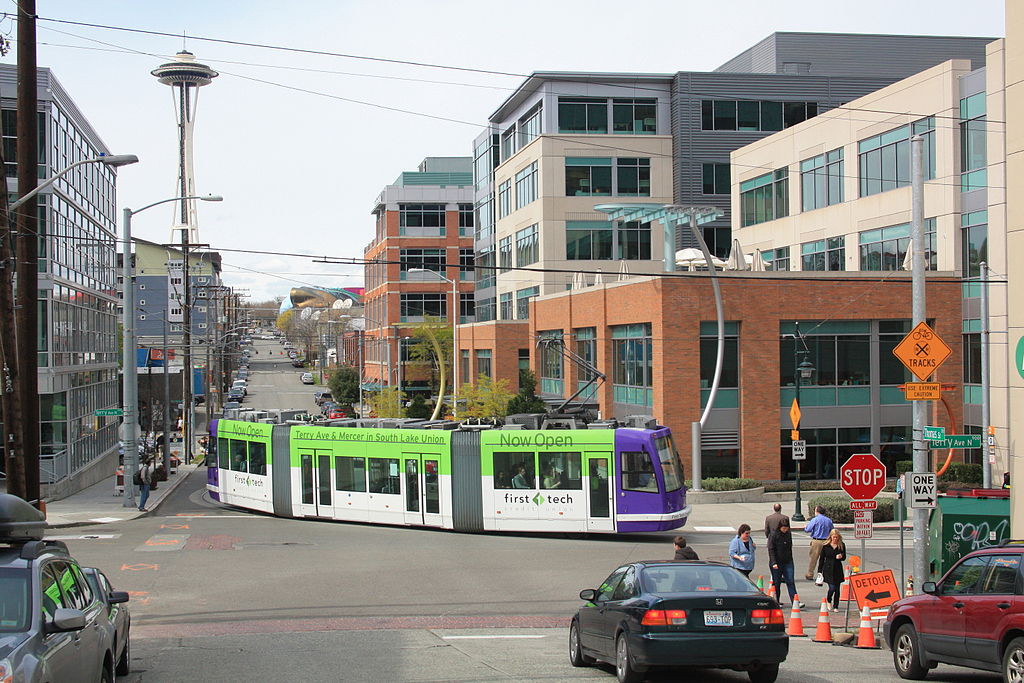
When I first started coming to Seattle in the early 1990s, the South Lake Union neighborhood was a run-down collection of low-rise commercial buildings and the remnants of industrial structures from when it was laced with railroad tracks. This was once a gritty maritime district — logging, ship repair, canneries — around the south edge of the lake, which was connected to Puget Sound by the ship canal.

Aside from having the headquarters of the Seattle Times, SLU as it became known, had little to recommend it. The area had been wounded in the 1960s when Interstate 5 was rammed through, tearing it apart from Capitol Hill. And blocks of car dealerships, parking lots, and the occasional seedy bar separated it from the downtown core.

In the early 1990s, Seattle Times columnist John Hinterberger suggested turning part of SLU into a large central park, something the city's core lacked since voters had rejected a visionary 1911 civic plan. The 60-acre "civic lawn" would be framed by high-tech companies, condos, and restaurants. The Seattle Commons attracted widespread business support, including from Microsoft co-founder Paul Allen, who was accumulating property there. But the famous "Seattle Process" intervened. Many feared it was a giveaway to Allen. Voters rejected the Commons in 1995 and 1996.

Phoenix’s Roaring Twenties

Phoenix’s Roaring Twenties

Central_Ave_looking_south_from_Monroe_1920s

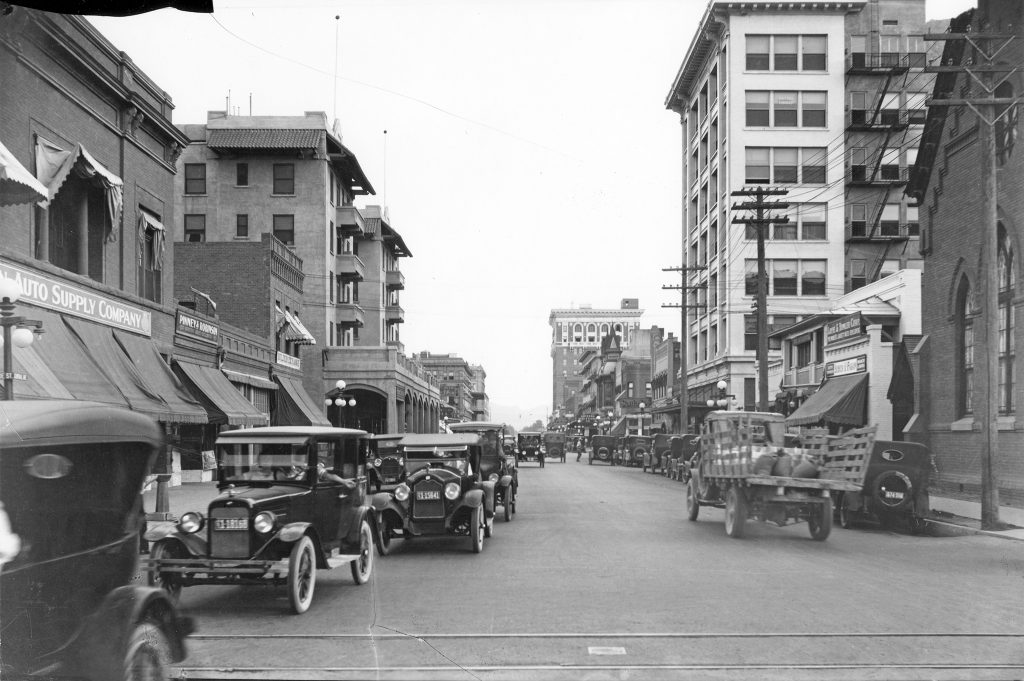
If this photo shows a busy little city from the Roaring Twenties, that's exactly what you found in Phoenix during this transformative decade. Town to city, horses to cars, less Wild West and more sophistication — Phoenix had been moving this way for years. But in the 1920s, they became solidly entrenched — even Town Ditch was covered. The first "skyscraper," the seven-story Heard Building, right, opened in 1920. By the end of the decade, it had several taller and more impressive siblings that remain some of the city's most treasured and beautiful buildings. Central Methodist Church (ME South) on the near right would move to a handsome new structure at Central and Pierce.

The nation entered the decade with Woodrow Wilson as president. But he was incapacitated by a stroke and his wife, Edith, was protecting him from most visitors and essentially carrying out most of his executive duties. America was disillusioned by the outcome of the Great War, the Palmer Raids and the "Red Scare," what was seen as Wilson's overreaching, and two decades of the Progressive Era. Voters (including women, for the first time) eagerly embraced Ohio's Warren G. Harding as the next president. He promised a "return to normalcy," forever wrecking the correct word "normality." Harding freed the Socialist Eugene Debs, who Wilson had imprisoned for opposing American involvement in the war.

The Great War had brought changes to the Salt River Valley, especially with the booming demand for cotton. By 1920, it had turned into a bust and Phoenix was suffering through the national recession. Things would soon turn around as the economy expanded and America embarked on, as F. Scott Fitzgerald put it, "the greatest, gaudiest spree in history." It was the Jazz Age, with the experiment of Prohibition sidestepped with speakeasies. Prohibition was hardly observed at all in the non-Mormon towns of the West. In Phoenix, bars, borthels, and gambling dens operated in the open, sometimes making payoffs to the city. This wide-open environment soon attracted the Mafia, including Al Capone.

The Phoenix of the 1920s was expanding out of the half-mile footprint of the original township. In the previous decade, the city had surpassed Tucson to become the most populous place in Arizona. With more than 29,000 people in 1920, Phoenix would grow nearly 66 percent over the next 10 years. Residential neighborhoods expanded a half mile north of McDowell, west of the Santa Fe tracks at 19th Avenue, and east as far as 16th Street. These were gradually incorporated into the city limits, which expanded from five square miles in 1920 to 6.5 square miles a decade later.

The mansions of "Millionaire's Row" still graced Monroe Street, but the central business district was moving north. Elegant bungalows lined the streets north of Van Buren into the fancy new Kenilworth District north of Roosevelt Street and eventually the Period Revival neighborhoods just beyond McDowell, including Palmcroft. Many of these were reachable by the streetcars.