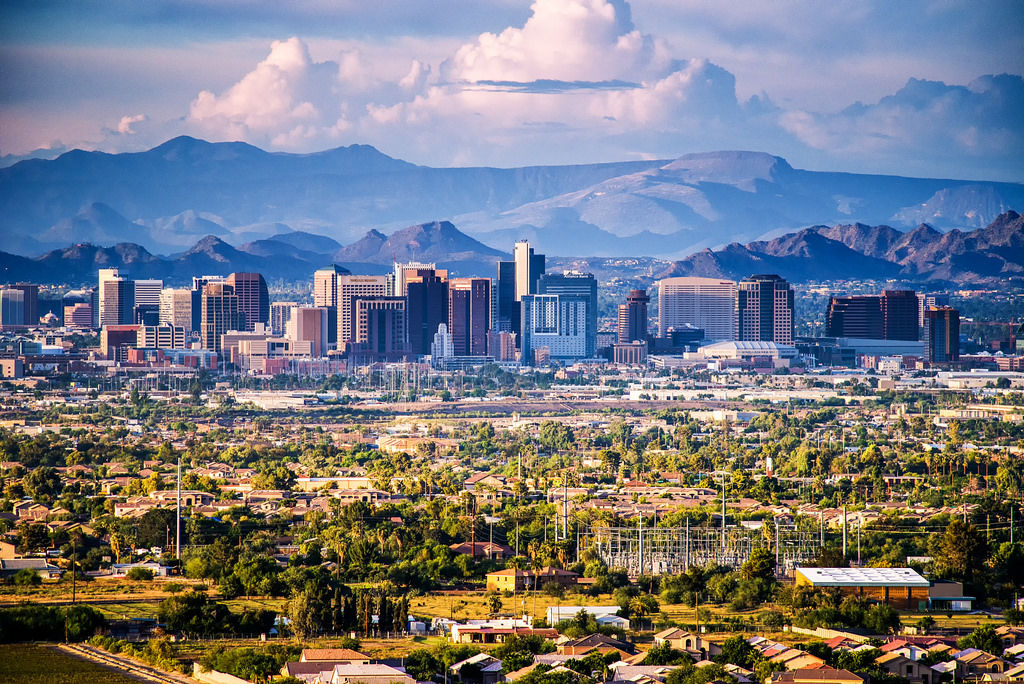
Silicon Valley in Phoenix?

Silicon Valley in Phoenix?

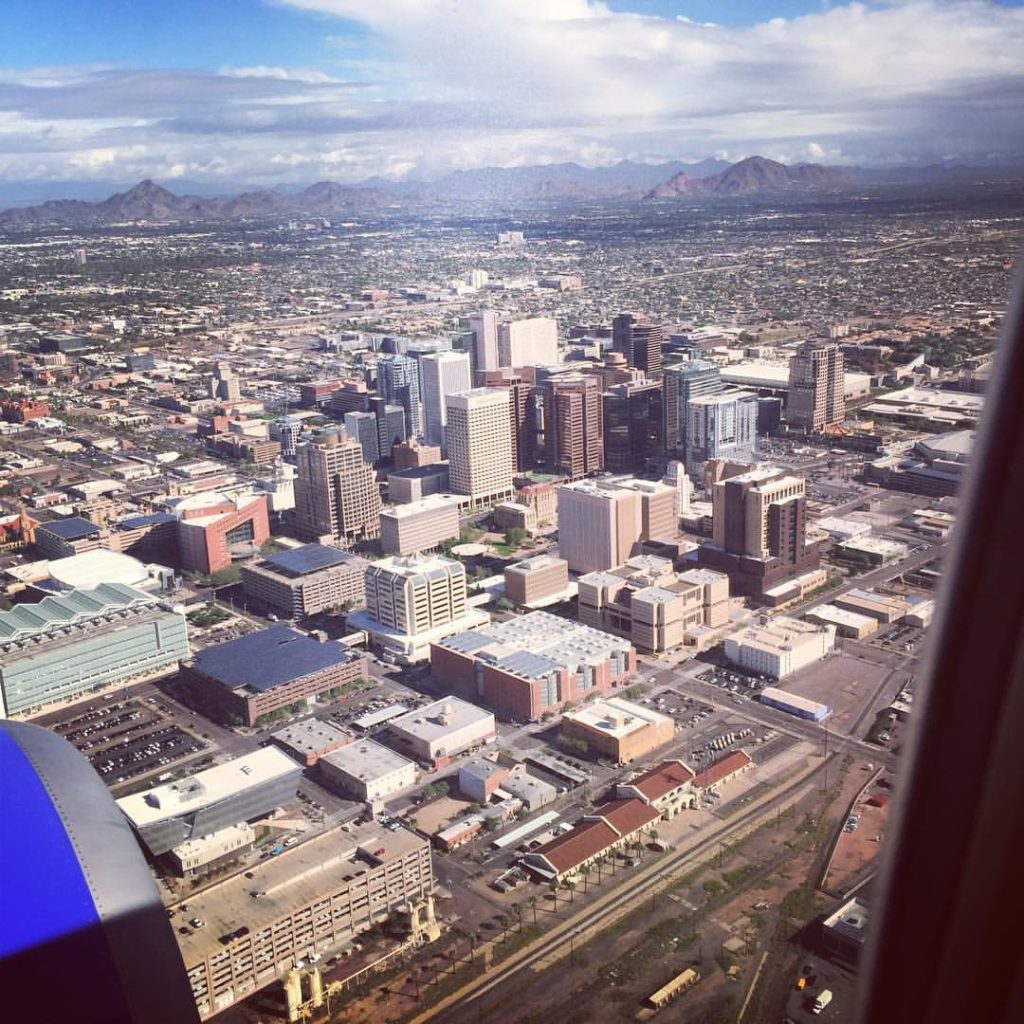
Phx_skyline_2010
Earlier this month, the New York Times published a story, most of which could have been written by the chamber of commerce, under the headline, "Bay Area Start-Ups Find Low-Cost Outposts in Arizona."

It rubbed me the wrong way from the start, because the story is not about Show Low or Why, Kingman, or even Tucson, but metropolitan Phoenix. I will never understand why one of the most magical city names in America is banished for the amorphous and sometimes inaccurate "Arizona." Anyway, riding with that burr under my saddle, I tried to approach the article with an open mind.

Unfortunately, it had all of the weaknesses of "parachute journalism." The writer, based in the Bay Area, parachutes into a little-known burg with an angle, assembles a few anecdotes, talks to a local economic development expert, adds some data from Moody's, widens the lens a bit to make the story about a broader trend, and presto! This is not easy stuff, particularly if you're not armed with history and skepticism. The only good parachute journalist I ever personally knew was Leah Beth Ward, my colleague from the Cincinnati Enquirer and Charlotte Observer.

It's not that I don't want success for Phoenix. Far from it. I was the Arizona Republic columnist who wiped out forests and digital space writing about Michael Crow and ASU, Jeff Trent and T-Gen, and Bill Harris and Science Foundation Arizona, the efforts to elevate the economy under Gov. Janet Napolitano and Phoenix Mayors Skip Rimsza, Phil Gordon, and Greg Stanton. I rarely felt that the brightsiders had my back. It is about time to see some payoff.

The story had none of this context and lacked much more. The reporter did not even avail himself of the readily available journalism about Arizona's crippling problems. Which is too bad for those of us who want to know the real score. So Homey did some digging.

Phoenix in the eighties

Phoenix in the eighties

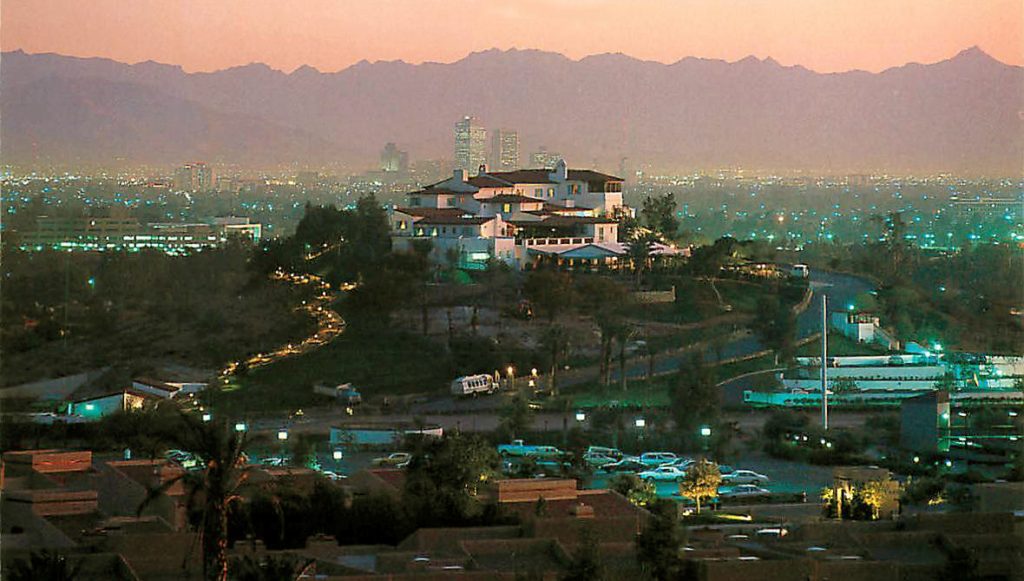
Wrigley_Mansion_looking_south_Estrellas_South_Mountain_1980sThe Wrigley looking southwest over the city in the 1980s (Photographer unknown).

On the night in 1968 after President Lyndon Johnson signed the bill authorizing construction of the Central Arizona Project., my mother took me on a long drive. We went through the citrus groves, the empty farmlands between the towns, the enchanting oasis that was Phoenix. Like many who had dedicated a good part of their lives to win the CAP, she had deep misgivings. She wanted me to see the place, burn it in my brain, and remember. "It will be gone," she said. She didn't live to see her prediction come true. But the ferocious transformation of Phoenix from my beloved old city to the nearly unrecognizable concrete desert of today largely  happened during the last two decades of the twentieth century. The big changes began in the 1980s.

In 1980, Phoenix's population was nearly 790,000, up 36 percent from 1970. The city would grow slower in the 1980s — up 25 percent. But Maricopa County grew almost 41 percent. Yesterday's small communities began to become today's mega-suburbs as sprawl took off as never before. For example, Glendale, which had grown by 168 percent in the 1970s, added another 52 percent in the eighties. It would hold nearly 148,000 people by 1990. Arrowhead Ranch, the citrus groves owned by the Goldwater and Martori families, was being developed into subdivisions, one of the largest new "master planned communities" in the state. Phoenix remained the power center of the state and county through the decade, but its hold began to slip.

In 1980, Phoenix still enjoyed a robust base of major headquarters. By most measures it was never stronger and almost all were located in the Central Corridor. Among them were the three big banks, Valley National, First National, and the Arizona Bank; Greyhound; Arizona Public Service; American Fence; Central Newspapers; Western Savings, and Del Webb Co. Karl Eller's Combined Communications had been purchased by Gannett in 1978 but Eller remained active, taking control of Circle K in 1983 and making it the nation's second-largest convenience store chain.

APS formed a holding company, Pinnacle West Capital, that was not regulated like the utility by the Corporation Commission. Among its ventures was the S&L Merabank. Taking advantage of airline deregulation, America West Airlines was formed by local investors in 1983 — it would go on to merge with USAirways and take over American Airlines. And Phelps-Dodge, which for a century controlled much of Arizona's destiny as the world's leading copper company, moved its headquarters from New York City to a new tower in Midtown Phoenix.

Dog days of summer

Dog days of summer

After three weeks of commenting on national politics, it's time to return to Phoenix. This was once the time of year to stay inside with the air conditioning and wait for the oven to ease up in September. Now it's snake removal calls in north Scottsdale, idiots hiking in the middle of the day and often putting first responders at risk to rescue them, and an oven that doesn't shut off until close to Thanksgiving. But…"everything's fine!," with championship golf!

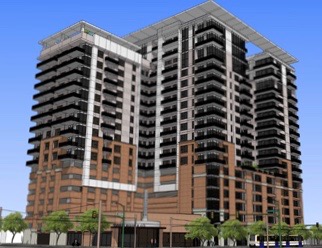
CirclesOfCentral• Phoenix rejected a tax break for a developer that partially demolished the historic Circles Records building under the pretext of erecting a 19-story residential tower. The Resistance, which was sandbagged by the tear-down, reacted by a range of "Hell, no!" to quiet negotiations with crisis-management duo Jordan and Jason Rose, brought in to salvage the deal.

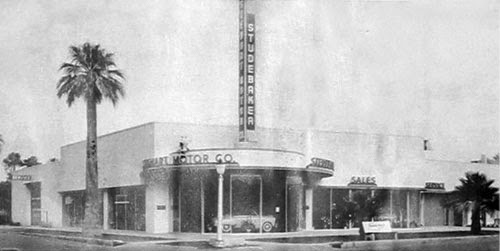
Unfortunately, I fear the result will be complete demolition and another surface parking lot to the flipped and reflipped until the day, decades hence, when the property ends up on the books of a REIT in Tel Aviv. It's unclear that the developer ever really had the capitalization to do the mid-rise, and lack of tax incentives makes it even more unlikely. State law gives enormous protection to property owners. So defeating the tax break doesn't mean saving what's left of the former Stewart Motors at McKinley and Central (technically just north of downtown).

It can't be said enough: Downtown Phoenix needs more than ASU, government, and a few modest headquarters. It needs a robust and diverse economy — very much at odds with the spec sprawl model at work elsewhere in "the Valley." Until then, Phoenix will be the only major city in the nation missing out on the "back to downtown" phenomenon you can read about here. It is an astonishing, heartbreaking failure, and saying that downtown Phoenix is better than 20 years ago doesn't cut it.

Light rail to Union Station

Light rail to Union Station

PhoenixTrainStation

"Roads? Where we're going we don't need roads."

The South Central line is one of the most promising additions to the Phoenix light-rail system (WBIYB). City Council has approved a plan to fast-track the five-mile extension to Baseline Road by 2023. But a crucial piece of the project isn't on the table, and as far as I know nobody is discussing it.

This line needs a slight rerouting: It needs to jog over the Third Avenue on Washington, then run south to Lincoln Street before moving back to Central for the journey south. This would provide two big benefits, one immediate and the other long term.

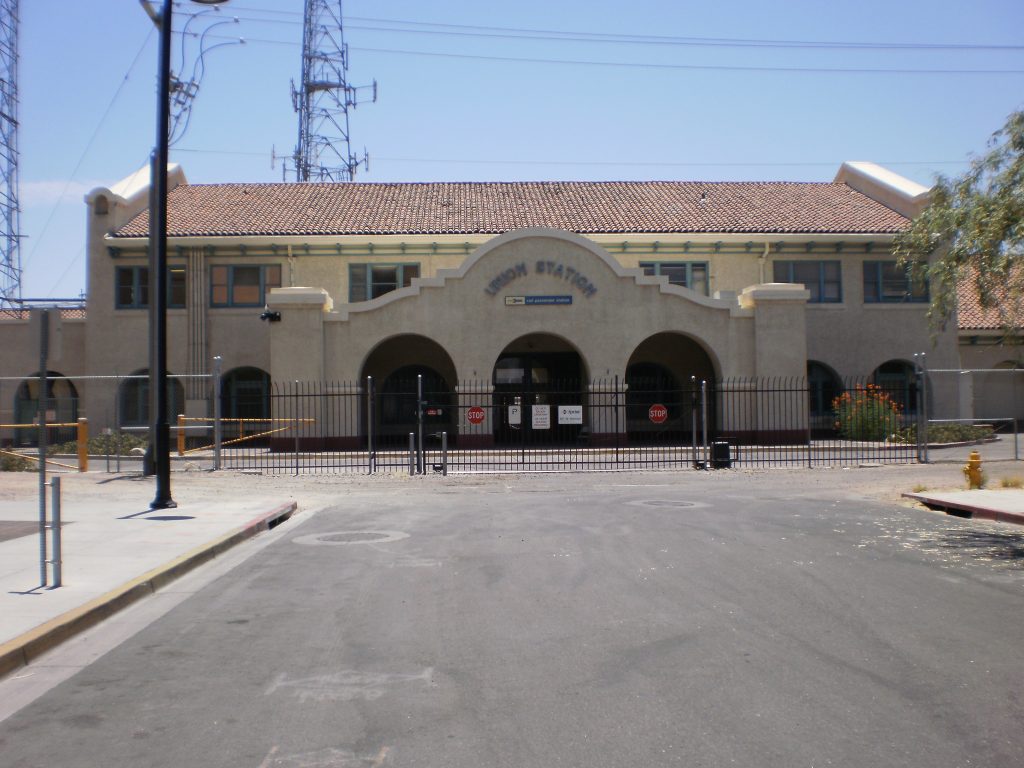
By shifting west, it would pick up large numbers of riders at the government centers of the city and county. But the big enchilada is that the line would pass just to the east of Union Station, which was Phoenix's intercity passenger rail depot until the 1990s.

Light rail might need a tunnel under the current Union Pacific line, but it would be worth it. The payoff would be connecting light rail with a reborn Union Station as the hub for a region-wide commuter train system as well as the return of Amtrak to Tucson and Los Angeles.

If Phoenix fails to do this, it will be a blunder to be regretted for decades to come.

Jane Jacobs is dead. Long live Jane Jacobs.

Jane Jacobs is dead. Long live Jane Jacobs.

Jane_Jacobs
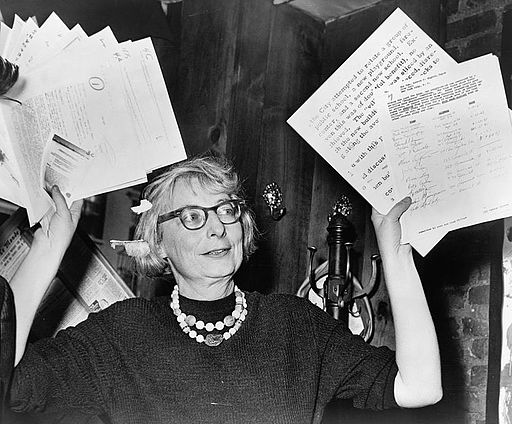
May 4th marked the centennial of the birth of seminal urbanist Jane Jacobs. It has been marked by numerous articles. Some of the better ones are here, here,  here, and, for a contemporary piece of revisionist iconoclasm, here. The latter aside, Jacobs remains an important figure, perhaps the most influential voice, in explaining the value of cities, how they really worked, and the damage of the planning elite. She begins her most famous work, The Death and Life of Great American Cities, bluntly: "This book is an attack on current city planning and rebuilding."

Written in 1961, the book was the first major refutation of the ideas that had brought urban renewal, dead housing projects, dull suburbia. Her great nemesis was Robert Moses, the powerful city planner and master builder of mid-century New York City. His hubris and the damage he did to New York are masterfully plumbed in Robert Caro's The Power Broker. Entire neighborhoods were bulldozed to make way for his freeways and his influence spread nationwide. She led the crusade that stopped Moses' Lower Manhattan Expressway, which would have gutted Geenwich Village, SoHo, and Little Italy. At one point in the battle, she was accused of inciting a riot (talk about the Resistance).

Jacobs was not an ideologue. To her, ideology was poison, offering "pre-fabricated answers" that adherents always fall back on. Instead, she was an observer of cities, a chronicler of what worked and what didn't.

Not once is Phoenix mentioned in Jacobs' first book, even though it was a big city by 1961. Still, I suspect she would have found much to like in the old Phoenix, where there was a "ballet of the streets" downtown and much of the city was focused on use by people instead of automobiles. This was before the freeways, before the teardowns. If she were alive today (she died in 2006), Phoenix would represent every horror she could imaging befalling a city. The Papago Freeway inner loop is classic Robert Moses vandalism. Her critique would include a lack of safety, for she documented how much more crime occurred in "thinned out" Los Angeles than in dense New York.

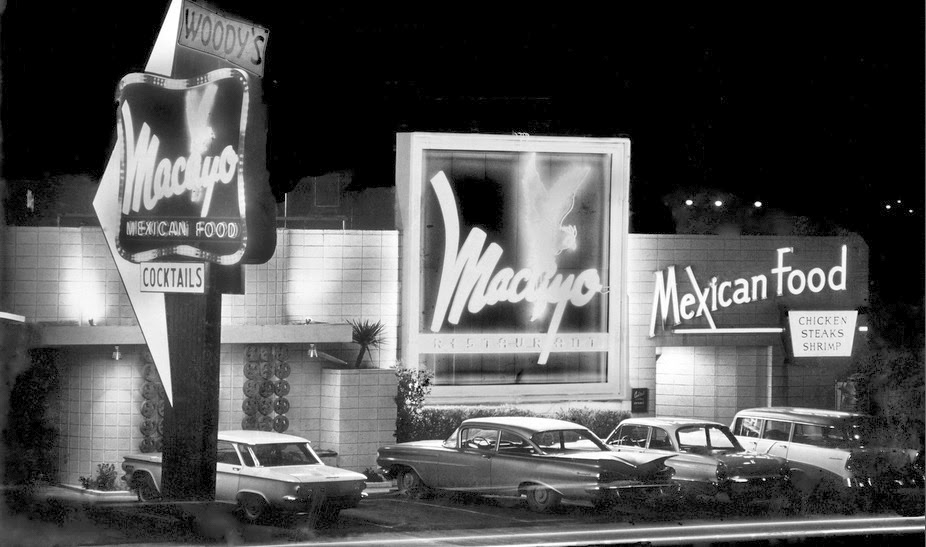
Next on the chopping block: Macayo’s Central

Next on the chopping block: Macayo’s Central

Woodys_Macayo_4001_N_Central_1960s
With Circles partially demolished and tagged and being held hostage by the developer comes news of another Central Avenue icon facing the bulldozer. 

The Macayo's restaurant that has stood for decades at Central and Indianola is facing demolition. In its place would be some 225 "residential units" in 65-foot building (this being Phoenix, of course, that is a big maybe). The developer is requesting a zoning change to "walkable urban."

One astounding thing is that "walkable urban" would require "only" 256 parking spaces (!). But the developer wants 369. "Free" parking is never free and Phoenix has way too much of it. Real urbanism would take down the number of spaces substantially. But, hey, WBIYB and the project (if it really happens) would be on light rail.

The really good news is that Macayo's intends to move to the south and stay in business.

The Circles jerks

The Circles jerks

Stewart_Motor_Co_Studebaker_800_N_Central_1950s

Stewart Motor Co., the Studebaker dealership, in the 1950s.

I knew they would do it, only when and whom the "they" would be. After Circles Records closed in 2010, I worried every time I passed the empty building. The only surprise was the speed with which much of the cherished former Stewart Motor/Circles Records, built in 1947, was demolished.

Aspirant Development, a unit of Scottsdale-based Empire Group, says it wants to build apartments on the site at Central and McKinley. It bought the parcel for $2.65 million. The company had even scheduled a meeting with the Roosevelt Action Association neighborhood groups on the Monday when…ooops!…two-thirds (or less) of the streamline moderne structure was torn down.

In a way, it's a salutary development that there was enough outrage to stop the tear-down and cause Aspirant to hire the ubiquitous Jason and Jordan Rose to handle damage control. Mayor Greg Stanton had this to say on Facebook:

I am angry that in the middle of negotiating a plan to save the iconic Stewart Motor Company building, the developer began demolition. After my office participated in discussions between the developer and neighborhood leaders, I was confident that a resolution would be found. However, sadly, it appears that the developer was acting in bad faith.

BACKGROUND:

The City’s Community and Economic Development Department was in the middle of discussions with the developer, Empire Group. Some of the agreed terms of the discussion stated that the developer would not demolish or remove any portion of the existing building on the Site prior to submitting for construction permits. Empire has plans to build a 19-story apartment building on the 1.24-acre site.

If only such consciousness had been around when hundreds of irreplaceable buildings were bulldozed in the 1980s and 1990s. Yet even now, the unofficial Preservation Police can't be everywhere at once, particularly when so much of the deck is stacked against them.

The developer even apologized. But here's the rub: Aspirant appears to be holding the remains — basically the facade — hostage in order to secure a tax break from the city. Something like a 25-year moratorium on property taxes. In exchange, it would build the 19-story apartment tower with pieces of the old building incorporated into a boring new glass lookalike design. After the developer's behavior, this will be a tough sell to Council.

Stanton’s dilemma

Stanton’s dilemma

Talking_Stick_Resort_Arena
Phoenix Mayor Greg Stanton gave a fine State of the City speech this week (you can watch it here). One could quibble with his "Not even a decade after the Great Recession shook us to our knees, Phoenix has emerged stronger and more resilient than ever before with an economy that is breaking free from the chains of the boom-then-bust cycle." Phoenix has far under-performed its peer cities in this recovery. But Stanton is an upbeat guy and Phoenicians have a hard time with reality.

He deserves credit for the courage to call out the Kookocracy's war on cities.

Now, the hard stuff. Outside the prepared remarks, the mayor supports building a new arena to be shared by the Suns and Coyotes, with at least some taxpayer money involved. The Arizona Republic reported, "Phoenix already has a permanent tourism tax on hotel and motel stays and car rentals. It is in the process of selling the city-owned Sheraton hotel and the Translational Genomics Research Institute building downtown, projects supported by the tourism tax. By getting those buildings off its books, the city could potentially free up revenue to help pay for a new stadium."

Not surprisingly, this produced its share of criticism. For example, E.J. Montini columnized about rich team owners asking for welfare:

So, politely as possible, I would suggest that all of us collectively send a little note to these guys:

"Dear Suns, Coyotes (and Diamondbacks),

"Build your own damn sports complex.

"Respectfully,

"Phoenix."

Snakebit

Snakebit

Chase_Field-3
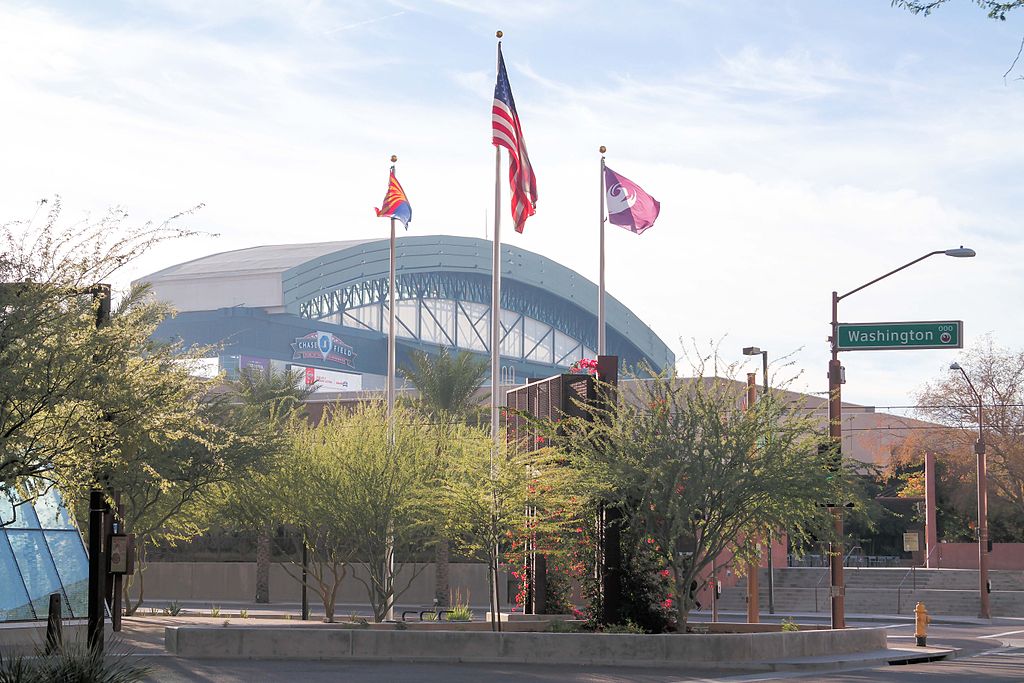
As with the Suns arena, the Diamondbacks stadium never would have been built downtown if it weren't for the unfairly reviled Jerry Colangelo. He was the last remaining civic steward who could knock heads and write checks in the tradition of the Phoenix 40.

Other sites were proposed, including on the Glendale fringe and at 40th Street and the Red Mountain Freeway. But Colangelo saw both venues as essential to the revival of the heart of the city. It was telling that with all the old headquarters gone or going, a sports executive was the last man standing. But it was enough and both facilities played pivotal roles in saving downtown.

BOB/Chase Field is not a handsome stadium, looking more like an airplane hanger than Camden Yards, Safeco Field, or Coors Field. It led to the demolition of numerous historic structures in the Warehouse District and Chinatown, including the Arizona Citrus Growers Coop building. On the other hand, a successful archeological dig was undertaken there. And the finished product is convenient to the entire region and located on light rail (WBIYB). Significantly, its air conditioning proved that Major League baseball could succeed in Phoenix.

Now, under Managing General Partner Ken Kendrick, the Diamondbacks are demanding that the county provide $187 million in upgrades — "current and future maintenance obligations" — or the team will seek a way out of its lease and leave.

I have long suspected that Kendrick, and his Suns counterpart Robert Sarver, have longed to depart downtown for the suburbs. Neither has a deep affinity to Phoenix or commitment to the health of downtown. Kendrick was already behind the lavish Spring Training facilities on the Salt River Pima-Maricopa Indian Community close to north Scottsdale. His wife, Randy, is a major right-wing money figure and both give to Koch causes and the "Goldwater" Institute — stances guaranteed to be anti-city.

Phoenix 101: Before superblocks

Phoenix 101: Before superblocks

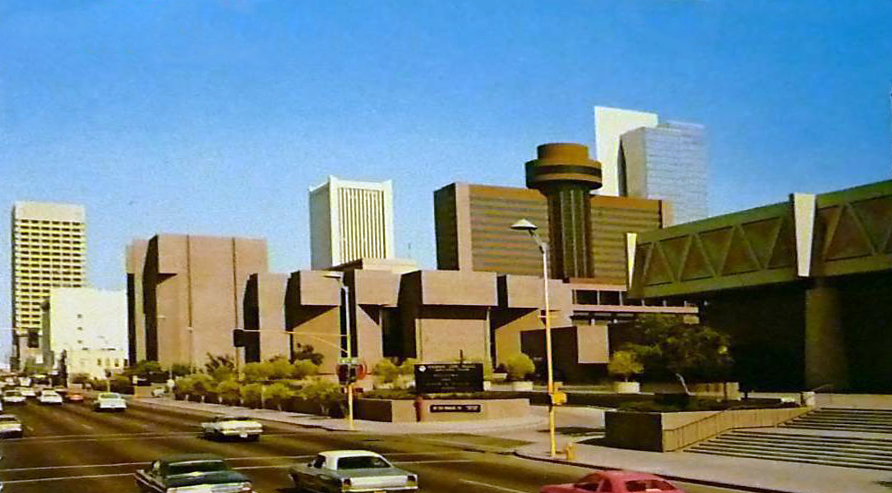
Washington_looking_west_1970s"Superblocks," with one project, be it an office, apartment, or parking garage, taking up an entire block, are one of the biggest enemies of a vibrant downtown. Think of old Civic Plaza (right) or the Chase Tower and its parking hulk. Even CityScape, which has many shops, offices, and restaurants (unfortunately facing inward), consists of superblocks that once held dozens of individual buildings, each with distinctive architecture and attitude to the street.

This is not a problem confined to central Phoenix — superblocks are profitable for developers. But this is a Phoenix-centric blog and no other major city lost more of its good urban bones to teardowns and, in many cases after decades, rebuilding into massive projects that are nearly dead at street level.

It's important to recall what Phoenix had. Not for nostalgia, but for lessons in how good cities really work (which is usually the opposite of what urban planners want) and because so few Phoenicians even know what once existed.

So thanks to the new digital archive of the McCulloch Brothers collection at ASU and other shots archived by Brad Hall, let's examine the energetic, walkable, full-of-life-and-commerce Phoenix:

Punked again?

I was going to write about [the real-estate developer], but that can wait until next week.

Here on the ground in Phoenix, there are new apartments but mostly rumors of new apartments.

For example, the property on the southwest corner of First Avenue and Roosevelt across from Trinity Cathedral is a dark hulk. Two five-story stairway shafts and one floor have been built. But it looks much the same as it did three months ago. No work seems to be happening.

The Edison, just south of One Lexington on Central, has a fence up, some grading done, and that's it. Lennar's apartments at Central and McDowell are moving very sloooowww.

Maybe I'm spoiled by Seattle. About 200 buildings, many of them skyscrapers, have been completed, permitted, or are under construction just downtown over the past couple of years. Things come out of the ground fast.

The Warehouse District

The Warehouse District

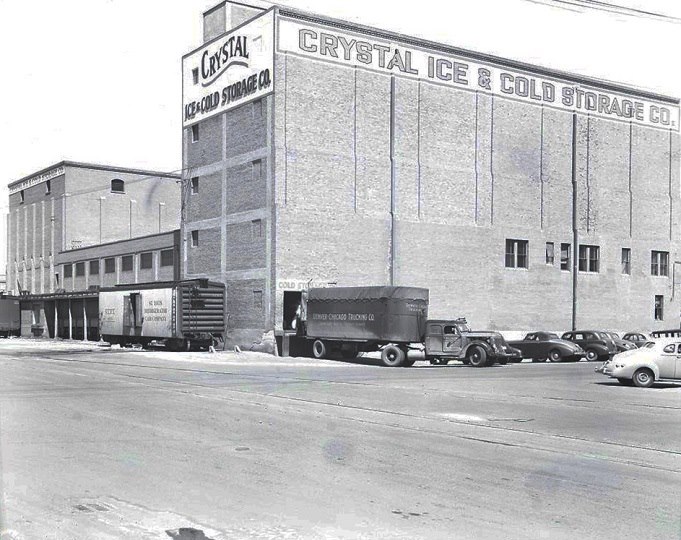
Crystal IceRailroad tracks running to Crystal Ice at Fourth Avenue and Jackson in the heart of the district. The plant not only provided ice deliveries to businesses and homes, but produced blocks to fill the bunkers of railroad refrigerator cars. The blocks were dragged and placed through roof doors in the railcars by workers on catwalks using hooks.  (McCulloch Bros./ASU Archives).

Phoenix's Warehouse District is finally seeing a payoff after years of destruction and false starts. How big a renaissance remains to be seen; coverage I've seen such as this doesn't quantify the new businesses. But something is happening. Most important, it involves creative firms and tech startups, not only restaurants.

The area saw an effervescence before, when artists discovered the historic buildings in the 1980s. But they were driven out by the arena, ballpark, Joe Arpaio's relentless jail expansions, Phoenix's ethos of tear-downs, and the city's lack of an effective preservation policy. The Job Corps moved into several buildings.

Some of the best buildings were lost. This helped fuel the successful fight in the mid-2000s to save the Sun Mercantile building, part of the city's old Chinatown. A few developers with stamina and perseverance, notably Michael Levine, refurbished some buildings. Another comeback attempt came with the opening of the unfortunately named Bentley Projects (the old Bell Laundry) in the 2000s, which included a restaurant, galleries, and a Poisoned Pen Bookstore. Too far from the core, that didn't take, either.

Phoenix never boasted a warehouse district with the size and great bones of, say, Denver, which has become a tremendous asset for an area anchored by the restored and expanded Denver Union Station. Phoenix was too small and limited in its economic heft. Still, what remains of the area is one of the city's treasures. It's one of the few places in Phoenix where you can find that coveted urban authenticity, with a variety of old buildings, narrow streets and density, that talented creatives seek.

The best of Rogue 2015

The best of Rogue 2015

11113955_473971796114940_6472959220703346943_oPhoto by Eugene Scott

Phoenix should leave the Greater Phoenix Economic Council: "GPEC can't serve the special needs of Phoenix and the appetite of the sprawl boyz. Maybe a few projects to far north Phoenix. But what has GPEC done for downtown, the Central Corridor or to fill abundant empty land along the light-rail line in the city? Not much if anything."

The evolution of the press, radio, and television in Phoenix: "It is an open question of how much power "the Pulliam press" actually had in post-war Phoenix. The city was attracting large numbers of middle-class Anglos from the Midwest that already shared his larger political philosophy. Pulliam was a civic leader, but hardly the only one, and most shared a common vision of a "business friendly" low-rise city with minimal restrictions on individuals. At least on white people."

Still got Dick Nixon to kick around: "For decades, Richard Nixon has been the devil to the left. But the left isn't politically relevant anymore (Jerry Ford Republicanism is what passes for "the left" in today's broken political spectrum). What's more consequential is that Nixon is now the devil to the right, which is more powerful than ever. So in the public square today, we are relitigating not Watergate but the domestic achievements of Tricky Dick."

Happy holidays

Happy holidays

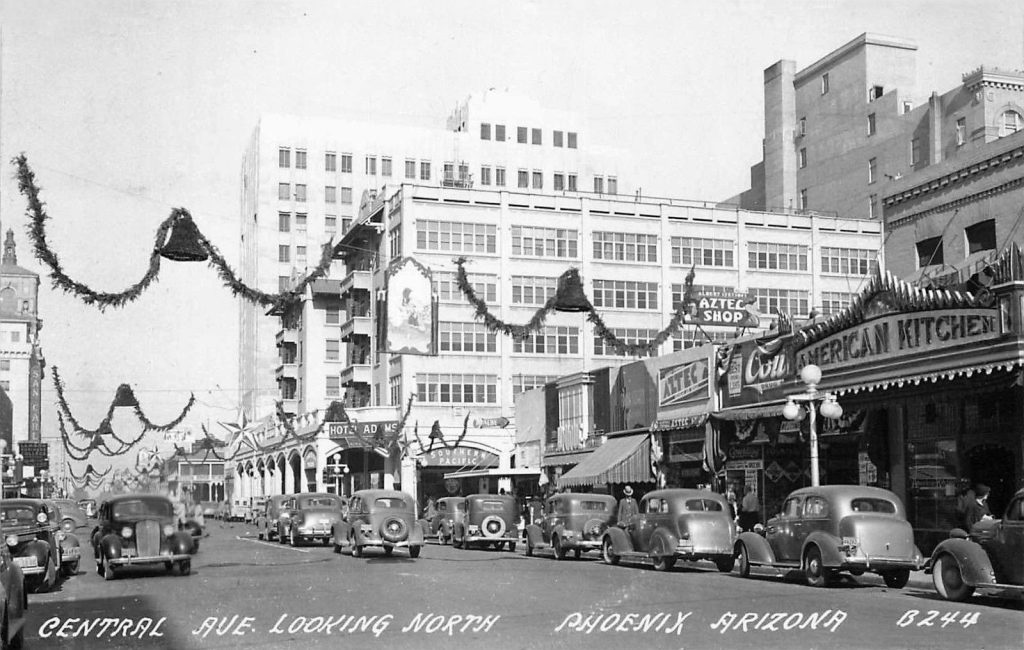
Central_Adams_looking_north_1940s

The saddest Christmas story I've encountered this year is the lack of holiday lights on Central Avenue.

From the time that I was a child until I left Phoenix in the late 1970s, decorations spanned Central downtown. You would also find the at Park Central, when it was still a mall.

Later, more compact displays were attached to the light poles along the main boulevard of the city. This continued in various reincarnations into the 2000s. But not this year.

So while Phoenix is full of places to see great Christmas lights, there's nothing on Central. This shows that despite the progress made in the core, something essential is lacking.

The cost of choices

The cost of choices

053

We had a lively discussion on the previous column about people wanting choices in where they live. One of Phoenix's biggest competitive disadvantages is that is largely lacks the choice of a vibrant downtown and real urban neighborhoods. Austin, Boston, Charlotte, Denver, Portland and Seattle, among others have them. They also have suburbs, malls, championship golf, big boxes and chain restaurants. Phoenix mostly only offers the latter.

I have an urban sensibility; growing up close to a then lively downtown Phoenix I always have. So while I don't "get" the appeal of suburbia, much less the exurbia exemplified by the mess outside Prescott and in the Verde Valley, I don't want to harshly judge those who want that.

I only want them to pay for it. And they don't.

Suburbia and exurbia, for all their GOP "I got mine" individualist attitude, are heavily subsidized by taxpayers. Let me count the ways.

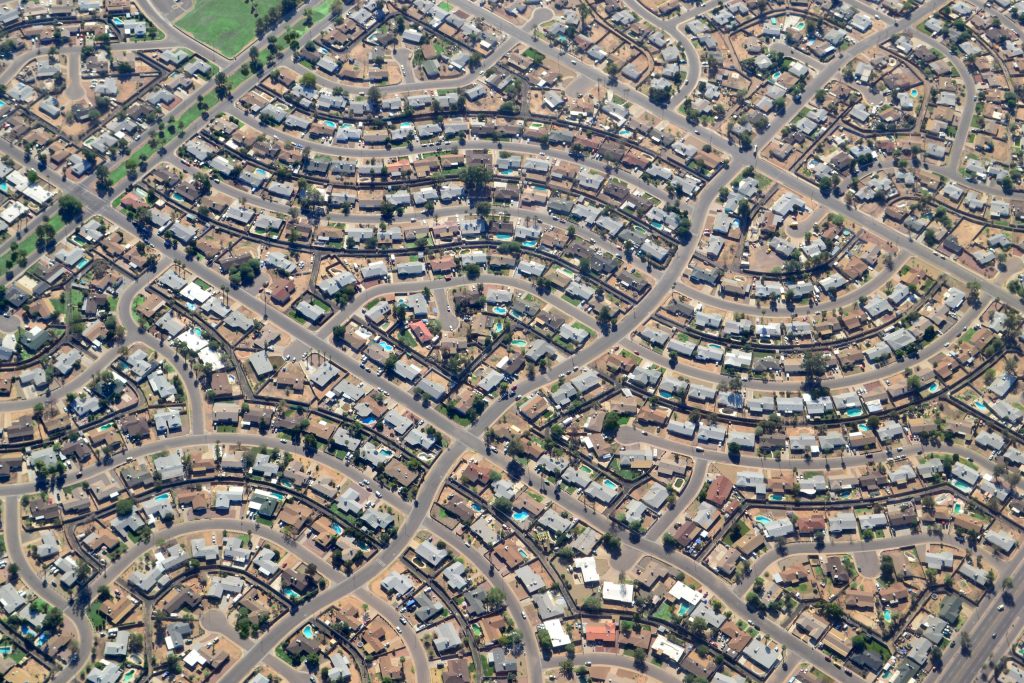
• FHA, other federally backed mortgages, and the mortgage tax deduction enabled especially Anglos to buy houses in the Maryvales of America and their successors. Urban neighborhoods were often redlined and assistance was not available. Smart Growth America reported that these federal subsidies cost $450 billion a year.

• Freeways sucked the life out of cities and made suburbs more convenient. Freeways did nothing positive for cities and entailed the destruction of entire urban neighborhoods. In the case of Phoenix, freeways made otherwise worthless desert or land only valuable for agriculture into gold mines for sprawl developers. This, along with the massive subsidies detailed elsewhere, has proved highly distorting to market forces.