Cautious signs of hope

Cautious signs of hope

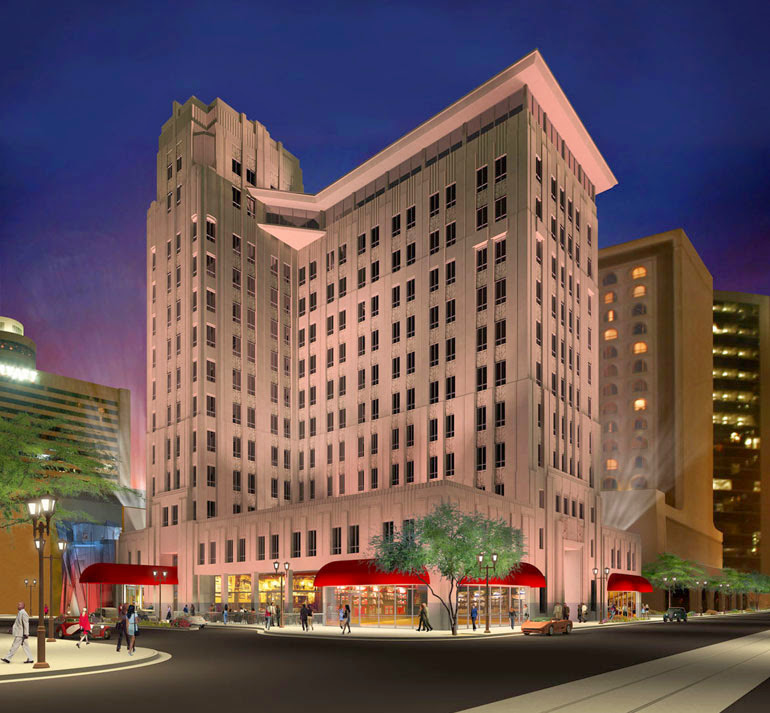
Professional_Building_Hotel_Monroe

After spending two weeks in Phoenix, I'm tempted to conclude that the central city is undergoing its most robust efflorescence in decades. And it is happening below the "red line" of Camelback Road.

This is not based on any single project — the Central Station tower and new arena for the Suns and perhaps Coyotes may or may not happen. Rather, dozens of smaller projects, mostly residential, are completed, under construction or in advanced site work or planning. Lots that have sat vacant for decades are seeing construction. Buildings are being restored — one example is the nice job the Old Spaghetti Factory did with its two former mansions on Central.

Commerce is happening, albeit on a mostly small scale, with startups and a few companies moving jobs into downtown, Midtown and Uptown. The restaurant scene is booming. We're far beyond the days when we struggled to keep Durant's, My Florist, Portland's and Cheuvront in business. Traffic is busy on Central again; more important, so is pedestrian and bicycle activity. Outside the core but in the old city many shopping strips have been given new looks.

This is small potatoes for what should be happening in the core of one of the nation's largest cities. Seattle has about a hundred major projects recently completed or underway, many of them highrises. The skyline is being dramatically remade. But considering the damage done to Phoenix over many decades of civic malpractice, it is verging on a spectacular rebirth.

They won’t build it…

They won’t build it…

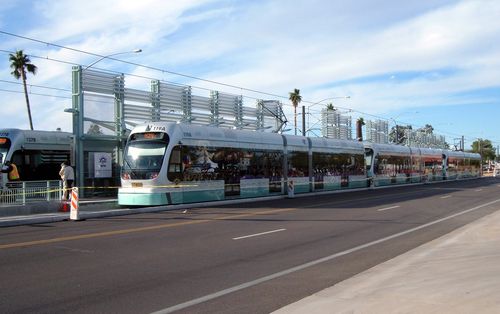
PhxLRTSo shopping-strip magnate Michael Pollack is worried about potential wording in Chandler's new general plan that might, might, possibly, someday allow light rail.

As the Arizona Republic reported, "It may be years from ever happening, but even the thought of extending the Valley's light-rail system from Mesa south into Chandler along Arizona Avenue is stirring strong opposition from a few key foes concerned that wording in a proposed planning document is a tacit endorsement of such a rail line."

There are, broadly speaking, two kinds of people in America: those with urban values and those with suburban values. The latter can sometimes "get it," how the health of an entire metropolitan area is dependent on a vibrant downtown — Oklahoma City is a good example. More often they don't, and the two tribes can't even speak the same language.

One of the biggest points of controversy is transit. Those with suburban values, especially "conservative" ideologues, have made a fetish of opposing any mode of travel that is not based on the automobile. Armed with seemingly economically invincible talking points regarding costs and often backed by Koch brothers money, they have defeated numerous transit measures nationally. They also speak in code to suburban whites, that transit will bring Those People to apartheid suburbia.

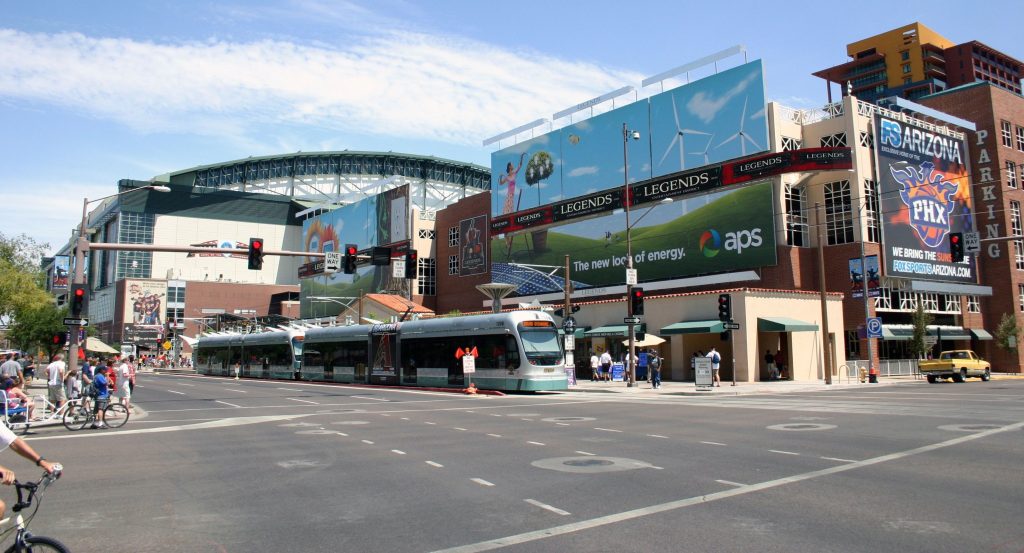
This is what makes Phoenix's light rail such a miracle. In the face of hysterical and often thuggish opposition, the starter line was completed and has now been expanded, with more growth on the way. It is highly popular. None of the predictions of doom happened. Even left turns are easy. We built it, you bastards (WBIYB).

Chandler won't. Never fear.

A train to Tucson

A train to Tucson

ICE_1_in_Augsburg-Hochzoll

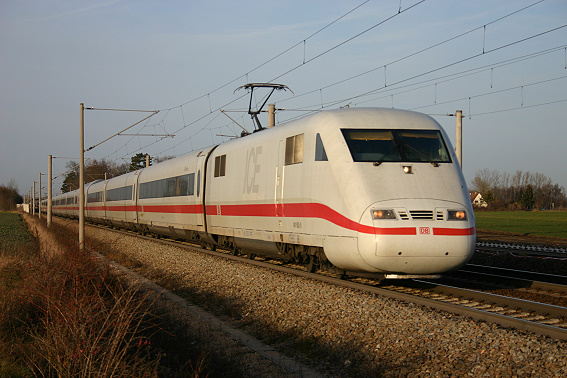
When I was a boy, the Southern Pacific Railroad operated six trains a day between Phoenix Union Station and Tucson. They were part of the fading American passenger-rail system, once the finest in the world.

The top of the line were the crack Sunset Limited, SP's flagship running between New Orleans and Los Angeles (once it went all the way to San Francisco). Phoenix to Tucson took less than two-and-a-half hours. Then the Golden State Limited, another premier train operated by SP from Los Angeles to Tucumcari, N.M., where it was handed off to the Rock Island for the trip to Chicago. Finally, there was the remains of the Imperial, once a fine train in its own right but by the 1960s a mail train with a single coach.

But the trains were dying, helped along by the Postal Service canceling the vital mail contracts in 1967-68. Amtrak took over a much diminished Sunset — three days a week — and it left Phoenix in the 1990s when the state would not help maintain the northern main line. Phoenix is the largest city in America with no passenger trains.

I mention this history as the Arizona Department of Transportation studies passenger rail between Phoenix and Tucson. It has gotten press. But is it possible?

The transportation vote

The transportation vote

PhxLRT2

See the comments section for an open thread on the vote.

Phoenix's Proposition 104 promises to extend light-rail and bus service, as well as make street improvements. Everyone who wishes the city well should vote for it.

Now that's out of the way, let's examine some lesser-explored aspects of the issue. I say "issue," because the debate has been won. WBIYB. Phoenix light rail is highly successful, as I predicted when advocating it — and getting death threats from the Bs in the latter B of WBIYB — as a columnist at the Arizona Republic.

A quick note on costs. With the $2 billion the state wants to flush down the toilet on the South Mountain Freeway, we could more than double the original 20 miles of light rail. That Arizona is still building freeways shows this racket for what it is: a way to keep spec construction going and enriching the Real Estate Industrial Complex.

Costs? Freeways destroy cities and farmland, spread pollution and emit enormous amounts of carbon into the global commons called the atmosphere. That these costs are hidden "externalities" does not mean they don't exist. Transit is a bargain. Enough said about the "light rail costs too much" Big Lie.

Writing Phoenix history

Writing Phoenix history

Central_Washington_looking_north_color_late_1920s
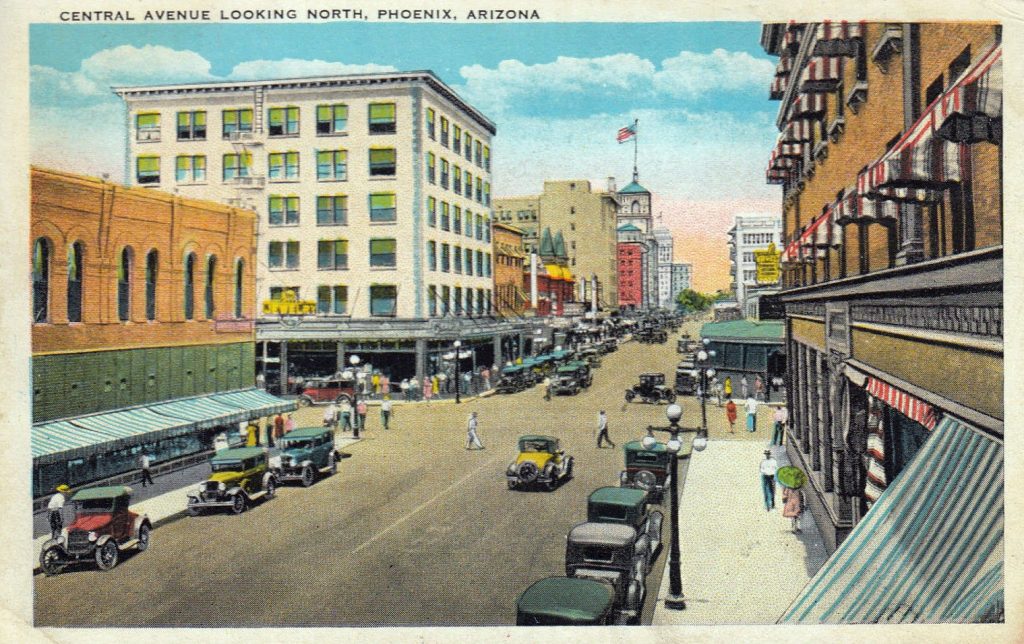
Apparently having read the Phoenix 101 posts, the History Press approached me to write a concise history of the city. In a hurry.

I thought this would be a compilation of Phoenix 101, but it turned out they wanted an entirely new book. Foolishly I signed up anyway. That's why I've been gone.

The final product may never see a bookshelf. It is certainly not an attempt to compete with the fine academic histories of Philip VanderMeer, William S. Collins or Bradford Luckingham. There are no doubt more qualified people who could have undertaken this project. Instead, at 32,000 words, it is an interpretive history of a fascinating city and one of great importance to America (whether America or even Phoenicians realize it). Think of it as the dissertation I never wrote.

Mindful of Harry Truman's admonishment that "the only thing new in the world is the history you don't know," I dug deep into primary and secondary sources. I'm glad I did it. Here is some of what I learned:

The rise of Margaret Hance

The rise of Margaret Hance

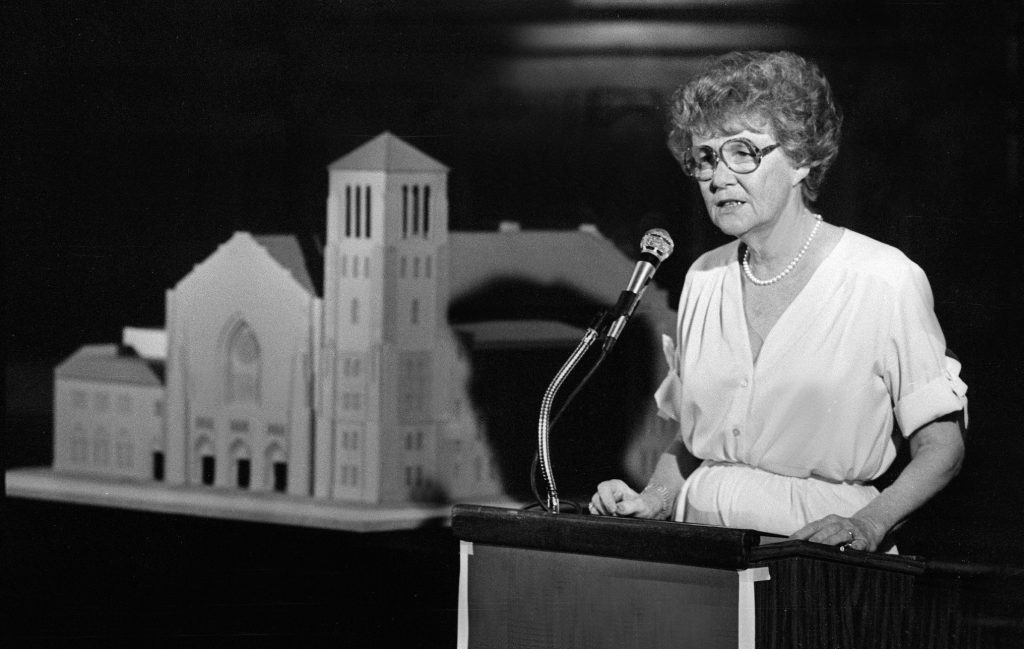
Margaret Hance (Ging photo)

(Michael Ging photo)

When Margaret Hance was elected mayor of Phoenix in November 1975, she was not, as is often claimed, the first woman to lead a major city. That marker goes to Bertha Knight Landes, elected mayor of Seattle in 1926. Patience Latting was elected mayor or Oklahoma City in 1971. Hance was third.

Hance's tenure was far more consequential, as we shall see. Still, she and Landes are twined in dissonances.

Landes, who ran advocating "municipal housecleaning," has been "honored" by Seattle naming its misbegotten tunnel boring machine after her. Hance is memorialized by a park in the heart of the city, a place she did little to help and much to harm.

Margaret Taylor Hance was almost a native, being brought from Iowa to Mesa at age three, in 1926. Her father went to work for Valley Bank, where became an executive vice president. Despite the onset of the Depression, the family moved to what is now Willo. (I am told they lived in the same house on Cypress Street in the 1930s where I grew up in the 1960s. In the '30s, unlike the '60s, it was a high-end neighborhood on the streetcar.)

Although she attended the University of Arizona, she transferred to the elite Scripps College in Claremont, Calif., from whence she graduated. In 1945, she married Robert Hance, who had trained as an Army Air Forces pilot in the Valley during World War II. Her brother, Glen Taylor, went on to become news editor at the Phoenix Gazette, retiring as assistant managing editor in 1983.

She settled into the comfortable and predictable life of an upper-middle-class Republican Phoenix woman. Robert went to work for Valley National Insurance and rose. The couple had three children. Margaret — known as Marge or Margie — volunteered for numerous organizations and joined the Junior League.

Glendale’s gambles

Glendale’s gambles

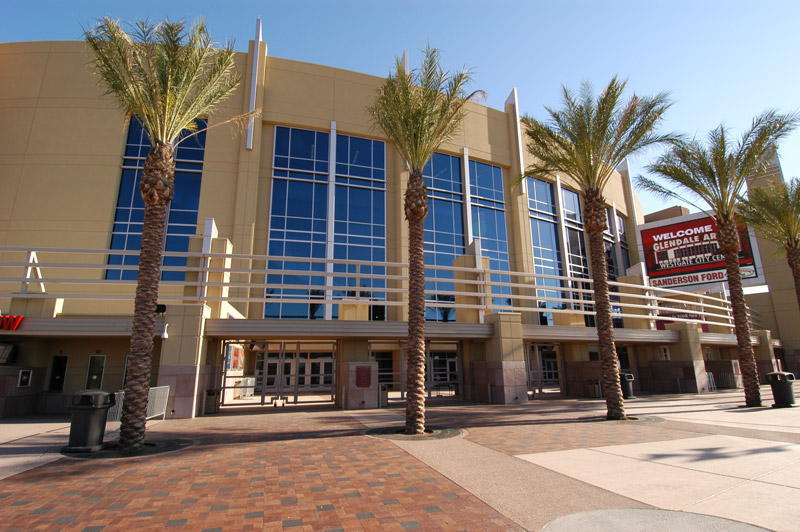
Glendale-arena

My Seattle Times colleague Geoff Baker has an insightful column about Glendale's NHL arena disaster. Sometimes one needs to be at a distance — and a distance from advertiser and fan pressure — to see things clearly.

The situation remains very much in play. Mayor Jerry Weiers may back down in the face of a lawsuit from the team formerly and rightly known as the Phoenix Coyotes. Or the courts could rule against the city's attempt to break its lease. Then the team can socialize its losses until the contract allows it to leave in three years.

But some aspects of what Baker calls "the Glendale fiasco" require Homey's distinctive local touch. Which I will proceed to attempt.

As with almost everything in Arizona today, Glendale's misery began with a real-estate hustle and taking an asset away from Phoenix, trying to make it the hole in the donut.

Architectural disasters

Architectural disasters

In retrospect, it was foolhardy of me to promise on Facebook that I would write about Phoenix's worst architectural disasters and … could they be fixed? Then to ask for nominations by Facebook friends.

There's just too much bad architecture out there (and no, not only in Phoenix). Now it's too late, a promise is a promise, so here are my top (or bottom) three worst buildings in Phoenix.

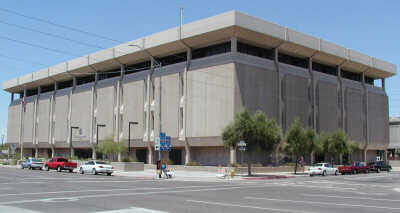
1. Phoenix Police Headquarters. Check out the seamless intertwining of Brutalist architecture, 1960s fortress mentality, and everything from the sides of the building to the abundant, heat-radiating concrete surrounding the structure screaming "bleak!" 

PPD

It is an almost perfect example of sterile, dehumanizing, soul-killing, boring hack-work. It even lacks the authority projected by the 1929 City Hall/County Courthouse. Instead, the taxpayers financed a block of ugly that has stood through some 45(!) years of indifference and civic malpractice.

2. The Arizona Executive Office Tower. Yes, this is Gov. Roscoe's aerie.

Exec_Tower

Built in 1974, only about four years after the building above, this mishap has the same dreary "pour boiling oil on the invaders" upper-story rampart as its cousin.

Yet its transgression goes further because it is attached to the charming territorial capitol building and addition. The top of the tower overpowers the modest copper dome of the capitol. The two buildings clash like a Chevy Vega front on a Rolls Royce.

The hard way

The hard way

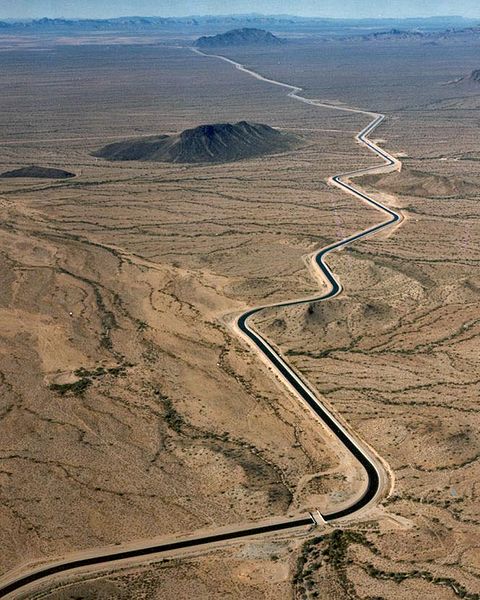
480px-Arizona_cap_canal
It was only a matter of time before the national media figured out that California is not the only place at risk from historic drought and the dwindling Colorado River.

Here is Slate, wrong from the first paragraph. And the Washington Post, which doesn't seem to have a clue about the dreary reality of Arizona's economy.

As a counterweight, I promoted this 2013 column on Twitter and Facebook — and traffic on this site exploded. It is important that the media elites understand the complex water issues facing Arizona. I urge you to read or re-read it.

Can Arizona and Phoenix survive the drought caused by man-made climate change? Probably. The question is whether it will be the easy way or the hard way.

But here's an easy back-of-the-bar-napkin calculus. The population of Maricopa County, mostly metro Phoenix, was 1.5 million in 1980, before the completion of the Central Arizona Project canal and the proliferation of sprawl that preceded it and was anticipating it.

Today, the population is more than 4 million. So in the long run, metropolitan Phoenix's sustainable population — in any pleasantly liveable way — is that 1980 figure. Two-and-a-half million people need to leave, head back to the Midwest and the East.

The new red line

The new red line

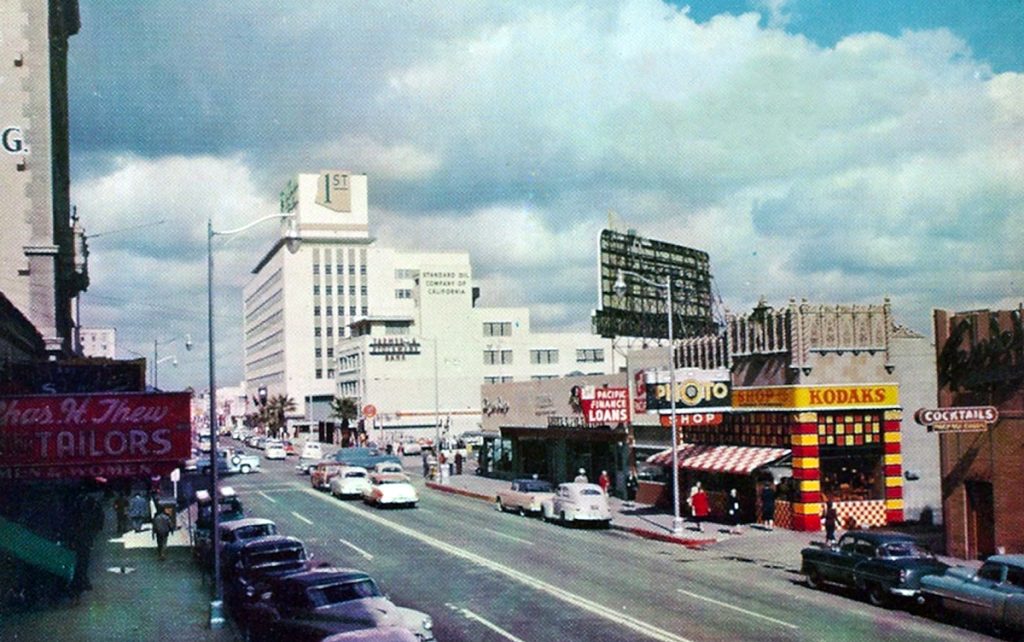
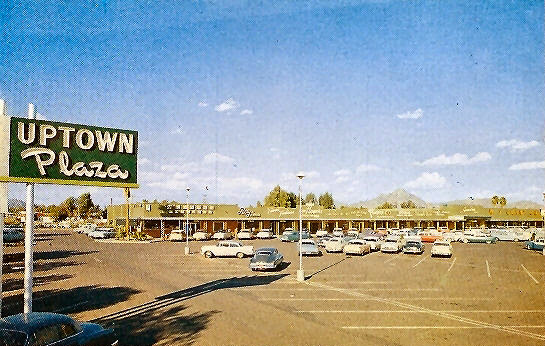
Camelback_Central_looking_northeast_Uptown_Plaza_1950s
Redlining is the practice of, in the United States, denying, or charging more for, services such as banking, insurance, access to health care, or even supermarkets, or denying jobs to residents in particular, often racially determined, areas.
— Wikipedia

The SOBs are well-known, and what an appropriate acronym. It means the north Scottsdale fatcats who refuse to go south of Bell (SOB) and measure their specialness by pronouncing the city of Phoenix as "the Mexican Detroit."

Most people with means who move to metro Phoenix don't consider it "home," as in a place to treasure and be invested in the common good. They are drunk with the resort "lifestyle" use-it-up new extraction industry. Being "exclusive" means drawing red lines to show one's superiority. To define zones that are scary and lost, whether this is true or not.

In recent years, I've become more aware of another red line within the city: Camelback Road.

Writing off the news*

So wealthy Republican Cara Carlton Sneed, aka "Carly Fiorina," is running for president. She represents everything wrong in an America run by oligarchy, including running venerable Hewlett Packard into the ground and laying off tens of thousands of people.

The two businessmen who became president were Warren G. Harding and George W. Bush. In fact, government can't and shouldn't be run like a business. A business, especially a big business today, seeks only its own growth and increasing stock price. Too many of its leaders, Fiorina included, are sociopaths with no notion of the public good. So she'll fit right with the Republican contenders.

It tells us something that this supposed titan of technology forgot to register her domain name.

Now, on to Arizona…

• I read that McDowell Road in Scottsdale is "continues (its) resurgence." With what little capital that metro Phoenix attracts clustering to the eastside — which should be a hair-on-fire issue at Phoenix City Hall — this isn't surprising. Here's what McDowell won't be: walkable, livable, or accessible to frequent transit. Make it shady, narrow it by four lanes or so, extend light rail, and plant mature shade trees and then you're talking.

• Narrowing a portion of 32nd Street is a good start in Phoenix. Unfortunately, it is outside the Salt River Project so the shade trees that would make it walkable for all but those seeking skin cancer is impossible. It is also served only by the 16 bus, not enough. So one-and-a-half cheers.

Bringing forth fruit

Bringing forth fruit

Rainbow 4
I first met Kit Danley in 2001 when she asked me to visit Neighborhood Ministries at its new home, hard against the railroad yards on Fillmore Street west of 19th Avenue.

It was a place that held fond memories for me. As a child, I had spent many hours train watching at the nearby Mobest Yard of the Santa Fe Railway. In those days, Fillmore ran through to 19th Avenue, and this end of the yard featured a cleaning facility for passenger cars (when Phoenix had passenger trains) and the locomotive turntable. South was the busy and (to my young eyes) imposing Valley Feed and Seed, where railcars were switched against the warehouse for loading and unloading.

Valley Feed and Seed looked very different in 2001: abandoned, decomposing, the grounds full of debris, silos that once provided seeds for this great agricultural valley now empty, eight acres of sadness. It was a graveyard that extended to Van Buren Street. Fillmore had been closed to a cul-de-sac when the yard was moved south (to lessen the train delays on McDowell). The surrounding area was known for crime now, not commerce.

But this was the site that Neighborhood Ministries had purchased in 1998 for an ambitious campus that would increase its outreach to the poor. By the time of my first visit, the organization had raised $2.2 million to begin renovations.

Kit_DanleyI liked Danley immediately. She was a near-native, went to Scottsdale High (I went to Coronado), and had chosen to make a stand in the wounded heart of Phoenix, founding Neighborhood Ministries in 1982. She was the polar opposite of the city of the short hustle, the state where hate was peddled for political profit.

And she would be frustrated that I appear to be making this column about her (it's not; read on). Like her spiritual forebear in Phoenix, Father Emmett McLoughlin, she felt called by Christ to minister here to the least and the lost, to the stranger and the wanderer, and find Christ in them.

Phoenix should leave GPEC

A little history: The Greater Phoenix Economic Council was formed in the aftermath of the 1990 recession. Fueled by savings-and-loan grifters and spec-building con artists (Charlie Keating combined both roles), it was the worst downturn the city had faced since the Depression.

Up to that point, of course.

It stung that the "infamous" and "negative" Barron's article calling out Phoenix was correct. But there were enough locally headquartered companies, civic stewards and sane political leaders remaining to be concerned about more than image. Phoenix and Arizona started a serious effort to diversify beyond real estate, to recapture the efforts of the late 1940s through the 1960s aimed at creating a robust, high-quality economy.

And for several years, GPEC was successful. The keys were the first president, Ioanna Morfessis, who had a sophisticated understanding of economic competitiveness and development; also, she was backed by a board of business titans who could knock heads and write checks. One other element helped: the city of Phoenix was still the unquestioned center of gravity.

Unfortunately, the decade saw 40 percent population growth and massive new sprawl. At the same time, most of the city's corporate crown jewels were either bought or significantly downsized and almost all the stewards died or retreated. The appetite to seriously build a quality economy, to sustain the cluster strategy, waned. In this "drunk on growth" atmosphere, Morfessis left.

She was followed by Rick Weddle and Barry Broome, both capable. But GPEC and the metropolitan area had changed dramatically.

‘Is Arizona hopeless?’

‘Is Arizona hopeless?’

Flag_of_Arizona
This was the most frequently asked question I encountered in Phoenix recently. Admittedly, the Resistance was demoralized by the results of the election. But the query-cum-statement came from more than activists — indeed, they are more likely to be too invested in the fight to allow a crack of doubt to enter.

Those asking are natives or have lived in the state for many years or decades. They are not nostalgiacs. They are intelligent and pragmatic. Some are considering leaving, adding to the brain drain of urbanites who come to Phoenix starry eyed at a "blank slate" only to discover the many barriers to progress and depart for Portland, Denver and Vancouver, B.C.

In raising this issue, I don't want to provoke the usual denial, sunny codependency or angry defensiveness. I was surprised that so many people, unprompted, asked the question.

Is Arizona hopeless?

It certainly doesn't seem that way to the Republicans and "conservative"-leaning independents who vote. They continue to get the place they want, with the exception of such socialist outbreaks as light rail (WBIYB). Some are people with whom I went to school but remained there. They are decent, smart individuals and, against all odds of the Cold Civil War, we remain friends. Anyway, the cons have no reason to complain — but that won't stop it from manufacturing its lifeline of perpetual grievance and victimhood. They tend to be sore winners.

So the question applies to others. How many are there? It's difficult to say with precision. People keep moving to Arizona, albeit at a slower pace. A Morrison Institute poll of more than a decade ago found that a strong plurality of residents would leave the state if they could.

Who would ask such a question? Anyone to the left of today's "conservative" dogma (which would include Barry Goldwater, were he alive); liberals and progressives; people with urban values; those concerned about the destruction of the environment; those disheartened by the struggle to build and maintain civic, economic and cultural assets as befits a big city, and the ones beaten down by the struggle as Arizona has become a one-party, one-ideology state.

Is Arizona hopeless?

You know this is the wrong place to look for booster lies ("Talton hates Arizona"). And as much as I would love to write a stirring column channelling Henry V or Churchill, it is a little late for in the game for that.

So the answer partly depends partly on how one defines Arizona and how one defines hopeless.