More shots in the ’30s and ’40s

More shots in the ’30s and ’40s

Golden West Hotel
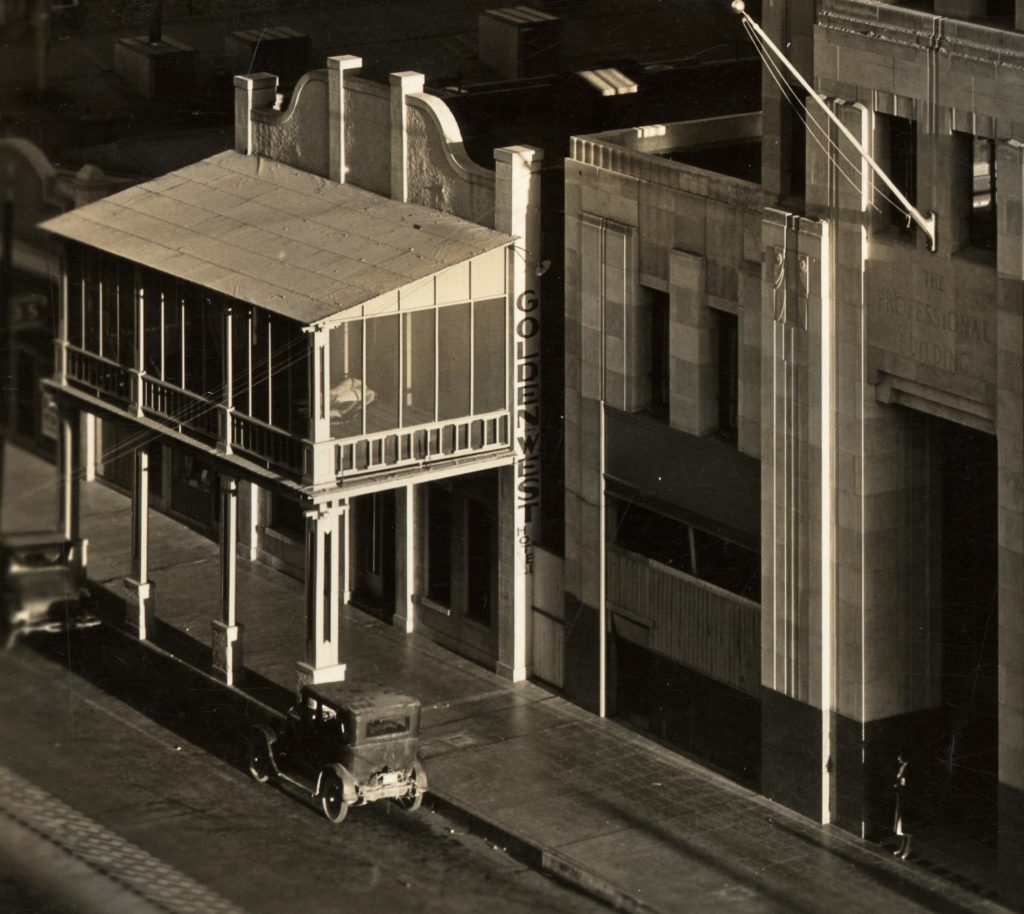
A few days ago, we lost the Golden West Hotel, formerly the Steinegger Lodging House, at 27 E. Monroe Street and built in 1889. It held Newman's cocktail lounge as late as 2005. But even with all of Phoenix's losses, the preservation police could not save the oldest building in downtown. Duran Lugo documented this act of civic vandalism on Facebook's Phoenix Shadetree History page.

In memory, let me clear my desktop of some historic Phoenix photos that likely haven't been on this site before (click for a larger view)

. And a final thought: If the Golden West isn't safe, what about Union Station?

7th_Ave_looking_north_towards_Osborn_1940sThis is Seventh Avenue looking north toward Osborn in the 1940s. The image perfectly captures old rural Phoenix, including abundant shade trees. No palo verdes of gravel to be seen.

Busy Central-Washington 1940sBusy Central and Washington in the same decade. Unlike today's suburban feel, downtown looked like the business core of a real city.

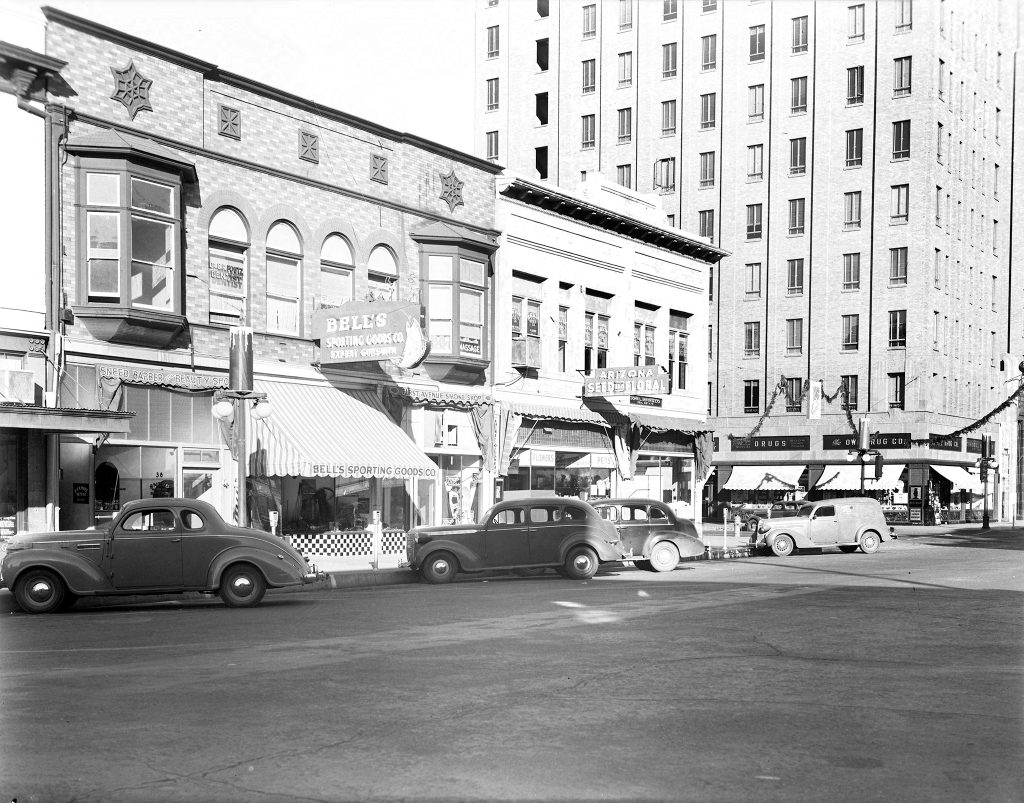
Central_Monroe_looking_south_South_Mountain_1940s(1)Thanks to Brad Hall, here's a high-resolution shot from Monroe and Central looking toward the South Mountains in the '40s. Note the Santa Fe Railway ticket office in the Professional Building. A few steps farther to the left is the Golden West. South of the Professional Building is the Hotel Adams, demolished in the 1970s.

The skyline through time

The skyline through time

In a column last year, I explained why Phoenix lacks the skyscrapers that are the defining feature of big cities. Why? It's complicated. Now, let's look at the Phoenix skyline through the years. Click on the image for a larger view.

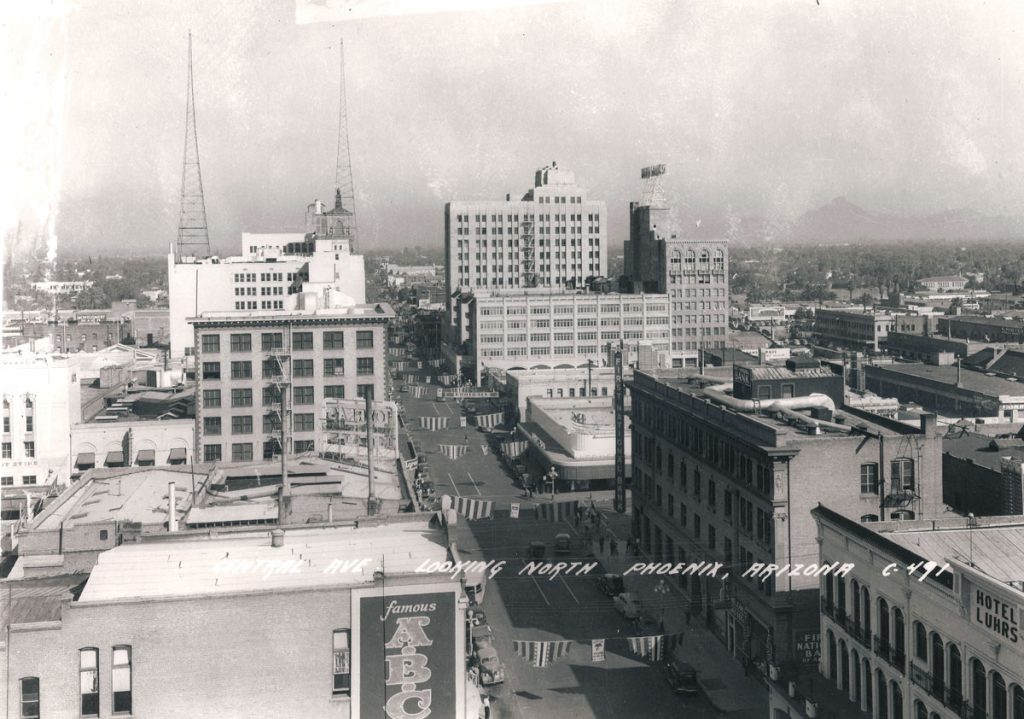
Phoenix_downtown02Looking north on Central from Jefferson Street, we see Phoenix's first real skyline that emerged in the 1920s building boom. At left with radio towers is the Heard Building and beyond it the cap of the Security Building. At left, beyond the Hotel Adams, is the Professional Building.

Luhrs Tower from parkSeen from the Courthouse Park, the Luhrs Building and art deco Luhrs Tower were among the most iconic structures from the 1920s skyline.

LuhrsBuildingAnother shot, this time from the Hotel Luhrs balcony, showcases the Luhrs Building and beyond it the Luhrs Tower.

David William Foster, an appreciation

David William Foster, an appreciation

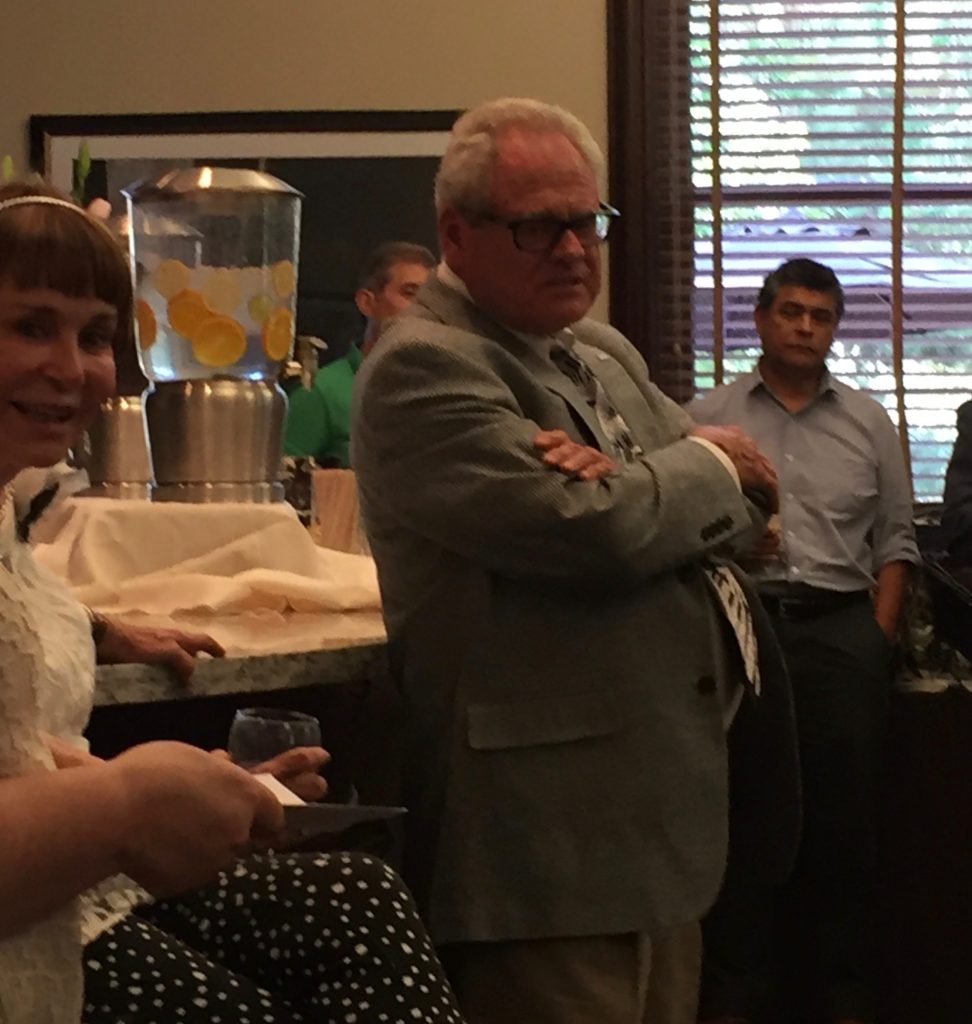
IMG_0403 (1)David W. Foster in 2016 at a celebration of his 50th year teaching at ASU, in the Old Main building. At left is his wife, Virginia.

My dear friend, David William Foster, Regents Professor at Arizona State University, died peacefully last night at age 79. His ASU bio doesn't begin to capture the man in full, but it's worth quoting at length because of the depth and breadth of his accomplishments:

David William Foster is a Regents Professor of Spanish and women and gender studies at Arizona State University. He has written extensively on Argentine narrative and theater, and he has held Fulbright teaching appointments in Argentina, Brazil, and Uruguay. He has also served as an Inter-American Development Bank professor in Chile. Foster has held visiting appointments at Fresno State College, Vanderbilt University, University of California-Los Angeles, University of California-Riverside, and Florida International University. He has conducted six seminars for teachers under the auspices of the National Endowment for the Humanities, the most recent in Sao Paulo in summer 2013.

In 1989, Foster was named the Graduate College's Outstanding Graduate Mentor, and in 1994 he was named Researcher of the Year by the Alumni Association. He received the 2000 Armando Discepolo Prize for theater scholarship awarded annually by GETEA (Grupo de Estudios de Teatro Argentino y Latinoamericano) of the Universidad de Buenos Aires.In 2010, Foster was honored for his lifetime work on Argentine culture by the Centro de Narratoloia at a program held at the Argentine National Library. He is past president of the Latin American Jewish Studies Association.

We've lost a man of astounding achievements, and this comes atop the crushing loss of historian Jack August in 2017. Arizona, and the world, are less for these passages.

The Groundwater Act

The Groundwater Act

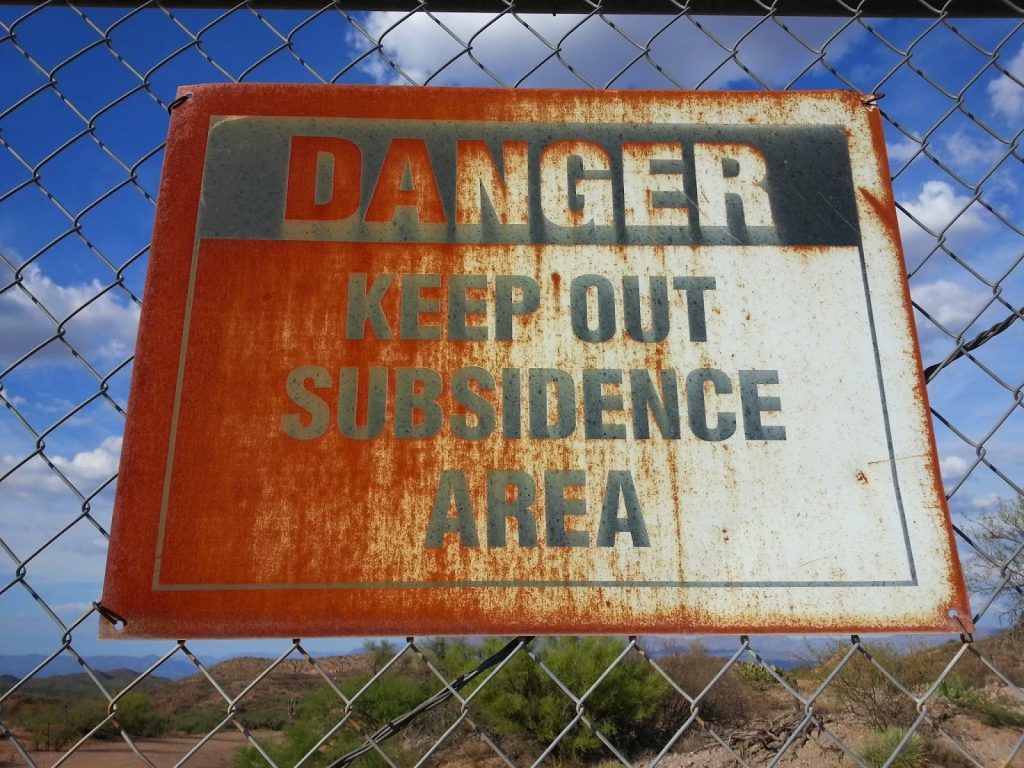
Subsidence sign flickr
History is written by the victors.

This marks the 40th anniversary of the Arizona Groundwater Management Act. The state Department of Water Resources said in a press release:

The 1980 Act was – and remains — the most sweeping state law in the Nation governing groundwater use. In addition to creating a coherent, manageable system for helping wean Arizona’s most populous regions from groundwater use, it enacted the framework for long-term groundwater-use reduction that continues to the present.

“In Arizona, we stand on the shoulders of giants — pragmatic, visionary leaders whose achievements have shown us the way and enabled our high quality of life,” said Governor Doug Ducey.

If today's Arizonans know of the landmark law at all, it's via the shorthand that new developments were required to show a 100-year supply of water. But it was primarily intended to stop groundwater depletion, which was frighteningly reducing aquifers that had taken centuries or millennia to fill. The most noticeable sign of this phenomenon is subsidence, the collapse of the earth and opening of fissures as groundwater is pumped away.

Groundwater pumping was particularly problematic in Pinal County, which depended on it heavily for agriculture. The irrigation district from Coolidge Dam wasn't nearly enough for the demands of farming there, rapidly giving way to tract houses. The resulting dead landscape along I-10 between Phoenix and Tucson makes it The Ugliest Drive In America.

More from early Phoenix

More from early Phoenix

This post piggybacks on the Phoenix at Statehood column from this past year. This time the emphasis is on photography, most from the Library of Congress and the McCulloch Brothers collection at the ASU Archives. Click in the image for a larger view. Enjoy.

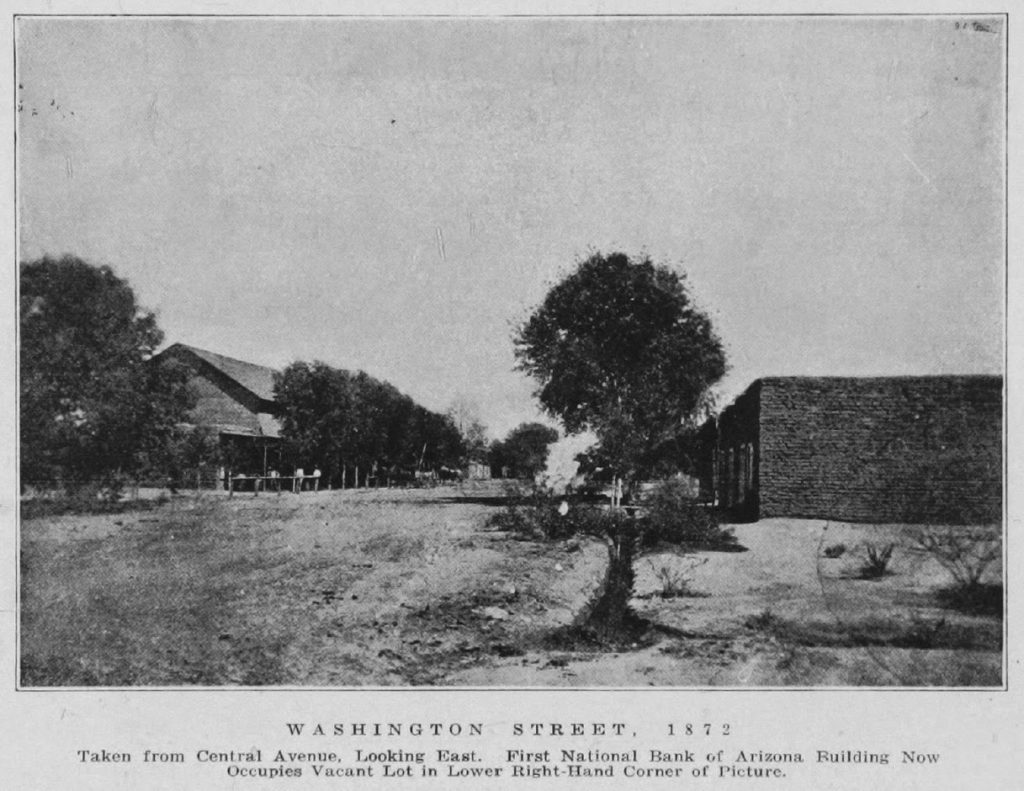
Washington_Central_looking_east_1872Washington and Center streets in 1872. The town wasn't even incorporated until nine years later. Note the abundance of shade trees even at this early stage.

2nd St and Jeff 10-mule team freighter 1880sBefore the arrival of the railroads, mule teams hauled freight to and from Phoenix — in this case headed for "the mines." This is the 1880s at Jefferson and Second Street (Maricopa Street).

12-mule teams 1st and Jefferson 1880sAnother view of mule teams hauling freight along Jefferson Street in the 1880s.

1st Ave and Adams 1890s

First Avenue and Adams (Cortes Street) in the 1890s. The 1889 Fleming Building is recognizable at right. Today the boxy Wells Fargo tower stands there.

More midcentury Phoenix

More midcentury Phoenix

I continue to feed the endless appetite for photographs of Phoenix. The value I try to add on this site is telling some of the story behind the images. I get these from a variety of sources but one of the best is Brad Hall's History Adventuring on Patreon — pledge a dollar or more and you can get access to far more photography. Click on the image for a larger view.

Celebrity_Theatre_Star_Theatre_440_N_32nd_St_1960s(1)

Celebrity Theater, the city's main concert venue, built in the 1960s on 32nd Street north of Van Buren, a sign of the hollowing out of downtown.

1970s_Central_Osborn_looking_south(1)Here's the southwest corner of Central and Osborn in the 1970s before the two bank towers were built. This was when the city was still litigating its long battle against billboards, hence the Eller sign advertising an early gated property around 27th Street and Osborn. Behind it is an old Phoenix stucco apartment. To the right are the Mayer towers, the short one with the Playboy Club on top and the tall one with the outside elevator, headquarters of First Federal Savings.

Arizona Bank Central Cypress 1960s.jpgFrom when I was growing up, here's the Arizona Bank at Central and Cypress Street. The shady area to the north surrounds a beautiful building that now houses the Inter-Tribal Council of Arizona. Most of these trees were ripped out for palo verdes.

Blue_Cross_Blue_Shield_under_construction_321_W_Indian_School_Rd_1971(1)The Blue Cross-Blue Shield headquarters at Third Street and Indian School, completed in 1970. This midcentury masterpiece was lost, replaced by a gas station.

20/20 hindsight

20/20 hindsight

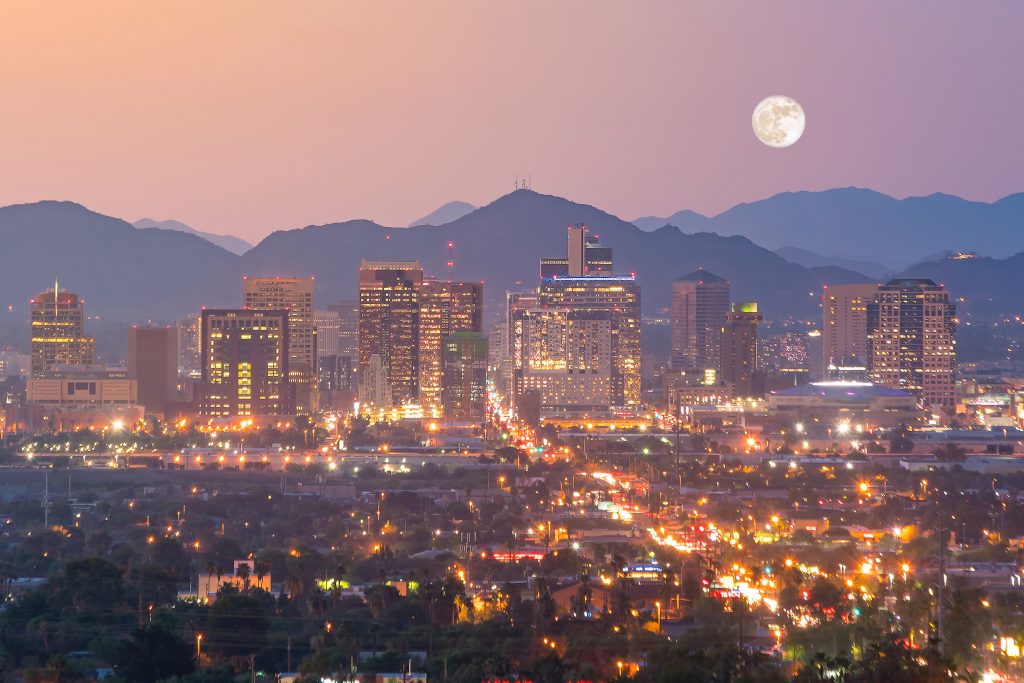
Phoenix night skyline
A score of things that made today's Phoenix:

1. ASU: In 1920, Tempe Normal School was awarding teaching certificates and providing high-school courses. From there it became Tempe State Teachers College (1925), Arizona State Teachers College (1929), Arizona State College (1945), and finally a university (1958). Today, under the dynamic leadership of Michael Crow, ASU is one of the largest universities in the United States. Among its five campuses/centers is the transformative downtown Phoenix location. The downside: Phoenix is by far the largest metropolitan areas in America with only one real, full-sized university.

2. Agriculture: A century ago, Phoenix was the center of a major agricultural empire thanks to its location in one of the planet's great alluvial river valleys. Anything would grow — just add water, which was abundant thanks to Theodore Roosevelt Dam and its successors. It's almost all gone. At one time, we could feed ourselves and exported produce and beef to the nation. Now Phoenix is almost entirely reliant on the 10,000-mile supply chain. A more foresighted place would have established agricultural trusts to preserve the citrus groves and Japanese flower gardens.

3. Air conditioning: Refrigerated air showed up in movie theaters and new hotels a century ago. Swamp coolers and central air units made Phoenix bearable for more people year-round (no more sleeping porches and wrapping oneself in wet sheets in summer). For awhile after World War II, Phoenix was also a center of air-conditioning manufacturing.

More Phoenix in the 1920s

More Phoenix in the 1920s

Here are photographs of Phoenix from 100 years ago — I wrote about the decade in this column. Click on the image for a larger view. Enjoy!

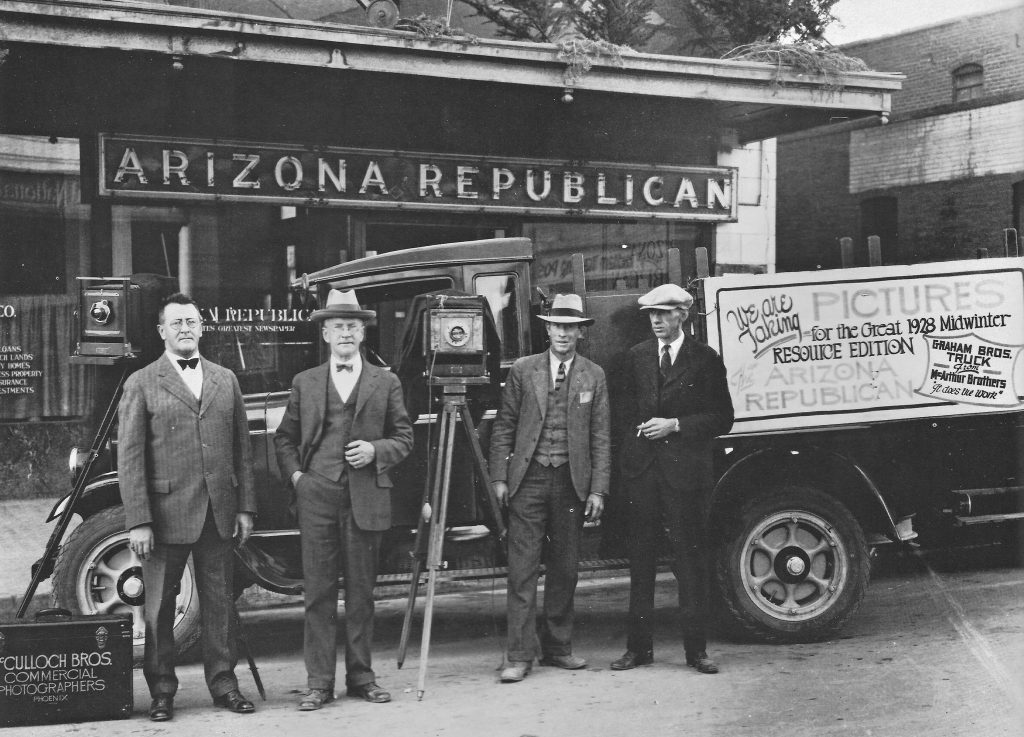
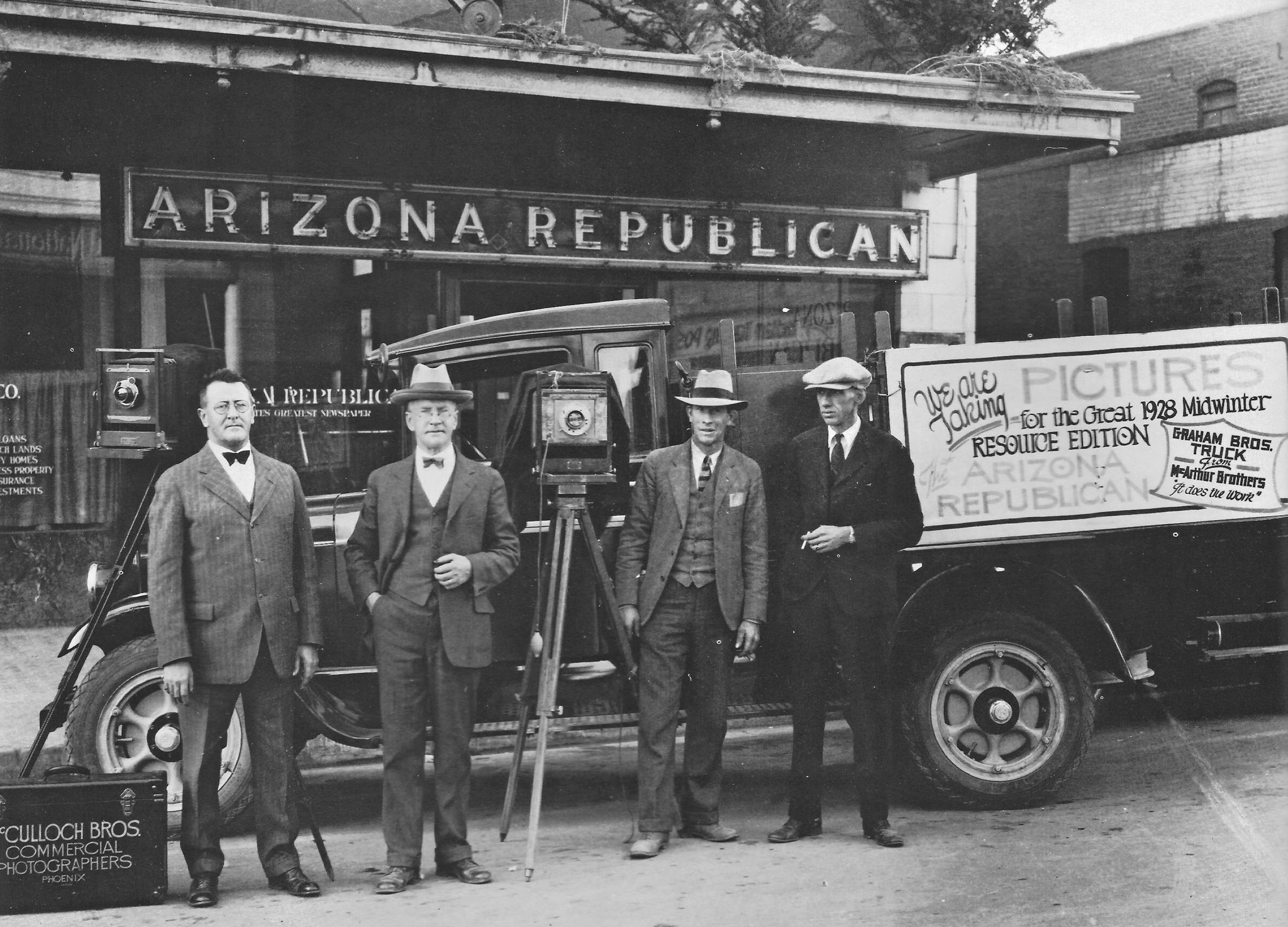
McCulloch_Brothers_Commercial_Photographers_1928The McCulloch Brothers Commercial Photographers posing in 1928 outside the Arizona Republican offices. ASU preserves the McCulloch archive as an essential resource for images from 1884 to 1947.

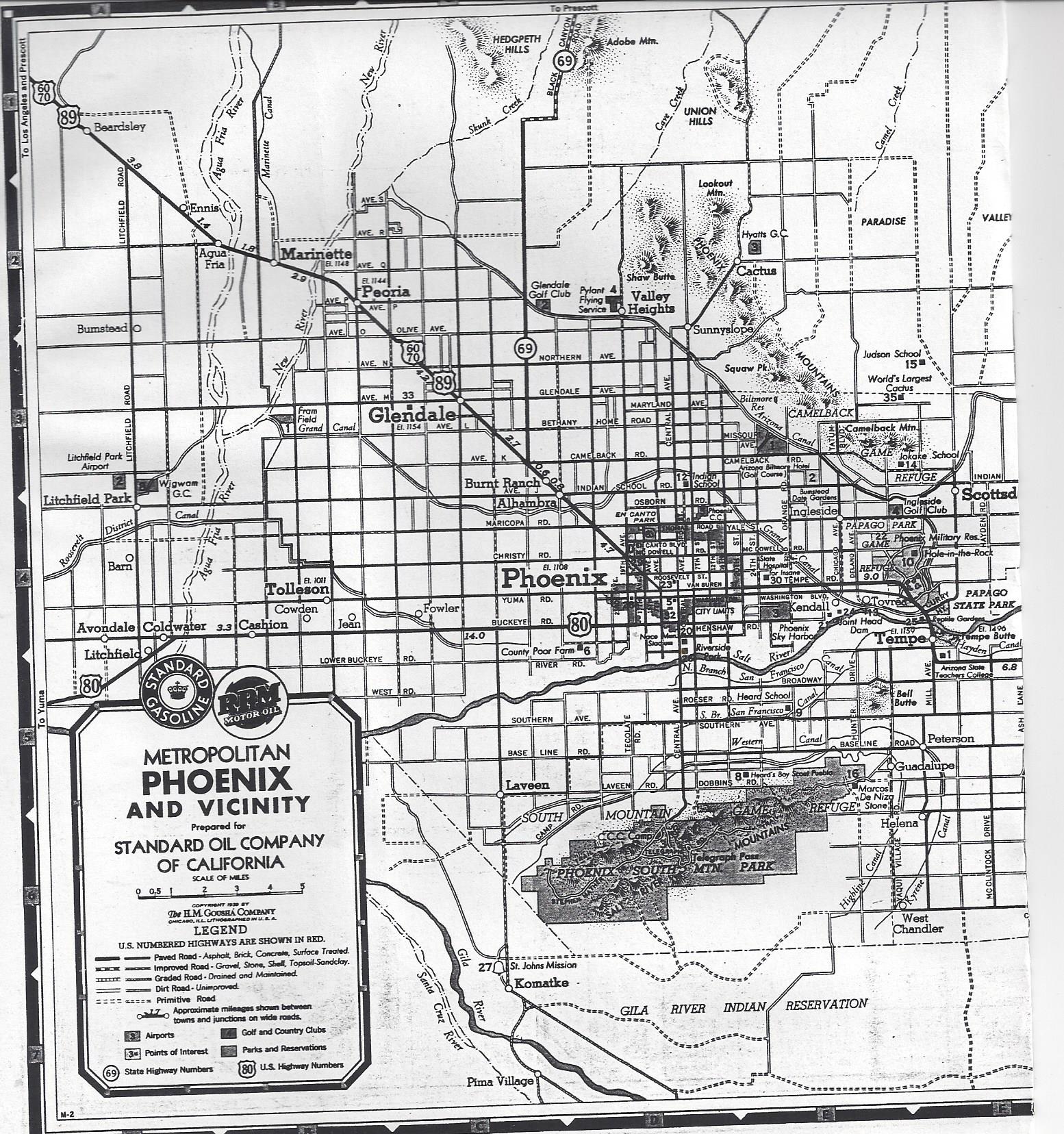
Phoenix map 1920s

A Standard Oil roadmap of Phoenix and vicinity, circa 1925.

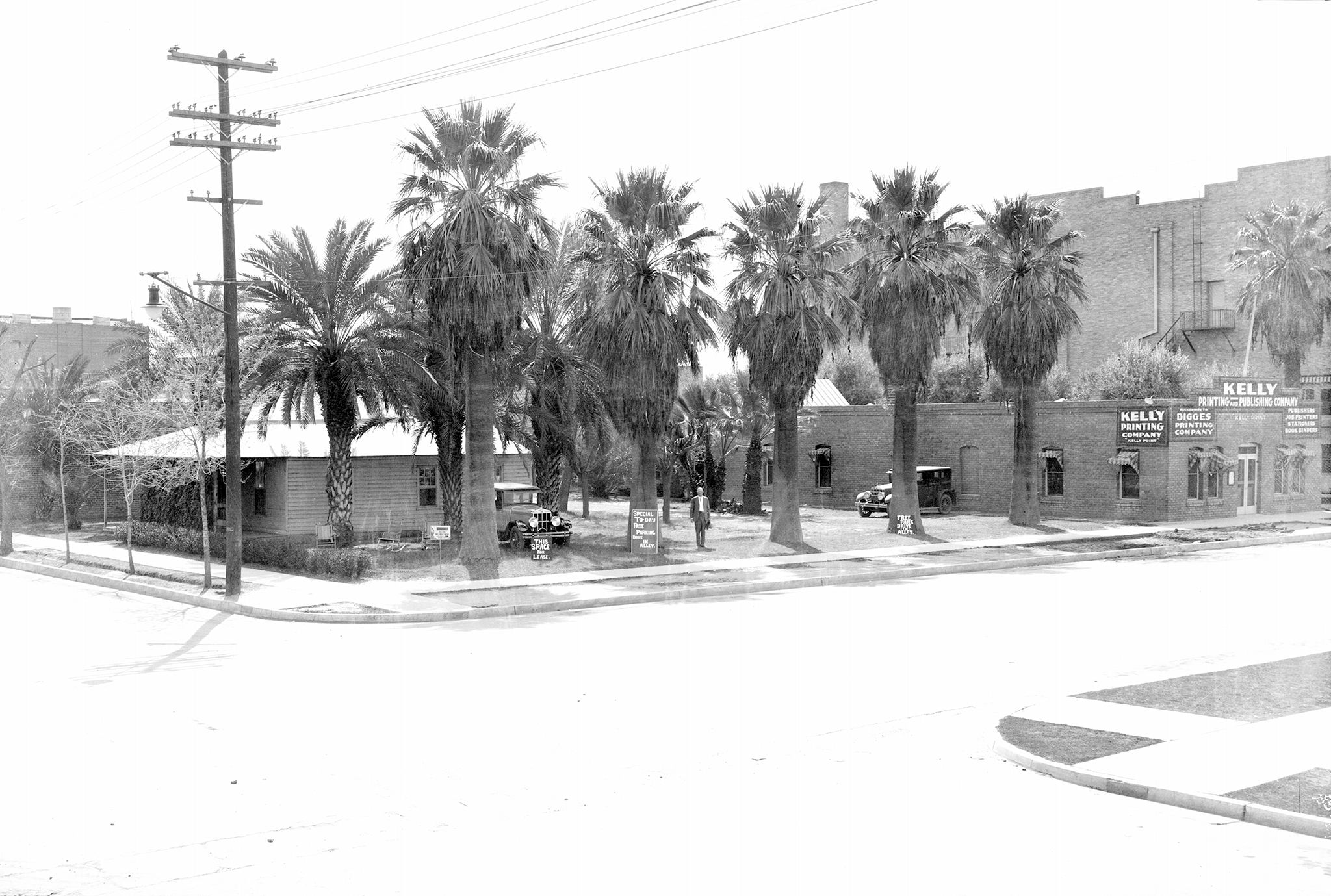
3rd_Ave_Monroe_looking_southwest_Kelly_Printing_1928(1)

Kelly Printing at Third Avenue and Monroe Street, 1928. 

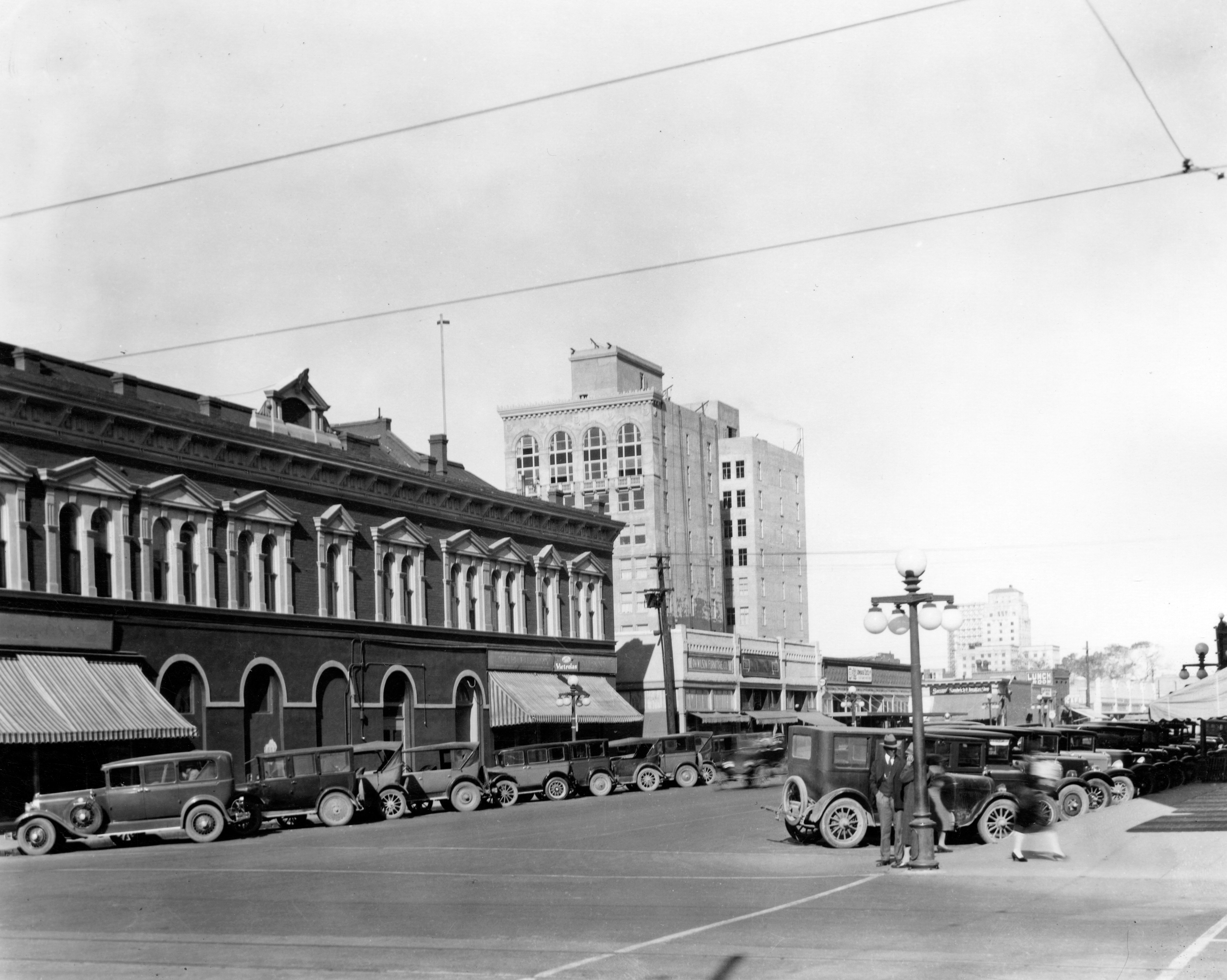
1st_Street_Washington_looking_north_Anderson_building_1928First Street and Washington looking north with the Anderson Building on the left in 1928.

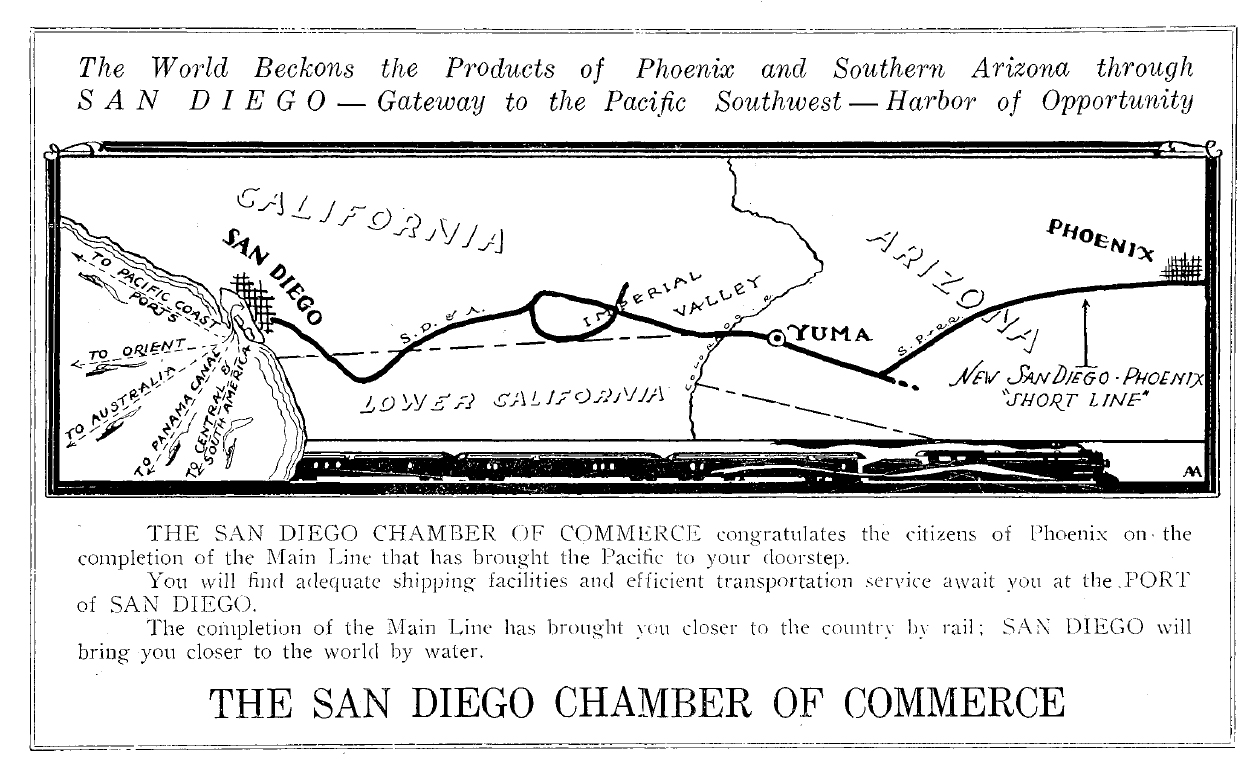
Ad_Main_Line_San_Diego_1926In 1926, Phoenix gained the northern main line of the Southern Pacific Railroad and most of its passenger trains at new Phoenix Union Station. This San Diego Chamber ad promotes a direct route between the two cities on the SP's challenging Carrizo Gorge route. That segment was originally begun by sugar magnate John Spreckels.

More Phoenix in the ’50s & ’60s

More Phoenix in the ’50s & ’60s

Last week's gallery of the 1940s was so wildly popular, let's continue on a theme. For readers, I produced columns on Phoenix in the 1950s and the 1960s. I invite you to read them, for they provide important context and history of the photos that follow (images that didn't make the original decade columns). Thanks to Brad Hall for most of these.

Enjoy! (Click on image to see a larger version):

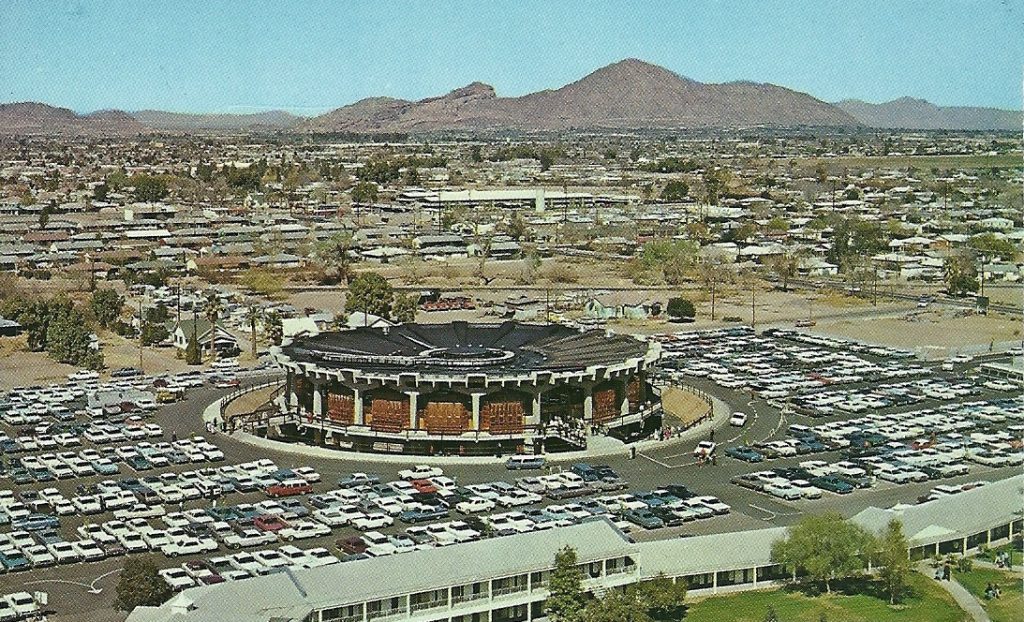
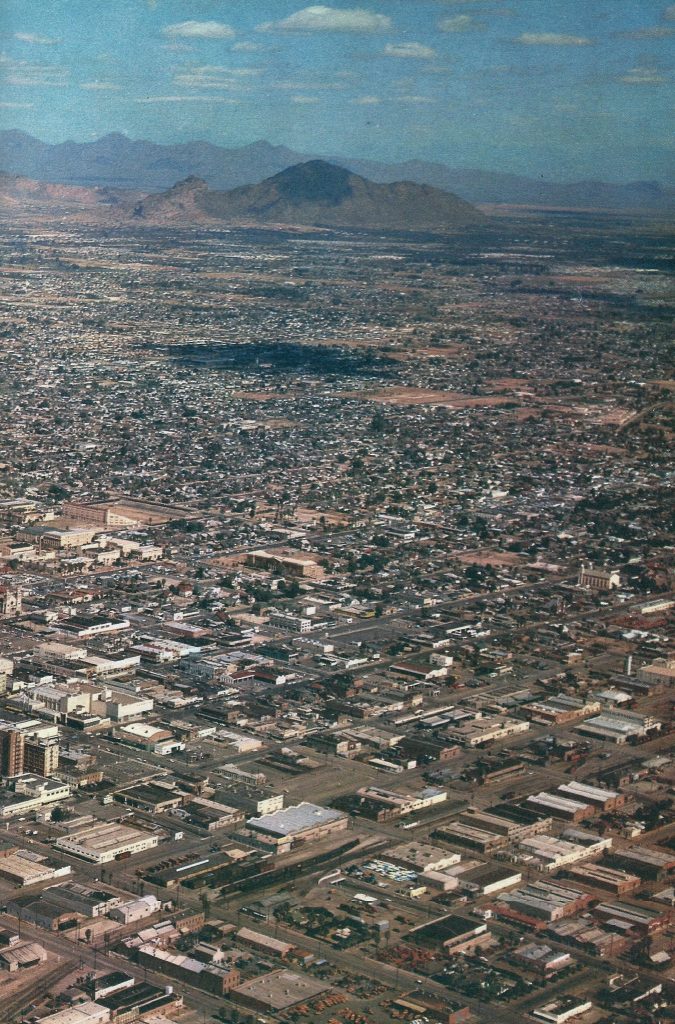
Phoenix_1956Overhead and in color, Phoenix in 1956. In the lower part of the photo are the Southern Pacific tracks and the Warehouse District. In the middle-left is Phoenix Union High School, including Montgomery Stadium. Camelback is bare of any houses, a situation that won't last long.

Third Street & Roosevelt 1953Roosevelt Row was decades in the future when Birch's Drugs was snapped in 1953. It was part of a larger commercial strip along east Roosevelt and easily walkable from the Evans-Churchill and Garfield neighborhoods.

Tenth Street and McDowellAnother walkable spot. Tenth Street and McDowell, part of the "Miracle Mile" commercial district in the 1950s.

Indian School and Central 1957;jpg
The northwest corner of Indian School and Central shows A.J. Bayless, Bekins moving and storage, and Carnation Dairy's restaurant, soda fountain, and main processing plant. It's 1957.

More Phoenix in the 1940s

More Phoenix in the 1940s

Earlier columns delved into our fair city in this decade and its role in World War II. Here are more images from the decade. Most are thanks to the McCulloch Bros. Collection at the ASU Archives or Brad Hall's archive (click for a larger view):

1st_Ave_looking_northwest_towards_Adams_Title_and_Trust_1940sFirst Avenue looking northwest toward the Title and Trust Building (now the Orpheum Lofts).

1st_Ave_Monroe_looking_west_Sun_Drug_1st_Methodist_Church_1947First Avenue and Monroe in 1947.

3 - Saratoga Cafe insideInside the famous Saratoga Cafe at Central and Washington.

Saratoga Cafe 1940s

Tico days

Tico days

Articulating bus 1970s
When I was a little boy, I rode the bus with my grandmother. We would board around Central Avenue and Cypress Street, riding downtown to shop. Such excursions were rare, to be sure. This daughter of the frontier loved to drive as much as she adored sliced bread, paper towels, and her "stories" (soap operas) on television.

In those days, the 1960s, buses were operated by a private company as Valley Transit. The city's surprisingly extensive streetcar system was a fading memory — cutbacks began in the Depression and the last dagger was a fire at the car barn in 1947. The replacement bus system was inadequate from the start.

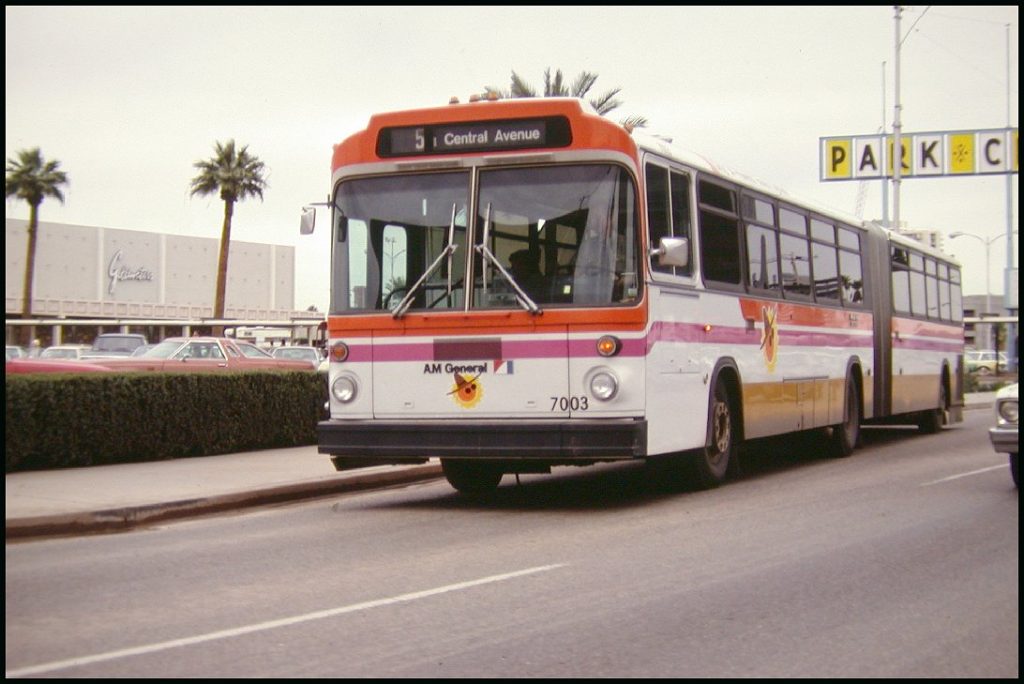
In 1971, the city regained control of the system. Private ownership hadn't worked. Three years later, the Tico logo appeared on festively repainted Phoenix Transit buses. The mascot showed a sunny dot wearing a smile, sunglasses, and sombrero. It remained on Phoenix buses until the late 1980s.

Phoenix in the ‘teens’

Phoenix in the ‘teens’

Phoenix circa 2010s
In 2010, Phoenix and Arizona were stuck in the worst (by most measures) bust since the Great Depression. Unemployment peaked at 10.9% in January statewide and 10.2% in metro Phoenix. Single-family housing starts in the metro area plunged from a monthly peak of 6,000 in 2004 to 854. Construction jobs fell from 183,000 in June 2006 to 81,000 in the summer of 2010. Phoenix was a national epicenter of the housing crash.

It was an eerie time. Freeways that had been clogged with tradesmen's pickup trucks were noticeably empty.

Now, nearly a decade later, the economy has recovered. Metro Phoenix joblessness was 4.1% in October, higher than the 3.6% nationally but still a marked improvement. Building permits clawed out of the 2009 trough but are still at levels of the early 1990s.

Population — the holy of holies worshipped by the local-yokel boosters — bounced back. After falling from 2008 to 2010, it rose by 653,000 by 2018 in the metro area. A much ballyhooed snapshot had the city itself the fastest-growing in the United States from 2017 to 2018. But the percentage rate of change looks to be slower this decade than the 2000s or the record 1990s.

True, the decade doesn't officially end until a year from now. But the "twenties" begin in the popular imagination this New Year's. So let's take stock of the "teens":

When Payson was small

When Payson was small

OxBow Inn
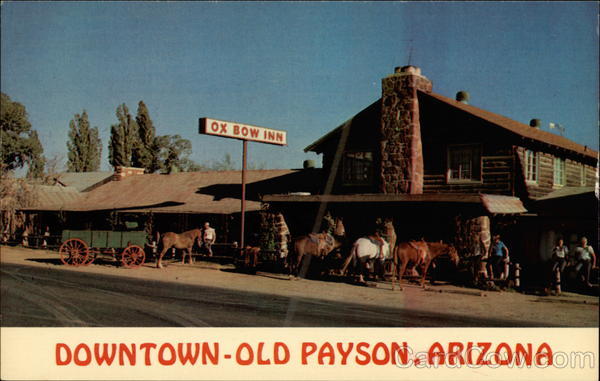
In 1967, my mother arranged for me, my friend Billy Warren, and my grandmother to spend much of the summer in Payson. It had not been connected to the outside world by a paved highway for even a decade. The population was around 1,500 and it was clustered around a real tiny town, the enchanting massif of the Mogollon Rim towering to the north above the forest. I was 10.

We lived in a rented house on what's now called Frontier Street, a few blocks west of Arizona 87 (the Beeline Highway). Like almost everything in town, it was built of wood. An early look around was a disappointment to this callow city kid: No trains, no chain restaurants, no easy biking to parks or soda fountains. I don't recall having television, either. Payson revolved around the two-lane highway, with logging trucks rumbling by and everything locally owned. At night, the darkness was primeval under the vault of billions of stars.

The fear of boredom didn't last more than 24 hours at most. The volunteer fire department had a new station a block south, a place to hang around, admire the apparatus, and talk to the firefighters. I got a library card and quickly became a darling of the librarians by being a bibliophile and checking out books every few days.

But the big show was outside.

Both Billy and I were in Scouts — Camp Geronimo was north of Payson — so my grandmother had no concerns about us spending most of the day wandering around the forest. And we did, armed with canteens, pocket knives and compass. She trusted our good sense and caution. In those days, child abductions were rare. Today, Arizona has 909 open cases of missing persons, many children.

St. Luke’s memories

St. Luke’s memories

St_Lukes_Hospital_Fillmore_18th_Street_looking_east_1960s
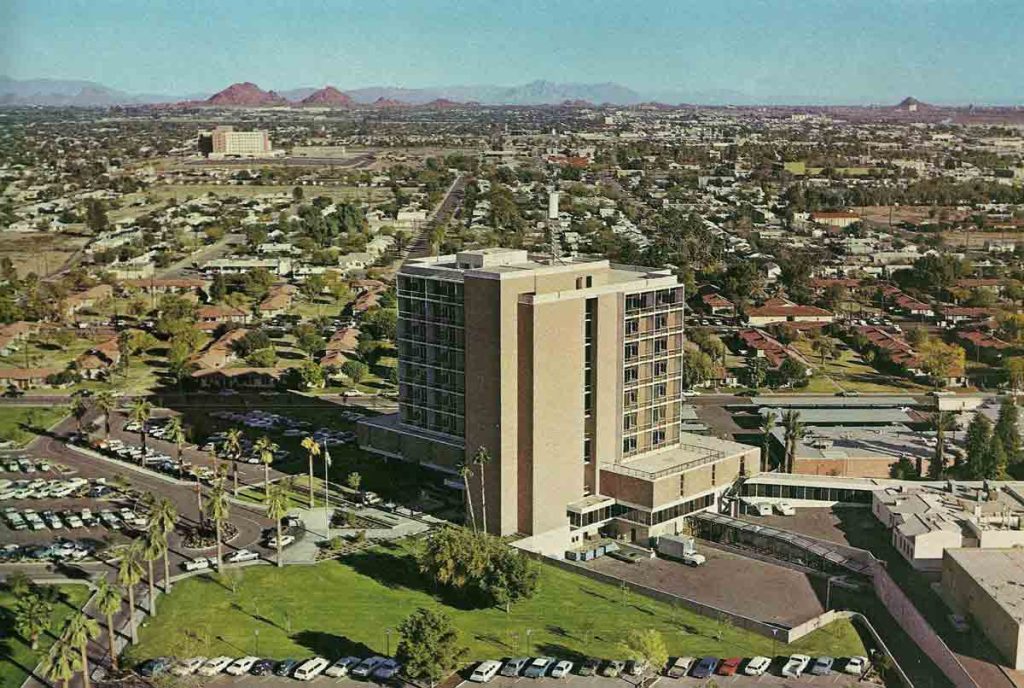
Town DitchSt. Luke's Hospital was built on the ruins of the dense Hohokam village called La Ciudad. It tilts at an angle because it had to fit against the original canal dug by Jack Swilling and his gang from Wickenburg. The Town Ditch or Swilling's Ditch was covered in the 1920s but Villa Street preserved the angle. Today's St. Luke's extends all the way to Van Buren Street with a ghastly spread of rocks and gravel. Yet the hospital you see above was built in the shady Montezuma Heights barrio
of houses and public housing projects south of Edison Park. No gravel.

In my time on the ambulance, I spent a good amount of time at the emergency room of St. Luke's (or, as we called it with our dark humor, St. Puke's). In the New Testament, Luke the Evangelist was referred to as a physician.

Once, we heard an explosion outside and went to check what had happened. A patient had thrown himself off an upper floor and was well beyond our ministrations. On a happier note, we regularly had lunch (Code 7) at nearby Sevilla's (before it moved to McDowell), a family-owned Mexican restaurant surrounded by the 'Jects. The homeboys kept watched over our units so they wouldn't be broken into for drugs or stolen.

Off duty, I would visit my mother there, in her twice-annual stays as a patient, being treated for the emphysema that would kill her within a few years. The care was good.

I write all this because, after a century at this location, St. Luke's is closing.

Camelback through the years

Camelback through the years

Camelback_Mountain_1956
No physical landmark says "Phoenix" more than Camelback Mountain. It's also a geological oddity. The camel's hump was formed in the Precambrian era, from 2 billion years ago (in Arizona) to 600 million years ago. But the camel's head came from the Tertiary period, as recently as 66 million old — it was created around the time as the Papago Buttes.

As Halka Chronic writes in Roadside Geology of Arizona, "The whole sequence of Paleozoic and Mesozoic rocks that should come between the Tertiary head and the Precambrian hump is missing!" It's also the only faulted mountain in the Salt River Valley, the hump caused by the earth being lifted upward rather than volcanic activity.

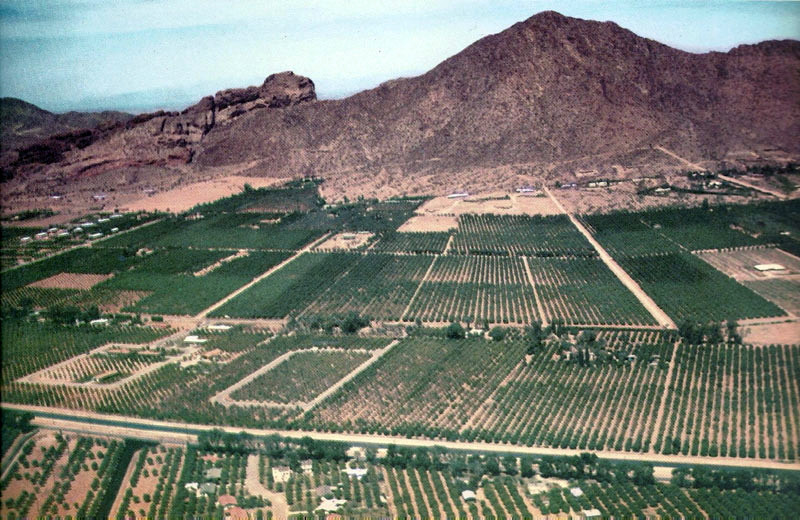
President Rutherford B. Hayes included Camelback in the Pima and Maricopa Indian reservation, a move reversed by the Territorial Legislature six months later. The 1956 photo above shows the mountain was still pristine, the same iconic image seen by the Hohokam, to whom it was sacred, and the first pioneers. But preservation was tardy and by this time private interests owned the entire mountain.

By the early 1960s, houses were marching up the side, with plans to go all the way to a resort on the top. I write about the ultimately successful effort to save the mountains elsewhere. It is true that Barry Goldwater took on the cause of Camelback after his unsuccessful 1964 presidential bid. We schoolchildren collected coins for the effort. But it ultimately took federal money, thanks to Interior Secretary Stewart Udall, to save the upper reaches of Camelback.

Phoenix extended Arcadia Drive north of the mountain's namesake avenue to serve the luxury homes clinging to the side. Who doesn't remember their first kiss from Valle Vista Road with the city lights reaching to the horizon. Unfortunately, recent years have also seen enormous numbers of hikers, especially tenderfoots attempting the ascent of this wilderness in the hottest weather. Their rescues put first-responders at risk and cost city money.

Let's take a visual tour of this magical mountain through the years (Click on a photo for a larger image).: