The Circles jerks

The Circles jerks

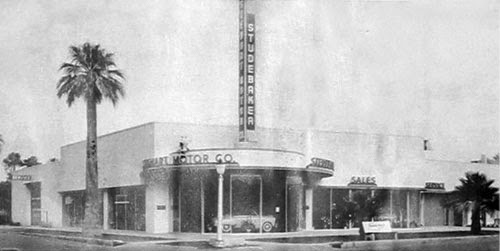
Stewart_Motor_Co_Studebaker_800_N_Central_1950s

Stewart Motor Co., the Studebaker dealership, in the 1950s.

I knew they would do it, only when and whom the "they" would be. After Circles Records closed in 2010, I worried every time I passed the empty building. The only surprise was the speed with which much of the cherished former Stewart Motor/Circles Records, built in 1947, was demolished.

Aspirant Development, a unit of Scottsdale-based Empire Group, says it wants to build apartments on the site at Central and McKinley. It bought the parcel for $2.65 million. The company had even scheduled a meeting with the Roosevelt Action Association neighborhood groups on the Monday when…ooops!…two-thirds (or less) of the streamline moderne structure was torn down.

In a way, it's a salutary development that there was enough outrage to stop the tear-down and cause Aspirant to hire the ubiquitous Jason and Jordan Rose to handle damage control. Mayor Greg Stanton had this to say on Facebook:

I am angry that in the middle of negotiating a plan to save the iconic Stewart Motor Company building, the developer began demolition. After my office participated in discussions between the developer and neighborhood leaders, I was confident that a resolution would be found. However, sadly, it appears that the developer was acting in bad faith.

BACKGROUND:

The City’s Community and Economic Development Department was in the middle of discussions with the developer, Empire Group. Some of the agreed terms of the discussion stated that the developer would not demolish or remove any portion of the existing building on the Site prior to submitting for construction permits. Empire has plans to build a 19-story apartment building on the 1.24-acre site.

If only such consciousness had been around when hundreds of irreplaceable buildings were bulldozed in the 1980s and 1990s. Yet even now, the unofficial Preservation Police can't be everywhere at once, particularly when so much of the deck is stacked against them.

The developer even apologized. But here's the rub: Aspirant appears to be holding the remains — basically the facade — hostage in order to secure a tax break from the city. Something like a 25-year moratorium on property taxes. In exchange, it would build the 19-story apartment tower with pieces of the old building incorporated into a boring new glass lookalike design. After the developer's behavior, this will be a tough sell to Council.

Stanton’s dilemma

Stanton’s dilemma

Talking_Stick_Resort_Arena
Phoenix Mayor Greg Stanton gave a fine State of the City speech this week (you can watch it here). One could quibble with his "Not even a decade after the Great Recession shook us to our knees, Phoenix has emerged stronger and more resilient than ever before with an economy that is breaking free from the chains of the boom-then-bust cycle." Phoenix has far under-performed its peer cities in this recovery. But Stanton is an upbeat guy and Phoenicians have a hard time with reality.

He deserves credit for the courage to call out the Kookocracy's war on cities.

Now, the hard stuff. Outside the prepared remarks, the mayor supports building a new arena to be shared by the Suns and Coyotes, with at least some taxpayer money involved. The Arizona Republic reported, "Phoenix already has a permanent tourism tax on hotel and motel stays and car rentals. It is in the process of selling the city-owned Sheraton hotel and the Translational Genomics Research Institute building downtown, projects supported by the tourism tax. By getting those buildings off its books, the city could potentially free up revenue to help pay for a new stadium."

Not surprisingly, this produced its share of criticism. For example, E.J. Montini columnized about rich team owners asking for welfare:

So, politely as possible, I would suggest that all of us collectively send a little note to these guys:

"Dear Suns, Coyotes (and Diamondbacks),

"Build your own damn sports complex.

"Respectfully,

"Phoenix."

Jim Newcomer, an appreciation

Jim Newcomer, an appreciation

Newcomer2
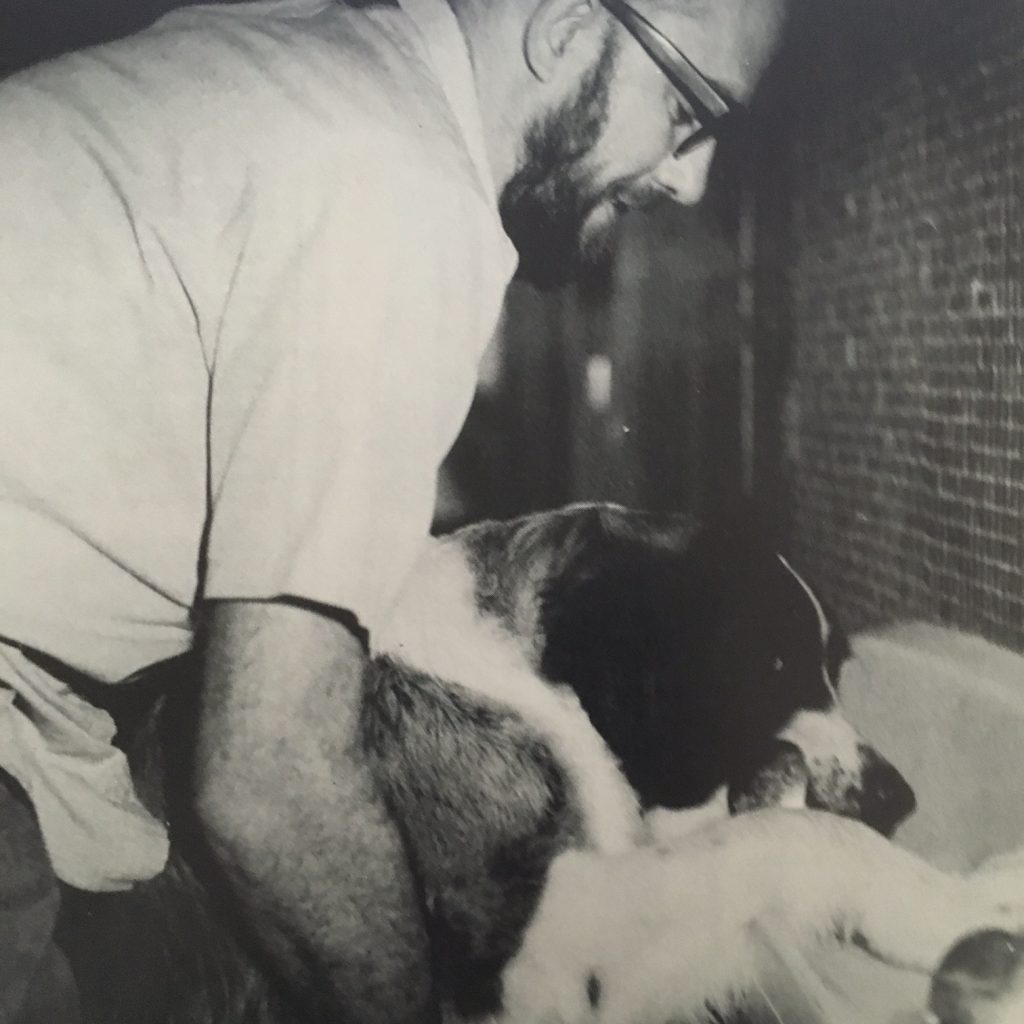
Like the elves departing Middle Earth they are now leaving us, the gifted teachers who helped make us the men and women we became. No loss has been tougher than the recent death of James E. Newcomer.

He was a towering figure among the giants assembled by Eugene Hanson at the Fine Arts Department of Coronado High School in Scottsdale, including Robert Frazier and Joseph Gatti. In those days, Scottsdale taxpayers happily funded public education. Coronado built one of the most respected fine arts programs in the nation. While other schools had a "senior play," we had seven or eight productions a year in the glory days of the 1970s, when I was blessed to be a student. These included a major musical and spring repertory, with productions at a level of sophistication and skill that could match university or professional theater. This was in no small part because of Jim Newcomer.

He drove a little red Beetle — one always knew he was on the job when it was parked behind the big roll-up door at the rear of the auditorium, even on weekends. He kept company with an enormous St. Bernard named Hildegard.

As the senior theater arts teacher, he taught acting as well as technical theater (lighting, set design and construction, props, costuming, makeup, etc.) Working in the stunning performance space designed by famed Phoenix architect Ralph Haver, we were repeatedly told by Newcomer that we might never again work in such an excellent facility. He was right. Most Broadway theaters were dumps. Plays at ASU were performed in the former college boiler room, the Lyceum Theater.

Newcomer was charismatic and striking, a tall man with a booming voice and laugh, a beard and long legs that splayed out whenever he sat down. Even the shyest student could find a place in Coronado theater, be it in property management or costuming. Yet all were a part of an enterprise that was demanding and professional. Excellence was Newcomer's true north and he got it.

Snakebit

Snakebit

Chase_Field-3
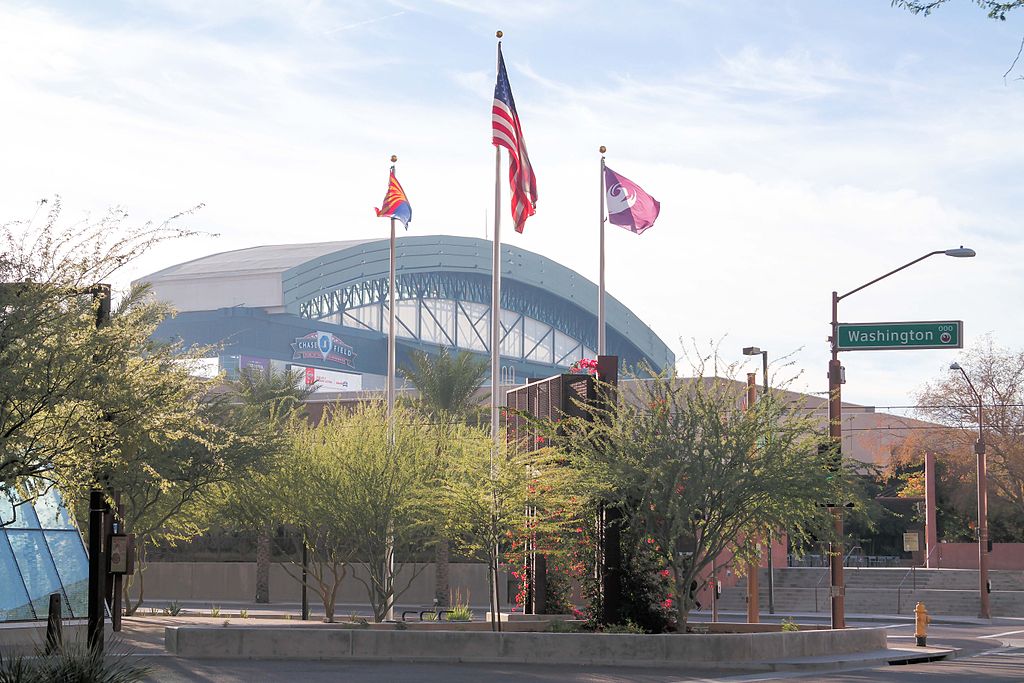
As with the Suns arena, the Diamondbacks stadium never would have been built downtown if it weren't for the unfairly reviled Jerry Colangelo. He was the last remaining civic steward who could knock heads and write checks in the tradition of the Phoenix 40.

Other sites were proposed, including on the Glendale fringe and at 40th Street and the Red Mountain Freeway. But Colangelo saw both venues as essential to the revival of the heart of the city. It was telling that with all the old headquarters gone or going, a sports executive was the last man standing. But it was enough and both facilities played pivotal roles in saving downtown.

BOB/Chase Field is not a handsome stadium, looking more like an airplane hanger than Camden Yards, Safeco Field, or Coors Field. It led to the demolition of numerous historic structures in the Warehouse District and Chinatown, including the Arizona Citrus Growers Coop building. On the other hand, a successful archeological dig was undertaken there. And the finished product is convenient to the entire region and located on light rail (WBIYB). Significantly, its air conditioning proved that Major League baseball could succeed in Phoenix.

Now, under Managing General Partner Ken Kendrick, the Diamondbacks are demanding that the county provide $187 million in upgrades — "current and future maintenance obligations" — or the team will seek a way out of its lease and leave.

I have long suspected that Kendrick, and his Suns counterpart Robert Sarver, have longed to depart downtown for the suburbs. Neither has a deep affinity to Phoenix or commitment to the health of downtown. Kendrick was already behind the lavish Spring Training facilities on the Salt River Pima-Maricopa Indian Community close to north Scottsdale. His wife, Randy, is a major right-wing money figure and both give to Koch causes and the "Goldwater" Institute — stances guaranteed to be anti-city.

The war on cities

The war on cities

001(Michael Ging photo)

"Local control" is one of the bedrock principles of the Republican Party. But as Arizona shows, this only applies when Republicans are in control locally.

Thus, the Legislature has passed laws forbidding cities from banning plastic bags, threatening to withdraw revenue sharing from those that mandate sick leave, and retroactively prohibiting Roosevelt Row from forming a business improvement district. In each case, these were pushed by suburban lawmakers.

For Arizona, this is a retrograde move from the 1960s and 1970s. Before the Supreme Court's 1964 "one man, one vote" decision, state policy was ruled by powerful rural state senators who consistently voted against education, transportation, and other infrastructure." With a Legislature that actually represented the population, Republican leader Burton Barr in the House and Democratic leader Alfredo Gutierrez in the Senate pushed through a slew of modernizing bills.

In recent decades, it's been moving in the opposite direction, from continued funding for sprawl-producing freeways to some of the worst cuts in education funding in the nation. It has fought and sabotaged light rail (WBIYB). Land-use restrictions are non-starters. Commuter rail or passenger service between Phoenix and Tucson are pipe dreams. New "takings" laws have severely limited cities' economic development and preservation efforts.

Arizona is one of the nation's most urbanized states, with 80 percent of the population living in the Phoenix and Tucson metro areas and most of the rest in smaller metros such as Flagstaff. Almost all of the intelligent responses that Arizona needs are to urban problems. Yet the Legislature is adamantly anti-city and growing more so with each session. (And, of course, it is against any mention of climate change).

Trump country

Trump country

MM-and-SK-on-Voter-Anger--Manufacturing-Employment-Decline1

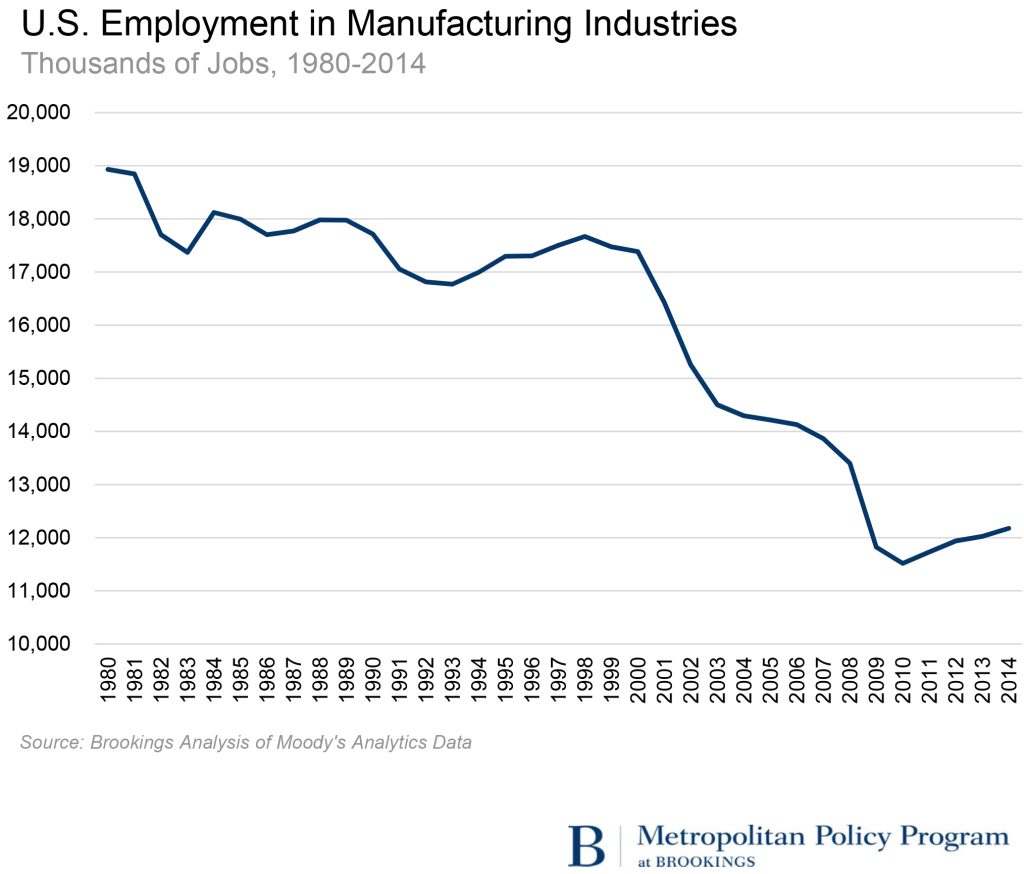
The chart above is pimped on Twitter as "Voter anger explained — in one chart."

With all due respect to my friends at Brookings, it doesn't explain the lead enjoyed in Arizona by [the real-estate developer]. The Wall Street Journal is closer to the mark in a story headlined, "Arizona Primaries to Stress Immigration."

[The real-estate developer] has made illegal immigration a centerpiece of his campaign since the day he entered the presidential race last June. He’s said many illegal immigrants from Mexico are “criminals” and “rapists.”

He’s also called for the mass deportation of all 11 million illegal immigrants currently living in the U.S. One of his top applause lines at rallies is that he will build a wall along the entire U.S.-Mexican border and force the Mexican government to pay for it. His rivals, including Texas Sen. Ted Cruz, have made similar comments.

“Border security is not just rhetoric here in Arizona,” said Christine Jones, a businesswoman and Republican activist who ran unsuccessfully for governor in 2014. “It will always be among the top issues because it’s an issue that people live” in their day to day lives in the state, said Ms. Jones, who is currently neutral in the 2016 race.

Mr. Trump has won the endorsements of the popular former governor of the state, Jan Brewer, as well as Maricopa County Sheriff Joe Arpaio, who has built a national reputation for his tough stances on undocumented immigrants and his unorthodox treatment of prisoners in his custody, including housing inmates in tents and forcing them to wear pink underwear.

Phoenix 101: Before superblocks

Phoenix 101: Before superblocks

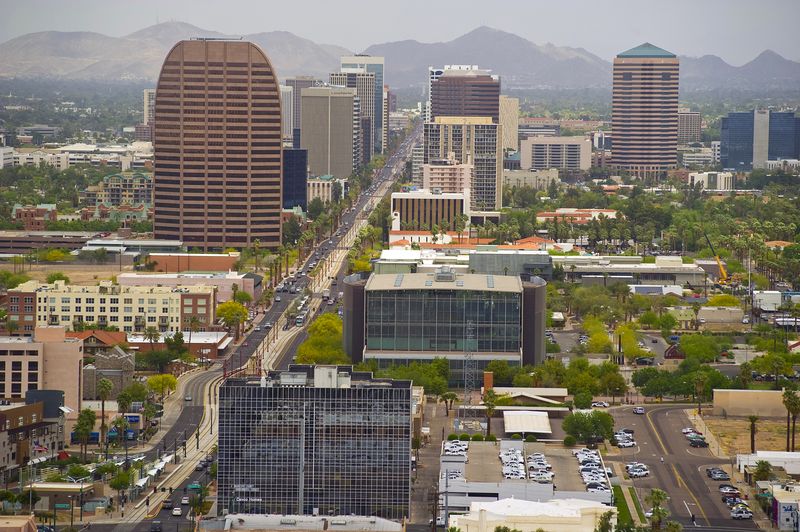
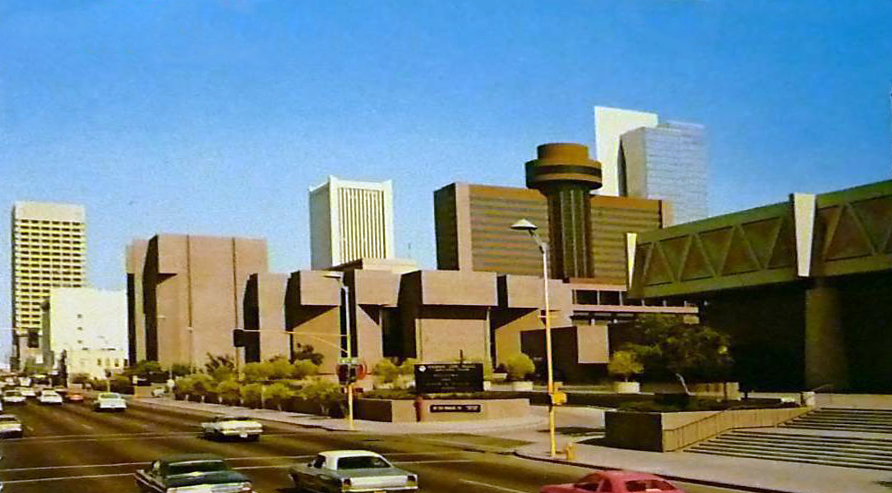
Washington_looking_west_1970s"Superblocks," with one project, be it an office, apartment, or parking garage, taking up an entire block, are one of the biggest enemies of a vibrant downtown. Think of old Civic Plaza (right) or the Chase Tower and its parking hulk. Even CityScape, which has many shops, offices, and restaurants (unfortunately facing inward), consists of superblocks that once held dozens of individual buildings, each with distinctive architecture and attitude to the street.

This is not a problem confined to central Phoenix — superblocks are profitable for developers. But this is a Phoenix-centric blog and no other major city lost more of its good urban bones to teardowns and, in many cases after decades, rebuilding into massive projects that are nearly dead at street level.

It's important to recall what Phoenix had. Not for nostalgia, but for lessons in how good cities really work (which is usually the opposite of what urban planners want) and because so few Phoenicians even know what once existed.

So thanks to the new digital archive of the McCulloch Brothers collection at ASU and other shots archived by Brad Hall, let's examine the energetic, walkable, full-of-life-and-commerce Phoenix:

Punked again?

I was going to write about [the real-estate developer], but that can wait until next week.

Here on the ground in Phoenix, there are new apartments but mostly rumors of new apartments.

For example, the property on the southwest corner of First Avenue and Roosevelt across from Trinity Cathedral is a dark hulk. Two five-story stairway shafts and one floor have been built. But it looks much the same as it did three months ago. No work seems to be happening.

The Edison, just south of One Lexington on Central, has a fence up, some grading done, and that's it. Lennar's apartments at Central and McDowell are moving very sloooowww.

Maybe I'm spoiled by Seattle. About 200 buildings, many of them skyscrapers, have been completed, permitted, or are under construction just downtown over the past couple of years. Things come out of the ground fast.

Unchangeable you

I've been writing about Phoenix and Arizona for 15 years now, first as a columnist for the Arizona Republic and then in this space.

We've had some victories to be sure, and I'll take a little credit for being in the fight, often against the worst kind of civic thugs and wreckers. Among them: revitalizing central Phoenix, building the new Convention Center, winning T-Gen and making a start, albeit so slow, on the Phoenix Biomedical Campus, creating the downtown ASU campus, and light rail (WBIYB). Under Michael Crow, ASU gained stature and I was writing in support all the way.

I worked hard to provide history and context to a place rich in both, but where so many people think they don't exist — indeed, that they are dangerous. Amid the rackets, my job was not to be a cheerleader for the short hustle but to call balls and strikes.

And yet, nothing much has changed in the big picture. We keep losing.

Despite a brief moment of hope when St. Janet became governor, the extreme right has become more dominant than ever. The charter school racket. Cutting public school funding while giving tax breaks to private schools and money to rich districts. The private prison racket. The refusal to consider sustainability in the face of climate change. Continuing to depend on sprawl real estate as the main engine of growth. Further profaning the deserts and forests. It's a long list. And nothing changes. Indeed, it gets worse.

Phoenix Confidential: Frenchy

Phoenix Confidential: Frenchy

Frenchy_graveThe 1944 murder of Phoenix Police Officer David "Star" Johnson by Detective "Frenchy" Navarre is well-known to regular readers here (if you're new, you can read this real-life-pulp-fiction tale here). For years, the police department and city tried to forget the incident — and subsequent retribution by Johnson's partner in killing Navarre — not least because of its racial component. Johnson and his partner, Joe Davis, were black. Navarre was white.

Now that it's more in the open, Johnson deserves to be recognized by the department as an in-the-line-of-duty death.

But mysteries continue to linger about the shooting on May 2, 1944 in the Deuce, and the cascade effect it had, resulting in two trials, Navarre's acquittal, and Davis taking revenge inside police headquarters. For example, how did Navarre post bail of $10,000 after his arrest on a city detective's modest pay?

A big part of the answer is that Navarre was friends with Gus Greenbaum, the high-ranking member of the Chicago Outfit who had been posted to Phoenix in 1928 and later became infamous at Las Vegas casinos and the victim of a high-profile assassination in Palmcroft in 1958.

University of nowhere

So it has come to this: Private equity will buy Apollo Education, the parent of the Unaiversity of Phoenix. It is "a move," the Wall Street Journal reports, "that would take the beleaguered company out of the eye of public investors."

But perhaps not out of peril from criticism by the White House and investigations by federal and California regulators. Maybe. The "for-profit education" sector is a contributor in politics (see here and here); even better, it fits the ideological bias of the ruling Republican Party (and neoliberal Dems) that the "free market" is the solution to everything.

The former, especially in Arizona, has spent years defunding public institutions of higher education. In other words, real universities, where one received a "universal" education under greater or lesser but real rigorous standards. Where students often had their first real experience with people from different countries, ethnicities and, if they were fortunate, different life paths. Places with real campuses, libraries, and traditions.

Nor will the controversial "business model" of the University of Phoenix likely change much. For all the "free market" triumphalism, the company depended on the U.S. taxpayers for 81 percent of its revenue. Most of this was in the form of federal student loans. The graduation rate is poor. Either way, students are disproportionately on the hook for debt. Since 2010, when the "university" had 477,000 students, it has been bleeding enrollment (See Business Insider's useful primer here).

Of all the hustles and rackets in Arizona that needed a lengthy proctological exam by the press, this is one of the top opportunities not primarily involving water or land use (even more so than public pensions or expense account padding!). Yet it has never, to my knowledge, received it.

The governor from Koch

No one should be surprised that Arizona’s governor, wealthy Republican Douglas A. Roscoe Jr., aka Doug Ducey, attended yet another conference sponsored by a Koch brothers front group.

As Howard Fischer reports, in the gubernatorial election the Koch organization American Encore spent more than $750,000 on attack ads against Democrat Fred DuVal. Another $650,000 was plowed into pro-Ducey efforts.

This is chump change in the multi-decade effort by right-wing reactionary billionaires to take control of American politics and game policy to their ends. Jane Mayer of the New Yorker does an excellent job of exposing its reach in the book, Dark Money.

The Democrats, much less liberals, have nothing that can compete.

The Warehouse District

The Warehouse District

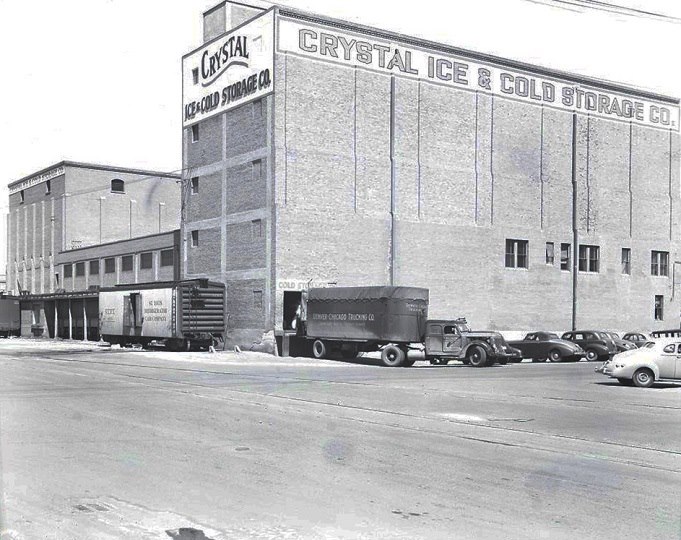
Crystal IceRailroad tracks running to Crystal Ice at Fourth Avenue and Jackson in the heart of the district. The plant not only provided ice deliveries to businesses and homes, but produced blocks to fill the bunkers of railroad refrigerator cars. The blocks were dragged and placed through roof doors in the railcars by workers on catwalks using hooks.  (McCulloch Bros./ASU Archives).

Phoenix's Warehouse District is finally seeing a payoff after years of destruction and false starts. How big a renaissance remains to be seen; coverage I've seen such as this doesn't quantify the new businesses. But something is happening. Most important, it involves creative firms and tech startups, not only restaurants.

The area saw an effervescence before, when artists discovered the historic buildings in the 1980s. But they were driven out by the arena, ballpark, Joe Arpaio's relentless jail expansions, Phoenix's ethos of tear-downs, and the city's lack of an effective preservation policy. The Job Corps moved into several buildings.

Some of the best buildings were lost. This helped fuel the successful fight in the mid-2000s to save the Sun Mercantile building, part of the city's old Chinatown. A few developers with stamina and perseverance, notably Michael Levine, refurbished some buildings. Another comeback attempt came with the opening of the unfortunately named Bentley Projects (the old Bell Laundry) in the 2000s, which included a restaurant, galleries, and a Poisoned Pen Bookstore. Too far from the core, that didn't take, either.

Phoenix never boasted a warehouse district with the size and great bones of, say, Denver, which has become a tremendous asset for an area anchored by the restored and expanded Denver Union Station. Phoenix was too small and limited in its economic heft. Still, what remains of the area is one of the city's treasures. It's one of the few places in Phoenix where you can find that coveted urban authenticity, with a variety of old buildings, narrow streets and density, that talented creatives seek.

When Ducey met Cali

When Ducey met Cali

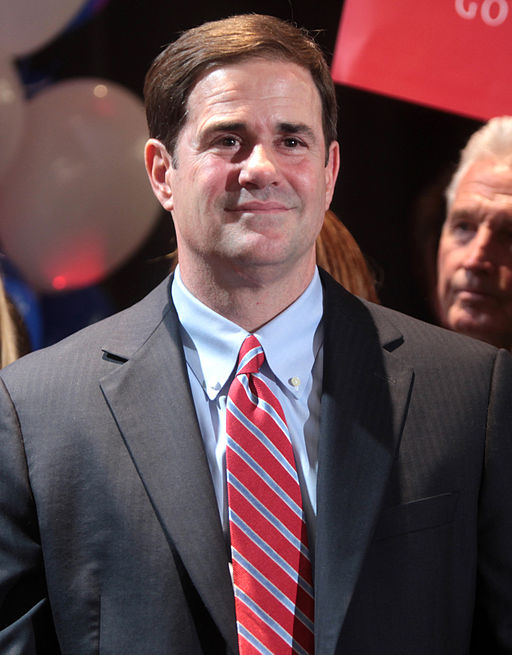
Doug_DuceyHe opened the door, so let's walk through.

He being wealthy Republican Douglas A. Roscoe Jr., aka "Doug Ducey," the governor of Arizona. In his State of the State address, he made a special point of contrasting Arizona's supposedly booming economy vs. the alleged economic disaster of the Golden State. As in, "So the goal is simple – to grow our economy, to take full advantage of our geography to better address the needs of businesses fleeing California and other states on the decline, and to ensure job creators who are already here, stay and thrive."

Let's look at the facts.

In November, the most recent month for which statistics are available, California's unemployment rate was 5.7 percent. Arizona's was 6 percent.

As of 2014, the most recent year available, Californians enjoyed a per capita personal income of $50,109; Arizonans struggled with $37,895. Median household income was $60,487 in California vs. $49,254 in Arizona. These are the "job creators," citizens with the incomes to spend and invest.

California has added 2 million new jobs over the past six years to reach a new record high. So much for companies "fleeing." Indeed, it is one of the most robust states for company formation and startups.

Arizona's gross domestic product is still below its pre-recession peak and stumbled along with 1.4 percent growth in 2014. California's GDP is at new record highs and grew more than 2.5 percent annually.

The bus strike

The bus strike

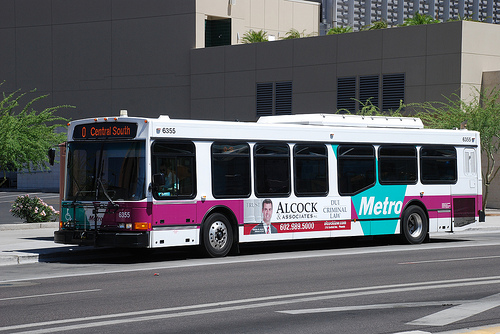
AbusAs a tentative agreement is reached to end the bus strike, is it the longest in Phoenix history? No — the record goes to a ruinous 56-day walkout in 1962. Tucson went through a 42-day strike last year, where Sun Tran drivers were particularly concerned about improvements to their safety. Once again, the strike was against Transdev, the multinational company that also operates many of Phoenix's routes (another operator is First Transit, which handles Valley Metro routes mostly in the suburbs).

Let's hope the drivers — who hardly make princely wages — get clean, safe restroom stops. That's not too much to ask.

The Republic has done a good job of laying out the issues and maintaining daily coverage. So I'll try to piece together some added context, questions, and thoughts.

The strike appears confusing because it affects 34 routes that carry 80,000 daily boarders. This has taken out almost all of the routes in the city and those that run east-west, except for the busy McDowell, Thomas and Indian School buses. With scabs, Transdev is operating some on reduced schedules. But according to the now-always-accurate Wikipedia, Valley Metro has 101 routes.

Part of the confusion may stem from Valley Metro merely being a brand for the city of Phoenix and the Regional Public Transportation Authority, an amalgamation created in 1993 from the old Phoenix Transit (Tico!) and other operations in Mesa, Tempe and Scottsdale. Most of the actual organizational expertise comes from the City of Phoenix Public Transit Department. Throw in the private-sector contract operators and light rail (WBIYB) and things get even more confusing.