The ‘gub’ment land’ hustle

The ‘gub’ment land’ hustle

TR
Even many Republicans are distancing themselves from the Y'All Queda/Vanilla ISIS theater in Oregon. And many liberals have rightly made a contrast with the authorities' likely response if a band of armed black militants would have taken over a federal building.

Beneath it, however, is a longstanding dislike of the federal government by many Western landowners and cattlemen. They wanted the perks that came from Washington: the Homestead and Desert Land acts, conquest of native tribes, land-grant railroads and reclamation.

They eagerly exploited the favorable terms of the General Mining Act of 1872, as well as price supports and other goodies for farmers and ranchers and timberlands in the 20th century. Developers wanted federal Interstates and other highways, flood control and murky, corruption-tainted land swaps of public land. And they demand taxpayer-funded firefighting to protect their "cabins" (read exurban subdivisions where they shouldn't have been built).

Ammon Bundy, son of welfare-queen rancher Cliven and "mastermind" of the Oregon takeover, is a taker himself. He received $530,000 through a tyrannical federal loan guarantee program for his truck-repair business in…wait for it…Phoenix.

Otherwise, these rugged individualists wanted the government gone. Some of Arizona's leading statesmen opposed making a National Park at Grand Canyon.

The notion of an oppressive federal government controlling the land, and hence the destiny, of the West has been political fuel for the Republican Party since the so-called Sagebrush Rebellion of the 1970s. One of its prominent arsonists was Nevada Sen. Paul Laxalt, a friend of Ronald Reagan. Now the issue is back.

Earlier this year, Arizona Republican Congressman Paul Gosar said, "For every acre of land declared public, there is an acre of private land lost, and in Arizona, only about 18 percent of the land remaining in the state is privately held."

He's right (it's 18.2 percent), yet very misleading.

WWII home front: Phoenix

WWII home front: Phoenix

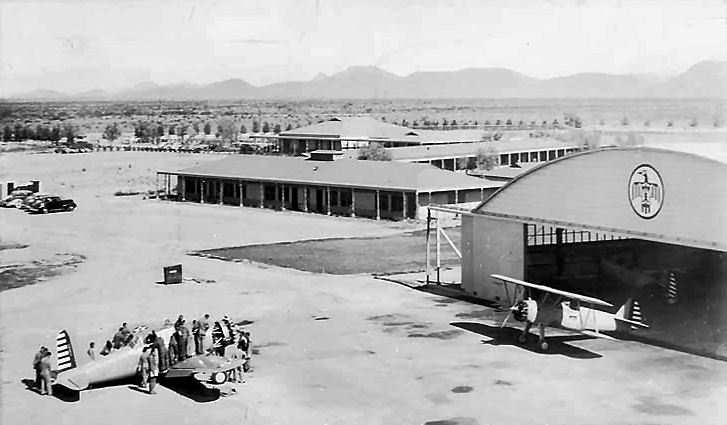
Thunderbird field
In the conventional telling of Phoenix history, World War II marks the pivot between the "old" and "new" city. The reality is not quite so neat. But the war does deserve its own niche, separate from the more expansive decade of the 1940s.

As with the Great War, the most immediate local beneficiaries of the outbreak of hostilities in Europe in 1939 (China had been fighting for its life against Japan since 1937) were the cotton farmers of the Salt River Valley. Even with America nominally neutral, Washington tilted policy toward Britain and France, and our extra-long staple cotton was critical to making tires.

But unlike World War I, the Second World War would touch Phoenix much more profoundly. It would bring military bases and new industries. Population increases would strain the city. Simmering racial hostilities would break through. One of the great injustices of American history would literally run through the heart of town.

The valley's destiny lay not merely with the land but in the sky. It, along with Tucson, was identified as an ideal place to train military pilots thanks to the abundant clear days. Even before America entered the war — and in spite of a large isolationist sentiment in the Congress and the country — FDR's War Department began seeking locations for air bases in the Southwest. They were meant to enhance "preparedness," Roosevelt's armed neutrality, but also train British, Canadian and Chinese pilots.

The best of Rogue 2015

The best of Rogue 2015

11113955_473971796114940_6472959220703346943_oPhoto by Eugene Scott

Phoenix should leave the Greater Phoenix Economic Council: "GPEC can't serve the special needs of Phoenix and the appetite of the sprawl boyz. Maybe a few projects to far north Phoenix. But what has GPEC done for downtown, the Central Corridor or to fill abundant empty land along the light-rail line in the city? Not much if anything."

The evolution of the press, radio, and television in Phoenix: "It is an open question of how much power "the Pulliam press" actually had in post-war Phoenix. The city was attracting large numbers of middle-class Anglos from the Midwest that already shared his larger political philosophy. Pulliam was a civic leader, but hardly the only one, and most shared a common vision of a "business friendly" low-rise city with minimal restrictions on individuals. At least on white people."

Still got Dick Nixon to kick around: "For decades, Richard Nixon has been the devil to the left. But the left isn't politically relevant anymore (Jerry Ford Republicanism is what passes for "the left" in today's broken political spectrum). What's more consequential is that Nixon is now the devil to the right, which is more powerful than ever. So in the public square today, we are relitigating not Watergate but the domestic achievements of Tricky Dick."

Man behind the curtain

It seemed like the 1980s and 1990s all over again, the recent Arizona Republic story about a speculator ordered to pay $86.4 million arising from a lawsuit over the "Road to Nowhere" land play west of the White Tanks. The project promised housing for 300,000 residents. It was never built.

I urge you to read the story. The labyrinthine deal and long-running court battle defy easy explanation and benefit from the authoritative writing of veteran Republic reporter Dennis Wagner. If you're outraged by a government official padding his expense account, you should see how the private sector rolls in Arizona.

Unfortunately, local journalists rarely venture into alleged wrongdoing by corporations, much less the enormously powerful elements that comprise the Real Estate Industrial Complex. When this happens, however, the curtain rises, ever so slightly on how "the system" really works, how power is used.

This is one of those rare moments. And, not surprisingly, at the center of this story is the fascinating Conley Wolfswinkel. At about age 65, he is the Energizer Bunny — or the Terminator ("That's what he does! That's all he does! You can't stop him!") — of central Arizona land speculation.

Happy holidays

Happy holidays

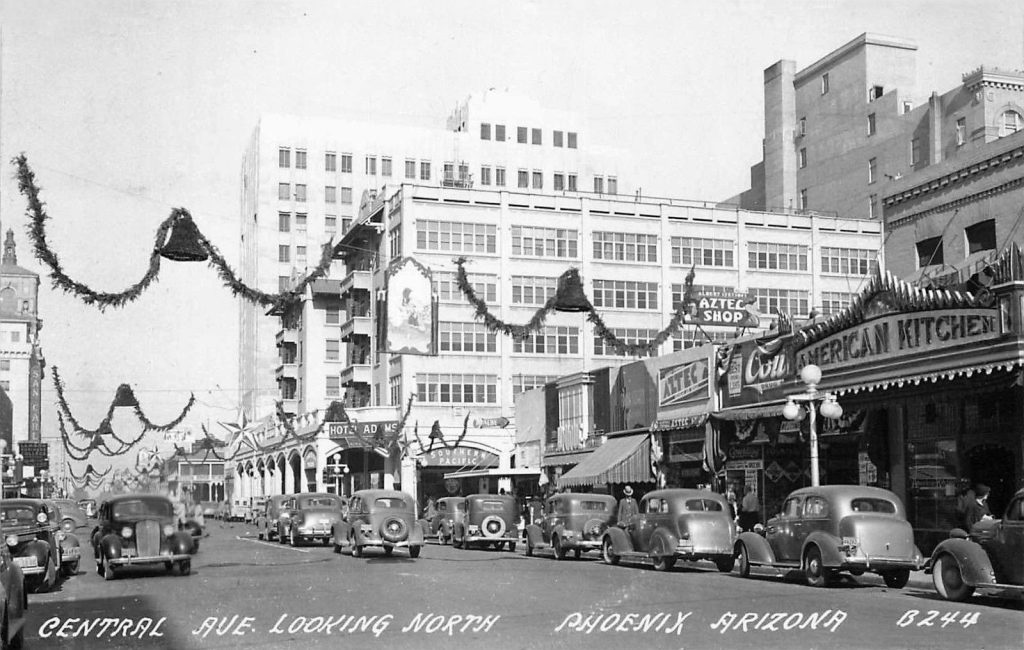
Central_Adams_looking_north_1940s

The saddest Christmas story I've encountered this year is the lack of holiday lights on Central Avenue.

From the time that I was a child until I left Phoenix in the late 1970s, decorations spanned Central downtown. You would also find the at Park Central, when it was still a mall.

Later, more compact displays were attached to the light poles along the main boulevard of the city. This continued in various reincarnations into the 2000s. But not this year.

So while Phoenix is full of places to see great Christmas lights, there's nothing on Central. This shows that despite the progress made in the core, something essential is lacking.

The cost of choices

The cost of choices

053

We had a lively discussion on the previous column about people wanting choices in where they live. One of Phoenix's biggest competitive disadvantages is that is largely lacks the choice of a vibrant downtown and real urban neighborhoods. Austin, Boston, Charlotte, Denver, Portland and Seattle, among others have them. They also have suburbs, malls, championship golf, big boxes and chain restaurants. Phoenix mostly only offers the latter.

I have an urban sensibility; growing up close to a then lively downtown Phoenix I always have. So while I don't "get" the appeal of suburbia, much less the exurbia exemplified by the mess outside Prescott and in the Verde Valley, I don't want to harshly judge those who want that.

I only want them to pay for it. And they don't.

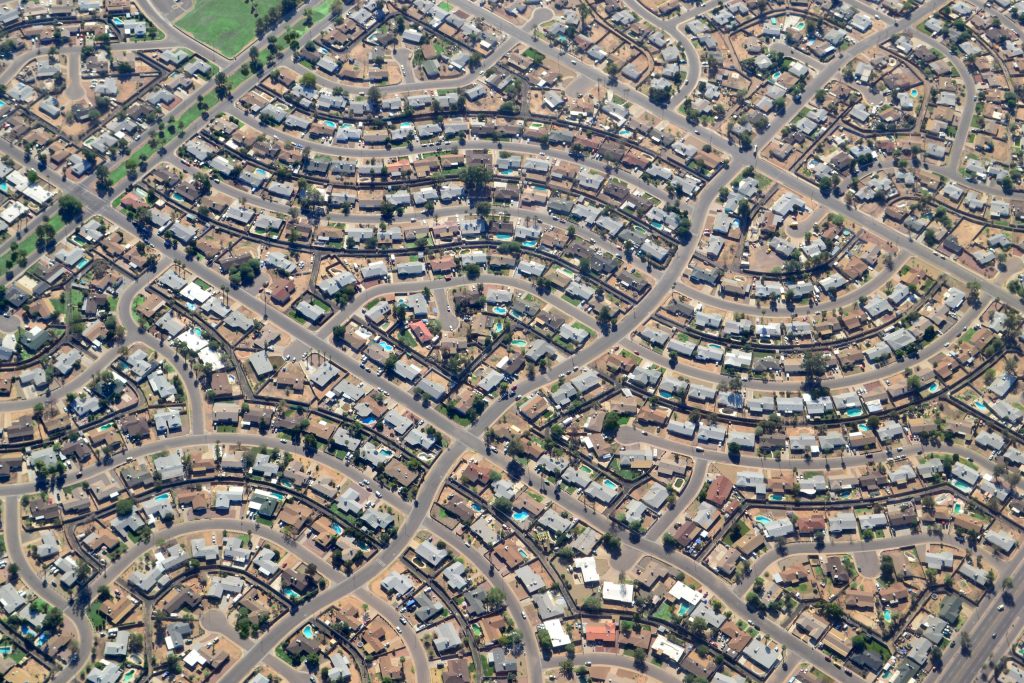
Suburbia and exurbia, for all their GOP "I got mine" individualist attitude, are heavily subsidized by taxpayers. Let me count the ways.

• FHA, other federally backed mortgages, and the mortgage tax deduction enabled especially Anglos to buy houses in the Maryvales of America and their successors. Urban neighborhoods were often redlined and assistance was not available. Smart Growth America reported that these federal subsidies cost $450 billion a year.

• Freeways sucked the life out of cities and made suburbs more convenient. Freeways did nothing positive for cities and entailed the destruction of entire urban neighborhoods. In the case of Phoenix, freeways made otherwise worthless desert or land only valuable for agriculture into gold mines for sprawl developers. This, along with the massive subsidies detailed elsewhere, has proved highly distorting to market forces.

Cautious signs of hope

Cautious signs of hope

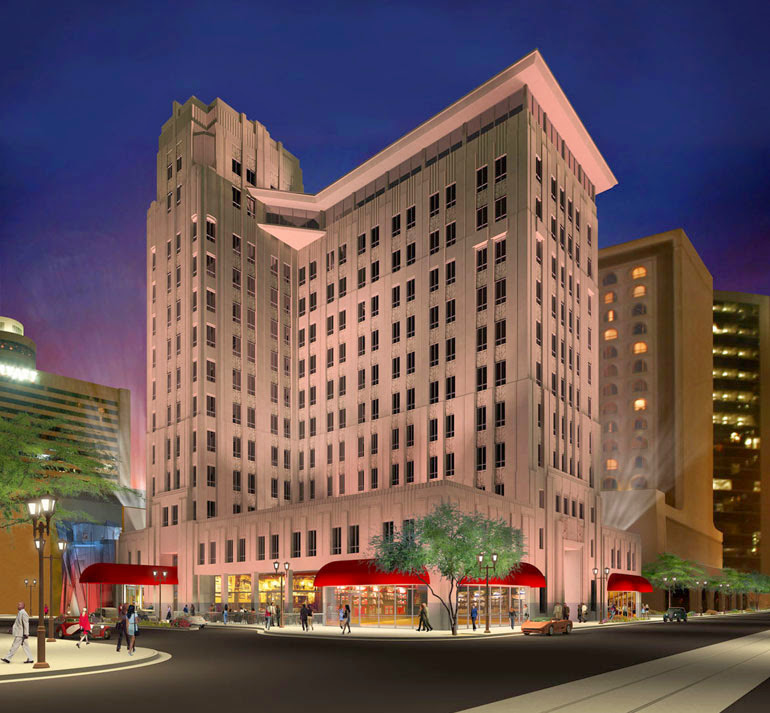
Professional_Building_Hotel_Monroe

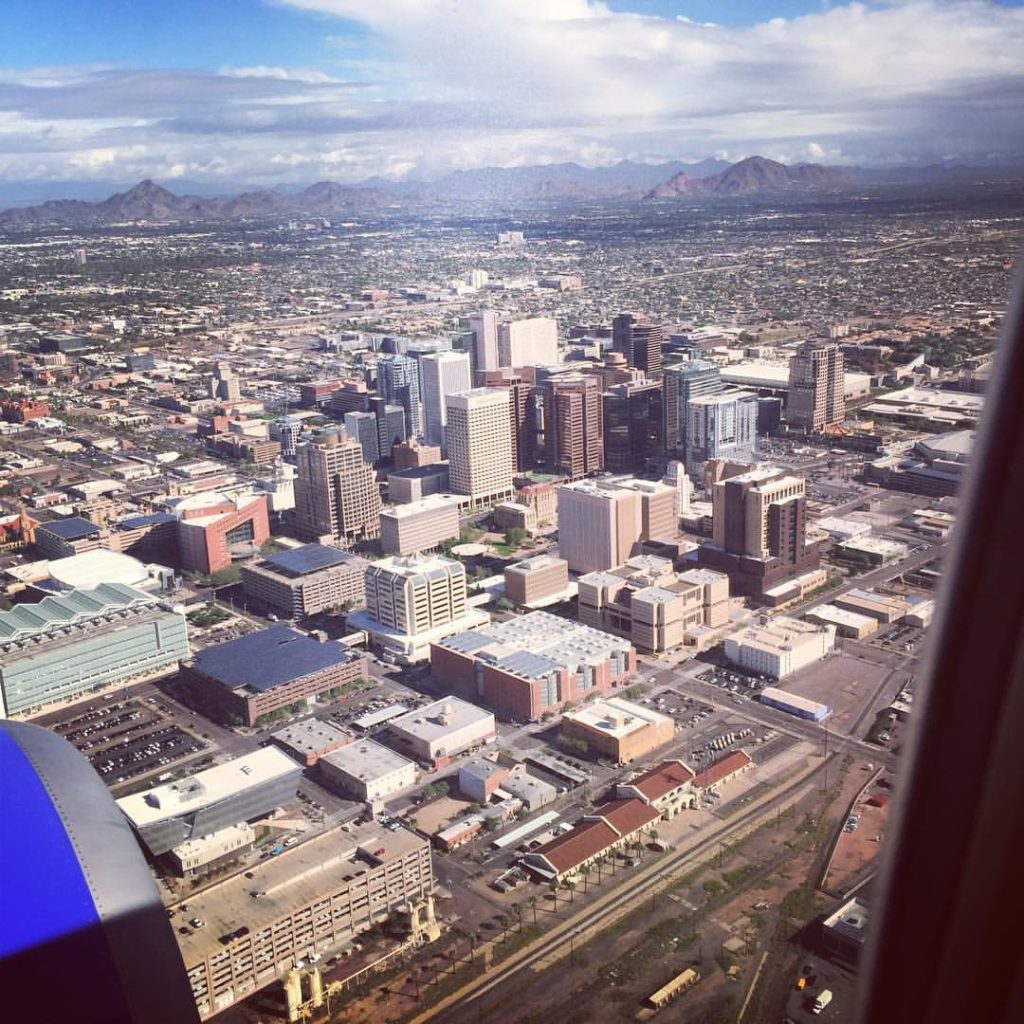
After spending two weeks in Phoenix, I'm tempted to conclude that the central city is undergoing its most robust efflorescence in decades. And it is happening below the "red line" of Camelback Road.

This is not based on any single project — the Central Station tower and new arena for the Suns and perhaps Coyotes may or may not happen. Rather, dozens of smaller projects, mostly residential, are completed, under construction or in advanced site work or planning. Lots that have sat vacant for decades are seeing construction. Buildings are being restored — one example is the nice job the Old Spaghetti Factory did with its two former mansions on Central.

Commerce is happening, albeit on a mostly small scale, with startups and a few companies moving jobs into downtown, Midtown and Uptown. The restaurant scene is booming. We're far beyond the days when we struggled to keep Durant's, My Florist, Portland's and Cheuvront in business. Traffic is busy on Central again; more important, so is pedestrian and bicycle activity. Outside the core but in the old city many shopping strips have been given new looks.

This is small potatoes for what should be happening in the core of one of the nation's largest cities. Seattle has about a hundred major projects recently completed or underway, many of them highrises. The skyline is being dramatically remade. But considering the damage done to Phoenix over many decades of civic malpractice, it is verging on a spectacular rebirth.

Traffic in old Phoenix

Traffic in old Phoenix

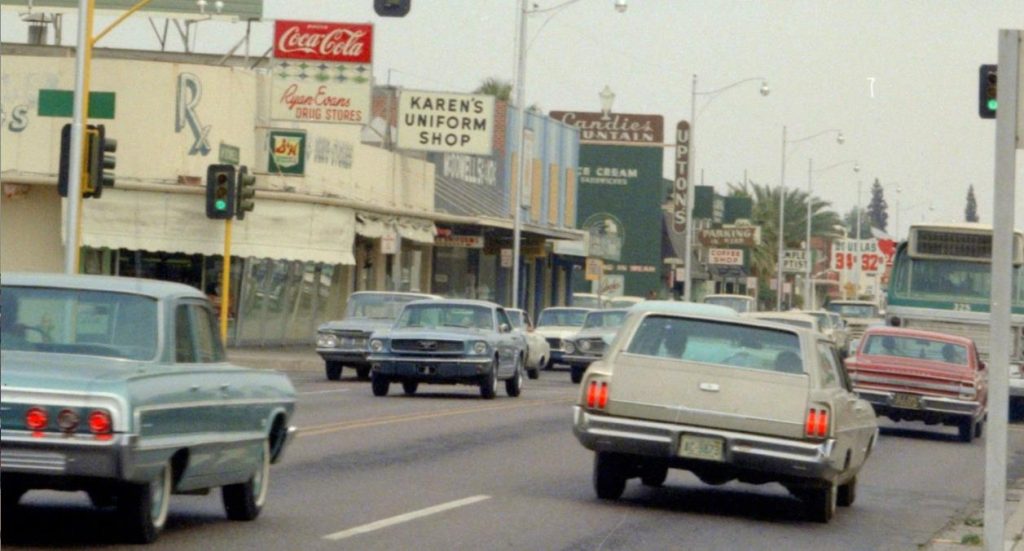
McDowell_10St._1960

Nothing has done more to wreck American cities than cars. Jane Jacobs was more precise: Planners and road builders "do not know what to do with automobiles in cities because they do not know how to plan for workable and vital cities anyhow — with or without automobiles."

In The Death and Life of Great American Cities, she continued: "The simple needs of automobiles are more easily understood and satisfied than the complex needs of cities… Cities have more intricate economic and social concerns than automobile traffic. How can you know what to try with traffic until you know how the city itself works, and what else it needs to do with its streets? You can't."

This 1961 warning did not stop the ongoing civic vandalism, which was particularly visited on Phoenix with catastrophic consequences.

Central_Ave_McDowell_looking_north_1940sOld Phoenix, with its 17 square miles and 105,000 people in 1950, was convenient and walkable. Streets were of modest widths — you can still see it on Third and Fifth avenues today. Cars easily co-existed with pedestrians. One fine example was the shady City Beautiful Movement parkways on Moreland and Portland streets. North of McDowell, Central was a two-lane street lined with lush palms.

But the planner elite, with their superstitions about how cities should work, were already undermining it.

They won’t build it…

They won’t build it…

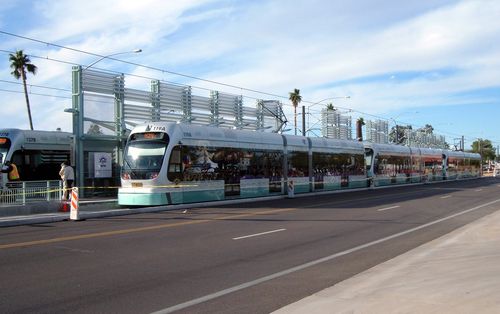
PhxLRTSo shopping-strip magnate Michael Pollack is worried about potential wording in Chandler's new general plan that might, might, possibly, someday allow light rail.

As the Arizona Republic reported, "It may be years from ever happening, but even the thought of extending the Valley's light-rail system from Mesa south into Chandler along Arizona Avenue is stirring strong opposition from a few key foes concerned that wording in a proposed planning document is a tacit endorsement of such a rail line."

There are, broadly speaking, two kinds of people in America: those with urban values and those with suburban values. The latter can sometimes "get it," how the health of an entire metropolitan area is dependent on a vibrant downtown — Oklahoma City is a good example. More often they don't, and the two tribes can't even speak the same language.

One of the biggest points of controversy is transit. Those with suburban values, especially "conservative" ideologues, have made a fetish of opposing any mode of travel that is not based on the automobile. Armed with seemingly economically invincible talking points regarding costs and often backed by Koch brothers money, they have defeated numerous transit measures nationally. They also speak in code to suburban whites, that transit will bring Those People to apartheid suburbia.

This is what makes Phoenix's light rail such a miracle. In the face of hysterical and often thuggish opposition, the starter line was completed and has now been expanded, with more growth on the way. It is highly popular. None of the predictions of doom happened. Even left turns are easy. We built it, you bastards (WBIYB).

Chandler won't. Never fear.

Ducey and the refugees

Ducey and the refugees

Women_and_children_among_Syrian_refugees_striking_at_the_platform_of_Budapest_Keleti_railway_station._Refugee_crisis._Budapest,_Hungary,_Central_Europe,_4_September_2015._(3)
It is low-hanging fruit to remind wealthy Republican Douglas A. Roscoe (aka "Doug Ducey"), the governor of Arizona, that one of the state's most famous families, the Bashas, came from the Laevant, specifically Lebanon.

Michel Goldwasser fled the 1848 revolutions convulsing Europe, first to London and finally to Arizona Territory. "Big Mike" changed the family name to Goldwater.

None of this would keep Gov. Roscoe from joining at least 30 other governors, almost all of them Republicans, from declaring their states would not accept Syrian refugees in the aftermath of the latest terrorist attack on Paris.

Marshall Trimble didn't teach Arizona history to high school students in Ducey's native Toledo, Ohio. So a quick primer: Anglo-Americans took what is now Arizona as spoils of the Mexican War (adding to it with the Gadsden Purchase). They took it from dozens of native tribes.

Arizona's history with refugees since then has been good, bad, and ugly.

Sunnyslope in old Phoenix

Sunnyslope in old Phoenix

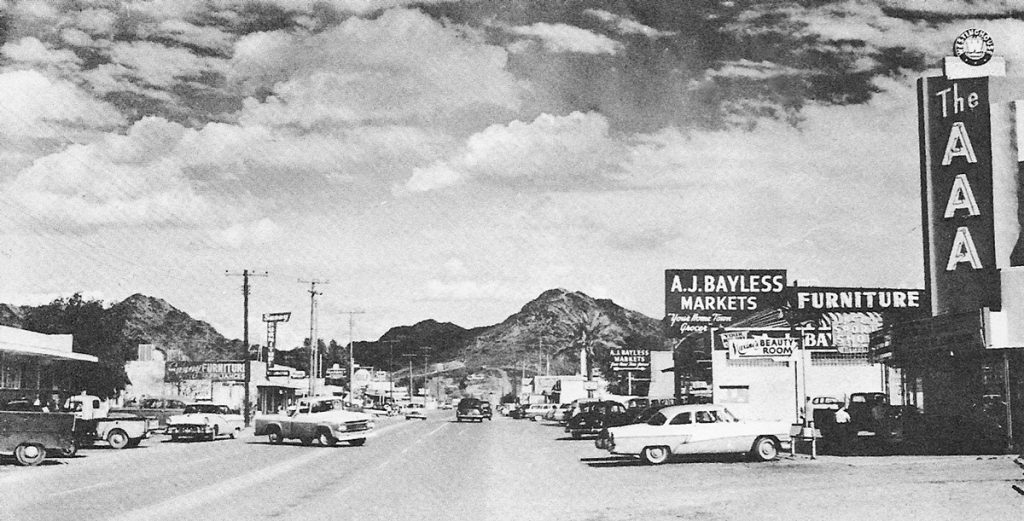
Sunnyslope_Dunlap_3rd_Street_looking_eastDunlap Avenue looking east in Sunnyslope's main commercial district in the 1950s.

Of all the areas that became part of today's 516-square-mile Phoenix, Sunnyslope had the best chance of being its own separate town.

At the foot of North Mountain, Sunnyslope was very different from Phoenix proper (the name came from the Sunny Slope subdivision laid out by William Norton in 1911). It was a desert town, north of the Arizona Canal which marked the beginning of the oasis.

It was higher than the historic Phoenix townsite, something you still can see today if you drive south from Hatcher on Central Avenue, and framed by rugged terrain. My grandmother sold real estate in Sunnyslope and any time I, an oasis kid, would go with her, it seemed very exotic. And unlike Phoenix, its history was not based on agriculture.

Instead, Sunnyslope attracted "health seekers" and usually poor ones. In the Great Depression, it hosted a Hooverville. And Phoenix leaders not only looked down on it, they didn't want it to be part of the city. It received virtually none of the massive New Deal aid that saved Phoenix in the 1930s.

The land economy

The land economy

00435v
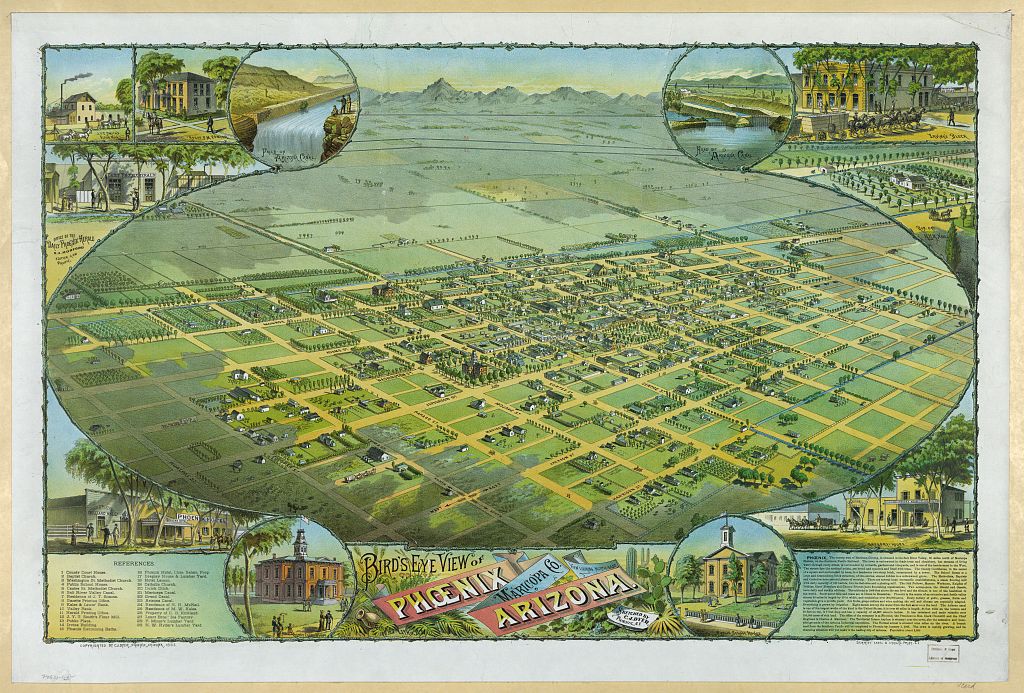
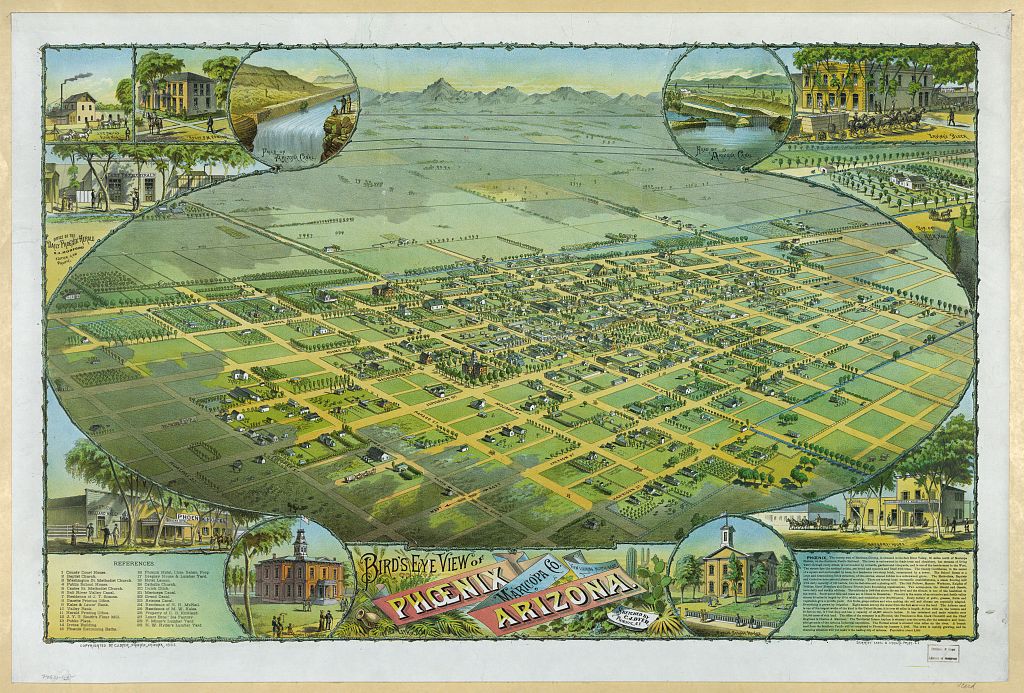
The oldest human activity in the Salt River Valley is agriculture. But the second oldest, in the era since American settlement began in the late 1860s, is land: platting, subdividing, buying, selling, flipping. It's an old-fashioned extraction industry. The remarkable thing is that it remains Phoenix's economic foundation.

With the 1851 Salt and Gila River Meridian, or "baseline," located near today's Phoenix International Raceway, the Americans set in place the point from which land would be surveyed and divided. This is a historic method of American empire, going back to the Northwest Ordinance of 1787. It laid down a template that organized and regularized land to make it fungible.

Initially, the land was divided into farms, the square-mile layout that remains the bones of Phoenix until one gets into the mountains. But as the towns of Phoenix, Tempe, Mesa, Glendale and others grew, increasing amounts were subdivided for houses and businesses. Phoenix's unique location in one of the world's richest river valleys made agriculture a natural source of wealth. But so was the land itself. The 1877 Desert Lands Act expanded the Homestead Act, not only attracting settlers but also speculators.

Here it comes…

Here it comes…

PHXfront

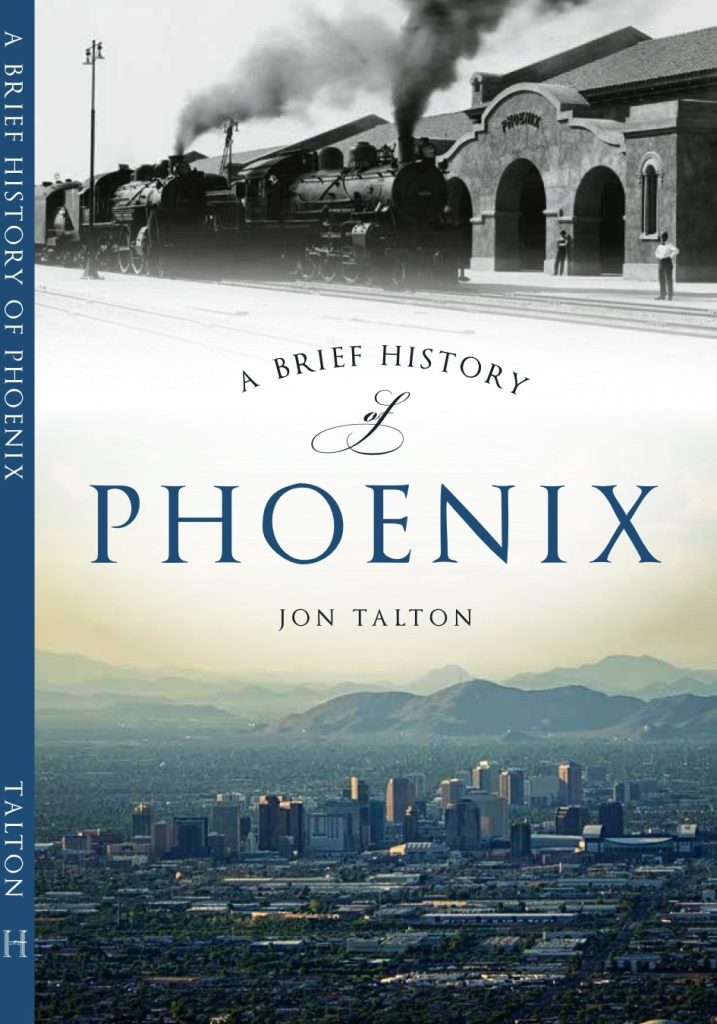
My new book, a concise history of Phoenix, comes out Nov. 9. Some initial signings are set for early December (see the "news" page of my author site) with more to come early next year.

I didn't intend to see two books published this year. High Country Nocturne, the eighth David Mapstone Mystery, would have done fine. But I was approached by an editor at the History Press who liked my Phoenix history columns on this site.

Initially, I thought it would entail a fairly easy compilation of that work. Instead, they wanted an almost entirely new book — and fast. So I set out to write the dissertation I never did.

I received a great deal of help in assembling the 60-plus photos that grace the book. That was still some of the most time consuming work. So was drilling down into primary sources. Then I had to make it my own, my concise interpretative history that can stand apart from fine work already done by Phil VanderMeer, Brad Luckingham and William Collins.

Wickenburg on the brink

Wickenburg on the brink

Wickenburg3(Photo by Jacob Roddy)

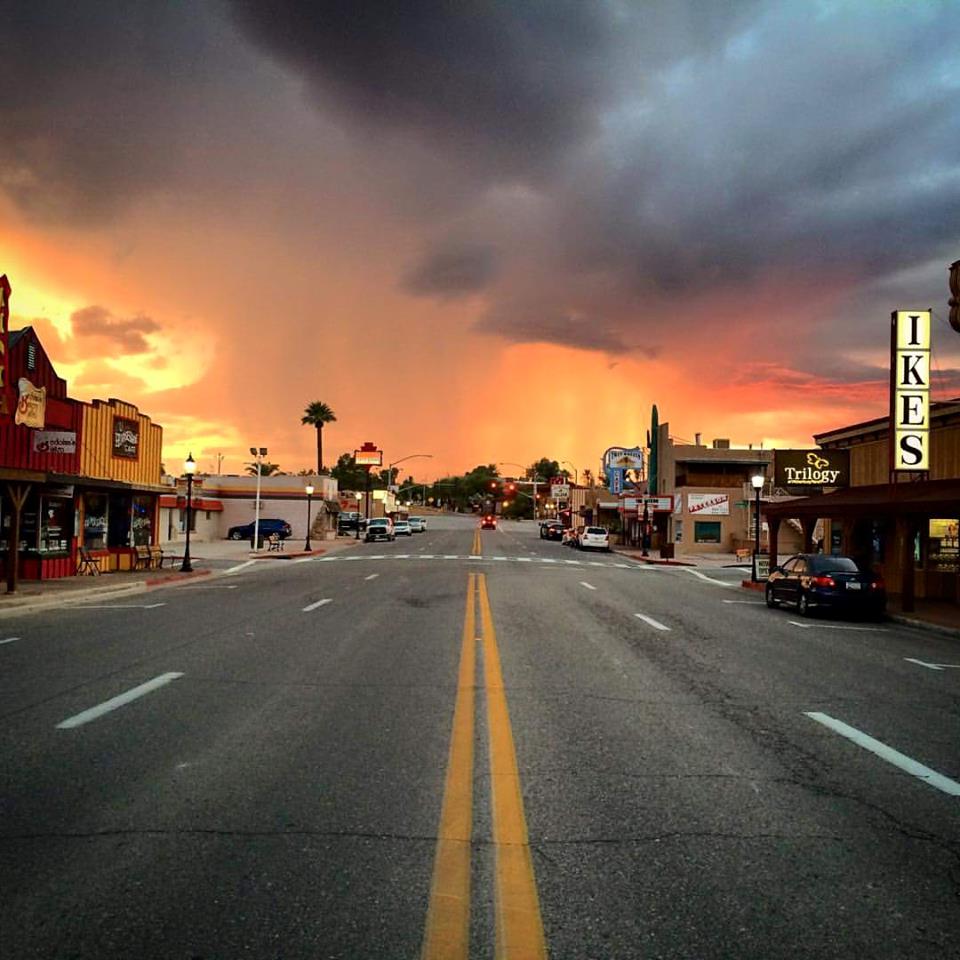
All my young life, Wickenburg was the most enchanting desert town closest to Phoenix. Even into the 2000s, it retained its main street charm.

Prospector Henry Wickenburg, an Austrian native, was the namesake of the town along the Hassayampa River. He discovered gold nearby in 1863. It became the famous Vulture Mine, based on claims Wickenburg sold to Behtchuel Phelps of New York. "The Comstock of Arizona" and "largest and richest gold mine" in the territory yielded about $2.5 million before it played out. Wickenburg himself scraped a living farming before committing suicide in 1905.

The young town was also contested by the Yavapai, who didn't appreciate the Anglo and Mexican settlers taking their land. In the Civil War, federal troops were withdrawn and the Yavapai attacked. Confederate cavalry responded but soon withdrew. Hundreds were killed on both sides before an uneasy peace settled.

Wickenburg the town played a major role in the rise of Phoenix. Jack Swilling, who also made some inportant gold finds there, saw an even richer possibility in the prehistoric Hohokam canals of the Salt River Valley. In the late 1860s, Swilling dragooned a crew of workers from Wickenburg to help excavate one, which became today's Grand Canal, and build Swilling's Ditch.

Later, Wickenburg became a stop on the Santa Fe Railway between the northern Arizona mainline and Phoenix; another line was built west to connect more directly with California. Until 1968, Wickenburg had daily passenger train service (and the depot still stands). The town was also an important stop on U.S. Highway 60 between Phoenix — on Grand Avenue — and Los Angeles.

Wickenburg2Even as Phoenix grew into a soulless blob and once-magical places such as Prescott were subsumed by sprawl, Wickenburg retained its uniqueness with local businesses, an intact and walkable central business district and even a working movie theater. Celerity rehab centers had replaced the dude ranches of the 1930s but Wickenburg circa 2005 seemed remarkably authentic. So close to plastic suburbia of "the Valley" and yet wonderfully apart. Now it is in the fight for its life, at least as the town we knew and loved.

Where Arizona fits

Where Arizona fits

Ninenations
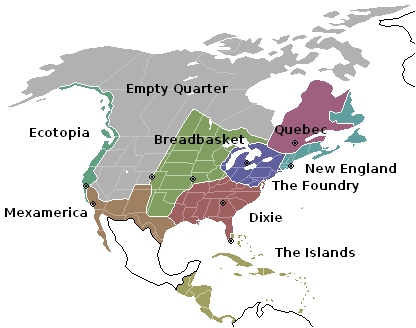
In 1981, Joel Garreau wrote a popular book called The Nine Nations of North America. His conceit was that state lines and even national borders were meaningless in understanding the "true regionalization" of the continent.

Arizona was split between "Meximerica" and "The Empty Quarter," with Phoenix and Tucson lying in the former. Of Meximerica, he wrote, it was "a 'booming place'…characterized by a sense of no limits."

They say that the only limit to growth is the human ability to dream. By the way, does that sound familiar? Where did our President grow up? In Los Angeles and the Southwest. Reagan’s vision of the world was formed by the way this part of the world works.

As for the Empty Quarter, "It is very dry; water is a constant preoccupation; it is very fragile…Very few people live here, and as a result it is politically powerless."

This is the last "colony" of the nine nations. The idea is that we are going to chew this up and spit it out to get us into the next century. But there is one hitch. This is also the place that has the last great stretches of wilderness and quality-one air; so, if we chew this up and spit it out, we can kiss the Rockies goodbye. And of course there is a political context to that too, because there are a lot of people who don’t want to see that wilderness despoiled.

So far, so OK. Except Arizona has little in common with Texas; Phoenix little commonality with Houston or Los Angeles. And the name Meximerica wouldn't get very far with the Kookocracy.

Now a new author wants to reorder things. Colin Woodard, according to the Washington Post, "says North America can be broken neatly into 11 separate nation-states, where dominant cultures explain our voting behaviors and attitudes toward everything from social issues to the role of government."