The Westward Ho tragedy

The Westward Ho tragedy

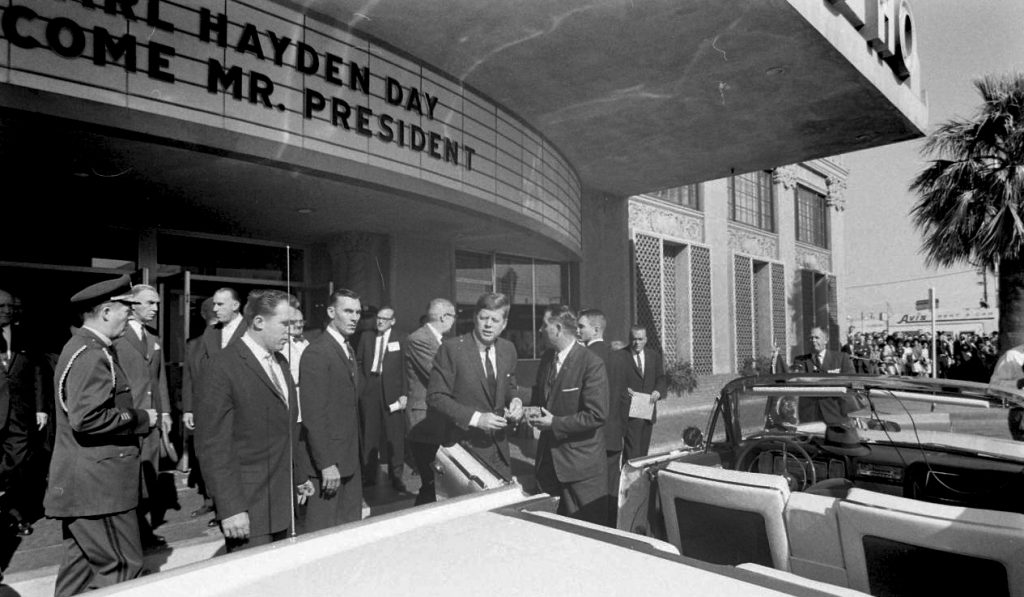
Hotel_Westward_Ho_John_Kennedy_1961
When Carl Hayden stood for his last U.S. Senate term in 1962, he faced a state that had been radically changed by population growth in the late 1950s and early '60s. He was also confronted by a radical Republican challenger in car dealer Evan Mecham who found purchase with many of these newcomers.

Hayden's crafty aide Roy Elson came up with a "re-introduce Carl Hayden" campaign — even though Hayden had served Arizona in Congress since statehood and was the indispensable man on water, especially the Central Arizona Project. For the showpiece, he angled a Carl Hayden Day featuring President John F. Kennedy and Vice President Lyndon Johnson.

The location was never in question: the Hotel Westward Ho at Central and Fillmore, the premier hostelry of Phoenix since it opened in 1928. The event was a huge success and Hayden won the election.

Within little more than 13 years, with downtown dying, the Westward Ho was a target for demolition. The iconic Luhrs Hotel and others had already met the wrecking ball. The beautiful Hotel Adams had been torn down, replaced by a box containing all the charm of 1970s brutalism. The Ho was saved by making the building into subsidized housing for seniors and the disabled. After falling out of family ownership, the property was repeatedly flipped and eventually sold at a sheriff's auction. Now the owner is using $44 million in a "multifaceted refinancing project" to upgrade the building. And it will continue as elderly housing.

Is this really the best Phoenix can do?

Arizona economy update in charts

Arizona economy update in charts

The Great Recession, which hit Arizona hardest than any economic downturn since the Depression, has been over for more than six years.

One big difference: In the Great Depression, Arizona was a huge beneficiary of the New Deal. Another is that it wasn't the epicenter of the calamity. This time it was, with its massive dependence on housing.

This is part of an ongoing update for how the state's economy is performing.

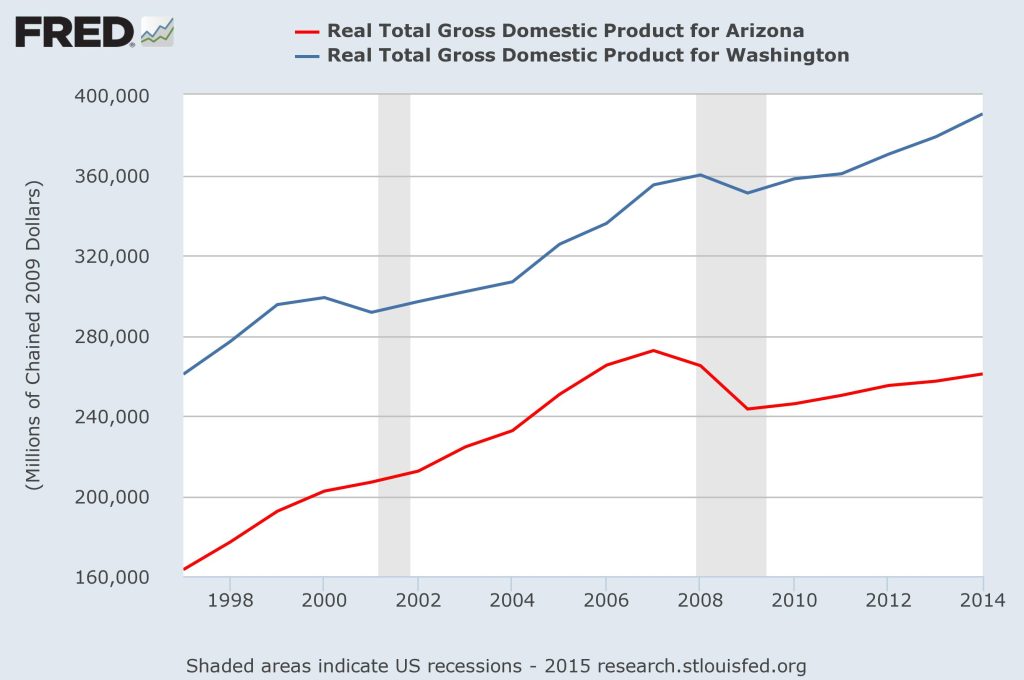
Total gross domestic product adjusted for inflation has still not recovered. It it badly lags Washington, a similarly populous Western state, which has recovered and reached new highs:

AZgdp1

Housing starts, the gold standard of the old economy, continue to struggle. They are around where they stood in the early 1990s, even though population has increased increased significantly:

AZhousing

The workforce is still smaller than before the collapse. It gets worse: ASU's Lee McPheters estimates that 44 percent of the adult population is not working:

AZworkforce

A train to Tucson

A train to Tucson

ICE_1_in_Augsburg-Hochzoll

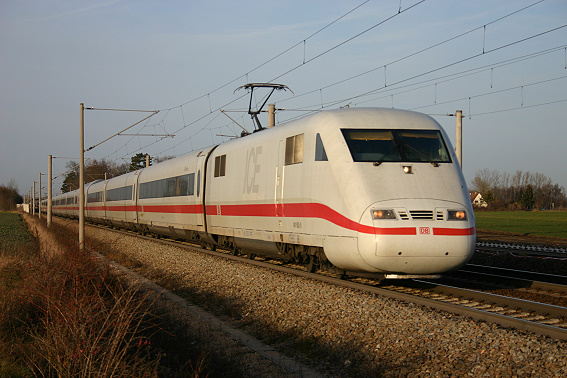
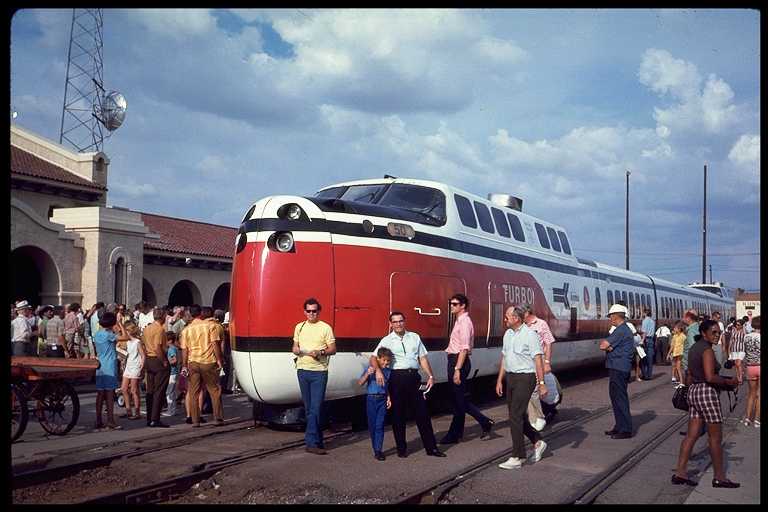
When I was a boy, the Southern Pacific Railroad operated six trains a day between Phoenix Union Station and Tucson. They were part of the fading American passenger-rail system, once the finest in the world.

The top of the line were the crack Sunset Limited, SP's flagship running between New Orleans and Los Angeles (once it went all the way to San Francisco). Phoenix to Tucson took less than two-and-a-half hours. Then the Golden State Limited, another premier train operated by SP from Los Angeles to Tucumcari, N.M., where it was handed off to the Rock Island for the trip to Chicago. Finally, there was the remains of the Imperial, once a fine train in its own right but by the 1960s a mail train with a single coach.

But the trains were dying, helped along by the Postal Service canceling the vital mail contracts in 1967-68. Amtrak took over a much diminished Sunset — three days a week — and it left Phoenix in the 1990s when the state would not help maintain the northern main line. Phoenix is the largest city in America with no passenger trains.

I mention this history as the Arizona Department of Transportation studies passenger rail between Phoenix and Tucson. It has gotten press. But is it possible?

Sinema’s way

Sinema’s way

Kyrsten_Sinema_113th_CongressAt least based on Facebook comments, U.S. Rep. Kyrsten Sinema has finally alienated many liberals for good, based on her vote against President Obama on the Iran nuclear deal.

In a statement defending/ explaining her vote, Sinema slyly says, "I was a principled opponent of the Iraq War and spoke out early against the U.S. invasion." One must wonder if she considers some opponents unprincipled. But the more important fact was that back then she was a recent Green Party candidate for Phoenix City Council.

Since then, she climbed the ladder to the Legislature and then Congress as a Democrat. She frequently alienated the Democratic wing of the Democratic Party, such as when, serving in the state Senate, she called the odious Russell Pearce, "my president." He was president of the Senate, but "my president"?

On the Iran vote, Blog for Arizona commented, "Sinema’s excuses for opposition are on matters entirely outside of the negotiated nuclear agreement, and thus not on the merits of the actual agreement itself. Like every Tea-Publican, Sinema wants total capitulation by Iran, something Iran would never agree to in a negotiation. This is a ridiculous expectation."

Who murdered Don Bolles?

Who murdered Don Bolles?

Bolles_paper
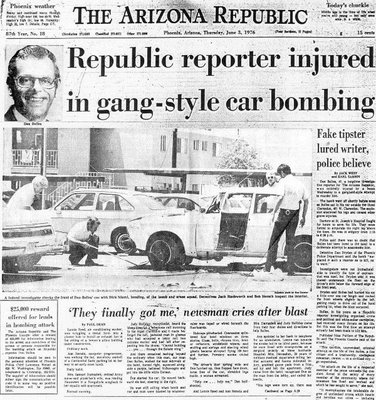
They still meet at the scene of the crime. The breakfasts at the Hotel Clarendon are informal reunions of the lead investigators of the murder of Arizona Republic reporter Don Bolles. The hotel itself, redone in the 2000s, has created a shrine of sorts to Bolles, photographs of the event along a hallway. No longer young men, they still have sharp, vivid memories. If one is fortunate enough to snag an invitation, bringing a reporter's notebook is impossible. It would shut down the conversation.

As difficult as it is for some of us to believe, next June will mark 40 years since the bombing. It remains the most enduring mystery and troubling crime in modern Phoenix history.

I have two minor personal connections. I was on duty that day on the ambulance and, as it turned out, one call rotation away from being there. My partner and I caught an auto accident with injuries, or 962 by the radio codes, at 16th Street and Southern. Next up was an explosion in Midtown. One of my friends took that call and was holding the mortally injured Bolles when he said, "They finally got me… Mafia, Emprise, Adamson… Find Adamson…" That's what she told me later in the squad room. (The excellent Paul Rubin of New Times has slightly different wording in this recollection of the event).

Also, in those days I was living in an apartment at 36th Street and Campbell, one of those classic Phoenix buildings surrounded by citrus trees with a grassy, shady courtyard. My neighbor was a young man named John. I noticed that whenever he came home at night, he would repeatedly circle the block. Over time, he told my mother that he and his mother had been relocated to Phoenix by the FBI after his father had died in a mob bombing in Chicago. The Bolles killing unnerved him. "He had been warned," he said. "They always warn you." Followed by, "I've said too much." He was even more reluctant to come home at night.

Signs

Signs

AhwatukeeDust

I'm not a scientist, man, as Senator (and presidential candidate) Marco Rubio said. But more than 97 percent of the scientists who actually specialize in climate science agree that climate change is real, heavily human caused, and getting worse faster than expected.

I'm also a witness. Sure, having moved to Phoenix in 1990 now makes you a "pioneer," but my experience goes back a but further.

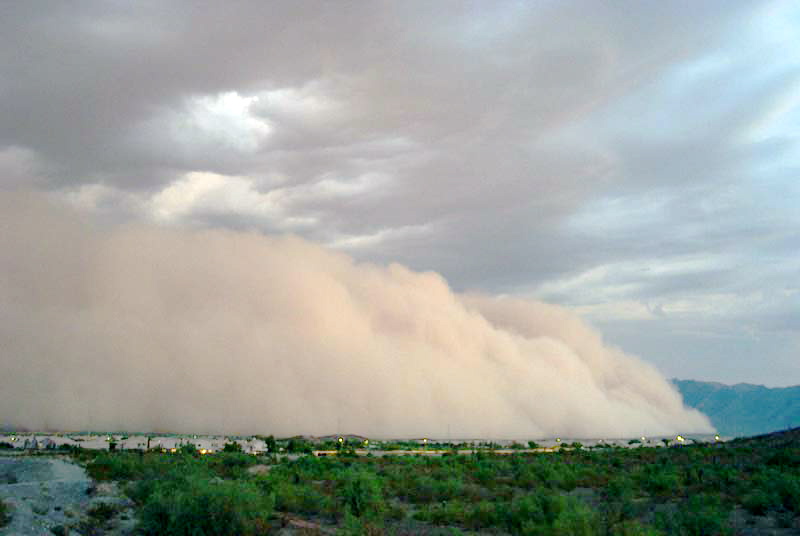
The dust storms that make such good visuals, and popularized as "haboobs," are not new. They, like the monsoon, have been a part of the Phoenix and Sonoran Desert landscape for tens of thousands of years. The same is true of intense rains and floods.

What seems to be different is the severity of monsoon storms that come into the city, especially destructive "microbursts" and tornadic winds.

One hit Midtown a few years ago and mowed down telephone poles along Third Avenue, as well as uprooting trees, including priceless old-growth trees in Encanto Park. The events have increased since then, including a severe storm Monday night. Trees came down all over the metropolitan area.

Rebranding Arizona

So wealthy Republican Gov. Douglas A. Roscoe Jr., aka "Doug Ducey," has ordered the state Commerce Authority to "rebrand" Arizona.

This unleashed no small amount of mirth. A few serious articles appeared, too (see here, here and here).

As Arizona Daily Star columnist Tim Steller pointed out, the state's problem isn't image but reality. If you doubt this, read through our Arizona's Continuing Crisis. Scan eight years of columns here. Correct those appalling problems identified and the Grand Canyon State will regain its luster.

But I'm not sure the in-state media are prepared, or would be allowed, to go far enough in examining the situation.

Arizona is at or near the bottom of almost every measure of economic, civic or social well-being, a national beacon of bigotry and know-nothingism, precisely because of the ideology Gov. Roscoe worships. Getting there has required an enormous amount of civic vandalism but Republicans got it done.

Specifically, this one party has controlled the Legislature, the most powerful branch of government, since the 1980s. All but two governors were Republicans. At the same time, the GOP moved from being a mass political party to one of ever more extreme "conservatism." Centrists were pushed out. Incumbents feared a challenge from their right, so became ever more ideologically enslaved. The result is what I labeled in 2001 the Kookocracy.

What killed Metrocenter?

What killed Metrocenter?

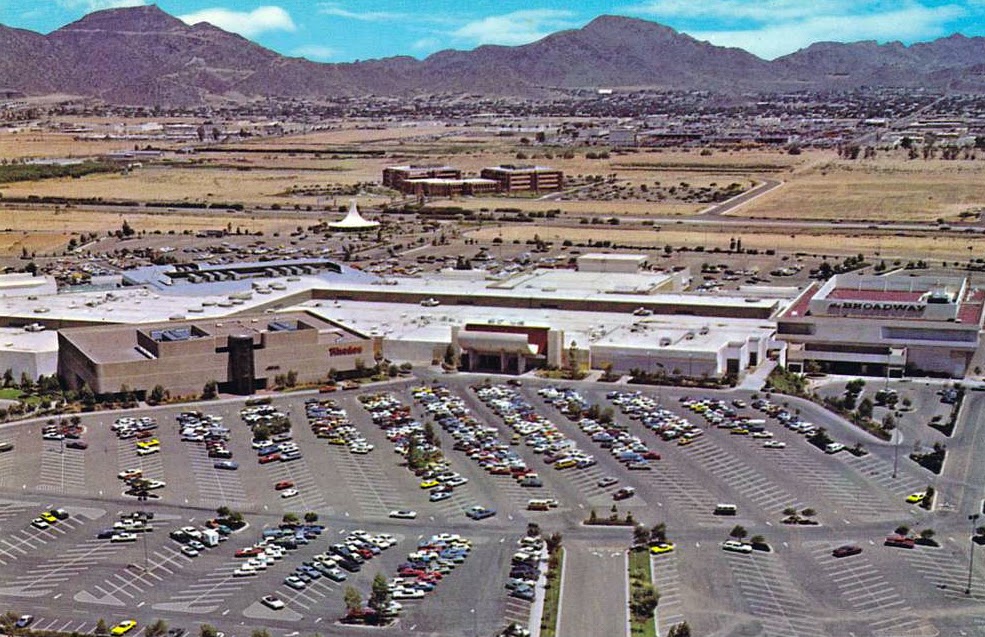
Metrocenter_mall_1975

Someone passed along an article on the demise of Metrocenter. It was from 2011 but is still relevant. The comments are especially interesting.

When Metrocenter opened in 1973, it was the first "super-regional" mall in the Southwest. Unlike the typical mall of the era with two anchor stores, Metrocenter had five: Goldwater's, Rhodes, The Broadway, Sears and Diamond's. With two levels, its sleek interior looked like a starship. The showpiece was an ice-skating rink with a bar-restaurant on the second level overlooking it.

As the photo above shows, it was initially built on the metropolitan fringes, along Black Canyon Freeway between Dunlap and Peoria avenues. Westcor, the developer of this and so many other Phoenix malls, assumed the growth of single-family subdivisions and office parks would follow. And so they did.

It gave the lie to "retail follows rooftops." Rather, Metrocenter was built on spec, and one underlying reality was that it would badly wound or kill older malls, especially Chris-Town and Park Central. And so it did.

Phoenix apocalypse

When Phoenix magazine Editor Craig Outhier approached me about writing an imagined Phoenix apocalypse, I was very reluctant. Too many minds snap shut at my approach because of my "he's…
Mad dogs and Phoenicians

Mad dogs and Phoenicians

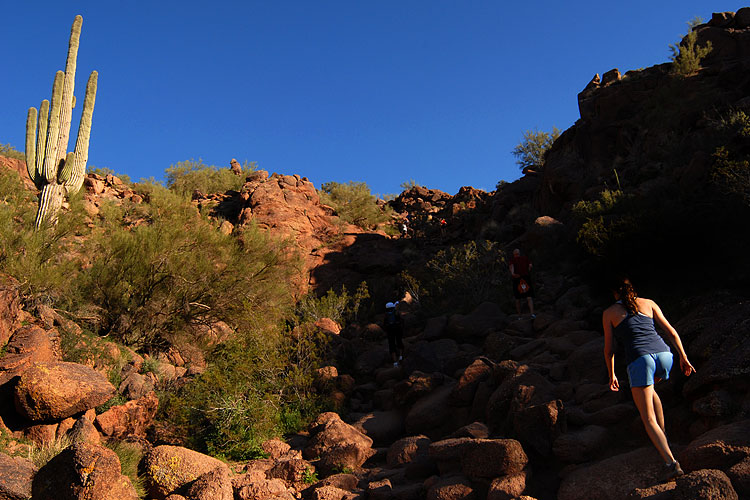
Along_Camelback_Mountain_trail_September_2008
Mad dogs and Englishmen go out in the midday sun.
— old expression.

People in Seattle are undergoing tremendous angst because of the astonishing boom there. Plenty of the population was born there or has lived in Seattle for decades. They even have a name: mossbacks. A trenchant column of the same name is written by old-timer Knute Berger in Crosscut.

Things are different in Phoenix. Few people of my age or older are actually from here; fewer still were able to stay because of the limited economy. The term "desert rat" doesn't really apply. Cal is a desert rat. I'm thinking of those who remember the old garden city, a unique place they loved. Oasis people?

The defensiveness and boosterism of the growth machine is not the same as loving a place.

Which bring me to the New York Times story about "the rebel tribe" that hikes the mountains despite the murderous summer heat.

This is something relatively new. I climbed almost every mountain and hiked nearly every wilderness area around Phoenix, many repeatedly. But never in the summer. Nobody I knew would have even considered such a thing.

The transportation vote

The transportation vote

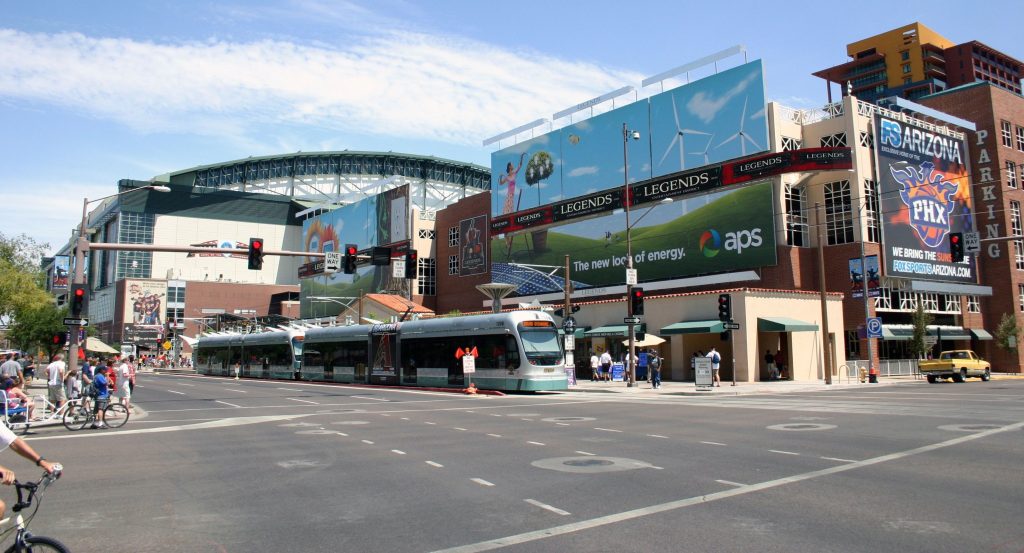
PhxLRT2

See the comments section for an open thread on the vote.

Phoenix's Proposition 104 promises to extend light-rail and bus service, as well as make street improvements. Everyone who wishes the city well should vote for it.

Now that's out of the way, let's examine some lesser-explored aspects of the issue. I say "issue," because the debate has been won. WBIYB. Phoenix light rail is highly successful, as I predicted when advocating it — and getting death threats from the Bs in the latter B of WBIYB — as a columnist at the Arizona Republic.

A quick note on costs. With the $2 billion the state wants to flush down the toilet on the South Mountain Freeway, we could more than double the original 20 miles of light rail. That Arizona is still building freeways shows this racket for what it is: a way to keep spec construction going and enriching the Real Estate Industrial Complex.

Costs? Freeways destroy cities and farmland, spread pollution and emit enormous amounts of carbon into the global commons called the atmosphere. That these costs are hidden "externalities" does not mean they don't exist. Transit is a bargain. Enough said about the "light rail costs too much" Big Lie.

Writing Phoenix history

Writing Phoenix history

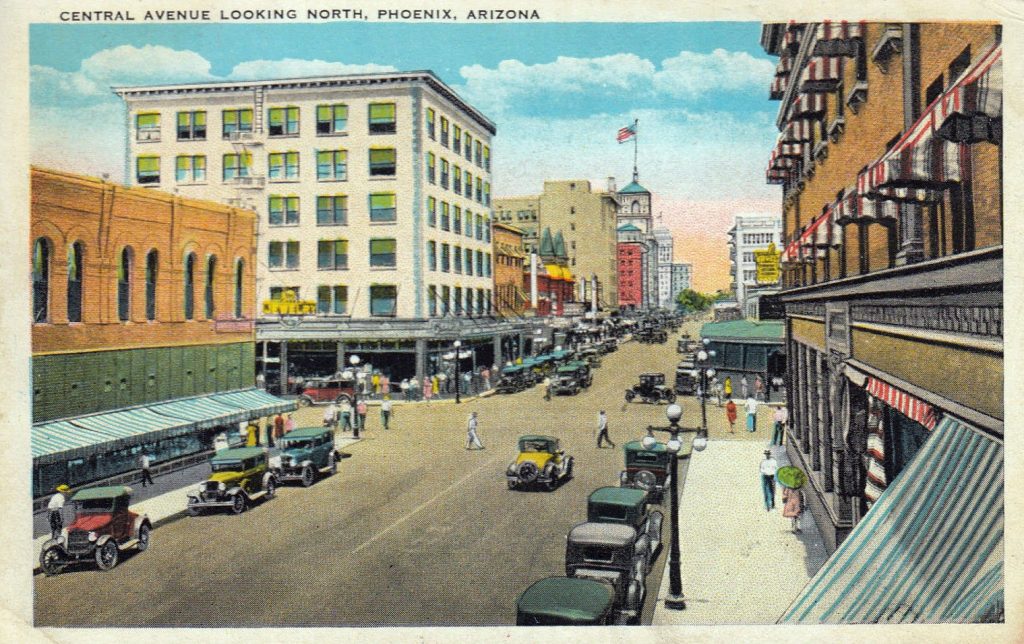
Central_Washington_looking_north_color_late_1920s
Apparently having read the Phoenix 101 posts, the History Press approached me to write a concise history of the city. In a hurry.

I thought this would be a compilation of Phoenix 101, but it turned out they wanted an entirely new book. Foolishly I signed up anyway. That's why I've been gone.

The final product may never see a bookshelf. It is certainly not an attempt to compete with the fine academic histories of Philip VanderMeer, William S. Collins or Bradford Luckingham. There are no doubt more qualified people who could have undertaken this project. Instead, at 32,000 words, it is an interpretive history of a fascinating city and one of great importance to America (whether America or even Phoenicians realize it). Think of it as the dissertation I never wrote.

Mindful of Harry Truman's admonishment that "the only thing new in the world is the history you don't know," I dug deep into primary and secondary sources. I'm glad I did it. Here is some of what I learned:

Progressive Arizona

Progressive Arizona

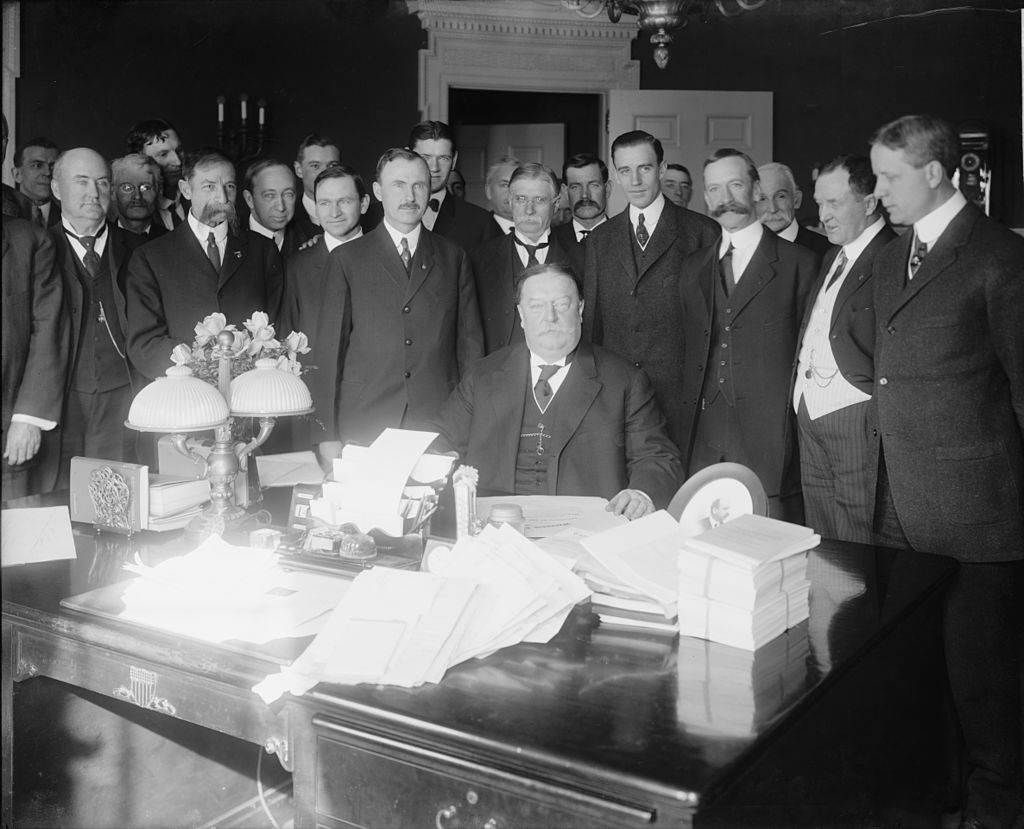
President_Taft_signing_Arizona_Statehood_Bill

President William Howard Taft signs the bill admitting Arizona as the 48th state in 1912.

If our advanced high-speed rail system backward dependence on overcrowded airliners works, I'll be on a panel next Friday at the national convention of Netroots Nation in Phoenix. The topic: How Progressive Arizona Became Tea Party Arizona.

Because panelists never get to say as much as they'd like, I'll set the table here.

Arizona indeed began as a capital-P Progressive state. This included a weak, almost figurehead of a governor and a strong Legislature, as well as the initiative and referendum where the people could essentially legislate on their own. Statewide officials were required to stand for re-election every two years. They could also be recalled.

Importantly for a state where mining interests and railroads exercised enormous power, the state constitution created a Corporation Commission with wide-ranging regulatory power over the capitalists.

All these were hallmarks of the Progressive Era, which developed as a response to the robber barons and inequality of the Gilded Age of the 1880s and 1890s.

Theodore Roosevelt busted the trusts and more vigorously applied tools that had been passed by Congress earlier, such as the Sherman Antitrust Act and Interstate Commerce Commission. He signed the Pure Food and Drug Act, which, like many Progressive measures, was a result of horrors exposed by muckraking journalists

Had TR won in 1912, he would have gone much further, enacting reforms that had to wait for his cousin, Franklin.

The rise of Margaret Hance

The rise of Margaret Hance

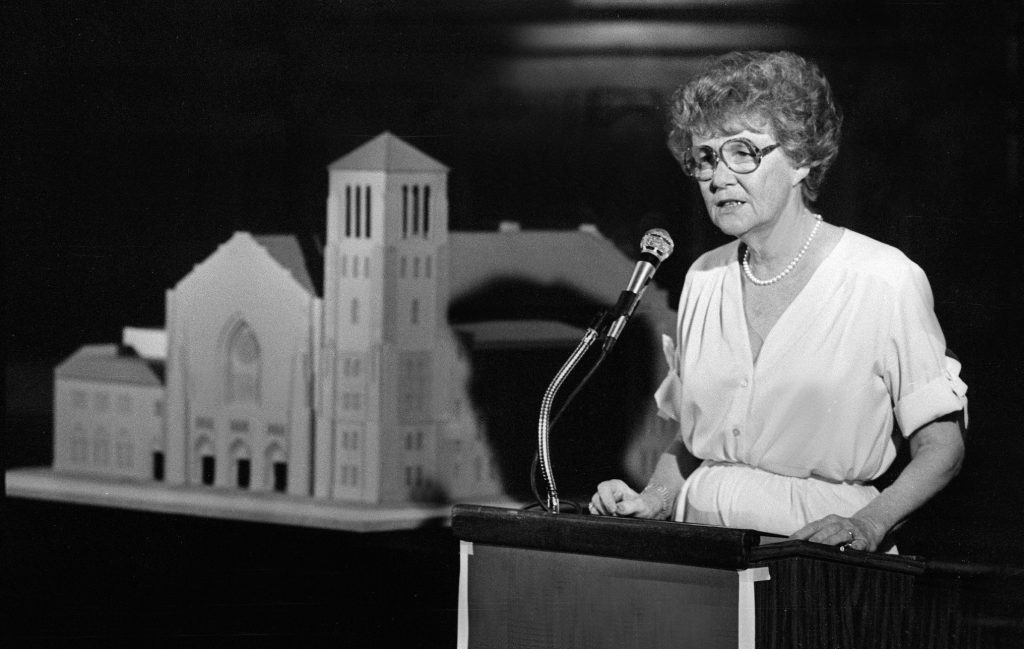
Margaret Hance (Ging photo)

(Michael Ging photo)

When Margaret Hance was elected mayor of Phoenix in November 1975, she was not, as is often claimed, the first woman to lead a major city. That marker goes to Bertha Knight Landes, elected mayor of Seattle in 1926. Patience Latting was elected mayor or Oklahoma City in 1971. Hance was third.

Hance's tenure was far more consequential, as we shall see. Still, she and Landes are twined in dissonances.

Landes, who ran advocating "municipal housecleaning," has been "honored" by Seattle naming its misbegotten tunnel boring machine after her. Hance is memorialized by a park in the heart of the city, a place she did little to help and much to harm.

Margaret Taylor Hance was almost a native, being brought from Iowa to Mesa at age three, in 1926. Her father went to work for Valley Bank, where became an executive vice president. Despite the onset of the Depression, the family moved to what is now Willo. (I am told they lived in the same house on Cypress Street in the 1930s where I grew up in the 1960s. In the '30s, unlike the '60s, it was a high-end neighborhood on the streetcar.)

Although she attended the University of Arizona, she transferred to the elite Scripps College in Claremont, Calif., from whence she graduated. In 1945, she married Robert Hance, who had trained as an Army Air Forces pilot in the Valley during World War II. Her brother, Glen Taylor, went on to become news editor at the Phoenix Gazette, retiring as assistant managing editor in 1983.

She settled into the comfortable and predictable life of an upper-middle-class Republican Phoenix woman. Robert went to work for Valley National Insurance and rose. The couple had three children. Margaret — known as Marge or Margie — volunteered for numerous organizations and joined the Junior League.