Wickenburg on the brink

Wickenburg on the brink

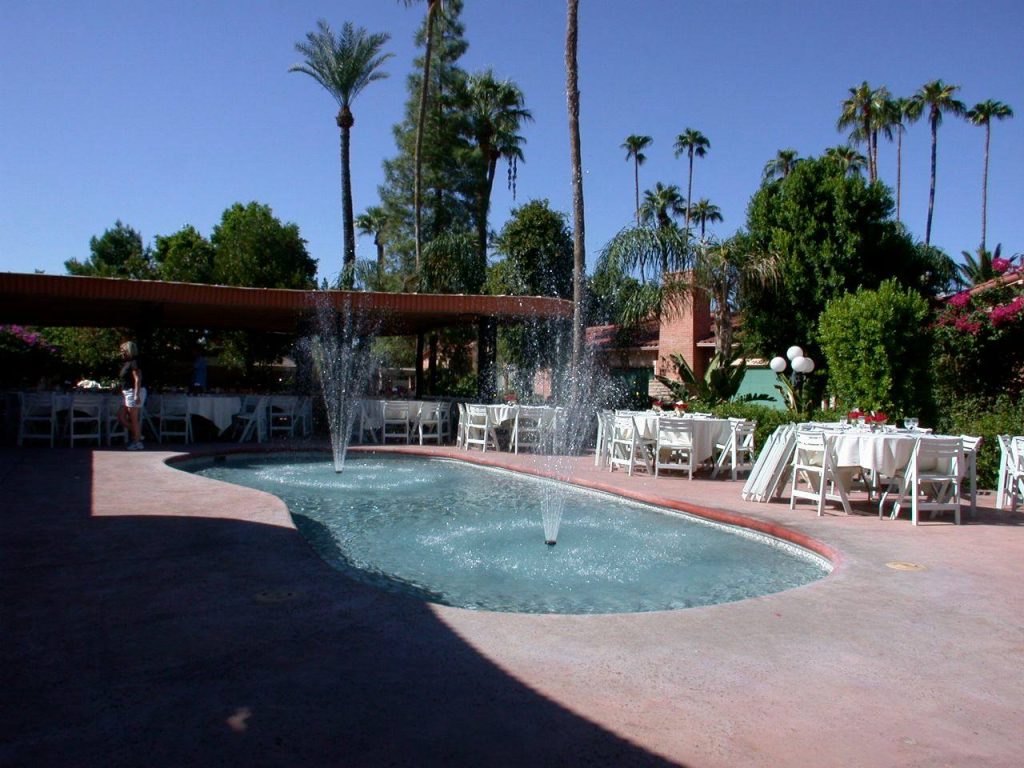
Wickenburg3(Photo by Jacob Roddy)

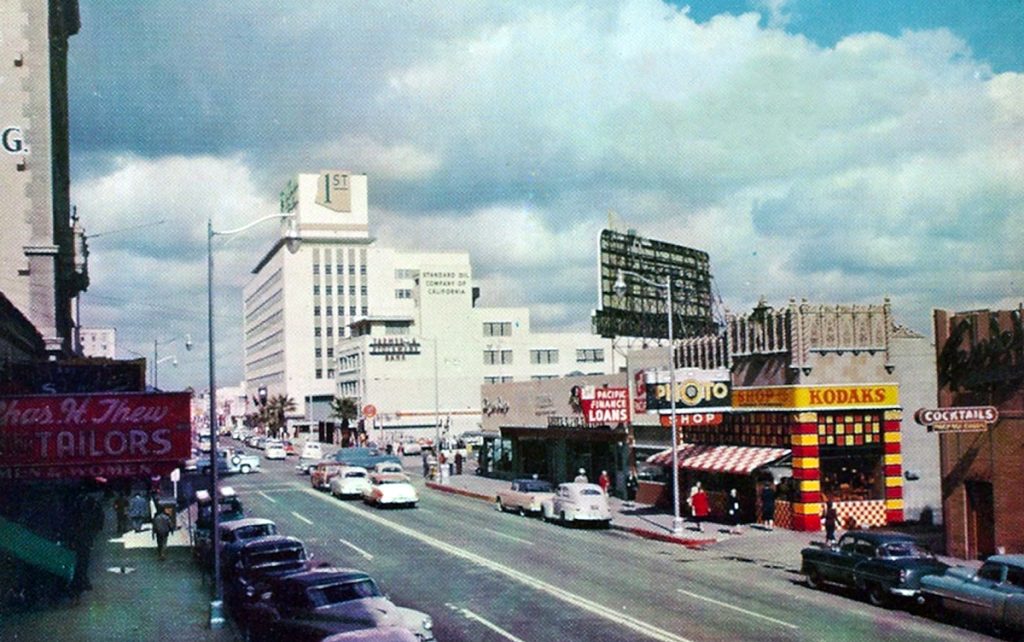
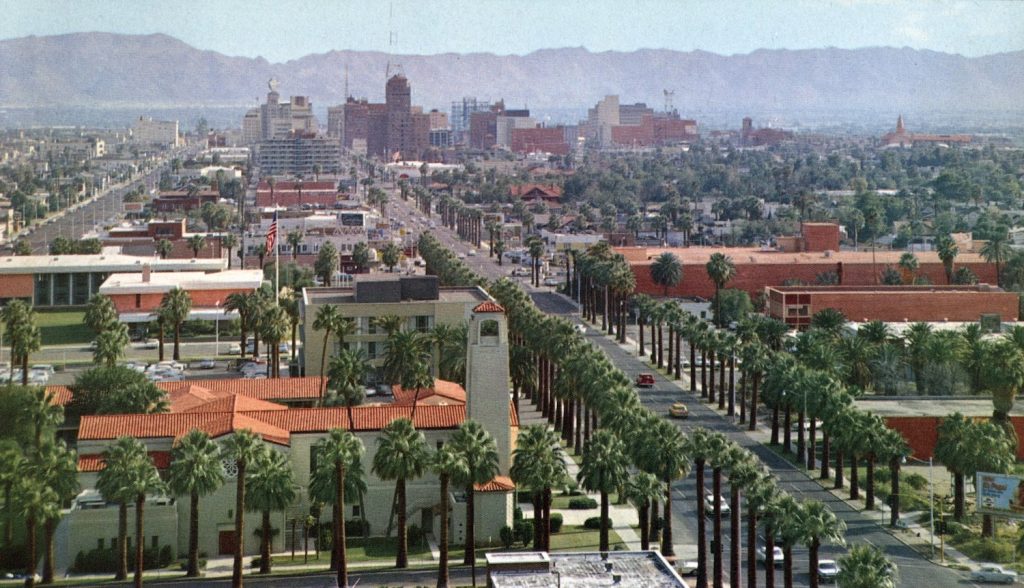
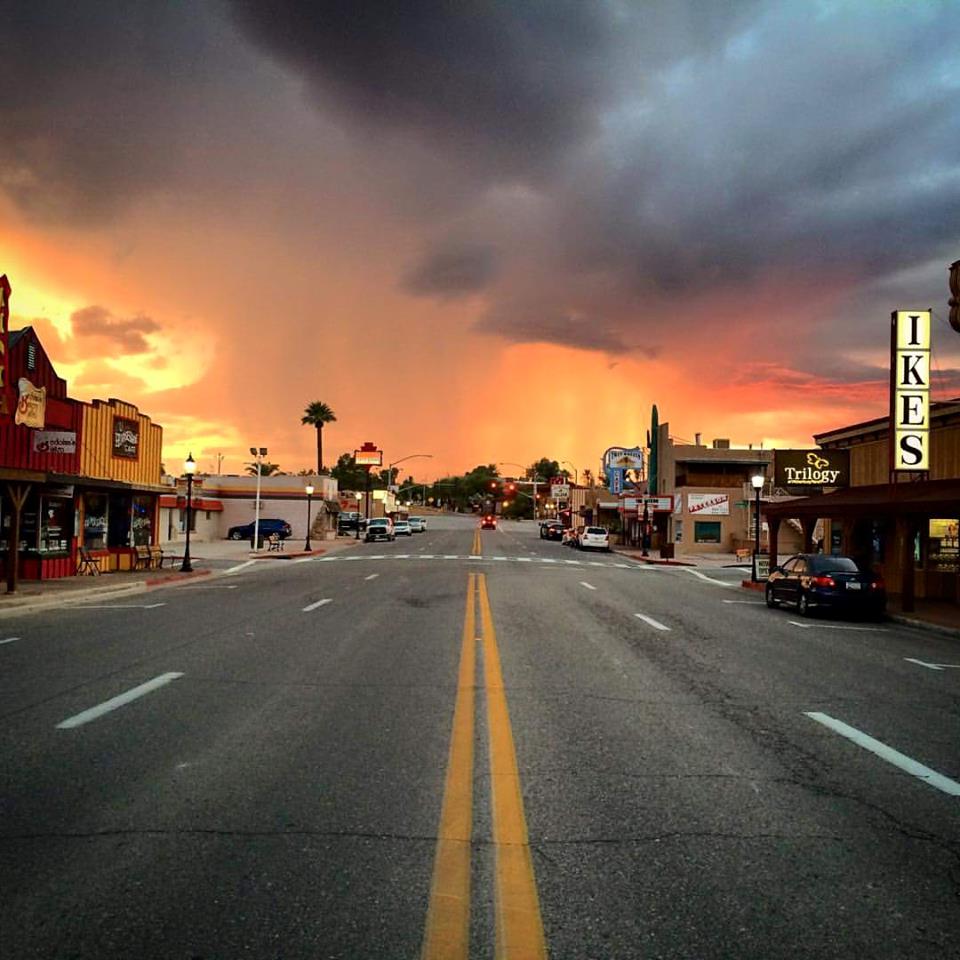
All my young life, Wickenburg was the most enchanting desert town closest to Phoenix. Even into the 2000s, it retained its main street charm.

Prospector Henry Wickenburg, an Austrian native, was the namesake of the town along the Hassayampa River. He discovered gold nearby in 1863. It became the famous Vulture Mine, based on claims Wickenburg sold to Behtchuel Phelps of New York. "The Comstock of Arizona" and "largest and richest gold mine" in the territory yielded about $2.5 million before it played out. Wickenburg himself scraped a living farming before committing suicide in 1905.

The young town was also contested by the Yavapai, who didn't appreciate the Anglo and Mexican settlers taking their land. In the Civil War, federal troops were withdrawn and the Yavapai attacked. Confederate cavalry responded but soon withdrew. Hundreds were killed on both sides before an uneasy peace settled.

Wickenburg the town played a major role in the rise of Phoenix. Jack Swilling, who also made some inportant gold finds there, saw an even richer possibility in the prehistoric Hohokam canals of the Salt River Valley. In the late 1860s, Swilling dragooned a crew of workers from Wickenburg to help excavate one, which became today's Grand Canal, and build Swilling's Ditch.

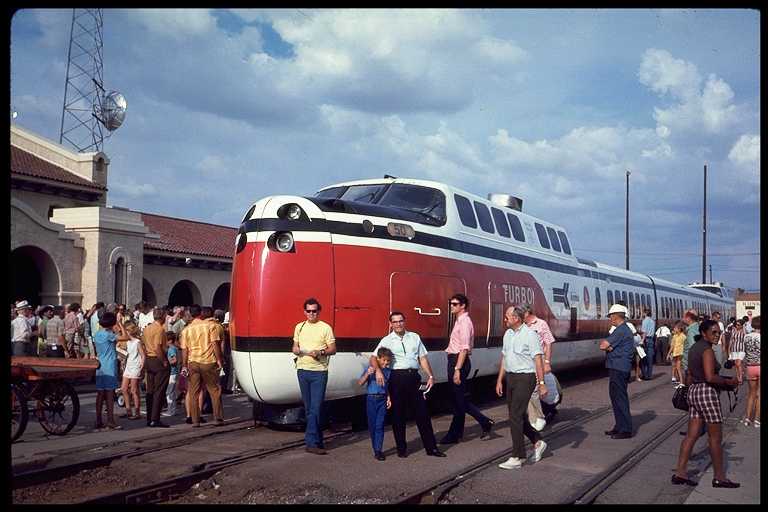
Later, Wickenburg became a stop on the Santa Fe Railway between the northern Arizona mainline and Phoenix; another line was built west to connect more directly with California. Until 1968, Wickenburg had daily passenger train service (and the depot still stands). The town was also an important stop on U.S. Highway 60 between Phoenix — on Grand Avenue — and Los Angeles.

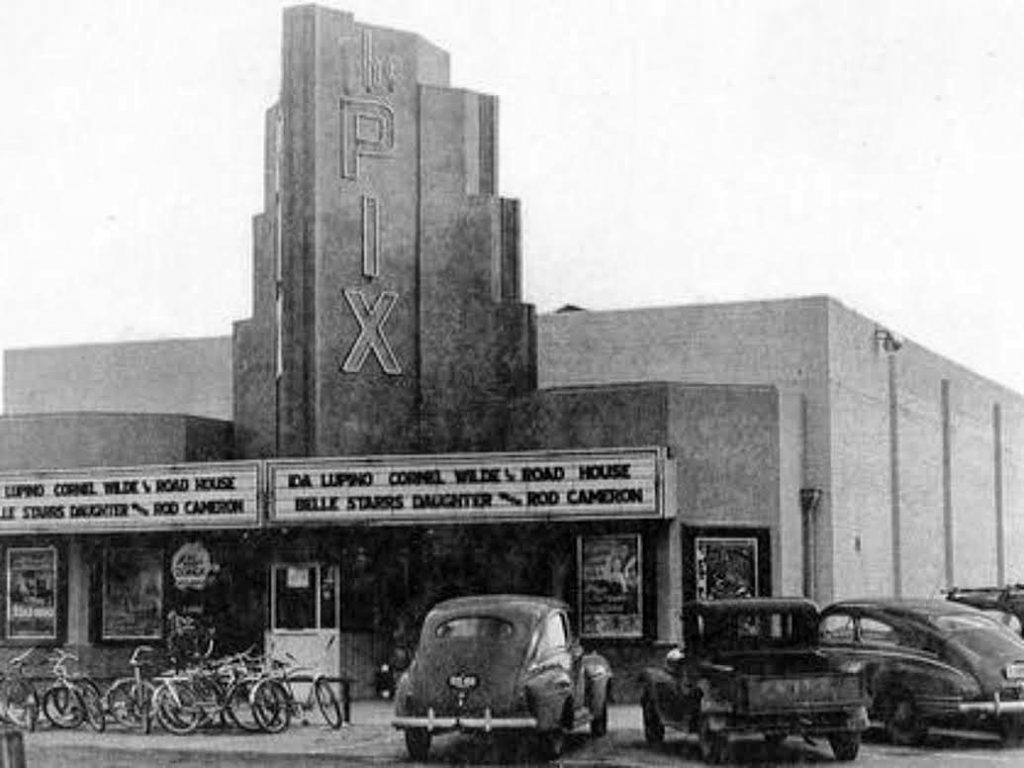
Wickenburg2Even as Phoenix grew into a soulless blob and once-magical places such as Prescott were subsumed by sprawl, Wickenburg retained its uniqueness with local businesses, an intact and walkable central business district and even a working movie theater. Celerity rehab centers had replaced the dude ranches of the 1930s but Wickenburg circa 2005 seemed remarkably authentic. So close to plastic suburbia of "the Valley" and yet wonderfully apart. Now it is in the fight for its life, at least as the town we knew and loved.

Little pieces

Little pieces

Tovrea_Mansion

The interior courtyard of the Tovrea Mansion in happier days. (Steve Weiss photo).

A reader from Michigan wrote, "My wife and I were married at the Tovrea Mansion in 2000 (on today in fact — 6 Oct.). Not the Castle, but the mansion on 46th Street and Van Buren. We went back to see the building last week and found it abandoned, looted, and partially destroyed."

Almost everyone in Phoenix who pays attention knows about the Tovrea Castle and its storied past. The unique building was saved thanks to the city and a preservation effort led by former Mayor John Driggs. Amazingly, a number of loud voices opposed this and wanted the building demolished, the saguaros bladed.

The Tovrea Mansion was not so fortunate. A large ranch house surrounded by tall oleanders and palm trees, it was unknown by most Phoenicians. The pioneer Tovrea family lived there for decades.  By the 2000s, it had been turned into an events center.

The Westward Ho tragedy

The Westward Ho tragedy

Hotel_Westward_Ho_John_Kennedy_1961
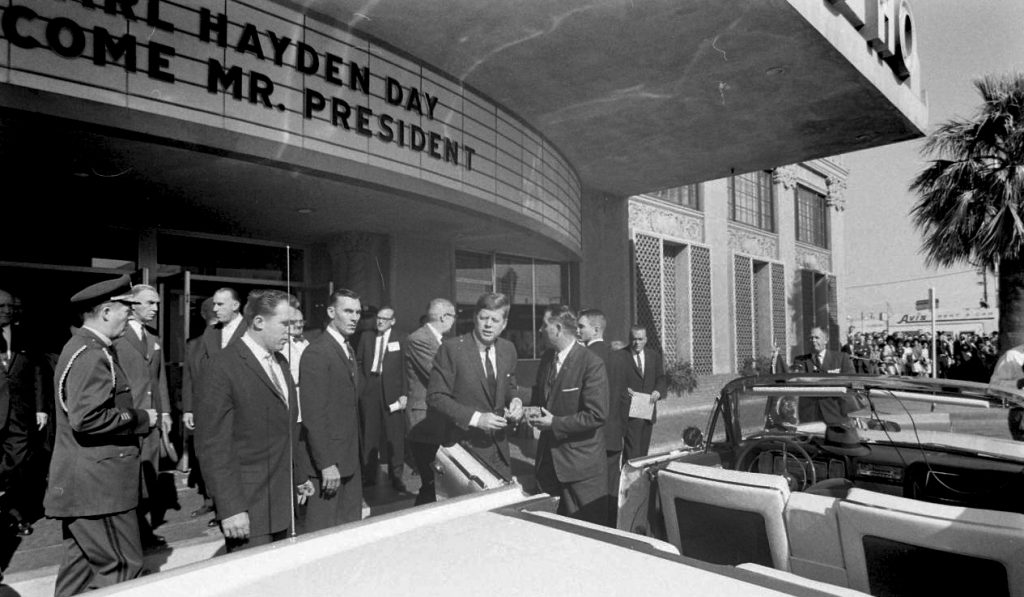
When Carl Hayden stood for his last U.S. Senate term in 1962, he faced a state that had been radically changed by population growth in the late 1950s and early '60s. He was also confronted by a radical Republican challenger in car dealer Evan Mecham who found purchase with many of these newcomers.

Hayden's crafty aide Roy Elson came up with a "re-introduce Carl Hayden" campaign — even though Hayden had served Arizona in Congress since statehood and was the indispensable man on water, especially the Central Arizona Project. For the showpiece, he angled a Carl Hayden Day featuring President John F. Kennedy and Vice President Lyndon Johnson.

The location was never in question: the Hotel Westward Ho at Central and Fillmore, the premier hostelry of Phoenix since it opened in 1928. The event was a huge success and Hayden won the election.

Within little more than 13 years, with downtown dying, the Westward Ho was a target for demolition. The iconic Luhrs Hotel and others had already met the wrecking ball. The beautiful Hotel Adams had been torn down, replaced by a box containing all the charm of 1970s brutalism. The Ho was saved by making the building into subsidized housing for seniors and the disabled. After falling out of family ownership, the property was repeatedly flipped and eventually sold at a sheriff's auction. Now the owner is using $44 million in a "multifaceted refinancing project" to upgrade the building. And it will continue as elderly housing.

Is this really the best Phoenix can do?

The first deportation

Led by Donald Trump, Republican presidential candidates are embracing the policy of deporting some 11 million Hispanics in the country illegally.

If implemented, it would be a humanitarian calamity and a stain on the nation. But it wouldn't be the first time "American exceptionalism" took such a cruel turn.

During the Great Depression, some 1 million Mexicans were deported from the United States to Mexico. An estimated 60 percent were American citizens. In 1930, the U.S. population was only 123 million.

The overt intention was to free up more jobs for "Americans" (read Anglos) when unemployment was 25 percent or higher. But it was invariably twined with racism, score settling and ethnic cleansing.

The most definitive scholarly account is found in the book Decade of Betrayal: Mexican Repatriation in the 1930s, by Francisco Balderrama and the late Raymond Rodriguez. They focus heavily on Los Angeles County, where the deportation was active and records were kept.

The degree to which it was carried out in Arizona and Phoenix is less documented. The late historian Bradford Luckingham writes of the intense anti-Mexican sentiment in Phoenix in the 1930s. In a six-month period during 1933, 130 Mexican families were "repatriated" from Phoenix. They received food and clothing from Friendly House, the city's oldest immigrant-assistance charity.

Who murdered Don Bolles?

Who murdered Don Bolles?

Bolles_paper
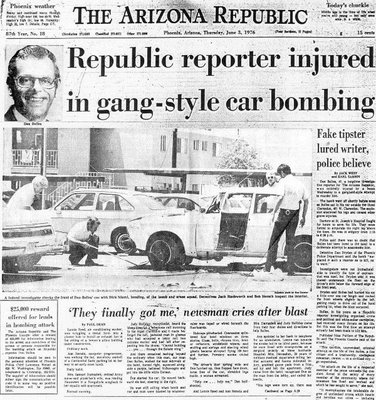
They still meet at the scene of the crime. The breakfasts at the Hotel Clarendon are informal reunions of the lead investigators of the murder of Arizona Republic reporter Don Bolles. The hotel itself, redone in the 2000s, has created a shrine of sorts to Bolles, photographs of the event along a hallway. No longer young men, they still have sharp, vivid memories. If one is fortunate enough to snag an invitation, bringing a reporter's notebook is impossible. It would shut down the conversation.

As difficult as it is for some of us to believe, next June will mark 40 years since the bombing. It remains the most enduring mystery and troubling crime in modern Phoenix history.

I have two minor personal connections. I was on duty that day on the ambulance and, as it turned out, one call rotation away from being there. My partner and I caught an auto accident with injuries, or 962 by the radio codes, at 16th Street and Southern. Next up was an explosion in Midtown. One of my friends took that call and was holding the mortally injured Bolles when he said, "They finally got me… Mafia, Emprise, Adamson… Find Adamson…" That's what she told me later in the squad room. (The excellent Paul Rubin of New Times has slightly different wording in this recollection of the event).

Also, in those days I was living in an apartment at 36th Street and Campbell, one of those classic Phoenix buildings surrounded by citrus trees with a grassy, shady courtyard. My neighbor was a young man named John. I noticed that whenever he came home at night, he would repeatedly circle the block. Over time, he told my mother that he and his mother had been relocated to Phoenix by the FBI after his father had died in a mob bombing in Chicago. The Bolles killing unnerved him. "He had been warned," he said. "They always warn you." Followed by, "I've said too much." He was even more reluctant to come home at night.

What killed Metrocenter?

What killed Metrocenter?

Metrocenter_mall_1975

Someone passed along an article on the demise of Metrocenter. It was from 2011 but is still relevant. The comments are especially interesting.

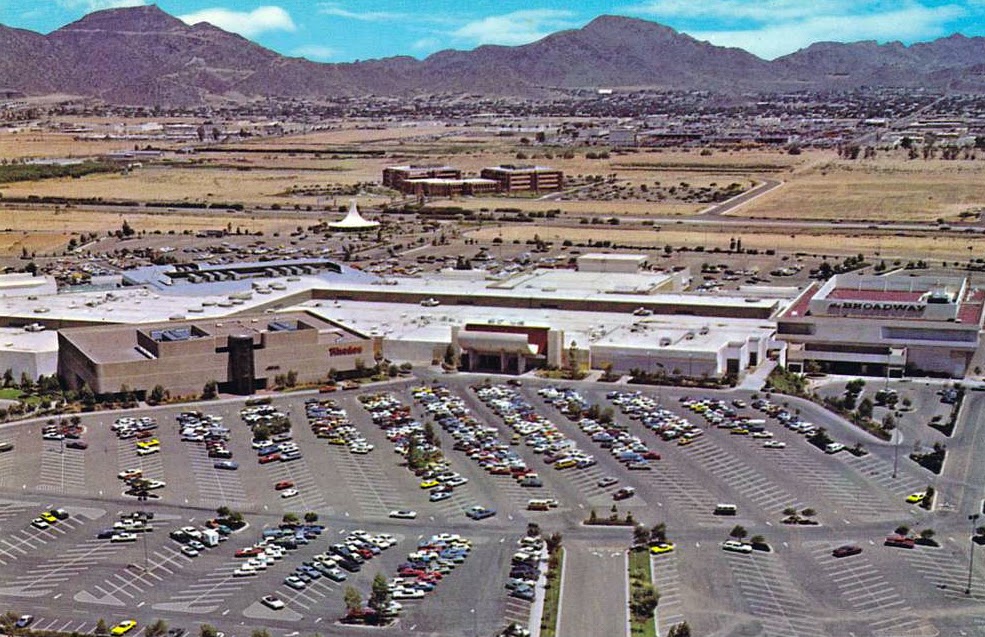
When Metrocenter opened in 1973, it was the first "super-regional" mall in the Southwest. Unlike the typical mall of the era with two anchor stores, Metrocenter had five: Goldwater's, Rhodes, The Broadway, Sears and Diamond's. With two levels, its sleek interior looked like a starship. The showpiece was an ice-skating rink with a bar-restaurant on the second level overlooking it.

As the photo above shows, it was initially built on the metropolitan fringes, along Black Canyon Freeway between Dunlap and Peoria avenues. Westcor, the developer of this and so many other Phoenix malls, assumed the growth of single-family subdivisions and office parks would follow. And so they did.

It gave the lie to "retail follows rooftops." Rather, Metrocenter was built on spec, and one underlying reality was that it would badly wound or kill older malls, especially Chris-Town and Park Central. And so it did.

Writing Phoenix history

Writing Phoenix history

Central_Washington_looking_north_color_late_1920s
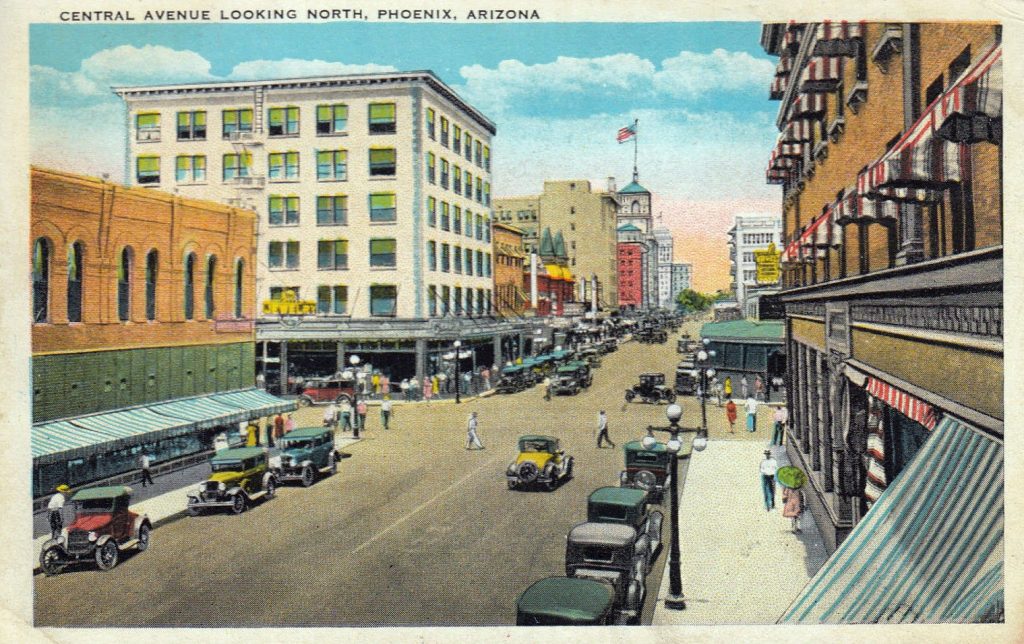
Apparently having read the Phoenix 101 posts, the History Press approached me to write a concise history of the city. In a hurry.

I thought this would be a compilation of Phoenix 101, but it turned out they wanted an entirely new book. Foolishly I signed up anyway. That's why I've been gone.

The final product may never see a bookshelf. It is certainly not an attempt to compete with the fine academic histories of Philip VanderMeer, William S. Collins or Bradford Luckingham. There are no doubt more qualified people who could have undertaken this project. Instead, at 32,000 words, it is an interpretive history of a fascinating city and one of great importance to America (whether America or even Phoenicians realize it). Think of it as the dissertation I never wrote.

Mindful of Harry Truman's admonishment that "the only thing new in the world is the history you don't know," I dug deep into primary and secondary sources. I'm glad I did it. Here is some of what I learned:

Progressive Arizona

Progressive Arizona

President_Taft_signing_Arizona_Statehood_Bill

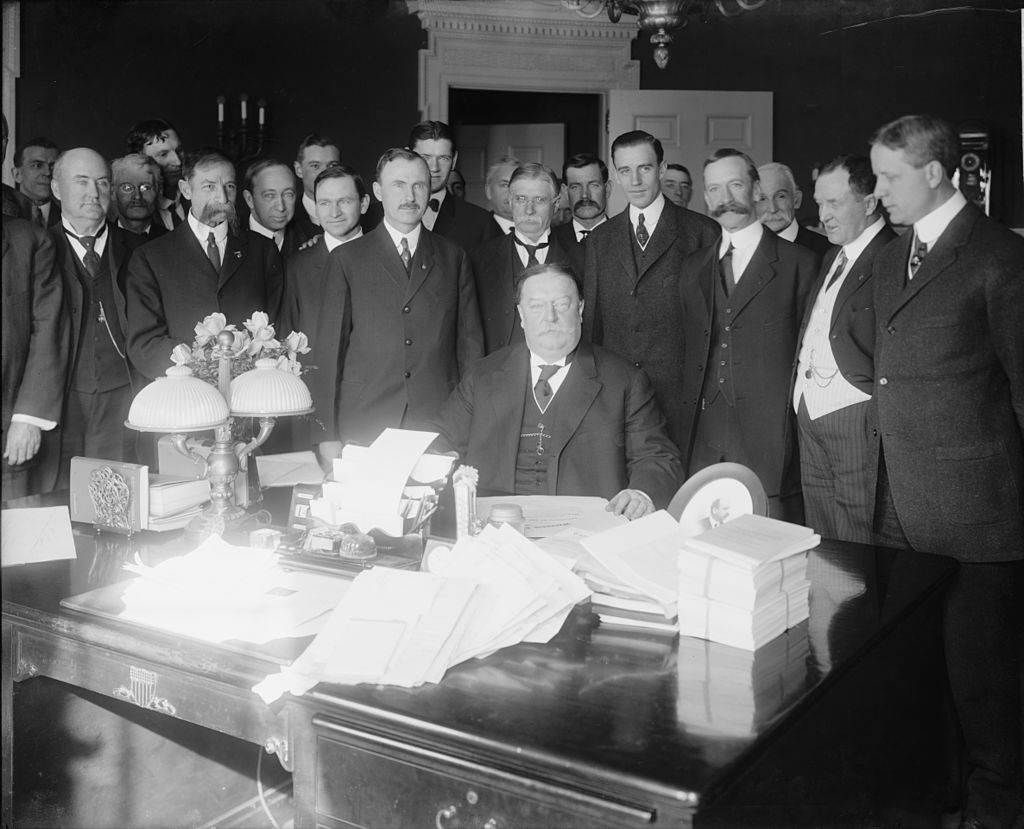
President William Howard Taft signs the bill admitting Arizona as the 48th state in 1912.

If our advanced high-speed rail system backward dependence on overcrowded airliners works, I'll be on a panel next Friday at the national convention of Netroots Nation in Phoenix. The topic: How Progressive Arizona Became Tea Party Arizona.

Because panelists never get to say as much as they'd like, I'll set the table here.

Arizona indeed began as a capital-P Progressive state. This included a weak, almost figurehead of a governor and a strong Legislature, as well as the initiative and referendum where the people could essentially legislate on their own. Statewide officials were required to stand for re-election every two years. They could also be recalled.

Importantly for a state where mining interests and railroads exercised enormous power, the state constitution created a Corporation Commission with wide-ranging regulatory power over the capitalists.

All these were hallmarks of the Progressive Era, which developed as a response to the robber barons and inequality of the Gilded Age of the 1880s and 1890s.

Theodore Roosevelt busted the trusts and more vigorously applied tools that had been passed by Congress earlier, such as the Sherman Antitrust Act and Interstate Commerce Commission. He signed the Pure Food and Drug Act, which, like many Progressive measures, was a result of horrors exposed by muckraking journalists

Had TR won in 1912, he would have gone much further, enacting reforms that had to wait for his cousin, Franklin.

The rise of Margaret Hance

The rise of Margaret Hance

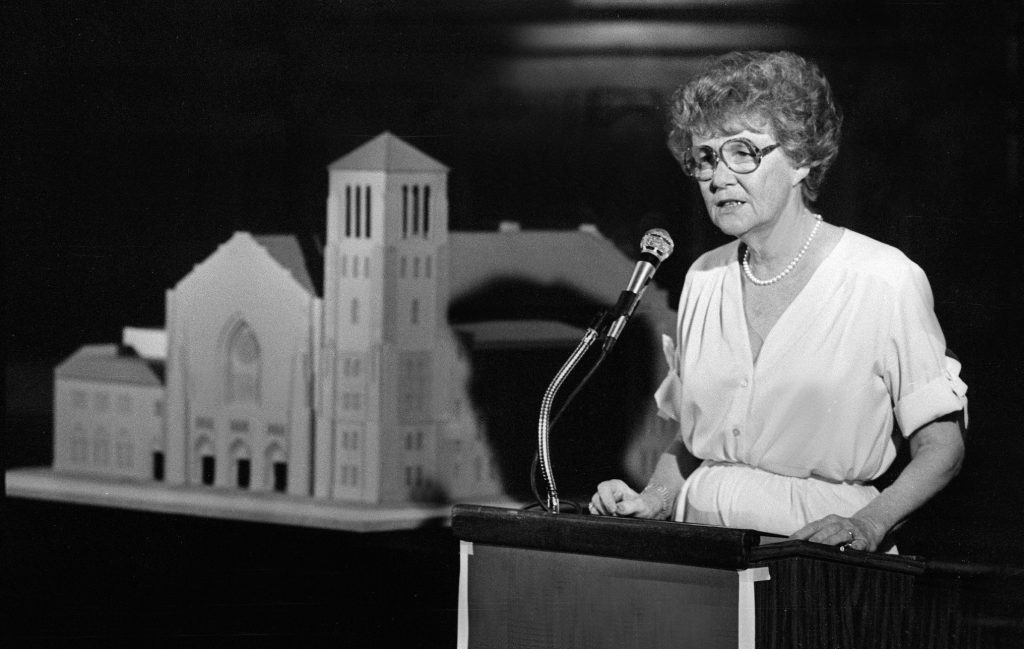
Margaret Hance (Ging photo)

(Michael Ging photo)

When Margaret Hance was elected mayor of Phoenix in November 1975, she was not, as is often claimed, the first woman to lead a major city. That marker goes to Bertha Knight Landes, elected mayor of Seattle in 1926. Patience Latting was elected mayor or Oklahoma City in 1971. Hance was third.

Hance's tenure was far more consequential, as we shall see. Still, she and Landes are twined in dissonances.

Landes, who ran advocating "municipal housecleaning," has been "honored" by Seattle naming its misbegotten tunnel boring machine after her. Hance is memorialized by a park in the heart of the city, a place she did little to help and much to harm.

Margaret Taylor Hance was almost a native, being brought from Iowa to Mesa at age three, in 1926. Her father went to work for Valley Bank, where became an executive vice president. Despite the onset of the Depression, the family moved to what is now Willo. (I am told they lived in the same house on Cypress Street in the 1930s where I grew up in the 1960s. In the '30s, unlike the '60s, it was a high-end neighborhood on the streetcar.)

Although she attended the University of Arizona, she transferred to the elite Scripps College in Claremont, Calif., from whence she graduated. In 1945, she married Robert Hance, who had trained as an Army Air Forces pilot in the Valley during World War II. Her brother, Glen Taylor, went on to become news editor at the Phoenix Gazette, retiring as assistant managing editor in 1983.

She settled into the comfortable and predictable life of an upper-middle-class Republican Phoenix woman. Robert went to work for Valley National Insurance and rose. The couple had three children. Margaret — known as Marge or Margie — volunteered for numerous organizations and joined the Junior League.

Architectural disasters

Architectural disasters

In retrospect, it was foolhardy of me to promise on Facebook that I would write about Phoenix's worst architectural disasters and … could they be fixed? Then to ask for nominations by Facebook friends.

There's just too much bad architecture out there (and no, not only in Phoenix). Now it's too late, a promise is a promise, so here are my top (or bottom) three worst buildings in Phoenix.

1. Phoenix Police Headquarters. Check out the seamless intertwining of Brutalist architecture, 1960s fortress mentality, and everything from the sides of the building to the abundant, heat-radiating concrete surrounding the structure screaming "bleak!" 

PPD

It is an almost perfect example of sterile, dehumanizing, soul-killing, boring hack-work. It even lacks the authority projected by the 1929 City Hall/County Courthouse. Instead, the taxpayers financed a block of ugly that has stood through some 45(!) years of indifference and civic malpractice.

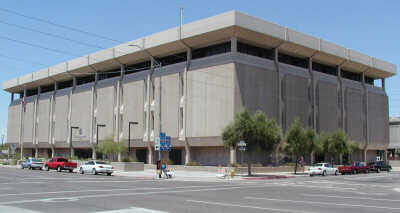
2. The Arizona Executive Office Tower. Yes, this is Gov. Roscoe's aerie.

Exec_Tower

Built in 1974, only about four years after the building above, this mishap has the same dreary "pour boiling oil on the invaders" upper-story rampart as its cousin.

Yet its transgression goes further because it is attached to the charming territorial capitol building and addition. The top of the tower overpowers the modest copper dome of the capitol. The two buildings clash like a Chevy Vega front on a Rolls Royce.