Bolles: a players guide

Bolles: a players guide

Bolles_paper


"They finally got me…Mafia, Emprise, Adamson…find John Adamson…"
— Don Bolles

On June 2, 1976, a bomb detonated under the car of Arizona Republic reporter Don Bolles in Midtown Phoenix. He survived an agonizing 11 days before he died. A recent article by Bolles' colleague John Winters lays out the basics. I've written about the case before here, as well as the Phoenix underworld. The closest assassins went to prison. Yet full justice was never served. The real puppetmasters got away with it. Many in high positions wanted it to go away.

But what exactly was it? The case has been extensively covered over the years, from the Arizona Project of Investigative Reporters and Editors (IRE) and contemporary, dogged reporting, by Republic and Phoenix Gazette reporters, including Al Sitter, Paul Dean, and Charles Kelly. New Times ran the IRE series and kept digging over the following decades, especially with Jana Bommersbach, John Dougherty, Tom Fitzpatrick and Paul Rubin. The Republic continues with retrospectives. Don Devereux, who worked for the Scottsdale Progress, still writes a blog about the case. A fascinating new book by Dave Wagner, an R&G city editor, The Politics of Murder: Organized Crime in Barry Goldwater's Arizona, makes an important contribution.

With so much having been written, so many characters and theories, one danger is becoming lost in a house of mirrors. The Bolles case would be the ultimate test of a mystery writer, were he foolish enough to try to make it into popular crime fiction. That's because in real life, the case was complex and shaded. It involved journalism and supposition, not all of the latter ultimately true. Carl Bernstein said that good journalism is the best available truth at that moment. But journalists write on history's leading edge and history is an argument without end. Law enforcement continues to debate the case, too. Files were lost or misplaced, perhaps deliberately. Among them, Phoenix Police file No. 851. In addition to the missing file, index cards for the files were also removed from the records room. Did it contain inconvenient information about Adamson, Emprise and Kemper Marley? Or more? Self-serving narratives, hidden agendas, and bad memories further blur the trail. Many questions remain. 

So my modest attempt for the 40th anniversary of the bombing is a list of the actual major players and their connection with the most notorious assassination of a reporter on American soil:

John Adamson: Don Bolles left his post covering the state Legislature to meet Adamson at the Clarendon House Hotel on June 2nd. Adamson promised a juicy tip on a land fraud involving Barry Goldwater, Harry Rosenzweig, Sam Steiger, and Kemper Marley. In reality, while Bolles waited for him in the lobby, Adamson planted the dynamite device under the driver's side of Bolles' new Datsun 710. After giving up on the meeting, Bolles returned to the parking lot, started his car, and pulled out when the bomb went off.

Usually portrayed as a small-time but menacing hood, Adamson hung out on the Central Avenue bars and the dog track. But he actually had worked his way up to being chief enforcer for land-fraud kingpin Ned Warren and had been retained by associates of Barry Goldwater for dirty business in a Navajo power struggle. He also worked as a confidential informant for someone in the Phoenix Police. Bolles identified Adamson in his famous last words. In exchange for cooperation, Adamson was given a 20-year sentence. When convictions from his testimony were thrown out, prosecutors charged him with first-degree murder. This conviction didn't stick. So after serving 20 years, Adamson entered federal witness protection, then voluntarily left it, dying in 2002. Some retired cops and journalists suspect that Adamson protected the true source of the death warrant on Bolles. In a jailhouse interview with Bommersbach and Rubin, Adamson said chillingly, "I didn't kill him for a story he'd written. I killed him for a story he was going to write."

Phoenix in the forties

Phoenix in the forties

Central Avenue 1940s
In 1941, Arthur Horton, a professor at Arizona State Teachers College, the precursor of ASU, published a remarkable Survey of Phoenix and the Valley of the Sun. What makes it still valuable is that it provides us with the most authoritative examination of Phoenix in that decade, or at any time until perhaps the 1960s.

The exhaustive report is also helpful in understanding a decade that meant far more than American involvement in World War II and its effects on Phoenix (which I wrote about here). That lasted less than four years out of 10. Much more was going on.

The decade began with a strong local economy, almost entirely thanks to the New Deal’s enormous largesse toward Phoenix and Arizona. The stimulus spending worked and helped pull Phoenix out of the Great Depression. By 1940, Americans were doing better and traveling, including visiting the mostly new resorts including the Arizona Biltmore, Camelback Inn, Jokake Inn, Adobe House, Ingleside Inn, Wigwam Guest Ranch and San Marcos at Chandler, as well as Phoenix’s premier hotels. The “Valley of the Sun” tourist promotion launched by the Chamber of Commerce and the railroads was paying off. To be sure, not everyone was doing better: 10,000 in the county (population 186,000) were on relief.

Agriculture remained the mainstay of the Salt River Valley’s economy. According to Horton, Arizona had 1.1 million grapefruit trees, 625,000 orange trees; 17,000 lemon trees; 5,000 tangerine trees, and 2,675 lime trees. Most of these were in the American Eden in and around Phoenix.

Phoenix Confidential: the dog track underworld

Phoenix Confidential: the dog track underworld

Greyhound_Park_40th_St_Washingon_1950s
With Arizona ending live greyhound racing, it's the end of an era long coming. Where the state once had five tracks, the only one left was in poor Tucson, which couldn't even keep a slice of Spring Training. The track in Phoenix closed to live racing in 2009. Changing tastes, animal activists and, especially, the proliferation of tribal casinos did in the pastime.

But once upon a time, it was a big deal. Before Phoenix Greyhound Park became a swap meet and was painted, like so much of the town, brown, it was one of the city's premier entertainment attractions. The golden age was from the 1950s through the 1970s. Opening in 1954, Phoenix Greyhound Park at 40th Street and Washington was a neon-lit palace where middle-class couples and compulsive gamblers mixed with the city's elite — and members of its extensive population of mobsters. Betting was legal. And a pre-video-device audience thrilled to dogs racing chasing a mechanical "lure" around the track. The park promised glamor, excitement, and was highly advertised ("there goes the rabbit, rabbit, rabbit!").

The extent of organized crime's penetration of dog racing in Phoenix remains an important, and controversial, element of the mystery of the 1976 assassination of Arizona Republic reporter Don Bolles. After the blast and before he passed out, first responders heard Bolles say (a version of) "they finally got me…Adamson, Emprise, Mafia…find John Adamson…" Emprise was a sports conglomerate headquartered in Buffalo, N.Y. and controlled by the Jacobs family. It held a controlling interest in Arizona dog tracks.

Emprise was found to be associated with organized crime figures and convicted in Los Angeles of racketeering in 1972. The allegations involved taking a hidden interest in a Las Vegas casino to skim the profits. In Phoenix, Emprise had been a target of Bolles' investigative reporting and focus of a crackdown by the state Racing Commission in the early 1970s. Even so, the state allowed the company to keep its concessions, including at Phoenix Greyhound Park. Emprise's Phoenix partner was the Funk family And it had friendly ties to Kemper Marley, the powerful land-and-booze baron always lurking at the edge of the Bolles murder.

Jim Newcomer, an appreciation

Jim Newcomer, an appreciation

Newcomer2
Like the elves departing Middle Earth they are now leaving us, the gifted teachers who helped make us the men and women we became. No loss has been tougher than the recent death of James E. Newcomer.

He was a towering figure among the giants assembled by Eugene Hanson at the Fine Arts Department of Coronado High School in Scottsdale, including Robert Frazier and Joseph Gatti. In those days, Scottsdale taxpayers happily funded public education. Coronado built one of the most respected fine arts programs in the nation. While other schools had a "senior play," we had seven or eight productions a year in the glory days of the 1970s, when I was blessed to be a student. These included a major musical and spring repertory, with productions at a level of sophistication and skill that could match university or professional theater. This was in no small part because of Jim Newcomer.

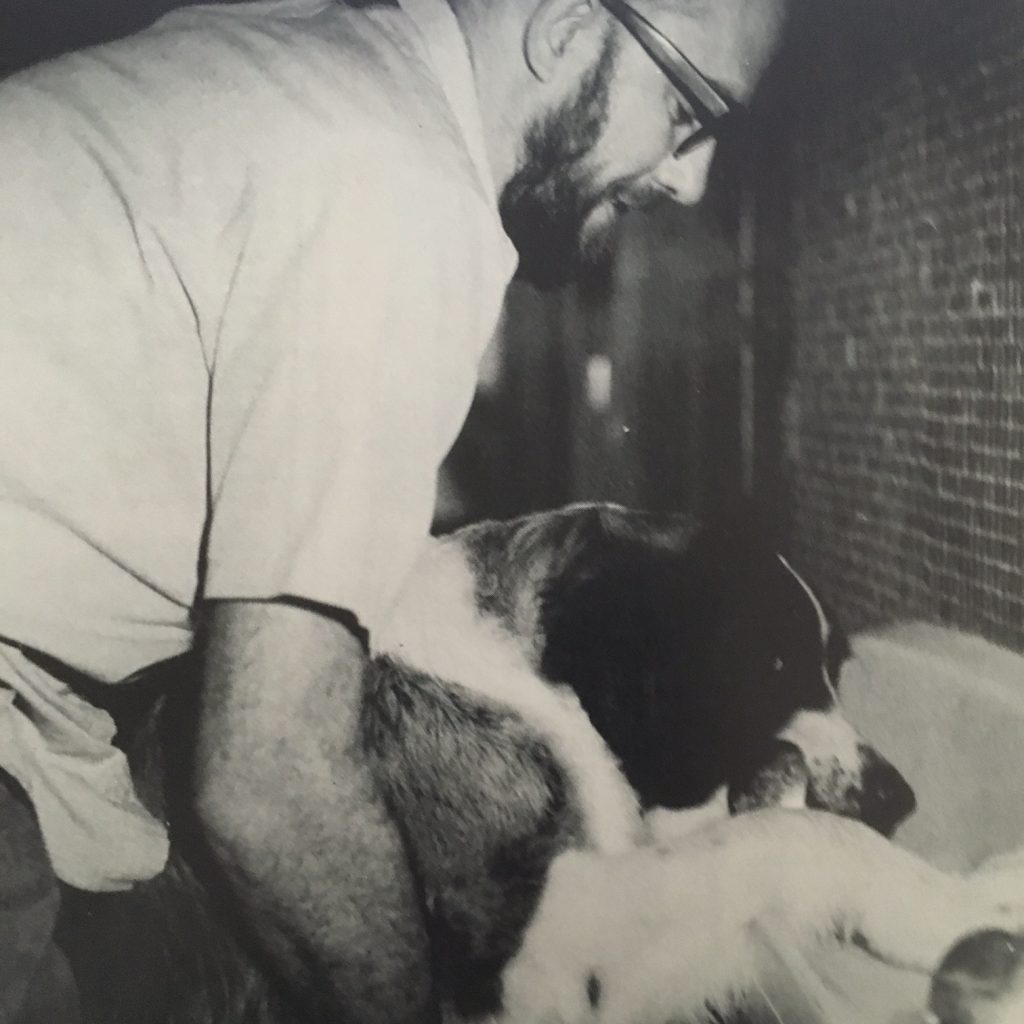
He drove a little red Beetle — one always knew he was on the job when it was parked behind the big roll-up door at the rear of the auditorium, even on weekends. He kept company with an enormous St. Bernard named Hildegard.

As the senior theater arts teacher, he taught acting as well as technical theater (lighting, set design and construction, props, costuming, makeup, etc.) Working in the stunning performance space designed by famed Phoenix architect Ralph Haver, we were repeatedly told by Newcomer that we might never again work in such an excellent facility. He was right. Most Broadway theaters were dumps. Plays at ASU were performed in the former college boiler room, the Lyceum Theater.

Newcomer was charismatic and striking, a tall man with a booming voice and laugh, a beard and long legs that splayed out whenever he sat down. Even the shyest student could find a place in Coronado theater, be it in property management or costuming. Yet all were a part of an enterprise that was demanding and professional. Excellence was Newcomer's true north and he got it.

Phoenix Confidential: the mob’s master of the skim

Phoenix Confidential: the mob’s master of the skim

GreenbaumThe most notorious gangster of mid-century Phoenix was Gus Greenbaum, but most people only know the end of the story. Where, in 1958, he and his wife were cooking steaks at their Palmcroft home on Monte Vista Drive when hitmen killed both.

Greenbaum's body was found in a bedroom, nearly decapitated in having his throat slit. His wife Bess' throat was cut, too. She was on a sofa facing the fireplace in the living room, trussed from behind and badly beaten in the face with a heavy bottle. Police discovered her propped face-down on pillows, which prevented blood from dripping on the carpet. They also found evidence that the assassins stayed on that December evening and ate the steaks.

Phoenix as a back office to Las Vegas and second home for Chicago Outfit mobsters (Willie Bioff, the notorious movie-industry hustler and Mafia turncoat for example), is often traced to Greenbaum. But he was actually sent to Phoenix in 1928 to run illegal liquor and betting; the latter eventually became southwest hub of the Outfit's gambling wire service, the Trans-America Publishing and News Service (Western Union would have frowned on accepting illegal telegraphs). This proprietary circuit also gave the Outfit an edge in national bookmaking rackets over rivals in New York and Detroit.

Gambling wouldn't be legalized in Nevada until 1931. Las Vegas was a village on the Union Pacific's main line from Salt Lake City to Los Angeles, population little more than 5,000. Legalization came because Nevada, whose population was centered around Reno and Carson City, was losing people and economic power as its mines played out and were destroyed by falling demand from the Great Depression.

Gus Greenbaum, a protege of the infamous Meyer Lansky, was 34. In Phoenix, he found a city of almost 48,000 and wide open. Gambling and prostitution flourished, with city commissioners and detectives taking a cut. The police department was deeply corrupt. Rail connections to Chicago were plentiful on the Santa Fe and Southern Pacific. Before the end of Prohibition, liquor was plentiful, too, thanks to Al Capone. Rising local leaders such as the Goldwater and Rosenzweig brothers and contractor Del Webb befriended Greenbaum. No wonder the Outfit thought it was the ideal home for Trans-America.

Phoenix 101: Before superblocks

Phoenix 101: Before superblocks

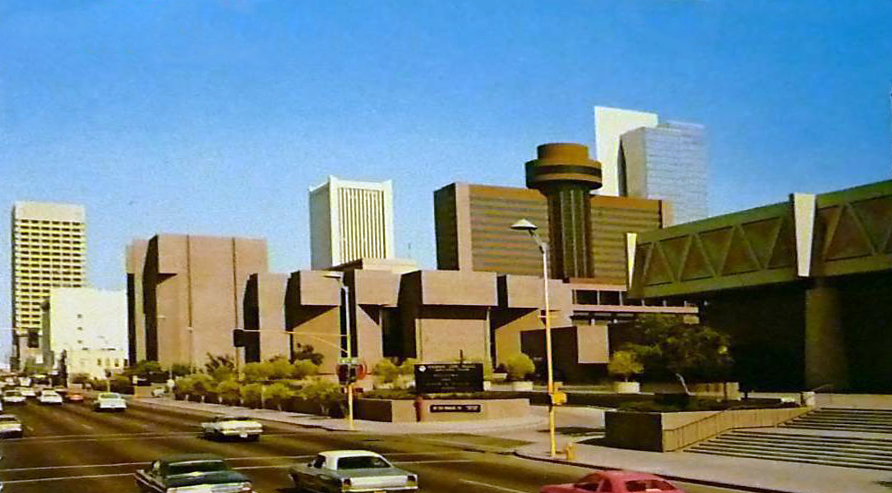
Washington_looking_west_1970s"Superblocks," with one project, be it an office, apartment, or parking garage, taking up an entire block, are one of the biggest enemies of a vibrant downtown. Think of old Civic Plaza (right) or the Chase Tower and its parking hulk. Even CityScape, which has many shops, offices, and restaurants (unfortunately facing inward), consists of superblocks that once held dozens of individual buildings, each with distinctive architecture and attitude to the street.

This is not a problem confined to central Phoenix — superblocks are profitable for developers. But this is a Phoenix-centric blog and no other major city lost more of its good urban bones to teardowns and, in many cases after decades, rebuilding into massive projects that are nearly dead at street level.

It's important to recall what Phoenix had. Not for nostalgia, but for lessons in how good cities really work (which is usually the opposite of what urban planners want) and because so few Phoenicians even know what once existed.

So thanks to the new digital archive of the McCulloch Brothers collection at ASU and other shots archived by Brad Hall, let's examine the energetic, walkable, full-of-life-and-commerce Phoenix:

The great hotels of old Phoenix

The great hotels of old Phoenix

Before the neon gateways of motels and auto courts, before the resorts, Phoenix welcomed visitors at a handful of elegant hotels. They succeeded the one-, two- and three-story hostelries mostly built in the late 19th and early 20th centuries, which gradually became single-room occupancy properties catering to those with few means.

All were located downtown, easily walkable for shopping, entertainment, and restaurants. They were convenient to travelers arriving by train at the Southern Pacific and Santa Fe depots, and after 1923 at Union Station. Once the town was easily accessible by rail, it attracted everyone from "health seekers" to Hollywood movie stars.

Let's take a tour. Click on the photo for a larger image. These images come from the McCulloch Bros. Collection/ASU Archives and the Brad Hall collection.

The Adams:

Adams_Central_looking_east_Gooding_Adams_Hotel_1908

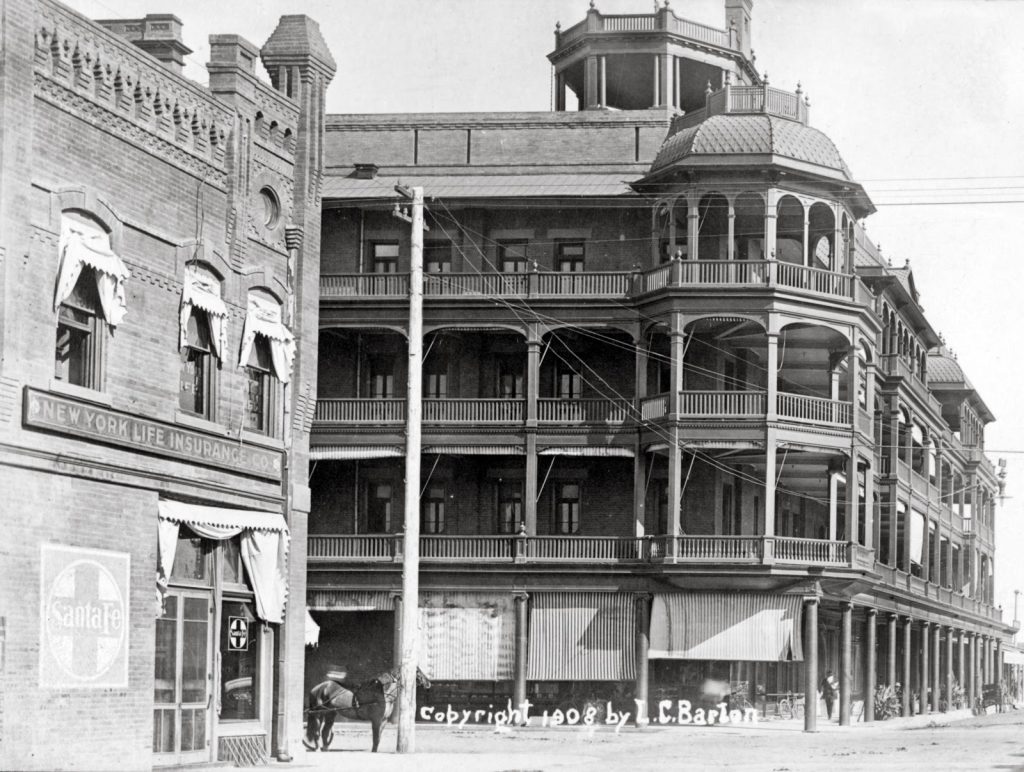
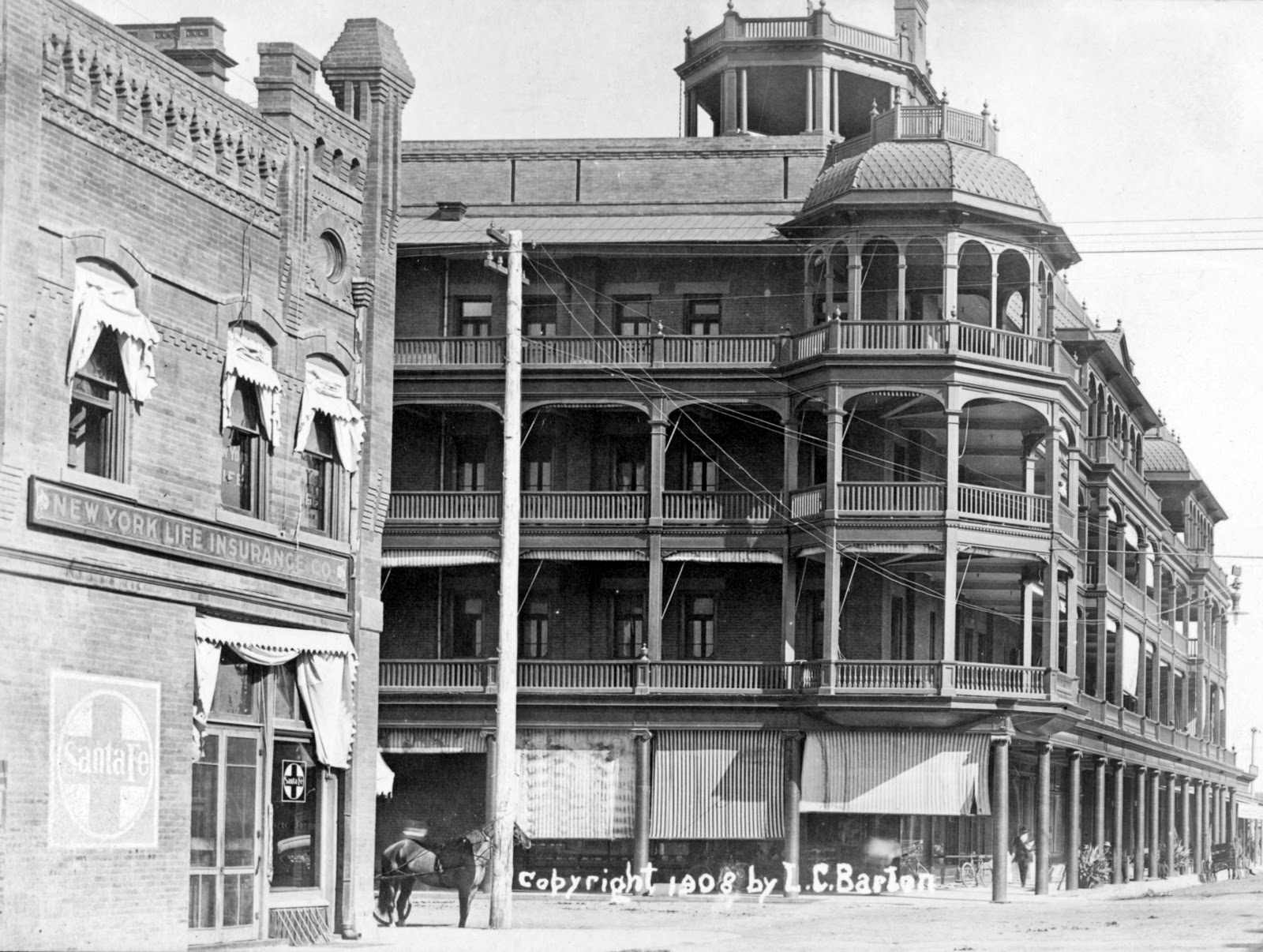
The Hotel Adams, at Center (Central) and Adams Street, was completed in 1896, the largest and grandest hotel in the territory. Phoenix's population was only 5,000. Owner John Adams came from Chicago and twice served as Phoenix's mayor.

Washington_1st_Ave_looking_northeast_Monihon_Adams_Hotel_Clark_Churchill_Camelback_1899(1)

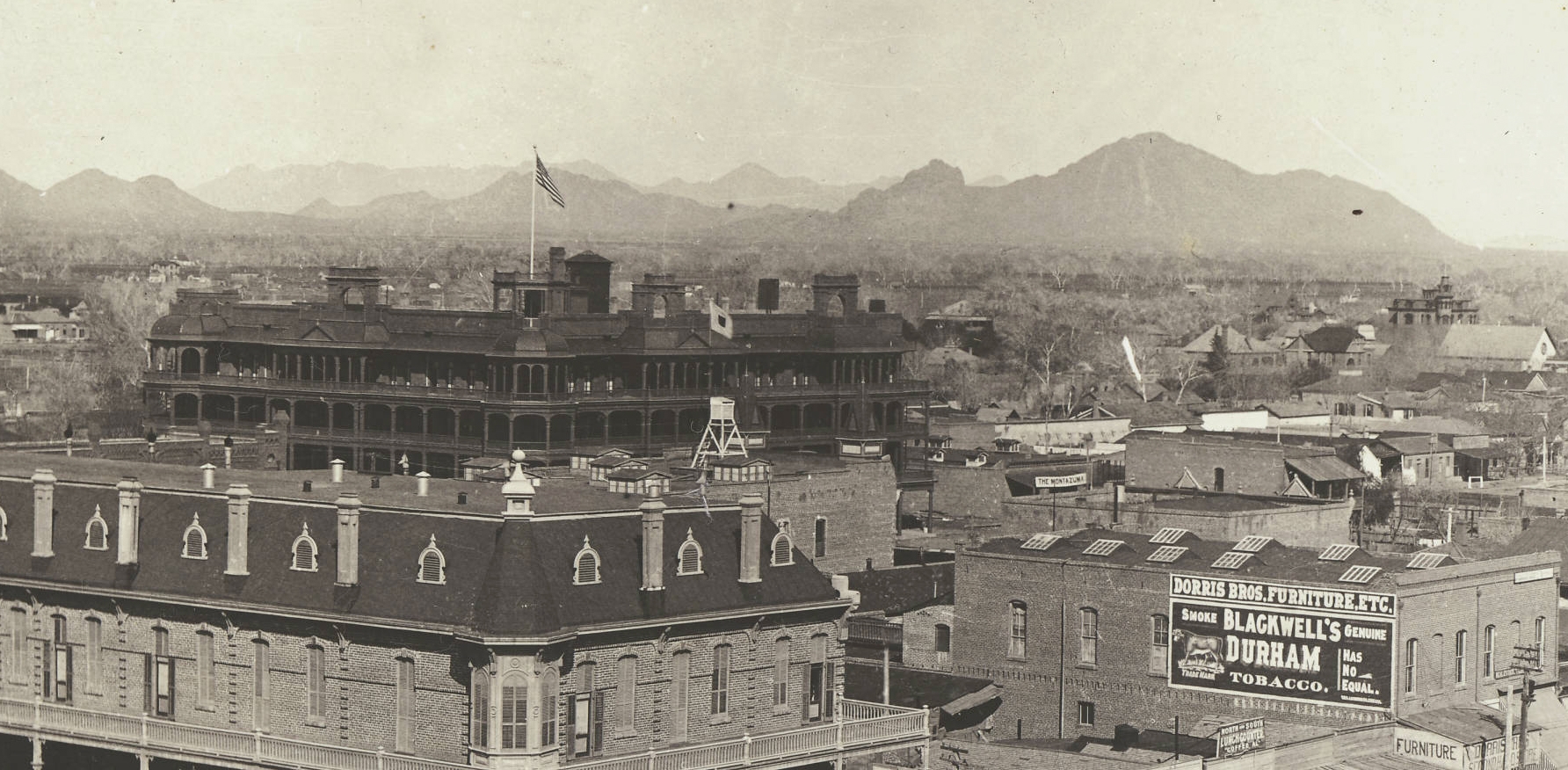
In 1899, looking over the Monihon Building (which features in my mystery City of Dark Corners), the Adams is the most impressive building in town.

Hotel_Adams_1900s

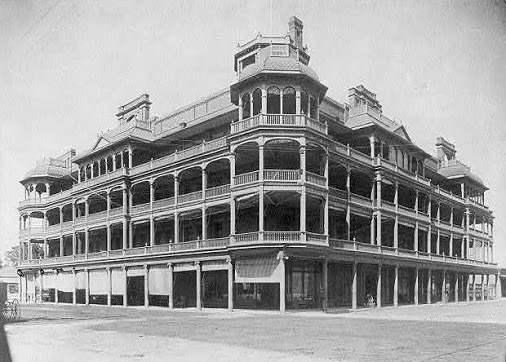
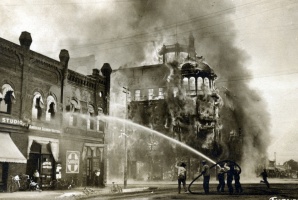
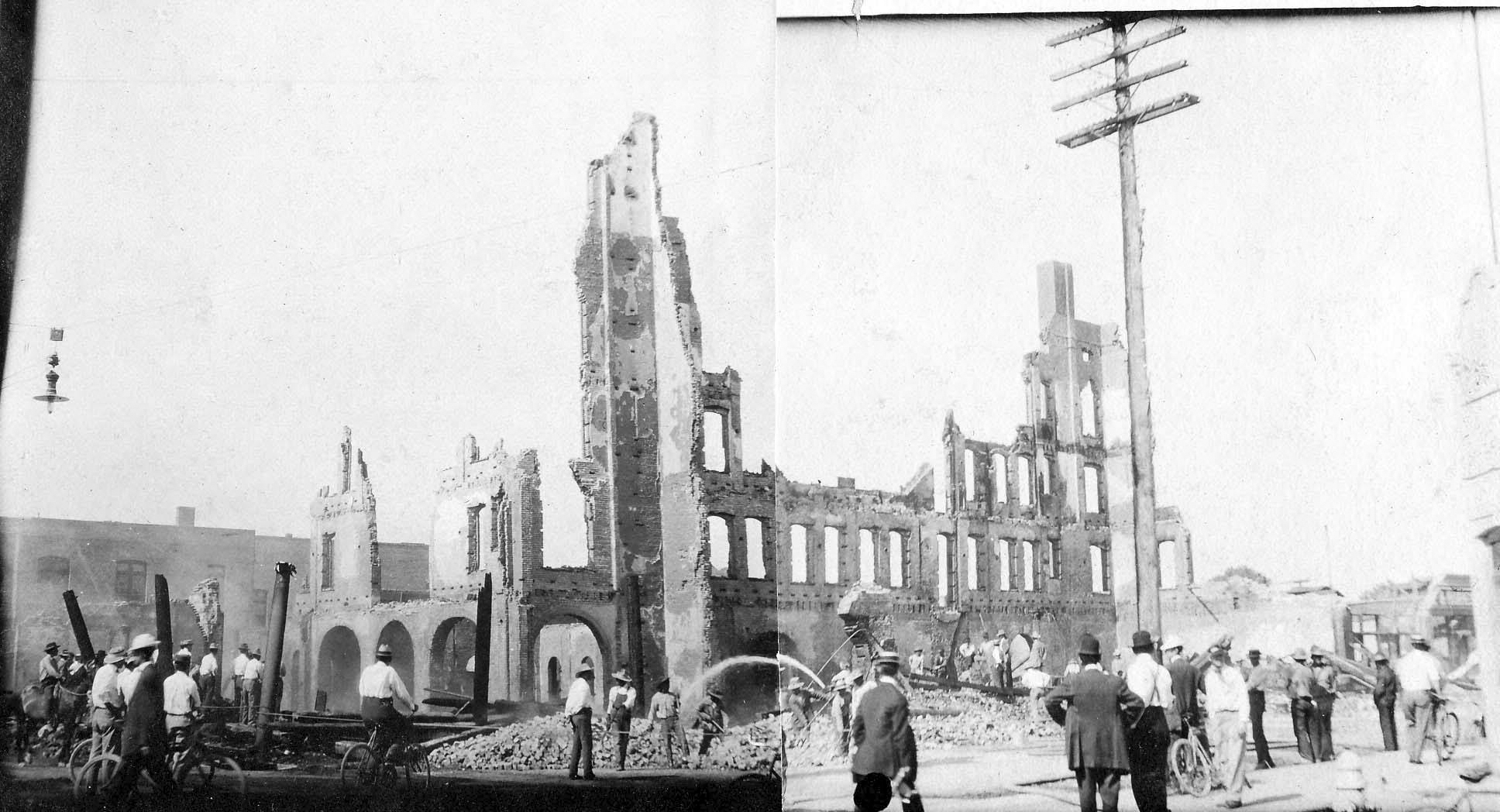
Hotel Adams fireHere's a glamour shot of the hotel soon after its completion. Without air conditioning, its awnings, balconies, and sleeping porches helped keep guests cool in the summer. Unfortunately, the original mostly wooden building was completely destroyed by a fire in 1910. The blaze was so intense that it was fortunate — and thanks to the efforts of the young Phoenix Fire Department, that it didn't spread through downtown, becoming a Great Phoenix Fire.

After the blaze was extinguished, only rubble remained. Adams immediately began rebuilding.

Adams_Hotel_after_fire_northeast_corner_Central_Adams_1910

Phoenix Confidential: Frenchy

Phoenix Confidential: Frenchy

Frenchy_graveThe 1944 murder of Phoenix Police Officer David "Star" Johnson by Detective "Frenchy" Navarre is well-known to regular readers here (if you're new, you can read this real-life-pulp-fiction tale here). For years, the police department and city tried to forget the incident — and subsequent retribution by Johnson's partner in killing Navarre — not least because of its racial component. Johnson and his partner, Joe Davis, were black. Navarre was white.

Now that it's more in the open, Johnson deserves to be recognized by the department as an in-the-line-of-duty death.

But mysteries continue to linger about the shooting on May 2, 1944 in the Deuce, and the cascade effect it had, resulting in two trials, Navarre's acquittal, and Davis taking revenge inside police headquarters. For example, how did Navarre post bail of $10,000 after his arrest on a city detective's modest pay?

A big part of the answer is that Navarre was friends with Gus Greenbaum, the high-ranking member of the Chicago Outfit who had been posted to Phoenix in 1928 and later became infamous at Las Vegas casinos and the victim of a high-profile assassination in Palmcroft in 1958.

The Warehouse District

The Warehouse District

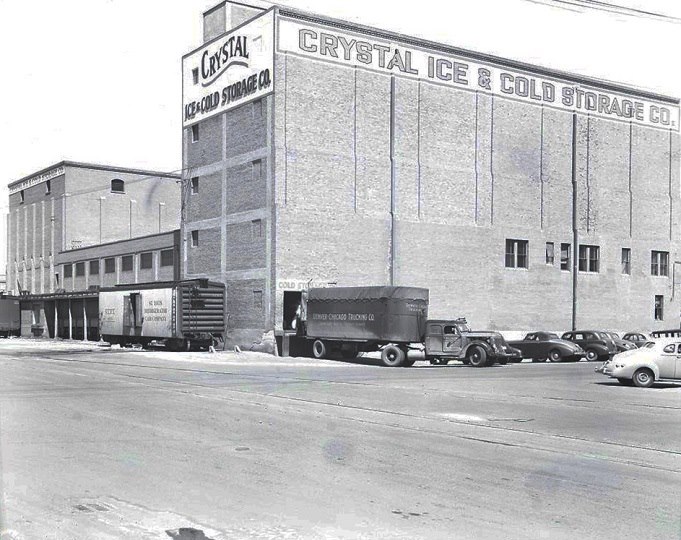
Crystal IceRailroad tracks running to Crystal Ice at Fourth Avenue and Jackson in the heart of the district. The plant not only provided ice deliveries to businesses and homes, but produced blocks to fill the bunkers of railroad refrigerator cars. The blocks were dragged and placed through roof doors in the railcars by workers on catwalks using hooks.  (McCulloch Bros./ASU Archives).

Phoenix's Warehouse District is finally seeing a payoff after years of destruction and false starts. How big a renaissance remains to be seen; coverage I've seen such as this doesn't quantify the new businesses. But something is happening. Most important, it involves creative firms and tech startups, not only restaurants.

The area saw an effervescence before, when artists discovered the historic buildings in the 1980s. But they were driven out by the arena, ballpark, Joe Arpaio's relentless jail expansions, Phoenix's ethos of tear-downs, and the city's lack of an effective preservation policy. The Job Corps moved into several buildings.

Some of the best buildings were lost. This helped fuel the successful fight in the mid-2000s to save the Sun Mercantile building, part of the city's old Chinatown. A few developers with stamina and perseverance, notably Michael Levine, refurbished some buildings. Another comeback attempt came with the opening of the unfortunately named Bentley Projects (the old Bell Laundry) in the 2000s, which included a restaurant, galleries, and a Poisoned Pen Bookstore. Too far from the core, that didn't take, either.

Phoenix never boasted a warehouse district with the size and great bones of, say, Denver, which has become a tremendous asset for an area anchored by the restored and expanded Denver Union Station. Phoenix was too small and limited in its economic heft. Still, what remains of the area is one of the city's treasures. It's one of the few places in Phoenix where you can find that coveted urban authenticity, with a variety of old buildings, narrow streets and density, that talented creatives seek.

WWII home front: Phoenix

WWII home front: Phoenix

Thunderbird field
In the conventional telling of Phoenix history, World War II marks the pivot between the "old" and "new" city. The reality is not quite so neat. But the war does deserve its own niche, separate from the more expansive decade of the 1940s.

As with the Great War, the most immediate local beneficiaries of the outbreak of hostilities in Europe in 1939 (China had been fighting for its life against Japan since 1937) were the cotton farmers of the Salt River Valley. Even with America nominally neutral, Washington tilted policy toward Britain and France, and our extra-long staple cotton was critical to making tires.

But unlike World War I, the Second World War would touch Phoenix much more profoundly. It would bring military bases and new industries. Population increases would strain the city. Simmering racial hostilities would break through. One of the great injustices of American history would literally run through the heart of town.

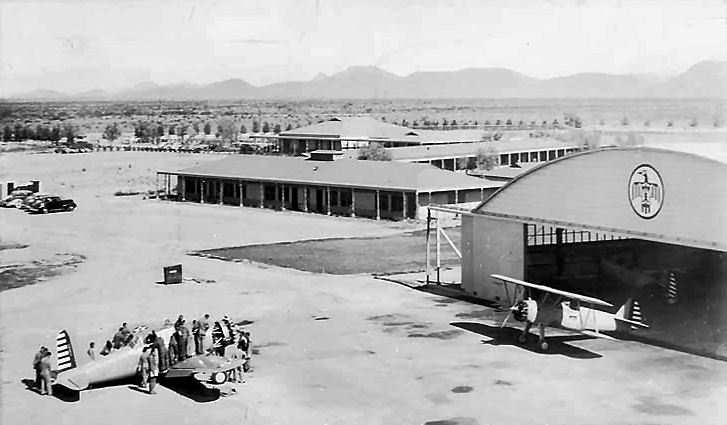
The valley's destiny lay not merely with the land but in the sky. It, along with Tucson, was identified as an ideal place to train military pilots thanks to the abundant clear days. Even before America entered the war — and in spite of a large isolationist sentiment in the Congress and the country — FDR's War Department began seeking locations for air bases in the Southwest. They were meant to enhance "preparedness," Roosevelt's armed neutrality, but also train British, Canadian and Chinese pilots.

The best of Rogue 2015

The best of Rogue 2015

11113955_473971796114940_6472959220703346943_oPhoto by Eugene Scott

Phoenix should leave the Greater Phoenix Economic Council: "GPEC can't serve the special needs of Phoenix and the appetite of the sprawl boyz. Maybe a few projects to far north Phoenix. But what has GPEC done for downtown, the Central Corridor or to fill abundant empty land along the light-rail line in the city? Not much if anything."

The evolution of the press, radio, and television in Phoenix: "It is an open question of how much power "the Pulliam press" actually had in post-war Phoenix. The city was attracting large numbers of middle-class Anglos from the Midwest that already shared his larger political philosophy. Pulliam was a civic leader, but hardly the only one, and most shared a common vision of a "business friendly" low-rise city with minimal restrictions on individuals. At least on white people."

Still got Dick Nixon to kick around: "For decades, Richard Nixon has been the devil to the left. But the left isn't politically relevant anymore (Jerry Ford Republicanism is what passes for "the left" in today's broken political spectrum). What's more consequential is that Nixon is now the devil to the right, which is more powerful than ever. So in the public square today, we are relitigating not Watergate but the domestic achievements of Tricky Dick."

Traffic in old Phoenix

Traffic in old Phoenix

McDowell_10St._1960

Nothing has done more to wreck American cities than cars. Jane Jacobs was more precise: Planners and road builders "do not know what to do with automobiles in cities because they do not know how to plan for workable and vital cities anyhow — with or without automobiles."

In The Death and Life of Great American Cities, she continued: "The simple needs of automobiles are more easily understood and satisfied than the complex needs of cities… Cities have more intricate economic and social concerns than automobile traffic. How can you know what to try with traffic until you know how the city itself works, and what else it needs to do with its streets? You can't."

This 1961 warning did not stop the ongoing civic vandalism, which was particularly visited on Phoenix with catastrophic consequences.

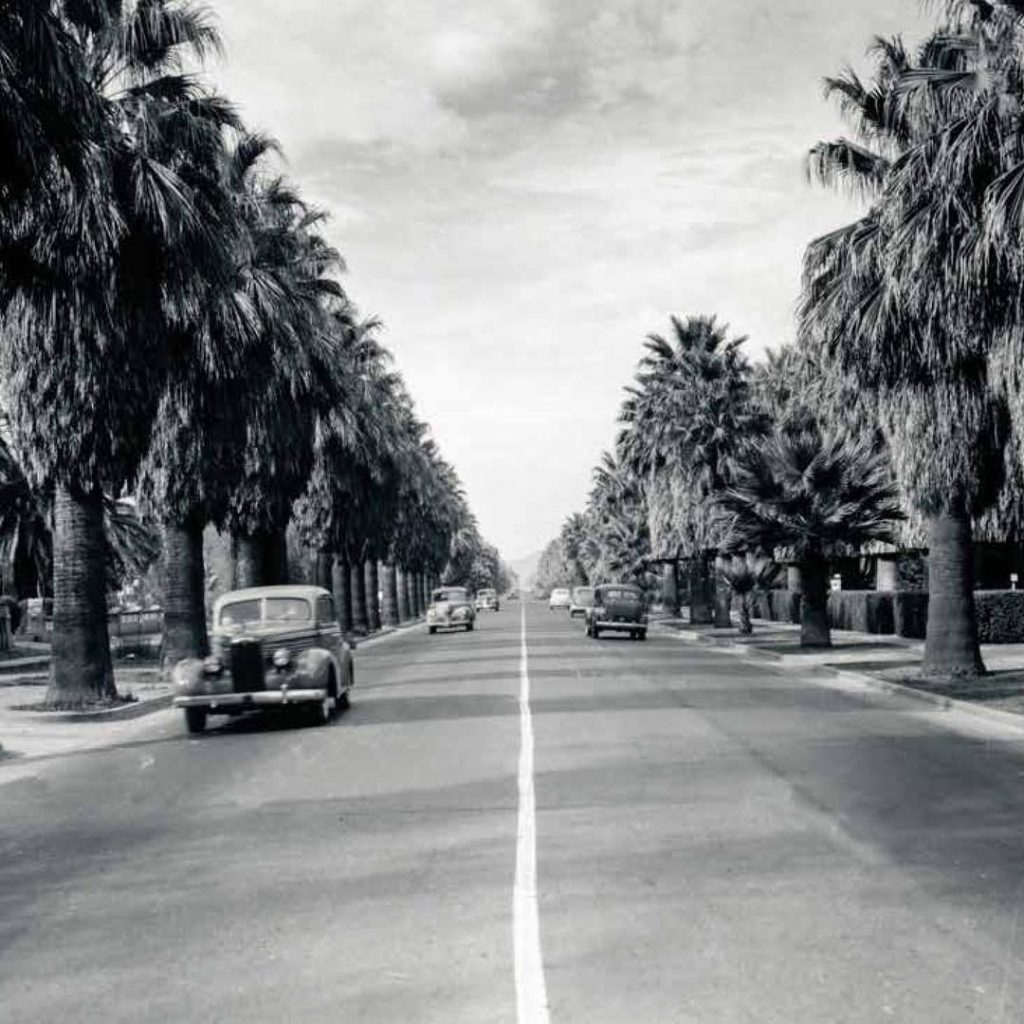
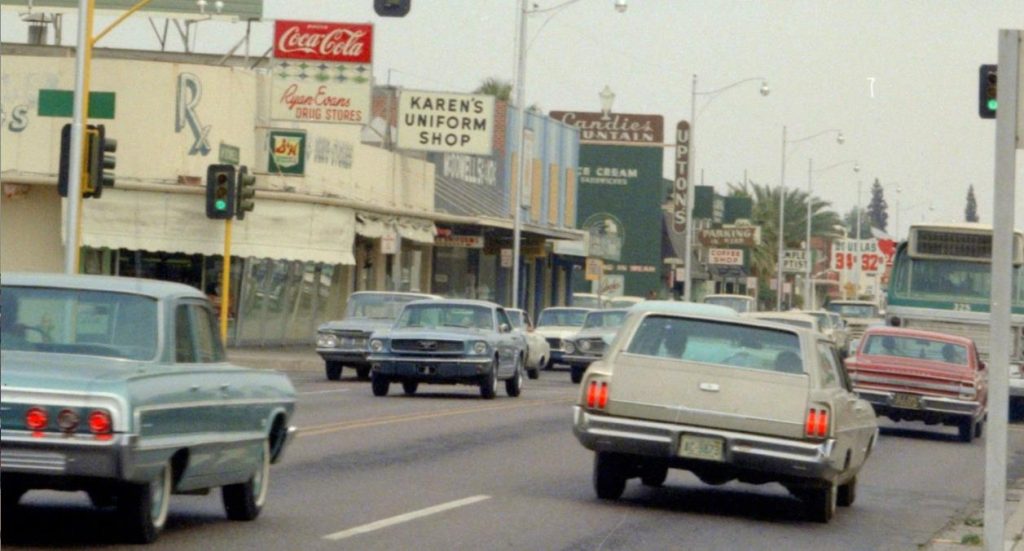
Central_Ave_McDowell_looking_north_1940sOld Phoenix, with its 17 square miles and 105,000 people in 1950, was convenient and walkable. Streets were of modest widths — you can still see it on Third and Fifth avenues today. Cars easily co-existed with pedestrians. One fine example was the shady City Beautiful Movement parkways on Moreland and Portland streets. North of McDowell, Central was a two-lane street lined with lush palms.

But the planner elite, with their superstitions about how cities should work, were already undermining it.

Sunnyslope in old Phoenix

Sunnyslope in old Phoenix

Sunnyslope_Dunlap_3rd_Street_looking_eastDunlap Avenue looking east in Sunnyslope's main commercial district in the 1950s.

Of all the areas that became part of today's 516-square-mile Phoenix, Sunnyslope had the best chance of being its own separate town.

At the foot of North Mountain, Sunnyslope was very different from Phoenix proper (the name came from the Sunny Slope subdivision laid out by William Norton in 1911). It was a desert town, north of the Arizona Canal which marked the beginning of the oasis.

It was higher than the historic Phoenix townsite, something you still can see today if you drive south from Hatcher on Central Avenue, and framed by rugged terrain. My grandmother sold real estate in Sunnyslope and any time I, an oasis kid, would go with her, it seemed very exotic. And unlike Phoenix, its history was not based on agriculture.

Instead, Sunnyslope attracted "health seekers" and usually poor ones. In the Great Depression, it hosted a Hooverville. And Phoenix leaders not only looked down on it, they didn't want it to be part of the city. It received virtually none of the massive New Deal aid that saved Phoenix in the 1930s.

The land economy

The land economy

00435v
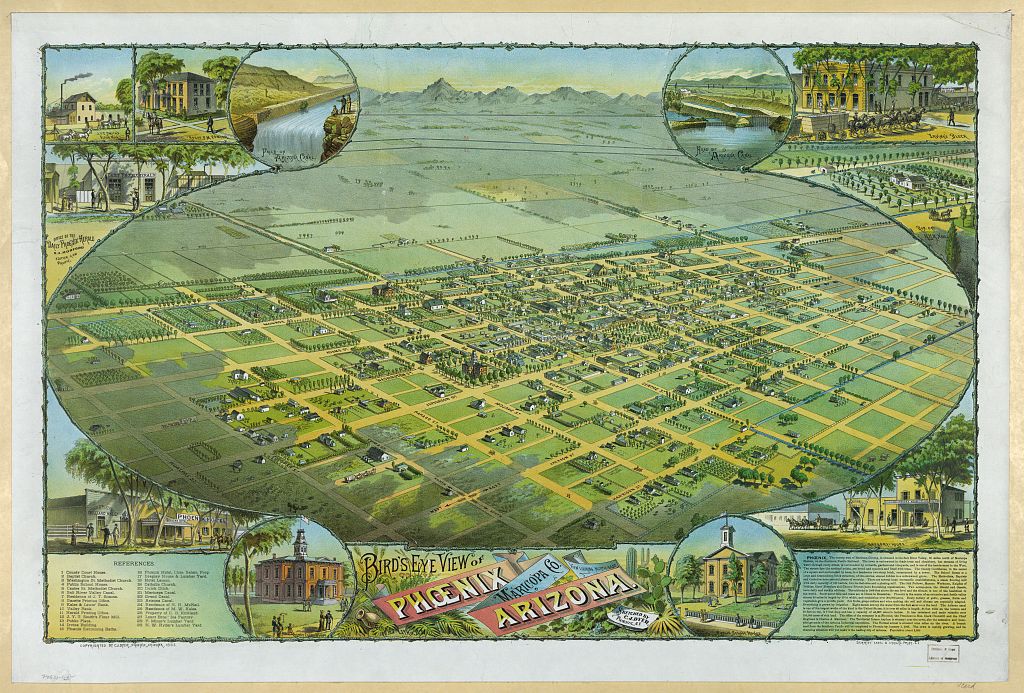
The oldest human activity in the Salt River Valley is agriculture. But the second oldest, in the era since American settlement began in the late 1860s, is land: platting, subdividing, buying, selling, flipping. It's an old-fashioned extraction industry. The remarkable thing is that it remains Phoenix's economic foundation.

With the 1851 Salt and Gila River Meridian, or "baseline," located near today's Phoenix International Raceway, the Americans set in place the point from which land would be surveyed and divided. This is a historic method of American empire, going back to the Northwest Ordinance of 1787. It laid down a template that organized and regularized land to make it fungible.

Initially, the land was divided into farms, the square-mile layout that remains the bones of Phoenix until one gets into the mountains. But as the towns of Phoenix, Tempe, Mesa, Glendale and others grew, increasing amounts were subdivided for houses and businesses. Phoenix's unique location in one of the world's richest river valleys made agriculture a natural source of wealth. But so was the land itself. The 1877 Desert Lands Act expanded the Homestead Act, not only attracting settlers but also speculators.

Here it comes…

Here it comes…

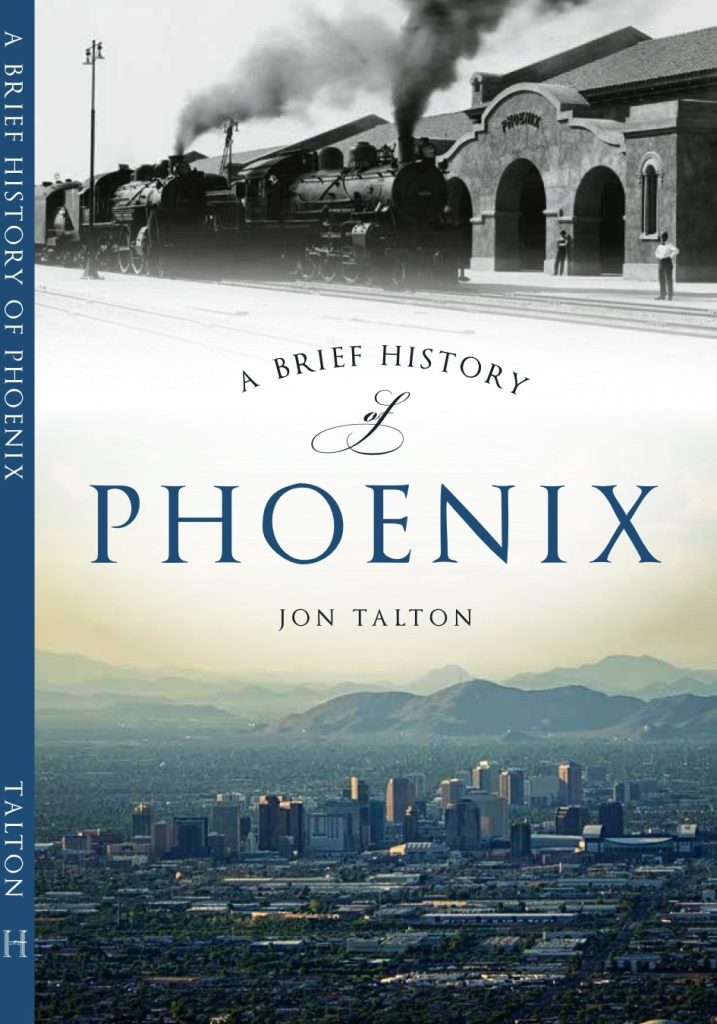
PHXfront

My new book, a concise history of Phoenix, comes out Nov. 9. Some initial signings are set for early December (see the "news" page of my author site) with more to come early next year.

I didn't intend to see two books published this year. High Country Nocturne, the eighth David Mapstone Mystery, would have done fine. But I was approached by an editor at the History Press who liked my Phoenix history columns on this site.

Initially, I thought it would entail a fairly easy compilation of that work. Instead, they wanted an almost entirely new book — and fast. So I set out to write the dissertation I never did.

I received a great deal of help in assembling the 60-plus photos that grace the book. That was still some of the most time consuming work. So was drilling down into primary sources. Then I had to make it my own, my concise interpretative history that can stand apart from fine work already done by Phil VanderMeer, Brad Luckingham and William Collins.