The preservation police

The preservation police

Whether through absent-mindedness or a Kookish desire to obliterate the memory of FDR, the state came very close to tearing down the 1938 administration building at the Arizona State Fairgrounds built by the WPA. The loose-knit community of preservationists — the preservation police, as one called it — went into action and the building was saved.

It's exhausting work done by average people. Phoenix lacks a wealthy steward such as Paul Allen, who saved and restored Seattle's magnificent Union Station and Cinerama. Phoenix lacks a widespread preservation ethic, too. There have been successes, such as saving the Frank Lloyd Wright house. And crushing failures, such as Robert Sarver's demolition of two territorial-era hotels to make…a surface parking lot.

Precisely because of these things, because Phoenix does have a fascinating history worth protecting even if it lacked the abundant good bones of older big cities — this makes the battle so important. Cities with enchanting old buildings and streetscapes also attract the creative class and urban-oriented tech workers and startups.

Our losses are profound. Here are a few of the ones most worth mourning:

1. The Japanese flower gardens along Baseline Road.

Japanese_Gardens
2. The Fox Theater, torn down in 1975 by City Hall vandals to make way for a municipal bus depot.

FoxTheater

Fox_theater_stairway_1940s

Fox_theater_interior_Fox_Theater_11_S_1st_St_1930s

What’s downtown Phoenix, what’s not

What’s downtown Phoenix, what’s not

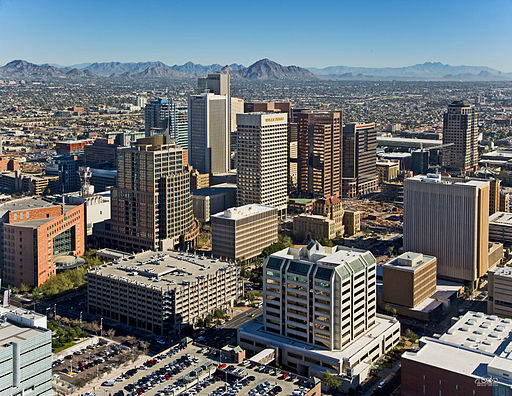
This is downtown — pre CityScape (photographer unknown):

512px-Downtown_Phoenix_Aerial_Looking_Northeast

Downtown 2020

Above is downtown 2020 (photographer unknown).

This isn't downtown (it's Midtown):

Phoenix-skyline

This isn't downtown, either. It's 24th Street and Camelback (photographer unknown):

Esplanade_Place_October_6_2013_Phoenix_Arizona_2816x2112

I wouldn't dare move to Chicago and claim that Hyde Park is the Loop. Nor could I say Hawthorne is downtown Minneapolis. Cincinnatians would quickly set me straight if I said Over the Rhine is downtown — downtown begins at Central Parkway. The natives in all these cities wouldn't let me get away with it. Nor would the transplants who felt a convert's zeal to protect the geographical integrity of their cities.

Yet people in "the Valley" (Silicon? Red River — of the north or of the south? San Joaquin? San Fernando? Of the Jolly Ho Ho Ho Green Giant?), many of them from these very cities, get away with this transgression every day in Phoenix.

Downtown Phoenix runs from Seventh Avenue to Seventh Street, and from the railroad tracks to Fillmore, or perhaps Roosevelt. It includes the original townsite and some additions. City Hall's definition taking the northern boundary to McDowell is ahistorical.

The murder of ‘Star’ Johnson

The murder of ‘Star’ Johnson

PPD_1940s

In this circa 1942 photo of the force, "Star" Johnson is in the middle of three black officers in the fourth row. To his right is his partner, Joe Davis. On the left is Joe Island. In uniform in the second row, behind and to the right of the man in suit and fedora, is Detective "Frenchy" Navarre.

Earlier this year when a Phoenix Police detective was killed in a shootout, the Arizona Republic ran a sidebar listing all the officers killed in the line of duty. The information came from a list kept by the police department. The trouble is that the list is incomplete. It omits the in-the-line-of-duty murder of David Lee "Star" Johnson in 1944.

He was killed by another cop.

I've told an abbreviated version of this event in another column, how it was a searing experience for a small but ambitious city. I've even used elements of it in my fiction. In this column, I want to tell the entire story based on the best research available. This true tale involves corruption, racism, betrayal and revenge in young Phoenix. It also is a powerful reminder that PPD should officially honor Johnson as an officer lost in the line of duty.

Walkable Phoenix

Walkable Phoenix

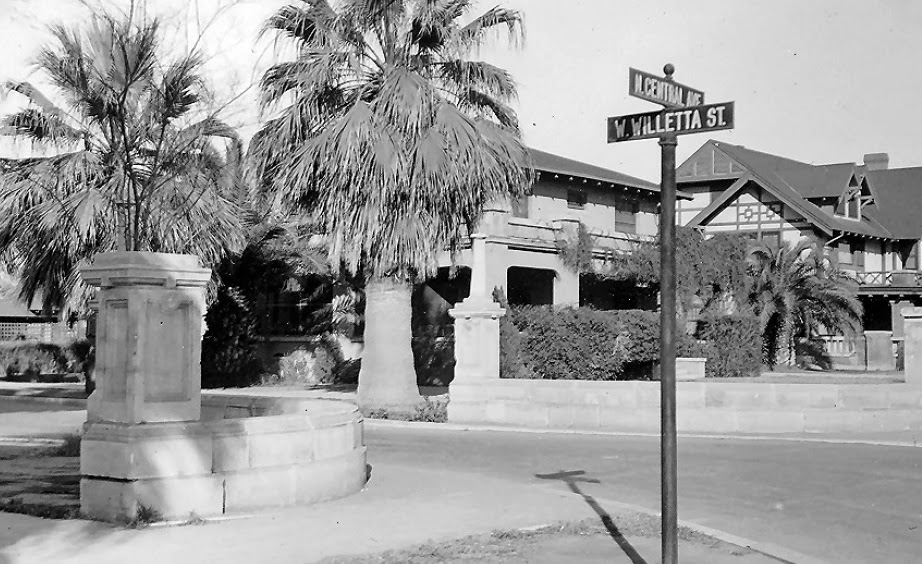
Central_Avenue_Willetta_1917

This beautiful scene in central Phoenix is from 1917. It makes you want to step into the picture and stroll. Not bad for a small, isolated city in a brand new state. More about that later. Alas, today the same location is a blighted vacant lot south of two once-graceful houses that have been turned into the Old Spaghetti Factory, the lawns replaced by asphalt.

I write because of an article in one of the online nooks of Fast Company headlined, "Phoenix is Pulling Off an Urban Miracle: Transforming into a Walkable City." Read and decide for yourself. On Facebook, someone said it came off like a press release. The kindest interpretation is that it represents an aspiration. To make it real, a little history might help.

Although Phoenix's growth is closely connected to the automobile age, the city was actually once highly walkable.

Let's define our terms. By "walkable," I don't mean you can drive your car to a canal bank or a desert "preserve" and hike. Not even the enchantingly shady, last time I checked, Murphy's Bridle Path. I mean the arrangements I enjoy in Seattle, where almost everything — shopping, restaurants, grocery stores, culture, health care, transportation hubs — is a quick walk or bus/bike ride away. One doesn't need a car.

Prior to the mid-1950s, when sprawl took off and never looked back, Phoenix offered such a "lifestyle." For anyone who grew up in the actual town prior to World War II, it was taken for granted.

Phoenix in the thirties

Phoenix in the thirties

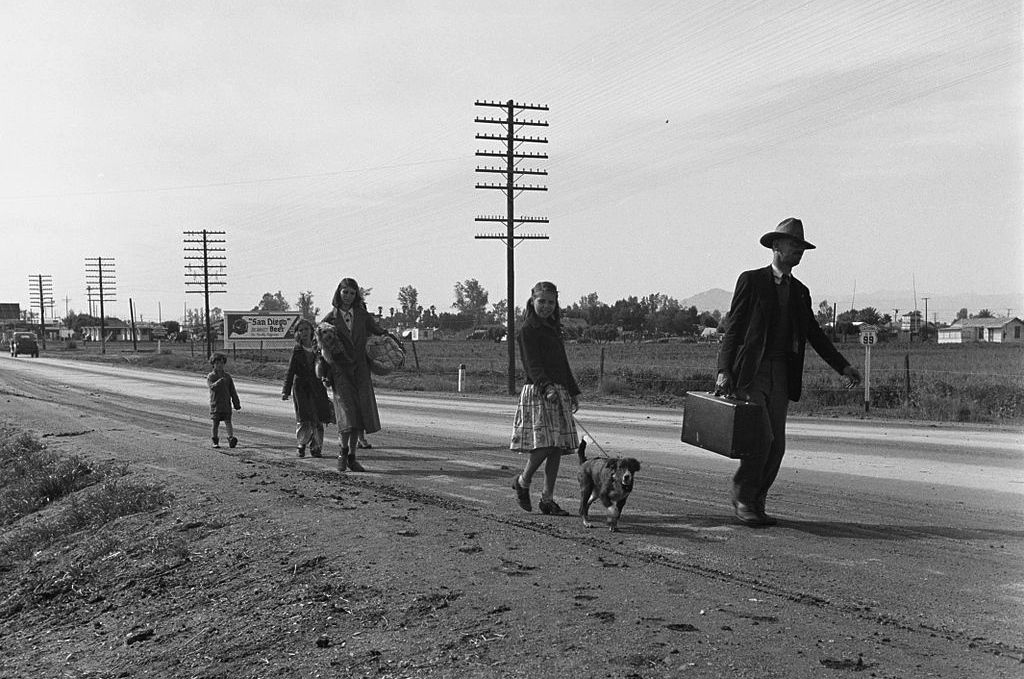
Lange_Homeless1930s

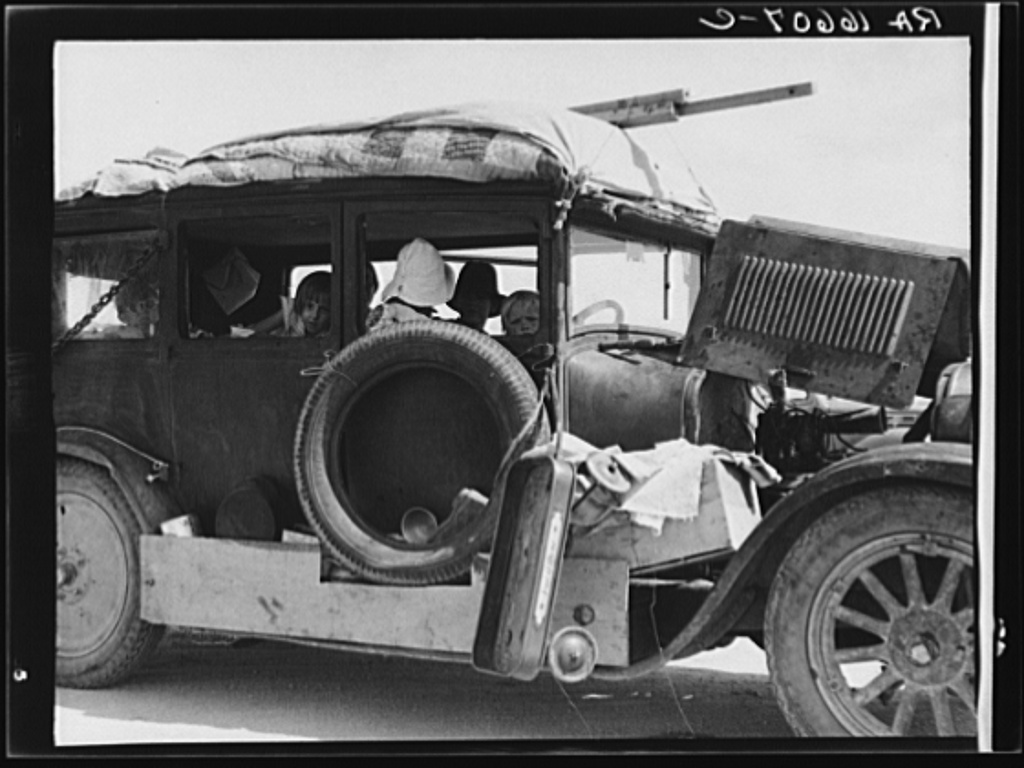
Dorothea Lange photographed this homeless family nearly Brawley, Calif., in 1939. They had been picking cotton in Phoenix but moved on when the work ran out. They hope for relief in California.

The Great Depression did not bypass our little oasis city. Even if, as historian Bradford Luckingham writes, the city's newspapers paid little attention to the 1929 crash and most Phoenicians, like most Americans, didn't own stock, the hard times soon arrived.

The severe contraction from 1930 through 1933 claimed two of the city's six banks and two of its five building-and-loan associations. Another, Valley Bank, was on the edge of failure. Depositors were wiped out in these pre-FDIC days. Arizona's big Three Cs of copper, cattle and cotton were decimated as demand collapsed. Twelve theaters closed in Phoenix. The state actually lost population in the early 1930s. The average income of American households fell by 40 percent from 1929 and 1932.

8b31908vIn Phoenix, unemployment grew while businesses closed and relief organizations were overwhelmed. My grandmother told stories about Okies and Texans arriving in jalopies, sometimes on foot or as hobos on freight trains. Victims of the Dust Bowl came by the thousands to the Salt River Valley, not, as in Grapes of Wrath, going as far as California (something confirmed by Philip VanderMeer in his insightful Desert Visions and the Making of Phoenix).

So don't believe it if you hear the shorthand that "Phoenix barely felt the Depression." Much less that its economic recovery came because of the "rugged individualism" of Phoenicians. For the second time in its young life, Phoenix was rescued by the federal government.

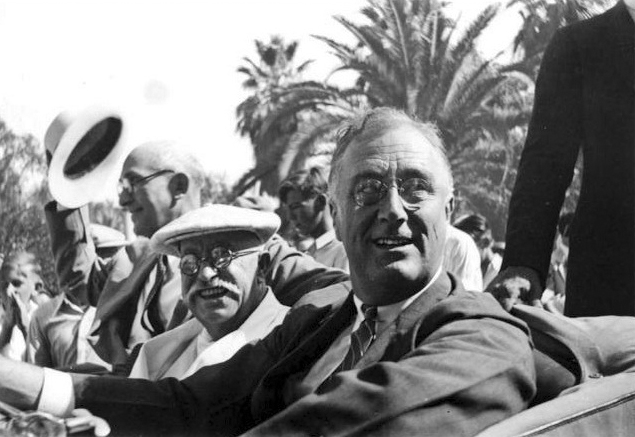
Franklin_Roosevelt_George_WP_Hunt_Carl_Hayden_1932The Great Depression was the overarching story of Phoenix in the 1930s. And the New Deal not only saved the city and state much suffering, but arguably had greater effect because of their small populations and economic composition. Arizona voted overwhelmingly for FDR, who is shown campaigning in Phoenix in 1931. He is at the wheel of the car as always, with Sen. Carl Hayden and Gov. George W.P. Hunt beside him. It proved a good bet.

Ballinger’s masterpiece

Ballinger’s masterpiece

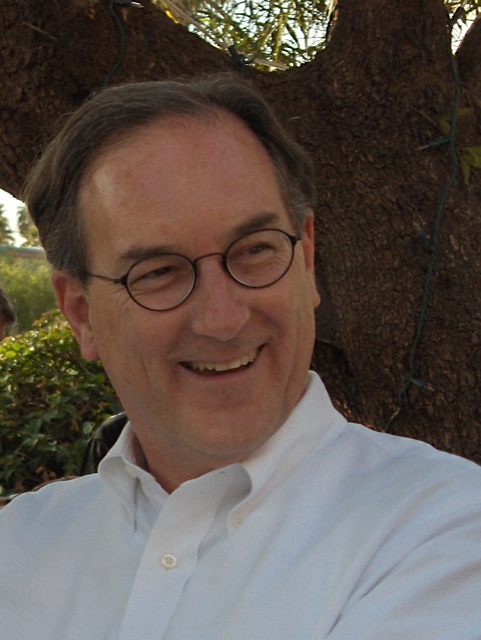
Jim Ballinger 2007When the pink-and-white Civic Center opened at Central and McDowell in 1950, it included a "little theater" but the art museum didn't come along for another nine years. Both were considered small confections to the main course: the public library. Things were not much different in 1974, when a young University of Kansas graduate named Jim Ballinger joined the museum's staff as curator of collections.

That the Phoenix Art Museum today enjoys national stature and draws prestigious international exhibitions — and has grown to take up most of the former Civic Center block — is mostly because of Ballinger, who announced Thursday that he will retire after 40 years with PAM. He became director in 1982. No other single figure has done more for the city's cultural landscape — to create, grow and sustain one — than Ballinger.

The reader should know that Ballinger and I are friends. We also were neighbors on Holly Street in Willo. But he first sought me out when I started as a columnist at the Arizona Republic, writing on such issues as the city and state's economic narrowness, lack of civic engagement, poor educational outcomes and difficulty in retaining talent. In our first conversation, he showed his incisive grasp of how such challenges would affect the future viability of cultural institutions.

Charlie Keating’s Phoenix

Charlie Keating’s Phoenix

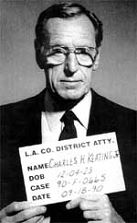
KeatingEverybody who was anybody in Phoenix has a favorite story about Charles H Keating Jr., who died this week at 90. Here's mine. By the time I came back in 2000, Keating, the disgraced imprisoned former S&L kingpin, was once again a fixture around town. I would run into him at Durant's, where he was cordial but declined my invitation to sit down sometime and tell his story.

One day the restaurant was packed and Keating couldn't get seated. He confronted the day manager, the fabulous Mari Connor, and said, "Do you know who I am?" Without a second's hesitation at a restaurant that had hosted governors and mobsters, Connor said, "No, but I'm sure they can seat you up the street at Alexi's. Otherwise, the wait is thirty minutes."

Time wounds all heels.

I was gone from Phoenix during Keating's glory days of the 1980s. He developed Dobson Ranch in Mesa and Estrella Mountain Ranch in Goodyear among many other projects. The most impressive physical monument he left behind was the Phoenician resort. The name says much about the time: Phoenix was still the center of "the Valley's" economic universe. It would never happen today; the resort claims it is in Scottsdale, even though it in the city. And for all the criticism heaped upon it, the Phoenician to me remains a beautiful place — built within the existing urban footprint — with an apt, evocative, allusionary name.

Phoenix’s charter journey

Phoenix’s charter journey

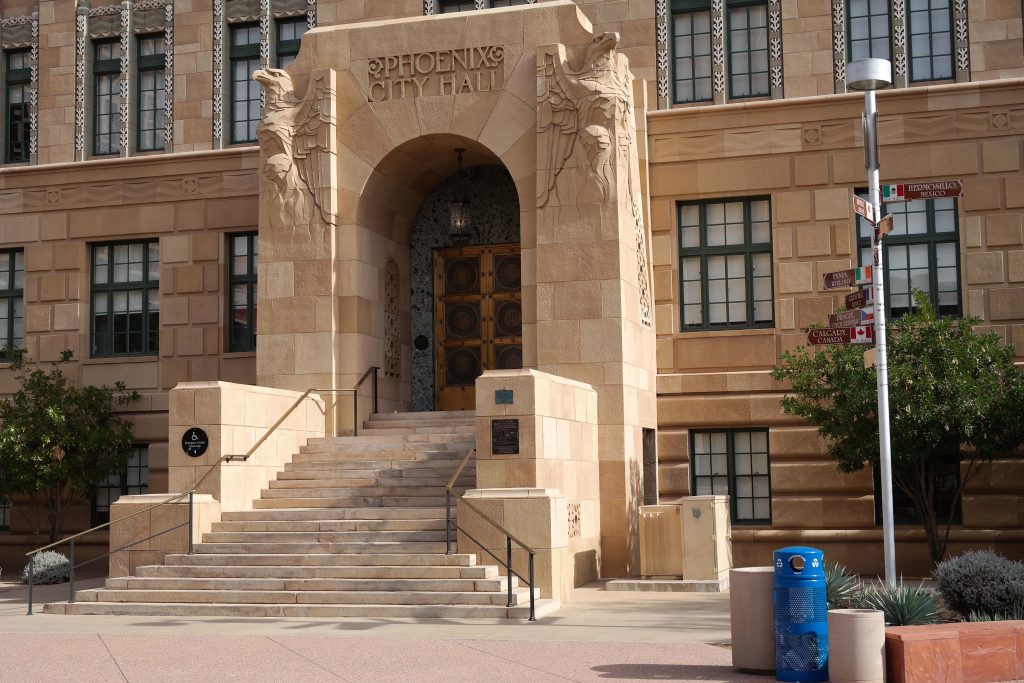
Old_City_Hall_Building_(Phoenix,_Arizona)-1For better or worse, Phoenicians with a sense of civic pride claim as their finest achievement not a magnificent city hall as in San Francisco, or a great subway system as in New York, or the breathtaking parks of Cincinnati. No, it is the efficient, professional handling of city business through the council/manager form of government. It's the most populous city in America without a strong mayor (with the city council acting as a legislature).

And it all began with the charter government movement of the late 1940s. Anyone that wants to understand Phoenix City Hall today or contemplate changes such as a strong mayor, must have at least a basic understanding of how we got here.

Once upon a time, Phoenix was a wide-open town, full of vice, politics dominated by unsavory bosses, and city hall eminently bribable. Then a group of crusading young businessmen, who knew the city could not grow and prosper under this corrupt yoke, threw out the rascals and created the cleanest city government in America. They went by the name of the Charter Government Committee. The rest is history.

But history is written by the victors. And the real story of Charter is more complex…and far more interesting.

Arizona Counterfactuals

Arizona Counterfactuals

"Counterfactual history" are fighting words for historians. Some view "what ifs" as useless or even pernicious. Others, and I am among them, think they can be a useful way to deepen our understanding of the past and how we got here.

In a previous column, I looked at some specific lost opportunities for Phoenix. This time, I want to lay out some turning points that might have gone another way, with profound implications for Arizona and the nation.

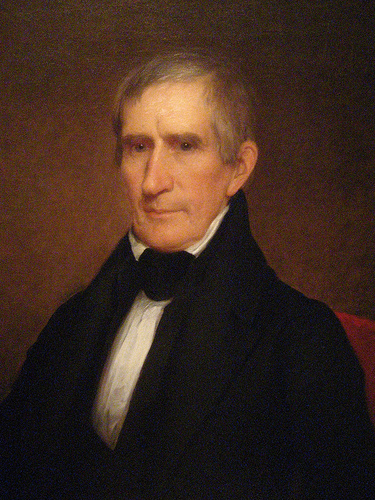
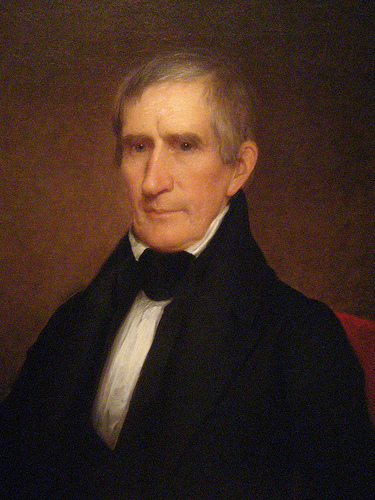
William_Henry_Harrison1. William Henry Harrison lived and served out his term(s). As every schoolboy or schoolgirl should know, the hero of the Battle of Tippecanoe was elected president in 1840. He delivered the longest inaugural address in history on a frigid March day with no hat or overcoat. He caught cold, which turned into pneumonia and pleurisy and he was dead in a month.

The consequences for American history were profound. Harrison led a Whig agenda (the "American System") that today would be considered progressive. His vice president, John Tyler, a former Democrat, abandoned it. Had the Whigs been able to enact their policies under this popular president and extend them with the election of another statesman, Henry Clay ("Harry of the West"), the power of the South would have been lessened and the Civil War might have been postponed for decades.

The Mexican War likely wouldn't have happened. An independent Texas Republic might have emerged and even joined the union. But what became Arizona would have remained part of Mexico. A weak and divided Mexico would have been unable to subdue the Apaches in the late 19th century. The result: Cal's dream of "sahuaros" as the largest population in a land of empty majesty.

Phoenix in the fifties

Phoenix in the fifties

Camelback_Mountain_1956Ask almost anyone who recalls Phoenix during this time and the fifties were indeed nifty. For most, it was the best time to have lived here.

This was also among the city's most sweeping eras of change. It saw the emergence of many of the trends that later turned unfortunate or worse. Below the gleam of Eisenhower peace and prosperity, much of the town was troubled.

To begin, however, it is easy to see why these years are remembered with fondness, and not merely with lazy nostalgia.

The fifties were the last decade when much of the city's life revolved around such sweet, small-town reveries as the Masque of the Yellow Moon, held annually at Phoenix Union High School's giant Montgomery Stadium. Although the Jaycees Rodeo of Rodeos would soldier on into the 1990s, it reached its pinnacle then, too. School let out for the rodeo parade day. Phoenix was not far removed from its roots of planting and cowboying.

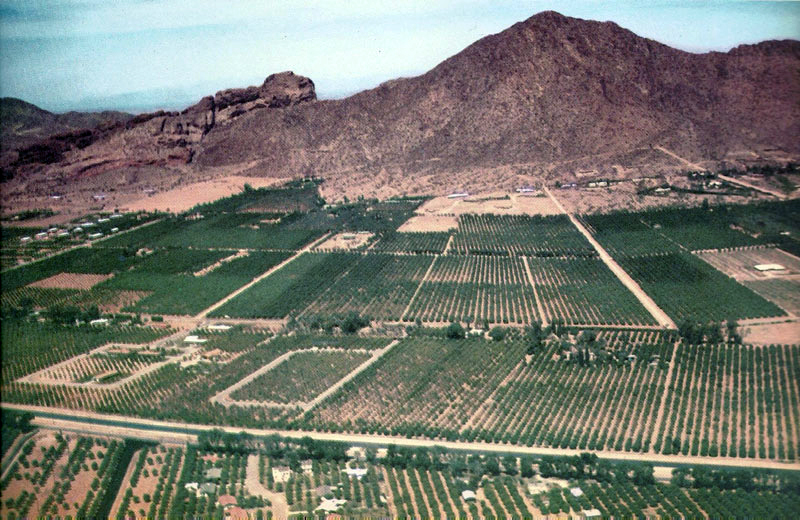
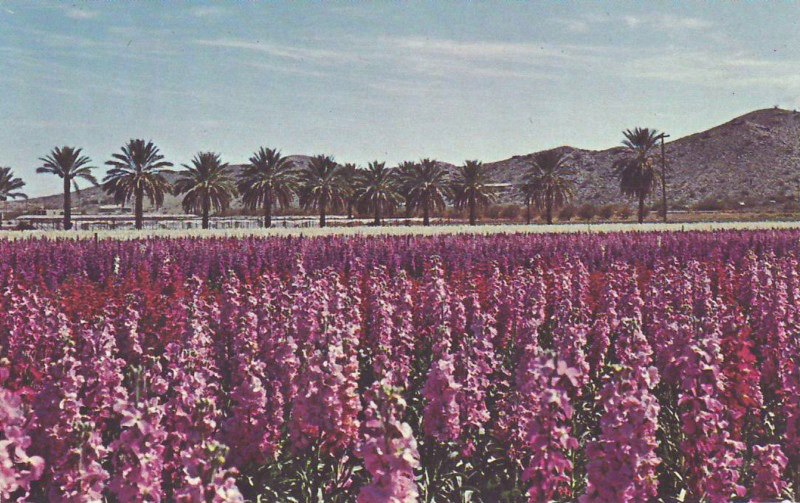
They were the last time when some of the larger canals were still lined with trees, doubling as widely patronized swimming holes, and water-skiing behind cars was winked at by the Salt River Project. When most of the Project's footprint was citrus groves, the Japanese flower gardens and fields, not subdivisions. When this enchanting oasis was sheltered by shade and green, and beyond it was largely pristine desert and High Country. When mining, cattle and logging were the industries in the sparsely populated state.

Phoenix was the city. Every other town in the Salt River Valley was small and separated from Phoenix by groves, fields and desert.

No wonder the overnight lows were ten degrees lower than now and summers were shorter and less severe.

Phoenix 101: What went wrong

Phoenix 101: What went wrong

If you think "everything's fine" or that Phoenix has no troubles that aren't common to other cities, this is not your post. Spoiler alert: Everything is not fine.

City_of_phoenix_logoWe discuss problems and challenges, as well as intelligent responses, frequently in this space. A previous column sought to debunk the excuses, myths and lies about the place. But reading the comments on the most recent post made me wonder: Is Phoenix uniquely troubled? If so, how and why?

Sprawl doesn't explain it. What Kunstler calls "cartoon architecture" has befouled the nation from sea to sea. Good civic design was lost everywhere. The best cities in the country are surrounded by soul-killing suburbs, office "parks," malls, shopping strips, parking lagoons and laced up with freeways.

Car culture, per se, isn't the answer, either. Oklahoma City ranks lowest in non-vehicle commuting, yet the entire metro has long backed a levy that has impressively rebuilt downtown. Freeway-mad Dallas also boasts the nation's largest light-rail system.

Phoenix: The oasis city

Phoenix: The oasis city

Oasis_CityCountyBldg
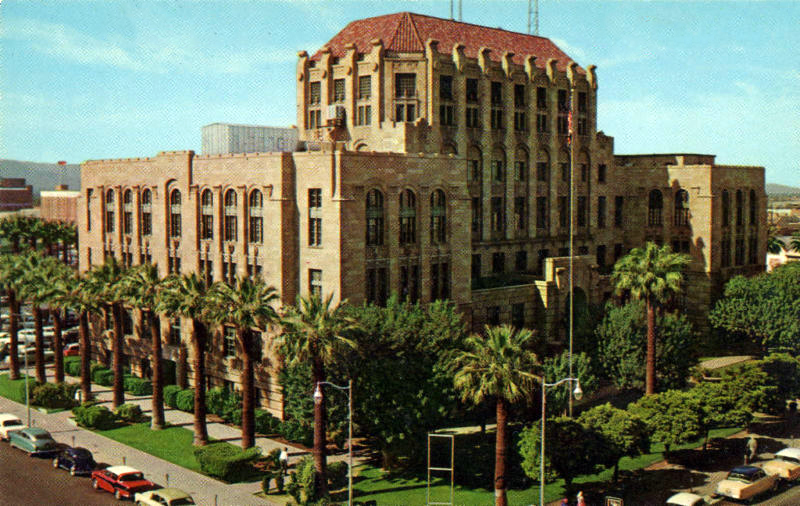
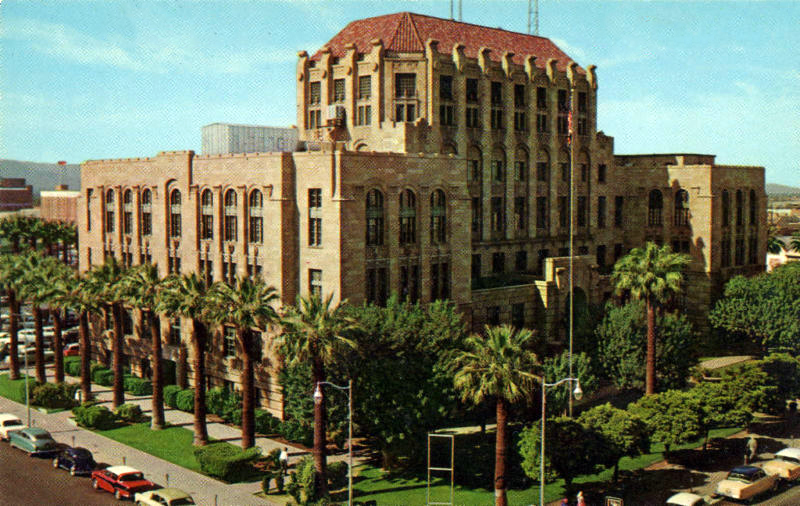
The 1929 Maricopa County Courthouse and Phoenix City Hall when it was surrounded by shade trees and manicured lawns (Photographer unknown).

Alone among the cities of the American Southwest, Phoenix is the oasis. It has always been so, but whether it remains an oasis city is starting to come into doubt. A common narrative is that Phoenix attracted Midwesterners who wanted to recreate the landscape from which they came.

This is untrue. In fact, the early Anglo residents were from many regions, especially the South. And the oasis predates American settlement. The archeology of the region is in flux, but it appears that "plant husbandry" was being performed by prehistoric tribes as early as 3,000 or 1,500 B.C. (or BCE if you are trapped in the politically correct precincts of academia). By the first millennium A.D., the most advanced irrigation in the New World was being perfected by the Hohokam.

The Salt River Valley was an ideal location, with rich alluvial soil that would grow anything — just add water. The altitude and weather in the modern climate era allow for two or more growing seasons depending on the crop. Maize was imported from Mesoamerica. Cottonwoods, willows and other native shade trees grew along the riverbank and its subsidiary creeks. I have no doubt that Hohokam dwellings were well-shaded. The new settlers merely took it to a higher level.

The photo above captures the oasis city at its zenith, in the 1960s. Note the inviting public space provided by shade and grass surrounding an inspiring art deco building. This was the Phoenix I grew up in. At 10,000 feet, you would have seen a green city surrounded by bands of citrus groves, farm fields and horse pastures. And then: The majestic, largely untrammeled Sonoran Desert. What a place to live. The older neighborhoods were graced by mature trees and parking lawns, a grassy area between the curb and sidewalk. Encanto Park was an oasis within an oasis. Central, as you see below, was lined with palm trees. North of Camelback were shady acreages, often along streets with an abundant shade canopy, set back behind irrigation "laterals." My great aunt lived in one: It was a wonder of shade and tranquility behind oleander hedges on Seventh Avenue. Well into her eighties, this daughter of the frontier would walk out every Sunday evening to turn the valve and "take her water," the flood irrigation from the Salt River Project.

In our neighborhood, what is now Willo, few families had pools but most put in winter lawns to give the sweet season its magical green. Even driveways had grass between two narrow concrete strips. This was not the Midwest. It wasn't LA, although the parking lawns were imported from there. Instead, Phoenix created its own unique urban aesthetic. It wasn't planned. This Eden just happened. If you missed it, you have my deepest sympathy. Many areas of oasis beauty remain. If you want a sense of the practical benefit, drive south from Osborn on Fifteenth Avenue some summer evening with the windows down. When you cross Thomas into Encanto Park, the temperature will drop by ten degrees or more.
The dam problem

The dam problem

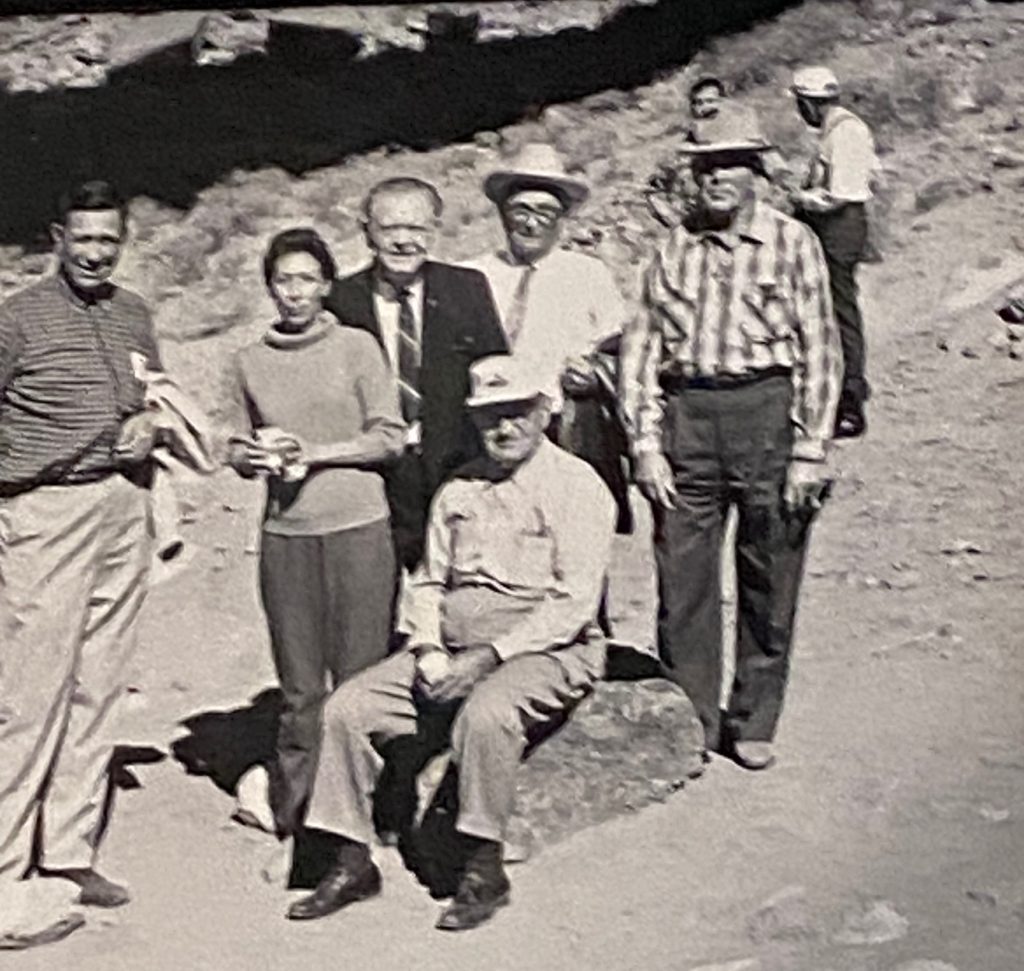
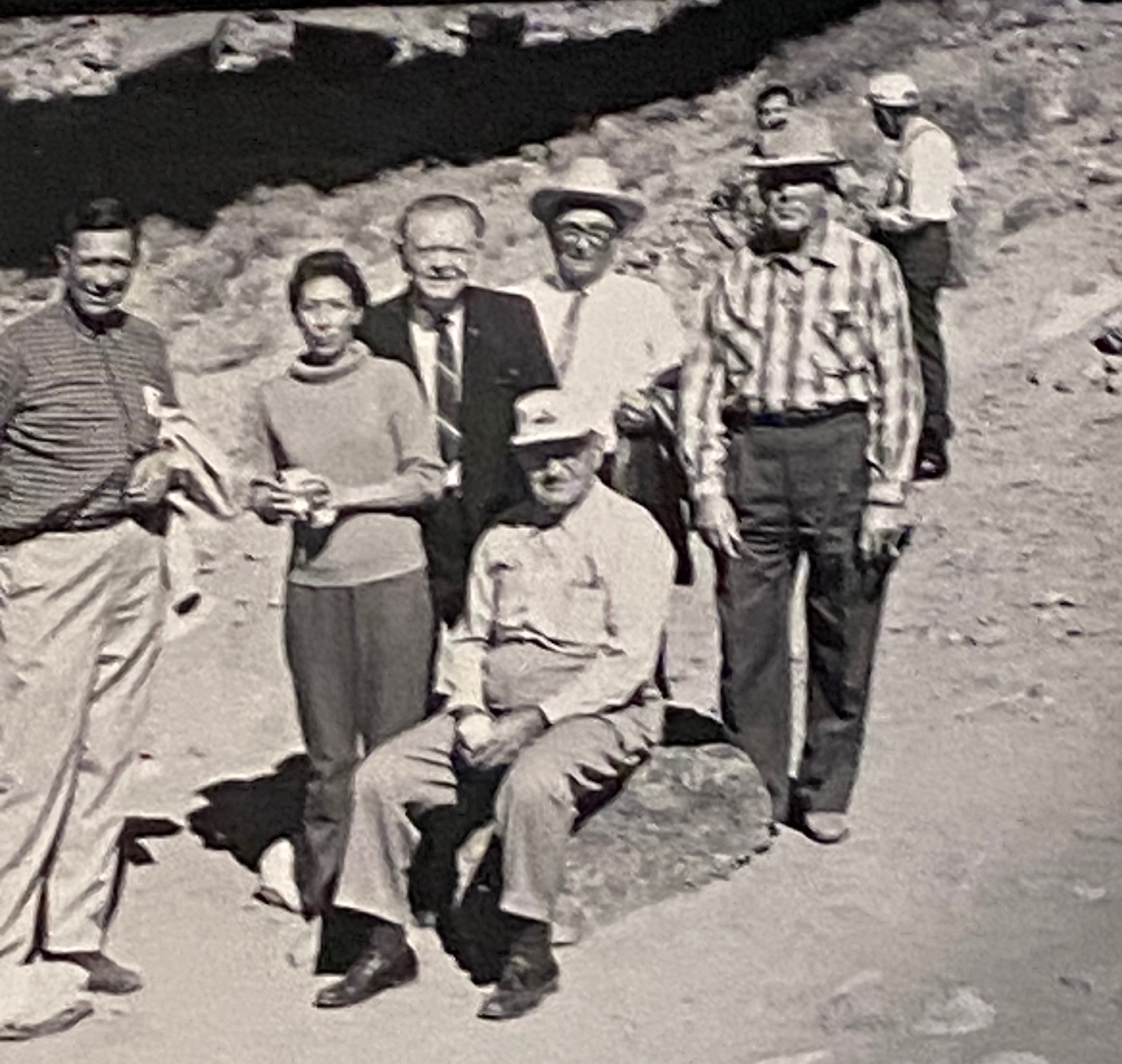
IMG_0246A photo hangs in my study showing my mother at Glen Canyon Dam, posing with officials of the U.S. Bureau of Reclamation, Interior Department and Arizona State Senate. She is the only woman in the group and represents the Arizona Interstate Stream Commission, the quiet but powerful state agency fighting for the Central Arizona Project. The year is 1965 and the 710-foot-tall stark white (at the time) arched structure that impounds Colorado River water in Lake Powell will begin full operations a year later.

She has the satisfied expression of a woman who never met a dam she didn't like (that would change later, as it would for many involved, when they realized the unintended consequences of what they had wrought). But she and some of her colleagues also knew they were pulling a kind of confidence game on California and the Upper Basin states. More about that later.

I've been studying that photo as Phoenicians who are paying attention read about how persistent drought is reducing the water released from Lake Powell. A Bureau of Reclamation study says the drought is the worst in a century (it is actually worse than that, but such is the record keeping), and less water will be sent downstream to Arizona, Nevada and California than at any time since when Powell filled — when that photo was taken.

It is a big deal.

Phoenix 101: Summer

Phoenix 101: Summer

Sun_WorshipperThe Sun Worshiper at Park Central mall in Midtown Phoenix, circa 1960. 

Summertime, and the livin' is easy," Gershwin wrote. I never understood that. Movies and television shows with children scampered through meadows in the noonday summer sun similarly baffled me. I was a Phoenician. Summer was the oven. It was a force that demanded respect. Summer could kill you.

We might have ridden bicycles without helmets and freely roamed our neighborhoods without "play dates," but we were also expert in desert survival. So in summertime the livin' was careful. My friends and I avoided going out in mid-day and paced our roams in high summer. I read so many books in a soothingly dim, air-conditioned room at home, or at the public library, where the blast of heat was only apparent if you came close to the windows.

The rhythm of the city changed, slowed down. Aside from the morning and evening rush hour, most people stayed off the streets. Mailmen wore pith helmets. Street work and construction was mostly done early in the morning or not at all. Bank signs flashed triple-digit temperature readings.

Summer did have its charms. For example, most of the snowbirds and tourists — the ones who would ask you where they could find a good "Spanish" restaurant — were gone. It was just us desert rats. The cold-water fountains at every gas station were heaven. Enough money to buy a milkshake or ice-cream cone at one of the drug-store fountains was a cloud above that.

Young men and fire

Young men and fire

Smokejumpers
Unless we are willing to escape into sentimentality or fantasy, often the best we can do with catastrophes, even our own, is to find out exactly what happened…
— Norman Maclean 

Smokejumpers and other wildfire-fighters call them "shake and bakes," the portable shelters they carry. These cocoons of foil and fiberglas offer the firefighters at best a 50%  chance of survival and are deployed as a last resort, as when the wind shifts and the living devil of fire traps and turns on them.

The hope is that the fire will pass over quickly. Otherwise, "the only thing your shake and bake will do is allow you to have an open-casket funeral,” one crew supervisor told Wired. Such dark humor is a necessary component of dangerous, sometimes deadly jobs. The Prescott Fire Department's Granite Mountain Hotshots team reportedly deployed its shake-and-bakes Sunday in a conflagration at Yarnell, amid triple-digit temperatures and high winds. Nineteen died. As I write, the fire is at zero containment.

This is the deadliest event for wildfire-fighters in modern history. Deadlier than Colorado's South Canyon fire in 1994 on Storm King Mountain. Deadlier than the 1949 Mann Gulch blaze in Montana, which inspired Norman Maclean's classic study, Young Men and Fire. a book both elegiac and forensically definitive.

Here is what I don't want: Cheap sentimentalizing and cynical religiosity from politicians who are otherwise hostile to public employees, adequate government budgets and sensible land-use policies. The ones who use public pensions and unions as evil hand-puppets to distract citizens from the screwing they are getting from the plutocrats. The tax cutters and climate-change "deniers."

Please spare me your sudden compassion for public servants and first responders. Spare me your flags and "USA! USA!" and endless evocation of "heroes" if this is mere denial and lazy thinking.

Look: I get the shock and grief. I used to be a first responder myself, cross-trained to deploy with forestry fire teams, and more than once was nearly killed (in the city). I know those men are with the Lord and all their tears have been dried, and I pray that their families are given comfort and grace. But I am not going to endlessly tweet this or post it on Facebook. We owe them more. Read on if you agree. This will not be a popular column. It is a necessary one.